Mozart Die Zauberflöte K620: Overture (1791) Beethoven Piano Concerto no.1 in C major Op.15 (1795, rev. 1800) Fanny Mendelssohn Overture in C major (1832) Mendelssohn Symphony no.4 in A major Op.90 ‘Italian’ (1833)
Benjamin Grosvenor (piano), City of Birmingham Symphony Orchestra / Marta Gardolińska
Symphony Hall, Birmingham Wednesday 3 November 2021 (2.15pm)
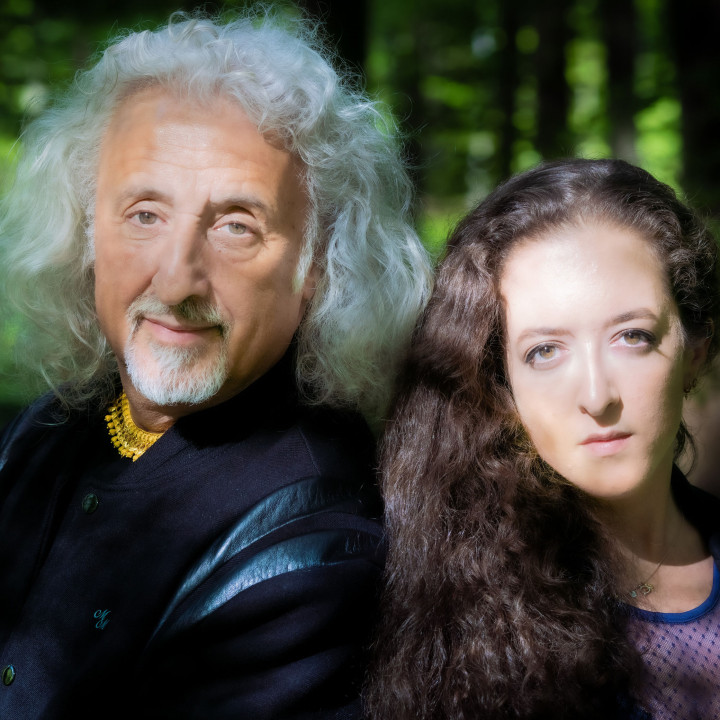
Written by Richard Whitehouse. Picture of Benjamin Grosvenor (c) Andrej Grilc
Those having heard Gustavo Dudamel’s recent Ives cycle will know of Marta Gardolińska’s role in the success of the Fourth Symphony, with her similarly methodical attention to detail being evident in this afternoon’s concert with the City of Birmingham Symphony Orchestra.
An avowedly Classical concert it may have been, but an artfully programmed one. Certainly, it was refreshing these days to hear the introduction of Mozart’s Overture to The Magic Flute given with this degree of gravitas, followed by a purposeful take on the main allegro such as brought out the music’s verve along with an onward striving apposite given its indebtedness to the ideals of the Enlightenment. The CBSO itself sounded wholly enthused in what was as purposeful and as immediate an account of this piece as it can have given in recent seasons.
It also prepared admirably for Beethoven’s First Piano Concerto with Benjamin Grosvenor (above). The latter has often sounded unduly self-effacing in the concerto repertoire, but this work fits his temperament to a tee – not least its initial Allegro, whose alternating of bravura with more equivocal expression included an electrifying transition to the reprise then nonchalant take on what is the second (c1805), shortest and contextually most satisfying of the composer’s three cadenzas. Neither was there any lack of eloquence in a Largo such as ranks among the most affecting of Beethoven’s earlier slow movements, while a headlong if never hectic tempo for the final Rondo enabled Grosvenor to instil his last entry with a poise as made the orchestral payoff the more conclusive. A fine performance which inevitably brought the house down.
Grosvenor returned for an affecting encore of Danza de la Moza Donosa – second of three Danzas Argentinas by Alberto Ginastera (maybe Grosvenor will investigate one or other of his piano concertos one day?). There was further unfamiliar fare after the interval, with an Overture by Fanny Mendelssohn. Her only completed orchestral work, its formal cohesion and technical finesse indicate what might have been possible under different circumstances, not least when Gardolińska drew such committed and characterful playing from the CBSO.
There cannot have been a time when Felix Mendelssohn’s Italian Symphony was unpopular in Birmingham and so it proved here. As has become customary, Gardolińska (rightly) observed the first movement’s exposition repeat, with its substantial lead-in, in what was otherwise an unexceptionally fine account of this opening Allegro. More individuality came through in the Andante, not least with its quirkily understated interplay between pedantry and pathos, while the intermezzo was more than usually arresting for the distinction made between its elegant outer sections and a trenchant, often combative trio. The ensuing Saltarello rounded off this performance in bracing fashion – those rhythmic contrasts between its main and second ‘tarantella’ themes vividly brought out on the way to a conclusion of no-nonsense finality.
This appealing programme was enthusiastically received by the fullest house the CBSO had enjoyed since live music-making resumed. Symphony Hall will hopefully be as well attended this Saturday, when Mirga Gražinytė-Tyla returns for the commemorative A Covid Requiem.
Further information on the CBSO’s current season can be found at the orchestra’swebsite. For more on Marta Gardolińska, clickhere – and for more on Benjamin Grosvenor, head to the pianist’s website
CBSO players perform the Allegretto from Fanny Mendelssohn’s String Quartet in E flat here:
Beethoven 7 Variations on ‘Bei Männern, welche Liebe fühlen’ from Mozart’s Die Zauberflöte WoO 46 (1796) Britten Cello Sonata in C major Op.65 (1961) Piazzolla Le grand tango (1982)
Mischa Maisky (cello), Lily Maisky (piano)
Wigmore Hall, London Monday 1 November 2021
Written by Ben Hogwood
Father and daughter duo Mischa and Lily Maisky presented an imaginative program of works for cello and piano in this BBC Radio 3 Lunchtime Concert, where it was gratifying to note a full attendance at the Wigmore Hall.
They immediately found the light-hearted spirit of Beethoven’s 7 Variations on Bei Männern, welche Liebe fühlen, an aria from Mozart’s Die Zauberflöte. The piano takes the lead for much of this work, and Lily’s phrasing was subtle yet nicely shaped. The burnished tone of Mischa’s cello was a feature in the minor-key fourth variation, while Lily’s sensitive ornamentation at the start of the sixth was especially attractive.
A compelling performance of Britten’s Cello Sonata followed. As a former pupil of Mstislav Rostropovich, Mischa Maisky effectively has a direct line to a work that started the beginning of an extremely fruitful musical friendship between Britten and Rostropovich that lasted up to the composer’s death 15 years later. This performance inhabited the spirit of the work from first note to last, with the feeling in the first movement Dialogo that we were eavesdropping on a private conversation. Britten’s frequent but subtle references to Shostakovich were nicely highlighted here, with a few witty asides.
In the second movement Scherzo the Maiskys were dancing a balletic routine, Mischa’s pizzicato questions finished off by Lily’s featherweight answers. The tempo was slightly slower than is often used here, but in this way the pair effectively pointed out the work’s proximity in Britten’s output to the opera A Midsummer Night’s Dream. The sombre third movement Elegie had a silvery tone from the cello, while the following Marcia dealt in sardonic humour. The finale was a tour de force, featuring low notes from Mischa’s cello capable of rattling the windows, before powering through to an emphatic finish.
Piazzolla’s Le Grand Tango celebrates the dance form with which the Argentinian composer became obsessed, though as he stated the preoccupation was in his mind rather than the dancing feet. This was a passionate performance, the Maiskys in hold throughout as they maintained their close musical chemistry, right from the full bodied notes with which the cello began to a red-blooded dance for the closing pages. In between we had music of great tenderness and affection, not to mention rhythmic persuasion.
The duo gave us two encores, the first of which was a heartfelt tribute to the recent passing of Nelson Freire, clearly a dear friend. Bloch’s Prayer, from the short suite From Jewish Life, was an ideal choice, reverently played and with a searing tone quality to the highest register. It was a moving tribute that could hardly be bettered. There was also an ideal response in the form of Mischa’s own transcription of Brahms’s Lerchengesang Op.70/2, where Lily’s piano took the expressive lead.
You can hear the music played by Mischa and Lily on the Spotify playlist below, compiling Mischa’s recordings for Deutsche Grammophon of all the repertoire:
For more information on Mischa Maisky you can visit hisartist page
Portrait of Antonio Salieri by Joseph Willibrord Mähler, 1815
Polyphonic Italian Songs for largely unaccompanied voices (1801-1803, Beethoven aged 32)
1. Bei labbri che amore (duet)
2. Ma tu tremi, o mio tesoro (trio)
3. E pur fra le tempeste (solo)
4. Sei mio ben (duet)
5. Giura il nocchier: trio (5a), quartet (5b), quartet (5c)
6. Ah rammenta (duet)
7. Chi mai di questo core (trio)
8. Scrivo in te (duet)
9. Per te d’amico aprile (trio)
10. Nei campi e nelle selve: quartet (10a), quartet (10b)
11. Fra tutte le pene: duet (11a), trio (11b), quartet (11c)
12. Salvo tu vuoi lo sposo: solo (12a), duet (12b)
13. Quella cetra ah pur tu sei: trio (13a), quartet (13b), quartet (13c)
14. Già la notte s’avvicina: trio (14a), quartet (14b)
15. Silvio amante disperato (quartet)
Dedication not known
Duration most songs between 1′ and 1’30”
ListenBackground and Critical Reception
This collection of Italian songs provides us with a fascinating insight into Beethoven’s studies with Antonio Salieri, while also closing this particular chapter in his career. All the settings are of texts by Pietro Metastasio, whose poetry Beethoven was already familiar with.
Keith Anderson writes for Naxos that the exercises provide a substantial collection of songs in varied form, in many cases offering Beethoven’s original version, followed by Salieri’s corrected version. They have been brought together under the number WoO 99, with a series of numbering from Beethoven compiler Willy Hess for each item. These settings offer varied insights into Salieri’s teaching methods and Beethoven’s achievements in these years. The unaccompanied Italian settings were written during Beethoven’s early days in Vienna, generally between 1793 and 1797 and those with accompaniment up to 1802. The listings and earlier complete recordings are discussed in full by Mark S. Zimmer in The Unheard Beethoven.
Jan Swafford gives valuable insight into Beethoven’s manner as a student. “As with his counterpoint masters, in his dealings with Salieri Beethoven was a wilful student even as he dutifully set his assigned old-fashioned Italian texts in a suitable style. One day Beethoven ran into Salieri in the street after the teacher had thrashed one of rhose efforts. Salieri complained that he hadn’t been able to get the tune out of his head. “Then, Herr von Salieri,” Beethoven grinned, “it can’t have been so utterly bad.”
Thoughts
These songs give fascinating insights into Beethoven’s development as a composer. The music feels much ‘older’, with the overriding impression that the pupil is diligently aiming for a style coveted by his teacher, rather than breaking particularly new ground – bolstering his abilities and covering perceived weaknesses.
The first of these settings, Bei labbri, che amore, is a chaste two-parter for male and female voice in close harmony. Ma tu tremi is initially similar but there is a slightly more awkward top line in the middle section. E pur fra le tempest is a short setting of just under a minute, for solo voice and flowing piano, moving to an unaccompanied and quite serene Sei mio ben for three voices.
It is interesting to hear three versions of Giura il nocchier, the second of which is much fuller in texture than the first, while the third shifts the pitch down a tone. The four-part Chi mai di questo core is the fullest song here, and features a nice dialogue between the voices, if still polite and functional.
Some of the arrangements are written for full, choral textures, such as the second and third short arrangements of Giura il nocchier. There are no fewer than six versions of Fra tutte le pene availble, each of the three originals with revisions by Salieri to make the part movements a little more logical.
Other songs include the pure C major of Scrivo in te, a minute-long setting in three parts, and the fuller choral songs Per te d’amico aprile and Nei campi e nelle selve, in two versions – the second of which has a mournful edge. Also in two versions are Salvo tu vuoi lo sposo, and Gia la notte savvicina, which has a feather light choral setting for its alternative. Meanwhile the choral Quella cetra ah pur ti sei has three – and sounds rather like Haydn in the first.
Spotify playlist and Recordings usedSoloists, Ensemble Tamanial, Cantus Novus Wien / Thomas Holmes (Naxos)
The Naxos recordings are very well delivered, with the caveat that it is difficult to convey emotion in songs that are so short. The solo items have the necessary intimacy, while the choral numbers have a nice space surrounding the textures in the recording picture. Occasionally the top edges of the soprano lines feel like a bit of a strain, but that could be as much due to the composer’s writing as anything else!
You can chart the Arcana Beethoven playlist as it grows, with one recommended version of each piece we listen to. Catch up here!
Also written in 1803 BoieldieuClarinet Concerto no.1 in E flat major Op.36Next upBei labbri, che Amore WoO 99/1
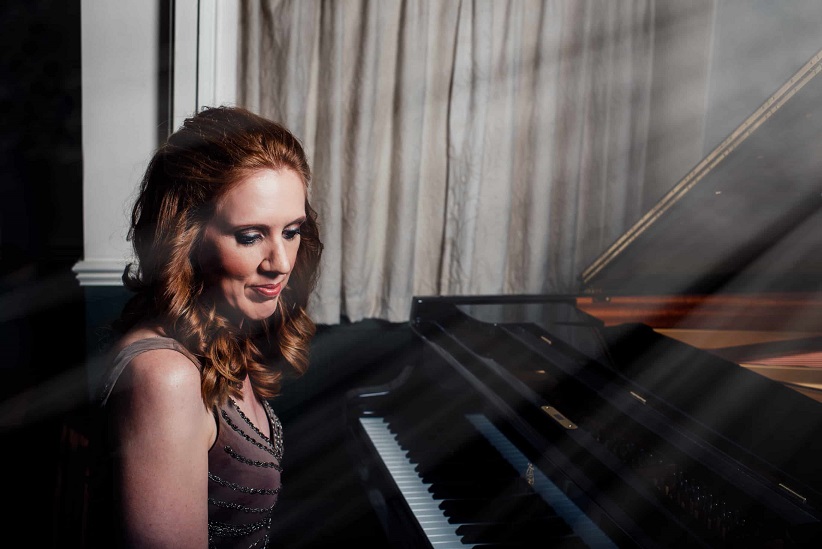
Sarah Beth Briggs (piano, above), English Symphony Orchestra / Kenneth Woods
Sawyers The Valley of Vision (2017) Mozart Piano Concerto no.22 in E flat major K482 (1785) Beethoven Symphony no.6 in F major Op.68 ‘Pastoral’ (1808)
Town Hall, Cheltenham Monday 25 October 2021
Written by Richard Whitehouse; picture of Sarah Beth Briggs by Carolyn Mendelsohn
Tonight’s concert found the English Symphony Orchestra at the Town Hall in Cheltenham, a building of Victorian opulence with an expansive while (surprisingly?) immediate acoustic to match, in a programme featuring classics of their respective media by Mozart and Beethoven.
First, though, a welcome revival for The Valley of Vision – the tone poem by Philip Sawyers that surveys the environs around Shoreham, Kent as were immortalized in the visionary early landscapes of Samuel Palmer. Although the composer had identified five continuous sections, the probing intensity of this music makes for a seamless unfolding which was to the fore in a superbly focussed account as directed by Kenneth Woods (who recently premiered Sawyers’ Fifth Symphony at the Colorado Mahler Festival). No less tangible was the control over this music’s momentum, extending through to a climactic faster section before soon regaining its initial pensiveness. In its subtly evocative aura and persuasive handling of tonality, moreover, this piece can rank with the most significant British orchestral works of the past two decades.
From the six piano concertos that Mozart wrote for his subscription concerts during the mid-1780s, the Twenty-Second is likely the least often heard. A pity, when its relatively expansive form and unpredictability of content are striking even in the context of this most exploratory phase from the composer’s output. Certainly, it is a piece of which Sarah Beth Briggs had the measure – whether in the forceful impetus of its opening Allegro, winsome interplay between soloist and woodwind in the central Andante (arguably the most eloquent among Mozart’s sets of variations) or blithe unfolding of a final Rondo afforded greater pathos by the ‘harmonien’ episode whose interposing was an inspired departure. Nor were Dennis Matthews’s succinct and artfully integrated cadenzas other than an enhancement of what was a fine performance.
Not that there was there anything routine about Beethoven’s Pastoral following the interval, a worthy successor to those performances of the Fifth and Seventh Symphonies that Woods and the ESO have given in recent concerts. Thus, a purposeful though never inflexible take on the opening movement left sufficient room to characterize its reflective asides, with the ‘Scene by the brook’ even more engrossing through its homogeneity of texture and seamless continuity; the closing bird-calls elegantly phrased and enticingly integrated into the whole.
Too rapid a tempo for the scherzo left Woods with insufficient room to point up contrasts in motion with its trio sections, but the Thunderstorm was finely rendered as an extended introduction into the finale – this Shepherd’s Song emerging as the formal and emotional culmination in all respects. Not the least of these strengths was an inevitability of progress – here maintained right through to a coda of serene poise and, in the process, underlining the degree to which any vestige of self has been sublimated into the enveloping cosmic dance.
An absorbing performance as made one look forward to further Beethoven symphonies from this source. Woods and ESO are in Worcester at the weekend with two concerts as part of the Autumn Elgar Festival, the first featuring the masterly Elegy for Strings by Harold Truscott.
Further information on the ESO’s current season can be found at their website. For more on composer Philip Sawyers, visit his website here, while more on pianist Sarah Beth Briggs can be found at her website
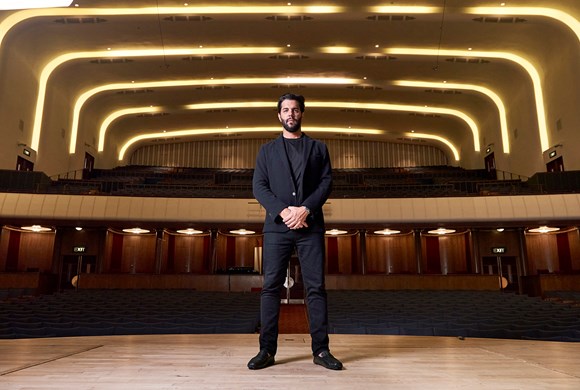
The new Chief Conductor of the Royal Liverpool Philharmonic Orchestra talks to Arcana about his appointment, the importance of an orchestra in its community and what he hopes to bring to the city of Liverpool.
interview by Ben Hogwood
It is a tall order indeed, following Vasily Petrenko onto the conductor’s rostrum at Philharmonic Hall, Liverpool. Domingo Hindoyan is the man chosen to fill the sizeable shoes of the Royal Liverpool Philharmonic Orchestra’s chief conductor, and he has joined Arcana to chat about the opportunities that lie ahead for him and for one of Britain’s finest orchestras.
He brings with him a positive energy, channelled through the most sonorous of voices. He could easily be mistaken for a baritone singer on this evidence alone, but his perspective as a conductor is brought immediately to the front. We begin by talking about one of his first appointments with the orchestra, his first Prom at the Royal Albert Hall in September this year. On the program were Dvořák’s Cello Concerto, with Sheku Kanneh-Mason as soloist, a new piece from Grace-Evangeline Mason (The Imagined Forest), Richard Strauss’ Don Juan and finally Hindemith’s Symphonic Metamorphosis of themes by Carl Maria von Weber.
The concert received extremely favourable reviews and was a great experience for the Venezuelan conductor himself. “It was a unique moment, a special moment in my career and in my musical life. It was my first concert as chief conductor, and the very special atmosphere of the Proms is unique around all the concert halls in the world.”
We talk about his decision to end with the Hindemith Symphonic Metamorphosis. “It is a great piece, and I had a lot of fun working on it, especially comparing it to what Weber wrote with the piano pieces. It is very, very clever, and shows perfectly all the facets of the orchestra, stressing a little bit on the brass section and the percussion. We have a fantastic set of bells, so we could use them in the second Turandot movement. We had a lot of fun. There was of course a link between all these pieces, with the 20th century composers, Strauss and Hindemith, but also an American connection between Hindemith and Dvořák. It is probably not obvious, but we’re talking about two composers who were influenced by the plantation music and by American music. Dvorak was the first one who really developed that to another level, and in the concerto, you don’t see as much as you can in the New World Symphony or the American string quartet, but you have in the second movement all the elements of American music. Hindemith was impressed later with some jazz moments we have in the second movement.”
He speaks very fondly of the Strauss, too. “Don Juan is a masterpiece, a showpiece for the orchestra. It’s a very difficult piece for orchestras, though today a little less as the technical level of the Royal Liverpool Philharmonic is very high. When you are technically free as the orchestra is, it is a piece that has thousands of colours, situations and emotions that we can explore. Every time I conduct it, I find new things you can do. That’s why it’s a masterpiece – all masterpieces have this characteristic.”
Hindoyan recalls his first visit to Liverpool. “It was not that long ago, in summer 2019. I conducted Beethoven’s Seventh Symphony, among other pieces of course. It’s not an easy piece to start a relationship with an orchestra, because every orchestra knows it very well, but I remember that immediately the chemistry was right. The energy was right too, so we could really rehearse in a natural way, as if we knew each other from a long time ago. The second time was also very special, because I could play some Latin American repertoire with a colleague of mine, Pacho Flores, a Venezuelan trumpet player. This was where I conducted Don Juan for the first time with the orchestra, and then I did Stravinsky’s The Firebird. Since the beginning the relationship has been very natural, with a great chemistry. So far it is going very well!”
On meeting an orchestra for the first time, how does a conductor gauge their strengths and common ground? “That’s a very interesting question, because that moment is probably the most important moment together with the concert. I was an orchestral musician, and if you ask a musician how it is when a conductor is with them for the first time, they will always tell you they know after one minute, as soon as they stand on the podium, they know if things will be OK or not. From the conductor’s point of view, it is also the same. From the first upbeat, and the first two or three minutes, you feel how it will go. You are not like a football trainer, where you are going to analyse the team against you with videos and so on. I don’t do this, and I have never met a colleague who does it. After five minutes you understand the strengths and the weaknesses, and then start working your way through with your ear and with your version of the music, the score you have in front of you. You try to achieve the sounds and version you want. Sometimes you don’t even need to talk, you can go with a gesture alone. It is a very interesting side of this job, the psychological contact with and between the musicians. It’s magic, and thanks to the scores and the genius of the composers!”
Domingo is conscious of the city’s fortunate position in having the Philharmonic Hall at their disposal, and when I suggest there is a buzz for classical music in the city, he agrees. “I also felt it! The city is lucky to have its own concert hall, and the orchestra is lucky to have a concert hall where many things happen, and where it is the cultural reference of the city. It is not only the concerts of the Philharmonic, but it is the pop concerts, the small ensembles, the music room – many, many activities. The daily life, after the pandemic, is that almost every day something is happening. These walls are used to beautiful vibrations of music, but one of the things that attracted me most to the orchestra was the community work they do, and how they want to expand to the community what’s happening in the concert hall. It is a symbiosis, from the stage to the community but also from the community to the stage. People get to know the faces of the musicians, the conductors, the guest conductors, and so the orchestra is the baby of the city.”
Hindoyan speaks from personal experience. “I am Venezuelan, and I grew up in Venezuela. I was part of El Sistema, a huge organisation of more than one million people. I studied violin and then conducting in Geneva. We had the idea with the Geneva Conservatory of founding an El Sistema project in Geneva. This year is ten years since we did it, and it’s working very well. It has brought music to some neighbourhoods that would not normally play music. There are two beautiful orchestras, one aged 10 to 16, for beginners – and it worked very well. This is motivation, and in that sense it feels like home to me, because it’s not exclusively about the orchestra. It is about everything, what’s happening with the choir, the kids, the young and contemporary music, pop music. I feel at home in that sense.”
Some adventurous concerts lie ahead for the Royal Liverpool Philharmonic Orchestra and their new conductor, including an interesting coupling of a new symphony – Roberto Sierra‘s Sixth Symphony – as a companion for Beethoven’s Ninth. “I first met Roberto when I had to do the European premiere of his Trumpet Concerto, and I enjoyed it enormously to analyse the score and see how talented, clean and transparently he can write his ideas. My heart was even more involved because I see he writes with elements of Latin American music, and I love it. When I first asked him, I said, “Roberto, I’m doing Beethoven’s Ninth in my first concert in Liverpool, and how many symphonies do you have?” “I have five”, he said. “That’s perfect – you should write the sixth and do as Beethoven did in his Sixth Symphony, a Pastoral” He didn’t name it as a Pastoral, but it is exactly that, a Caribbean Pastoral. It is all about the nature in the Caribbean area, and in Latin America. The first movement is about the cities, the urban craziness of Caracas or Mexico City. The second movement is the Caribbean nights, and then we have a scherzo with a shape of the perfect pastoral symphony. He took the example of Beethoven throughout!”
There is a reunion with Pacho Flores, the trumpeter giving the European premiere of the Concerto Venezolano by Paquito D’Rivera in November. “I think bringing some of the Caribbean to Liverpool in October is a very good idea. This is what I want to bring in general, to bring more of the Latin American repertoire to Liverpool. We have great composers in Argentina, Venezuela and Mexico, for instance. Many of them were students of Copland, and I really want to play them more here. In building a program I found it better to mix with other folkloric music. I decided to take the Bartók Concerto for Orchestra and couple them together. I think for the ear it is better, because you can compare, and you have some freshness. The Bartók Concerto, as we said with the Strauss, is a showpiece for the orchestra too.”
Are there plans afoot for new recordings with the orchestra? “We have some plans. My colleague Vasily has left a great legacy, he has been doing a fantastic job for 15 years. I will record my beloved pieces, those I feel comfortable with, and those I want to explore. I will introduce a lot of the Latin American repertoire and American repertoire that has not been played so often, without excluding anything of the traditional repertoire, that I love myself and I conduct very often too. It is a wide range of repertoire, and we have great plans.”
He reveals that he spoke briefly with Petrenko, his predecessor, before beginning the job. “We did have a short conversation, and we will have a longer one soon, but I am already on the job. Time for conductors is crazy! I had a nice message of welcome, and I was touched to see his last concert on demand. It was a difficult last year for him though because he couldn’t achieve his last season as he wanted. I could not do the transition as we wanted either, so our really first concert with full orchestra was last Sunday.”
Hindoyan is grateful to have a full programme stretching in front of him. “Of course. Every country had its own regulations. My first concert with an audience was last March, with a small audience for the Detroit Symphony. Then in April I had a bigger audience in Utah, but then in Europe we started with a small audience, and here in Liverpool last June I had a very warm audience for the last repertoire we did here. We did Ravel’s Le Tombeau de Couperin, BerliozSymphonie Fantastique and StravinskyOctet, and the trombone concerto by Dani Howard. We had the audience but now finally we have 80 people on stage, and the choir for the Beethoven in October. Finally, we can do music as we used to.”
There is a positive side to be found from the pandemic, however. “I always try! There were two positive things for me. First was the discovery of plenty of repertoire, which didn’t get played very often. Second, the exposure of the orchestras online, with recorded video, was very important, so that people had access to the concerts whenever they want. Social distancing was difficult, but on the other hand it has increased the attention of the players and the conductors. You have to make an extra effort to play together, which means when you start playing close again it is easier. It’s like going to the gym and you have to lift 30 kilos, but in fact you your goal was only 20, That is very light when you lift 30!”
One benefit of the online concerts is the chance for those further afield to see orchestras they would not normally see. “You can watch orchestras in Japan or South America, you can go on tour without travelling! Of course I believe there is nothing like live performance, the energy is never the same. When it is filmed you gain something, especially with opera, but in a symphonic concert there is nothing like the acoustic of the concert hall and the feeling of the sound coming to you directly.”
Domingo Hindoyan conducts the Royal Liverpool Philharmonic Orchestra in Roberto Sierra’s Symphony no.6 and Beethoven’s Ninth Symphony (the ‘Choral’) on Saturday 16 October in Liverpool’s Philharmonic Hall. For tickets, click here
For more information on the orchestra’s 2021-2022 season, including the concert with trumpeter Pacho Flores, head to the orchestra’s website here