Listening to Beethoven #187 – 15 Variations and fugue on an original theme in E flat major Op.35 ‘Eroica’

Beethoven-eroica

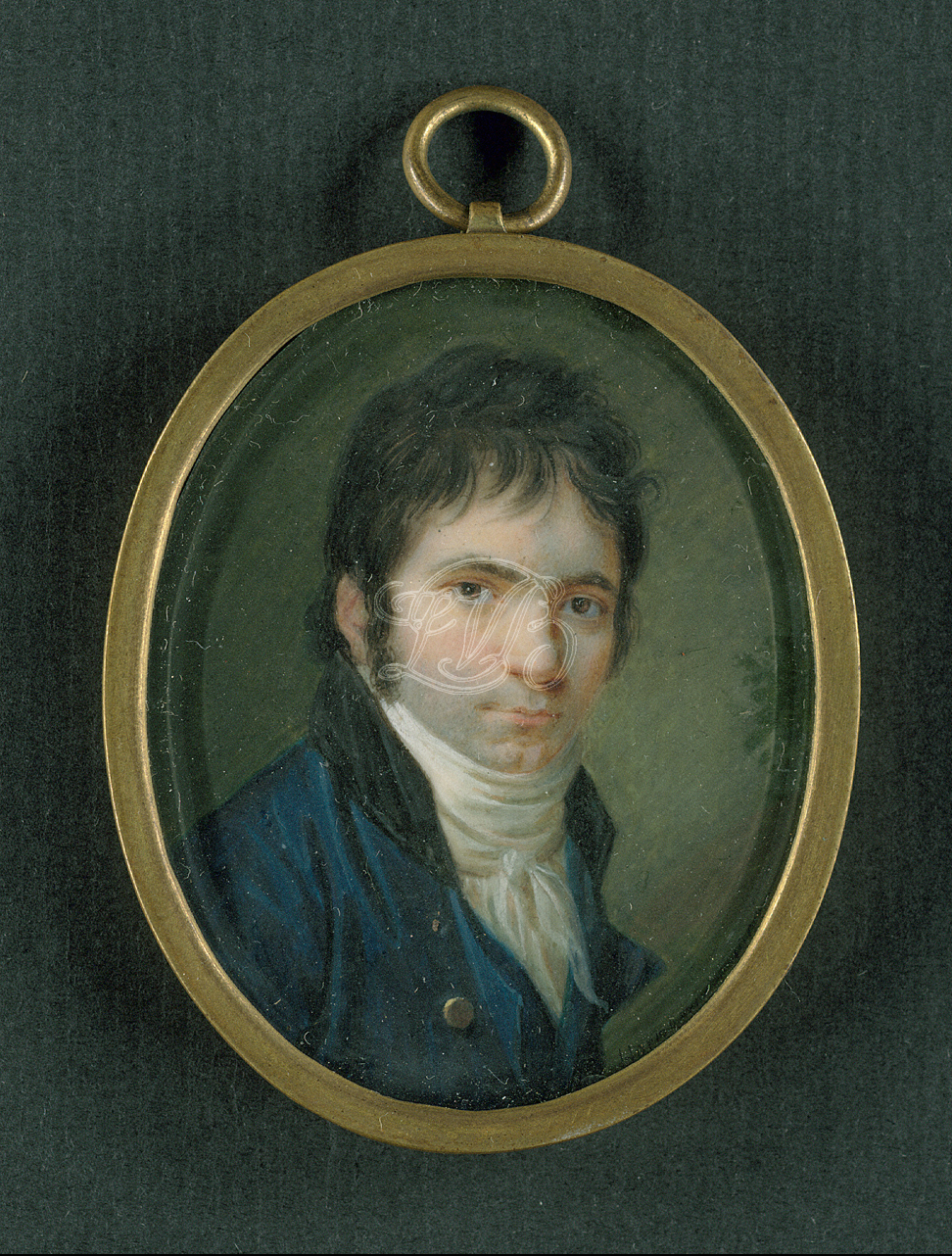
Portrait of Beethoven as a young man by Carl Traugott Riedel and Prometheus Bound by Peter Paul Rubens

15 Variations and fugue on an original theme in E flat major Op.35 ‘Eroica’ for piano (1802, Beethoven aged 31)

Dedication unknown
Duration 25′

Listen

What’s the theme like?

Although this piece is known as the Eroica Variations, the theme is taken from the finale to Beethoven’s music for Die Geschöpfe des Prometheus:

Background and Critical Reception

This substantial set of variations became known as the Eroica Variations because Beethoven used the tune in the finale of his third symphony, the Eroica.

Angela Hewitt describes the set as his most ‘bravura orientated’ variations, going on to illustrate how, before we even hear the main Eroica theme, Beethoven presents a theme in the bass and proceeds to unwind three variations on it. She notes how the theme and its fifteen variations ‘delight us with their compositional and pianistic fancies’.

Harold Truscott, writing in The Beethoven Companion, has some controversial views on Beethoven’s piano writing, branding it ‘on the borderline between difficulty and awkwardness. This is a quality frequently found in Beethoven’s keyboard writing’, he writes, ‘although no one ever mentions it’. He does, however, concede that ‘the Eroica set is a masterpiece for the most part unique in his work’.

Lewis Lockwood labels ‘this great work…the culmination of Beethoven’s early variations sets’. ‘In any case’, he writes, ‘Opus 35 is a milestone in the history of variation. Its introduction dramatically unfolds several elements in order, as if Beethoven, at the keyboard instead of writing in a sketchbook, was sequentially building the thematic material before the very ears of the listener.’

Thoughts

Where the previous set of variations in F major could be described as ‘not your typical set of variations’, this is something else. When you are done listening to the Eroica variations, this is a piece where you are left in no doubt that Beethoven has put his entire heart and soul into writing a piece, and has channelled some extraordinary powers of invention. By the end it is difficult to say exactly how many variations there are, as they seem to fuse into each other.

The introduction is pure drama – and Beethoven’s insistent B flats sound like a knock on the door, as though the theme is waiting to get in. When it does finally arrive the piece is already in full swing, and the mood is already buoyant. The theme and first variation have a spring in their step, the balletic origins laid clear – and as Beethoven gets to work, the dance gets faster.

The second variation is effectively a cadenza, showing off Beethoven’s virtuosity to the full – not just as a performer but as a composer too. His writing is quasi-orchestral, the fourth variation depicting a lively bassoon giving out the variation and strings plucking in the middle ground. Calmer waters are found for the fifth, but soon the textures are full again and the ideas overflowing. The piano writing is remarkably dense and demanding, but thrilling too.

Variation 7, marked Canone all’Ottava, anticipates the fugue but practically stamps on the keyboard at times. What the audience would have made of Beethoven’s bravura and daring is anybody’s guess. Varation 9 picks up a similar theme, where it feels like the B flat has got stuck, while the tenth is like a blast of cold air, disappearing up some odd tonal alleyways. We return to the ballet for Variation 11, the keyboard opens out in the 12th, before the 13th reintroduces the ‘stuck’ B flat in a jarring upper register, in an act both maddening and humorous!

A much-needed respite arrives with Variation 14, where we move to the minor key for a reflective episode. Far from running out of ideas with the ‘final’ variation, Beethoven feels like he has only just got started, and the lead-up to the fugue acquires impressive gravitas. The fugue itself is symphonic, its tune unusually hummable, with a lot of action between the parts.

At the risk of sounding like a cracked record, what a remarkable piece this is. Beethoven’s powers of invention are truly stretched, but the feeling remains that he could have written enough for another half hour of music without flagging. We will see an awful lot more of that invention as his pieces move further and further away from the norm.

Recordings used and Spotify links

Angela Hewitt (Hyperion)
Cécile Ousset
(Eloquence)
Ronald Brautigam
(BIS)
Alfred Brendel
(Philips)
Rudolf Buchbinder
(Teldec)
Glenn Gould
(Sony)

Some very impressive recordings here, not least the newest – a dazzling but extremely musical account from Hewitt, whose musicality always comes before the virtuosity. Emil Gilels is masterly from the commanding first chord and thoughtful theme. Cécile Ousset conveys the scope of the piece immediately, inhabiting the drama of the introduction, and having a lot of fun with the dance variations.

The Spotify playlist below includes all but one of the versions listed above – with the opportunity to hear a clip from Angela Hewitt’s version on the Hyperion website

Also written in 1802 Samuel Wesley Symphony in B flat major

Next up Symphony no.2 in D major Op.36

On record – Villa-Lobos: Choral Transcriptions (São Paulo Symphony Choir / Valentina Peleggi) (Naxos)

villa-lobos

Villa-Lobos transcriptions of:

Bach Prelude and Fugue no.8 in E flat minor / D sharp minor BWV853, Prelude no.14 in F sharp minor BWV883; Fugues – no.1 in C major, BWV846; no.5 in D major, BWV874; no.21 in B flat major, BWV866; no. 22 in B flat minor BWV867
Beethoven Adagio cantabile Op.13/2
Chopin Waltz no.7 in C sharp minor Op.64/2
Massenet Élégie Op.10/5
Mendelssohn Lieder ohne Worte in E major Op.30/3
Rachmaninov Prelude in C sharp minor Op.3/2
Schubert Ständchen D957/3
Schumann Träumerei Op.15/7
Villa-Lobos Bachianas Brasileiras no.9 W449

São Paulo Symphony Choir / Valentina Peleggi

Naxos 8.574286 [58’32”] English and Portuguese translations included

Producer Ulrich Schneider
Engineers Marcio Jesus Torres, Camilla Braga Marciano, Fabio Myiahara

Recorded: 5-10 August 2019 at Sala São Paulo, Brazil

Written by Richard Whitehouse

What’s the story?

Naxos’s coverage of the music of Heitor Villa-Lobos (part of this label’s series The Music of Brazil) continues with a selection of mainly transcriptions from the piano repertoire that the composer undertook during the mid-1930s as part of his extensive educational commitments.

What’s the music like?

Almost all these arrangements emerged in the period 1932-5, when Villa-Lobos took on the challenge of overhauling music education in the public school system of Rio de Janeiro. This involved the creation, virtually from scratch, of a choral pedagogy that he drew from across the spectrum of Baroque, Classical and Romantic music. It is a measure of his prowess that such transformation from mostly piano sources was accomplished with unfailing rigour and an idiomatic quality, so the fame of the originals is almost the only clue to their provenance.

From the soulful strains of among the most mellifluous from Mendelssohn’s Songs without Words, the programme then continues with the Eighth Prelude and Fugue from the first book of Bach’s The Well-Tempered Clavier – the former piece summoning a plangently rhetorical response which finds pertinent contrast with the latter piece’s methodical and intricate build-up to a culmination of sombre eloquence. The arrangement of Dreaming from Schumann’s Scenes from Childhood fully conveys its wistful pathos, as does that of the First Fugue from Bach’s WTC the original’s cool elegance. Similarly, the last of Schubert’s Serenade settings loses little of this song’s plaintiveness, and the Twenty-First Fugue from Bach’s WTC takes on unexpected jauntiness in what proves one of Villa-Lobos’s most inspiriting re-creations.

Chopin’s Waltzes might be considered unsuited to the vocal medium, yet the C sharp minor responds ably to such elaboration, as too the ruminative calm of the Twenty-Second Prelude from Bach’s WTC. Rachmaninov might have thought better of his Prelude in C sharp minor had he encountered this uninhibitedly dramatic realization, with basses providing the baleful anchorage, in contrast to the yearning aura drawn from the Fourteenth Prelude of the second book from Bach’s WTC. Massenet’s Elegy exceeds the original song for bittersweet poise, a foil to the serenity of the Fifth Fugue from Bach’s WTC. The indelible main melody from the Adagio of Beethoven’s Pathétique segues ideally into the Ninth Bachianas Brasileiras, with Villa-Lobos’s choral incarnation rather more atmospheric and evocative than that for strings.

Does it all work?

Almost entirely and due in no small part to the excellence of the São Paulo Symphonic Choir with its Italian conductor Valentina Peleggi. Lasting just under 60 minutes, the selection feels varied yet also cohesive enough to be enjoyed as a continuous programme, while enterprising choirs from both sides of the Atlantic ought to find much here to enrich their existing rosters. Inclusion of Villa-Lobos’s own music at the close is a reminder its technical demands should never be taken for granted, but here too the SPSC rises to the challenge with unstinting verve.

Is it recommended?

It is. The acoustic is just a little reverberant at times yet without detriment to the clarity of the choral writing, with informative annotations from Manoel Corrêa do Lago. Listeners should also investigate a recent Naxos release of Villa-Lobos’s first three violin sonatas (8.574310).

Listen

Buy

You can discover more about this release at the Naxos website, and you can also purchase the recording here. You can read more about conductor Valentina Peleggi here

Listening to Beethoven #186 – 6 Variations on an original theme in F major Op.34

Beethoven-op34

Beethoven: Bust en face in oval – ivory miniature, 1802 by Christian Hornemann, courtesy of Beethoven-Haus, Bonn

6 Variations on an original theme in F major Op.34 for piano (1802, Beethoven aged 31)

Dedication unknown
Duration 15′

Listen

What’s the theme like?

The theme is Beethoven’s own, unusually – and is a slow, stately number with an expansive chord in the middle.

Background and Critical Reception

Beethoven’s stay in the village of Heiligenstadt was a turning point in his life. The principal reason for this was the onset of his deafness, and he used the change of location as a time to come to terms with that, hence the Heiligenstadt Testament referred to previously.

Yet his increasingly original approaches to composition were there for all to see, not least in this set of variations from 1802. For the first time in a long while he did not use another composer’s music for the theme, writing one himself – and he proceeded to turn it into a number of very different variations, each one of the six in a different key.

Angela Hewitt has recently recorded the work for Hyperion, and writes a telling quote from the composer. ‘Usually I have to wait for other people to tell me when I have new ideas, because I never know this myself. But this time – I myself can assure you that in both these works the manner is quite new for me.’

The originality is also noted by Harold Truscott, writing about the piano music in The Beethoven Companion. ‘The whole outlook is utterly different from that of any first-period work’, he writes. ‘The Adagio theme has the luxurious sprawl of so many of his first-period slow movements – on the surface; in fact it is as tight as a drum, and there is not a note that does not contribute to the basic theme and harmonic texture essential for the variations.’

Hewitt identifies the penultimate variation as a key component. ‘What really makes this work is…a funeral march in C minor (foreshadowing his Eroica symphony). Nothing could be further from the mood of the original theme.’ She also points out how the sixth and ‘final’ variation actually contains a further two ‘bonus’ variations.

Thoughts

This is not your typical set of Beethoven variations. Right from the start it is clear something will be different, from the expansive theme that stresses the home key of F major – but presents some lavish, added-note chords as it does so. Beethoven then leaves said home key behind as he embarks on a harmonic and melodic adventure, having fun but preserving the musicality.

The appearance of D major for the first variation is a surprise, employing a very similar tactic to the fourth bagatelle of the Op.33 set he was working on at almost the same time. The B flat second variation feels like a piece of early Schumann, a rustic march-like affair, while the third in G major is an airy aside, operating in much longer melodic units.

The fourth variation is a bit more playful, its roots in the dance, while the fifth probes deeper, as Hewitt identifies, with raw emotion and full, red-blooded chords as punctuation. The sixth variation turns out to be a remarkable section showing Beethoven’s fearsome powers of invention. Lasting one third of the work, it starts with a long build-up on a ‘C’ chord before playfully throwing the theme around back in the ‘home’ key. This leads to a section of trills, like an elaborate cadenza in a piano concerto, before a relatively calm, measured finish.

Full of invention and unpredictability, this is without doubt one of Beethoven’s finest variation sets to date – and yet it is still not well known! Something to put right…

Recordings used and Spotify links

Angela Hewitt (Hyperion)
Cécile Ousset
(Eloquence)
Ronald Brautigam
(BIS)
Alfred Brendel
(Philips)
Rudolf Buchbinder
(Teldec)
Glenn Gould
(Sony)

The Spotify playlist below includes all but one of the versions listed above – with the opportunity to hear a clip from Angela Hewitt’s version on the Hyperion website

There are some terrific versions of this piece, led by Angela Hewitt’s new recording for Hyperion, which shows just how much she loves the work with some wonderful characterisations. Cécile Ousset is also outstanding in her flowing account, as is Rudolf Buchbinder, who contributes a steely funeral march. Ronald Brautigam has a great deal of bravura and punch in his account on the fortepiano.

Also written in 1802 Clementi Piano Sonata in G major Op.40/1

Next up 15 Variations on an Original Theme in E flat major Op.35 ‘Eroica’

Listening to Beethoven #185 – Piano Sonata no.18 in E flat major Op.31/3

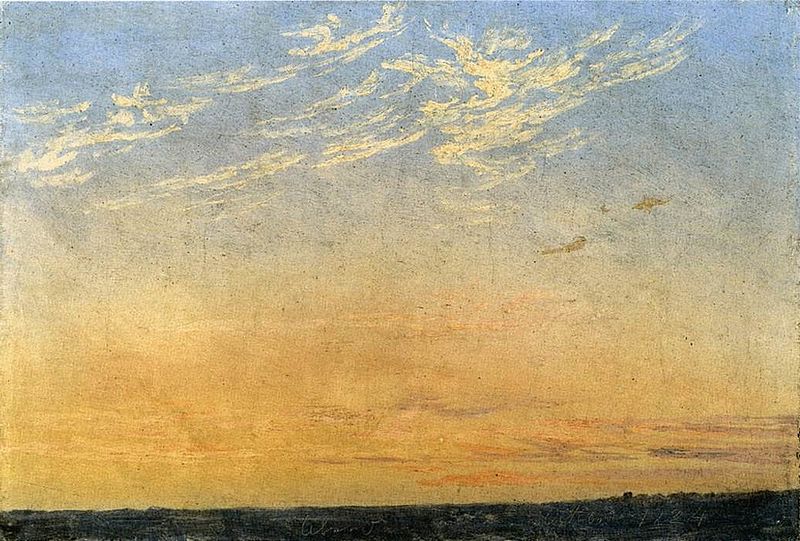
Evening by Caspar David Friedrich (1824)

Piano Sonata no.18 in E flat major Op.31/3 for piano (1802, Beethoven aged 31)

1. Allegro
2. Scherzetto: Allegretto vivace

3. Menuetto: Moderato e grazioso
4. Presto con fuoco

Dedication unknown
Duration 23′

Listen

written by Ben Hogwood

Background and Critical Reception

The third of Beethoven’s Op.31 trilogy is in four movements – the last of his piano sonatas to be structured in this way. It returns to happier climes after the darkness of The Tempest, but does so in wholly original ways.

Critics are united in their praise for this work, with Jan Swafford taking up the story. ‘Beethoven begins Op.31 no.3 in E flat with a harmony so strange that it would have earned him more cries of bizarre from critics if it did not commence a work of surpassing warmth, wit and winsomeness. The beginning is an invitation, like a hand extended in friendship or love.’ The importance of positive feeling is stressed. ‘Following the scherzo, most unexpectedly, comes a graceful and lyrical minuet – he wanted no slow movement to trouble the warm weather of this sonata. For conclusion, a tarantella marked Presto con fuoco, with the fire appropriate to that old whirling dance in which, once upon a time, you hoped to survive the bite of the tarantula by dancing to exhaustion.’

For Sir András Schiff, ‘the third sonata, in E flat major, is probably the hardest one to paraphrase in words: on the one hand it seems tender, entreating and pleading, with a lyrical basic mood strongly in evidence; and on the other hand, in the scherzo and finale it maintains a high spirited and urgent sense of motion.’

The nature of the finale earned the sonata a nickname of The Hunt in some quarters – and many admirers, including Angela Hewitt, who found that ‘Beethoven is in his element, for sure’.

Thoughts

Op.31/3 starts with a gentle question; a chord that is the musical equivalent of a bird unexpectedly landing on a small branch. It is the most unusual beginning to a sonata yet, and opens up a beautifully paced story, Beethoven’s invention bubbling up and down the keyboard. The chord itself is the sort you could easily play over and over again on the piano, creating an oasis of calm and positivity.

After this fascinating and elusive first movement, Beethoven has fun with the martial rhythms of the second. Back in A flat major, this is far removed from the stillness of the Pathétique slow movement, with the composer intent on making his audience smile and jump with the suddenly loud interjections. As a complement, a softer side in the form of a charming minuet, flowing nicely but with just a touch of shade in the form of some unusual harmonies – Beethoven’s second theme has a slight shiver running through it.

The last movement is a canter – as Angela Hewitt says, a bit fast for a hunt, but with a galloping gait. Beethoven builds up terrific momentum here, and some of the bigger chords would surely have been stretching the pianos of the day. The good feeling is irrepressible, in complete contrast to the end of the Tempest, and the sonata finishes with a winning flourish. Beethoven’s strength of feeling wins the day.

Recordings used and Spotify links

Emil Gilels (Deutsche Grammophon)
Alfred Brendel (Philips)
András Schiff (ECM)
Angela Hewitt (Hyperion)
Paul Badura-Skoda (Arcana)
Stephen Kovacevich (EMI)
Igor Levit (Sony Classical)
Claudio Arrau (Philips)
Daniel Barenboim (Deutsche Grammophon)

Some wonderful recordings to savour here – with Sir András Schiff, Stephen Kovacevich and Alfred Brendel particularly enjoyable. Yet the most enjoyable guide, and a regular late night companion for this listener, is Emil Gilels, who gets a perfect balance between the delicacy and determined optimism at the heart of this work.

You can hear clips of Hewitt’s recording at the Hyperion website

You can chart the Arcana Beethoven playlist as it grows, with one recommended version of each piece we listen to. Catch up here!

Also written in 1802 Hummel Piano Quintet in E flat major Op.87

Next up 6 Variations in F major Op.34

Listening to Beethoven #184 – Piano Sonata no.17 in D minor Op.31/2 ‘The Tempest’

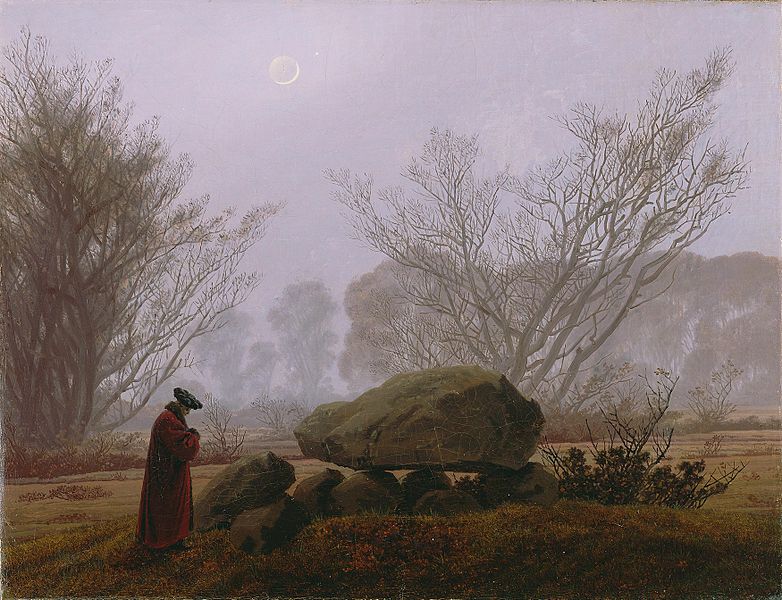
Walk at Dusk (Man Contemplating a Megalith), possibly a self-portrait by Caspar David Friedrich (1837-40)

Piano Sonata no.17 in D minor Op.31/2 ‘The Tempest’ for piano (1802, Beethoven aged 31)

1. Largo – Allegro
2. Adagio
3. Allegretto

Dedication unknown
Duration 23′

Listen

written by Ben Hogwood

Background and Critical Reception

As we have previously considered, the Op.31 sonatas were composed in the year of Beethoven’s Heiligenstadt Testament, written on 6 October 1802. In this landmark letter to his brothers, which was left unsent, he revealed the full torment of his encroaching deafness – and while nobody would guess Beethoven’s fate from the first or last in the Op.31 set of his troubles, they could be left in no doubt by the second.

Its nickname of The Tempest could well be spurious, for it was applied after Anton Schindler recounted a conversation asking the composer what the piece was about, whereupon Beethoven supposedly said, ‘Read Shakespeare’s Tempest!’

Angela Hewitt, in the booklet notes accompanying her Hyperion recordings of the sonatas, gives a heartfelt appraisal of the sonata, noting its quote in the first movement of the aria Es ist vollbracht from J.S. Bach’s St. John Passion, and also the similarity of the last few bars to the rumbling of distant thunder, a quality identified by Beethoven’s friend Carl Czerny.

Hewitt takes in ‘one of Beethoven’s most glorious slow movements’, with a dolce melody that proves ‘heartbreaking in its eloquent simplicity’. In the third movement, ‘the tragic feeling continues right to the end, with the music disappearing into the void.’

Thoughts

This sonata is both dramatic and tragic – the opposite of its predecessor in G major. From the beginning it has a heavy heart, and a tendency to lean on dissonances in a way that somehow anticipates the music of Janáček, still some 120 years away.

The first movement paints a dark picture, with a lot of the action lower down in the piano. Ominous rumblings and angular lines are the order of the day, and as the development of these ideas progresses the music almost stops, enfolded in its own mystery. Suddenly a bolt of lightning thunders down, the listener jolted back to an awful reality.

After the fire and brimstone of the first movement, the second is calmer but not necessarily consoling. The intensity is still present in Beethoven’s thoughts, now presented in a measured way. Again the composer’s use of silence is telling, as is the time given to the lower end of the piano once again.

The finale shifts up towards the higher register but stays resolutely in D minor. It retains the powerful expression of the first two movements, but stays in semiquavers the whole way through, meaning the tension never lets up. Just on the approach to the recap of the main theme the music adopts a rocking motion, before subsiding to a quiet, thoughtful end. There is no major key happiness to be had here.

This must surely be the lowest piano sonata to have been written by 1802, and would have had an enormous impact on early audiences. In the knowledge of Beethoven’s realisation of his deafness it is convenient to link the Tempest sonata to the anguish he must have felt, but it really does feel like a pure expression of pain and loss. The piano sonata as Beethoven would have known it was breaking new grounds.

Recordings used and Spotify links

Emil Gilels (Deutsche Grammophon)
Alfred Brendel (Philips)
András Schiff (ECM)
Angela Hewitt (Hyperion)
Paul Badura-Skoda (Arcana)
Stephen Kovacevich (EMI)
Igor Levit (Sony Classical)
Claudio Arrau (Philips)
Daniel Barenboim (Deutsche Grammophon)

Emil Gilels is the ideal guide for this tragic piece, and his interpretation has a great deal of gravitas. The crunch of the lower register chords comes through on Paul Badura-Skoda’s fortepiano account, while Sir András Schiff conveys plenty of drama too. Angela Hewitt’s heartfelt account is also warmly recommended.

You can hear clips of Hewitt’s recording at the Hyperion website

You can chart the Arcana Beethoven playlist as it grows, with one recommended version of each piece we listen to. Catch up here!

Also written in 1802 Haydn Harmoniemesse

Next up Piano Sonata no.18 in E flat major Op.31/3