Listening to Beethoven #180 – Silvio, amante disperato, WoO 99/12

beethoven-fragment

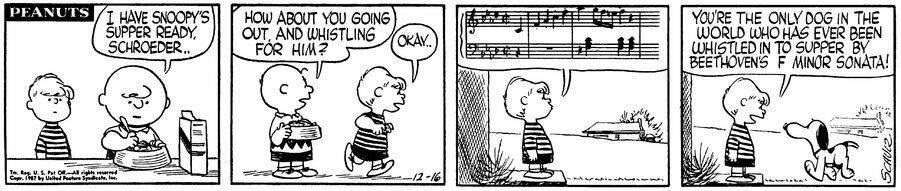
Peanuts comic strip, drawn by Charles M. Schulz (c)PNTS

Silvio, amante disperato WoO 99/120 for soprano, alto, tenor and bass (1801-02, Beethoven aged 31)

Text Metastasio
Duration 10″

Listen

You can hear this fragment on the excellent site The Unheard Beethoven

Background and Critical Reception

This entry is more of a placeholder for a short song (26 bars) written by Beethoven as a product of his studies with Salieri. There seems to be some contention on when it would have been written – the IMSLP list of works, which this study has been using, says 1801-02 while the Unheard Beethoven resource speculates at 1795.

Thoughts

Although there is very little to listen to here, the existence of this piece is well worth noting, as we have had very little music for unaccompanied voices from Beethoven up to this time. From this fragment the mood seems downcast.

Recordings used

None as yet, other than the fragment heard from Unheard Beethoven – this link will download the small file

Also written in 1802 Zeller Sammlung kleiner Balladen und Lieder Z123

Next up 7 Bagatelles Op.33

Listening to Beethoven #179 – Sonata for piano and violin no.8 in G major Op.30/3

op303-koch-ruth-boaz

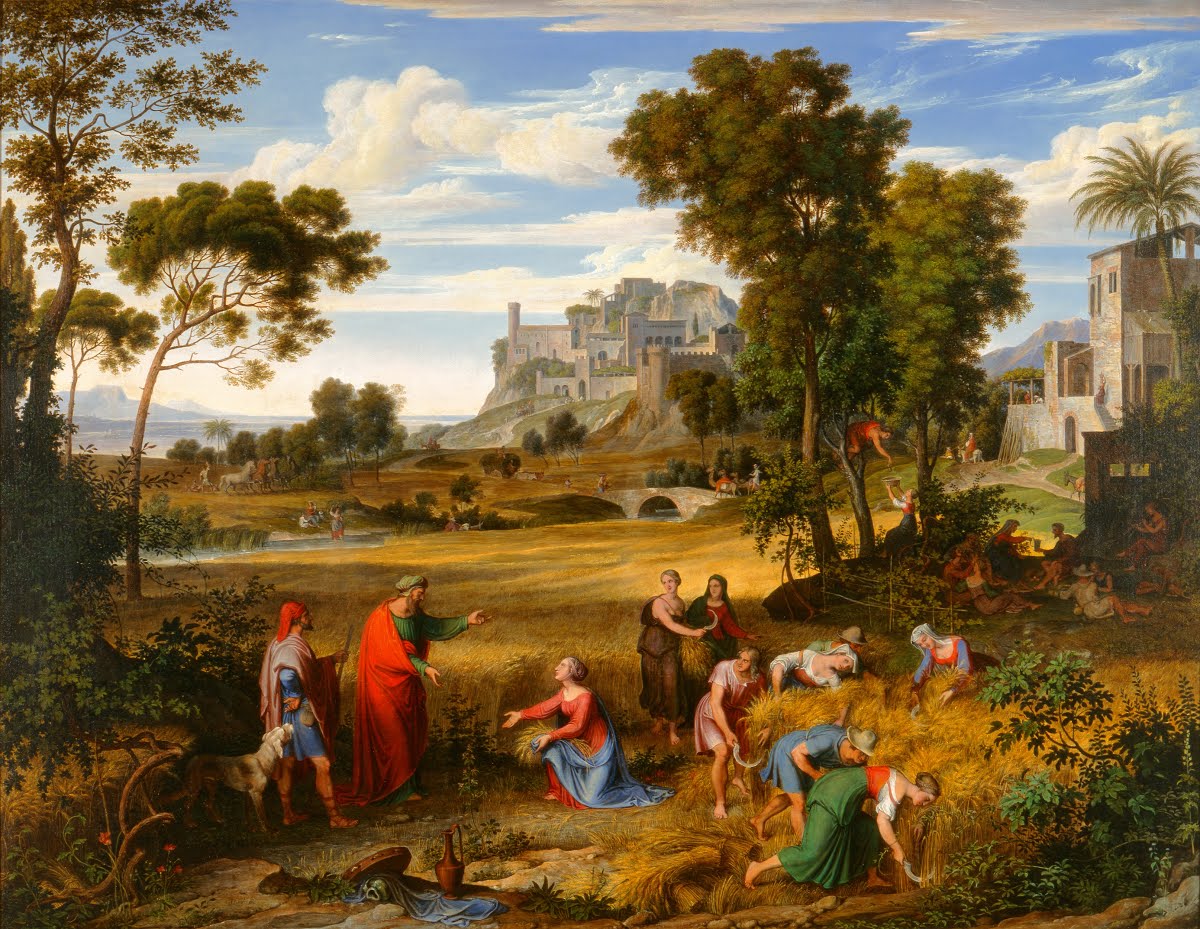
Landscape with Ruth and Boaz (1823/5) by Joseph Anton Koch

Sonata no.8 for piano and violin in G major Op.30/3 (1802, Beethoven aged 31)

1. Allegro assai
2. Tempo di minuetto, ma molto moderato e grazioso
3. Allegro vivace

Dedication Tsar Alexander I
Duration 18′

Listen

by Ben Hogwood

Background and Critical Reception

For the third in his Op.30 set of violin sonatas, Beethoven moves from the turbulence of C minor to the fresh air of G major. This is a piece, in Gerald Abraham’s words, ‘so short and unpretentious that it can be easily undervalued. Yet there is no Beethoven sonata remotely like it, and it is one of his wittiest and most delightful works. Again he seems at once to revitalize the past and to point to the future.’

Abraham singles out the second movement, ‘an exceedingly beautiful slow minuet which, far from being old-fashioned…generates the sort of expressive warmth we have already found in the slow movement of Op.24 (the Spring sonata). Jan Swafford finds a lovely description of the opening of the piece, ‘a swirling unison followed by a lilting (and a touch tipsy) theme, complete with hiccup in the violin. The rondo of the G major is one of the most whimsical finales he ever wrote, its theme a spinning folk tune over a bagpipe drone, starting a brilliant and smile-inducing movement unlike anything else in his work. Call it Haydnesque wit and folksiness gone deliriously over the top.’

Thoughts

This is a fun piece and, as the commentators above have noted, a compact marvel. Not a note is wasted, from the exuberant beginning, where violin and piano toy with a phrase like a cat with a ball of string, to the airy slow movement, which has the air of a Bach sicilienne in its beautiful simplicity. Here the instruments finish each other’s sentences in an intimate setting.

Beethoven packs his faster music with good melodies, many of them derived from the opening mood. The second movement has a softer side but is warm with it, though a central section finds Beethoven moving to further and less certain keys and musical language.

The finale is as good as they say, high-spirited and bubbling with energy. It is essentially a jig, the ideas once again passed between the instruments, with bird-like calls from the violin recalling an early Haydn quartet from the Op.33 set, the Bird.

A lovely piece – and a guaranteed mood-lifter.

Recordings used and Spotify playlist

Midori Seiler (violin), Jos van Immerseel (fortepiano) (Zig Zag Classics)
Yehudi Menuhin (violin), Wilhelm Kempff (Deutsche Grammophon)
Josef Suk (violin), Jan Panenka (piano) (Supraphon)
Alina Ibragimova (violin), Cédric Tiberghien (Wigmore Hall Live)
Tasmin Little (violin), Martin Roscoe (piano) (Chandos)
Frank Peter Zimmermann (violin), Martin Helmchen (BIS)
Paul Barritt (violin), James Lisney (piano) (Woodhouse Editions)
Arthur Grumiaux (violin), Clara Haskil (piano) (Philips)
Augustin Dumay (violin), Maria João Pires (piano) (Deutsche Grammophon)

Some very enjoyable recordings here, the approach again falling between the leaner sound of the period-instruments (Midori Seiler and Jos Van Immerseel) and the more overtly romantic approach of Suk and Panenka. Yehudi Menuhin and Wilhelm Kempff have fun, while Dumay and Pires enjoy the work’s exuberance too.

The Spotify playlist below does not contain the Barritt / Lisney version, but does also include a highly powered account by Gidon Kremer and Martha Argerich, recorded for Deutsche Grammophon:

You can chart the Arcana Beethoven playlist as it grows, with one recommended version of each piece we listen to. Catch up here!

Also written in 1802 Samuel Wesley – Symphony in B flat major

Next up 7 Bagatelles Op.33

Listening to Beethoven #178 – Sonata for piano and violin no.7 in C minor Op.30/2

op302-koch-glacier

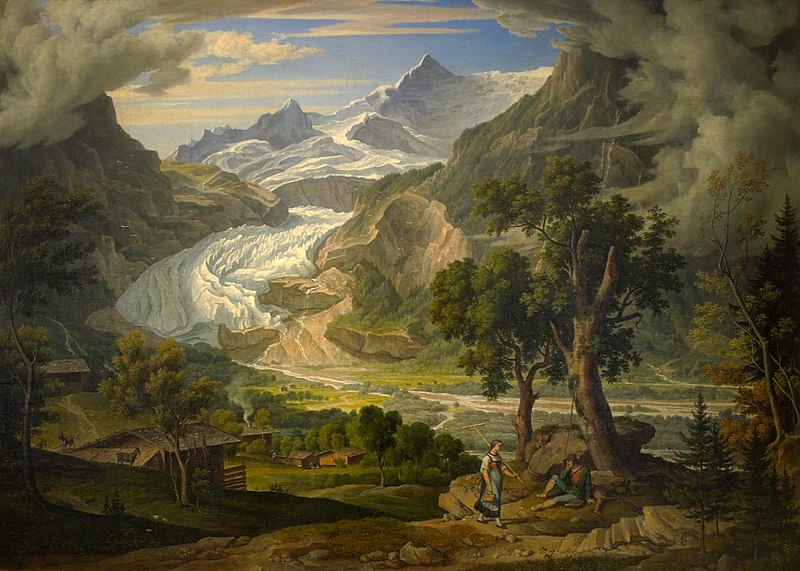
Grindelwald Glacier in the Alps (1823) by Joseph Anton Koch

Sonata no.7 for piano and violin in C minor Op.30/2 (1802, Beethoven aged 31)

1. Allegro con brio
2. Adagio cantabile
3. Scherzo: Allegro
4. Finale: Allegro; Presto

Dedication Tsar Alexander I
Duration 26′

Listen

by Ben Hogwood

Background and Critical Reception

Once again, a group of three instrumental pieces by Beethoven is found to contain a tempestuous piece in C minor, the Op.30 violin sonatas following in the footsteps of Op.1 (piano trios), Op.9 (string trios) and Op.10 (piano sonatas). Gerald Abraham, writing in The Beethoven Companion, says ‘one grows used to finding that the C minor work in a group is the outstanding piece’. He finds the first movement of this work to be ‘one of Beethoven’s grandest first movements to date in any medium’.

Jan Swafford is slightly less affected, declaring the sonata ‘only modestly fiery compared to the storms that that key usually roused in him’. He reserves greatest praise for the slow movement, ‘a touching Adagio cantabile with no lingering hints of the eighteenth-century galant but rather an inward and spiritual atmosphere of wonderful beauty’.

In this piece Beethoven reverts to a four movement structure, with the slow movement second and a scherzo placed third.

Thoughts

Beethoven is certainly a different animal when operating in C minor. Right from the off there is a tension about this piece, and added urgency to the material that follows. As in all his C minor works Beethoven uses silence to intense dramatic effect, the breaks between the notes as important as the notes themselves. There is a big-boned piano part, too, which could dominate due to its sheer weight, even though the violin has an equal share of the melodic material.

The slow movement lies in Beethoven’s familiar ‘slow movement’ key of A flat major, and has a calming introduction to the theme from the piano. The violin follows almost in step, but gradually the dialogue becomes more animated, especially in the central section.

The third movement is playful, a Scherzo choosing C major briefly as its home. The clipped delivery of its theme is shared between the two instruments, and for a while we are in sunnier climes. Yet the closing Allegro takes us back to more serious business, the instruments shadowing each other again before rushing to a close in the coda. Beethoven toys with a lighter ending but at the close he firmly shuts the door with an emphatic gesture.
This is Beethoven’s most dramatic violin sonata so far, the tension bubbling on the surface. Though it may not cut loose in the same way as his other C minor works there is a great deal of inner strength and a keen sense of purpose. Repeated listening only heightens the admiration for a fine piece of work.

Recordings used and Spotify playlist

Midori Seiler (violin), Jos van Immerseel (fortepiano) (Zig Zag Classics)
Yehudi Menuhin (violin), Wilhelm Kempff (Deutsche Grammophon)
Josef Suk (violin), Jan Panenka (piano) (Supraphon)
Alina Ibragimova (violin), Cédric Tiberghien (Wigmore Hall Live)
Tasmin Little (violin), Martin Roscoe (piano) (Chandos)
Frank Peter Zimmermann (violin), Martin Helmchen (BIS)
Paul Barritt (violin), James Lisney (piano) (Woodhouse Editions)
Arthur Grumiaux (violin), Clara Haskil (piano) (Philips)
Augustin Dumay (violin), Maria João Pires (piano) (Deutsche Grammophon)

The drama of this piece is laid at its most bare by Midori Seiler and Jos Van Immerseel, and while some pianists exaggerate the forceful nature of their part, Yehudi Menuhin and Wilhelm Kempff strike the ideal balance. Dumay and Pires offer a very fine digital version too.

The Spotify playlist below does not contain the Barritt / Lisney version, but does also include a highly powered account by Gidon Kremer and Martha Argerich, recorded for Deutsche Grammophon:

You can chart the Arcana Beethoven playlist as it grows, with one recommended version of each piece we listen to. Catch up here!

Also written in 1802 Krommer – Concerto for 2 Clarinets in E flat major Op.35

Next up Sonata no.8 for piano and violin in G major Op.30/3

Listening to Beethoven #177 – Sonata for piano and violin no.6 in A major Op.30/1

op301-koch-monastery

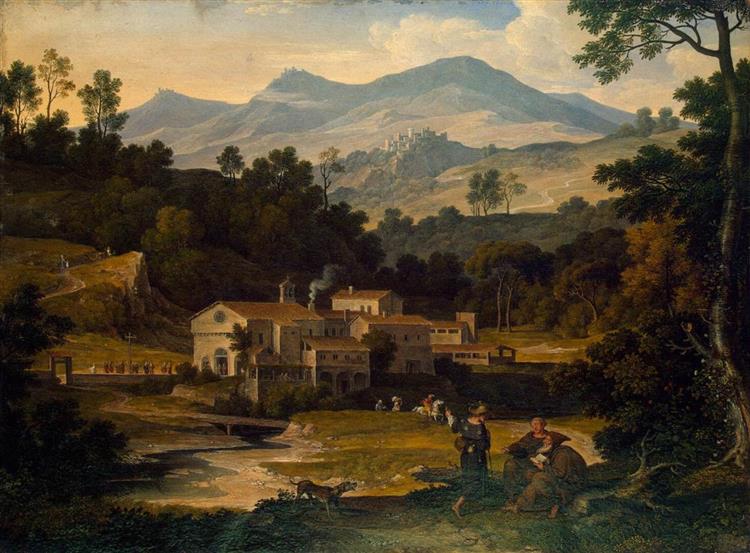
Monastery of San Francesco Di Civitella in the Sabine Mountains (1812) by Joseph Anton Koch

Sonata no.6 for piano and violin in A major Op.30/1 (1802, Beethoven aged 31)

1. Allegro
2. Adagio molto espressivo
3. Allegretto con variazioni

Dedication Tsar Alexander I
Duration 23′

Listen

by Ben Hogwood

Background and Critical Reception

The Op.30 violin sonatas stand at a crossroads in Beethoven’s output, drawing the early works to a close and beginning the more exploratory middle period. There is more evidence for the ‘equalising’ of the instruments, too, the violin on an equal footing with the keyboard instrument, now firmly established a fortepiano.

This set of three works was dedicated to Tsar Alexander I, in the view of Jan Swafford a convenient gesture ‘to a figure famously allied to enlightened ideals…who might also be moved to do something for a composer now and then’.

Commentators tend to gloss over this first work in the set and head for the stormy C minor work, placed second, or the bubbly third work in G major. However Gerald Abraham, writing in The Beethoven Companion, stops to take in the ‘beautiful three-part writing of the opening’ and the ‘violin cantilena of the slow movement’. Bernhard Uske, writing booklet notes for Deutsche Grammophon, exaggerates the violin-piano relationship. ‘The violin’s role is declamatory and evocative, the piano’s is to energize and keep things moving, as the need arises’.

Beethoven’s friend, fellow composer Carl Czerny, found ‘peaceful, tender seriousness’ in the first movement, described the second as ‘almost like a ballad’ and found the theme for the final movement variations ‘more speaking than sentimental’. In using this format Beethoven put aside his original version of the finale, saving it for another violin and piano work – the Kreutzer sonata, completed the following year.

Thoughts

Beethoven may be at a stylistic crossroads, moving on to something more forward-looking, but he certainly has control over his musical destination. This is fluent, attractive music, full of melody and good feeling.

This first of three sonatas does feel a little ‘older’, however – more Mozartian. The piano leads off and both instruments stay close together with elegant lines – though the violin begins to take its chances to sing more obviously. Things take a slightly darker turn in the middle as the music moves towards minor keys, but this proves to be a brief cloud on the horizon as the original material returns.

In the second movement the violin adopts the poise of a singer for a highly expressive solo, Beethoven taking an effective ‘less is more’ approach, lightly textured and relatively carefree.

The theme and variations begin with a simple melody shared by the violin, before a capricious first variation. Often the hands of the piano appear to be operating different instruments, with the left hand in triplets and the right using trills in Variation 3, before perky multiple notes in the fourth variation suggest the composer is exploring more of the violin’s capabilities. The minor key variation repeats into itself before a sprightly coda, Beethoven teasing the listener towards the end as the two instruments spar politely.

Recordings used and Spotify playlist

Midori Seiler (violin), Jos van Immerseel (fortepiano) (Zig Zag Classics)
Yehudi Menuhin (violin), Wilhelm Kempff (Deutsche Grammophon)
Josef Suk (violin), Jan Panenka (piano) (Supraphon)
Alina Ibragimova (violin), Cédric Tiberghien (Wigmore Hall Live)
Tasmin Little (violin), Martin Roscoe (piano) (Chandos)
Frank Peter Zimmermann (violin), Martin Helmchen (BIS)
Paul Barritt (violin), James Lisney (piano) (Woodhouse Editions)
Arthur Grumiaux (violin), Clara Haskil (piano) (Philips)
Augustin Dumay (violin), Maria João Pires (piano) (Deutsche Grammophon)

Dumay and Pires come into their own in the slow movement of this work with a highly expressive performance, even though their tempo choice is on the fast side. As always the period instrument duo of Midori Seiler and Jos van Immerseel are illuminating, while the richer tones of Grumiaux, Suk and Menuhin are complemented by beautifully phrased piano playing from Haskil, Panenka and Kempff respectively. The newest version, from Frank Peter Zimmermann and Martin Helmchen, is among the finest.

The Spotify playlist below does not contain the Barritt / Lisney version, but does also include a highly powered account by Gidon Kremer and Martha Argerich, recorded for Deutsche Grammophon:

You can chart the Arcana Beethoven playlist as it grows, with one recommended version of each piece we listen to. Catch up here!

Also written in 1802 Hummel – Piano Quintet in E flat major Op.87

Next up Sonata no.7 for piano and violin in C minor Op.30/2

Listening to Beethoven #176 – Man strebt, die Flamme zu verhehlen, WoO 120

man-strebt

Peanuts comic strip, drawn by Charles M. Schulz (c)PNTS

Man strebt, die Flamme zu verhehlen WoO 120 for voice and piano (1802, Beethoven aged 30)

Dedication Johanna von Weissenthurn
Text Johanna von Weissenthurn
Duration 2′

Listen

Background and Critical Reception

Beethoven dedicated his song Man Strebt, die Flamme zu Verhehlen (One strives to conceal the flame) to Johanna Franul von Weissenthurn, an actress, poet, and playwright active in Vienna beginning in 1789.

Charles Petzold, in his Beethoven 250 series, sets the song in a good deal of context here, revealing a little more about the elusive Frau Weissenthurn in the process.

Thoughts

Given that this song only lasts just over two minutes, it has an unusually elaborate introduction from the piano – maybe part of Beethoven’s portrait-setting?

When the voice enters it sounds preoccupied, and the piano responds again. Translated, the text talks of how ‘a glance says more than a thousand words…a glance will often unbolt the door of passion long concealed. The voice seems to be portraying the glance, the piano more intent on opening the door with its florid right hand.

Recordings used

Natalie Pérez, Jean-Pierre Armengaud (Warner Classics)

Hermann Prey (baritone), Leonard Hokanson (piano) (Capriccio)

Both versions convey the preoccupied feel of this text.

Also written in 1802 Zeller Sammlung kleiner Balladen und Lieder Z123

Next up Sonata for piano and violin no.6 in A major Op.30/1