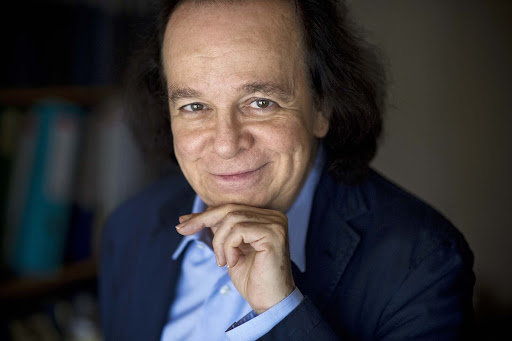
Talking Heads: Beethoven 250 – Cyprien Katsaris

interview by Ben Hogwood

Celebrated pianist Cyprien Katsaris is on the phone to Arcana from Paris. We are to talk about the music of Beethoven, which he has celebrated with the release of a fascinating new box set, exploring a number of different corners of the composer’s piano output. Not for him a disc of sonatas – this includes some of Beethoven’s earliest and latest works, plus familiar utterances in unexpected guises, for instance Saint-Saëns’ and Musorgsky in arrangements of movements from the string quartets.

Cyprien is an extremely generous interviewee, and our chat is punctuated by musical examples given on the piano of his Paris apartment. He is also incredibly good-humoured and engaging. We begin the interview by discussing his first experiences of Beethoven’s music, which on the way reveal important aspects of his upbringing.

“We used to live in French Cameroon in the 1950s”, he says, “and I was raised there because my family emigrated from Cyprus. My parents were among the few people who had an LP collection, and I remember very well my first Beethoven listening was the Pastoral symphony and the Ninth, because they had those LPs. This could explain why I went into recording the transcriptions by Liszt of the nine Beethoven symphonies in the 1980s for Teldec, because since I was a kid I loved that music. I was always wondering if it was possible to enjoy this music with my own fingers on the piano, so you can guess the shock when I found out about those transcriptions, which were published by the French publisher Durand.”

He is a natural storyteller who draws some unexpected parallels. “As you might also guess, when you like something and you can’t get it, you want it more. It’s like having a girlfriend who is very beautiful, but when I walk down the street and I see another woman I want her even more because I know that I cannot get her. When I say this to my girlfriend she laughs, you know?! The same thing happened with the Pastoral symphony, and that could be the explanation for my very strong attraction towards transcriptions. I always try in my life to keep a balance in my concert programmes and recordings between normal, standard repertoire and forgotten pieces or transcriptions.”

His contribution to Beethoven’s anniversary is A Chronological Odyssey, a set of six CDs available on his own Piano 21 label. “The idea came to me in April last year, because I was wondering what to do for the 250th anniversary. Doing the 32 sonatas again did not seem like a good idea. There are so many, and I was told there are more than 70 versions. The idea was to do this chronological odyssey, mixing standard repertoire and transcriptions, and I also had a photocopy of the Kreutzer Sonata arranged for piano. I have had that for several years, and received it from a musicologist at the Beethoven-Haus in Bonn. He told me that the second movement was arranged by Carl Czerny. Nobody knows who did the other two movements, maybe Czerny and maybe someone else, and I was wondering if I should record it. That was the perfect combination, and the Spring Sonata too. They sound so nice on the piano. I only found out then that the Mozart and Beethoven sonatas, and the cello sonatas, are not written for violin and piano, but for piano with violin.”

We turn to Beethoven’s output of sonatas for solo piano. “As you know there are not 32 sonatas but 35”, he tells me, “because you have to include the first three ones that Beethoven wrote, known as the Electoral sonatas. I also wanted to include a rarity, the 2 Preludes in all 12 major keys. There is also the small Ritterballet, a commission from Count Waldstein. On the day of the premiere the Count said to the audience that he was the composer! It’s crazy. There is a piano transcription by Beethoven himself.”

Katsaris does also include some well-known works, such as the Moonlight and Appassionata sonatas. “I made a selection of eight sonatas in addition to the youth sonatas, and I tried to be careful about the combination of personal ideas and the information written by Beethoven himself on the score, considering that the pianos now are different to his years. For example, in the last movement of the Appassionata Sonata, it says Allegro ma non troppo, and almost all the big names who recorded or played it played it too fast! This is not what Beethoven wants. Of course it is a temptation to do that, but it’s not what he wrote!” By way of illustration he sings the theme. “These little details are important, in order to respect the wishes of the composer.”

A good deal of detective work has resulted in the unearthing of some unusual arrangements. “I have spent all those years – I’m 69 now – and I have been in libraries, specialist shops of antique scores, and sometimes you are lucky and sometimes not so lucky. Saint-Saëns, by the way, his anniversary is next year. He died in 1921, on 16 December – the exact anniversary of when Beethoven is supposed to have been born. I had invitations for a Beethoven recital in Bonn in May and September, where I was going to play the Symphony no.9 in a two-piano version with my good friend Etsuko Hirose. She lives in Paris, and won the Martha Argerich competition. We were going to play the Symphony no.9 together, and then I have an invitation on 16 December into the Beethoven Haus with several musicians playing a piece each. I hope the confinement t will allow us to do this. Saint-Saëns arranged for piano three movements from string quartets, and Musorgsky two movements from the last quartet, Op.135. It’s quite fascinating, and also the Wagner transcription of the Symphony no.9. It’s not as good as the Liszt version, but Wagner discovered the music of Beethoven when he was 18 years old, and he claimed that Beethoven and Shakespeare were visiting him in his dreams. He copied the Fifth and Ninth symphonies entirely, and transcribed the Fifth, so I wanted to include that transcription. It also allowed me to cover all the scores in my collection. Some of them I was not even aware of!”

There were more arrangements to come. “I found out about Louis Winkler, who made these great transcriptions of the Spring Sonata and some other pieces, and as I explained in the booklet, he did a lot and transcribed so many things! There was also Franz Kullak who transcribed the last movement of the Violin Concerto. It’s all very fascinating, and the idea was to have a chronological order from the very first transcription when Beethoven was 11 or 12 years old, up to the very last one. I didn’t even know that Beethoven wrote the short canons which he used to call a musical joke, which is very interesting and funny!”

He recounts his thoughts on Beethoven’s first work. “The very first piece is based on a march by Dressler. They didn’t find out where this march comes from, and I remember a German musicologist told me 25 years or so ago in Berlin that we pianists only play 2% of everything which has been published for the piano in the 19th century. Anyway, this piece is variations by a kid, and it could be considered in the beginning a little bit boring. I decided to change the tempi of the variations to make it a little bit more interesting, but this is not of course the only way to perform this piece. You can stay in the same tempo, like the theme. My argument is that when you consider Beethoven was a great improviser, like Mozart, Chopin, Bach or Liszt, the problem of composing music is that you have just one version put down in writing. For example, Chopin, when he played the same piece again, would change tempi, dynamics, the notes, even – we found several versions.”

The same applies here. “When you look at Beethoven maybe I am maybe the first pianist who recorded the four versions of that famous theme of the last movement of the Eroica Symphony. He wrote it first as a dance, part of a group of dances for orchestra with piano arrangements, and then he used it again as the last number of his ballet The Creatures of Prometheus. Then he uses it again in the last movement of the Eroica Symphony, and his Eroica Variations Op.35. It shows that sometimes they have these different ideas about a theme. We know he was a great improviser, and from the writings of Carl Czerny that he played quite fast and full of fire. I think that allows some freedom, especially in the Variations, and especially those that could become a little bit boring if you don’t add something a little bit more spicy. Of course Beethoven was a kid, and his teacher probably told him to keep the same tempo, but I think there is a probability that if Beethoven played that piece as an adult he would play it in a different way to when he was under the guidance of that teacher. What a pity we didn’t have recordings earlier!”

Cyprien also includes the Fantasy, published as Op.77 in Beethoven’s output. “What a difficult piece!” he exclaims. “This is a perfect example of what could have been an improvisation of Beethoven, right? It is a very interesting piece, and not often performed unfortunately. I don’t know if that is because it’s difficult. Is it because when a pianist wants to include the music of Beethoven in a program it’s always sonatas, and sometimes variations, and almost nothing else? I found out that some colleagues don’t even know about the existence of this piece. It’s a pity because it’s a great piece, and it’s interesting to have an overview between the first sonata and the last one.”

He has a special place for the last of Beethoven’s 32 sonatas, published as Op.111. “The last sonata is of course this great masterpiece. It’s all written in the booklet to the release, but it is expressing so much of what were the feelings and philosophy of Beethoven. With the Fantasy, you have at the end this strange theme which could be an embryo of the Ninth Symphony and the Ode To Joy theme. The same thing happened with Mozart. We are going to release the complete concertos in a few months, live recordings made in Salzburg, and one theme he used in his Piano Concerto no.8 in C major K246, and this theme he uses again a little bit differently in a later concerto, also in C major, and again in his last C major concerto, no.25. It’s so interesting to find out about all these connections. I remember about 15 years ago I made a CD devoted to the family of Mozart, the father and his son. I recorded one of the three sonatas of Leopold Mozart, which is a strange situation because he was a violinist but has not left any violin pieces! I found in his Piano Sonata in C major that the second movement contains some elements which are obviously used again by Mozart the son when he wrote the divine slow movement of the Piano Concerto no.21. This means that he remembered the slow movement of his father’s sonata.”

Katsaris is on something of a roll. “When I met your former prime minister Tony Blair at a dinner, I went to the piano of my friends and I improvised. First, I played the British national anthem, and then I improvised on the Warsaw Concerto, and Rule Britannia, and I asked him how many times did you meet the Queen in those Tuesday meetings? He could not remember because he did not write it down. But you know that Beethoven wrote variations on God Save The King and Rule Britannia, don’t you? On one of my CDs called Album d’un voyager, I recorded a piece, a set of variations on Rule Britannia composed and published in London something like 200 years ago by a French composer called Latour. He was established in London, and that was in my collection of old scores. Many people were writing fantasies, potpourris and variations on old tunes from Wales, England and Scotland.”

Our time is sadly up – which gives me time for one last question, on how Cyprien has reacted to lockdown conditions. “I am practising continuously”, he says with characteristic enthusiasm, “even without the confinement. I practise every day of the year. Life is too short and I have too many scores to still learn before I pass away! I have decided I will not pass away for several decades more. I practise every day except for the day of the concert. If you have a nice dinner in the evening you will spoil it by having a dinner before, so I always do not play on the day of the concert itself. The confinement here does not concern me at all.”

Beethoven: A Chronological Odyssey is a 6D anthology of the composer played by Cyprien Katsaris, and released by Piano 21. You can listen to the collection on the Spotfy link below, and you can explore purchase options at the Presto website
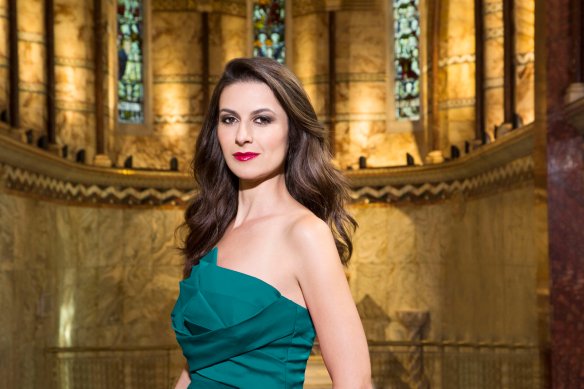
Talking Heads: Beethoven 250 – Chen Reiss

interview by Ben Hogwood

If you ask a classical listener to name their favourite works by Beethoven, it is unlikely that the vocal works will sit towards the top of their list. This is partly due to the invention and inspiration of Beethoven’s instrumental works, but also because the vocal works have been rendered unfashionable, and therefore easy to dismiss, for decades.

While Arcana have been listening to the works of Beethoven it has emerged that this verdict on the vocal works is less than fair. With that in mind it seemed only right to seek out a performer whose love for the vocal works of Beethoven has really come to the fore in this, the composer’s 250th anniversary year. Soprano Chen Reiss has made a number of contributions, headed by a disc of arias for Onyx Classics with the Academy of Ancient Music and Richard Egarr. In the course of our discussion Reiss, born in Israel and now living in the UK, sheds new light on these neglected works.

Our chat finds Reiss on holiday. “I’m on vacation! she says excitedly. “I have two children, and I have been locked down with them in Vienna since March, and we couldn’t go anywhere. Now they have been to school for a bit but not full time, it was an arrangement of three days a week, something like that. Since the end of June they are on vacation completely, and it has been quite a challenge at times, as parents. Luckily I wasn’t working, so I could deal with it, but I’m not used to being a 24-7 mum!”

She responds warmly to my observations on the vocal works heard so far. “I’m very glad to hear you saying that. Beethoven has such a reputation of writing badly for the voice, which I don’t understand. His writing is challenging, that is true, and that may have kept a lot of singers away from his music – but the music is fantastic, you know, as he is a genius after all. Anything that he writes, even if it is not the best in his standards, is much better than many other composers. When I did the research for my CD, it was also a surprise for me how few recordings there are of his vocal music. Everybody is recording the Ninth Symphony and Fidelio, but only these. With the arias that are on my CD, a lot of them are early works, that were not published in Beethoven’s lifetime. After the research that I did with some scholars, I found he approved the pieces to be published, and they just didn’t manage to happen. Each aria has an interesting story behind it. That was the reason why I did this CD, not just because it’s Beethoven year but because of a strong belief that these arias belong in the main repertoire and should be performed as often as Ah! Perfido.”

Her reference is Beethoven’s most popular work for solo voice. “Everybody is singing Ah! Perfido, and I agree that the form and dramatic development of the piece is probably the most complete. It was written later, but the earlier pieces are also excellent, and very interesting. Beethoven was a revolutionary composer, and you have one foot in the classical tradition, maybe Haydn or Mozart, and the other foot is already in the future. Maybe the sound of the early pieces reminds us more of Haydn – not Salieri, in my opinion – and even though he wrote them before he started with Haydn he knew his music and was very much in the period. We shouldn’t forget that Beethoven wrote those works around 1790, when Haydn was still active. The music of Mozart was also very much known to Beethoven, and so you hear the influence of those masters.”

Her opinion of the pieces, as a singer, has never been in doubt. “I do think they belong in the main repertoire, not only because they are good vocally. Maybe you need to practice them a little more, but then you would practice a Donizetti aria too. Of course you have the Italian masters, where the music sits in the voice much more authentically than Beethoven, because he wasn’t really in my opinion thinking vocally at this point, it was instrumentally. For example, the concept of ‘solfeggio’ in the voice, that is the transfer between the register of the mid voice to the high voice, it didn’t exist with Beethoven! Many times he writes in that particular part of the voice, which is not so comfortable, and this is why one needs to have a clear tone, and not just a dramatic plan but a vocal one too. This is a challenge, but it is the case for the music of Bach too. It’s not like Beethoven is the only one. Bach writes in a very instrumental way, and there are some recitatives that lie in the solfeggio area and are not so comfortable. Beethoven is not the only composer to do it.”

Reiss has done a good deal of background reading. “I found from research that Beethoven did not do it on purpose to upset the singers, not at all. He actually had contact with the singers and constantly spoke with them, and he wanted to get their input and improve his writing for the voice. In my opinion this is also the reason he went to have lessons with Salieri, and we shouldn’t forget that when he took these lessons he was already an established composer. He felt that to write for the voice was not as natural for him as writing for the piano, which was his instrument. He chose Salieri, who was the master in Vienna at writing for the voice, and I think that although musically there was no comparison with the genius of Beethoven, Salieri had a skill of writing for the voice. That was why Beethoven studied with him.”

When performing Beethoven, Reiss is keenly aware of the role played by her allies. “The other challenge in Beethoven is not so much for the singer but more for the conductor. In many of the pieces he writes for the voice in a very low register, and not very loud, but he would write passages where the orchestra is really loud. Beethoven was relying on the fact that he would have good conductors conducting his music, and that they would know how to balance. His writing is very dramatic, in Ah! Perfido especially, but also in Primo amore.”

She elaborates on the latter piece, an earlier work for soprano and orchestra. “You really need a good conductor for this piece because of the dynamics and the balance. There are a lot of different sections in this aria, and they have very different characteristics, so it is really down to the conductor to create magic and for the orchestra to be very soft and transparent, but also to give the oomph and the drama when needed. We definitely rely on the conductor!”

This approach extends further. “My arguments here also apply to the Missa Solemnis”, she says. “I have spoken with several big conductors, and they have said it is really not an easy piece to conduct, and that it is very challenging because of the balancing. The orchestra is large and there is a quartet of singers, so in order not to cover them you have to really take a delicate approach. When the music is written as forte the orchestra does not have to blast, it has to be relative to the quartet of voices that you have. You really rely on the fact that you have a good conductor to give the right interpretation of what is on the page.”

Would this explain why Beethoven’s vocal works were not so well known; that he had trouble finding the right conductor for them as much as the right singers? “I am not sure what the reason is”, she says honestly. “There is an aria on the CD from the Cantata on the Accession of Emperor Leopold (Fliesse, Wonnezähre, fliesse!) and there is a rumour I read that orchestras of the time did not want to play it because it was unplayable. For an orchestra of today that is no problem, because our technical level is higher than it was 200 years ago. Physically it was a problem, but that became musical too. You need very sensitive musicians to play it, because it is very technically challenging not just for the soprano but for the soloists in the orchestra – the cello and the flute solos are not easy. Beethoven was a challenging composer, he wanted to push the boundaries as much as he could. The pianists back then found his music challenging, maybe not so much now because if you play Rachmaninov or something then Beethoven is not quite so difficult.”

Reiss expands her thinking to consider other operatic composers. “I do agree that Verdi or Puccini wrote for the voice in a more confident way, but I’m now learning Zaïde, the early Mozart opera, and I’m finding similar challenges to Beethoven. There are long phrases where you need impeccable breath control, which in my opinion is not easier for the voice. That is no reason not to sing it, though! Primo amore shows what I love about Beethoven, in that he was very human. He writes about very fundamental feelings and he writes about them with his heart on his sleeve. It is romantic but not pathetic, it is substantial and filled with feeling. Today they would probably give him Prozac, because he was someone with very grand feelings! Those feelings are very true, there is no melodrama. I don’t want to insult other composers, but there are others who were melodramatic. Some of the French and Italian composers wrote on a very grand scale.”

The accompanying interview for Chen’s Beethoven release features not just conductor Richard Egarr’s clear enjoyment of the music, but also Reiss talking about how she really identified with how Beethoven was feeling, and that he felt he was reflecting what a lot of us feel in relationships and romantic situations in his music. “He was misfortunate with love”, she says, “but then who could stand up to his standards? At first, I chose the arias that I thought were good for my voice and also good dramatically. I find the orchestras love them too, as it gives them the possibility to shine. If you think of a composer like Donizetti, it’s not as challenging for the orchestra, and I think they like challenges. There is so much character in the writing for the orchestra in these pieces, not so much ‘oom-pah oom-pah’ as there is in Salieri or a lot of the Italian composers of that time. Here the orchestral players are just as important as the singer. I really enjoyed working with Richard and the Academy of Ancient Music, because they took this role and played with real gusto and passion.”

On the Odradek release, Chen sings the substantial aria Tremate, empi, tremate (Tremble, guilty ones, tremble) with tenor Paul Armin Edelmann and bass Jan Petryka. “My ambition was try to record or sing the Beethoven music that is suitable for my voice”, she explains. “In July this summer I was supposed to do the Missa Solemnis, which I have never performed before. Unfortunately it was cancelled because of COVID, but I did learn the piece. Other than that I managed to do everything. I sang in Lenore, which was marvellous, and then Fidelio itself, and these arias. The only thing I didn’t do was this trio, so I’m very glad that we found the possibility to record it in another city. It was a coincidence that I met Thomas Rösner, the conductor. It was in Liege where I was singing, two years ago, and he said, ‘I’m doing a disc with the Piano Concerto arrangement of the Violin Concerto, do you think we could do something?’ We thought we could do the Mozart aria Ch’io mi scordi di te?, and I said, ‘Listen, there is a Beethoven trio I would really like to record’. When I did this Tremate it reminded me a little of the trio in Fidelio with the Father and the two lovers. Marzelline is thinking that Fidelio is a man, and she’s in love with him, and the father basically gives his blessing. It is of course a different story altogether, but the ending is very dramatic. I think it’s a very good piece to perform as an encore in a concert, wouldn’t you agree?”

Given the way the voices combine, and the dramatic third part, she has a strong point. “Yes. I think it is very well conducted, with the middle part which has these beautiful long lines. I think it is an early piece, and of course Beethoven has these dramatic parts, which come later, but he also has a very good sense of lyricism and melodic beauty, a pureness which reminds me very much of Mozart and Haydn. You see it in these early works that he was more classical, and then he became much more dramatic. The third version of Fidelio, which we play today, is much more dramatic than the first two versions because I think the magic aspect was less interesting for him ten years later. Then he was more interested in the political aspect of the scene. He steps away from a beautiful sound to make music in the service of the emotion, rather than in the service of just beauty, which we have more with Donizetti.”

She considers once again the operatic works of Beethoven’s contemporaries. “Of course Mozart also wrote operas with political aspects. It’s really interesting with Zaïde, which I’m learning at the moment. It is an early piece, but he presents the conflict between East and West, the Christians and the Muslims. It’s amazing how nothing has changed in the tension between the regions, and between people who come from different cultures and mentalities. We have not really changed. Of course, today we are much more politically correct. Back then the European culture, manners and way of life was seen as superior to the Turks, for example, or the Muslims. Mozart was always talking about these things politically, but I think the music always has to sound beautiful and eloquent. In Beethoven the drama and the emotion are very much in the foreground.”

Reiss’s Immortal Beloved program finishes with perhaps Beethoven’s best-known solo vocal piece. “Ah, Perfido! is a real joy to sing”, she says passionately. “What is so great about these pieces is that lighter voices can sing them. It depends what approach you take – do you take the Baroque approach, the Classical approach, or do you take the more Romantic, Wagnerian approach? Are you presenting where he is coming from, or where he is going to? In my case, doing this CD, I was presenting with where he was coming from. I started with an early piece from 1791, and I finished with the later Ah! Perfido. It is about showing his development as a composer for the voice, how he maxed out his way in writing for voices.”

Has Chen recorded many of the songs with piano? “I haven’t done those this year, I have concentrated more on the orchestral pieces. My friends at the opera were struggling with them. I do think that people who claim it is really difficult to sing Beethoven perhaps approach from heavier productions such as Wagner and Verdi. My idea was that if you approach the instrumental, classical / baroque approach – in German we call it ‘schlicht’, which means ‘simple’. The voice production has to be more like you would sing Mozart, and when you approach from that direction it is easier to manage the ‘solfeggio’ and his vocal lines, which are often instrumental. If you sing with a lot of weight on the voice then you might find the songs quite tiring, because they do not always lie in the sweet part of the voice. But, if you approach them with a little less vibrato but still a warm sound – but not heavy – then I think you sing them much more easily.

Given some of the versions heard in our journey through listening to Beethoven’s works, this makes sense. “Or even Schubert”, offers Reiss. “A lot of people who sing Beethoven like Wagner, why not sing like Schubert? After all he was a contemporary, and again Schubert could be sung in a Romantic way. That doesn’t mean you have to sing Beethoven in a Baroque way, as he was a very Romantic composer. If you go in the direction of Schubert it would be much more manageable. I don’t think Beethoven would have expected a Wagner sound, it was not the way they sang in Vienna back then. This is how we often play his symphonies, for example, with a very rich sound, but instruments are different from back then, the piano now is different from how it was back then. The voice is not.”

Outside of the vocal music, what would Reiss class as her favourite Beethoven? She hesitates, laughing a little. “For me, the Piano Concertos. I really love these – number one, four and five. I am a frustrated pianist, and it is an instrument that can express so much. I wish I had the patience when I was seven or eight to practice more!”

Chen Reiss’s Beethoven album Immortal Beloved is out now on Onyx. You can listen to clips and explore purchase options from the Onyx website

Chen Reiss also appears on Voices, an album of works by Beethoven and Mozart under the direction of conductor Thomas Rösner. You can read about it and listen to clips on the Odradek website. Meanwhile the soprano’s own website is here

Listening to Beethoven #97 – Erlkönig


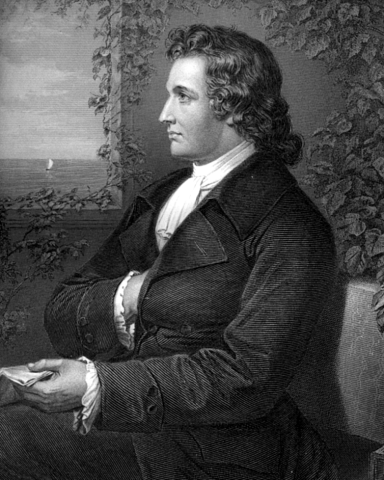
Goethe in c1775

Erlkönig for voice and piano (1794-6, Beethoven aged 25)

Dedication not known
Text Johann Wolfgang von Goethe
Duration 3’30”

Listen

Background and Critical Reception

Those readers who know the songs of Schubert will recognise Erlkönig as one of the composer’s most popular songs, a tumultuous setting of Goethe’s heroic poem. Yet here is a response from Beethoven some twenty years earlier, a fragment completed for publication by Reinhold Becker.

The Unheard Beethoven site helpfully goes into detail on Becker’s amendments and extensions to Beethoven’s work, adding a downloadable score and audio. It also presents the original, unmodified sketch, as written by Beethoven and transcribed by Gustav Nottebohm.

Thoughts

Beethoven’s setting is a pretty dramatic one, a turbulent piano introduction then shadowing the baritone’s bold melody. The key is D minor, which until now we have not heard Beethoven use. It is the ideal vehicle to convey the tragic-heroic text, and the composer keeps a keen air of occasion running throughout. The end is hollow on the part of the singer, who signs off with a whisper.

Recording used and Spotify link

Paul Armin Edelmann (baritone), Bernadette Bartos (piano) (Naxos)

You can compare notes with the Schubert setting below:

You can chart the Arcana Beethoven playlist as it grows, with one recommended version of each piece we listen to. Catch up here!

Also written in 1796 Haydn Saper vorrei se m’ami Hob.XXVa:2

Next up Piano Sonata no.20 in G major Op.49/2

Listening to Beethoven #96 – Wind Quintet in E flat major


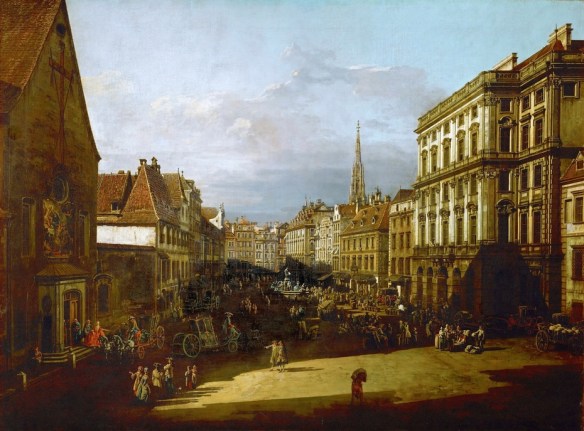
Vienna, Panorama from Palais Kaunitz by Bernardo Bellotto (1759)

Quintet in E flat major Hess 19 for 3 horns, oboe and 2 bassoons (1796, Beethoven aged 25)

1. Allegro
2. Adagio maestoso
3. Minuetto

Dedication unknown
Duration 15′

Listen

Background and Critical Reception

Beethoven’s preoccupation with wind instruments continues with this incomplete quintet, written for the unusual combination of three horns, oboe and bassoon. The unfinished work sits in three movements, the bones of which were seemingly sketched out in 1796 or 1797. The first movement autograph score begins at bar 158, the second movement is complete but only a fragment of the third, a Minuet, remains.

Keith Anderson, writing in the booklet notes for Naxos’ recording of the Quintet, details how the first movement was reconstructed by Leopold Zellner and first played in 1862, while the celebrated Beethoven scholar Willy Hess edited the work for publication. In its surviving form it is top heavy, with a first movement more than double the length of the second and third combined.

Thoughts

We are once again in E flat major, Beethoven’s ‘key of choice’ for wind instruments – and his most-used up until now. The colouring is slightly different here though, the full-bodied horns dominating in a largely mellow texture, until the oboe pokes its head above the parapet. The melodic material is less distinctive than the preceding Sextet but is pleasant all the same.

The slow movement stays in the ‘home’ key and again has lovely sonorities but feels lacking in the craft a finished version from the composer would surely have brought. A perky Minuetto tails off all too soon.

Recording and Spotify link

Jeno Keveházi, János Keveházi, Sándor Berki (horns), Ottó Rácz (oboe), Jozsef Vajda (bassoon)

A nicely balanced account from the Hungarian soloists, recorded by Naxos in Budapest in 1994.

You can chart the Arcana Beethoven playlist as it grows, with one recommended version of each piece we listen to. Catch up here!

Also written in 1796 Boieldieu Duo no.2 in B flat major for harp and piano

Next up Erlkönig

Listening to Beethoven #95 – Sextet in E flat major Op.71


Mehlmarkt in Vienna by Bernardo Bellotto (1758)

Sextet in E flat major Op.71 for 2 clarinet, 2 bassoons and 2 horns (1796, Beethoven aged 25)

1. Adagio – Allegro
2. Adagio
3. Menuetto quasi allegretto
4. Rondo. Allegro

Dedication unknown
Duration 21′

Listen

Background and Critical Reception

Beethoven wrote his Sextet for an established combination of clarinets, bassoons and horns – two of each – in 1796. However it appears not to have been performed until 1805, at a concert for the benefit of his violinist friend Ignaz Schuppanzigh, and another five years elapsed until it was published.

Reviewing the benefit concert, Allgemeine musikalische Zeitung spoke of ‘lively melodies, unconstrained harmonies, and a wealth of new and surprising ideas.’

When handing it over to his publisher, Beethoven is said to have described it as ‘one of my earlier works, written in one night, and one can only say that it is written by an author who has brought out at least some better works’.

The quick composition time explains the fluent writing through four traditional movements, Beethoven thinking in a form that would please Viennese audiences.

Thoughts

The Sextet starts with what feels like a very basic introduction, a slow and simple statement of the notes of the E flat triad. From these less memorable beginnings comes a first movement of charm, rooted in the dance – which the bassoons are intent on reminding us about with a spring in the step of their accompaniment. Burbling clarinets help the inner workings as the piece trips along, the sonority of the ensemble in itself a lovely tonic to the ear. Beethoven gradually develops his material, moving to keys further afield, before reasserting E flat with the jauntier fast theme.

The slow movement is lovely, giving the bassoon an unusual prominence for its songlike first them, echoing the male baritone voice. The Menuetto brings the horns forward, and is more staccato in tone as a result, with a central trio section of lovely colours that is the ideal complement. Finally a Rondo, easy on the ear, makes the most of ensemble teamwork with its busy exchanges.

Recordings used and Spotify links

Academy of St. Martin-in-the-Fields Chamber Ensemble (Philips)
Scottish Chamber Orchestra Winds (Linn)
L’Archibudelli (Sony Classical)
Gerd Seifert, Günter Piesk, Henning Trog, Karl Leister, Manfred Klier, Peter Geisler (Deutsche Grammophon)

Some very fine performances here. The ASMF winds are immaculate, and so too are the Scottish Chamber Orchestra ensemble, who benefit from Linn’s superb recording. L’Archibudelli, playing on period instruments and a slightly lower pitch, have a coarser sound that proves every bit as enjoyable as their modern counterparts. The starry team of soloists from the Berlin Philharmonic on DG are not as consistent with their use of Beethoven’s repeated sections.

The Spotify playlist below collects the recordings used:

You can chart the Arcana Beethoven playlist as it grows, with one recommended version of each piece we listen to. Catch up here!

Also written in 1796 Haydn Trumpet Concerto in E flat major Hob. VIIe/1

Next up Quintet for wind in E flat major H19