In concert – Mark Bebbington, Czech National Symphony Orchestra / Steven Mercurio: Delius, Beethoven, Smetana & Dvořák @ Symphony Hall, Birmingham

Mark Bebbington (piano, below), Czech National Symphony Orchestra / Steven Mercurio

Delius The Walk to the Paradise Garden (1906)
Beethoven Piano Concerto no.5 in E flat Op.73 ‘Emperor’ (1809)
Smetana Má vlast – Vltava (1874)
Dvořák Symphony no.8 in G major Op.88 (1889)

Symphony Hall, Birmingham
Tuesday 21 May 2024

Reviewed by Richard Whitehouse

Although it might not see the number of visiting orchestras that it once did, Symphony Hall still hosts a number of such concerts and the season’s representation ended tonight with this welcome appearance by the Czech National Symphony Orchestra and music director Steven Mercurio.

Opening with DeliusThe Walk to the Paradise Garden (from his opera A Village Romeo and Juliet) found these players evincing real affinity with its powerful if elusive idiom, Mercurio securing a poetic response from the woodwind and no mean ardour during its climactic stages.

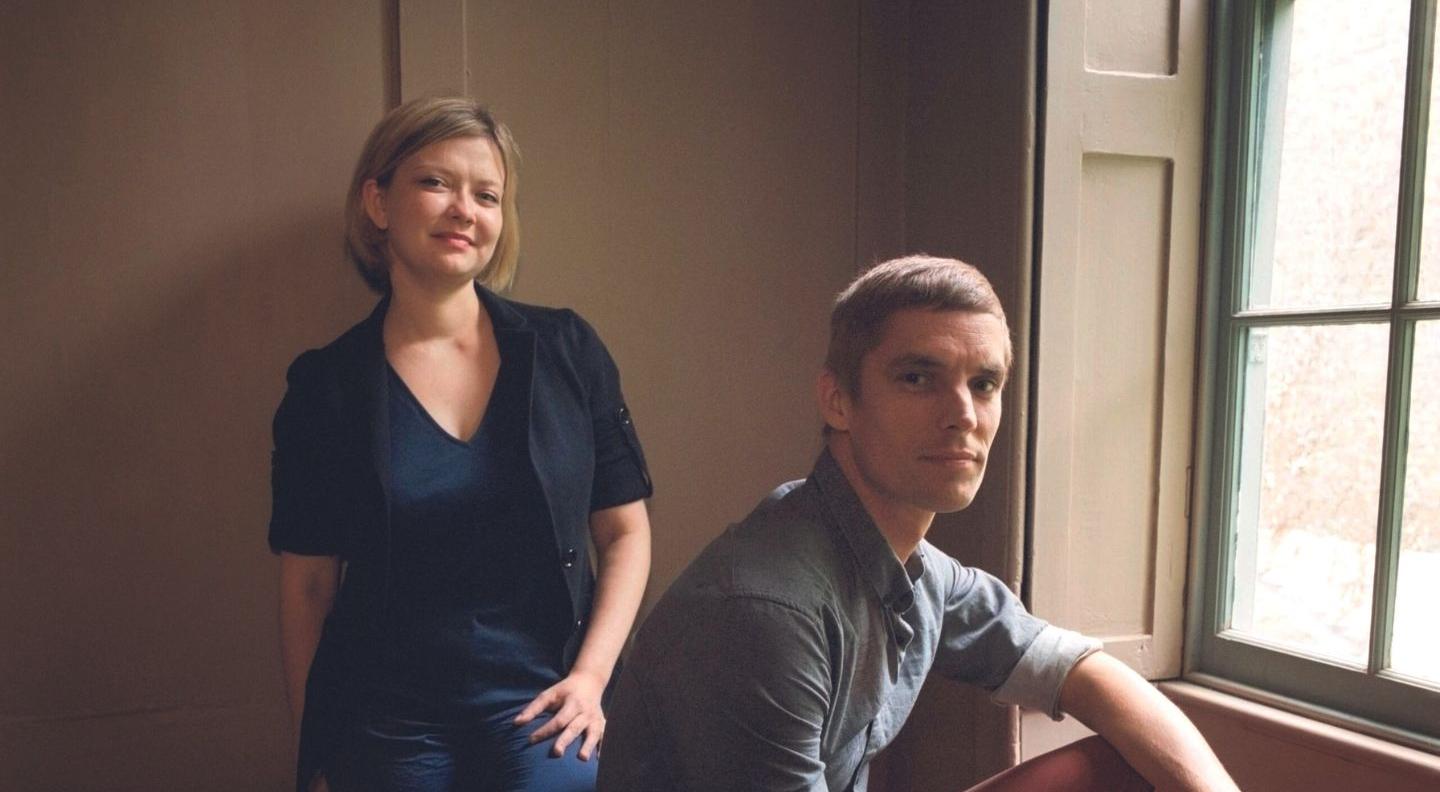
Despite coming from and being based in or around Birmingham for most of his career, Mark Bebbington (above) is less known locally than he might be and his account of Beethoven’s Emperor Concerto confirmed a sure grasp of its expansive formal structure, with his secure and never inflexible technique more than equal to its pianistic demands. After those commanding initial exchanges, the initial Allegro felt just a little under-characterized until hitting its stride in the development; from where this reading proceeded with tangible conviction through to an agile ‘anti-cadenza’ then combative coda. The Adagio’s winsome variations could have had greater inner rapture, yet the eloquence of Bebbington’s response was not in doubt while the hushed transition into the Rondo produced an emotional frisson as carried through this finale overall.

Throughout the movement, Bebbington’s scintillating pianism duly galvanized the CNSO into a forthright response right up to the life-affirming close – after which, he acknowledged the enthusiastic applause with his limpid take on Chopin’s Nocturne (no.20) in C sharp minor.

Following the interval, Czech music not unreasonably took centre-stage. The players might have been surprised by reference to the ‘Moldau’, but Mercurio directed a fluent Vltava with such passages as its wedding dance or traversal of St John’s Rapids nothing if not evocative.

Having been at the helm of the CNSO since March 2019 (in succession to the much-missed Libor Pešek), Mercurio has certainly put his own stamp on its repertoire and presentation. He gave an account of Dvořák’s Eighth Symphony (sometimes referred to as the ‘English’ due to being published by Novello, but actually the most Czech-sounding of his mature symphonies) that, if affording few revelations, underlined its structural innovations as surely as its melodic immediacy. The opening Allegro made a virtue out of eliding the customary formal divisions on route to a resounding peroration, then the Adagio was even finer for the way that its pathos and grandeur were melded into a seamless and methodical yet cumulative design; one where the composer’s Romantic instincts and his Classical inclinations find especially potent accord.

The lilting Allegretto sees Dvořák at its most felicitous – Mercurio aptly taking its boisterous pay-off as a lead-in to the final Allegro, with its variations on an easeful theme for the strings that ingeniously shadow the outline of a sonata design prior to a coda of headlong brilliance.

Conductor and orchestra duly responded with two encores – a rhythmically incisive piece by Iranian-Canadian composer Iman Habibi, then a bossa nova as gave first trumpet and CSNO co-founder Jan Hasenöhrl the spotlight and brought the whole evening gently down to earth.

Click on the names to read more about the Czech National Symphony Orchestra, conductor Steven Mercurio, pianist Mark Bebbington and composer / pianist Iman Habibi

Published post no.2,186 – Wednesday 22 May 2024

In concert – Seong-Jin Cho, London Philharmonic Orchestra / Edward Gardner: Wagner, Beethoven & Tippett

Seong-Jin Cho (piano), London Philharmonic Orchestra / Edward Gardner

Wagner Parsifal – Prelude to Act One (1878)
Beethoven Piano Concerto no.4 in G major Op.58 (1805-6)
Tippett Symphony no. 2 (1956-7)

Symphony Hall, Birmingham
Wednesday 10 April 2024

Reviewed by Richard Whitehouse

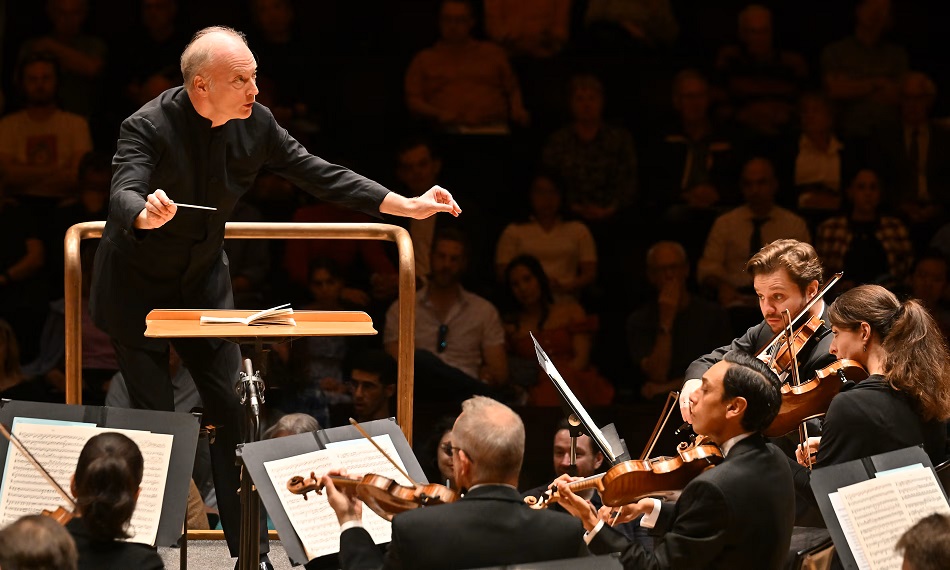
Although the London Philharmonic Orchestra’s ongoing season might not have been among its most enterprising, this evening’s concert confirmed how Edward Gardner is influencing both this orchestra’s programmes and its approach to standard repertoire as well as modern classics.

Beginning with the Prelude from Wagner’s Parsifal is certainly playing for high stakes and, while it afforded no revelations, this performance seemed nothing if not aware of the piece’s searching grandeur where the placing of motifs and those silences between them is crucial to its overall cohesion. A pity, perhaps, that Gardner opted for the ‘concert ending’ in which the close of the first act is laminated onto what went before instead of merely allowing the music to remain in expectancy, but this detracted only slightly from the majesty of what was heard.

Beethoven’s Fourth Piano Concerto then provided a perfect foil, not least in a performance so attentive to the interplay between soloist and orchestra. It helped that Seong-Jin Cho, winner of the Chopin International Competition in 2015, had an innate feeling for that ‘give and take’ necessary in this most integrated of the cycle; his fastidious while never uninvolving pianism heard to advantage over an initial movement where gradual evolution was uppermost, though his take on Beethoven’s earlier and less capricious cadenza was not lacking virtuosity. He and Gardner were at one in conveying the elemental call-and-response of the Andante, a brief but profound entry into a final Rondo whose vivacity was judiciously balanced with a ruminative poise, where lower woodwinds and strings emerged at the fore prior to the exhilarating close.

Some 66 years following its problematic premiere (restarted after a collapse of ensemble just minutes in), Tippett’s Second Symphony now enjoys regular revival though it could hardly be said to play itself. A keen advocate of this composer (witness his acclaimed recording of The Midsummer Marriage), Gardner paced the opening Allegro unerringly – pointing up contrast between its vigorous and yielding themes, while securing the requisite impetus in its lengthy development then a surging energy in its coda. Punctuated by Paul Beniston’s superb trumpet playing, the Adagio was almost as fine even if a slower underlying tempo might have brought even more depth to some of Tippett’s most evocative and spellbinding music; not least during its central build-up in the strings to a climax whose stark curtailing feels more than prescient.

Reservations as such centred on the Presto – undeniably well articulated in terms of rhythmic precision, while lacking the swiftness or velocity for its obsessive interplay and its Dionysiac culmination really to hit home. By contrast, the final Allegro was far from the anti-climax it can seem. Gardner had its measure from the jazzy introduction, via an inventive sequence of variations then sensuously descending melody on strings against shimmering woodwinds, to those cumulative ‘gestures of farewell’ that ended this performance in ecstatic ambivalence.

If not definitive, this was certainly an absorbing and memorable account as will hopefully be made available on the LPO’s own label (the concert having been broadcast live on Radio 3): one that rounded off what proved to be a judiciously planned and finely executed programme.

Click on the link to read more on the current LPO concert season, and on the names for more on pianist Seong-Jin Cho, conductor Edward Gardner and a website devoted to composer Sir Michael Tippett. The LPO’s new recording of The Midsummer Marriage can be found here

Published post no.2,148 – Sunday 14 April 2024

Listening to Beethoven #229 – String Quartet no.9 in C major Op.59/3 ‘Razumovsky’

The Summer, by Caspar David Friedrich (1807)

String Quartet no.9 in C major Op.59/3 ‘Razumovsky’ (1806, Beethoven aged 35)

Dedication Count (later Prince) Andrey Kirillovich Razumovsky
Duration 32’

1.Andante con moto – Allegro vivace
2.Andante con moto quasi allegretto
3.Menuetto: Grazioso
4.Allegro molto

Listen

written by Ben Hogwood

Background and Critical Reception

The third of Beethoven’s ‘Razumovsky’ quartets provides the light to the relative darkness of its predecessor, set in sunny C major in contrast to E minor. Jan Swafford documents it as ‘another of the 1806 works written at a gallop. Like the Fourth Symphony and the Violin Concerto, it is absolutely of a piece and a splendid piece, but more compact in material than its colleagues in the set, with less complex interrelations than the others. It conservative elements, however, do not imply a retreat to the eighteenth century. All the Razumovskys are distinctive pilgrims on Beethoven’s New Path.

The celebrated musicologist Carl Dahlhaus devotes more time to this ‘Razumovsky’ quartet than the other two in his book Beethoven: Approaches to his Music, sharing Ludwig Fincher’s view of the piece ‘as a reflection, from a composer’s point of view, of the social position of the string quartet in the years following 1800.’

For Dahlhaus, “the quartet makes use of symphonic or concertante means as a way of presenting itself to the general public, but at the same time it incorporates those same means in a skilled artistic construction that only connoisseurs can appreciate.” Swafford has the emphatic last word. “For Beethoven’s part, having cleared his throat with op.18, with op.59 he was ready to stand up to his predecessors and models, ready to prove he was their equal on their home ground.”

Thoughts

There is a mysterious introduction to this work that – for this listener at least – harks back to the uncertainty of Mozart’s string quartet in the same key, known as the Dissonance. The harmony is not so otherworldly here but there is still an atmosphere of uncertainty, one set right by the start of the Allegro, even though Beethoven’s genial theme doesn’t immediately set down roots in C major. It does however start off a highly attractive Allegro section, where the quartet enjoys the fulsome writing, while songful and virtuoso exchanges comfortably exist side by side.

The Andante has roots in A minor, C major’s closest ‘relative’, but moves around a little restlessly. There is the spirit of a slow dance but one that never fully settles, as though the first violin is changing partners at irregular intervals. The cello offers a rhythmic base and counterpoint through pizzicato figures.

The Menuetto (not marked as a Scherzo) has a grace one might associate with Haydn, from one of the Op.33 quartets, the melodies freely passing between instruments as the music flows beautifully. This is the ‘chamber’ Beethoven, whereas the finale – following seamlessly without a break – is definitely the ‘public’ Beethoven. Here he is showing off in the best possible way, with a full-blown fugue showing a complete mastery of the form. It generates a terrific energy which must have been a whole new experience for the first audiences. The quartet ends with a flourish, and you can imagine Ignaz Schuppanzigh bowing for all he was worth in the first performance before collapsing in a heap at the end!

Recordings used and Spotify links

Melos Quartet (Wilhelm Melcher and Gerhard Voss (violins), Hermann Voss (viola), Peter Buck (cello) (Deutsche Grammophon)
Borodin String Quartet (Ruben Aharonian, Andrei Abramenkov (violins), Igor Naidin (viola), Valentin Berlinsky (cello) (Chandos)
Takács Quartet (Edward Dusinberre, Károly Schranz (violins), Roger Tapping (viola), Andras Fejér (Decca)
Tokyo String Quartet (Peter Oundjian, Kikuei Ikeda (violins), Kazuhide Isomura (viola), Sadao Harada (cello) (BMG)
Végh Quartet (Sándor Végh, Sándor Zöldy (violins), Georges Janzer (viola) & Paul Szabo (cello) (Valois)
Amadeus String Quartet (Norbert Brainin, Siegmund Nissel (violins), Peter Schidlof (viola), Martin Lovett (cello)

You can chart the Arcana Beethoven playlist as it grows, with one recommended version of each piece we listen to. Catch up here!

Also written in 1806 Hummel 12 Minuets

Next up tbc

Published post no.2,139 – Friday 5 April 2024

Listening to Beethoven #228 – String Quartet no.8 in E minor Op.59/2 ‘Razumovsky’

Dolmen in snow, by Caspar David Friedrich (1807)

String Quartet no.8 in E minor Op.59/2 ‘Razumovsky’ (1806, Beethoven aged 35)

Dedication Count (later Prince) Andrey Kirillovich Razumovsky
Duration 38’

1.Allegro
2.Molto adagio ‘Si tratta questo pezzo con molto di sentimento’
3.Allegretto (second section marked ‘Maggiore – Thème russe’
4.Finale. Presto

Listen

written by Ben Hogwood

    Background and Critical Reception

    Beethoven is thought to have written the three Razumovsky string quartets between April and November 1806 – during which he redefined the parameters of a form shaped by Haydn and Mozart. When you stop to consider he was working on the Fourth Piano Concerto, the Violin Concerto and the Fourth Symphony at the time, it offers some perspective on his capabilities as a composer!

    The first ‘Razumovsky quartet’ in F major drew parallels to the Eroica symphony, but the second is a very different work, set in E minor – a key seen by Lewis Lockwood to be “a bleak and distant key in the tonal system of the period”. As Jan Swafford goes on to note, “The beginning is as curiously fragmentary as the previous quartet’s was curiously sustained. The feeling of the minor mode here is not tragic but mysterious, with startling harmonic jumps.”

    As for the second movement, contemporary composer and friend Carl Czerny recalled Beethoven saying that the E-major slow movement fell into his mind “when contemplating the starry sky and thinking about the music of the spheres”.

    Thoughts

    There is high drama in the first movement of this quartet, the polar opposite to its predecessor. The sweep of the first two chords is unlike anything we have heard in Beethoven’s music for string quartet to date – the first chord with 9 notes, the second with 7. Together they make a gesture whose impact is felt throughout the work, and the follow-up – a kind of stunned statement – also carries thematic importance.

    The first movement moves between this loud dynamic and soft, dramatic responses, the atmosphere tense and febrile. Whenever the intensity grows the chords reappear in different guises, and there are some striking discords as the movement heads to its thoughtful close.

    The slow movement is placed second, a much richer affair than the first quartet – but equally expressive, the four instruments showing off a very full bodied sound at climactic points. Again, slow music for Beethoven has a heavenly air in its stillness – though a central section disturbs this piece with harsh double stopped violin, imparting the atmosphere of the first movement.

    The scherzo is both elegant and serious to begin with, though at times becomes full-bodied and heavy. The trio, on the other hand, is light footed, its perky tune shared between the instruments. The finale’s dotted rhythms provide the backing for a folksy tune on the violin, with the unmistakable feeling of turning for home. Though starting in C major, E minor is the obvious destination, and so it proves with music of terrific power and poise. It’s easy to forget just four instruments are involved!

    This is further evidence of Beethoven’s total reimagining of the string quartet, elevating the medium to a higher and much more ambitious plane. Each quartet is now a fully fledged drama, with a huge dynamic range and more meaningful emotions than we have yet heard from any composer.

    Recordings used and Spotify links

    Melos Quartet (Wilhelm Melcher and Gerhard Voss (violins), Hermann Voss (viola), Peter Buck (cello) (Deutsche Grammophon)
    Borodin String Quartet (Ruben Aharonian, Andrei Abramenkov (violins), Igor Naidin (viola), Valentin Berlinsky (cello) (Chandos)
    Takács Quartet (Edward Dusinberre, Károly Schranz (violins), Roger Tapping (viola), Andras Fejér (Decca)
    Tokyo String Quartet (Peter Oundjian, Kikuei Ikeda (violins), Kazuhide Isomura (viola), Sadao Harada (cello) (BMG)
    Végh Quartet (Sándor Végh, Sándor Zöldy (violins), Georges Janzer (viola) & Paul Szabo (cello) (Valois)
    Amadeus String Quartet (Norbert Brainin, Siegmund Nissel (violins), Peter Schidlof (viola), Martin Lovett (cello)

    The quartets listed above rise to the technical challenge offered by Beethoven, each one capturing the symphonic structure and scope of the piece. The Amadeus Quartet deliver a heartfelt if slightly glossy reading, while those by the Tokyo, Borodin and Melos Quartets are ideally poised and played. The Végh Quartet is a classic recording.

    You can chart the Arcana Beethoven playlist as it grows, with one recommended version of each piece we listen to. Catch up here!

    Also written in 1806 Wölfl Piano Concerto no.5 ‘Grand Concerto Militaire’ Op.43

    Next up String Quartet no.9 in C major Op.59/3 ‘Razumovsky’

    Published post no.2,138 – Thursday 4 April 2024

    Listening to Beethoven #227 – String Quartet no.7 in F major Op.59/1 ‘Razumovsky’

    Sea beach with fisherman (The fisherman), by Caspar David Friedrich (1807)

    String Quartet no.7 in F major Op.59/1 ‘Razumovsky’ (1806, Beethoven aged 35)

    Dedication Count (later Prince) Andrey Kirillovich Razumovsky
    Duration 40’

    1.Allegro
    2.Allegretto vivace e sempre scherzando
    3.Adagio molto e mesto – attacca
    4.Thème Russe: Allegro

    Listen

    written by Ben Hogwood

    Background and Critical Reception

    In 1801, Beethoven published his first group of string quartets, the six quartets Op.18 confirming his prowess in yet another form of music – while suggesting he had the potential to take this form much further.

    Just five years on, that potential was realised in dramatic fashion through a set of three substantial string quartets dedicated to the Russian ambassador in Vienna, Count Andreas Razumovsky. The new works were nearly half as long again as the Op.18 set, and showed many ways in which the string quartet was challenging the boundaries of its very form.

    To help communicate his new ideas Beethoven had at his disposal the violinist Ignaz Schuppanzigh, in the words of the Grove Dictionary “the first musician in history to make his main reputation as a chamber-music specialist”. Jan Swafford notes how “this portly, silly-looking violinist was the indispensable partner in Beethoven’s remaking of the medium…Schuppanzigh and his men allowed Beethoven to take quartets wherever he wanted to go with them.”

    It is thought Beethoven wrote the three Razumovsky quartets between April and November 1806. They are, as Swafford observes, ‘the most symphonic quartets to that time, harder on both players and listeners than any quartet before’.

    Several commentators liken the impact of the first quartet in the set to that of the Eroica symphony. There are musical parallels for sure – the elevation of the cello to take on the first theme, the resolute and optimistic mood of the first movement, the willingness to stretch the structure like never before, pushing the tolerance of players and audiences.

    Thoughts

    The cello’s heightened role is immediately evident as the instrument leads of with the main theme – not just any theme, but an expressive, lyrical one giving it a whole new importance in the quartet. Nor is the theme dissimilar to the first movement of the Eroica, though the mood is less bullish.

    There is an assurance about Beethoven’s writing, a kind of inner serenity as the musical dialogue unfolds, and also a sense that the real drama is still to come. His writing is so fluent in the first movement, each melody seemingly inevitable and with a really strong sense of unity between the quartet members. The middle of the movement becomes more mysterious, the first violin with a figuration suggesting a bird on the wing as the other quartet members engage in dialogue of the theme.

    The second movement begins with a remarkably innocuous statement on the cello, a single note rhythmic figure – but of course Beethoven makes something distinctive out of it, like a subtle but insistent knocking on the door. By the time the full quartet play it, we have a fully fledged tune and enough energy to power the whole of the scherzo. The music then goes for a ‘wander’, Beethoven exploring all manner of far flung tonal areas with an appealing wit. The rhythmic and melodic figures with which the movement began are always kept in mind, however, and before we know it the original key has returned.

    The slow movement is very solemn, sorrowful even, its theme played mournfully by the first violin on a supportive bed of thick harmony. Yet there is strength in that supporting playing, which comes through in powerful dialogue between the violins and a touching elegiac theme on viola. There is a very tender passage halfway through, beautiful but tinged with sadness in D flat major before working its way back.

    The slow movement leads beautifully into the finale, whereupon the sun ‘reappears’, the cello once again starting an upbeat, dance-inflected theme. This is the most playful music we have heard so far, as though Beethoven has shaken off his troubled feelings for the time being. In a master stroke in the coda he brings the main theme back at half speed, implying a solemn finish – before a gust of wind blows the main theme back through at a rate, and over the finish line.

    Recordings used and Spotify links

    Melos Quartet (Wilhelm Melcher and Gerhard Voss (violins), Hermann Voss (viola), Peter Buck (cello) (Deutsche Grammophon)
    Borodin String Quartet (Ruben Aharonian, Andrei Abramenkov (violins), Igor Naidin (viola), Valentin Berlinsky (cello) (Chandos)
    Takács Quartet (Edward Dusinberre, Károly Schranz (violins), Roger Tapping (viola), Andras Fejér (Decca)
    Tokyo String Quartet (Peter Oundjian, Kikuei Ikeda (violins), Kazuhide Isomura (viola), Sadao Harada (cello) (BMG)
    Végh Quartet (Sándor Végh, Sándor Zöldy (violins), Georges Janzer (viola) & Paul Szabo (cello) (Valois)
    Amadeus String Quartet (Norbert Brainin, Siegmund Nissel (violins), Peter Schidlof (viola), Martin Lovett (cello)

    There are some finely cultivated versions of the first ‘Razumovsky’ quartet on record. It is a shame that Quatuor Mosaïques did not get as far as the set, given the quality of their Op.18 interpretations, but any of the quartets below will more than satisfy. The Melos and Takács spend more time over the slow movement, but generally speeds are similar.

    You can chart the Arcana Beethoven playlist as it grows, with one recommended version of each piece we listen to. Catch up here!

    Also written in 1806 Weber Concertino for horn and orchestra

    Next up String Quartet no.8 in E minor Op.59/2 ‘Razumovsky’