Live review – Jeremy Denk, CBSO / Gustavo Gimeno: Beethoven & Stravinsky

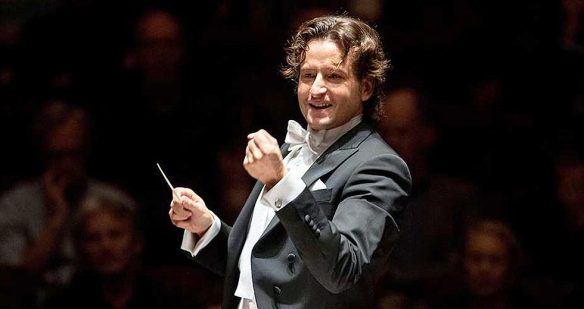
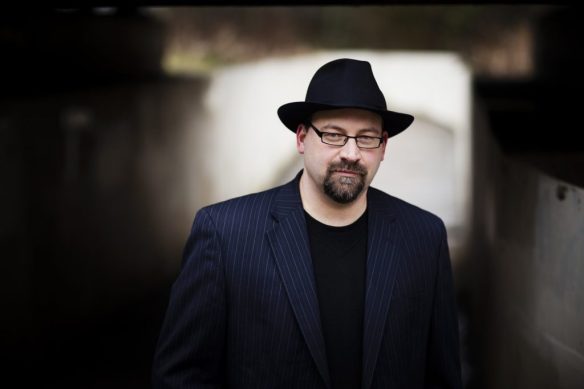
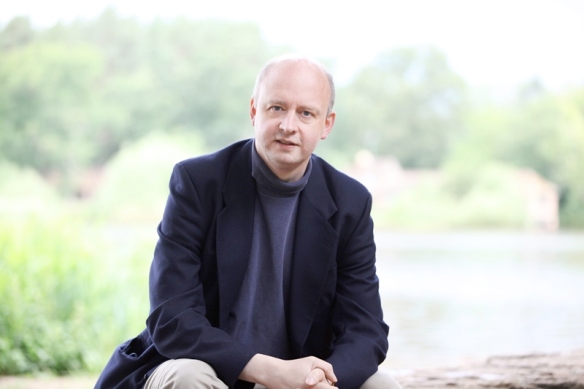
Jeremy Denk (piano, below), City of Birmingham Symphony Orchestra / Gustavo Gimeno (above)

Symphony Hall, Birmingham
Wednesday 20 November 2019 (2.15pm)

Beethoven
Egmont Op.84 – Overture (1810)
Piano Concerto no.3 in C minor Op.37 (1800, rev. 1803)
Stravinsky
Petrushka (1911, rev. 1947)

Written by Richard Whitehouse

Beethoven and Stravinsky might not be felt natural bedfellows (whatever the latter claimed in later life), but this afternoon’s concert with the City of Birmingham Symphony Orchestra and fast-rising conductor Gustavo Gimeno was evidently intent on demonstrating otherwise. The overture from Beethoven‘s music for Goethe’s play Egmont duly launched the programme in imposing fashion, Gimeno securing a trenchant while slightly inflexible response across the main Allegro, with no lack of rhythmic definition as held good during an incisive peroration.
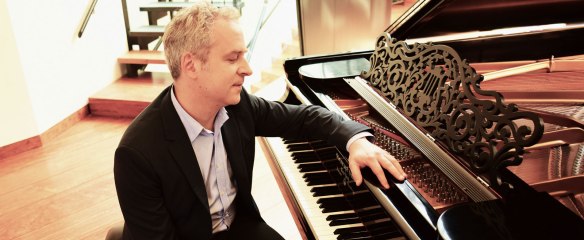
If his Third Piano Concerto finds Beethoven more overtly indebted to Classical precedent, its palpable emotional breadth is a clear pointer to what lay ahead. As soloist, Jeremy Denk had the measure of the opening movement’s often abrupt alternation between imperiousness and intimacy – not least a probing take on the development with those eloquent woodwind contributions. If the cadenza was a shade too volatile in its later stages, the fateful emergence of the coda (timpani and strings) was suitably rapt in its intensity. Raptness was equally the watchword of the central Largo, Denk pointing up the stark contrast of his E flat entry then duetting blissfully with bassoon and flute in its transition to the main theme, but as the coda (seemingly) evanesces into silence a greater dynamic subtlety would have been welcome.

Interestingly, Denk supplied this in abundance at that mesmeric point in the finale when the rondo theme ventures into the major as if to goad the music back to the prevailing C minor. Elsewhere, this was an impetuous and assured account which reached its culmination with a heady solo transition into a coda that dispersed preceding tensions through its unchecked ebullience. Denk returned for an unlikely yet appealing encore – a paraphrase (his own?) on the Pilgrims’ Chorus from Wagner‘s Tannhauser as rapidly evolved into a full-blown rag.

Few British orchestras can have performed Stravinsky‘s early ballets with the frequency and consistency of the CBSO, which is not to suggest Gimeno was other than his own man in this reading of Petrushka – heard in its streamlined 1947 revision rather than the texturally more imaginative 1911 original (which this past nine decades the orchestra has only played under Pierre Boulez). Certainly the revision’s tendency to encourage a headlong and even ruthless approach was evident in an overly regimented take on the Russian Dance, the scene-setting that precedes it audibly lacking atmosphere, but thankfully not the central tableaux depicting Petrushka and the Blackamoor – the former as nervous and agitated as the latter was moody and, not least following the arrival of the Ballerina, ominous in its smouldering sexuality.

No less impressive were the surrounding evocations of the Shrovetide Fair – the latter with its various set-pieces vividly and tellingly characterized, on route to the sudden reappearance of the main protagonists then Petrushka’s death and ghostly apparition for what remain some of the composer’s most affecting pages. The stentorian trumpet writing was fearlessly delivered, and if those concluding pizzicato chords might have been more unanimous, it only marginally detracted from the conviction of what was a well conceived and finely executed performance.

This performance will be repeated at Symphony Hall, Birmingham, on Saturday 23 November at 7pm. For more details head to the CBSO website
Live review – English Symphony Orchestra / Kenneth Woods: Matthew Taylor Symphony no.5, Mendelssohn & Beethoven

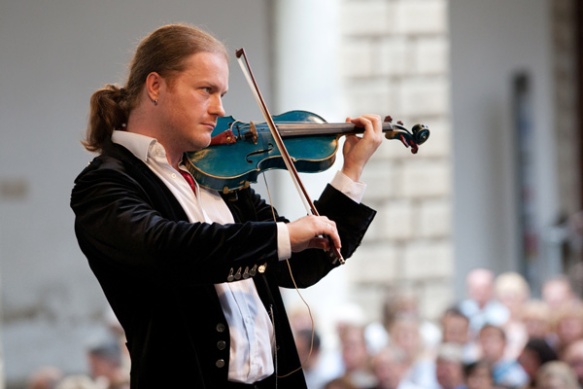
Pavel Šporcl (violin), English Symphony Orchestra / Kenneth Woods (above)

Cadogan Hall, London
Sunday 9 June 2019 (3pm)

Taylor Symphony no.5 Op.59 (2018)
Mendelssohn Violin Concerto in E minor Op.64 (1844)
Beethoven Symphony no.5 in C minor Op.67 (1808)

Written by Richard Whitehouse, who also introduced the concert with Matthew from the Cadogan Hall platform

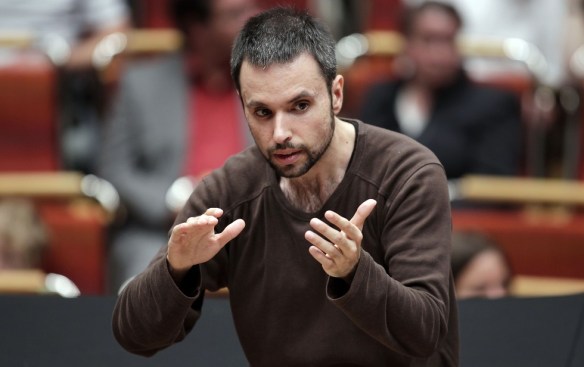
This debut at Cadogan Hall by the English Symphony Orchestra was also the third in its 21st Century Symphony Project, having previously included the Third by Philip Sawyers and the Ninth from David Matthews. This afternoon brought the Fifth Symphony of Matthew Taylor (below).

Symphonism goes back to the start of Taylor’s composing career, his Sinfonia Brevis having been completed at just 21. The present work is only his second such piece in four movements, but here the formal and expressive emphasis feels very different. Indeed, the opening Allegro is unprecedented in his output for its tensile volatility (not unlike that of Beethoven’s Serioso Quartet), its driving impetus and explosive culmination creating a momentum pointedly left unfulfilled by the ensuing intermezzi: the first (a tribute to composer and teacher Cy Lloyd) as terse and equivocal as the second (a tribute to Angela Simpson, wife of composer Robert Simpson) is poised and wistful. It remains for the final Adagio (a tribute to Taylor’s mother Brigid) to secure that eloquent apotheosis towards which the whole work had been headed.

The ESO responded with playing of sustained emotional power such as carried through this movement’s plangent twin climaxes and on to its resigned coda. Not that there was any lack of commitment earlier – Kenneth Woods having set a suitably headlong tempo for the first movement as left his players unfazed, then characterizing the central intermezzi with regard for their subtly different auras. A fine rendering of a piece which amply reinforces Taylor’s standing as a symphonist of stature. Hopefully further hearings will not be long in coming.

The rest of this concert consisted of standard repertoire, but there was nothing routine about the performances. Pavel Šporcl (above) was soloist in Mendelssohn’s Violin Concerto, notable for the trenchancy and forward impetus of its opening movement – not least the structurally crucial cadenza placed between development and reprise, then the alternately easeful and searching Andante. The finale had no lack of wit or insouciance – Šporcl duly returning for a dynamic account of the Fifth Caprice by Paganini, its coruscating passagework delivered with aplomb.

After the interval, Beethoven’s Fifth Symphony received a reading as attentive to the smaller detail as to its overall trajectory. The initial Allegro was incisive though never inflexible, not least in delineating the myriad variants on its indelible four-note ‘motto’, and if the Andante evinced a marginal lack of grandeur at its relatively swift tempo, those teasing asides which open-out its expressive course were deftly underlined.

Using the Clive Brown edition of this piece, Woods (rightly) opted to include the second-time repeat of scherzo and trio – giving it an enhanced presence as ideally complemented the finale’s ensuing majesty. There was little to fault in the latter’s uninhibited course: whether, or not, this edition places greater emphasis on the piccolo part, the clarity with which it emerged itself proved something of a revelation.

A memorable conclusion to a concert which also underlined the importance of this project in bringing together past and present of the symphony as a genre of ongoing and vital relevance. Next year sees a third instalment in the guise of the First Symphony by James Francis Brown.

Further listening

Toccata Classics have previously issued an album of Matthew Taylor orchestral music, recorded with the BBC Symphony Orchestra and Garry Walker. The composer’s Second Symphony and Viola Concerto can be heard here:

Pavel Šporcl can be heard in violin concertos by Richard Strauss and Korngold on the album below:

For more information on Matthew Taylor, visit the composer’s website Meanwhile Kenneth Woods has a detailed website of writing and engagements here, and you can read more about the English Symphony Orchestra here

Music for Burns Night

Here is an Arcana playlist for Burns Night! Made up of Scottish classical music and settings of the poet, it is a mixture of vocal and instrumental music that will hopefully give an idea of the breadth of responses to Robert Burns and his poetry – not to mention his own songwriting. Make sure you serve with haggis, neaps and tatties, and a warming whisky…

Live review – Yulianna Avdeeva, CBSO / Constantinos Carydis – Skalkottas, Tchaikovsky & Beethoven

Yulianna Avdeeva (below, piano), City of Birmingham Symphony OrchestraConstantinos Carydis (above)

Photo credits: Thomas Brill (Constantinos Carydis), C Schneider (Yulianna Avdeeva) 

Symphony Hall, Birmingham. Thursday October, 2018

Skalkottas Four Images (1948)
Tchaikovsky Piano Concerto no.1 in B flat minor Op.23 (1875)
Koukos In Memoriam Y. A. Papaioannou (1989)
Beethoven Symphony no.7 in A major Op.92 (1812)

Written by Richard Whitehouse

Conductors are not obliged to programme their compatriots, though Constantinos Carydis certainly rang the changes by including music by Nikos Skalkottas (1904-49) – who, along with Xenakis, is undoubtedly the leading Greek classical composer from the 20th century.

Nor is the City of Birmingham Symphony unacquainted with his work, having given the first complete performance of his First Symphonic Suite in 1972. That piece typifies the intricate, serially-derived music of his earlier maturity, whereas the Four Images comes from his last years when tonal music predominated. Derived from a longer ballet score for piano, these characterful miniatures amply evoke folk scenes (without using actual folk themes) in a way recalling Bartók’s Dance Suite or, more directly, the dances from Ginastera‘s ballet Estancia.

Carydis accordingly had their measure – whether the forceful rhythms and acerbic harmonies of The Harvest, or wistful pathos of The Sowing with its resplendent, bell-capped climax. After this, The Vintage provides a scherzo of no mean propulsion and Carydis was right to lead directly into The Grape Stomping for a finale of scintillating vigour and impetus. Such were the qualities that the CBSO brought to this music, in what was a captivating account of a piece which could easily become as familiar as those aforementioned given such advocacy.

Tchaikovsky’s First Piano Concerto has never wanted for exponents, so credit to Yulianna Avdeeva for her engaging perspective on music to which the ‘war-horse’ epithet is too often applicable. The indelible opening melody was majestic without being portentous, with the imposing first movement convincingly held together so that the accrued momentum carried through to a searching take on its lengthy cadenza. There was no lack of deftness during the Andantino, replete with woodwind playing of real elegance, while the finale had energy to spare on its way to a surging peroration. This is an impressive interpretation in the making.

As well as his illustrious forebears, Carydis was intent on promoting the music of his Greek contemporaries. Well regarded for his operas, Periklis Koukos (b.1960) is little known in the UK, but the tribute to his teacher In Memoriam Y. A. Papaioannou suggests a composer of no mean eloquence – this threnody for strings not a little redolent of Nino Rota in its restrained sentiment, and a solo violin part that leader Anna-Liisa Bezrodny rendered with ideal poise.

Carydis then headed directly into Beethoven’s Seventh Symphony, here given a reading that was always invigorating and often electrifying. Dynamic contrasts occasionally verged on the contrived, and the repeat of the scherzo’s hymnal trio was almost parodic in its stateliness, but these were outweighed by the power and incisiveness elsewhere. Carydis drove the CBSO hard in the finale, but the players admirably rose to the challenge – antiphonal violins to the fore as the coda reached its visceral culmination. Whatever its inconsistencies, this was a performance to reaffirm the greatness of this music, as an enthusiastic reception testified.

A persuasive programme of the evergreen and unfamiliar. Should Carydis include Skalkottas’ ballet The Maiden and Death in a future engagement with the CBSO, then so much the better.

Tonight’s concert will be repeated at Symphony Hall on Sunday 7th October at 3pm. For more information on future CBSO concerts head to their website

City AM: Music While You Work

If you live in London, hopefully you have picked up a copy of City AM this morning. If you have, and read the Office Politics section, you’ll have seen my piece about the benefits of listening to classical music while you work.

I really wanted to share those with you here, so please find below links to a playlist on Spotify that will hopefully float your boat!

If you want some specific advice on music to listen to, or want to share an opinion, please get in touch! Send me an e-mail or get in touch over Twitter