New music – Julianna Barwick & Mary Lattimore: Melting Moon (InFiné)

adapted from the press release by Ben Hogwood

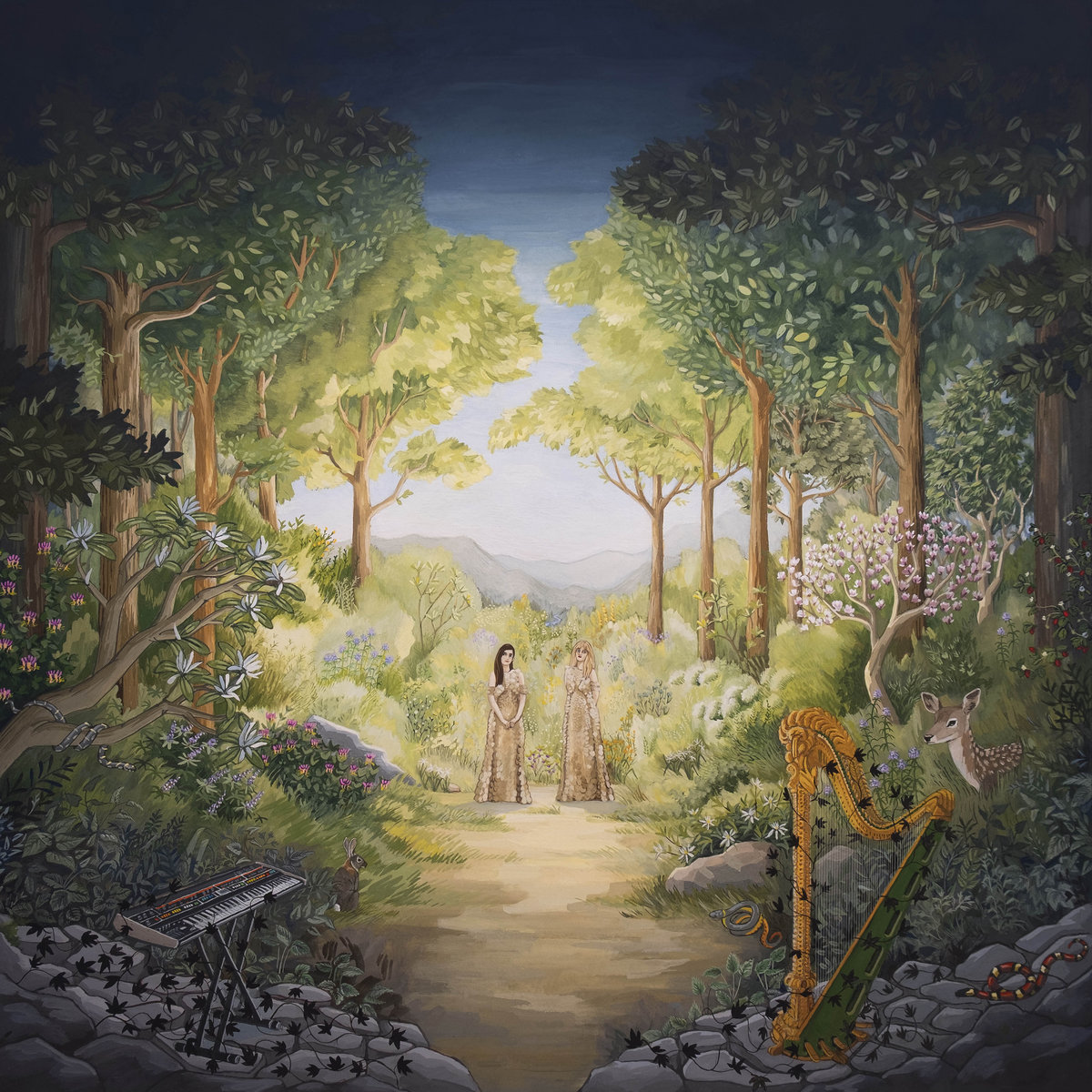
Julianna Barwick and Mary Lattimore have formed a formidable duo to release a new album, Tragic Magic, due out on 16 January 2026 via InFiné. Today they release the new single Melted Moon, one of “seven immersive, evocative songs” that make up the album. The press release details how, “together in freeform dialogue, voice and instrument, Barwick and Lattimore render a meditation on tragedy, wonder, and the restorative power of shared experience.”

The story continues: “Co-produced by Trevor Spencer (Fleet Foxes, Beach House), Tragic Magic came together in just nine days, a testament to the “musical telepathy,” as Barwick puts it, that has developed between the two artists over the years traveling the world as friends and tourmates. Sessions crossed improvisation with loose ideas they arrived in Paris with from Los Angeles, shortly after the January 2025 wildfires while still reeling for their community.

Barwick and Lattimore were given access to the extraordinary instrument collection of the Philharmonie de Paris’ Musée de la Musique in partnership with InFiné. The two artists embraced a divine setting, overwhelmed by the beauty and history at their fingertips. Lattimore selected three harps tracing the evolution of the instrument from 1728 to 1873, and Barwick chose several analog synthesizers that have shaped decades of exploratory music, including the Roland JUPITER and Sequential Circuits PROPHET-5, among other treasures.

“We were so lucky to have access to this experience. There was a lot of reverence, working with people with such warmth and enthusiasm, bringing these instruments into a modern context, literally taken off the shelves of the museum,” says Lattimore. “We wanted to honor the past while making music that we feel is a true expression of ourselves,” Barwick adds.

Today’s release of Melted Moon is accompanied by a video of Barwick and Lattimore performing the song live. Directed and edited by Joel Kazuo Knoernschild, the performance was filmed at Lou Lou’s Jungle Room at the Lafayette Hotel in San Diego this past April.”

The first single, Perpetual Adoration, is followed by the album’s closing track Melted Moon, a direct response to the Los Angeles wildfires in January 2025. The bold strokes of Lattimore’s harp soften as a calming chord progression asserts itself, before Barwick’s seraphic vocal adds a beautiful counter melody.

Barwick recalls “packing up her life under the dark ash clouds, “What do I need for these trips, but also, what do we need if we can’t come back to this house?” Lattimore lends a harp refrain that loops and echoes in the eventide, a measure in which she plays above as Barwick, uncharacteristically free of effects, offers her lyrics in poignant clarity, both haunting and hopeful (“Under the melted moon / The lights are all out / A strange taste in my mouth / You may never go home again / At least not the home you know”).

The notion embodies Tragic Magic as a whole: two artists and friends processing life through music, observing moments and working through emotions, contributing what they can to the world, within a lineage of creative expression and visionary invention represented by the very tools they used to realize this project.

Published post no.2,688 – Wednesday 15 October 2025

Switched On: Mary Lattimore – Goodbye, Hotel Arkada (Ghostly International)

by Ben Hogwood

What’s the story?

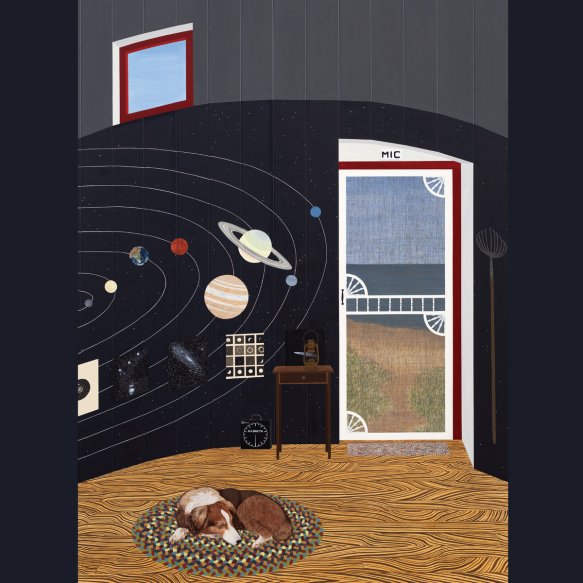
This is an album about change and the lasting effects it can have on people. Its title bears the name of a beloved hotel in Croatia visited by American harpist Mary Lattimore, and closing for renovation. She takes this as a stimulus for six pieces that explore the theme of change and how nothing can ever be the same again.

The musical material has its roots in improvisation but Lattimore honed the album over two years, both in a solo capacity and in the company of a host of collaborators. To that end she was joined by The Cure’s Lol Tolhurst, Meg Baird, Slowdive’s Rachel Goswell, Ray Montgomery, Samara Lubelski and Walt McClements.

What’s the music like?

Beautiful. It is worth studying some of the stories behind Lattimore’s work, for it reveals something of her sense of humour as well as a softer side to her thinking. And Then He Wrapped His Wings Around Me – featuring Baird and Clements – is about a moment where she got to meet Big Bird with her mum, and he gave her ‘an incredible hug with this scratchy yellow wings’. The resultant track has a similar effect!

Arrivederci, with Tolhurst, is an intensely calming experience – written by Lattimore when she was at a low ebb after being let go from a project. It is styled as a round, a repetitive chord sequence where the harpist adds more and more melodic substance. Blender In A Blender goes on a compelling journey with Montgomery, becoming gradually more distorted and separated from a traditional harp sound and harnessing considerable power.

Lattimore’s titles are always eye-openers – so to speak – and Music For Applying Shimmering Eye Shadow gets music to match in the form of wonky, wobbly lines that falter over a much steadier base. It is as though one hand is faltering, the other an immovable object. There is a different kind of pitch variation in Horses, Glossy On The Hill, the idea of bells jangling together made by the clashing of semitones and microtones on the harp, before the instrument swirls in a gorgeous torrent of sound.

Yesterday’s Parties is a highly effective coda, the vocals of Goswell and Lubelski swooning as the harp plays delicate lines.

Does it all work?

It does. Lattimore’s imagination with the harp is key, producing some extraordinary sounds from the instrument in her manipulations and with studio trickery without ever becoming gimmicky or taking things too far. The underlying power in the music is also most impressive, as the likes of Arrivederci illustrate.

Is it recommended?

Wholeheartedly. This is music of beauty and inner resolve, and a powerfully moving album – arguably Mary Lattimore’s best yet.

Listen

Buy

Published post no.1,988 – Tuesday 24 October 2023

Switched On – Mary Lattimore: Silver Ladders (Ghostly International)

reviewed by Ben Hogwood

What’s the story?

The harpist Mary Lattimore has been busy in the two years since her last album release, Hundreds Of Days, with a good deal of touring and a remix package from that long player featuring work from Julianna Barwick and Jónsi among others.

For Silver Ladders she decamped from her Los Angeles home to the studio of Slowdive and Mojave 3 lynchpin Neil Halstead near Newquay, in Cornwall, working with him in sessions over an intense recording period of nine days.

What’s the music like?

Rather magical. The very different starting points of Lattimore and her producer are ideal, for the twinkling colours of the harp find their ideal match in Halstead’s very subtle guitar and studio work.

The harp remains the most prominent instrument and sets the tone with the beautifully poised Pine Trees, Lattimore’s silvery colours punctuated with pinpricks of intensity.

The album unfolds over seven tracks, with the centrepiece Til A Mermaid Drags You Under. This substantial piece of work begins in the lower register of the harp but gradually takes flight, the upper register adding wider perspectives and a twinkling edge. Halstead’s production touches reinforce the bass with sonorous notes and boost the reverberation, the listener given a sound picture akin to hovering over a vast bay.

Don’t Look is another extended meditation, Lattimore exploring the deep twang of a string in the harp’s lower register but with dreamy guitar from Halstead. The producer also provides thoughtful counterpoint to Sometimes He’s In My Dreams, then murmuring electronics to Chop on the Climbout, Lattimore’s harp flickering in the half light.

The closing Thirty Tulips is particularly beautiful, shifting phases and gently undulating, with a range of different sounds from the harp and broader electronic notes in the background.

Does it all work?

Yes, and repeated hearings only enhance the positive experience this album can bring. For an extra dimension, try the visual score accompaniment by Rachael Pony Cassells, which adds a further layer of enchantment to this already beautiful music:

Is it recommended?

With no hesitation. In these rather fraught times the subtleness of music like this can work wonders – though that’s not to say Mary Lattimore is without expression or imagination. Silver Ladders evokes starry ripples on the nocturnal waters with effortless ease, the listener borne away on the waves.

Stream and Buy

Switched On – Julianna Barwick: Healing Is A Miracle (Ninja Tune)

reviewed by Ben Hogwood

What’s the story?

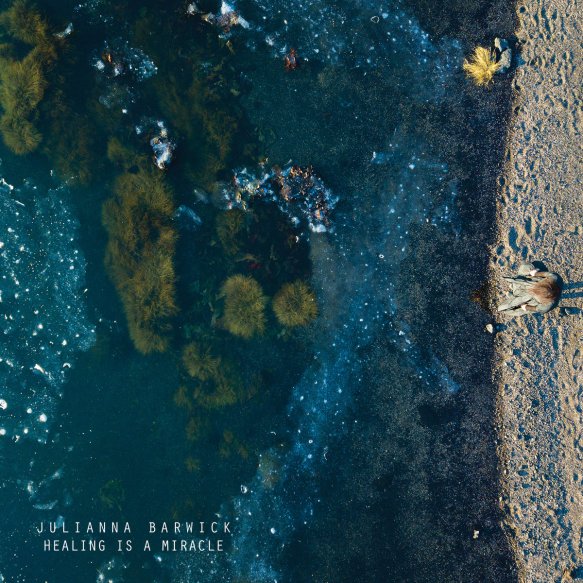
Julianna Barwick has enjoyed a near-constant stream of productivity in the last decade, but for many reasons Healing Is A Miracle feels like a defining moment. Apart from being her first album for the Ninja Tune family it marks the point where, after 16 years, she moves from East Coast to West, from New York to Los Angeles.

The title is a reference to the ability of the human body to recover itself after sustaining damage, Barwick marvelling at the way cuts and bruises heal themselves – and it appears to be a metaphor for the next stage of her life too. The recording methodology was also different, using monitors instead of headphones for the first time, which proved a revelation.

Healing Is A Miracle includes three collaborations, each with a close friend.

What’s the music like?

Barwick makes some of the most emotive ambient music you can imagine. While some producers opt for the distanced approach, allowing their music all the room it needs to operate away from human contact, Healing Is A Miracle offers further evidence of a rare ability to make ambient music right from the heart.

Despite the intimacy she achieves with the vocal material in particular, her studies in reverberation have resulted in enormous, cathedral-like textures. Inspirit, the first track on the album, is a softly recurring chant but with a big, surrounding echo, and when Barwick adds the bass sounds to the mix the music stops you in your tracks with its heart stopping beauty.

The collaborations are really nicely judged. Jónsi’s voice works in close harmony with Barwick on In Light, the Sigur Rós vocalist just below the melody but closely matched, before the big beats open the music outwards, seemingly toward the stars. Oh, Memory has a greater delicacy in the company of Mary Lattimore, its weightless vocals hanging on the wind, while Nod, with Nosaj Thing, builds layers on a breathy loop before adding beats, after which it pans out again to a consoling coda.

The title track has long, sustained keyboard sounds that hang on just a bit longer than the vocals, giving an even greater feeling of space. Flowers has striking sonorities, scaling mountainous heights but with an earthbound bass presence too, which grows to take over the track completely.

Does it all work?

Yes. With Julianna Barwick the listener really does inhabit a whole new world, and if escapism or mental clarity is what you are searching for then you have definitely come to the right place.

Is it recommended?

Wholeheartedly. Even within the output of one of the most consistent ambient artists, Healing Is A Miracle is a touchstone, an album where everything falls into its natural place. For an emotive out of body experience, you would really struggle to do better.

Stream

Buy