In concert – CBSO / Mirga Gražinytė-Tyla: The Sea – Britten, Adès, Weinberg & Debussy

Britten Four Sea Interludes from Peter Grimes, Op. 33a (1945)
Adès The Exterminating Angel Symphony (2020)
Weinberg Jewish Rhapsody, Op. 36 No. 2 (1947) [First public performance]
Debussy La mer (1905)

City of Birmingham Symphony Orchestra / Mirga Gražinytė-Tyla

Symphony Hall, Birmingham
Wednesday 28 September 2022

Reviewed by Richard Whitehouse

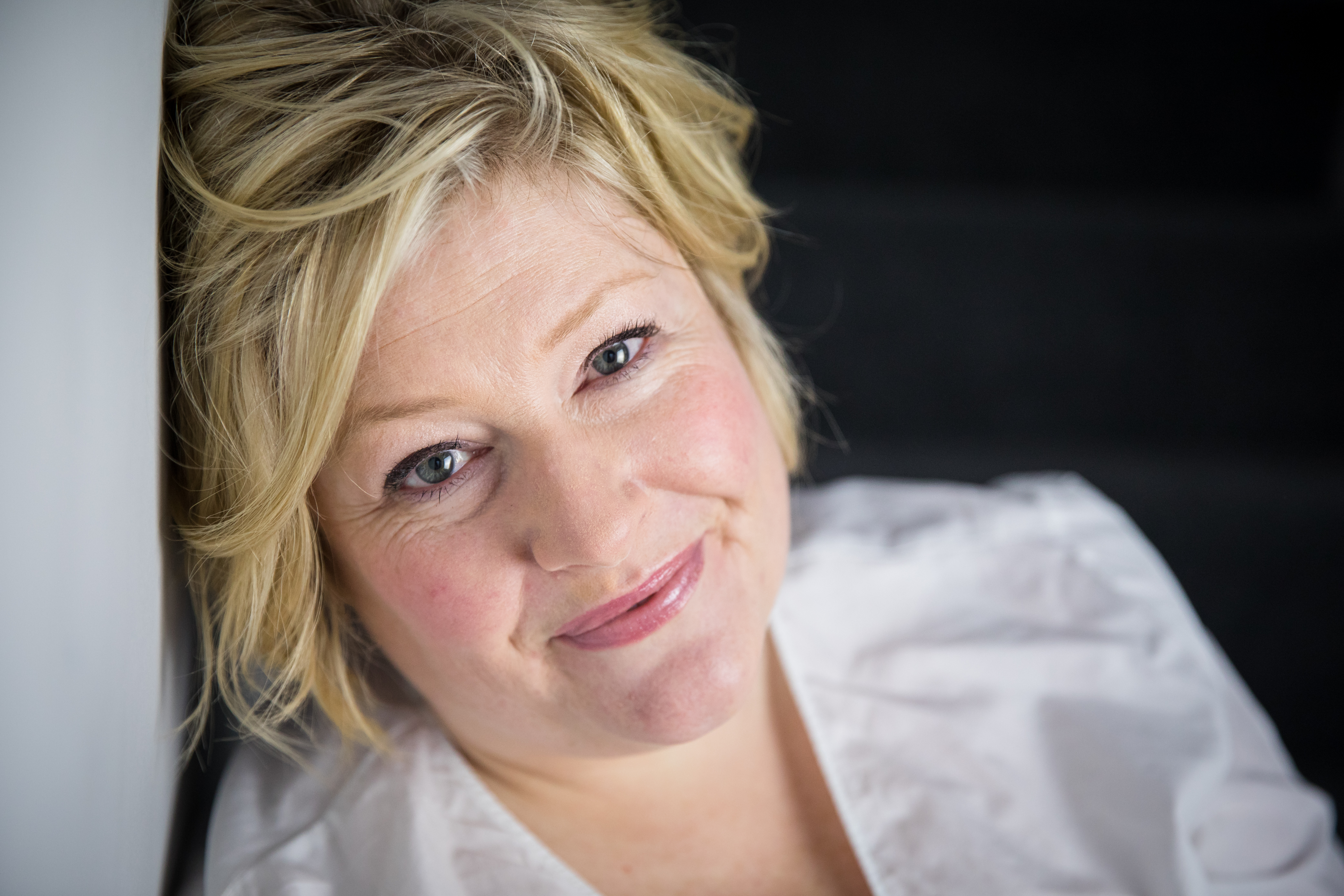
This afternoon concert by the City of Birmingham Symphony Orchestra found Mirga Gražinytė-Tyla at the helm for her first concert as the orchestra’s principal guest conductor in what was a varied programme featuring music of (more or less) Jewish emphasis framed by evocations of the sea.

The Four Sea Interludes that Britten extracted from his opera Peter Grimes invariably makes a worthwhile concert-opener, not least with Dawn as hauntingly poised as this. MG-T drove Sunday Morning hard, so that the cross-rhythmic interplay between wind and strings came close to decoupling, but there was no lack of atmosphere either here or in Moonlight where a sense of emotional disintegration was almost tangible. Storm was as relentless and, in its latter stages, imploring as the music requires – hurtling forth toward a close of brutal finality.

Next, a revival of The Exterminating Angel Symphony as derived from the eponymous opera by Thomas Adès, commissioned and premiered by the CBSO last August. As previously, its four sections feel more a symphonic suite than symphony per se – the whole still amounting to more than the sum of its constituent parts. MG-T secured a virtuoso response – whether in the encroaching expressive ambivalence of Entrances, or relentless build-up and malevolent aura of March. Berceuse remains uninvolving in emotional content despite the allure of its scoring, while Waltzes provides a suavely ingenious finale in its inexorable motion towards catastrophe. It would be hard to imagine a more committed or convincing account, such that the composer – making one of his rare appearances as a non-performer – looked well pleased.

After the interval, MG-T continued her advocacy of Mieczysław Weinberg in what was billed as a ‘first public performance’ for his Jewish Rhapsody. One of various pieces at a time when Soviet composers attempted (inevitably unsuccessfully) to placate officialdom with music of an outwardly populist nature, it forms the middle part of a Festive Scenes trilogy only recently located in its entirety. Beginning with an affecting melody for flutes it proceeds, via solos for clarinet and violin, to sombrely eloquent music (a little akin to that of Kodály’s folk-inspired works from the 1930s) which gains in energy until breaking out in dance-music of decidedly manic cast – a recall of the initial melody on flute then oboe leading to the headlong pay-off. Superbly rendered by the CBSO, this is no mean discovery and warrants repeated hearings.

Finally, to La mer – a piece of which this orchestra has given many memorable performances over the decades, and which did not disappoint here. If the opening stages of From Dawn to Midday on the Sea were a little tentative, the theme for divided cellos was finely articulated and the apotheosis powerfully wrought. Play of the Waves had no lack of capriciousness or delicacy, while Dialogue of the Wind and the Sea duly contrasted those visceral and poetic elements towards a peroration that never lost sight of the essential pathos within its triumph. An impressive close, then, to a concert such as gave notice of the continued rapport between orchestra and conductor. MG-T returns next week for an equally diverse selection with Sheku Kanneh-Mason in Haydn and the CBSO’s own Marie-Christine Zupancic in more Weinberg.

You can read all about the 2022/23 season and book tickets at the CBSO website. You can visit Mirga Gražinyte-Tyla‘s website here – and for further information on Weinberg or Adès, click on the composer names
In concert – Sheku Kanneh-Mason, CBSO / Charlotte Politi: Tchaikovsky, Shostakovich & Weinberg

16-March-Sheku-KM

Tchaikovsky Swan Lake, Act 2 – Scène, Op. 20 No. 10 (1875-6)
Shostakovich
Cello Concerto No. 2 in G, Op. 126 (1966)
Weinberg
Symphony No. 3 in B minor, Op. 45 (1949-50, rev. 1959)

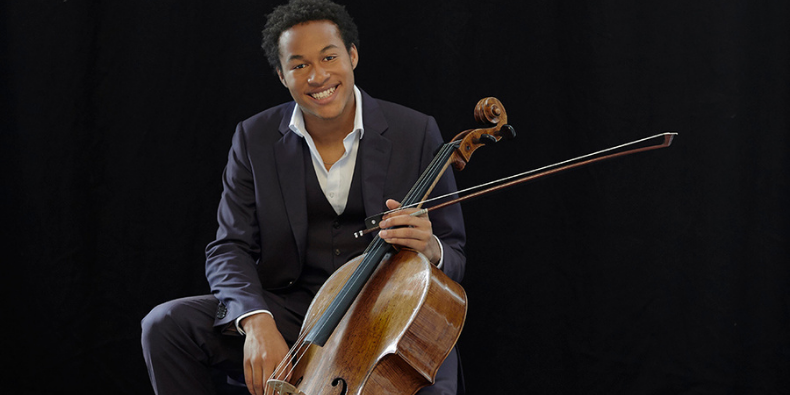
Sheku Kanneh-Mason (cello, above), City of Birmingham Symphony Orchestra / Charlotte Politi (below)

Symphony Hall, Birmingham
Wednesday 16 March 2022

Written by Richard Whitehouse

This evening’s concert by the City of Birmingham Symphony Orchestra should have been a Weinberg double-bill but the last-minute indisposition of Mirga Gražinytė-Tyla (having tested positive for Covid) brought to the podium one of the orchestra’s assistant conductors, Charlotte Politi.

Something in the programme had to give and that was only the second hearing in the UK for Weinberg’s Fourth Symphony, an incisively neo-classical piece long familiar to enthusiasts through the Melodiya recording issued in the 1970s and which, while it lacks the gravitas of later symphonies, is never less than engaging in its own right. Instead, the programme began with the ‘Scène’ from Act Two of Tchaikovsky’s Swan Lake (itself the opening number of the suite) – its fraught pathos enticingly realized, if making for an all-too brief curtain-raiser.

Sheku Kanneh-Mason was still present for Shostakovich’s Second Cello Concerto, among the first products of his final creative period and one of his most equivocal works in any medium. Most accounts over-stress its introspection, but Kanneh-Mason gauged the varied expressive shades of its Adagio with unforced rightness; its wrenching climax finding acute contrast with the sombre rumination from which it emerges and to which it returns. The ensuing Allegrettos could not be more dissimilar – a tensile and sardonic scherzo culminating in raucous fanfares as set into motion the finale. If coordination of soloist and orchestra in the former was a little tentative, Kanneh-Mason adroitly negotiated the latter’s gnomic dialogue – afforded focus by an easeful refrain and with a culmination of defiant exasperation, then a coda of furtive repose.

With its unshowy virtuosity and its concertante-like solo writing, this is a hard piece to bring off, but Kanneh-Mason rendered it with some conviction. He returned for an eloquent encore of what sounded to be a (Ukrainian?) folksong with the front four desks of the CBSO cellos.

After the interval, another chance to hear the Third Symphony by Weinberg this orchestra has rather made its own in recent seasons. Ostensibly a response to the anti-formalist campaign as spearheaded by Andrei Zhdanov, with the intention of making Soviet art more accountable to the public, its citing Belorussian and Polish folksongs is offset by the opening Allegro’s often ambivalent progress to a coda shot through with foreboding. Politi was often persuasive here, then not at all fazed by the Allegretto’s interplay of whimsical with a more sardonic humour.

Even better was to come in the Adagio’s finely sustained progress towards a climax of stark tragedy, only slightly mediated by the pensive close. An energetic final Allegro duly set out to secure an affirmative end, only to culminate in marked desperation, and it was a measure of Politi’s insight that the coda maintained its uncertainty even as those decisive closing bars echoed to silence. The CBSO responded impressively throughout a piece it must know better than any other orchestra, and it was to Politi’s credit that her own input was so often evident.

Hopefully MG-T will recover in time for the CBSO’s forthcoming European tour, such that Weinberg’s Fourth Symphony will gain the hearings it deserves. And if next season she can schedule the Fifth, arguably his finest purely orchestral symphony, then so much the better.

For more information on the CBSO’s spring tour, visit their website. Meanwhile for more information on the artists, click on the names to access the websites of Charlotte Politi and Sheku Kanneh-Mason. Meanwhile for more on composer Mieczysław Weinberg, click here

In concert – CBSO Centre Stage: Trios for flute, viola and harp (Marie-Christine Zupancic, David BaMaung & Katherine Thomas)

Instrument-detail-Neil-Pugh

Bax Elegiac Trio GP178 (1916)
Weinberg
Trio Op.127 (1979)
Debussy
Sonata for flute, viola and harp L137 (1915)

Members of the City of Birmingham Symphony Orchestra [Marie-Christine Zupancic (flute), David BaMaung (viola), Katherine Thomas (harp)]

CBSO Centre, Birmingham
Thursday 18 November 2021

Written by Richard Whitehouse

Although little more than a century old, the enticing combination of flute, viola and harp has since given rise to a host of stylistically varied pieces – three of which were featured in this Centre Stage lunchtime recital by members of the City of Birmingham Symphony Orchestra.

If not the most elaborate of his numerous works for mixed ensemble, Arnold Bax’s Elegiac Trio is surely among his most affecting as a (deliberately?) understated ‘in memoriam’ for those friends who had died as a result of the ill-fated Easter Uprising in Ireland. While the underlying mood rarely moves too far from that implied by the title, the close-knit motivic writing and subtly shifting emotions which are filtered through the textural ‘weave’ prove    as subtle as they are elusive – not least in a performance as focussed or as assured as this.

His extensive chamber output might be dominated by his 17 string quartets, but Mieczysław Weinberg wrote numerous pieces for sundry combinations – of which the present Trio could be considered typical of his spare and elusive later idiom. As in other works from this period, descriptions are replaced by metronome markings, endowing the music with an inscrutability as leaves the musicians to convey more tangible expression – whether in an initial movement that uncovers its formal trajectory as it brings these instruments into play, a central movement whose fragmentary textures never quite evolve into cohesive exchanges, then a finale whose vigorous rhythmic motion is tersely curtailed almost out of spite. An insightful account of an absorbing piece, especially when not given in its alternative version with piano replacing harp.

A recital such as this almost had to close with the Sonata by Debussy that will likely remain the template for this ensemble. Here, the opening Pastorale seemed a little too restive fully to convey this music’s ethereal emotion, but the Interlude found an ideal balance between incisiveness and elegance whose minuet-like gait belies its almost intuitive unfolding, while the Finale drew all three instruments into an inexorable motion through to the decisive close – the composer asserting his credentials as ‘musicien français’ with pointed understatement.

An appealing and not a little thought-provoking recital for which Marie-Christine Zupancic, David BaMaung and Katherine Thomas placed those present in their debt. The Centre Stage series continues on December 3rd, with a programme from the CBSO Percussion Ensemble.

Further information on future CBSO Stage concerts can be found here

On record – Weinberg: Complete Violin Sonatas Volume Three (Yuri Kalnits & Michael Csányi-Wills) (Toccata Classics)

weinberg-violin-sonatas

Mieczysław Weinberg
Violin Sonata no.3 Op.37 (1947)
Violin Sonata no.6 Op.136bis (1982)
Solo Violin Sonata no.3 Op.126 (1979)

Yuri Kalnits (violin), Michael Csányi-Wills (piano)

Toccata Classics TOCC00096 [60’36”]

Producers Yuri Kalnits, Michael Csányi-Wills
Engineer Rupert Coulson

Recorded 9-12 July 2016 at St John’s Fulham, London; 7-8 July 2020 at K Studios, London (Solo sonata)

Written by Richard Whitehouse

What’s the story?

After a lengthy hiatus, Toccata Classics duly continues its series devoted to the violin sonatas by Mieczysław Weinberg with this third volume featuring two further sonatas with piano and the last of his solo sonatas – in performances comparable to those on the earlier two volumes.

What’s the music like?

It is a measure of how the Weinberg discography has grown that, in the decade or more since this cycle commenced, all the composer’s violin sonatas have now been recorded on several occasions. Good, then, that Toccata has opted to see it through as the interpretative stance of Yuri Kalnits and Michael Csányi-Wills is a persuasive one – not least for the subtlety of its interplay between violin and piano such as underlines the increasingly and flexibly idiomatic nature of Weinberg’s writing for a medium that remains problematic whatever its popularity.

With the Third Sonata (1947), Weinberg achieved an all-round assurance as is evident from the flexible handling of content within each of these progressively longer movements. Thus, the moderately paced initial Allegro exudes a purposefully provisional feel, fulfilled by the central Andantino with its achingly expressive deployment of Jewish folk elements, before being intensified in the final Allegretto cantabile that moves adeptly between eloquent and energetic ideas prior to a Lento coda which brings the work deftly and movingly full-circle.

Unlike its predecessors the Third Solo Sonata, dedicated to the memory of the composer’s father, unfolds as a continuous span which, though it can be viewed as several interrelated movements, is more akin to variational episodes on the motives heard at the outset. As if to underline this audacity, the writing for violin is the most resourceful and imaginative to be found in in any of these pieces – a heady succession of mood and textures such as reaffirms Weinberg’s technical and creative mastery when confronting apparent restrictions head-on. 

Weinberg abandoned the duo medium in the late 1950s and when the Sixth Sonata emerged, it went unacknowledged until 2007. Yet a work dedicated to the memory of his mother must have held a deeply personal significance. The initial Moderato, where the instruments come together only at the centre and are framed by an anguished prologue for violin then resigned epilogue for piano, speaks of intensely subjective emotion – as do the elegiac central Adagio and a finale which surveys previous material in a more consoling if ultimately fatalistic light.

Does it all work?

Yes, not least given the widely differing concept that underlies each piece (further proof that Weinberg repeated neither himself nor other composers), as well as the undemonstrative yet searching approach of the performers. Others may favour the commanding rhetoric of Linus Roth (Challenge Classics) or the forthright incisiveness of Stefan Kirpal (CPO), but the more understated manner of Kalnits and Csányi-Wills likely brings out the inward intensity of this music more completely. As a cycle for repeated listening, it should prove difficult to surpass.

Is it recommended?

Indeed, abetted by almost perfect instrumental balance and detailed notes by David Fanning. A fourth volume – which, other than the early Three Pieces, might feature the Sonata for Two Violins and Gidon Kremer’s arrangement of the 24 Preludes for cello – is keenly anticipated.

Listen

Buy

You can discover more about this release at the Toccata Classics website, where you can also purchase the recording. You can read more about Yuri Kalnits here, and more about Michael Csányi-Wills here

In concert – Karen Cargill, CBSO / Mirga Gražinytė-Tyla: Mirga conducts Weinberg

Mirga

Karen Cargill (mezzo-soprano, below), City of Birmingham Symphony Orchestra / Mirga Gražinytė-Tyla (above)

Weinberg Rhapsody on Moldavian Themes Op.47/1 (1949)
Mahler Rückert-Lieder (1901-02)
Weinberg Symphony no.3 in B minor Op.45 (1949-50, rev. 1960)

Symphony Hall, Birmingham
Wednesday 23 June 2021 (6.30pm)

Written by Richard Whitehouse Photo of Karen Cargill courtesy of Nadine Boyd Photography

The music of Mieczysław Weinberg has been a prominent feature in the City of Birmingham Symphony Orchestra’s programmes with its music director Mirga Gražinytė-Tyla, and the Rhapsody on Moldavian Themes duly started this latest of the orchestra’s concerts in impressive fashion.

Written when Soviet composers were under intense pressure to create music of a populist – or rather, nationalistic – nature, its recourse to melodies emanating from the region of Bessarabia (from where the composer’s parents hailed) draws directly on a lineage from Liszt to Bartók and Kodály. Weinberg’s handling of these, in its subtle take on a slow-fast trajectory, is never less than assured. MGT undoubtedly had its measure, whether in the ruminative opening with its plangent woodwind or the boisterous later stages when brass comes irresistibly to the fore.

Itself a revival (having been played at Symphony Hall in 2019 then at that year’s Proms), the Third Symphony is a more considered response to the anti-formalist campaign spearheaded by Andrei Zhdanov with the intention of making Soviet music more accountable to its public. Hence the inclusion of Belorussian and Polish folksong, though Weinberg is mindful to offset these with a formal rigour as, in the initial Allegro, ensures an emotionally restless unfolding to a coda shot-through with foreboding – one of several passages likely made more explicit in the subsequent revision. Here, as in the wistful second theme (akin to what Malcolm Arnold was writing around this time) then a climactic transition heading into the reprise, the CBSO’s playing underlined its ongoing affinity with this music which held good through to the close.

Hardly less idiomatic was the scherzo’s interplay of capricious with a more sardonic humour, then the Adagio’s sustained yet cumulative progress towards a climax of stark tragedy – only slightly pacified in the inward closing phase. If the animated finale strives to secure an overly affirmative ending, it was a measure of this account that any such optimism was held in check until the peremptory last bars. Weinberg could scarcely have hoped to hear a more perceptive performance: good to hear both this and the Rhapsody were being recorded for future release.

Between these pieces, Karen Cargill joined the CBSO for Mahler’s Rückert-Lieder (evidently the first time the orchestra has given them since baritone Olaf Bär with Simon Rattle in 1992). She drew a keen irony from Blicke mir nicht in die Lieder, then rendered Ich atmet’ einen linden Duft with appealing deftness. With its fugitive writing for woodwind and brass, and a fervent climax capped by garish arabesques from piano, Um Mitternacht is a difficult song to bring off but was notably effective, and the only disappointment was a rather inert take on Liebst du um Schönheit – Max Puttmann’s sub-Léhar orchestration at least partly to blame. Nor was Ich bin der Welt abhanden gekommen ideally transcendent, yet the eloquence of Cargill’s response left no doubt concerning its status as arguably the greatest orchestral Lied.

A judiciously planned concert, then, in which the rapport between orchestra and conductor came through these past 15 months unscathed. The CBSO returns next Wednesday with its principal guest conductor Kazuki Yamada in a programme of Julian Anderson and Dvorák.

You can find information on the CBSO’s next concert at their website