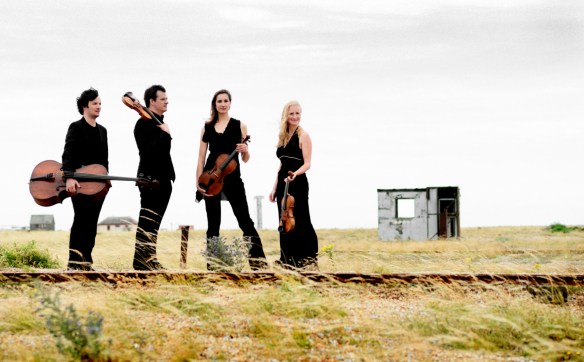
In concert – Gwilym Bowen, Gareth Brynmor John, William Vann, Navarra String Quartet @ Temple Church, London – Ian Venables: Out of the Shadows (a 70th birthday concert)

Gwilym Bowen (tenor), Gareth Brynmor John (baritone), William Vann (piano), Navarra Quartet [Benjamin Marquise Gilmore, Eva Aronian (violins), Sascha Bota (viola), Brian O’Kane (cello)]

Venables Out of the Shadows Op.55 (2023)
Vaughan Williams arr. Vann Fantasia on Greensleeves (1934)
Vaughan Williams On Wenlock Edge (1909)
Vaughan Williams Love Bade Me Welcome (1911)
Venables Portraits of a Mind Op.54 (2022)
Howells An Old Man’s Lullaby (1947)

The Temple Church, London
Tuesday 4 November 2025

Reviewed by Richard Whitehouse

The emergence of Ian Venables as the leading British art-song composer was suitably marked with a 70th-birthday concert, sponsored by the Morris-Venables Charitable Foundation under the auspices of Temple Music Foundation and held in the evocative setting of Temple Church.

Song cycles being at the forefront of Venables’s output, it made sense to start with one of his most recent – Out of the Shadows a wide-ranging overview of male love. From the coyness of Constantine Cavafy’s At the Cafè Door and the barbed humour of Horatio Brown’s Bored, this takes in the fleeting ecstasy of Cavafy’s The Mirror in the Hall and stark soulfulness of Alfred Tennyson’s Dark House, prior to the overt playfulness of John Addington Symonds’s Love’s Olympian Laughter and calm affirmation of Edward Perry Warren’s Body and Soul.

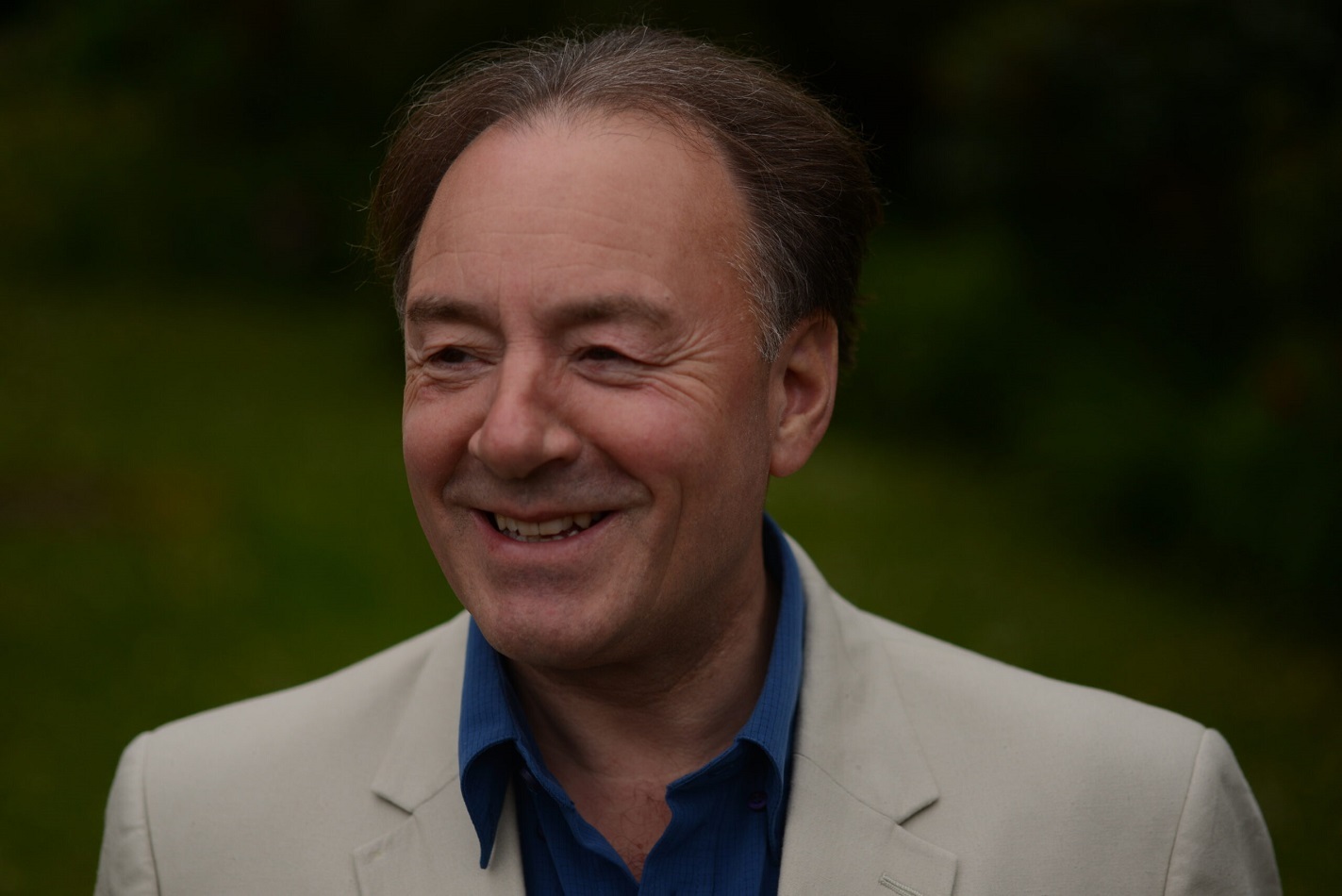
Affectingly sung by Gareth Brynmor John (above), it preceded likely the most influential such cycle in English. A. E. Housman may have disliked his settings, but Vaughan Williams always gets to the heart of the matter in On Wenlock Edge. Hence the volatile imaginings of its title-number or hymnic poise of ‘From Far, from Eve and Morning’, the brooding dialogue of ‘Is My Team Ploughing’ or nonchalant wit of ‘Oh, When I Was in Love with You’; reaching a climax in the innocence to experience of ‘Bredon Hill’, with ‘Clun’ ending the sequence in fatalistic repose.

Gwilym Bowen gave a searching account of this cycle (doubly so having replaced Alessandro Fisher at such short notice), with Brynmor John comparably attuned to the understatement of George Butterworth’s Love Blows as the Wind Blows. These settings of W. E. Henley amount to a cohesive yet subtly contrasted entity – the existential musing of In the Year that’s Come and Gone followed by the deadpan charm of Life in Her Creaking Shoes and effervescence of Fill a Glass with Golden Wine, then On the Way to Kew brings a close of deftest poise.

Bowen duly tackled a further Venables cycle. Written to commemorate the 150th anniversary of Vaughan Williams’s birth, Portraits of a Mind is a notably inclusive one of the composer. Hence the gentle pantheism of George Meredith’s The Lark Ascending and the meditation on creativity of Ursula VW’s Man Makes Delight His Own; the engaging impetus of R. L. Stevenson’s From a Railway Carriage a perfect foil to the resignation of Christina Rosetti’s Echo, before lines from Walt Whitman’s A Clear Midnight conjure a warm transcendence.
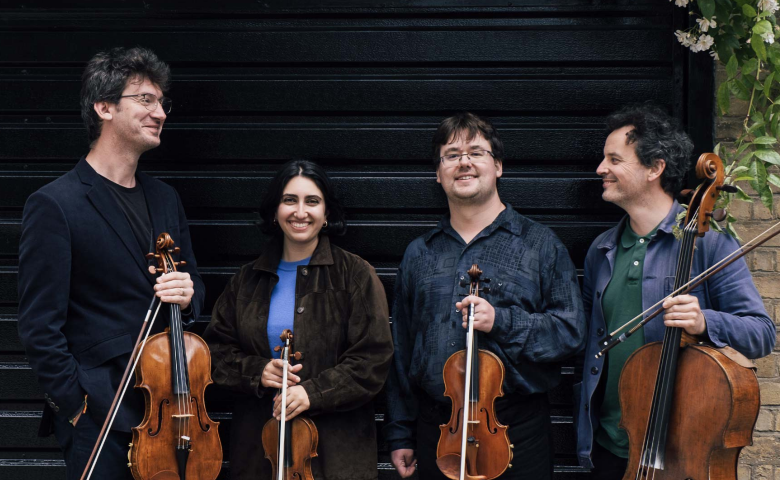
Throughout these performances, the playing of the Navarra Quartet (above) evinced an incisiveness and eloquence always at the service of this music; William Vann’s attentive pianism astutely deployed in his appealing arrangement of VW’s Fantasia on ‘Greensleeves’. Brynmor John opened the second half with that composer’s disarming take on George Herbert’s Love Bade Me Welcome (first of Five Mystical Songs), with both vocalists heard to advantage in An Old Man’s LullabyHerbert Howells’s setting of Thomas Dekker that made for a winsome envoi.

Taken overall, this was a wholly pleasurable evening and welcome confirmation of Venables’ creative prowess – his corpus of songs or song-cycles surely second to none among those for whom the English language is a source of never-ending and always unexpected possibilities.

Click here to read an extensive tribute to Ian Venables on from his husband, pianist Graham J. Lloyd – or click on the names to read more about Gwilym Bowen, Gareth Brynmor John, William Vann, the Navarra Quartet and Temple Music Foundation

Published post no.2,710 – Thursday 6 November 2025
Wigmore Mondays: Elias + Navarra = Mendelssohn Octet

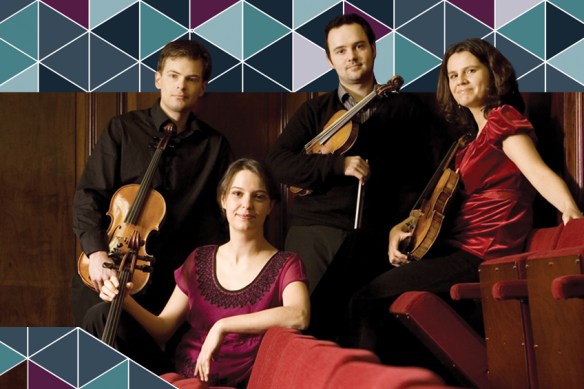
Elias String Quartet (above – Sara Bitlloch, Donald Grant (violins), Robin Ireland (viola), Marie Bitlloch (cello)); Navarra String Quartet (below – Magnus Johnston, Marije Johnston (violins), Rebecca Jones (viola), Brian O’Kane (cello)

Beamish String Quartet no.3, ‘Reed Stanzas’ (2011) (5:25-20:49) (Elias Quartet only)
Mendelssohn Octet in E flat major Op.20 (1825) (27:02-58:58)

Wigmore Hall, London; Monday 25 June 2018

You can listen to the BBC Radio 3 broadcast by clicking here

Written by Ben Hogwood

You would do well to find a really quiet spot before listening to this concert. That is because Sally Beamish’s String Quartet no.3, written for a first performance at the BBC Proms in 2011, begins with a distant offstage violin solo.

In her work Beamish is tapping heavily into the folksongs of the Hebrides, and the Elias Quartet second violinist Donald Grant, well versed in that literature, is an ideal player to begin the work (from 5:25), with all the inflections the style of writing brings. As the ensemble join nearly two minutes later Beamish’s harmonic workings become clearer, but the distinctive folk melody continues to pull the ear.

A set of ‘stanzas’ provide development and variations on the theme, with the one from 8:15 changing the mood considerably from wide open to closed in. From 11:25 violin and cello join in a duet, before the music breaks into a quicker and much more assertive section. Then after some pretty frenetic dialogue, the mood cuts once again towards that of the opening, moving back towards the original folk melody, which subsides to silence once again.

The performance here was an intense one, its colours and harmonies showing a clear debt to Britten, whose quartets Beamish was listening to at the time. Yet there is no fully blown pastiche here, with a distinctive style of quartet writing that stays very open and direct in its communication. It was great to see Sally Beamish in the audience.

The Elias Quartet were then doubled in number by the Navarra Quartet to play one of Mendelssohn’s many early chamber music masterpieces. The Octet is a real one-off, mastering a form few composers since have managed to achieve. It is all the more remarkable when you consider Mendelssohn completed the work at the age of just 16!

The piece begins with typically youthful Mendelssohn qualities of enthusiasm and vigour, but with a melody that immediately sticks in the head (from 27:02-41:02). The second theme (29:07) is a nice complement, serene and thoughtful. What really stands out is the fullness of texture when compared to the string quartet before, Mendelssohn beefing up the sound with the two cellos and violas at the lower end in particular. Yet he thinks nothing of changing the mood quite considerably in the course of the first movement, with a sudden vulnerability introduced around 35:50 that checks the positive thoughts around it – until a rush back to the original theme.

The second movement (from 41:30-48:18)) is a slow Andante, and it exploits the uncertainty briefly aired in the first with a darker outlook but also a romantic sense of longing. It too thinks nothing of moving to a faster section, quite a fraught exchange of ideas.

The third movement scherzo (48:39) is the most celebrated of the four movements, containing strong pointers towards Mendelssohn’s Shakespearian music, and especially the Scherzo from A Midsummer Night’s Dream. This one too is fleet of foot, with silvery shadows darting around the texture all the way through to the end at 53:03. At this point we surged into the finale, a thrilling dialogue between the four different sections of instruments (two lots of violins, violas and cellos) before a sweep to the finish at 58:58.

This was an excellent, joyous performance from the two ensembles, even if just occasionally it had too firm a foot on the accelerator pedal, with some of the tuning in the first movement going slightly awry as the ensembles pushed further forwards.

Further listening

There are no recordings currently available of Reed Stanzas, though a natural progression for further listening is a disc containing Beamish’s first two string quartets:

If the Mendelssohn appeals, this version from the Academy of St. Martin-in-the-Fields Chamber Ensemble combines the Octet with a much later work, the wonderful and underrated String Quintet no.2:

For more early Mendelssohn, you simply have to try the amazing Piano Quartets, written when the composer was just 14, and showing an uncommon mastery of writing dramatic music for the piano: