On Record – Oliver Patrice Weder: The Pool Project (SA Recordings)

oliver-patrice-weder

reviewed by Ben Hogwood

What’s the story?

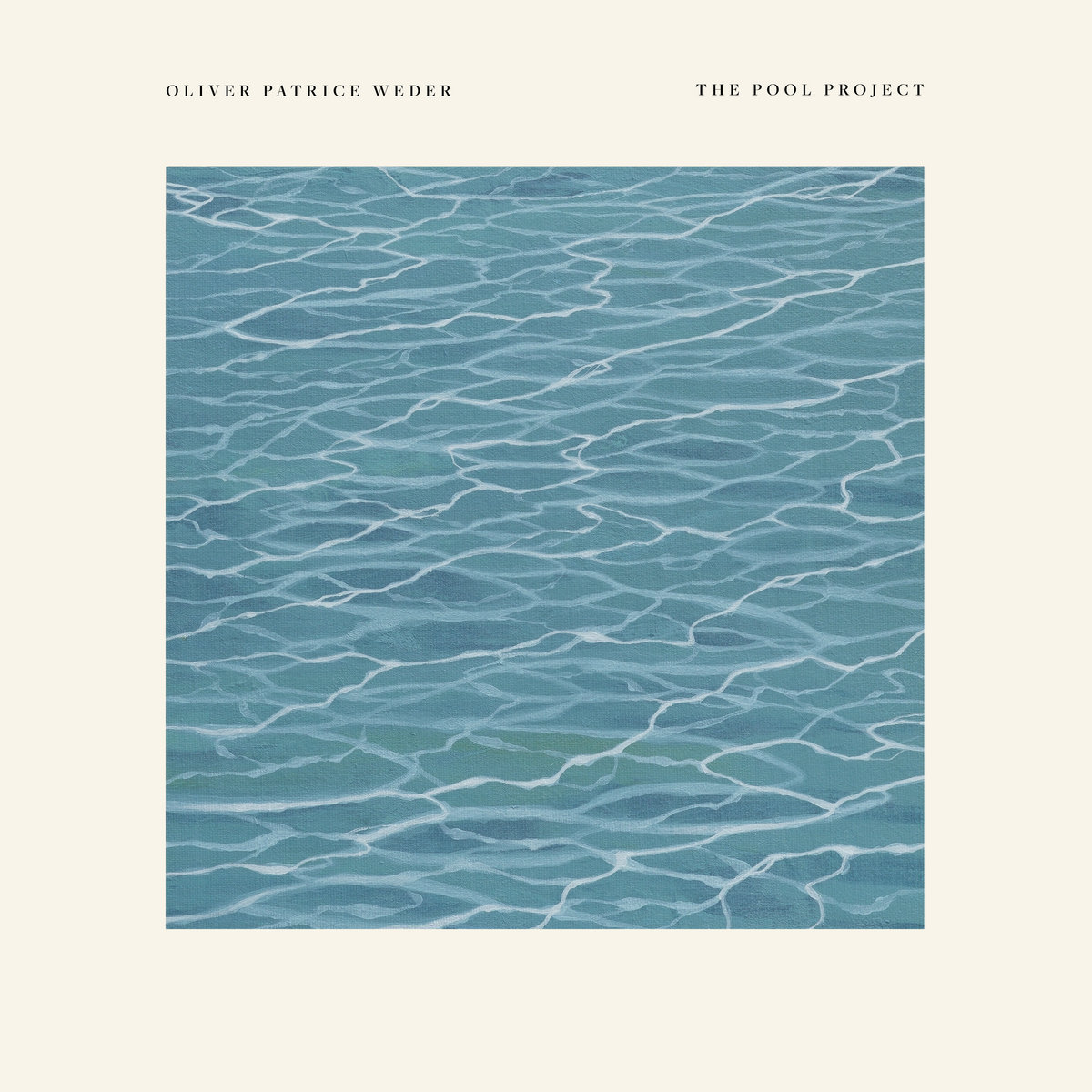
It is helpful to know where The Pool Project was recorded. Oliver Patrice Weder, a Swiss composer residing in Spain, recorded the album with friends in a pool house, surrounded by an evergreen oak tree forest, just outside of Madrid.

Weder has an intriguing musical history, channeling his love for The Doors‘ keyboard-based work into more classical and jazz-orientated work. Keeping this open musical policy, he sketched the music for The Pool Project in this restful area, before bringing friends in to contribute. The instrumentation speaks more of jazz, including voices, alto flute, bass clarinet and percussion, with Weder himself providing keyboards and electronics.

Weder’s own company Spitfire Audio are simultaneously releasing a sound library, giving composers and producers the opportunity to manipulate the sounds from the album for their own purposes. The toolkit offers an extension of these sounds, capturing the acoustics of the pool house, and is offered as an easy-to-use plug-in.

What’s the music like?

As restful as can be. The lapping of the water and the soft, Satie-like piano loop used in Rainbow Fish are indications of the pace at which Weder is going to operate. Satie is a good point of reference, for this piece operates along the line and rhythmic cadence of his Gymnopédies, developing its ideas subtly.

Weder uses imaginative orchestration to allow his ideas to bloom. The winsome bass clarinet in Lala, or the mellow alto flute on Rainbow Fish are really nice touches, as is the older, slightly untempered quality he gives to the piano, with its soft undercurrents of melody. This gives the chromatic line on Encina a displaced quality, also adding a mellow tone to the soft oscillations of Peter.

Forest Glade bubbles with life, introducing a steady but unobtrusive beat to go with its softly reverberating phrases, secured from a delayed Wurlitzer electric piano.

Does it all work?

It does. Everything about this meditation is unforced, Weder’s ideas allowed to pursue a naturally evolving path until they come to rest. Sometimes the listener is invited to sit back and enjoy the lightly applied jazz flavourings to the melodies, but then on occasion Weder complements the slow, quiet music with pockets of reviving energy.

The guest instrumentalists pitch their contributions just right, and deserve to be credited – Clara Gallardo on fulsome but mellow alto flute, while Joaquín Sánchez Gil moves from light meanderings on Peter to more outright, jazz-influenced work on Lala. Guitarist David del Cerro Turner frames the closing Distant Island beautifully, while percussionist Juan Espiga brings the necessary movement to Forest Glade.

Is it recommended?

It is. The Pool Project is a beautifully executed piece of communal meditation, its simple phrases blossoming into restful tableaus of music.

Stream

Buy


On Record – Jordan Rakei: What We Call Life (Ninja Tune)

jordan-rakei

reviewed by Ben Hogwood

What’s the story?

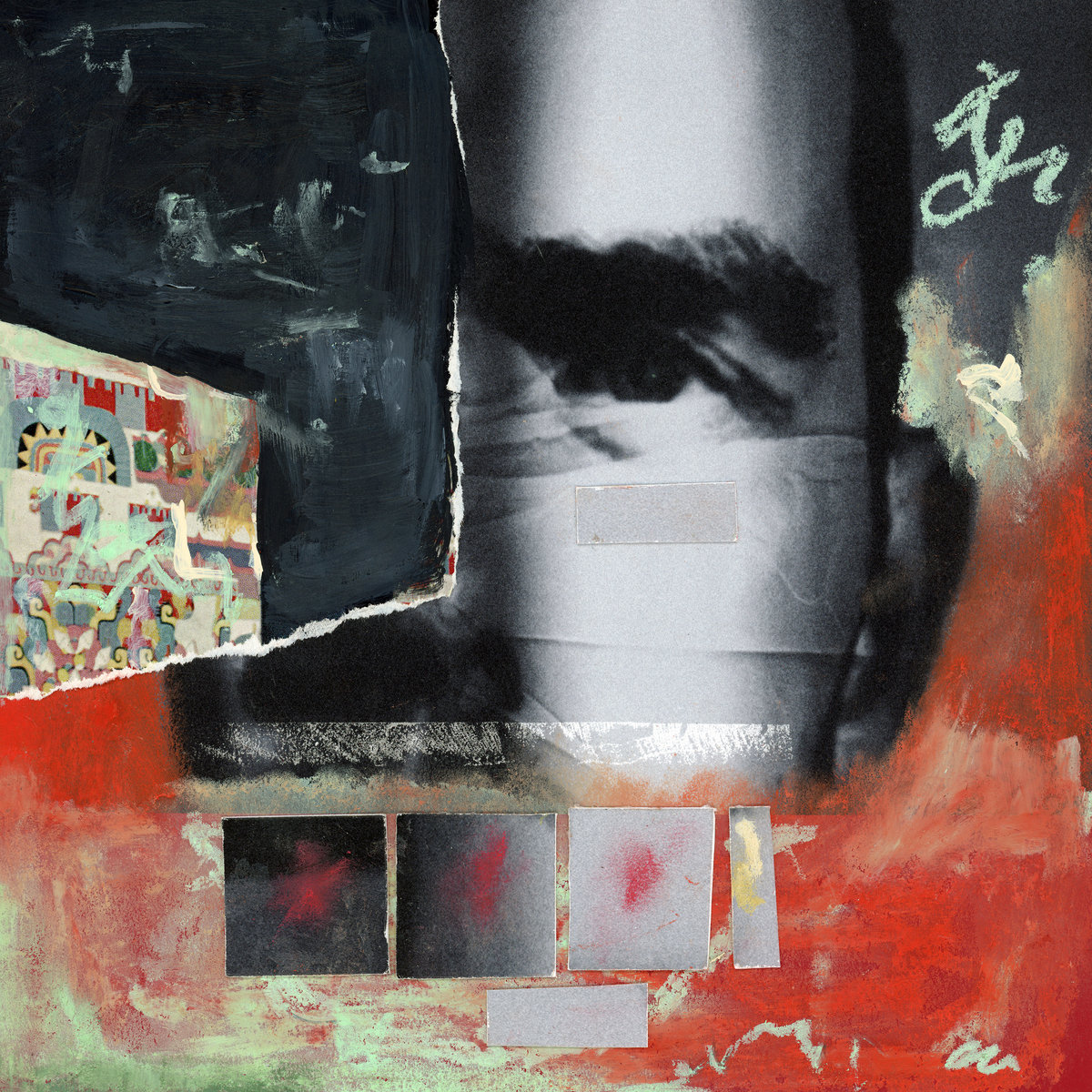
Jordan Rakei is hitting a rich vein of form and productivity in his musical life. What We Call Life, though, is his most meaningful and personal album to date. It is an exploration of his experiences during therapy, and in particular ‘positive psychology’. In this deeply personal exercise he learned a lot about himself, his behaviour patterns and anxiety triggers, and how his marriage compares to that of his own parents.

Not the average material for a soulful singer – but Rakei takes it as the basis for a profound look at his own life.

What’s the music like?

Perhaps not surprisingly, What We Call Life is deeply expressive. Yet Jordan Rakei manages to avoid any charges of self-obsession that could be levelled at him. Instead, he makes every situation and experience very relatable, and he does that through his own voice – which is a subtly powerful instrument and communicator.

His words are very easy to follow but the song structures really help his cause, as does the instrumentation. The string arrangements are beautifully managed, the slightly skewed beats with hints of funk and / or soul at every turn, the delivery in a conversational style – all these aspects of his style add extra authenticity and authority.

The songs are deeply considered – and even the bigger structures like Brace take their time but leave their mark too. The title track is especially impressive, but Rakei’s most vulnerable moments – Clouds, Send My Love and Illusion – are his most revealing.

Does it all work?

Yes. With each album Jordan Rakei’s authority grows, and this one is the most consistent yet. Measured but heartfelt, each of What We Call Life’s songs is both believable and relatable.

Is it recommended?

Wholeheartedly. Few singers could match his poise and personal style at the moment, and it is all the more impressive given that no singers sound like Jordan Rakei at the moment. He is a serious singer, but he is a compelling one too.

Stream

Buy


Switched On – DJ Food: Kaleidoscope Companion (Ninja Tune)

dj-food-kaleidoscope

reviewed by Ben Hogwood

What’s the story?

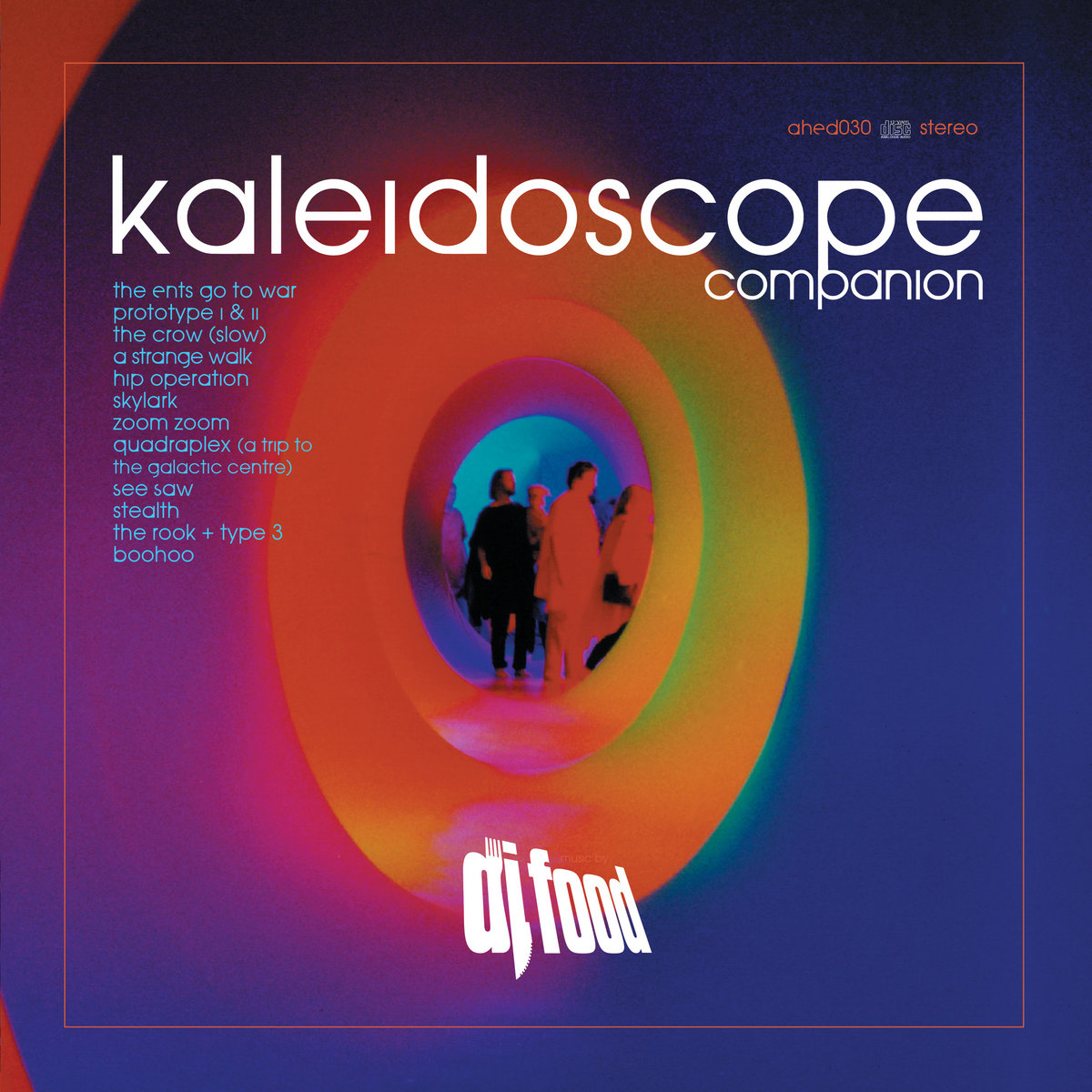
Strictly Kev and PC, the men behind DJ Food, can reveal just how productively they spent last year’s lockdown. Aware that it marked two decades since the release of Kaleidoscope, when DJ Food was a mysterious incarnation conceived by Ninja Tune founders Coldcut, the two rounded up music from their archives of the recording sessions. To their surprise the volume and quality of the material was such that Kaleidoscope Companion became possible. It is a collection of unreleased tracks, remixes and alternate versions, all closely related to the album but structured in such a way that a whole new opus has been created. Kev explains it best, as ‘not a new DJ Food album’, more ‘an old one that never was’.

What’s the music like?

Given that this electronic music is essentially 20 years old, Kaleidoscope Companion could have been written yesterday. That says much for the staying power of DJ Food, and how inventive the beats and sound pictures were in the year they were released. Here the quality of the compositions is immediately evident.

Take Skylark, exposed as a mini-masterpiece. With the crackling of the outdoors effectively evoked, an elastic bass line is established before a stringed instrument climbs through the textures and floats on the air effortlessly.

The Crow (Slow) is one of the welcome alternate versions, stretching its material into a gorgeous panoramic view that could easily last double the length it is given here. See Saw also offers reassuringly thick textures of an ambient persuasion, as does the closing Boohoo, with a serene string line that segues into softly humourous pitch bends at the end.

There are elements of spatial jazz here. Hip Operation (great title!) is an active story, building with white noise beats and detective-drama trumpets. Stealth, an alternative version of the Gentle Cruelty remix of The Ageing Young Rebel, is a nocturnal scene with a mellow but quite mournful flute tone. Its spoken word vocal, telling of self-obsession, is remarkably prescient for today’s times. The Rook + Type 3 takes a more cinematic turn, with another flexible bass and brief figures from strings and clarinet, while offbeat percussion flickers and flares in the background.

The collection’s centrepiece is Quadraplex (A Trip to the Galactic Centre), which starts without beats but then wanders seemingly into the middle of a clearing and a meditation in full swing, with thrumming percussion and a series of spatial effects. Blended from several different takes, it is a mesmerising piece of work.

Does it all work?

It does. The structure of Kaleidoscope Companion has been carefully thought through, and the positioning of Quadraplex in the middle splits the collection into three parts, with a meditative quarter of an hour at its heart.

The analogue clicks and crackles around the edges of many of the tracks are welcome, and the refusal of the music to comply to stricter digital confines serves it well too.

Is it recommended?

Yes. If you listened to this without knowing the author, you would bookmark it as a talent to keep an eye on, a source of new and exciting electronica. The fact that it is a companion to an already excellent and revered album only heightens the appeal, showing just how durable electronic music has proved to be. Fans of the Ninja Tune label will love it.

Stream

Buy


Switched On – Leon Vynehall: Rare, Forever (Ninja Tune)

leon-vynehall

reviewed by Ben Hogwood

What’s the story?

Thus is the first album of Leon Vynehall‘s thirties, a response to the nagging inner voice asking where he was going artistically. The response is predictably varied, a creative line in the sand showing off what a versatile producer he has become.

What’s the music like?

Because of the variety of music here, Rare, Forever hangs together extremely well as an album. There are strong undercurrents running through it too- Vynehall’s ear for richly coloured sounds is always apparent, as is a strong affinity with elements of rave from the late 1980s. These are revealed in the quicker tracks, but the atmospheric slower material is equally effective.

From the off, a strong melody winds upwards before cutting to loping beats as Ecce! Ego! takes shape. Mothra features probing electronic riffs, flickering against a white foamy backdrop. Alichea Vella Amor takes a thoughtful tenor sax solo and winds it around a metronomic backing, while on Snakeskin ∞ Has-Been the beats cut loose.

The ambitious beats and chopped up rhythms are a strong feature of the album as it gets into its stride. Worm (& Closer & Closer) is a particularly good track, with a dislocated vocal and big, wide open loops. An Exhale has splashes of colour over the bumpy beats, while Dumbo also hits a jagged groove, the rave elements up top. The air hangs thick and heavy for the elegiac Farewell! Magnus Gabbro, while All I See Is You, Velvet Brown gives us an atmospheric close.

Does it all work?

Yes. A very different album to his previous acclaimed long player Nothing Is Still, but one that shows Leon Vynehall has capacity to master a number of different styles and speeds. Nothing Is Still was achingly cinematic at times, but Rare, Forever has a wide range of approaches, and hits a powerful set of grooves as it progresses.

Is it recommended?

Very much so. Rare, Forever is a portrait of an artist at a fascinating point in his career. The multi-talented Leon Vynehall still has enormous potential, and it will be fascinating to see where it takes him next.

Stream

Buy


Switched On – Bicep: Isles (Ninja Tune)

reviewed by Ben Hogwood

Isles is the second album from Bicep, the Belfast-born and London based duo of Matt McBriar and Andy Ferguson, who dazzled us with their self-titled album in 2017. On it they showed a love of early rave music and an ability to channel it into futuristic beats and soundscapes. This resulted in a number of high profile advert appearances (BMW especially) but also translates into a brilliant live show.

When live gigs do return, this ‘home listening version’ of their second album will find new impetus in front of an audience, with Bicep always keen to give their fans the biggest show possible.

What’s the music like?

In truth it would be impossible to recreate the primal thrill of Bicep’s debut, which was all about having the maximum possible impact on the dancefloor. Yet Isles runs its predecessor close, retaining the distinctive clipped beats and riffs that make the duo’s music instantly recognisable, and adding some imaginative samples and vocals drawn from international sources.

Second single Apricots is a prime example, powered by a double sample of traditional Malawian singers recorded in 1958 and a song from the Bulgarian State Radio and Television Choir. Along with Atlas it runs close to the sound of their first album, with enjoyable kinetic energy and early house highs. Meanwhile Sundial uses Asha Boshle and Bhupinder Singh’s Jab Andhera Hota Hai, a sublime piece of work catching the dazzling rays of our star.

The clipped beats find an ideal complement in the vocals of Clara La San on Saku, a singer who manages the balance of being quite subdued but capturing an underground garage sound. The two really feed off each other. Vocals of a very different kind inform the beatless Lido, based on a sample of a motet by Italian renaissance composer Carlo Gesualdo.

These examples show just how broad the reach of McBriar and Ferguson can be, a cosmopolitan approach that keeps a healthy edge to the music and gives the album a healthy variety.

Does it all work?

Pretty much everything does. Just on occasion it would be good to see Bicep develop their source material a bit more, as in a track like Rever, with Julia Kent, which has a really good sample but doesn’t push on as much as you might expect. Elsewhere though, when the beats ping around like images on a 1980s video game, Bicep are on great form.

Is it recommended?

Yes. While Isles may not have their immediate thrills and spills of the Bicep debut, it still has plenty going for it. A fine follow-up which shows them to be great beatsmiths on record – and let’s hope it’ not too long before we get to see them live as well.

Stream

Buy