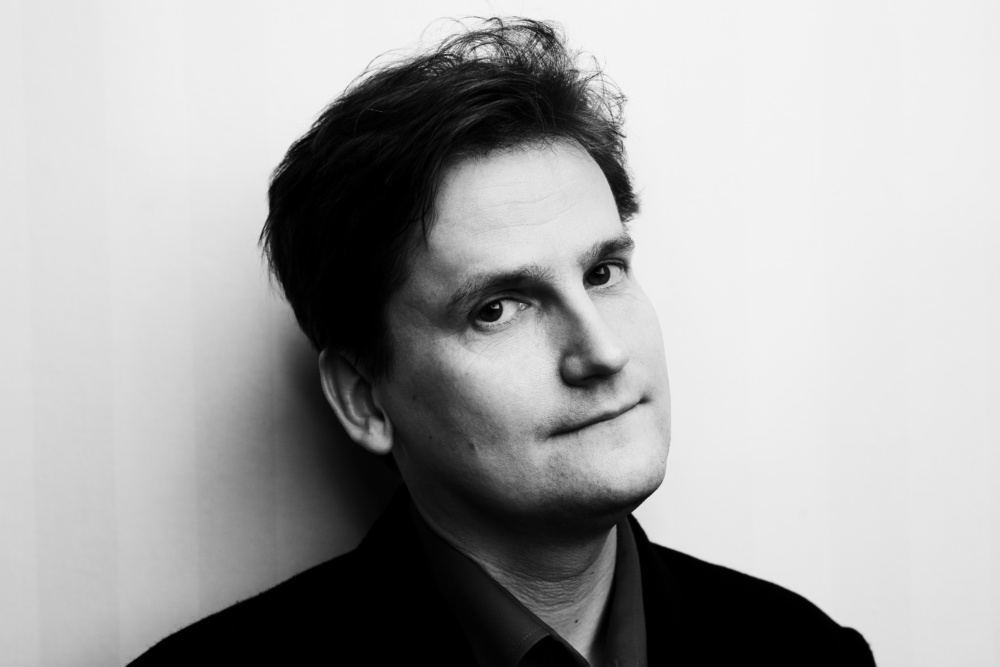
In Concert – Olli Mustonen plays Prokofiev Piano Sonatas Part 2 @ Wigmore Hall

Olli Mustonen (piano)

Prokofiev
Piano Sonata no.5 in C major Op.28 (original version) (1923)
Piano Sonata no.8 in B flat major Op.84 (1939-44)
Piano Sonata no.1 in F minor Op.1 (1909)
Piano Sonata no.3 in A minor Op.28 (1917)
Piano Sonata no.7 in B flat major Op.83 (1939-42)

Wigmore Hall, London
Tuesday 1 November 2022

Reviewed by Ben Hogwood

The second part of Olli Mustonen’s journey through Prokofiev’s nine completed piano sonatas featured crucial roles for piano tuner and page turner. On the first night Mustonen had experienced problems with the upper register of his Steinway, which fell out of tune under duress as the Piano Sonata no.6 progressed. Tonight one was at hand to ensure temperament was consistent throughout, while the page turner deserves a special mention for his busy supporting role in the whirlwind passages of the Piano Sonata no.7.

The real star, though, was the music – as Mustonen has always been at pains to point out. He is a humble artist whose preparation was clearly meticulous, but one with an extraordinary range of dynamics and the ability to think quickly on his feet / fingers. Here the composer in him comes to the surface, his thoughts on stage often highly instinctive while offering unique insights into Prokofiev’s music.

The order of the sonatas on the second night was as logical as the first – with two more substantial works before the interval and three short sonatas after, two of those presnting their arguments in single-movement form. The Piano Sonata no.5 in C major was first, a work whose initial tempo marking Allegro tranquillo was at odds with the music itself. Certainly Mustonen set about his task with a uniquely probing intensity for the right hand line, becoming increasingly agitated as the music progressed. The Fifth, the only sonata to be written outside Russia, has an unmistakeably French flavour, its Parisian origins found in languorous bass lines and harmonies aligning themselves with the Les Six school. The third movement presented an enchanted sound world, presenting impish qualities but evading any attempt to pin down a definite mood.

The Piano Sonata no.8 is the largest of the nine sonatas, capping the wartime trilogy completed in the early 1940s. Mustonen started in a dreamy mood, but soon the thoughts meandered and the music became increasingly distracted. The powerful middle section was capped by a remarkably strong outburst of feeling, passions near to the surface. The slow movement had warm lyricism and cold sorrow in almost equal measure, while the finale’s capricious theme gave way to music of raw power, with fiendishly quick passagework in the right hand and some incredibly intricate workings under the bonnet. The spectre of war lies close to the surface of this work, and its percussive clout in the faster music gives it impressive power, yet the more measured melodies made the lasting impressions.

It was fascinating to hear Prokofiev’s Piano Sonata no.1, his Op.1, after the interval. While not his first work in order of composition, this is a piece looking back to peaks of ardent Russian romanticism as well as Chopin and Liszt. The rich harmonies were however topped by signs of the mature Prokofiev to come in the occasionally jagged rhythmic profile and some spicy dissonances, all of which Mustonen conveyed in an incident-packed 7 minutes.

The Piano Sonata no.3 in A minor, also a single-movement work, looks sideways at the sonatas of Scriabin. An awful lot happens in the course of its eight minutes, from the profile of a virtuoso tarantella to an emphatic signing off. Along the way there are distinctive melodic snippets, crisply developed, with harmonic barbs and clipped comments. Later in the sequence some bell-like sequences ring out, projecting easily to the back of the hall. Mustonen’s affection for this music was clear, the sharp-witted themes and peppery harmonies brilliantly realised.

The Piano Sonata no.7 in B flat major was the logical next step, Mustonen delivering the three works with barely a pause in between. The shortest of the wartime trilogy, the Seventh is the most explicitly virtuosic, its driving rhythms making it something of a crowd pleaser. Mustonen took its outer movements at a blistering pace, the right hand somehow phrasing the quirky opening melody of the first so that it still made sense, before rolling out the barrel as the music tripped along. The real heart of the performance lay in the Andante caloroso, this curious marking of the second movement asking for warmth from the performer in what was by far the slowest music of the night. There is a deeply yearning centre to this movement, and Mustonen’s soulful interpretation felt just right. The finale could not have been more different, a hair-raising drive to the finish where the insistent three-note motif in bass octaves threatened to go right through the floor. The right hand had a breathtaking speed of transition, somehow coping with the aggressively fast tempo to drive the music kicking and screaming over the line.

Mustonen received a well-deserved standing ovation for his Herculean efforts, his incredible stamina powered by Prokofiev’s unique and instantly recognisable writing for the piano, and his commitment obvious from first note to last. As if to remind us of Prokofiev’s innocent and simple lyricism, he then gave an excerpt from the Music for Children Op.65 as an encore, capping a remarkable two days of music.

In Concert – Olli Mustonen plays Prokofiev Piano Sonatas @ Wigmore Hall

Prokofiev

Piano Sonata no.4 in C minor Op.29 (1917)
Piano Sonata no.2 in D minor Op.14 (1912)
Piano Sonata no.9 in C major Op.103 (1947)
Piano Sonata no.6 in A major Op.82 (1939-40)

Olli Mustonen (piano)

Wigmore Hall, London
Monday 31 October 2022

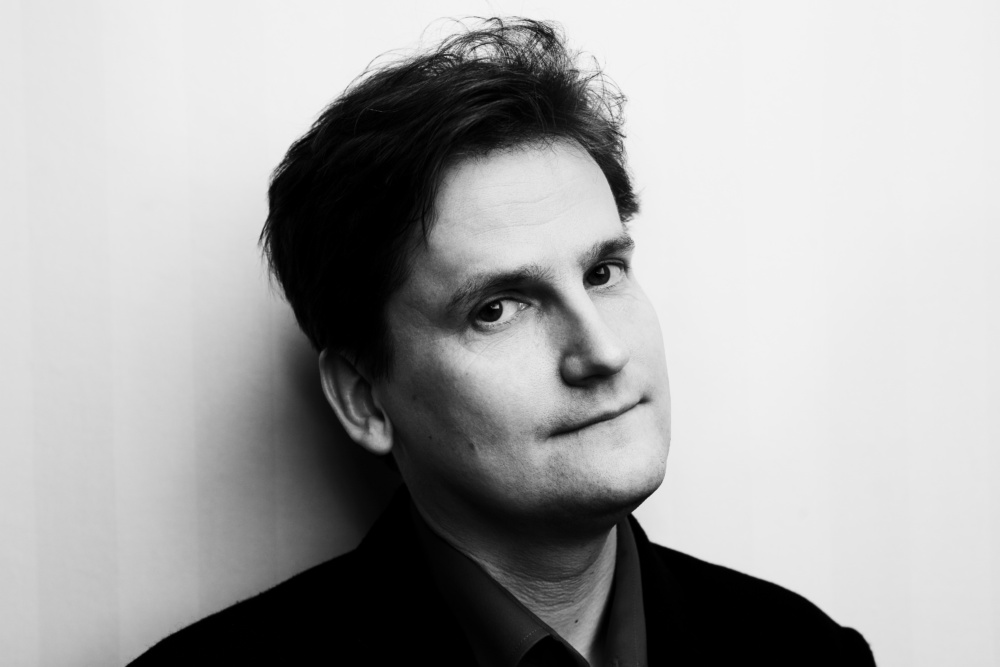
Reviewed by Ben Hogwood; Photo of Olli Mustonen (c) Heikki Tuuli

Sergei Prokofiev is a composer whose music responds well to a ‘completist’ treatment. In the last decade London has seen cycles of his seven symphonies (from Valery Gergiev and the Mariinsky Orchestra) and his five piano concertos, given in a memorable Prom in 2015 with the London Symphony Orchestra supporting five different soloists. Now came the chance to look more closely at the composer’s writing for piano in a two-night performance of the nine solo sonatas, given by a specialist of the composer’s music.

Olli Mustonen has recorded the Prokofiev concertos but not yet committed his thoughts on the sonatas to disc. Should he do so the results will be fascinating, for he has a highly individual and uniquely compelling take on this composer’s music. His is an energetic approach, and even by the end of the first movement of the Piano Sonata no.4 he was mopping a fevered brow. Fourteen movements later he had delivered a revealing look at music whose power to reflect its time and place of composition is remarkably strong, carrying profound messages forward to the present day.

Born in what is now Ukraine, Prokofiev experienced great trials and separations throughout his life. Those tensions are felt in his music, where they are offset by a ready sense of humour, expressed through piano writing that emphasises athleticism but makes room for tender lyricism, backed by an instinct for concise yet developed frameworks in which the music can sit. As a result, pieces and movements rarely overstate their welcome.

Piano Sonata no.4 was a good choice with which to start, a collection of old jottings sometimes subtitled D’après des vieux cahiers (After Old Notebooks). Using material dating back to 1908, Prokofiev assembles a selection of inner thoughts and bittersweet memories. Mustonen expressed these first hand, taking liberties with the rhythm and note emphasis on occasion but wholly in the spirit of the music. The language, initially gruff, melted to an emotive and balletic slow movement with an expressive tune using the white notes on the keyboard. The bustling finale exhibiting a common language with the contemporaneous Piano Concerto no.3.

Like the fourth sonata, the Piano Sonata no.2 bears a dedication to Prokofiev’s friend from the St Petersburg Conservatory Maximilian Schmidthof, tragically lost to suicide in 1913. The language here is more obviously Romantic, with elements of Chopin and Scriabin, but the tart lyricism in the right hand could only be from Prokofiev, and Mustonen brought it out with often startling clarity. There was a whirlwind scherzo, like a devilish skaters’ dance, before a cold melancholy encased the slow movement, which sounded like a distant relative of The Old Castle from Mussorgsky’s Pictures At An Exhibition. The helter-skelter finale, brilliantly played, took the audience on a fairground ride.

After the interval Mustonen gave a rare performance of the Piano Sonata no.9, an elusive work whose dedicatee, Sviatoslav Richter, confessed to finding it a difficult work to understand. Its music hints at a new simplicity, emphasised by the choice of C major as the ‘home’ key, but the awkward complexion of the music tells of a troubled mind, Prokofiev seemingly thrown by the end of the Second World War and yet another set of restrictions on musical style from the Russian authorities.

The faster figures in the first movement soon tired of their attempts to run away from this, but the macabre second movement suggested a restless toy shop after dark. Throughout the work, bursts of brittle melody threatened to extinguish the more songful elements of Prokofiev’s writing, though the forceful finale was typical of the composer in its power and obduracy. Mustonen did well to communicate what seemed to be a dip in the composer’s energy towards the close.

Finally we heard the Piano Sonata no.6, a work speaking directly to the wartime climate today. Written as the Second World War was raging, it is closely linked with the seventh and eighth sonatas, works that also tell of conflict, anger and desolation. The opening salvo of the Sixth was chilling indeed, but in Mustonen’s hands it became an outright assault, the treble notes biting through with such power that the ‘A’ on the piano lost its tuning as the sonata progressed. If anything this made the impact of Prokofiev’s writing even stronger, the scrunched-up harmonies raw and dissonant.

The Sixth is not a depressing work, however – as its stuttering Scherzo told, wrenched this way and that by a left-hand melody. The lyrical power of the third movement, initially subtle but then more overtly passionate, looked ahead towards the composer’s colourful ballet scores. Mustonen felt that connection, conducting himself whenever a hand was free, and sensing the orchestral connections for the voices in front of him. The finale had a curiously phrased but highly effective main theme, and when the artillery from the first movement returned it brought with it an even greater chill than before. The sonata ended in a cacophony of noise, powerfully wrought and given without quarter.

Taking the white heat out of the sonatas a little, Mustonen proceeded to charm with an encore of the Prelude Op.12/7, published in 1913 and often used as an encore by the great Russian pianist Emil Gilels. It was an unexpected treat, capping an evening of exceptional pianism.

You can hear Olli Mustonen’s recording of the Prelude, part of a Prokofiev miscellany recorded for Ondine, below:

Olli Mustonen plays Prokofiev

This week, Arcana will be visiting the Wigmore Hall to hear the complete piano sonatas of Prokofiev, played over two nights by Olli Mustonen.

The Finnish pianist is a specialist in the Ukrainian-born composer’s music, and it looks set to be a fascinating pair of concerts, offering a rare chance to appraise the complete works in this area of Prokofiev’s output. As a taster to illustrate his natural rapport with Prokofiev’s writing for the keyboard, here is Mustonen performing the Piano Concerto no.2 in G minor with the Singapore Symphony Orchestra and Hannu Lintu:

Olli Mustonen plays the complete sonatas at the Wigmore Hall, over two nights – for information click on the links for Monday 31 October and Tuesday 1 November:

Mustonen has also recorded the five piano concertos for Ondine, with Lintu and the Finnish Radio Symphony Orchestra. You can hear these dynamic accounts below:

Oxford Lieder Festival – Mr McFall’s Chamber: Solitude

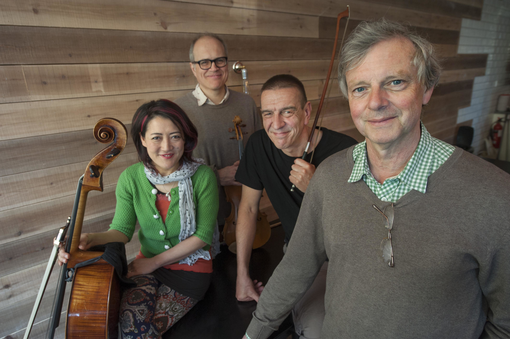
Mr McFall’s Chamber (above – Cyril Garac, Robert McFall (violins), Brian Schiele (viola), Su-a Lee (cello), Rick Standley (double bass), Maria Martinova (piano)

Sallinen Introduction and Tango Overture Op.74a (1997)
Pärt Für Alina (1976)
Tüür Dedication (1990)
Mustonen Toccata (1989)
Pēteris Vasks A Little Summer Music (1985)
Toivo Kärki Täysikuu (1953)
Sibelius Einsames Lied (arranged for piano sextet)
Unto Mononen Satumaa (1955)

Holywell Music Room, Oxford
Wednesday 17 October 2018 – 5:30pm

Written by Ben Hogwood

This recital, given in the intimate surrounds of the Holywell Music Room, was centred on Solitudes, a recent release of Baltic chamber music from Mr McFall’s Chamber, a group founded by violinist Robert McFall and centred around friends from the Scottish Chamber Orchestra.

This is surely how chamber music should be – a group of friends playing music that has mutual appeal – and the chemistry between the group was that of easy familiarity and affection. That affection spread to the audience, thanks to an easygoing set of introductions from McFall to put the music in context.

Over an hour’s concert we had seven very different and well-chosen pieces, linking nicely with the Oxford Lieder Festival’s theme of the Grand Tour and providing context of the Estonian music ahead of the evening concert from Kai Rüütel and Roger Vignoles.

Neighbouring Finland also got in on the act, and the Introduction and Tango Overture from Aulis Sallinen proved a bold opening piece once its persuasive rhythms and bold melodies got going. We heard more of the tango in Finland towards the end, with brilliantly swung versions of Toivo Kärki’s Täysikuu and Unto Mononen’s Satumaa.

Contrasting nicely with this was a brief but very poignant excerpt from SibeliusBelshazzar’s Feast, Einsames Lied (Song of Solitude, giving the concert its name), and a substantial Toccata by Olli Mustonen, which took Bach’s Brandenburg Concertos as its inspiration but used powerfully driven rhythms and motifs to make a punchy piece with full bodied Romantic harmonies. As with the tangos, these were performed with great character and verve by the sextet.

To balance the concert rather nicely there were pieces for reduced instrumental forces. The brief meditation of Für Alina from Arvo Pärt, Estonia’s favourite composer, left a lasting mark through the sustain applied by pianist Maria Martoniva. So too did the powerful Dedication for cello and piano by fellow Estonian Erkki-Sven Tüür, whose output falls under the influence of his time in progressive rock band In Spe. This blended catchy melodic riffs into a powerful call and response between cello and piano, with expressive cellist Su-a Lee and Martoniva quick to get to the heart of the piece.

Meanwhile A Little Summer Music, from Latvian composer Peteris Vasks, offered a sunny counterpart, its six short movements bursting with life and melody. Written as something of a pastiche, this did nonetheless work beautifully as six brief picture postcards of a Baltic summer, the violin imitating insects in the final movement while exploring attractive Latvian dances in the second, third and fifth. Cyril Garac played these with great dexterity and energy, helped with the fulsome accompaniment of Martoniva.

This was a hugely enjoyable concert, opening the door to a number of musical discoveries. Yet Mr McFall’s Chamber had one more trick up their sleeve, an encore of the hymn from SibeliusFinlandia, with the piece de resistance a solo role for Su-a Lee on musical saw. It was strangely moving as well as humorous – and capped a terrific concert.

Further listening

You can hear all of the repertoire from this concert performed by Mr McFall’s Chamber on Spotify. The album was made for Delphian Records:

Steven Isserlis & Olli Mustonen at the Wigmore Hall – A Revolutionary cello recital

Steven Isserlis (cello) and Olli Mustonen (piano)

Prokofiev Ballade, Op.15 (1912)
Mustonen Chanson russe & Danse Oriental (1995)
Kabalevsky Cello Sonata in B flat major Op.71 (1962)

Wigmore Hall, London; Sunday 29 October 2017

Written by Ben Hogwood

A chamber concert with revolution in the air. This carefully chosen recital was short and to the point, but contained some deeply meaningful music lying just outside of the normal repertoire for cello and piano. Just before Steven Isserlis and Olli Mustonen played an early Sibelius Waltz as their encore, the cellist explained the programme’s themes of revolution, both in Russia and Finland.

They began with a startling performance of Prokofiev’s Ballade in C minor, startling in the sense that this music was brought to life with an intensity rarely experienced in this or any of the composer’s music. Isserlis was at his probing best, particularly in the pizzicato sections, but Mustonen took the lead, bringing out the composer’s phrasing as only he can, with heavily weighted emphasis on the most important harmonic notes. Thus the piece became a Ballade in the truest sense of the word – dark, passionate and stormy.

Mustonen’s joining of links between his own Finland and Russia was next, the Chanson russe surprising in its simplicity, which was touchingly effective, before a whirlwind Danse Oriental that could have been contemporaneous with the Prokofiev. It made a highly effective concert piece, and both performers clearly enjoyed it.

The most substantial piece was Kabalevsky’s Cello Sonata, written perhaps inevitably for the great cellist Mstislav Rostropovich in 1962. With some of the Rostropovich dedications the cellist’s spirit hangs heavily over the music, and it was easy to imagine his larger than life projections of the melodies. While Isserlis may not have the sheer volume of the late Russian (who does?!) he has sensitive phrasing and a lovely tone at his disposal, and, at the beginning of the second movement, produced a feather-light touch on the tremolos that sent a shiver down the spine.

Again it was satisfying to experience a piece packed full of melody, and with more harmonic sleights that Mustonen inevitably brought to the fore. The style could be viewed as a hybrid of Prokofiev and Shostakovich – no bad thing, certainly! – and the main melody, which reappeared at the end, had a harmonic twist and simplicity that pulled subtly at the heartstrings.

The major-minor subtleties of the writing were fully explored, and while Mustonen often took the lead rhythmically this felt wholly appropriate. Kabalevsky is a composer whose music works well in the concert hall, with memorable tunes, a sense of humour and pockets of unexpected poignancy. It is less obviously weighted than Prokofiev but extremely enjoyable on its own terms.

Gratifyingly, Isserlis and Mustonen explored those qualities to the full, and with their virtuosity and drive they gave the composer the best possible advocacy. The Sibelius waltz, known as the Lulu Waltz, was economy itself, over in a minute – but leaving a strong impression.

Further listening and reading

Unfortunately this concert is not available online, but you can hear the premiere recording, made by cellist Mstislav Rostropovich with the composer at the piano, on the Spotify link below:

In addition the Kabalevsky Cello Concertos are highly recommended – and they can be heard in these recent recordings by Torleif Thedéen and the Hannover Radio Philharmonic Orchestra, conducted by Eiji Oue: