Arcana at the opera: The Bartered Bride @ Garsington Opera

The Bartered Bride (Prodaná nevěsta) (1866)
Comic opera in Three Acts – music by Bedřich Smetana; Libretto by Karel Sabina
Sung in Czech with English surtitles.

Mařenka – Pumeza Matshikiza (soprano), Jeník – Oliver Johnston (tenor), Kecal – David Ireland (bass), Vašek – John Findon (tenor), Ludmila – Yvonne Howard (soprano), Krušina – William Dazeley (baritone), Mícha – John Savournin (bass), Háta – Louise Winter (mezzo-soprano), Ringmaster – Jeffrey Lloyd-Roberts (tenor), Esmeralda – Isabelle Peters (soprano)

Rosie Purdie (director), Kevin Knight (designer), Howard Hudson (lighting), Darren Royston (choreographer)

Circus Troupe, Garsington Opera Chorus, Philharmonia Orchestra / Jac van Steen

Garsington Opera, Wormsley
Friday 30 June 2023

review by Richard Whitehouse Photos by (c) Alice Pennefather

Smetana may have played down its status in the context of his output, but The Bartered Bride remains the foundation of Czech opera and is much the most performed work stemming from that tradition, making this revival of Garsington Opera’s 2019 production the more welcome.

Rosie Purdie’s direction accorded wholly with Paul Curran’s original conception, transferring the scenario to a 1950s Britain where class restrictions and petty-mindedness were as much a given as in Bohemia a century before, yet the socio-political facet seemed as astutely handled as the cultural trappings of that first teenage generation were underlined without detriment to what was played out on stage. Kevin Knight’s designs clarified this setting most effectively, and Howard Hudson’s lighting was vivid without ever being garish. Most especially, Darren Royston’s choreography afforded communal togetherness during the crowd scenes while also ensuring that the circus troupe’s routines at the beginning of the third act came alive without any sense of their being a mere ‘add on’ to this production, and hence of the opera as a whole.
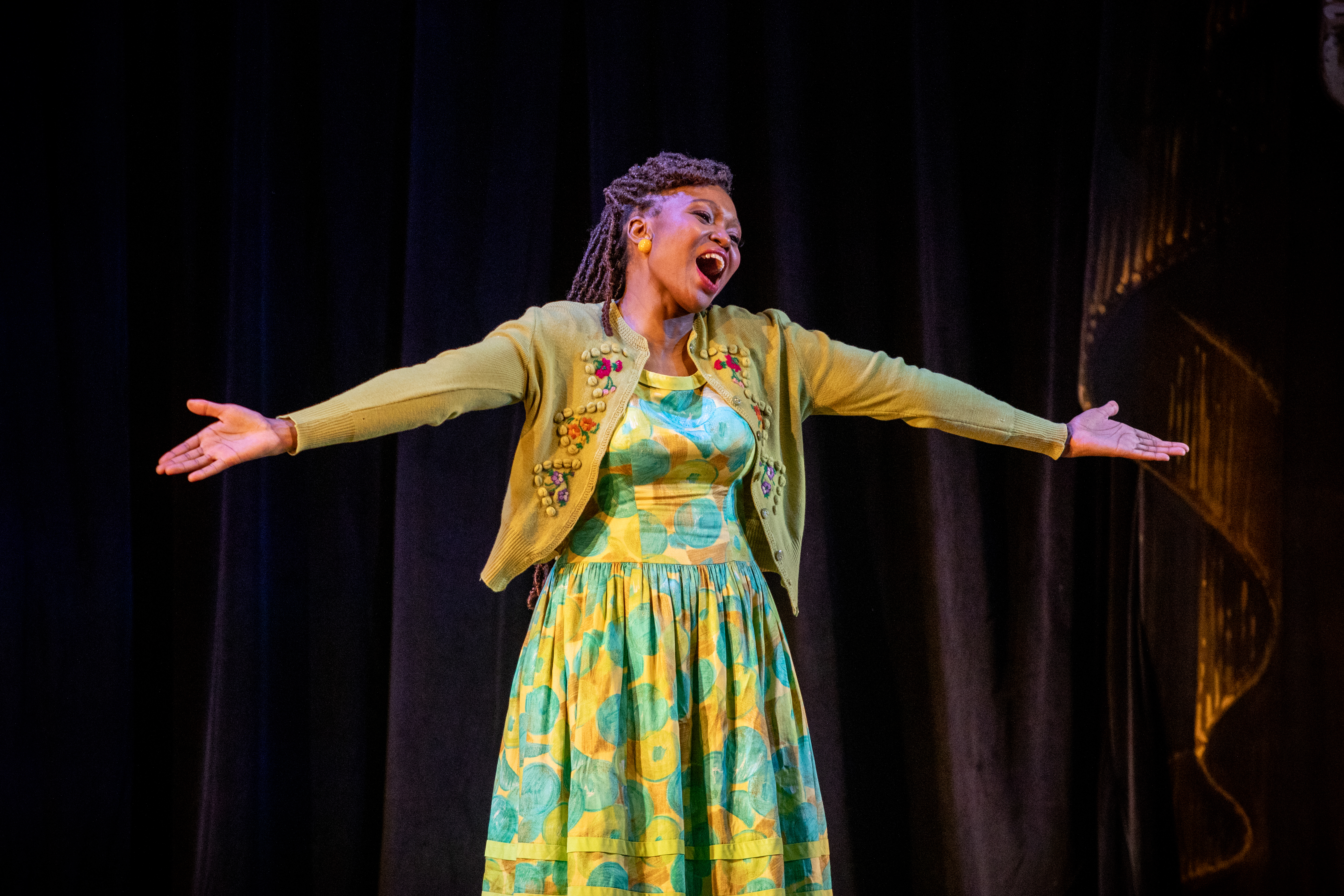
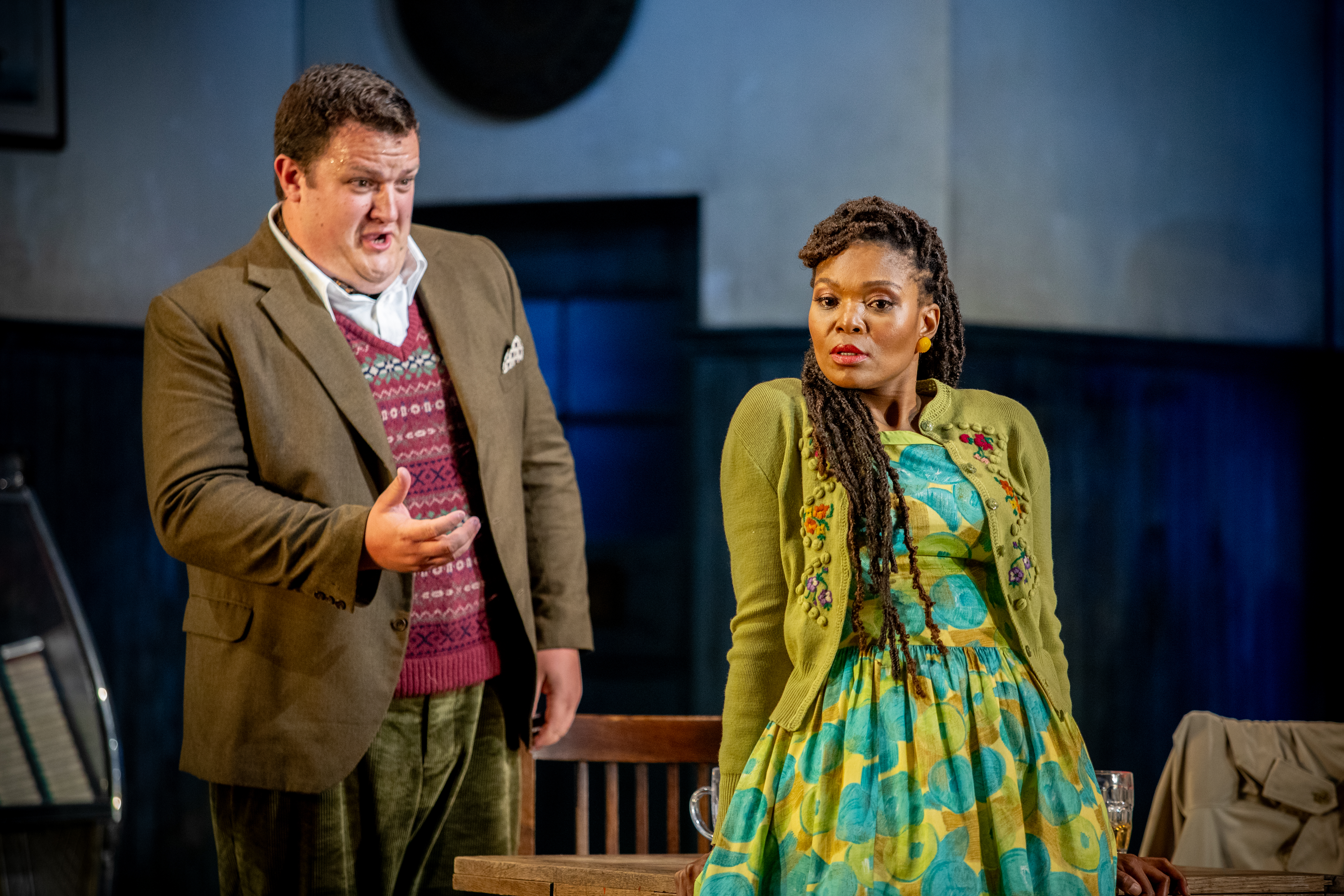
The casting could hardly have been bettered. Among the most wide-ranging role of any 19th-century opera, Mařenka was superbly taken by Pumeza Matshikiza (above) who conveyed pathos and real integrity of character to substantialize those comic capers unfolding on stage in what was an assumption to savour. Not comparable musically, that of Jeník is a notable role that Oliver Johnston rendered with verve and audible eloquence – such that his ostensibly hard-headed decisions could only be the outcome of an essentially sincere as well as selfless motivation.
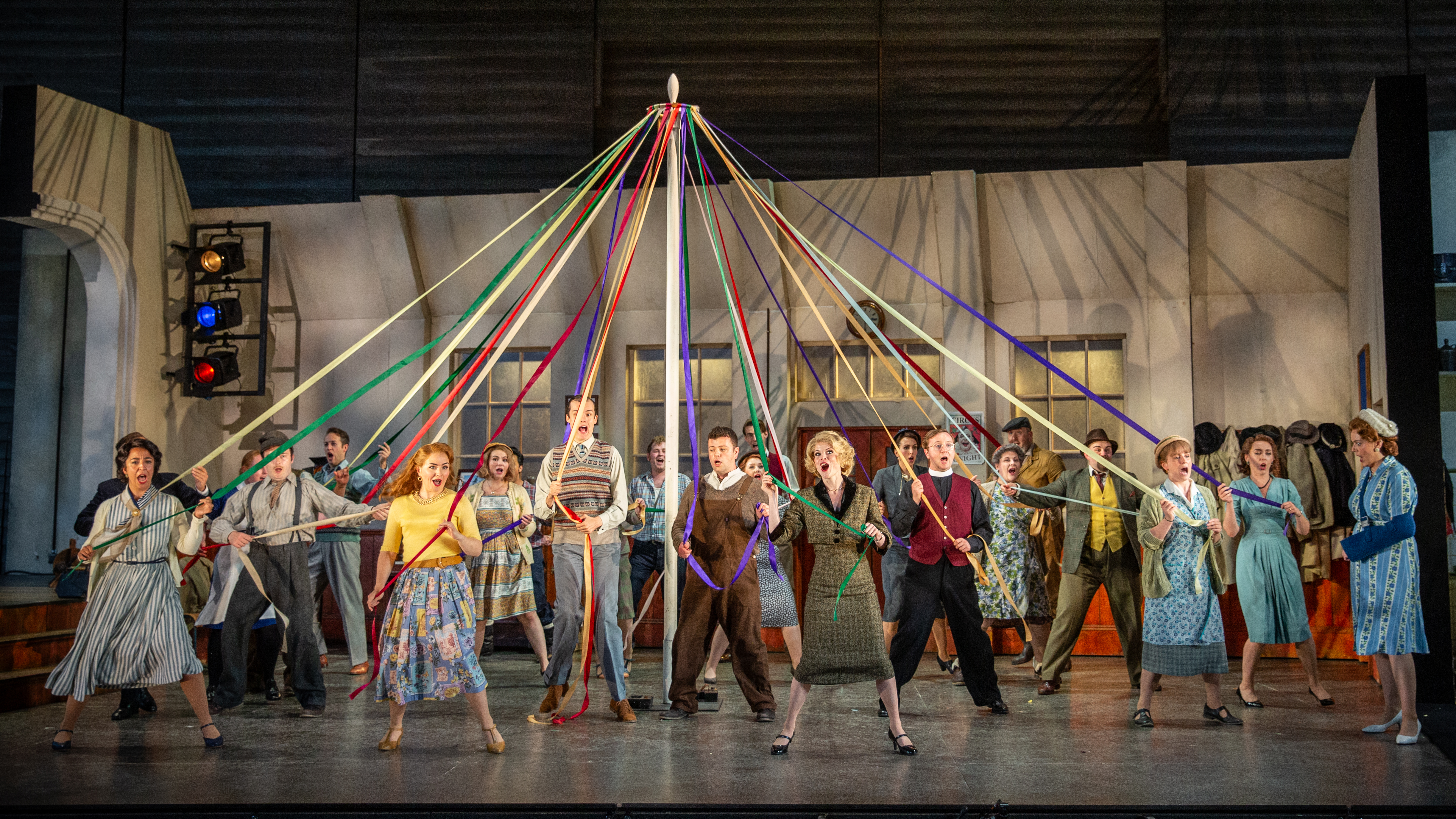
Notwithstanding that the secondary roles provide relatively little in terms of characterization, John Findon drew a degree of sympathy for the hapless Vašek, William Dazeley and Yvonne Howard were well matched as the warmly uncomprehending Kružina and Lumilla, while the scheming couple of Mícha and Háta saw a suitable response from John Savournin and Louise Winter, abetted in this respect by David Ireland’s roguish Kecal. Jeffrey Lloyd-Roberts was magnetic as the Ringmaster, and Isabelle Peters provided an entrancing cameo as Esmerelda.

The latter characters are part of a Circus Troupe that, fronted by Jennifer Robinson, brought the stage to life just after the dinner interval. Elsewhere, the hard-working Garsington Opera Chorus offered a reminder this is an opera second to none in terms of its choral contribution, while the Philharmonia sounded in its collective element under the assured direction of Jac van Steen, familiar in the UK through his extensive work with the BBC National Orchestra of Wales and Ulster Orchestra. In particular, the overture and set-pieces in each act had the requisite vigour and effervescence as has made them at least as familiar in the concert hall, and it remains a testament both to Smetana’s immersion in and understanding of his native music that only the ‘Furiant’ at the start of the second act derives from a traditional source.

The Bartered Bride has enjoyed numerous UK productions during recent decades – among which, this Garsington revival can rank with the finest in terms of musical immediacy and visual allure. Those not able to see it four years ago should certainly do so this time around.

For information on further performances, visit the Garsington Opera website. Click on the artist names for more information on Pumeza Matshikiza, Oliver Johnston, Jac van Steen, Philharmonia Orchestra and stage director Rosie Purdie

In concert – Alice Coote, Philharmonia Orchestra / John Eliot Gardiner: The Sea and the Land: Mendelssohn, Elgar & Dvořák

Mendelssohn Hebrides Overture Op.26 ‘Fingal’s Cave’ (1830, rev. 1832)
Elgar Sea Pictures Op.37 (1899)
Dvořák Symphony no.5 in F major Op.75 (1875, rev. 1887)

Alice Coote (mezzo-soprano), Philharmonia Orchestra / John Eliot Gardiner

Royal Festival Hall, London
Thursday 16 February 2023

Reviewed by Ben Hogwood Picture credits – John Eliot Gardiner (c) Sim Canetty-Clarke; Alice Coote (c) Jiyang Chen

This was an ultimately invigorating concert, using a cleverly constructed programme to look at how composers respond to the earth itself.

We began off the west coast of Scotland, the Inner Hebrides to be exact – and the uninhabited island of Staffa. Here it was that Mendelssohn saw Fingal’s Cave (above) in the summer of 1829. His musical response has become one of the composer’s best-loved pieces, an early and remarkably vivid example of the symphonic poem. Under John Eliot Gardiner, the Philharmonia Orchestra recounted the scene with remarkable accuracy, capturing the unusual, organ-like appearance of the landmark as well as the sea spray crashing around it. Gardiner steered a sure-footed and clear course through the water, aided by a wonderful clarinet duet from Mark van de Wiel and Laurent Ben Slimane in the second theme.

Alice Coote (above) then joined the orchestra, transporting us to the rarefied waters of Elgar’s Sea Pictures, the mezzo-soprano bringing to life five carefully chosen gems that took the composer far from his desk in Malvern in 1899. It took a while for singer and orchestra to achieve the optimum balance, so the words on the screen above were helpful as Coote found her feet. She did so quickly, and the somnambulant atmosphere of Sea Slumber-Song was cast, the strings lapping at the edges of Coote’s beautifully placed words. As she grew into the role so the gently rocking In Capri was attractively weighted and subtly intense.

Sabbath Morning At Sea was solemn yet soon reached for the heights, Coote’s innate grasp of the text matched by Gardiner’s control and shaping of the melodic line from the orchestra. The celebrated Where Corals Lie was perhaps inevitably the highlight, but The Swimmer ran it close, running all the way to a richly coloured high register from the singer at the end. Support came from the depths, too, with Alistair Young’s sensitive contribution on the Royal Festival Hall organ one to savour.

We returned to land for Dvořák’s Symphony no.5, the work with which he ‘rebooted’ his career as an orchestral composer in 1887, his publisher having spotted an opportunity to re-promote a piece finished in 1875. In this concert the parallel with the seasons was irresistible, the symphony’s first movement in particular resembling the flourishing of flowers in spring. Fleet footed strings were complemented by fresh faced woodwind, headed by the burbling clarinets who shone once again in the opening theme.

The Fifth is a sunny work, sitting in the shadow of the last three symphonies (nos.7-9) where live performances are concerned. As this concert revealed, however, it is a descendant of Beethoven’s Pastoral symphony, a work with considerable depth of its own and many different orchestral colours in which to revel. After a vivacious first movement, where Dvořák’s themes were given the best possible chance to shine, the cellos took the lead in their burnished opening to the romantic slow movement. This serious, minor key theme – surprisingly similar to the main tune of the Mendelssohn – was supplemented by an attractive, triple-time dance in the major key.

The slow movement segued effortlessly into the Scherzo, where the flurry of violins conjured up a vision of dancers trying to find their feet on the floor. The give and take between orchestral sections was a delight both to hear and to watch, as it was in the finale. The material here turns a little sour initially, Dvořák struggling manfully to regain the positive demeanour of the first movement. In Gardiner’s hands this was a compelling argument, ultimately won with the help of the superb Philharmonia brass, trombones punching out their melodies to thrilling effect. Once the ‘home’ key was reached the winter storms retreated and we basked in glorious musical sunshine, capping a fine evening where spring really did seem within touching distance.

You can read all about the 2022/23 season and book tickets at the Philharmonia Orchestra website.

In concert – Members of the Philharmonia Orchestra / Olivia Clarke: Music of Today: Bryce Dessner

Bryce Dessner
The Forest, Sederunt Principes (2019) (UK premiere)
Lachrimae (2012) (UK premiere)

Members of the Philharmonia Orchestra / Olivia Clarke

Purcell Room, Southbank Centre, London
Thursday 2 February 2023

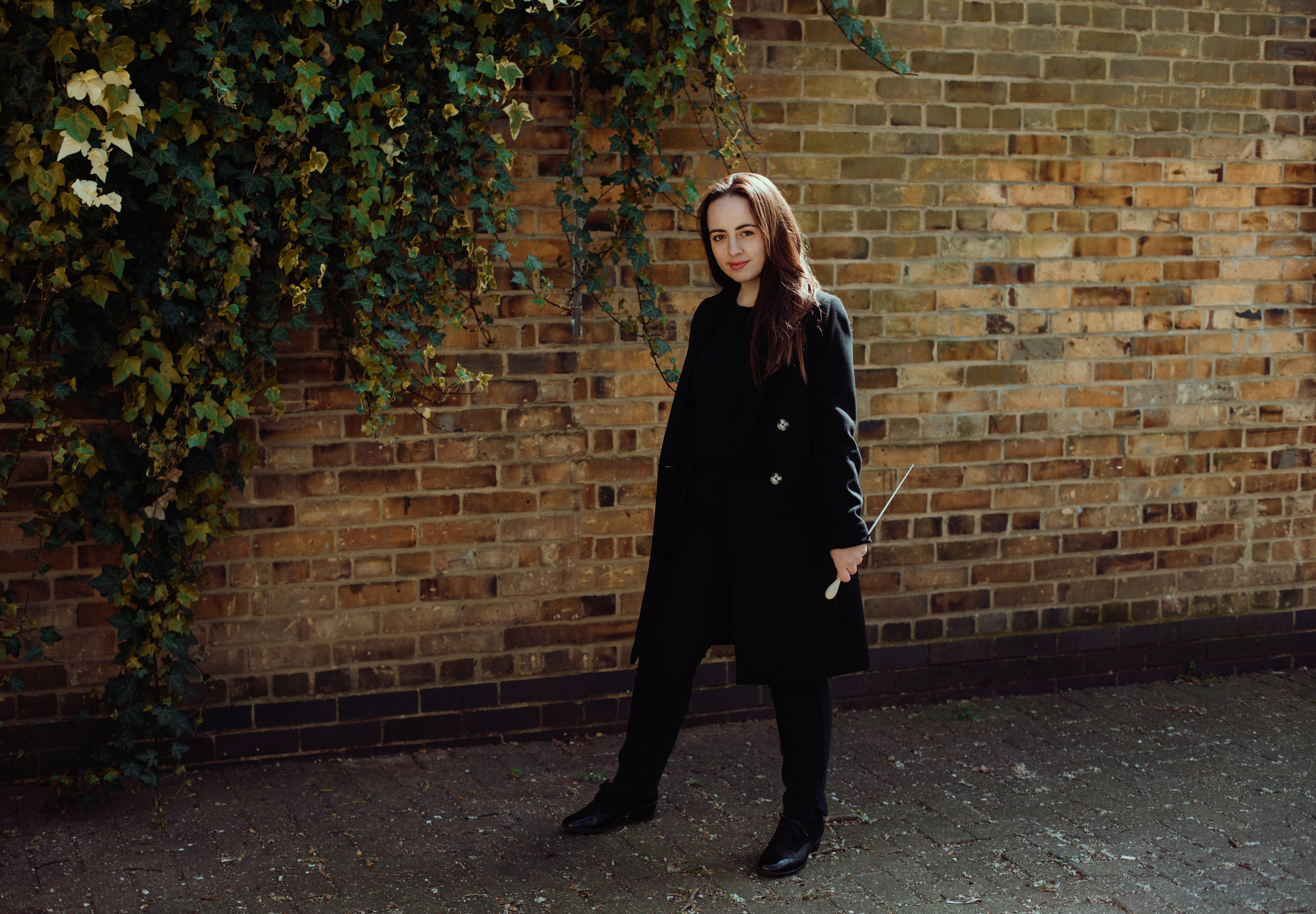
Reviewed by Ben Hogwood Olivia Clarke picture (c) Rebecca Nead Menear

Bryce Dessner is surely the only composer able to list Taylor Swift, Paul Simon and the Philharmonia Orchestra among their musical accomplices. It is this multi-disciplined CV that makes him an excellent choice as Artist-in-Residence at the Southbank Centre – and this instalment of the Philharmonia Orchestra’s early evening Music of Today series allowed a look at his writing for string ensemble.

As well as namechecking the above artists, rock guitarist Dessner has a number of musical projects currently coming to the boil. His band The National (where his twin brother Aaron also plays) stand on the verge of their 9th album, prefaced by elegant single Tropic Morning News just over two weeks prior.

Meanwhile his string arrangements for the Malmö Symphony Orchestra help encapsulate the musical wonder of Complete Mountain Almanac, a project fronted by his sister Jessica and singer Rebekka Karijord. Their self-titled album, released in late January, has a folk-inflected beauty.

Dessner’s composition work also continues apace, and as this concert illustrated he is amassing an impressive and durable body of work. The Forest, for seven cellos, is not a nature poem as its title might suggest. Rather, it refers to the forest-like interiors of Notre Dame cathedral, all but destroyed in the dreadful fire of 2019. Dessner was in Paris at the time, and was moved to write a musical response. He considered the wood lost in the flames, pondering the sounds it would have absorbed through the ages, going back as far as Perotin’s 12th century motet Sederunt principes.

Taking this as his stimulus, Dessner weaves old and new together with a seamless join, the deeply historical source material given fresh if solemn context. The composer chooses not to use the swell of the cello sound too often, steering clear of cliches often found in writing for this instrumental combination. Instead the sounds are more subtle, the cellos often applying the wood of the bow to the string, decorating the sound and giving it acoustic context. In this way they present an absorbing collage of sounds, meditating on the lost material while projecting well beyond the size of the Purcell Room to evoke the vastness of the cathedral. Olivia Clarke (above) kept a firm hand on proceedings in what was a fine performance.

Lachrimae, as its title suggests, also looks to the distant past for inspiration. The source material here is John Dowland’s song of the same name, expanded by Dessner into a piece for a 12-piece string ensemble that also draws on Bartók’s Divertimento for strings. The piece starts by quoting its source material, but quickly projects it on to a wider musical canvas. In this performance there were pre-echoes of Dessner’s soundtrack for The Revenant three years later, these being colder textures with an equally compelling group of musical ideas.

Michael Fuller’s double bass was a central component of the more expansive writing, and the lower notes were played as though freshly dug from the ground itself. Meanwhile the upper strings traded motifs of power and poise, building energy and momentum impressively and inexorably – until suddenly all was still. The cold haze of a winter morning could be glimpsed in the mind’s eye, and the piece ended in the contemplative mood with which it began.

Olivia Clarke conducted another excellent, concentrated performance, aided by the forthright leadership of cellist Karen Stephenson. It may have been a short encounter, but this was a concert affirming Dessner as a composer whose progress should be closely monitored, fully justifying Steve Reich’s billing as ‘a major voice of his generation’.

You can watch a previous performance of The Forest on Facebook here:

For more information, visit the Bryce Dessner website – and for more on the Philharmonia’s free concert series Music of Today, visit their dedicated page

BBC Proms – Víkingur Ólafsson, Philharmonia / Paavo Järvi: Bach, Mozart, Prokofiev & Shostakovich

olafsson-jarvi

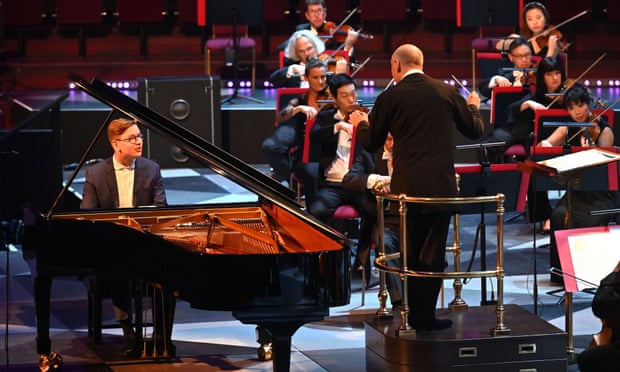
Víkingur Ólafsson (piano), Philharmonia Orchestra / Paavo Järvi

Prokofiev Symphony no.1 in D major Op.25 ‘Classical’ (1916-17)
J.S. Bach Keyboard Concerto in F minor BWV1056 (c1738-9)
Mozart Piano Concerto no.24 in C minor K491 (1786)
Shostakovich Symphony no. 9 in E flat major Op.70 (1945)

Royal Albert Hall, London
Saturday 14 August 2021

Written by Richard Whitehouse

Tonight’s Prom brought change of conductor, the always reliable Paavo Järvi stepping in for Santtu-Matias Rouvali in what would have been the latter’s Proms debut, but not of soloist – Icelandic pianist Víkingur Ólafsson duly making his first appearance at these concerts with concertos which, for the most part, played to his strengths.

The number of times that Bach’s keyboard concertos have been heard here on piano in recent decades can be counted on the fingers on one hand (Tatiana Nikolayeva’s D minor resonates in the memory), but that in F minor was a good choice in terms of its succinctness – the outer movements pitting soloist and (sizable body of) strings against each other with a trenchancy as was vividly conveyed here, with the central Andante an oasis of serenity that was not without its plangent asides.

Placing this piece before the interval, however, made for a distinctly short first half – given the relative length of Mozart’s C minor Concerto after the interval. There were many good things in this latter, Ólafsson keeping the first movement on a tight yet never inflexible rein so that its inclination to pathos – if not always its portentous undertones – came through in ample measure; not least in a coda that had been cannily prepared by the soloist’s cadenza. The central Larghetto was none the less the highlight – Ólafsson varying his tone such that piano melded into the woodwind for an early and defining instance of timbral colouration, with its limpid elegance never undersold. Maybe the finale was a little staid in the overall unfolding of its variations, but the coda’s strangely ambiguous poise was tangibly realized.

An auspicious debut, then, for Ólafsson, who underlined his prowess with affecting readings of the slow movement of Bach’s Fourth Organ Sonata (BWV526) in August Stradal’s chaste transcription and Liszt’s not unduly mawkish version of Mozart’s Ave Verum Corpus (K617). These further extended the disparity between each half – the first of which had commenced with Prokofiev’s ‘Classical’ Symphony, not in the least small of scale or mimsyish as Järvi heard it; witness his acerbic and impetuous take on the initial Allegro, trumpets and timpani to the fore, then a Larghetto whose swift underlying tempo left little room for any harmonic piquancy to emerge. The Gavotte was slightly marred by several mannered agogics which tended to impede its rhythmic profile, but the Finale lacked little in sparkle or insouciance.

Among the most travelled and recorded conductors of today, Järvi can seem detached or even aloof in manner – but there was no such reticence evident in Shostakovich’s Ninth Symphony as ended this programme. After a tensile and assertive Allegro, which audibly benefitted from the sizable forces onstage, the Moderato recalled Efrem Kurtz’s classic recording as to overall restraint and a dark-hued introspection rising to anguish in its twin climaxes. Playing without pause, the other movements were of a piece with the foregoing – a driving and almost manic Presto subsiding into a Largo, whose ruminative bassoon soliloquys were eloquently taken by Emily Hultmark, then an Allegretto whose capriciousness was acutely gauged through to its bitingly sardonic climax and breathless final payoff. Undoubtedly a performance to savour.

You can find more information on the BBC Proms at the festival’s homepage

In concert – Leonidas Kavakos, Philharmonia Orchestra / John Wilson: Elgar Symphony no.3; Barber & Korngold

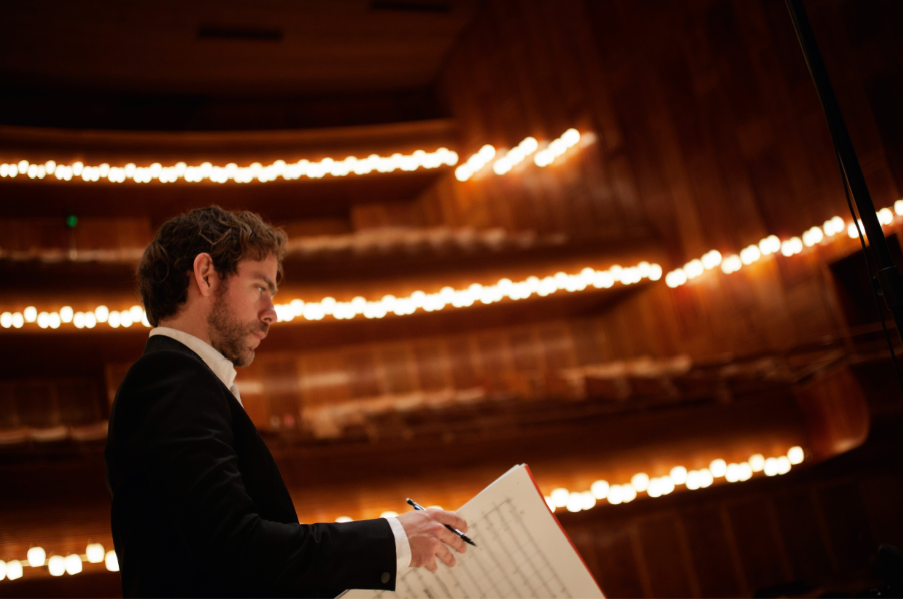
Leonidas Kavakos (cello), Philharmonia Orchestra / John Wilson (above)

Royal Festival Hall, Southbank Centre, London
Thursday 27 February 2020

Barber First Essay Op.12 (1937)
Korngold Violin Concerto in D major Op.35 (1945)
Elgar, realized Anthony Payne Symphony no.3 in C minor Op.88 (1933; 1993-4)

Reviewed by Richard Whitehouse
Photo credit (John Wilson) Sim Canetty-Clarke

It is good to see John Wilson taking up more concert engagements, so putting his talent at the service of symphonic repertoire. Tonight, he directed the Philharmonia in a programme that culminated with quite possibly the finest reading Elgar’s Third Symphony has yet received.

The relatively brief first half commenced with Barber’s First Essay, written in the wake of his soon-to-be ubiquitous Adagio and given a high-profile launch by Arturo Toscanini with the New York Philharmonic. Succinct to a fault, the sombre rumination of its initial section soon makes way for music of brittle aggression (such as Britten surely had in mind writing the Dies irae section of his Sinfonia da Requiem two years later), and reaches a short-lived climax with the return of the piece’s opening which itself subsides into musing expectation.

A timely revival, whereas Korngold’s Violin Concerto now seems almost too familiar since coming in from the cold some quarter-century ago. Leonidas Kavakos has become one of his staunchest advocates, but while his recent Proms account often verged towards the soporific, this evening saw much greater focus; not least an initial Moderato whose yearning melodies were rendered with real incisiveness, then a Romanze whose lush textures and diaphanous harmonies never risked becoming cloying. If the final Allegro was even more impressive, this was because what is ostensibly the weakest movement emerged on a par with those before – Kavakos pointing up its effervescence while keeping any indulgence in check on route to the heady return of its opening theme, in what is a coup de théâtre even by Korngold’s standards.

Wilson has already demonstrated his Vaughan Williams credentials, and is evidently no less at home in Elgar. Some 22 years on from its premiere and the Third Symphony, as realized by Anthony Payne, continues to fascinate and exasperate in equal measure – yet, while there can be no denying its conjectural status, what came over here was Wilson’s conviction as he steered a purposeful course through the opening movement – pulling together what can feel a prolix development then evincing similar grip and determination in the coda. What follows was ideally poised between scherzo and intermezzo, its balletic and song-like strains eliding seamlessly, while the Adagio has seldom sounded more potent in its wrenching dissonances and wan consolation as lead to a coda whose fragmented texture only emphasized its pathos.

On to the finale (Wilson rightly ensured minimal pause between movements) and while there was no lack of finesse in the shaping of its themes, Wilson made relative light of there being no concrete development section by bringing its nominally tentative variants into tensile and, above all, cumulative accord. This carried through into the coda – undoubtedly the best Payne which Elgar never wrote and whose spirit of reaching out towards whatever might lie beyond was palpably conveyed as the music receded, slowly but never disconsolately, toward silence.

At some 50 minutes this was as taut and incisive a reading as the piece can yet have received, but the essential rightness of Wilson’s approach could not be doubted. Payne himself looked mightily impressed, and one can only hope a recording with the Philharmonia is in the offing.