
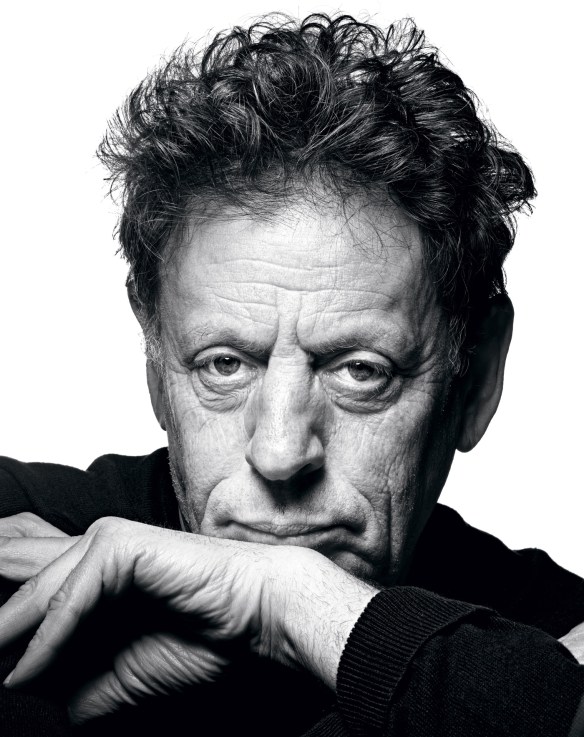
Ten Pieces of Glass – An 80th Birthday Tribute to Philip Glass

glass

Today is the 80th birthday of one of the biggest composers of the ‘minimalist’ movement in music. Philip Glass, together with Steve Reich, Terry Riley and John Adams, has exerted considerable influence on today’s electronic music artists, and it’s easy to forget just how pioneering his works, the early ones in particular, still are.

Within classical music circles there is a large group of people who think Glass has got lucky, and that his music is little more than repeated arpeggios that don’t really go anywhere. From personal experience I can see why some of the material in the more recent works gets tarred with that particular brush, but I also think that if you look in the right parts of Glass’s massive compositional output there are many treasures to be found.

Steve Reich might be regarded as the more trendy composer, being referenced by pop acts as an influence with great regularity. Yet while he worked recently with Radiohead material in Radio Rewrite, giving him extra credibility, let’s not forget Glass completed three symphonies based on themes by David Bowie and Brian Eno.

Granted, Reich is probably more progressive in his musical thinking, and is certainly more economic with his musical material, but to assume his music is ‘better’ is to misunderstand Glass. There is definitely room for both! So to shout the corner of Reich’s former business partner – the two ran a removal business in the 1970s – here are my Ten Pieces of Glass, given in the order in which I discovered them:


Company (1983)

When I first heard the celebrated Kronos Quartet recording of this, Company – Glass’s String Quartet no.2 – it was the first time I had encountered the composer’s music. It had a lasting effect, for despite its incredible simplicity Company contains moving harmonic progressions and propulsive music that somehow serves as a soothing balm. All four movements are untitled, their only indication a metronome marking, but that only adds to the simplicity, and when the opening begins it is as though Glass has turned his attention back several centuries.

Dances nos.1-5 (1980)

When I first listened to this I remember my mother calling up the stairs to check my CD player wasn’t malfunctioning! Dance no.1 is a confrontational listen but in the best possible way, hurling joyful notes at its listener without ceasing. It is a strange but rather wonderful ritual:

Dance no.4, meanwhile, visits another world entirely, and once heard on the church organ is unlikely to be forgotten. The recording I have in mind is that by Christopher Bowers-Broadbent, recorded in great splendour by ECM, though the original from the composer himself is very fine too.

The arpeggios are pure Glass, but once the circular harmonic progression begins the listener is invited on a flight of fancy that gets ever more powerful as it moves on:

Powaqqatsi (1988)

In contrast the music Glass’s score for the film Powaqqatsi goes straight for the jugular as soon as it begins. Serra Pelada, the opening salvo, has a rush of saxophones and rocking children’s voices, a real thrill for the senses from start to finish:

Koyaanisqatsi (1983)

One of the film scores that got Glass his name as a composer for the big screen was his music for Francis Ford Coppola’s Koyaanisqatsi in 1983. The soundtrack is one of those ‘once heard, never forgotten’ moments, the slow-moving organ and subterranean bass voice combining to make a sonorous yet otherworldly sound.

Metamorphosis One from Solo Piano (1988)

This piece is simplicity itself – no doubt one of the reasons you’re just as likely to hear it in Café Nero as anywhere else. There are three very basic strands to the music – the stern opening chords, then an oscillating arpeggio, then a statement from the right hand that takes a slightly unexpected harmonic twist. It’s that twist that sets Glass apart and gives the music its uncertain air.

Early keyboard Music

Glass’s early work has absolutely no frills, as the titles prove. Music in Contrary Motion, Two Pages and Mad Rush – all contain music of the utmost simplicity, with notes running in sequence or against each other. And yet the energy conjured up here is remarkable, and as the pieces continue a trance can fall over the listener. Steffen Schleiermacher’s recordings of these are highly recommended, but in their absence here is an alternative arrangement of Two Pages (1968):

Symphony no.3 (1995)

The most concise of Glass’s eleven works in the form, the Third Symphony tones down the excesses of the Second to offer a piece for 19 stringed instruments that is a remarkable work of economy.

Different sides of the string orchestra talk to each other, exchanging ideas over an impressive dynamic range – the second movement could be lifted from a Shostakovich scherzo. It is, like Company, music that talks with the utmost simplicity to leave a lasting impression:

Satyagraha (1979)

Some time ago, English National Opera delivered a winning setting of Glass’s opera about Mahatma Gandhi. The crucial element in their success was the use of remarkable visual props to complement the colourful, trance-like music. Not only that, the staging confirmed that Glass’s music is so much more than Western classical – it searches out other customs, religions and cultures on its path.

Very little happens in the plot of Satyagraha but that’s not really the point, for as the music unfolds this becomes a surprisingly stirring statement and tribute to the work of Gandhi. Repetitious it may be, but again with each statement of his material Glass focuses the listener’s mind on only one thing.

Symphony no.7, ‘Toltec’ (2005)

Some of the classical world get a bit annoyed that Glass calls these works ‘symphonies’, as though they are not deserving of the title. Yet works like the Toltec symphony, performed at the BBC Proms back in 2009, prove that whatever label you put on it, this is a deeply meaningful and powerful piece of work. Glass’s ‘Choral’ symphony has music of grace and power that moves surprisingly close to the world of Bruckner in its tactful use of silence.

(not available on Spotify)

Escape from The Hours (2002)

This proves that Glass is not all boundless energy and fast-moving arpeggios. On the playlist, Amy Dickson’s soulful saxophone is the icing on the cake on this haunting piece of music – yet further proof that Glass can write film music with lasting appeal.
Happy new year from Arcana!

celloFirst of all, a very happy new year to you all. Hope 2017 has been good to you so far!
Here at Arcana we are dipping our toes back in the water after an extended break, gradually getting back into the swing of the day job – and planning some exciting things for the site in 2017. The idea is to use the enjoyment and power of music to bring some much-needed sunshine to the current climate. Not just us though – if there is anything you want to see after reading this, please get in touch (editor@arcana.fm), so we can be as inclusive as possible!

So far, with the site almost two years old, it is fair to say the focus has been too heavily on classical music. That might seem an odd thing to say, but it’s time Arcana went back to first principles and delivered on its promise of looking at the intersection between pop and classical, and how we can make the latter much more approachable.

With that in mind, we will be looking a lot more at music from composers who work well on both sides. Philip Glass is 80 this year, John Adams 70 – and a lot of artists and composers inspired by them are expected to be busy.

We will once again be taking friends to classical concerts for the first time, an idea trialed with great success at the 2016 BBC Proms, so if you’re interested in that then please let us know! The Wigmore Hall Monday lunchtime concerts will still be covered too – the only website to offer reviews of these hour-long treats.

We plan to honour the music of Emerson, Lake & Palmer, paying tribute to last year’s sadly departed Keith Emerson and Greg Lake as we look at their treatment of classical music.

We will also celebrate the unrivalled career of cellist Mstislav Rostropovich, who would have been 90 this year, by taking an extended look at the pieces he commissioned from some of the greatest composers of the twentieth century, and celebrate his instrument, the cello.

Rostropovich singlehandedly changed the reputation of the instrument, and we’ll be looking at how he did that while also enjoying concerts such as the Kings Place cello festival.

As you’ll see then, plenty to get our teeth into as the New Year gets in to gear. Hope you enjoy the ride!

Ben Hogwood, editor, Arcana.fm

Víkingur Ólafsson – a true classical music entrepreneur

vikingur-olafssonIf you wanted a definition of a classical music entrepreneur, Víkingur Ólafsson would surely fit it.

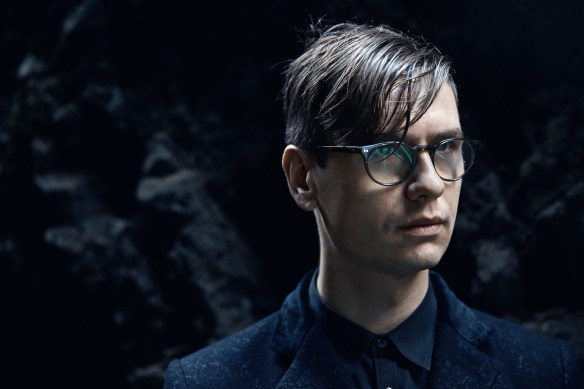
The Icelandic pianist, performing Liszt’s Piano Concerto no.2 this week with Vladimir Ashkenazy and the Philharmonia Orchestra, is Artistic Director both of Vinterfest in northern Sweden and of the Reykjavik Midsummer Festival. He runs a record label (Dirrindí) and has run a ten-part series with Icelandic National Broadcasting Service called Útúrdúr (Out of Tune), looking to encourage new classical music audiences through performance, interviews and demonstrations at the keyboard. He generously took some time to talk to Arcana recently about his career and aspirations.

Can you remember your first encounters with classical music?

I could say my very first encounters were when I was still in my mother’s womb, while she was completing her soloist degree from Berlin’s University for the Arts. She did a huge solo recital when six months pregnant with me! So I was close to the keyboard from the early stages. But more concretely, there are pictures of me reaching for the keyboard high above my head, before I started to speak.

What are your memories of studying piano – are there any pianists / teachers who have left a lasting influence on your career to date?

I saw the piano primarily as a toy – simply the best toy in the world – as a boy. I still do actually. I think I’ve been very fortunate that all my very good teachers maintained this sense of freedom towards music within me, which meant that I never had to be asked to practice – I just felt like playing the piano a lot.

I started listening to some of the great pianists in my early teens, mostly recordings from the 1930s and 1940s. On the one hand, classicists such as Clara Haskil and Dinu Lipatti fascinated me – I don’t know how many dozens of times I listened to Lipatti’s last recital album. On the other hand, I loved the big romantic players – the piano poets – like Benno Moiseiwitsch, Sergei Rachmaninov, Josef Hoffmann, Ignaz Friedman and Alfred Cortot, pianists from the so-called ‘golden age of the piano’. I remember listening incessantly to Friedman’s Chopin mazurka recordings, and trying to imitate them – with very little success I should add. So my early influences came from very different directions.

In my late teens and early 20s, as a student at Juilliard, I had two great piano teachers who, I now realize, could be seen as coming from these very different directions – Robert McDonald the classicist with his unbelievable sensitivity for the proportions of musical form and architecture, and Jerome Lowenthal, the freest musical spirit, master of the spontaneous.

You have performed recently with Vladimir Ashkenazy before in Tchaikovsky’s First Piano Concerto. What did you take from that experience?

It is a privilege to work with Maestro Ashkenazy. It is a special feeling to have one of history’s great pianists on the podium. I can feel that he knows every single note I play on such a deep level. He’s completely with me every second. I’ve been asked whether it is intimidating to have a great pianist like Ashkenazy conducting, but quite on the contrary it really gives me a sense of freedom.

How would you introduce Liszt’s Second Piano Concerto to a newcomer?

When I heard the Second Piano Concerto in my teens, I actually didn’t like it at first. I remember saying it was too superficial. In retrospect, I now realize how superficial I was. It is a brilliant piece of music, written by one of the most captivating personalities in music history. I feel safe to say that Liszt was the greatest pianist of all time. The way he wrote for the instrument, and the way his performances have been described by his contemporaries, the way he invented much of modern day piano technique…he’s a man I have unlimited admiration for.

Liszt lived an enormously glamorous life as a young man and was probably the most famous musician of his day, but gradually turned more towards spiritual practice and even joined a monastery for a time. And I feel the piece contains these two contrasting sides. It is a musical narrative, which seems to take place somewhere midway between the grand and glamorous salons of Paris of the 1840s and a reclusive monastery up in the French mountains. I feel it is a one man’s quest, an Ein heldenleben of sorts.

How was Vinterfest last week – and how do you see the festival evolving in the future?

It was beyond my expectations. I chose the theme ‘New Worlds’ and we explored it in various ways. One concert was called Animal Worlds, featuring music of insects, whales and birds, another looked at the First and Second Viennese schools through juxtaposing the violin and piano fantasies of Schubert and Schoenberg, then there was my John Cage prepared piano workshop, the Eight Seasons of Vivaldi and Piazzolla and lots more.

I was extremely happy to have a Boulez In Memoriam concert with Michael Barenboim playing Anthèmes 2 for violin and electronics with IRCAM sound engineers. That was such a gourmet concert to listen to – I’ve never heard more beautiful electronics. It took place in a rather awesome car company and the audience was totally into Boulez’s music – nobody complained of it being to ‘too modern’ or ‘difficult’. Which of course it isn’t.

What can we expect from Reykjavík’s Midsummer Music this year?

The theme will be ‘Wanderer’ – and we will be exploring it in Harpa Concert house with artists such as Viktoria Mullova, Kristinn Sigmundsson, Ursula Oppens, Jerome Lowenthal, Tai Murray and more. The dates are 16-19 June, and I’m already looking forward to it.

As an Artistic Director of festivals, what do you look for when you are programming such an event?

To make sure that no festival is too similar to any other festival from earlier years. I don’t want people to be able to predict my festivals. In this respect, I love to work with a closely defined theme. Even if it means 10x more work for me to make the puzzle work with all the factors that need to be taken in to consideration, it allows for each year to have its own distinct palette of colours.

You have worked closely with Philip Glass. What appeals to you about his music, and what is he like as a person?

Mr Glass is such a unique and warm person. He is extremely brilliant of course, and knows what he wants, but is also very open-minded about interpretation. He has this creative energy that is simply put astonishing. I’ll give you an example: After we had done a long day of traveling in the early morning, checking-in to a hotel, going straight to sound check, giving a performance of his complete Etudes, he took me out to a restaurant. This was in Gothenburg in early 2014, and I felt happy but a little exhausted around midnight when we were having the last toast of the evening before heading to the hotel to rest. Or so I thought.

When asking for the bill, Mr. Glass also asked for a large cup of strong black coffee (!) and I asked him how on earth he could drink that before going to bed. He gave the following response: “but Víkingur, I haven’t had any time to compose today! I always compose 5 hours a day, and will do that now in my hotel room”. He, 78 at the time, made me feel like an old man. I was 29 at the time.

Icelandic music seems to be in a very exciting place at the moment. What is it about the country that inspires so much creativity?

The creative output of my fellow countrymen is undeniably impressive and vast when considering the inhabitants on the island are only around 330,000, but there is no simple answer to this question. The island itself is a very special place with strikingly varied and beautiful natural scenery. Maybe this has an influence on the Icelandic people’s (often overblown) sense of themselves as being unique and thus wanting to express themselves creatively through a medium…

Maybe the long and dark winters and the isolation of the island have something to do with this… Maybe it’s got to do with how young we are as a cultural nation, we are not very burdened by the past. I don’t know really…

You are also performing with Viktoria Mullova and Matthew Barley in June – what will you be playing?

We will be playing Schubert’s Piano Trio no.2 and Ravel’s Piano Trio.

What does classical music mean to you?

You might as well ask: “What does nature mean to you”. It means the world to me.

What piece or piece(s) of new Icelandic music would you recommend to Arcana readers? Both obvious and less obvious would be great!

How about Daníel Bjarnason’s Piano Concerto No 2 ‘Processions’ which he wrote for me in 2009, with its first two movements written in the grand tradition of heroic concertos before the third movement concludes the work with something close to techno music…

As a nice compliment from a very different direction, check out Anna Thorvaldsdottir’s album Aerial, out on Deutsche Grammophon. You will find both on iTunes and Spotify.

Víkingur Ólafsson plays Liszt’s Piano Concerto no.2 with the Philharmonia, conducted by Vladimir Ashkenazy, at Symphony Hall, Birmingham on Tuesday 1 March. For tickets click here

You can find out more about the Midsummer Music festival in Reykjavik here, while you can also discover Vinterfest here