
Live review – Yulianna Avdeeva, CBSO / Constantinos Carydis – Skalkottas, Tchaikovsky & Beethoven

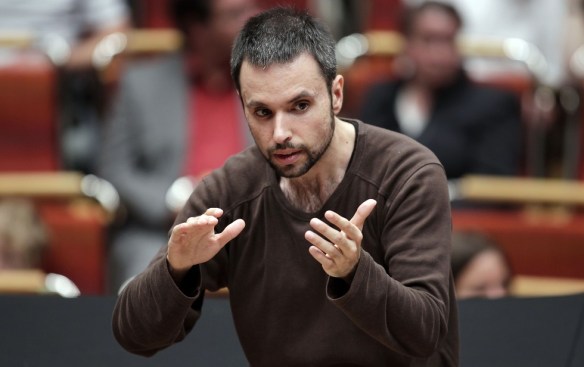
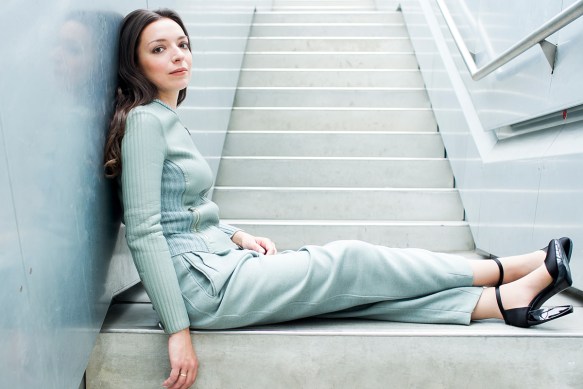
Yulianna Avdeeva (below, piano), City of Birmingham Symphony OrchestraConstantinos Carydis (above)

Photo credits: Thomas Brill (Constantinos Carydis), C Schneider (Yulianna Avdeeva) 

Symphony Hall, Birmingham. Thursday October, 2018

Skalkottas Four Images (1948)
Tchaikovsky Piano Concerto no.1 in B flat minor Op.23 (1875)
Koukos In Memoriam Y. A. Papaioannou (1989)
Beethoven Symphony no.7 in A major Op.92 (1812)

Written by Richard Whitehouse

Conductors are not obliged to programme their compatriots, though Constantinos Carydis certainly rang the changes by including music by Nikos Skalkottas (1904-49) – who, along with Xenakis, is undoubtedly the leading Greek classical composer from the 20th century.

Nor is the City of Birmingham Symphony unacquainted with his work, having given the first complete performance of his First Symphonic Suite in 1972. That piece typifies the intricate, serially-derived music of his earlier maturity, whereas the Four Images comes from his last years when tonal music predominated. Derived from a longer ballet score for piano, these characterful miniatures amply evoke folk scenes (without using actual folk themes) in a way recalling Bartók’s Dance Suite or, more directly, the dances from Ginastera‘s ballet Estancia.

Carydis accordingly had their measure – whether the forceful rhythms and acerbic harmonies of The Harvest, or wistful pathos of The Sowing with its resplendent, bell-capped climax. After this, The Vintage provides a scherzo of no mean propulsion and Carydis was right to lead directly into The Grape Stomping for a finale of scintillating vigour and impetus. Such were the qualities that the CBSO brought to this music, in what was a captivating account of a piece which could easily become as familiar as those aforementioned given such advocacy.
Tchaikovsky’s First Piano Concerto has never wanted for exponents, so credit to Yulianna Avdeeva for her engaging perspective on music to which the ‘war-horse’ epithet is too often applicable. The indelible opening melody was majestic without being portentous, with the imposing first movement convincingly held together so that the accrued momentum carried through to a searching take on its lengthy cadenza. There was no lack of deftness during the Andantino, replete with woodwind playing of real elegance, while the finale had energy to spare on its way to a surging peroration. This is an impressive interpretation in the making.

As well as his illustrious forebears, Carydis was intent on promoting the music of his Greek contemporaries. Well regarded for his operas, Periklis Koukos (b.1960) is little known in the UK, but the tribute to his teacher In Memoriam Y. A. Papaioannou suggests a composer of no mean eloquence – this threnody for strings not a little redolent of Nino Rota in its restrained sentiment, and a solo violin part that leader Anna-Liisa Bezrodny rendered with ideal poise.

Carydis then headed directly into Beethoven’s Seventh Symphony, here given a reading that was always invigorating and often electrifying. Dynamic contrasts occasionally verged on the contrived, and the repeat of the scherzo’s hymnal trio was almost parodic in its stateliness, but these were outweighed by the power and incisiveness elsewhere. Carydis drove the CBSO hard in the finale, but the players admirably rose to the challenge – antiphonal violins to the fore as the coda reached its visceral culmination. Whatever its inconsistencies, this was a performance to reaffirm the greatness of this music, as an enthusiastic reception testified.

A persuasive programme of the evergreen and unfamiliar. Should Carydis include Skalkottas’ ballet The Maiden and Death in a future engagement with the CBSO, then so much the better.

Tonight’s concert will be repeated at Symphony Hall on Sunday 7th October at 3pm. For more information on future CBSO concerts head to their website

Alexandra Dariescu, Royal Philharmonic Orchestra / Cristian Mandeal – Romanian Centennial Concert

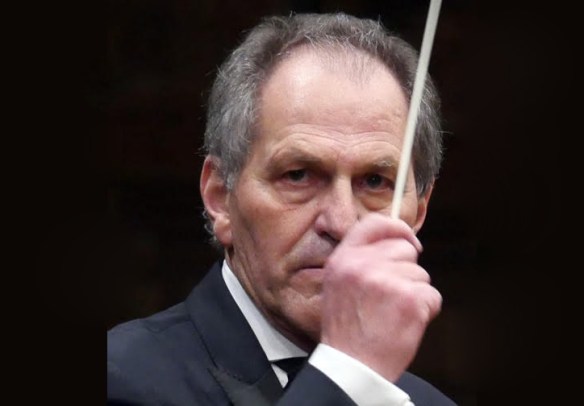
Alexandra Dariescu (piano, above), Royal Philharmonic Orchestra / Cristian Mandeal (below)

Cadogan Hall, London; Tuesday 28 November 2017 (Concert supported by the Romanian Cultural Institute)

Enescu Romanian Rhapsody No. 1 in A, Op. 11 No. 1 (1901)
Grieg Piano Concerto in A minor, Op. 16 (1868)
Lipatti Concertino in Classical Style, Op. 3 (1936)
Tchaikovsky Francesca da Rimini, Op. 32 (1876)

Reviewed by Richard Whitehouse

It has often been remarked that the death of Dinu Lipatti, in 1950 at the age of 33, robbed the musical world of a rare pianist, yet his ability as a composer was by no means inconsiderable. Such was evident throughout the modest and perfectly judged proportions of his Concertino in Classical Style, its four movements discreetly and judiciously evoking formal precedents while also offering up the subtlest of allusions to several then contemporary composers who had drawn productively on a neo-classicism inspired (both more and less directly) by Bach.

The Concertino was given here with style and no little insight by Alexandra Dariescu, who had already appeared prior to the interval for an enjoyable performance of Grieg’s perennial Piano Concerto. If the first movement lacked the last degree of formal cohesion, the extent of its expressive scope was not in doubt – not least during the wide-ranging cadenza which Dariescu dispatched with aplomb. The sentiment of the Adagio never cloyed, then the finale exuded energy and eloquence on its way to a grandiloquent but not overbearing peroration.

Both these works benefitted from the stylish and attentive accompaniment as secured, from a Royal Philharmonic Orchestra on excellent form, by Cristian Mandeal – assuredly the leading Romanian conductor of his generation. He began proceedings with Enescu’s First Romanian Rhapsody – a piece that, however much its composer might have deplored the fact, continues to represent his music to the public at large. If just a shade hesitant in the initial section, this account audibly hit its stride in a coruscating take on the breathless dance-music that follows.
The programme ended with an impressive account of Francesca da Rimini – if not the most often heard of Tchaikovsky’s symphonic poems, arguably his most involving in terms of its graphic depiction of the heroine’s love and tragic fate. Not the easiest piece to hold together, it benefitted from the conviction with which Mandeal integrated its contrasting episodes; not least the infernal storm which yields even greater terror in those cataclysmic final pages. The Cadogan acoustic strained to take this all in, but orchestra and conductor emerged triumphant.

For more concert information on the Royal Philharmonic Orchestra, head to the What’s On page on their website

You can hear a recording of the Dinu Lipatti Concertino on Spotify below, part of a disc devoted to the composer’s music by Marco Vincenzi:

BBC Symphony Orchestra & Semyon Bychkov – Beloved Friend: Tchaikovsky Project

semyon-bychkov

Richard Whitehouse on the BBC Symphony Orchestra, conducted by Semyon Bychkov (above) in the second of their Tchaikovsky-themed concerts

Tchaikovsky Serenade for strings in C major, Op. 48 (1880)

Tchaikovsky Piano Concerto No.3 in E flat major, Op. 75 (1893)

Taneyev Overture: The Oresteia, Op.6 (1889)

Tchaikovsky Francesca da Rimini, Op. 32 (1876)

Kirill Gerstein (piano), BBC Symphony Orchestra / Semyon Bychkov

Barbican Hall, London; Monday 24 October

The Beloved Friend series being curated by Semyon Bychkov provides a revealing overview of Tchaikovsky through some lesser performed works. Not the least of which is the Serenade for strings that, though its individual movements emerge frequently on radio, is not so often encountered in concert. Too short to occupy a second or even first half, it makes for a lengthy yet viable opening item when, as tonight, a full-sized string section is deployed with panache.

Bychkov ensured a fervent response in the first movement, its animated main sections framed by the rhetorical motto theme that ultimately returns as an apotheosis, then found suavity as well as elegance in the Waltz. Despite lack of inwardness, the Elegy yielded real clarity in its denser passages, while the Finale proceeded briskly yet characterfully to its resolute close.

kirill-gersteinNext followed a rare revival of the Third Piano Concerto, itself reworked from an abandoned symphony and what would doubtless have become a three-movement entity had Tchaikovsky completed its Andante and Finale to his satisfaction prior to his death (these latter, as realized posthumously by Taneyev, make an effective whole – as Alexander Markovich demonstrated in a Royal Festival Hall account eight years ago).

As a stand-alone piece, the Allegro brillante (best known in its ballet incarnation by George Balanchine) unfolds a quirky and characterful sonata design – its themes distinctive for their emotional restraint, with a stealthy interplay between piano and orchestra that Kirill Gerstein (above) audibly relished. Momentum faltered marginally after a scintillating cadenza, but the final pages strode onwards to a decisive if peremptory ending.

Overall, a convincing account of music which warrants greater exposure. Hopefully Gerstein will yet tackle this work’s three-movement incarnation: for now, he returned for a reading of Méditation – the fifth of Tchaikovsky’s Op. 72 collection – that oozed eloquence and poise.

More discussed than played in the West, Sergey Taneyev was as least as much a composer as pedagogue; a notable output of orchestral and chamber music capped by his ambitious opera The Oresteia. Beginning life as this latter’s introduction, the present overture expanded into an autonomous entity that surveys the opera’s dramatic content and is an eventful symphonic poem in its own right. Its complementary halves representing an archetypal ‘war and peace’ in dramatic as well as musical terms, the piece is harmonically questing and often texturally adventurous – not least in its extensive though never self-conscious writing for harps. Some 15 years after Taneyev last enjoyed a fair measure of exposure in London, Bychkov directed a fastidious performance to remind listeners that they are the poorer for this music’s neglect.

Even in an era intent on ‘concerto and symphony’ programming, Tchaikovsky’s Francesca da Rimini has never lacked for performances – this symphonic fantasia mingling drama with pathos to a heady degree even for this composer. Bychkov accordingly upped the ante in the tempestuous opening, then secured a suitably rapt response from woodwind and strings in the central section depicting Paolo and Francesca. Its balletic continuation drifted as is often the case, but the final pages portrayed the hapless lovers’ descent into hell with unerring ferocity.

Recorded by BBC Radio 3 for future broadcast in Afternoon on 3, and available for 30 days thereafter via the Radio 3 website

BBC Proms 2016 – Pekka Suusisto, Thomas Dausgaard and the BBC Scottish Symphony Orchestra

Pekka Kuusisto High Res 6 - credit Maija Tammi

Pekka Kuusisto (c) Maija Tammi

Prom 27; Royal Albert Hall, 5 August 2016

You can watch this Prom from its BBC broadcast – the Grime and Tchaikovsky here and the Stravinsky here

For sheer musical enjoyment this Prom took some beating.

Right from the start it was clear the players of the BBC Scottish Symphony Orchestra were at the Royal Albert Hall to enjoy their Friday night, and in Pekka Kuusisto they had a more than willing accomplice.

It was Kuusisto’s first appearance at the festival, and as he arrived onstage he gazed in wonder at the full hall, taking in its scope and bidding a cheery ‘hello’ to the front ranks of the Prommers. At that moment you sensed his performance, even before he played a note, had gone up a gear.

Sure enough, his performance of Tchaikovksy’s Violin Concerto was dazzling, but he was careful not to let technical feats overshadow the core of the music’s emotion. As the longer first movement unfolded so did the ardent, lyrical phrases, until we reached the solo cadenza, where just a flick of the eyes and arms were enough to get the audience laughing. Kuusisto plays a lot of his music as though for the first time, the childlike innocence (not to mention his boyish face!) a combination of pure enjoyment. The audience, wrapped up in the occasion, applauded as though he had finished, fully aware there were two more movements to come.

These were the doleful Canzonetta, reminding us of the serious circumstances in which the piece was composed (Tchaikovsky’s disastrous and shortlived marriage, made in spite of his convictions around his homosexual orientation) and a finale that brushed all that aside, its main tune from the violin scampering all over the orchestra as they tried to keep up.

Both violinist and orchestra rightly received a rapturous ovation, but Kuusisto was not done, returning for a traditional Finnish song. Following Sol Gabetta’s lead from the First Night he did the singing, while BBC SSO leader Laura Samuel gamely added a rustic accompaniment. Even the audience were involved, singing one of the phrases as Kuusisto brought the house down.

Even after that the enjoyment was yet to peak, for Thomas Dausgaard – who had shaped Tchaikovksy’s phrases rather beautifully – led them in a vibrant account of Stravinsky’s Petrushka. The composer’s second ballet is perhaps his most tuneful, full of Russian folk song references as it tells the tale of the ultimately doomed puppet. The colours of this performance were given by the BBC SSO at their very best, with superb contributions from Mark O’Keeffe and Eric Dunlea (trumpets), a beautiful, child-like solo from flautist Charlotte Ashton, and wonderful contributions from solo woodwind, brass and percussion alike – not to mention the brilliant efforts of pianist Lynda Cochrane and Julia Lynch on celesta.

Dausgaard was enjoying himself, and although on occasion the music was a little fast it was never less than energetic, the players relishing the shades of colour in The Shrovetide Fair, and the irresistible hooks and dance rhythms Stravinsky threads through the music.

Dausgaard is due to take over full time as chief conductor of the orchestra in the autumn, and on this evidence the two look set for a fruitful musical relationship.

eardleyCatterline in Winter (c) The estate of Joan Eardley.

Beginning the concert was the first part of Helen Grime’s Two Eardley Pictures, a new piece commissioned by the BBC and with its second part today. This one, Catterline in Winter, portrayed the fishing village of the North of Scotland, capturing it in steely, metallic colours – reflecting the dark grey sky and the icy blasts of a seemingly ever present wind. It is always difficult to appraise a new piece on first hearing, but this was an impressive and brightly lit score that is well worth hearing for a second time – preferably in the company of the second, Snow.

Ben Hogwood

BBC Proms – Of Land, Sea and Sky…

prom-15

Andrew Davis conducting the BBC Symphony Chorus and Orchestra

(c) Chris Christodolou

Prom 15; Royal Albert Hall, Tuesday 27 July 2016

Tchaikovsky The Tempest (1873)

Anthony Payne Of Land, Sea and Sky (2016) [BBC commission: World premiere]

Bruch: Violin Concerto No. 1 in G minor (1866) (Ray Chen, violin)

Vaughan Williams Toward the Unknown Region (1906)

The focal point of this evening’s Prom was a first hearing for Of Land, Sea and Sky, the latest work from Anthony Payne and a BBC commission to mark his 80th birthday in a week’s time.

Taking its departure from a description of white horses in the Rhône Valley as they seemed to merge into the surrounding water, this piece comprises eight continuous sections in which the relationship between image and illusion is considered from numerous perspectives.

Payne evidently looked at various texts before deciding to write his own: what resulted is functional in the best sense, each of the choral sections conveying its appropriate imagery without any superfluous literariness. Choral writing is less certain in that it often feels more of a textural gloss on, than integrated into orchestral writing whose clarity and resourcefulness continues from Payne’s previous large-scale works; indeed, the piece as a whole seems to unfold as a sequence of variations on the motifs set out in the opening pages, with an orchestral postlude effecting a final synthesis as the very notion of illusion is rendered in suitably elusive terms.

Of Land, Sea and Sky is typical of Payne in that its approachable (and recognizably English) while never derivative idiom is likely to yield any number of subtleties on repeated hearings. The present performance seemed an assured one, Andrew Davis securing a committed response from the BBC Symphony Orchestra and Chorus in music whose intricacy benefited from the cushioning resonance of the Albert Hall acoustic. This also marked the fourth Proms collaboration between conductor, orchestra and composer, and will hopefully not be the last.

The programme had opened with a hearing for The Tempest, Tchaikovsky’s still relatively unfamiliar symphonic fantasy inspired by, yet by no means indebted to Shakespeare’s play. The framing seascape music, with its sombre horn writing, resonates long after the music has ended, and if what comes in-between – notably the eloquent but unmemorable ‘love’ theme – finds the composer at less than his best, this was perhaps reinforced by a reading that lacked nothing in cohesion without sustaining a cumulative momentum across the piece as a whole.

After the interval, Ray Chen made his much-heralded Proms debut with Bruch’s First Violin Concerto. A little histrionic, the preludial first movement was vividly and at times ardently projected, with a heightened transition into an Adagio whose fervency was purposefully held in check. Nor, other than a slightly hectoring edge in passagework, was there much to fault in the final Allegro; despatched with a flamboyance continued in the encore – Paganini’s 21st Caprice in A, which provided ample means for Chen to display his meaningful virtuosity.

The concert ended with a welcome revival for Vaughan Williams’s Toward the Unknown Region, the composer’s first major success and a piece whose impression is greater than its modest length. If the rapt inwardness of the first half feels more successful than the fervency of what follows, Davis ensured a cumulative tension such as made the final pages – the BBC Symphony Chorus giving its all and the Albert Hall’s organ enhancing the resplendence – a fitting testimony to Walt Whitman’s conviction as to the soul’s tangibility in death as in life.

Richard Whitehouse