…this time from Tchaikovsky. Here is his Serenade for Strings in C major, performed by the Norwegian Chamber Orchestra, conducted by Terje Tønnesen:
Published post no.2,190 – Sunday 26 May 2024
…this time from Tchaikovsky. Here is his Serenade for Strings in C major, performed by the Norwegian Chamber Orchestra, conducted by Terje Tønnesen:
Published post no.2,190 – Sunday 26 May 2024

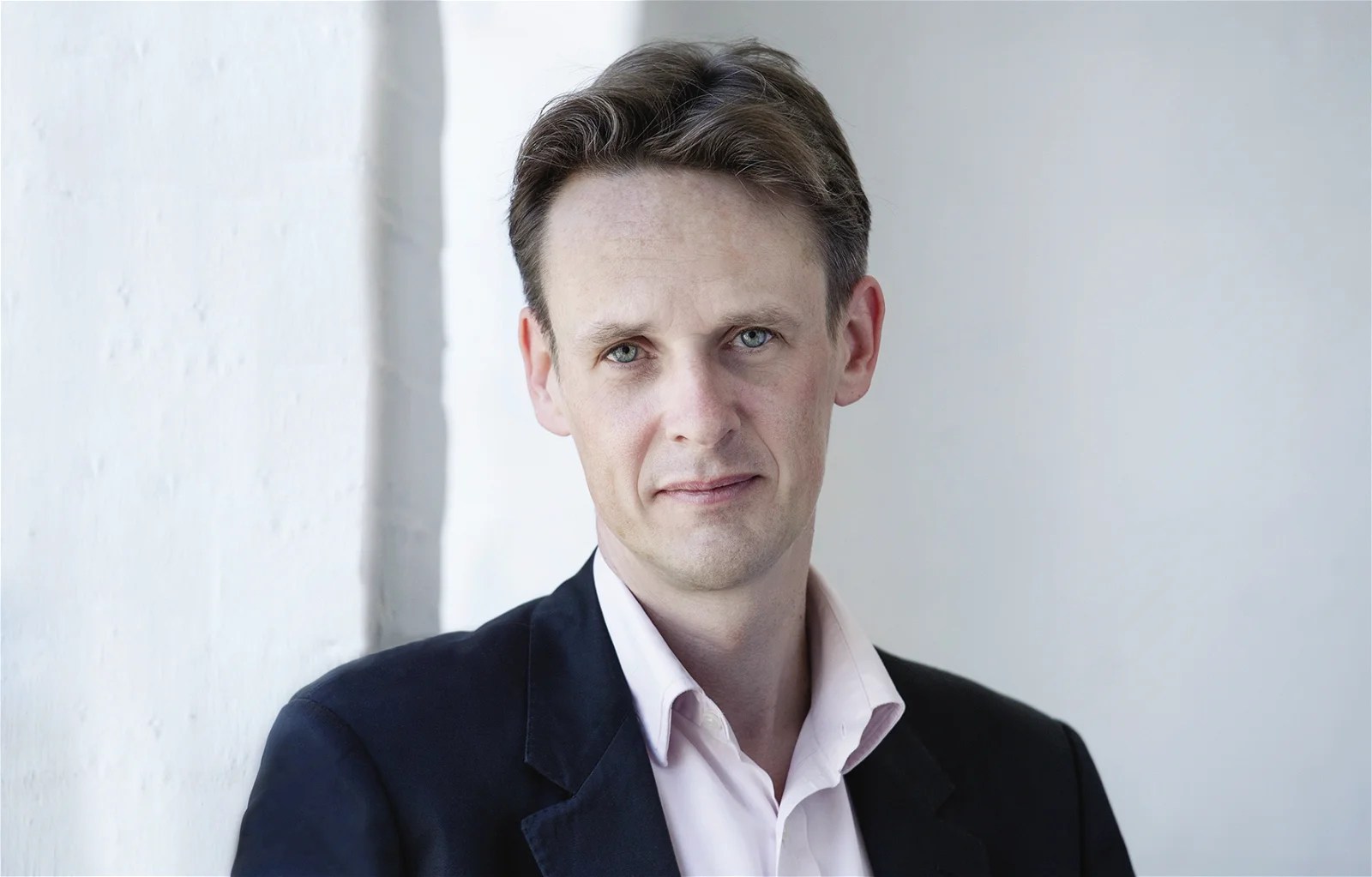
Ian Bostridge (tenor), City of Birmingham Symphony Orchestra / Gergely Madaras (above)
Thorvaldsdottir Dreaming (2008)
Britten Les Illuminations Op.18 (1939)
Tchaikovsky Symphony no.1 in G minor Op.13 ‘Winter Daydreams’ (1866, rev. 1883)
Symphony Hall, Birmingham
Wednesday 17 April 2024
Reviewed by Richard Whitehouse Picture of Gergely Madaras (c) Hannah Fathers
This evening’s concert with the City of Birmingham Symphony Orchestra comprised what was an unusually cohesive programme centred on the concept of ‘dreams’, assembled and directed with consistent empathy and insight by the Hungarian conductor Gergely Madaras.
Dreaming was the title as well as the watchword of the piece by Anna Thorvaldsdottir which opened proceedings. Her first major work for orchestra is already characteristic in its eliding between evocations arcadian and desolate, with an undeniable sense of the ominous coming through as the final stages take on an extemporized quality; musicians gradually exiting the sonic frame with just the capricious asides of a cellist remaining. Eduardo Vassallo made the most of this brief spotlight, and the CBSO made its collective presence felt to striking effect.

Arthur Rimbaud’s brief but meteoric spell as a poet in the early 1870s had belated if decisive impact on numerous composers and none more than Britten, his song-cycle Les Illuminations among his finest achievements in any medium. Having sung it many times, Ian Bostridge (above) still manages to point up the growing anticipation of ‘Fanfare’ or breathless excitement of Villes; his wide-eyed wonder in Phrase then graceful musing in Antique matched by the resolute irony of Marine or glancing wit of Royauté. Madaras drew languorous playing from the CBSO strings in Interlude and brought out the ecstatic longing of Being Beauteous, before the fervid imagining of Parade brought this sequence full circle. It remained for Départ to offer a fulfilled exit as poet – and composer – resignedly bids farewell to the realm of dreams.
This gripping account should not have needed Bostridge to address members of the audience after the fourth song, asking they refrain taking pictures on their mobiles while the music was in progress. An overhaul of the management’s current laissez-faire approach might be in order.
After the interval, a comparatively rare outing for Tchaikovsky’s First Symphony. The ‘Winter Daydreams’ of its subtitle implies an unforced though rarely contrary take on formal precepts, as in an opening movement (oddly marked Allegro tranquillo) whose often portentous pauses were well integrated by Madaras into the cumulative symphonic flow. The CBSO woodwind came into own with the Adagio – its oboe melody among its composer’s most affecting, and not least when it returns at the movement’s climax in a mood of expansive if fateful grandeur.
Partly drawn from an earlier piano sonata, the Scherzo exudes a pert animation that Madaras judged to a nicety, as he did the wistful ruminations of its trio. Much the hardest movement to make cohere, the Finale unfolded persuasively from its sombre introduction to a celebratory Allegro replete with fugal episodes; the ensuing build-up (its effect not lost on Shostakovich) to the resounding restatement of its main theme duly capped by an apotheosis whose overkill was (rightly) kept well within limits, thereby setting the seal on this persuasive performance. For imaginative programming and convincing execution, Madaras is at the forefront among conductors of his generation – his rapport with the CBSO evident throughout. This should be equally true when Markus Stenz returns next week for a pairing of Schumann and Bruckner.
Click on the link to read more on the current CBSO concert season, and on the names for more on tenor Ian Bostridge and conductor Gergely Madaras. Click here for an interview Arcana conducted with composer Anna Thorvaldsdottir in 2023
Published post no.2,153 – Friday 19 April 2024

by Ben Hogwood
What’s the story?
It comes as no surprise to learn that Katie ‘Austra’ Stelmanis had her first experience performing in the orchestra pit for Tchaikovsky’s The Nutcracker, performed by the National Ballet of Canada in 1990.
Since then her distinctive voice has been one of the standout elements in the music of her band, Austra, who have made a name for their distinctive electronica, a satisfying mix of pop and 80s-inspired electronica.
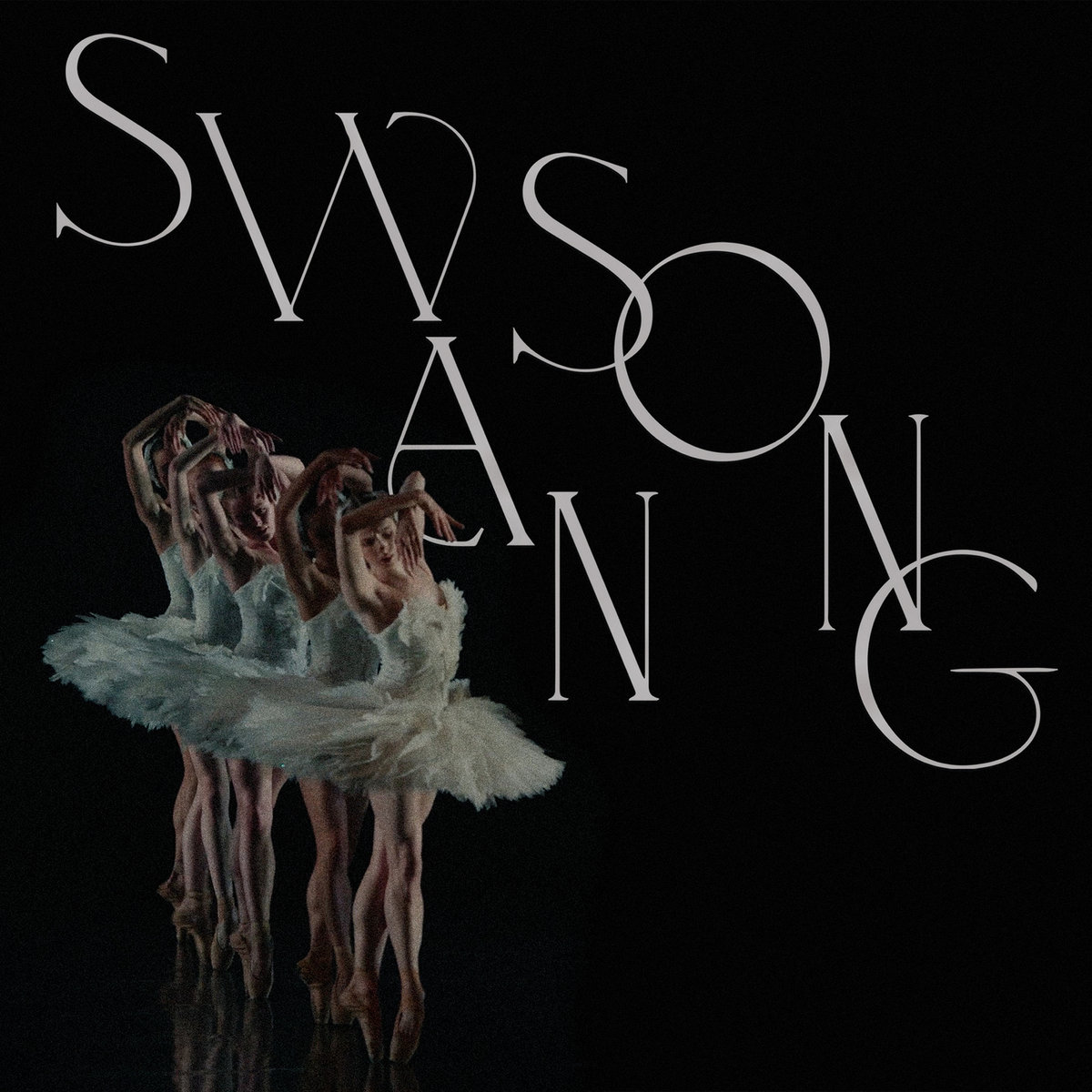
Now, though, she turns her attention to solo concerns with a lo-fi set-up. Tasked with setting the musical scene to Swan Song, a feature documentary immersing viewers inside The National Ballet of Canada in its new production of Tchaikovsky’s Swan Lake, she decided to use a single synth, a mellotron and – of course – her voice.
What’s the music like?
‘Ethereal’ is an overused word in writing about music, but it really does apply to Katie Stelmanis and her voice, which she uses to great effect here. It floats on the air in the opening Karen’s Theme, accompanied by the graceful synth lines, responding to the ebb and flow of the dancers. The themes are beautifully characterised, and Stelmanis often uses softly voiced arpeggios on the synth (a Juno-106) to depict the rise and fall of the dancers.
Genevieve’s Theme and Shae’s Theme are relatively muffled but attractively scored, while Siphe’s Theme has a lovely mottled presentation. Robart gives contrast, with gurgling electronics, as do Move To The Theatre and Curtain Call, each dressed with a beautiful vocalise.
The mellotron comes into its own for Corps de Ballet, and with its twisting line gives a good representation of a dancer maintaining their poise. The main number is Bow, whose minimal ideas and probing motif are subtly moving.
Stelmanis’ use of the Tchaikovsky themes is subtle and very clever, leaving an original score whose inspiration sits beneath the surface but has a lasting impact.
Does it all work?
It does. By their nature these soundtracks can be quite fragmented but the sequence here is very satisfying, with some lovely sounds and colours.
Is it recommended?
It is. If you like Austra as a band you won’t need any persuading, though you might be surprised at the extent to which Katie Stelmanis allows her imagination to blossom in what is a striking piece of work.
For fans of… Gazelle Twin, Julia Holter, Laurel Halo
Listen & Buy
Published post no.2,103 – Thursday 29 February 2024

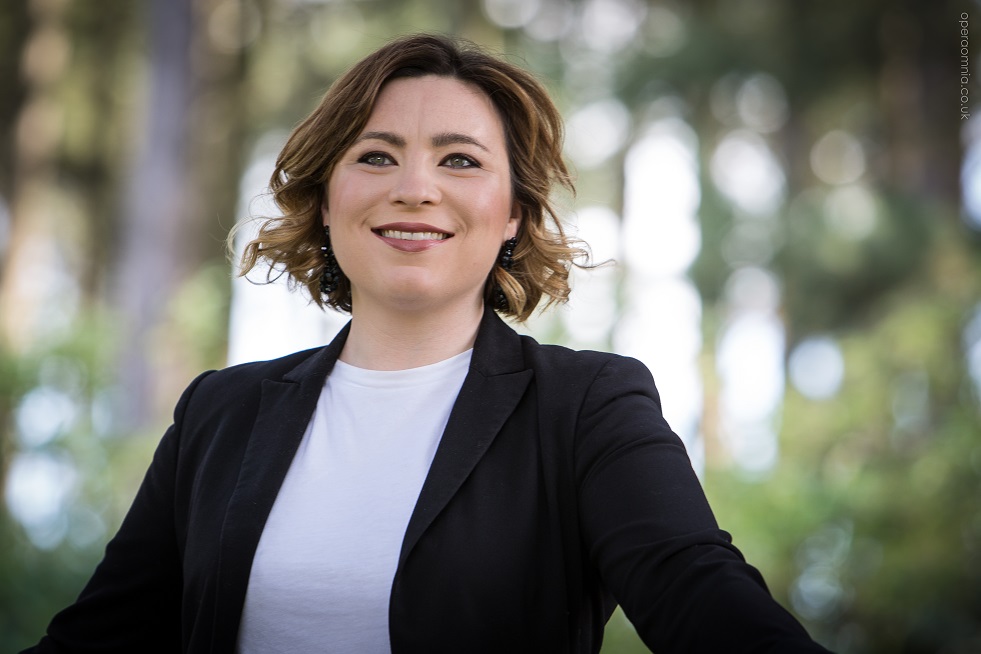
Natalya Romaniw (soprano, above), City of Birmingham Symphony Orchestra / Vassily Sinaisky (below)
Tchaikovsky Romeo and Juliet Fantasy Overture (1869, rev. 1872 & 1880)
Tchaikovsky Eugene Onegin, Op.24 (1877-78) – Letter Scene
Beethoven Ah! Perfido, Op.65 (1796)
Beethoven Symphony no.2 in D major Op.36 (1801-2)
Symphony Hall, Birmingham
Wednesday 14 February 2024
Reviewed by Richard Whitehouse
It might have been billed as a concert for Valentine’s Day and, though there was little about tonight’s programme to reinforce ‘true love reigns supreme’, it did make for a welcome new collaboration between the City of Birmingham Symphony Orchestra and Vassily Sinaisky.
Whether or not there is any more personal significance in Tchaikovsky’s Romeo and Juliet, it remains a potent encapsulation of Shakespeare’s tragedy. The brooding introduction seemed a little inhibited, but Sinaisky brought suitable incisiveness to the warring families and growing ardour to the love music. Nor was there any lack of drama as this ‘fantasy overture’ unfolded to its fateful denouement – after which, the benedictory chorale as Friar Laurence movingly apostrophises these doomed lovers brought an eloquent response from the CBSO woodwind.
Tchaikovsky’s reputation as an opera composer may have altered markedly over the decades, but Eugene Onegin has held the stage since its premiere; the Letter Scene, in which Tatyana knowingly risks all for love of a cynical anti-hero, its highlight. The Welsh-Ukrainian soprano Natalya Romaniw responded with real impulsiveness and, if her projection was too full-on to convey the emotional ambivalence and fragility of its central stages, the joyous abandon of its beginning and reckless determination at its close were duly rendered with unfailing charisma.
Romaniw sounded even more in her element as the jilted lover of Pietro Metastasio’s lyric Ah! Perfido which Beethoven set in his mid-20s. The latter wrote few such concert arias, but the immediacy of his response can hardly be gainsaid and Romaniw gave it her all – whether in its despairing introduction, the more consoling yet hardly untroubled expression that follows, or the steely resolve of those closing pages where the former ‘loved one’ is denounced in no uncertain terms. As in the Tchaikovsky, it was a pity neither text nor surtitles were provided.
Quite how Beethoven’s Second Symphony fitted into tonight’s conception was unclear, other than with its determination to defy fate and live life to the full, but Sinaisky evidently relished putting the CBSO through its paces – not least a first movement whose imposing introduction prepared for an Allegro of driving impetus and emotional fervour ideally intertwined prior to the blazing coda. Easy to underestimate, the Larghetto impressed with its lilting elegance and, in the central development, its teasing modulations – alongside a pay-off of disarming poise.
If, given its textural weight and unabashed rhetoric, this was ostensibly a performance of the ‘old school’, there was nothing portentous about Sinaisky’s take on the Scherzo – as lithe and quizzical as its trio was capricious, then the final Allegro had the character of an opera buffa ensemble refashioned for the post-Classical symphony toward which Beethoven was striving. Not the least attraction of this reading was its differentiation between soft and loud dynamics – crucial to the impact of a lengthy coda which fairly crackled with energy in its closing bars.
A gripping performance of a symphony which, while hardly unknown, is likely the least often played (albeit in the UK) of Beethoven’s nine. Sinaisky has enjoyed a productive relationship with the CBSO across the years, and it is to be hoped that this will continue in future seasons.
Click on the link to read more on the current CBSO concert season, and on the names for more on soprano Natalya Romaniw and conductor Vassily Sinaisky. To read more about the Beethoven works in the program, follow Arcana’s Listening to Beethoven series – which has already included Ah! Perfido and the Symphony no.2
Published post no.2,089 – Friday 16 February 2024

Paul Lewis (piano), City of Birmingham Symphony Orchestra / Tabita Berglund
Sibelius Pohjola’s Daughter Op.49 (1906)
Grieg Piano Concerto in A minor Op.16 (1868)
Tchaikovsky Symphony no.5 in E minor Op.64 (1888)
Symphony Hall, Birmingham
Thursday 11th January 2024 [2.15pm]
Reviewed by Richard Whitehouse
Entering 2024 with this attractive programme, the City of Birmingham Symphony Orchestra was conducted by Tabita Berglund – the Norwegian who, though unrelated to the late, great Paavo, seems certain to become one of the most significant conductors from her generation.
It was with Sibelius that the programme commenced, Pohjola’s Daughter lying on the cusp between its composer’s nationalistically inclined Romanticism and the relative Classicism that ensued. Pointedly so given the composer derived his inspiration from the Kalevala, in which its totemic figure Väinämöinen is outwitted by the ‘daughter of the North’, as the basis for a symphonic fantasia which critiques as surely as it remodels its underlying sonata design. Other interpreters have ensured a more seamless cohesion, but the acute characterization that Berglund brought to each episode, then the emotional frisson when those main motifs come together for a powerful apotheosis, compelled admiration – as did the closing pages in which Sibelius cannily fragments form and texture so all that remains is an all-enveloping silence.
Its ubiquity across 150 years should not distract attention from the innovative qualities found in Grieg’s Piano Concerto, and if his was not a consciously recreative approach, Paul Lewis gave a performance as appealing as it was insightful. Not least in an opening Allegro whose melodic directness was always balanced by a tangible sense of where this music was headed, and culminating in a take on the lengthy cadenza that infused its rhetoric with an inevitability worthy of Beethoven. There was expressive light and shade aplenty in the central Adagio, as too an unforced progress to the heartfelt restatement of its main theme. The outer sections of the final Allegro had no lack of impetus, as if to emphasize contrast with its rapt flute melody that closes the work in a thrilling peroration where soloist and conductor were rightly as one.
After the interval, Tchaikovsky’s Fifth Symphony emerged as a forceful and combative piece with its occasional longueurs convincingly held in check. Not least in an opening movement, the simmering expectancy of whose introduction intensified throughout what followed. Any short-windedness of phrasing was absent in the Andante cantabile, its indelible horn melody serenely intoned by Elspeth Dutch then its interplay between slow-burning eloquence and violent interjections of the ‘fate’ theme astutely judged on route to a warmly resigned coda.
Ostensibly an interlude, the Valse has a charm and, in its central trio, insouciance as belies its formal ingenuity that Berglund conveyed in full measure. Nor was there any sense of overkill as the Finale pursued a purposeful but never headlong course – its initial restatement of the main theme exuding an expressive focus matched by that of its climactic reappearance, here without risk of bathos in what brought the performance to a decisive and affirmative close. Certainly, the composer’s doubts as to any ‘insincerity’ proved unfounded on this occasion. It also confirmed a rapport between Berglund and the CBSO which will hopefully continue. Next week, however, brings the return of Kazuki Yamada for a wide-ranging programme of Berlioz, Walton and the world premiere of a newly commissioned work from Dai Fujikura.
Click on the link to read more on the current CBSO concert season, and on the artist names for more on Tabita Berglund and Paul Lewis
Published post no.2,054 – Friday 12 January 2024