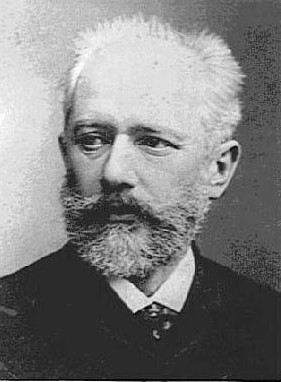
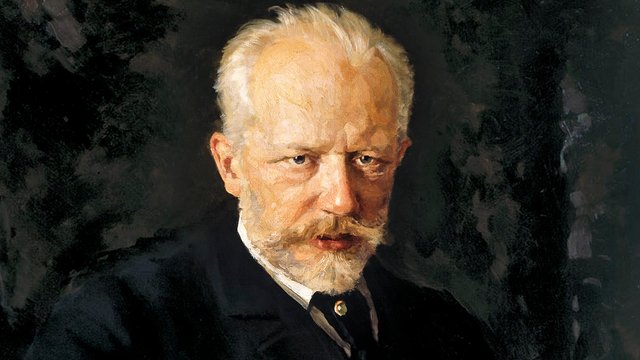
by Ben Hogwood. Image by Charles Reutlinger, used courtesy of Wikipedia
On this day 150 years ago, the first performance took place of Tchaikovsky’s Symphony no.3 in D major, his Op.29, took place with the Moscow Symphony Orchestra conducted by Nikolai Rubinstein. The work carries the unofficial nickname Polish, on account of the Polonaise composed for its fifth and final movement.
The Third is almost certainly the least performed of Tchaikovsky’s symphonies, yet it is increasingly winning a place in the hearts of the composer’s fans. Listen below and you will see why, for the piece has an abundance of melodic charm and character:
Published post no.2,724 – Wednesday 19 November 2025
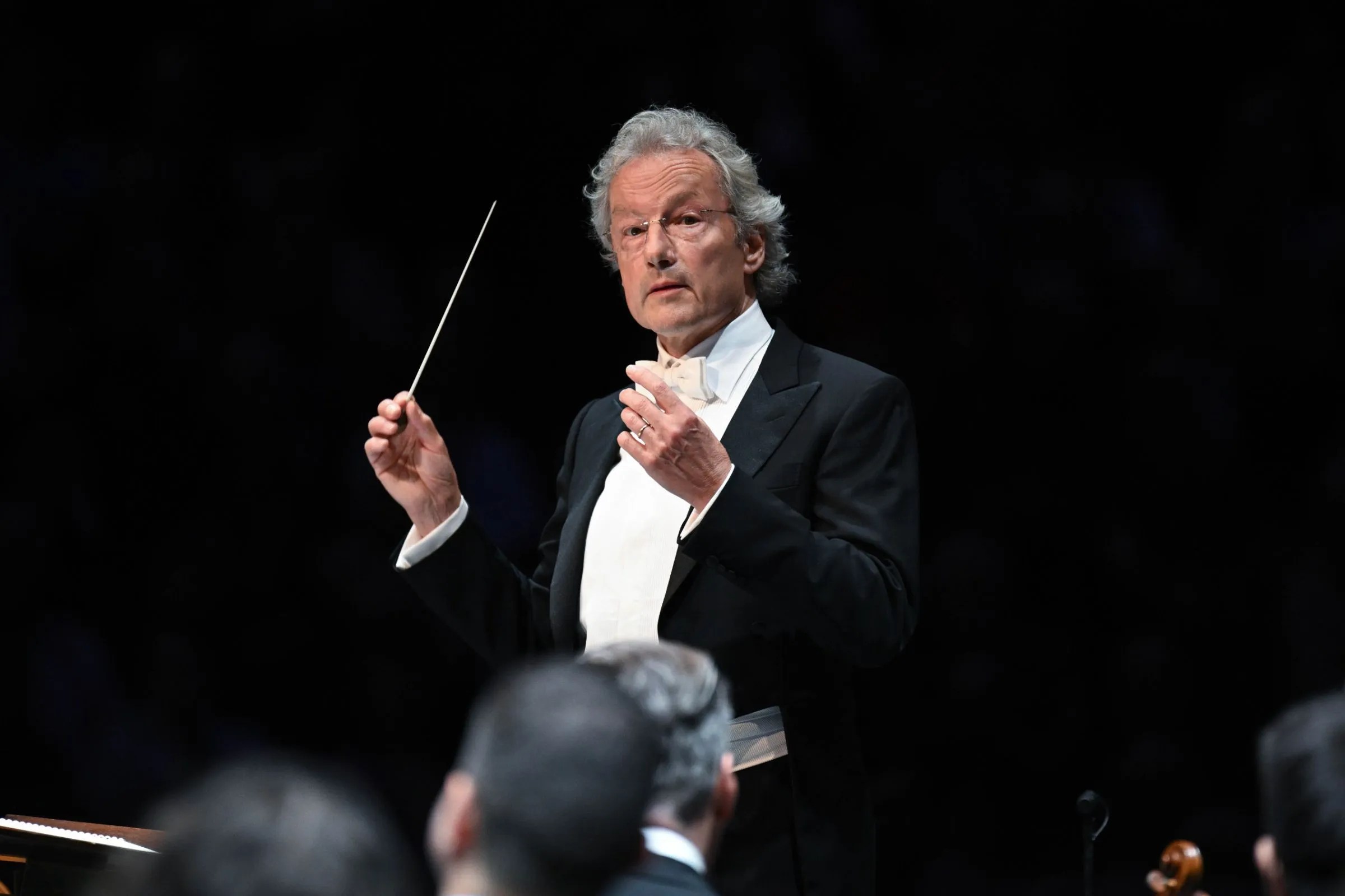
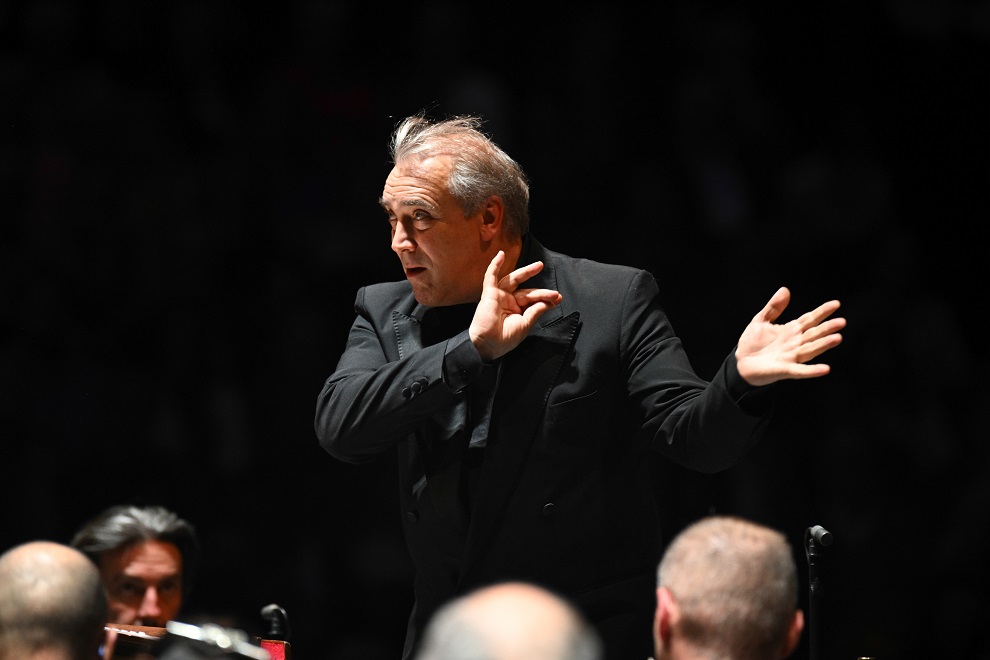
Vienna Philharmonic Orchestra / Franz Welser-Möst (above)
Mozart Symphony no.38 in D major K504 ‘Prague’ (1786) Tchaikovsky Symphony no.6 in B minor Op.74 ‘Pathétique’ (1893)
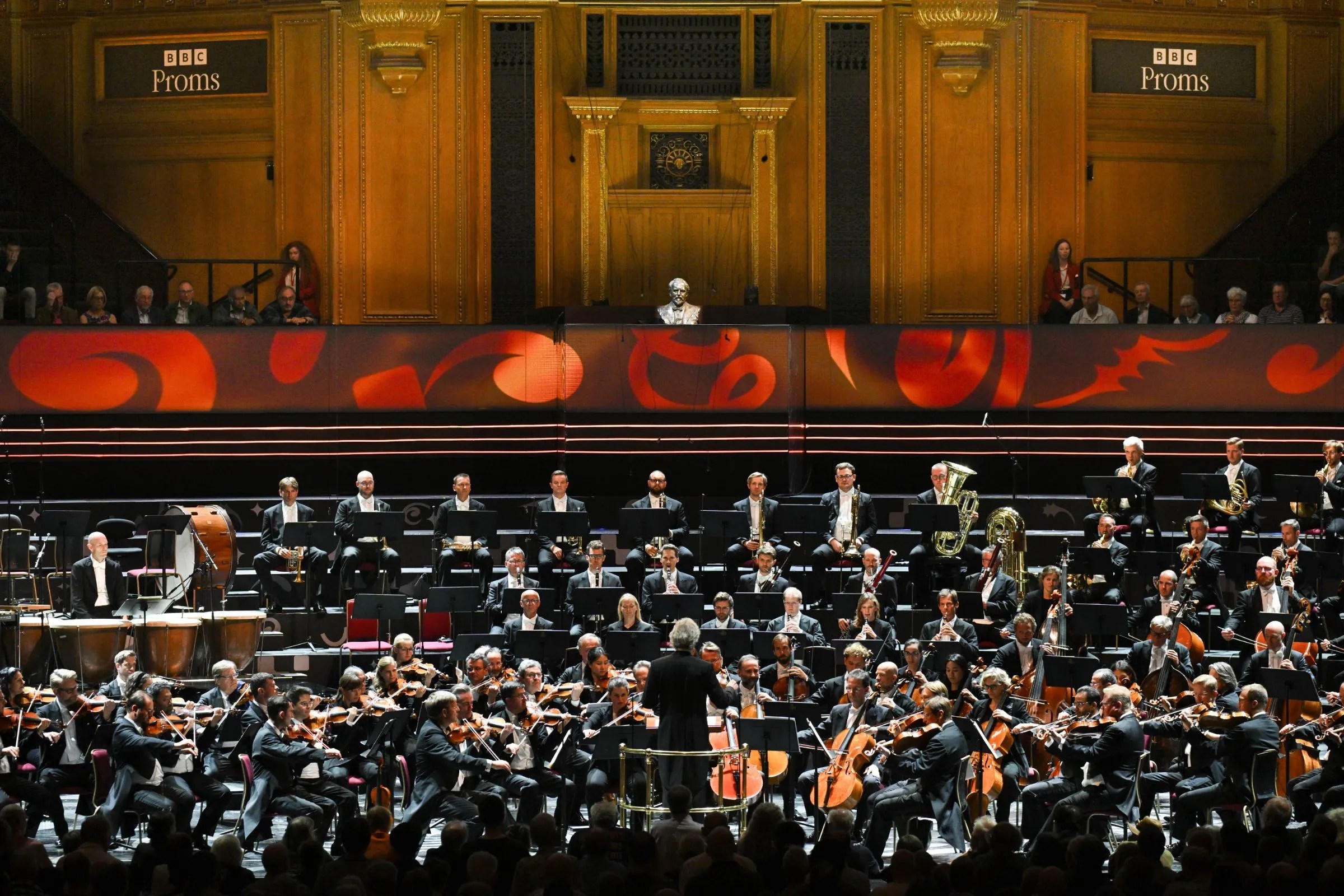
Royal Albert Hall, London Tuesday 9 September 2025
Reviewed by Ben Hogwood Photos (c) BBC / Chris Christodoulou
The music of Mozart is the lifeblood of the Vienna Philharmonic Orchestra, so to describe their performance of the composer’s Prague symphony as routine is to say that everything was present and completely idiomatic.
Completed in Vienna, the Prague deserves to be mentioned with the last three symphonies as among Mozart’s greatest. In the hands of guest conductor Franz Welser-Möst, its phrases were stylishly turned, violins silky-smooth but keeping clear of full fat over-indulgence. This performance drew the audience in, with a chamber orchestra sound that acquired more beef when needed in the first movement, which had appropriate drama, or the boisterous passages of the finale. The woodwind were superb throughout.
Most intriguing was the Andante, a thoughtful repose whose chromatic melodies were lovingly shaped, while the central section was notable for its autumnal frissons whenever the music headed for a minor key. Meanwhile the faster music was imbued with the spirit of the dance, a performance carefully considered but let off the leash when appropriate.
Tchaikovsky’s Pathétique symphony took a while to get going, revealing the composer’s own Mozartian influence in the process. Initially the first movement felt underpowered, its sense of dread kept to a minimum and the second theme kept within itself – though that did mean a particularly beautiful clarinet solo from Matthias Schorn. This turned out to be an effective interpretative ploy on the part of Welser-Möst, for the impact of the stormy section was heightened, the orchestra suddenly playing hell for leather.
The 5/4 metre of the second movement was persuasively realised, the lilt of its dance compromised by unexpected syncopations, alternating between charming and disturbing. By this point the Proms audience notably rapt in their attention, and still between movements.
The scherzo felt Viennese yet acquired a manic need to please more in keeping with Mahler – not encouraged as much by Welser-Möst as previous Vienna Philharmonic incumbents (Herbert von Karajan, for example) but effective, nonetheless. It all set up the devastating pathos of the finale, taken relatively smooth and never lingering, but still uncommonly moving. Double basses were appropriately knotty, while the effect of the stopped horns, playing low and loud, was genuinely chilling. The fabled gong stroke, on the light side, was still a telling moment in the hall, as was the silence following the last note, Welser-Möst giving us over a minute to consider the masterpiece we had just heard. After that, there could be no encore.
Franz Welser-Möst is a subtle conductor who over the years has developed a close relationship with his charges in Cleveland and Vienna particularly. His poised approach brings optimum virtuosity and watertight ensemble, to which can be added artistic approaches with a great deal to commend them. In this case both Mozart and Tchaikovsky were the beneficiaries.
You can listen back to this Prom concert on BBC Sounds until Sunday 12 October.
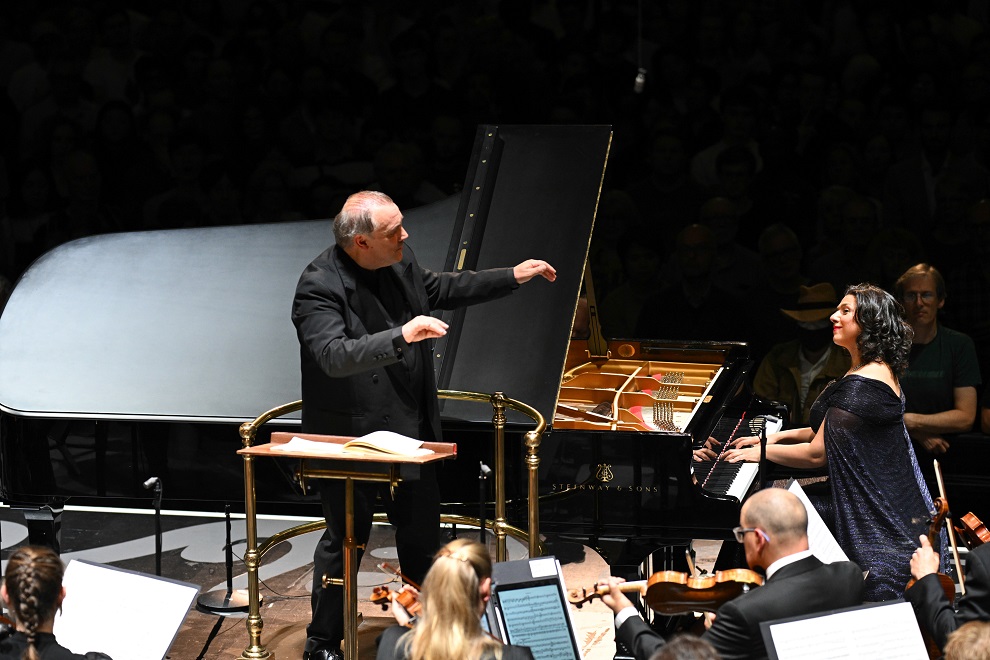
Khatia Buniatishvili (piano), Melbourne Symphony Orchestra / Jaime Martin
Sutherland Haunted Hills (1950) [Proms premiere] Tchaikovsky Piano Concerto no.1 in B flat minor Op.23 (1874-5) Dvořák Symphony no.6 in D major Op.60 (1880)
Royal Albert Hall, London Friday 29 August 2025
Reviewed by Richard Whitehouse Photos (c) BBC / Chris Christodoulou
Eleven years after its well-received debut at these concerts under the late Sir Andrew Davis, the Melbourne Symphony Orchestra made its unintentionally eventful return with current chief conductor Jaime Martin and a programme which, for the most part, played to this orchestra’s strengths.
A significant presence in Australian music throughout the mid-twentieth century, Margaret Sutherland has yet to receive her due in live or recorded terms; making this performance of Haunted Hills the more timely. Inspired by the Dandenong Ranges, just outside Melbourne, her symphonic poem evokes the timelessness of its environment as surely as the fate of the Aboriginals who came there. Its starkly dissonant opening then granitic opening paragraph recall that Vaughan Williams’ Sixth Symphony had been unleashed barely two years earlier, and while much of what follows is notable more for its judicious orchestration than formal cohesion, the musical persona that finally emerges is distinctive enough to warrant further hearings of this piece within the context of Sutherland’s not inconsiderable output overall.
Logistical factors necessitated a reordering such that Dvořák’s Sixth Symphony came before the interval. Not a stranger to these concerts (tonight’s being its ninth hearing in 72 years), it responded well to Martin’s interventionist if rarely intrusive approach – not least an opening Allegro (its non tanto duly observed albeit with no exposition repeat) at its most persuasive in a development whose seeming discursiveness was purposefully reined in, and on to a coda whose heightened sense of arrival was mitigated only by those slightly tentative closing bars.
Not the deepest among Dvořák’s symphonic slow movements, the Adagio is surely his most felicitous in its expressive shadings and emotional understatement. Martin made the most of these, as too the contrast between the Scherzo’s impetuous outer sections and its ingratiating trio. The surging acceleration at its close prepared unerringly, moreover, for a Finale as finds Dvořák at his most Brahmsian though, here again, Martin (above), steered a forthright course through its overly rhetorical development before he infused its coda with an exhilarating affirmation.
Tchaikovsky’s First Piano Concerto cannot often have occupied the second half of a concert, though Khatia Buniatishvili made the most of her delayed appearance. Most striking was the amount of hushed playing during a lengthy opening movement whose indelible introduction was kept well within emotional limits. If coordination between soloist and orchestra was not all it might have been, the latter’s entry after a suitably dextrous cadenza was an undoubted highpoint, though not a rather blowsy coda. A melting take on the Andantino was enhanced with poetic contributions from flautist Prudence Davis and cellist David Berlin – while if, in the final Allegro, Buniatishvili’s passagework could seem unnecessarily skittish, she and the Melbourne players came together admirably in a surging but not unduly bathetic peroration.
As to extra-musical occurrences at this concert (for a full BBC account, read here), these artists responded simply by focussing on the music. As an envoi, Buniatishvili’s elegant rendering of the Adagio from Alessandro Marcello’s Oboe Concerto in D minor, arranged by Johann Sebastian Bach, could not have been more fitting.
Sheku Kanneh-Mason (cello), City of Birmingham Symphony Orchestra / Kazuki Yamada
Elgar Cello Concerto in E minor Op.85 (1919) Tchaikovsky Symphony no.5 in E minor Op.64 (1888)
Symphony Hall, Birmingham Thursday 19 June 2025 2:15pm
Reviewed by Richard Whitehouse Picture of Sheku Kanneh-Mason (c) Andrew Fox
The City of Birmingham Symphony Orchestra’s ‘Season of Joy’ ended (at least at its home base) this afternoon with this concert in E minor, featuring major works by two composers whose wresting triumph from out of adversity was by no means always their strongest suit.
It is all too prevalent these days to talk of Elgar’s Cello Concerto as being the ‘end of an era’ statement, so credit to Sheku Kanneh-Mason for leavening any overt fatalism with a lyrical intensity which paid dividends in the musing restiveness of the first movement – its indelible opening gesture rendered with an understated defiance that set the course for what followed. Nor was the Scherzo’s glancing irony at all undersold, its tensile energy seamlessly absorbing the mock nobility of its secondary theme on the way to a conclusion of throwaway deftness.
Others may have summoned greater fervency from the Adagio, yet Kanneh-Mason’s unforced poise in this ‘song without words’ was its own justification and an ideal entrée into the more complex finale. Especially impressive was his methodical while never calculated building of tension towards a climax of tangible emotional intensity, capped with the terse stoicism of its coda. Kazuki Yamada and the CBSO were unfailingly responsive in support. Kanneh-Mason returned with the 18th (Sarabande) of Mieczysław Weinberg’s 24 Preludes (1969) as a sombre encore.
If to imply that by being his most ‘classical’ such piece, Tchaikovsky’s Fifth Symphony may also be his most predictable, Yamada evidently had other ideas. Certainly, there was nothing passive about the first movement’s scene-setting Andante, Oliver Janes palpably ominous in its ruminative clarinet theme. A smattering of over-emphases in phrasing just occasionally impeded the Allegro’s rhythmic flow but was outweighed by the gripping spontaneity of the whole. Even finer was the Andante cantabile, as undulating lower strings launched french horn player Elspeth Dutch’s eloquent take on its ineffable main melody. The eventual climax was curtailed by a brutal intrusion of the ‘fate’ motto, before the music subsided into its calmly regretful close. Whether or not Tchaikovsky’s greatest slow movement, Yamada’s reading made it seem so.
Interesting this conductor made an attacca to the ensuing Valse, which proved effective even if one between the first two movements would have been even more so. Whatever its laissez-faire elegance, this cannily structured movement is more than a mere interlude – not least for the way the motto steals in at its close. Yamada ensured it connected directly into the Finale’s slow introduction, its fervency reined-in so as not to pre-empt the energy of the main Allegro as it surged toward one of the most theatrical ‘grand pauses’ in music. Taking this confidently in its stride, the CBSO was equally in control of an apotheosis whose grandiloquence never risked overkill. The charge of insincerity that its composer found hard to refute might never have gone away, yet heard as an inevitable outcome, this was pretty convincing all the same.
It found the CBSO in formidable shape as it embarks on a two-week tour of Japan under its music director. A handful of UK concerts (including an annual appearance at the Proms) then precedes next season which begins with more Elgar in the guise of The Dream of Gerontius.
This day marks the anniversary of one of Tchaikovsky‘s biggest orchestral works, which over the last few decades has gained a foothold in the concert hall and the studio.
Tchaikovsky’s Manfed Symphony was written in between his Fourth and Fifth symphonies, and, at the suggestion of the composer Balakirev, was based on the poem of the same name by Lord Byron.
It is actually longer than any of Tchaikovsky’s numbered symphonies, and shows the influence of Berlioz – who, ironically, was given the opportunity to write Manfred but declined due to old age. Tchaikovsky too declined initially, but Balakirev, who had worked closely with him on the final revision to Romeo and Juliet, persuaded him otherwise.
Ultimately Tchaikovsky responded with a powerful work, whose impact on the listener is considerable. The composer summed it up as follows: “The symphony has turned out to be huge, serious, difficult, absorbing all my time, sometimes to utter exhaustion; but an inner voice tells me that my labour is not in vain and that this work will perhaps be the best of my symphonic works.”
Time has proved him right – and while the work, dedicated to Balakirev, was not universally praised on its premiere in Moscow, it has stood the test of time. Here it is in a 1986 performance with the Oslo Philharmonic Orchestra conducted by Tchaikovsky specialist Mariss Janssons: