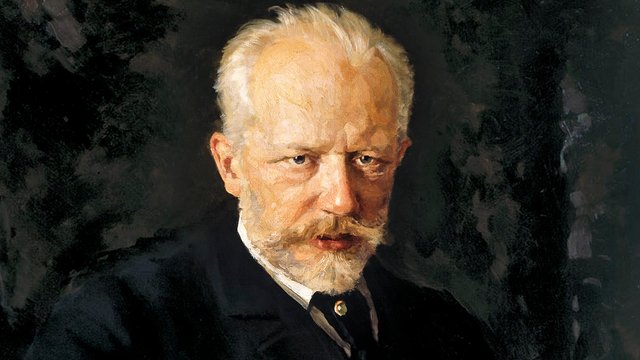
This day marks the anniversary of the premiere of Tchaikovsky‘s Romeo and Juliet, an ‘Overture-Fantasy’ marking the pinnacle of his inspiration from the plays of William Shakespeare.
Although one of his most successful works nowadays, the work had a tricky genesis – the reaction to its premiere in Moscow in 1870 was lukewarm to say the least. Two more revisions followed, the last of which we can hear in this white hot live version from the New York Philharmonic Orchestra under Leonard Bernstein:
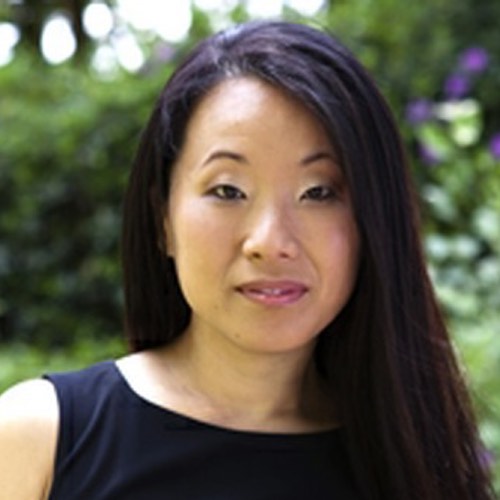
Jong-Gyung Park (piano, below), Tonbridge Philharmonic Orchestra / Oliver Cope (above)
Tchaikovsky Romeo & Juliet Fantasy Overture (1869, rev. 1880) Rachmaninov Rhapsody on a Theme of Paganini Op.43 (1934) Brahms Symphony no.4 in E minor Op.98 (1884-5)
Chapel of St Augustine, Tonbridge School, Tonbridge Saturday 22 February 2025
Reviewed by Ben Hogwood Photos of Oliver Cope, Chapel of St Augustine (c) Ben Hogwood
This was the first concert for the Tonbridge Philharmonic Orchestra under their interim musical director Oliver Cope, in the position while current incumbent Naomi Butcher is on maternity leave. On this evidence he has quickly built a rapport with the orchestra, already in fine fettle under Butcher’s recent direction. On this occasion they responded with a memorable concert of Romantic favourites, given in the spectacular setting of the Chapel of St Augustine in Tonbridge School.
It is easy to take Tchaikovsky’s inspiration for granted, for his storytelling and melodic gifts are so abundant that his best music flows irrepressibly. Such is the case with the Romeo & Juliet Fantasy Overture, in spite of the two revisions required for its composer to be fully satisfied. Cope was an athletic presence on the podium as the orchestra responded with a dramatic account of the lovers’ story, the sword duel between Mercutio and Tybalt particularly vivid, while the soaring love theme tugged at the heartstrings. With fire and brimstone, and crisp ensemble playing, this performance lit the touch paper at the start of the evening.
If anything, Rachmaninov’s Rhapsody on a Theme of Paganini was even better. This was because Jong-Gyung Park (above), the popular rehearsal pianist with the Tonbridge Philharmonic Choir, delivered a sparkling account of the theme and its 24 variations. Cope threw down the gauntlet with a brisk tempo, yet Park rose to the challenge by taking control of even the quickest exchanges. There was an instinctive flow through the first six variations, the mood acquiring an appropriate chill as the Dies Irae was introduced in the seventh. From here the music travelled down darker roads, though still found time for a baleful sixteenth variation, before a shiver could be felt in the air as the seventeenth took hold. The famous eighteenth variation was lovingly delivered, before a flight to the finish that saw Park dazzle with her virtuosity, never losing sight of the whole picture.
To complete a challenging program, Brahms’s Symphony no.4 – and after initial hesitation, a convincing interpretation revealing this work’s unique bridges to the past – notably Bach – and the future, with Schoenberg on the horizon. There was an attractive open-air quality to much of the orchestra’s music making, with the second movement becoming a spring-like counterpart to the obdurate first. The scherzo built on this, dancing with a smile on its face. Flautist Rebecca Rees led a fine woodwind section in the second movement, where the horns, led by Paul Kajzar, were suitably fulsome. They were to prove critical to the success of the finale as the passacaglia developed, capping a performance with serious outlines but shot through with bursts of optimism suggesting Brahms still had a great deal to be thankful for later on in life. It put the seal on an extremely impressive concert.
Tier3 Trio [Joseph Wolfe (violin), Jonathan Ayling (cello), Daniel Grimwood (piano)]
Liszt arr. Saint-Saëns Orpheus Tchaikovsky arr. Grimwood Andante non troppo (second movement of Piano Concerto no.2 in G major Op.44) (1880) Arensky Piano Trio no.1 in D minor Op.32 (1894)
St Giles Cripplegate, London Thursday 13 June 2024, 1pm
Reviewed by Ben Hogwood
‘Love’s Labours’ is the title of this year’s Summer Music in City Churches festival, based opposite the Barbican Hall in St Giles Cripplegate. The ten day-long enterprise is proving ample consolation for the much-missed City of London Festival, which once captivated audiences in the Square Mile for three weeks and offers music of equal range and imagination.
For the second year in succession the Tier3 Trio visited for a lunchtime recital, following up last year’s tempestuous Tchaikovsky Piano Trio with an attractive programme subtitled From Russia with Love. They began with a curiosity, playing Saint-Saëns’ little-known arrangement of Liszt’s symphonic poem Orpheus for piano trio. A highly effective transcription, it retained its dramatic thread in this fine performance, notable for its attention to detail and well-balanced lines when reproducing Liszt’s slow-burning music. Pianist Daniel Grimwood successfully evoked Orpheus’ lyre, while Jonathan Ayling’s burnished cello sound probed in counterpoint to Joseph Wolfe’s violin.
Tier3 was formed during lockdown, and in the same period when he was performing Tchaikovsky’s Piano Concerto no.2 in Germany, Grimwood realised the suitability of the work’s slow movement for trio. He rightly complemented ‘the extent to which Tchaikovsky was an experimenter in form’, a trait found in many works but at its inventive peak in the second concerto, whose slow movement is in effect a piano trio with orchestra. Here the arrangement was just right – balanced, elegant and fiercely dramatic towards the end. Clarity of line was secured through sensitive pedalling from Grimwood, the trio using the resonant acoustic to their advantage, while the individual cadenzas were brilliantly played.
These two notable curiosities linked beautifully into one of the best-known works of Anton Arensky, his Piano Trio no.1 in D minor. Arensky is not a well-known composer, fulfilling in part an unkind prophecy from his teacher, Rimsky-Korsakov. However that does not mean his music is without merit – far from it, as in his brief life of 45 years he wrote two symphonies, four orchestral suites, a substantial output of piano and high quality chamber music, of which the first piano trio is the pick.
Dedicated to the cellist Karl Davidov, it is equal parts elegy, drama and ballet – with a powerful first movement setting the tone. The balletic second movement Scherzo demands much of the piano, but Grimwood was its equal, sparkling passagework from the right hand dressed with twinkling figures for cello and piano. The emotional centre of the trio was in the slow movement, with a heartfelt tribute to Davidov in Ayling’s first solo, while the finale rounded everything up in a highly satisfying payoff, a return to the first movement’s profound theme capped with an emphatic closing section.
These were very fine performances from a trio at the top of their game, navigating the resonant acoustic of St Giles with power and precision. On this evidence, Rimsky-Korsakov would have had to eat his words!
You can read more about Summer Music in City Churches at the festival website – and you can listen to a Spotify playlist below, containing the music heard in this concert – with the original version of the Tchaikovsky:
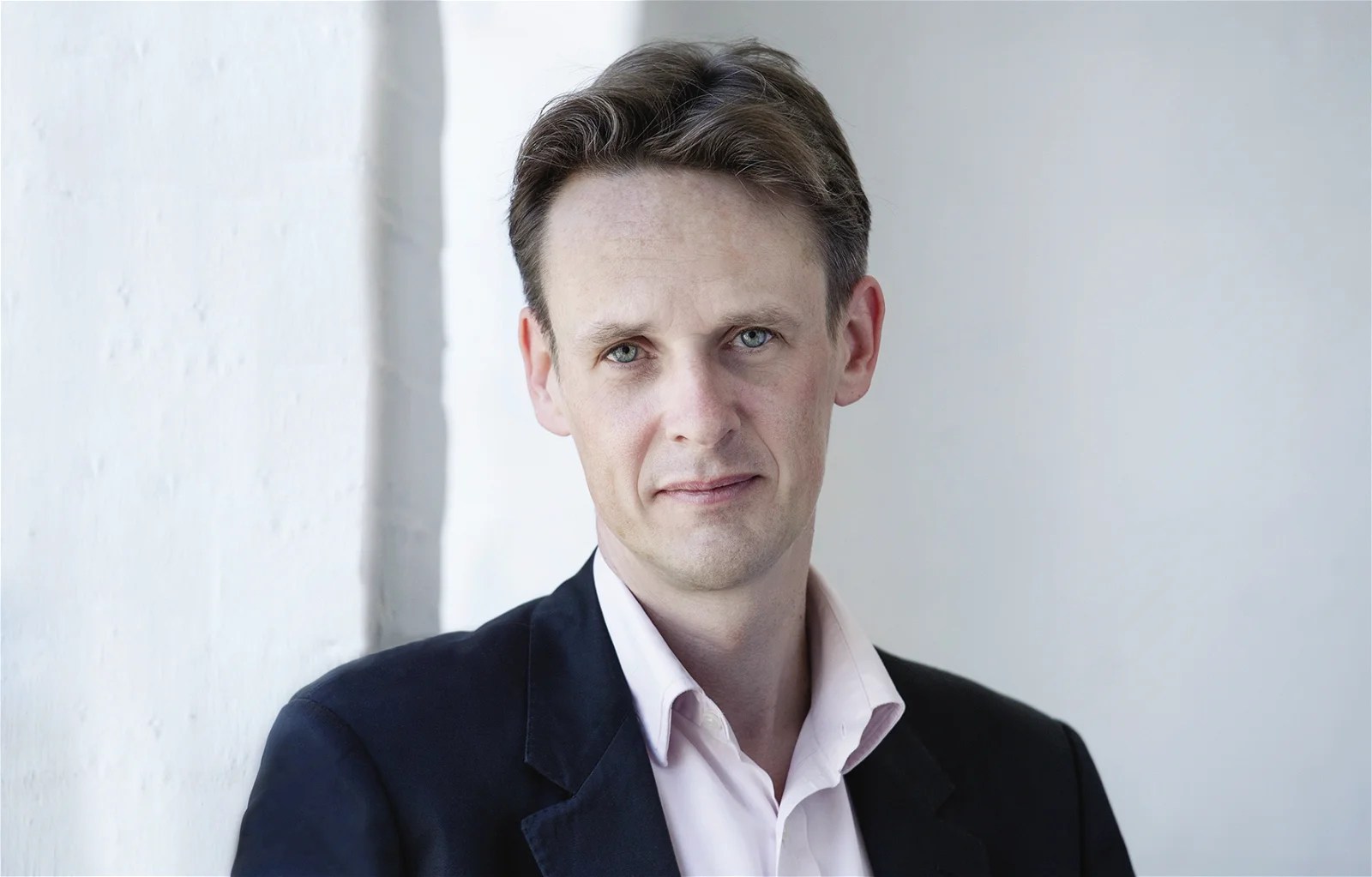
Ian Bostridge (tenor), City of Birmingham Symphony Orchestra / Gergely Madaras (above)
Thorvaldsdottir Dreaming (2008) Britten Les Illuminations Op.18 (1939) Tchaikovsky Symphony no.1 in G minor Op.13 ‘Winter Daydreams’ (1866, rev. 1883)
Symphony Hall, Birmingham Wednesday 17 April 2024
Reviewed by Richard Whitehouse Picture of Gergely Madaras (c) Hannah Fathers
This evening’s concert with the City of Birmingham Symphony Orchestra comprised what was an unusually cohesive programme centred on the concept of ‘dreams’, assembled and directed with consistent empathy and insight by the Hungarian conductor Gergely Madaras.
Dreaming was the title as well as the watchword of the piece by Anna Thorvaldsdottir which opened proceedings. Her first major work for orchestra is already characteristic in its eliding between evocations arcadian and desolate, with an undeniable sense of the ominous coming through as the final stages take on an extemporized quality; musicians gradually exiting the sonic frame with just the capricious asides of a cellist remaining. Eduardo Vassallo made the most of this brief spotlight, and the CBSO made its collective presence felt to striking effect.
Arthur Rimbaud’s brief but meteoric spell as a poet in the early 1870s had belated if decisive impact on numerous composers and none more than Britten, his song-cycle Les Illuminations among his finest achievements in any medium. Having sung it many times, Ian Bostridge (above) still manages to point up the growing anticipation of ‘Fanfare’ or breathless excitement of Villes; his wide-eyed wonder in Phrase then graceful musing in Antique matched by the resolute irony of Marine or glancing wit of Royauté. Madaras drew languorous playing from the CBSO strings in Interlude and brought out the ecstatic longing of Being Beauteous, before the fervid imagining of Parade brought this sequence full circle. It remained for Départ to offer a fulfilled exit as poet – and composer – resignedly bids farewell to the realm of dreams.
This gripping account should not have needed Bostridge to address members of the audience after the fourth song, asking they refrain taking pictures on their mobiles while the music was in progress. An overhaul of the management’s current laissez-faire approach might be in order.
After the interval, a comparatively rare outing for Tchaikovsky’s First Symphony. The ‘Winter Daydreams’ of its subtitle implies an unforced though rarely contrary take on formal precepts, as in an opening movement (oddly marked Allegro tranquillo) whose often portentous pauses were well integrated by Madaras into the cumulative symphonic flow. The CBSO woodwind came into own with the Adagio – its oboe melody among its composer’s most affecting, and not least when it returns at the movement’s climax in a mood of expansive if fateful grandeur.
Partly drawn from an earlier piano sonata, the Scherzo exudes a pert animation that Madaras judged to a nicety, as he did the wistful ruminations of its trio. Much the hardest movement to make cohere, the Finale unfolded persuasively from its sombre introduction to a celebratory Allegro replete with fugal episodes; the ensuing build-up (its effect not lost on Shostakovich) to the resounding restatement of its main theme duly capped by an apotheosis whose overkill was (rightly) kept well within limits, thereby setting the seal on this persuasive performance. For imaginative programming and convincing execution, Madaras is at the forefront among conductors of his generation – his rapport with the CBSO evident throughout. This should be equally true when Markus Stenz returns next week for a pairing of Schumann and Bruckner.