In concert – Natalya Romaniw, CBSO / Vassily Sinaisky: Beethoven and Tchaikovsky

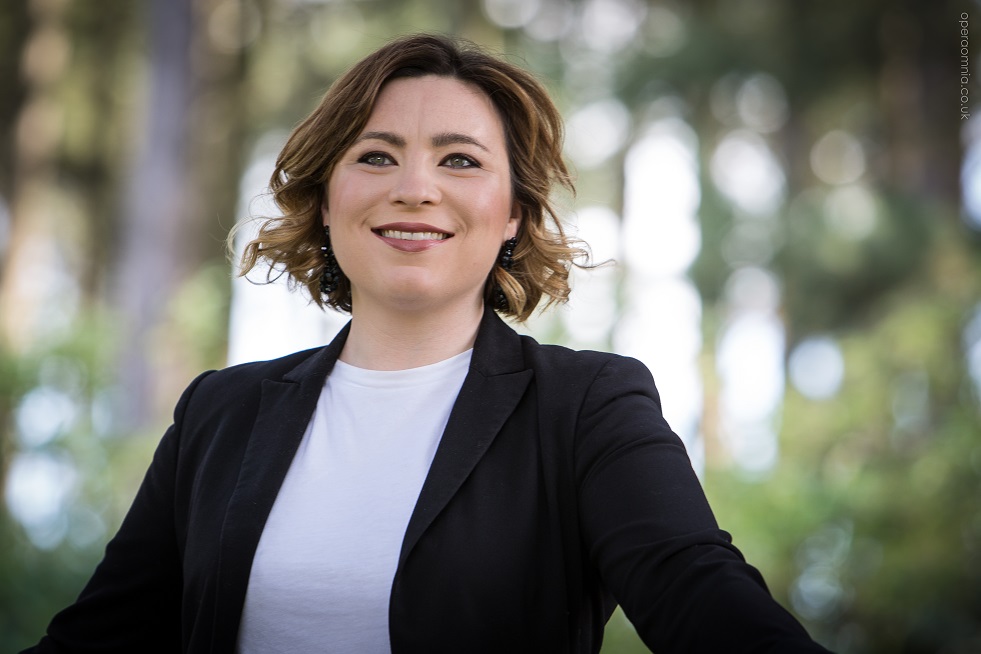
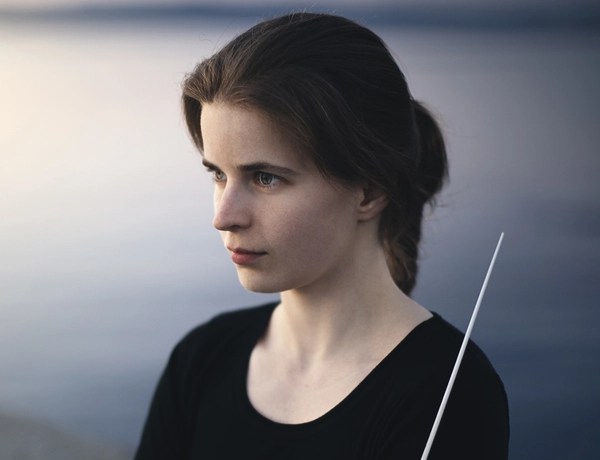
Natalya Romaniw (soprano, above), City of Birmingham Symphony Orchestra / Vassily Sinaisky (below)

Tchaikovsky Romeo and Juliet Fantasy Overture (1869, rev. 1872 & 1880)
Tchaikovsky Eugene Onegin, Op.24 (1877-78) – Letter Scene
Beethoven Ah! Perfido, Op.65 (1796)
Beethoven Symphony no.2 in D major Op.36 (1801-2)

Symphony Hall, Birmingham
Wednesday 14 February 2024

Reviewed by Richard Whitehouse

It might have been billed as a concert for Valentine’s Day and, though there was little about tonight’s programme to reinforce ‘true love reigns supreme’, it did make for a welcome new collaboration between the City of Birmingham Symphony Orchestra and Vassily Sinaisky.

Whether or not there is any more personal significance in Tchaikovsky’s Romeo and Juliet, it remains a potent encapsulation of Shakespeare’s tragedy. The brooding introduction seemed a little inhibited, but Sinaisky brought suitable incisiveness to the warring families and growing ardour to the love music. Nor was there any lack of drama as this ‘fantasy overture’ unfolded to its fateful denouement – after which, the benedictory chorale as Friar Laurence movingly apostrophises these doomed lovers brought an eloquent response from the CBSO woodwind.

Tchaikovsky’s reputation as an opera composer may have altered markedly over the decades, but Eugene Onegin has held the stage since its premiere; the Letter Scene, in which Tatyana knowingly risks all for love of a cynical anti-hero, its highlight. The Welsh-Ukrainian soprano Natalya Romaniw responded with real impulsiveness and, if her projection was too full-on to convey the emotional ambivalence and fragility of its central stages, the joyous abandon of its beginning and reckless determination at its close were duly rendered with unfailing charisma.

Romaniw sounded even more in her element as the jilted lover of Pietro Metastasio’s lyric Ah! Perfido which Beethoven set in his mid-20s. The latter wrote few such concert arias, but the immediacy of his response can hardly be gainsaid and Romaniw gave it her all – whether in its despairing introduction, the more consoling yet hardly untroubled expression that follows, or the steely resolve of those closing pages where the former ‘loved one’ is denounced in no uncertain terms. As in the Tchaikovsky, it was a pity neither text nor surtitles were provided.

Quite how Beethoven’s Second Symphony fitted into tonight’s conception was unclear, other than with its determination to defy fate and live life to the full, but Sinaisky evidently relished putting the CBSO through its paces – not least a first movement whose imposing introduction prepared for an Allegro of driving impetus and emotional fervour ideally intertwined prior to the blazing coda. Easy to underestimate, the Larghetto impressed with its lilting elegance and, in the central development, its teasing modulations – alongside a pay-off of disarming poise.

If, given its textural weight and unabashed rhetoric, this was ostensibly a performance of the ‘old school’, there was nothing portentous about Sinaisky’s take on the Scherzo – as lithe and quizzical as its trio was capricious, then the final Allegro had the character of an opera buffa ensemble refashioned for the post-Classical symphony toward which Beethoven was striving. Not the least attraction of this reading was its differentiation between soft and loud dynamics – crucial to the impact of a lengthy coda which fairly crackled with energy in its closing bars.

A gripping performance of a symphony which, while hardly unknown, is likely the least often played (albeit in the UK) of Beethoven’s nine. Sinaisky has enjoyed a productive relationship with the CBSO across the years, and it is to be hoped that this will continue in future seasons.

Click on the link to read more on the current CBSO concert season, and on the names for more on soprano Natalya Romaniw and conductor Vassily Sinaisky. To read more about the Beethoven works in the program, follow Arcana’s Listening to Beethoven series – which has already included Ah! Perfido and the Symphony no.2

Published post no.2,089 – Friday 16 February 2024

In concert – Paul Lewis, CBSO / Tabita Berglund: Sibelius, Grieg & Tchaikovsky

Paul Lewis (piano), City of Birmingham Symphony Orchestra / Tabita Berglund

Sibelius Pohjola’s Daughter Op.49 (1906)
Grieg Piano Concerto in A minor Op.16 (1868)
Tchaikovsky Symphony no.5 in E minor Op.64 (1888)

Symphony Hall, Birmingham
Thursday 11th January 2024 [2.15pm]

Reviewed by Richard Whitehouse

Entering 2024 with this attractive programme, the City of Birmingham Symphony Orchestra was conducted by Tabita Berglund – the Norwegian who, though unrelated to the late, great Paavo, seems certain to become one of the most significant conductors from her generation.

It was with Sibelius that the programme commenced, Pohjola’s Daughter lying on the cusp between its composer’s nationalistically inclined Romanticism and the relative Classicism that ensued. Pointedly so given the composer derived his inspiration from the Kalevala, in which its totemic figure Väinämöinen is outwitted by the ‘daughter of the North’, as the basis for a symphonic fantasia which critiques as surely as it remodels its underlying sonata design. Other interpreters have ensured a more seamless cohesion, but the acute characterization that Berglund brought to each episode, then the emotional frisson when those main motifs come together for a powerful apotheosis, compelled admiration – as did the closing pages in which Sibelius cannily fragments form and texture so all that remains is an all-enveloping silence.

Its ubiquity across 150 years should not distract attention from the innovative qualities found in Grieg’s Piano Concerto, and if his was not a consciously recreative approach, Paul Lewis gave a performance as appealing as it was insightful. Not least in an opening Allegro whose melodic directness was always balanced by a tangible sense of where this music was headed, and culminating in a take on the lengthy cadenza that infused its rhetoric with an inevitability worthy of Beethoven. There was expressive light and shade aplenty in the central Adagio, as too an unforced progress to the heartfelt restatement of its main theme. The outer sections of the final Allegro had no lack of impetus, as if to emphasize contrast with its rapt flute melody that closes the work in a thrilling peroration where soloist and conductor were rightly as one.

After the interval, Tchaikovsky’s Fifth Symphony emerged as a forceful and combative piece with its occasional longueurs convincingly held in check. Not least in an opening movement, the simmering expectancy of whose introduction intensified throughout what followed. Any short-windedness of phrasing was absent in the Andante cantabile, its indelible horn melody serenely intoned by Elspeth Dutch then its interplay between slow-burning eloquence and violent interjections of the ‘fate’ theme astutely judged on route to a warmly resigned coda.

Ostensibly an interlude, the Valse has a charm and, in its central trio, insouciance as belies its formal ingenuity that Berglund conveyed in full measure. Nor was there any sense of overkill as the Finale pursued a purposeful but never headlong course – its initial restatement of the main theme exuding an expressive focus matched by that of its climactic reappearance, here without risk of bathos in what brought the performance to a decisive and affirmative close. Certainly, the composer’s doubts as to any ‘insincerity’ proved unfounded on this occasion. It also confirmed a rapport between Berglund and the CBSO which will hopefully continue. Next week, however, brings the return of Kazuki Yamada for a wide-ranging programme of Berlioz, Walton and the world premiere of a newly commissioned work from Dai Fujikura.

Click on the link to read more on the current CBSO concert season, and on the artist names for more on Tabita Berglund and Paul Lewis

Published post no.2,054 – Friday 12 January 2024

The 1st of July – musical miniatures from Tchaikovsky and…Bomb The Bass

With the arrival of July 1st, here are two very different musical responses to the month. The first is an extract from Tchaikovsky’s popular cycle for piano, The Seasons – designating July to be The Song of the Reaper:

Then, with the weather here in the UK having been a little downcast this morning, a very different response from Bomb The Bass. Winter In July is a wonderfully moody song, with vocals from Loretta Haywood. It could only be from the early 1990s!

In concert – CBSO Centre Stage: Bobbie-Jane Gardner & Tchaikovsky

Eugene Tzikindelean, Kirsty Lovie (violins), Adam Römer, aDavid BaMaung (violas), Eduardo Vassallo, aArthur Boutillier (cellos)

Gardner True Self (2023) [CBSO Centenary Commission: World Premiere]
Tchaikovsky String Sextet in D minor, Op. 70, ‘Souvenir de Florence’ (1890)a

CBSO Centre, Birmingham
Thursday 8 June 2023 (2pm)

Reviewed by Richard Whitehouse

This last of the City of Birmingham Symphony Orchestra’s Centre Stage programmes for this season brought together the most heard work for the relatively limited medium of string sextet with a Centenary Commission for string quartet by a composer born and based in Birmingham.

Best known for her diverse arrangements of African-American classics taking in Odetta and Alicia Keys, Bobbie-Jane Gardner has also written extensively for classical ensembles; most recently Up on the Toes (the slippery stair dance) for brass quintet (recorded by Onyx Brass), and now True Self. Taking its cue from the Buddhist virtue of absolute happiness, this latter unfolds along an ‘innocence to experience’ trajectory prior to a new awakening – the whole piece founded on a motif whose ‘childlike’ innocence is pervaded by its own vulnerability.

Harmonically subtle and rhythmically agile, True Self received what sounded a committed reading from the CBSO players – notably in the opening section when the music stirs gently but insistently into life, and towards the close when it touches on a resolution not so much tentative as anticipatory. Maybe these nine minutes could yet prove the first stage of a large-scale work or series of pieces? At any rate, it left a thoughtful and affecting impression, and will hopefully be taken up by other quartets seeking a worthwhile addition to the repertoire.

Souvenir de Florence has never been out of its respective repertoire, and this performance gave it its due – not least an impetuous opening Allegro as made the most of Tchaikovsky’s frequently dense part-writing, with a thrillingly climactic lead-back to the reprise, followed by an Adagio whose emotional build-ups were never indulged or overbearing. Even so, the speculative central interlude (with its edgy sul ponticello exchanges) might have benefitted from a touch more ambivalence to set the expansive sections either side into greater relief.

There was no doubting the trenchancy of the Allegretto, outwardly an intermezzo but with a scherzo-like capriciousness across its trio, while the unabashed rhetoric of the final Allegro was finely controlled as this movement reached a close of suitably breathless exhilaration.

You can read all about the 2023/24 season for Centre Stage at the CBSO website. Click on the composer name for more information on Bobbie-Jane Gardner, or visit her Soundcloud page

In concert – Tier3 Trio play Tchaikovsky – In Memory Of A Hero @ St Giles’ Cripplegate, London

Tier3 Trio [Daniel Grimwood (piano), Joseph Wolfe (violin), Jonathan Ayling (cello)]

Tchaikovsky Piano Trio in A minor Op.50 (1881-2)

St Giles’ Cripplegate, London
Friday 9 June 2023

Reviewed by Ben Hogwood

Summer Music in City Churches is a week-long festival in London’s Square Mile, bringing a wide range of classical music to the capital’s audiences in a format that brings fond reminiscences of the much-missed City of London Festival.

For their fifth year, the City Churches concerts run under the theme Legends & Heroes, inspiring creative programmes from solo piano (Mark Bebbington’s Liszt-themed hour) through to a centenary performance of Walton’s Façade and a welcome pairing of Haydn’s Nelson Mass and Bliss’s Pastoral: Lie Strewn The White Flocks, closing the festival on Thursday 15 June.

St Giles’ Cripplegate played host to the Goliath of piano trios, the Tier3 Trio bringing us Tchaikovsky’s sole but very substantial essay in the genre. The composer had tried his hand at the format within the confines of his Piano Concerto no.2, writing the slow movement almost exclusively for violin, cello and piano. Here, he seems to go the other way, writing music for trio that sounds orchestral both in concept and sound. The piece is a sizeable memorial, the subtitle ‘À la mémoire d’un grand artiste’ a recognition of Tchaikovsky’s great friend and mentor, pianist Nikolay Rubinstein.

The challenge facing Tier3 – named after the pandemic conditions in which they were formed – was to get their sound to fill the roomy acoustic of St Giles without it losing detail, and this they commendably achieved. The balance between the instruments was ideal, thanks to Daniel Grimwood’s sensitive and clear phrasing at the keyboard, as well as careful attention to dynamic detail from violinist Joseph Wolfe and cellist Jonathan Ayling.

This is such a passionate piece that it would be easy to peak too soon, but this interpretation was borne of experience and a clear love for Tchaikovsky’s music. The sizeable first movement, clocking in at over 20 minutes, was ideally paced and compelling throughout. A sense of sorrow pervaded the soulful opening, with a profound solo from Ayling, but gradually chinks of light began to show, especially in Grimwood’s heroic second theme, block chords pealing like bells.

Despite its orchestral outbursts the trio does contain music of great tenderness, and these were found in sweetly toned violin and doleful cello, set against arpeggiated chords from Grimwood’s piano – a telling episode before the return of the main theme, radiating great sorrow.

The second and third movements effectively merge into a huge finale, Tchaikovsky presenting a Theme with 11 variations and a vast coda of boundless invention and variety. Here they kept the audience on the edge of their seats.

Early on there was brilliant virtuosity from Grimwood, the tumbling variations of the third variation giving it a balletic quality. These led into a passionate cello solo from Ayling, immediately contrasted by celesta-like sonorities from the upper range of the piano. An appropriately heroic seventh variation led to a fugue of impressive clarity and dexterity, before the figurations of the ninth variation unexpectedly conjured the vision of flowers falling onto a coffin.

A quirky tenth variation and relatively serene counterpart led us to the coda, an emphatic and exuberant theme surging forward. Here the players were at the limit but rose to the occasion magnificently, emotions close to the surface, before the final twist when the music returned to the minor key. Here there were parallels to the funeral march from Chopin’s Piano Sonata no.2 before the music gradually and respectfully subsided to silence.

This was an extremely fine performance of a piece whose impact remains considerable, an outpouring keenly conveyed to the St. Giles’ audience by players relishing the experience. As an encore Tier3 made a most imaginative and suitable choice, giving us a the fourth of Widor’s short Pieces en Trio. Titled Sérénade, it was a charming complement to the sunshine outside.

You can read more about Summer Music In City Churches at the festival website – and click on the artist name to read more about Tier3 Trio.