In concert – Tier3 Trio play Tchaikovsky – In Memory Of A Hero @ St Giles’ Cripplegate, London

Tier3 Trio [Daniel Grimwood (piano), Joseph Wolfe (violin), Jonathan Ayling (cello)]

Tchaikovsky Piano Trio in A minor Op.50 (1881-2)

St Giles’ Cripplegate, London
Friday 9 June 2023

Reviewed by Ben Hogwood

Summer Music in City Churches is a week-long festival in London’s Square Mile, bringing a wide range of classical music to the capital’s audiences in a format that brings fond reminiscences of the much-missed City of London Festival.

For their fifth year, the City Churches concerts run under the theme Legends & Heroes, inspiring creative programmes from solo piano (Mark Bebbington’s Liszt-themed hour) through to a centenary performance of Walton’s Façade and a welcome pairing of Haydn’s Nelson Mass and Bliss’s Pastoral: Lie Strewn The White Flocks, closing the festival on Thursday 15 June.

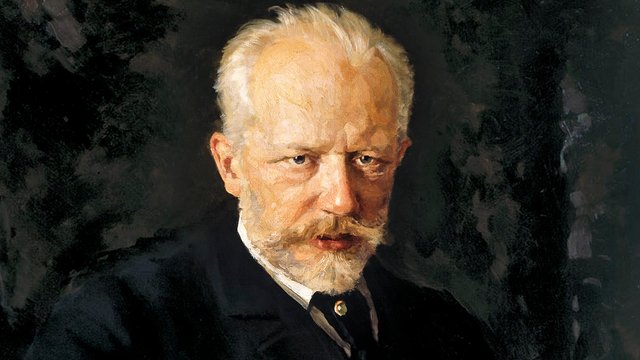
St Giles’ Cripplegate played host to the Goliath of piano trios, the Tier3 Trio bringing us Tchaikovsky’s sole but very substantial essay in the genre. The composer had tried his hand at the format within the confines of his Piano Concerto no.2, writing the slow movement almost exclusively for violin, cello and piano. Here, he seems to go the other way, writing music for trio that sounds orchestral both in concept and sound. The piece is a sizeable memorial, the subtitle ‘À la mémoire d’un grand artiste’ a recognition of Tchaikovsky’s great friend and mentor, pianist Nikolay Rubinstein.

The challenge facing Tier3 – named after the pandemic conditions in which they were formed – was to get their sound to fill the roomy acoustic of St Giles without it losing detail, and this they commendably achieved. The balance between the instruments was ideal, thanks to Daniel Grimwood’s sensitive and clear phrasing at the keyboard, as well as careful attention to dynamic detail from violinist Joseph Wolfe and cellist Jonathan Ayling.

This is such a passionate piece that it would be easy to peak too soon, but this interpretation was borne of experience and a clear love for Tchaikovsky’s music. The sizeable first movement, clocking in at over 20 minutes, was ideally paced and compelling throughout. A sense of sorrow pervaded the soulful opening, with a profound solo from Ayling, but gradually chinks of light began to show, especially in Grimwood’s heroic second theme, block chords pealing like bells.

Despite its orchestral outbursts the trio does contain music of great tenderness, and these were found in sweetly toned violin and doleful cello, set against arpeggiated chords from Grimwood’s piano – a telling episode before the return of the main theme, radiating great sorrow.

The second and third movements effectively merge into a huge finale, Tchaikovsky presenting a Theme with 11 variations and a vast coda of boundless invention and variety. Here they kept the audience on the edge of their seats.

Early on there was brilliant virtuosity from Grimwood, the tumbling variations of the third variation giving it a balletic quality. These led into a passionate cello solo from Ayling, immediately contrasted by celesta-like sonorities from the upper range of the piano. An appropriately heroic seventh variation led to a fugue of impressive clarity and dexterity, before the figurations of the ninth variation unexpectedly conjured the vision of flowers falling onto a coffin.

A quirky tenth variation and relatively serene counterpart led us to the coda, an emphatic and exuberant theme surging forward. Here the players were at the limit but rose to the occasion magnificently, emotions close to the surface, before the final twist when the music returned to the minor key. Here there were parallels to the funeral march from Chopin’s Piano Sonata no.2 before the music gradually and respectfully subsided to silence.

This was an extremely fine performance of a piece whose impact remains considerable, an outpouring keenly conveyed to the St. Giles’ audience by players relishing the experience. As an encore Tier3 made a most imaginative and suitable choice, giving us a the fourth of Widor’s short Pieces en Trio. Titled Sérénade, it was a charming complement to the sunshine outside.

You can read more about Summer Music In City Churches at the festival website – and click on the artist name to read more about Tier3 Trio.

In concert – Alexandre Kantorow, CBSO / Kazuki Yamada: Tchaikovsky Piano Concerto no.2 & Holst The Planets

Alexandre Kantorow (piano), CBSO Youth Chorus, City of Birmingham Symphony Orchestra / Kazuki Yamada

Tchaikovsky Piano Concerto no.2 in G major Op. 44 (1879-80)
Holst The Planets Op. 32 (1914-17)

Symphony Hall, Birmingham
Thursday 2 February 2023

Reviewed by Richard Whitehouse

He may not take up his role as Chief Conductor for a couple of months, but Kazuki Yamada already has acute rapport with the City of Birmingham Symphony Orchestra, as was evident tonight in this unlikely though effective coupling of major works by Tchaikovsky and Holst.

While it has never aspired to the popularity of its predecessor, Tchaikovsky’s Second Piano Concerto lacks none of the melodic appeal or emotional heft synonymous with this composer. Growing conviction that piano and orchestra were best heard separately rather than together can give the first movement a rather stop-start trajectory, but with Alexandre Kantorow (below) alive to its bravura and poetic facets there was never a sense of disjointedness in a first movement – emphasis on whose ‘brillante’ and ‘vivace’ markings avoided any risk of portentousness.

Although those aspects of the edition by Alexander Ziloti that simplify the solo writing have now been consigned to history, truncation of the Andante into an intermezzo akin to that of the First Concerto remains common. To do so, however, misses out on the expansiveness of this movement – notably its eventful trialogue between piano, violin and cello as dominates the latter stages, and which here saw a sustained interaction between Kantorow and the CBSO section leaders (Eugene Tzikindelean and an as yet unidentified cellist. Yamada directed with an unobtrusive rightness, then gave the soloist his head in a finale that makes up for its relative brevity with scintillating wit and agility – not least in the coda when, having resisted any temptation for a grand apotheosis, Tchaikovsky allows soloist and orchestra an effervescent race to the close.

Tchaikovsky was never an influence on Holst, and the conventional scoring of the former’s piece is worlds away from that of The Planets with its extended range of ingenious timbres and textures. Finding the right martial pulse at the outset of Mars, Yamada built this first piece to a pulverizing climax – after which, the enfolding raptness of Venus was the more tangible in its serenity and poise. The deftness and insouciance of Mercury was no less to the fore, and the only reservations came in a Jupiter whose bracing outer sections verged  on the dogged; with a central section whose indelible melody took on a ceremonial turgidity which has nothing to do with this music as Holst conceived it. Happily, the remaining three pieces, which all too often seem anticlimactic, emerged as highlights of this performance.

Undeniably the emotional focal-point, Saturn unfolded from initial remoteness to a climax whose sense of crisis was palpably evident, before withdrawing into a radiant evanescence. Contrast with the sardonic humour of Uranus was pronounced – Yamada making the most of its flights of fancy, then lurchingly triumphant parade, before the heart-stopping dissolve near its close. Neptune capped proceedings superbly – its strangeness and insubstantiality allied to searching introspection which afforded cohesion to this venture into the unknown.

Placed high to the left of the auditorium, the CBSO Youth Chorus added its ethereal tones. The final fadeout began almost too remotely to be sustained yet, as this repeating vocalise moved beyond earshot, there was no doubt as to the totality of what had been experienced.

You can read all about the 2022/23 season and book tickets at the CBSO website. Click on the artist names for more on Kazuki Yamada and Alexandre Kantorow – and for more on Gustav Holst, head to The Holst Society

Music for today – Tchaikovsky’s Symphony no.1 ‘Winter Daydreams’

by Ben Hogwood

With the weather taking a sharp turn for the colder in the UK today, thoughts turn to wintry music. An underrated gem in this area is the first symphony of Tchaikovsky, which the composer subtitled Winter Daydreams.

This is a tuneful and highly appealing work from 1866, showing the influence of Mendelssohn but also revealing Tchaikovsky’s own individual grasp of symphonic form, and his aptitude for writing programme music.

The full subtitle of the first movement is Dreams of a Winter Journey, while the second movement, Land of Desolation, Land of Mists, is the emotional heart of the symphony with a yearning slow theme. The cool, slight melancholy of the untitled third movement Scherzo is swept away by a jubilant Finale, bringing Tchaikovsky’s first symphonic structure to a satisfying end.

There was much more to come, of course! You can enjoy the symphony in a performance from the Berlin Philharmoniker and Herbert von Karajan below:

In concert – Gabriela Montero, CBSO / Mirga Gražinytė-Tyla: Tchaikovsky & Bruckner

Gabreila-Montero

Tchaikovsky Piano Concerto No. 1 in B flat minor Op.23 (1874-5)
Bruckner
Symphony no.6 in A major (1879-81)

Gabriela Montero (piano), City of Birmingham Symphony Orchestra / Mirga Gražinytė-Tyla

Symphony Hall, Birmingham
Wednesday 11 May 2022

Written by Richard Whitehouse

Tchaikovsky and Bruckner might not be the likeliest coupling, but this evening’s programme by the City of Birmingham Symphony Orchestra juxtaposed two works of less than a decade apart to arresting and even thought-provoking effect under the baton of Mirga Gražinytė-Tyla.

Gabriela Montero can almost always be relied upon to ring the changes in standard repertoire, as it proved in this account of Tchaikovsky’s First Piano Concerto. Its introduction opulent if not unduly grandiloquent, the opening movement proceeded securely and often imaginatively – Montero unafraid to tackle the orchestra head on in this most elemental confrontation, even while her tone was not free of clatter on occasion. Powerfully shaped and incisively rendered, the cadenza brought forth a spontaneous response to this composer at his most imaginative.

At less than half the length of their predecessor, the remaining movements can feel almost an afterthought, though Montero had the measure of the Andantino with its winsome main theme (elegantly phrased by flautist Marie-Christine Zupancic) with its capricious central section incisively fleet of foot. Heading straight into the final Allegro con fuoco (mention of which was omitted from the programme), she duly balanced pianistic fireworks with tangible pathos on the way to an apotheosis with piano and orchestra at one in conveying the music’s unchecked elation.

From the outset of her career, Montero has advocated the almost lost art (with pianists if not organists) of improvisation, and her encore duly took the title-theme from Ennio Morricone’s score to Cinema Paradiso as basis for an engaging workout along the lines of a Bach fugue.

It was Bruckner’s Sixth that MG-T should have conducted (replaced by Omer Meir-Wellber) at what proved the CBSO’s last ‘home’ concert prior to the corona virus ushering in the first lockdown. Good she has been able to reschedule it, even if the overall result was inconsistent. The initial Majestoso was mostly well judged, even if her modification of tempo between its first and second themes then her hairpin crescendos towards the apexes of the development and coda – the latter being one of Bruckner’s finest inspirations – impeded formal continuity. No such issues affected the Adagio, its ineffable expanse guided with assurance and no little insight towards those climaxes supporting the structure as though pillars of an ecclesiastical edifice – the coda ensuring a benediction whose repose remained after this music had ceased.

Nor was there anything to take issue in a Scherzo whose outer sections had all the requisite verve and wit, with the insouciance of its trio ideally judged. A pity when things rather fell apart in the Finale – its genial second theme just avoiding sentimentality at this halting pace, but whose development unfolded at so inhibited a tempo as to become parenthetical to the movement overall. By the time the coda emerged, any consistency of pulse had long been sacrificed so not even the splendour of the CBSO’s collective response could save the day.

Hopefully MG-T will be able to tackle this recalcitrant work again soon, though tomorrow sees the Tchaikovsky paired with Brahms’s Third Symphony. The CBSO then embarks on another European tour before returning for a History of Soul event at the end of this month.

For more information on the CBSO’s 2021/22 season, visit their website, and for details on the newly announced 2022/23 season click here. Meanwhile for more information on the artists, click on the names to access the websites of Gabriela Montero and Mirga Gražinytė-Tyla

In concert – Sheku Kanneh-Mason, CBSO / Charlotte Politi: Tchaikovsky, Shostakovich & Weinberg

16-March-Sheku-KM

Tchaikovsky Swan Lake, Act 2 – Scène, Op. 20 No. 10 (1875-6)
Shostakovich
Cello Concerto No. 2 in G, Op. 126 (1966)
Weinberg
Symphony No. 3 in B minor, Op. 45 (1949-50, rev. 1959)

Sheku Kanneh-Mason (cello, above), City of Birmingham Symphony Orchestra / Charlotte Politi (below)

Symphony Hall, Birmingham
Wednesday 16 March 2022

Written by Richard Whitehouse

This evening’s concert by the City of Birmingham Symphony Orchestra should have been a Weinberg double-bill but the last-minute indisposition of Mirga Gražinytė-Tyla (having tested positive for Covid) brought to the podium one of the orchestra’s assistant conductors, Charlotte Politi.

Something in the programme had to give and that was only the second hearing in the UK for Weinberg’s Fourth Symphony, an incisively neo-classical piece long familiar to enthusiasts through the Melodiya recording issued in the 1970s and which, while it lacks the gravitas of later symphonies, is never less than engaging in its own right. Instead, the programme began with the ‘Scène’ from Act Two of Tchaikovsky’s Swan Lake (itself the opening number of the suite) – its fraught pathos enticingly realized, if making for an all-too brief curtain-raiser.

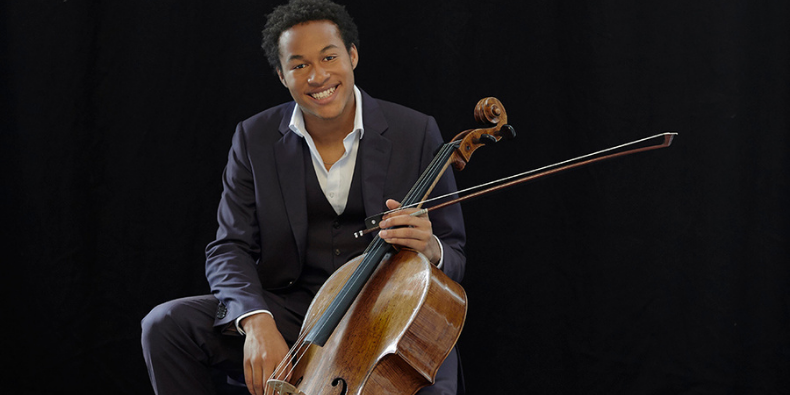
Sheku Kanneh-Mason was still present for Shostakovich’s Second Cello Concerto, among the first products of his final creative period and one of his most equivocal works in any medium. Most accounts over-stress its introspection, but Kanneh-Mason gauged the varied expressive shades of its Adagio with unforced rightness; its wrenching climax finding acute contrast with the sombre rumination from which it emerges and to which it returns. The ensuing Allegrettos could not be more dissimilar – a tensile and sardonic scherzo culminating in raucous fanfares as set into motion the finale. If coordination of soloist and orchestra in the former was a little tentative, Kanneh-Mason adroitly negotiated the latter’s gnomic dialogue – afforded focus by an easeful refrain and with a culmination of defiant exasperation, then a coda of furtive repose.

With its unshowy virtuosity and its concertante-like solo writing, this is a hard piece to bring off, but Kanneh-Mason rendered it with some conviction. He returned for an eloquent encore of what sounded to be a (Ukrainian?) folksong with the front four desks of the CBSO cellos.

After the interval, another chance to hear the Third Symphony by Weinberg this orchestra has rather made its own in recent seasons. Ostensibly a response to the anti-formalist campaign as spearheaded by Andrei Zhdanov, with the intention of making Soviet art more accountable to the public, its citing Belorussian and Polish folksongs is offset by the opening Allegro’s often ambivalent progress to a coda shot through with foreboding. Politi was often persuasive here, then not at all fazed by the Allegretto’s interplay of whimsical with a more sardonic humour.

Even better was to come in the Adagio’s finely sustained progress towards a climax of stark tragedy, only slightly mediated by the pensive close. An energetic final Allegro duly set out to secure an affirmative end, only to culminate in marked desperation, and it was a measure of Politi’s insight that the coda maintained its uncertainty even as those decisive closing bars echoed to silence. The CBSO responded impressively throughout a piece it must know better than any other orchestra, and it was to Politi’s credit that her own input was so often evident.

Hopefully MG-T will recover in time for the CBSO’s forthcoming European tour, such that Weinberg’s Fourth Symphony will gain the hearings it deserves. And if next season she can schedule the Fifth, arguably his finest purely orchestral symphony, then so much the better.

For more information on the CBSO’s spring tour, visit their website. Meanwhile for more information on the artists, click on the names to access the websites of Charlotte Politi and Sheku Kanneh-Mason. Meanwhile for more on composer Mieczysław Weinberg, click here