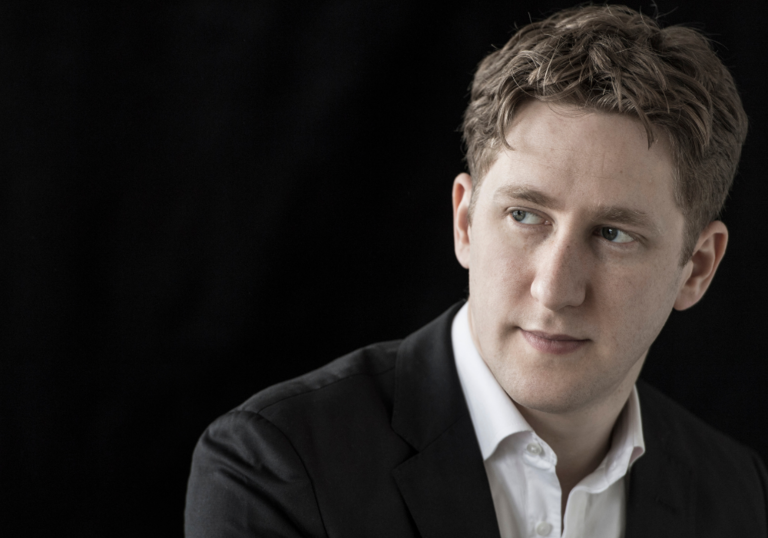
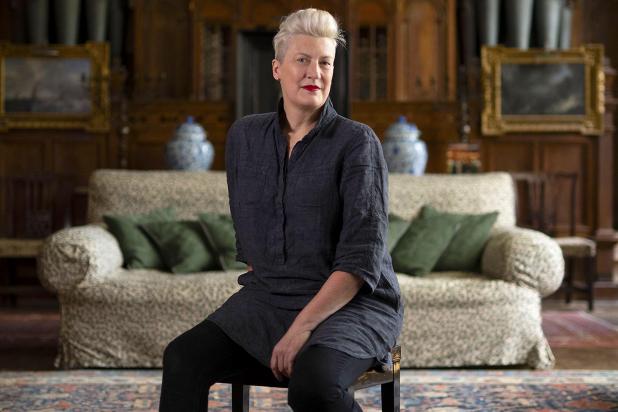
In concert – Dr Samantha Ege, CBSO Youth Orchestra / Joshua Weilerstein: Korngold, Tchaikovsky & Price

Samantha-Ege

Korngold Schauspiel-Ouvertüre, Op. 4 (1911)
Price Piano Concerto in D minor (1932-4)
Tchaikovsky Symphony No. 5 in E minor, Op. 64 (1888)

Dr Samantha Ege (piano, above), CBSO Youth Orchestra / Joshua Weilerstein (below)

Symphony Hall, Birmingham
Sunday 27 February 2022

Written by Richard Whitehouse. Picture of Joshua Weilerstein (c) Sim Canetty-Clark

The year’s first concert by the CBSO Youth Orchestra programmed a staple of the symphonic repertoire with two works by composers whose success in their lifetimes subsequently faded almost to oblivion, only to meet with renewed acceptance in a very different cultural climate.

It might have been the first such piece he himself orchestrated, but Overture to a Drama finds the 14-year-old Erich Korngold in command of late-Romantic forces with a tonal opulence to match. Best here are the ominously modal introduction which returns transformed in a defiant peroration, and while the main sonata design rather goes through the motions – not least a ‘by numbers’ development – it engaged due to Joshua Weilerstein’s astute direction, not least his bringing out the wistful charm of its second theme (eloquently played by oboist Elly Barlow).

Florence Price’s Piano Concerto was met with a distinctly equivocal response when given at last year’s Proms, and it made a comparable impression today. The introduction – soloist in ruminative dialogue with trumpet and woodwind – promises much, but the actual Andantino proceeds rather dutifully to a half-hearted climax. This heads into a central Adagio where the piano arabesques elegantly dovetail with instrumental solos (notably cellist Eryna Kisumba) in a manner redolent of Edward MacDowell’s once-ubiquitous D minor Concerto. The final Allegretto unfolds to the rhythm of the Juba (precursor of Ragtime), but the overall effect is tepid compared to its use in Price’s symphonies, even if Samantha Ege (replacing an injured Jeneba Kanneh-Mason) might have made more of its vivacity on the way to a forceful close.

A prominent academic as well as pianist, Dr Ege recently met with considerable acclaim for her album of Price’s piano music Fantasie Nègre (Lorelt), and it would be well worth hearing her in a concerto of greater substance such as those by Adolphus Hailstork or George Walker.

Weilerstein (above) works extensively with youth orchestras, and there was doubting his rapport with these players in Tchaikovsky’s Fifth Symphony. Pensive if never turgid, the first movement’s introduction passed seamlessly into an Allegro whose rhythmic tensility held its expressive fervour in check. The coda’s march-past then found meaningful contrast with the sepulchral start of the Andante, its indelible horn theme (lucidly rendered by Alex Hocknull) part of an inevitable unfolding capped by a stormy return of the ‘fate’ motto and coda of gentle pathos.

Segueing unexpectedly but effectively into the Valse, Weilerstein duly made the most of this music’s elegance and insouciance. Nor did he lose focus in the Finale’s opening restatement of the motto-theme, whose appearance can all too easily pre-empt what follows. There was no lack of impetus as the music built purposefully towards an apotheosis whose affirmation was shorn of bombast, nor any risk of hectoring with the triumphal surge to the close. This is never an easy piece to bring off, and the present performance was rarely less then convincing.

For more information on this concert, click here – and for information on the artists click on the names Samantha Ege and Joshua Weilerstein. Websites dedicated to Korngold and Florence Price can be accessed by clicking on the composer names.

Online concert – English String Orchestra / Kenneth Woods: Tchaikovsky: String Quartet no.3

eso-tchaikovsky

English String Orchestra / Kenneth Woods

Tchaikovsky arr. Woods String Quartet No. 3 in E flat minor, Op. 30 (1876)

Wyastone Concert Hall, Monmouth
12-13 July 2021

Written by Richard Whitehouse

The English String Orchestra launched its schedule for 2022 with another premiere – that of Tchaikovsky’s Third Quartet in an arrangement by Kenneth Woods, continuing a line of such rethinking which has previously included Brahms’s Second Piano Quartet (Nimbus NI6364).

Completed early in 1876, this work came about through the premature demise of Ferdinand Laub who led those premieres of Tchaikovsky’s previous quartets and whom the composer held in highest regard. Its tonic-key is unexpected yet influential (notably on Shostakovich), not least in an opening movement where the Andante introduction leads to an Allegro whose fervent striving never quite breaks free of the fatalism from which it emerges and to which it returns. Woods might have made more of that Allegro’s undulating emotions, but his take on its introduction and coda duly enhanced their sombre intensity. Nor was there any lack of wit or urbanity in the next movement, poised unerringly between scherzo and intermezzo, which could become almost as popular as the waltz of the Serenade for Strings in this incarnation.

Interesting that Tchaikovsky belatedly reversed the order of the middle movements, given the Andante funebre is the undoubted highpoint of this work and its impact would be diminished if heard earlier in the overall design. Moreover, Woods’ arrangement was at its finest here in terms of the interplay between solo and ensemble strings – those soliloquys for violin, viola and cello given added pathos by the greater textural depth; not least as the movement reaches its anguished climax then subsides into the chant-inflected elegy of its closing stages. Maybe the finale would have conveyed even more a sense of release at a swifter tempo, but Woods was scrupulous as regards its ‘non troppo’ marking; nor was there any lack of resolve as this movement headed on its impetuous course towards a decisive and life-affirming conclusion.

A convincing new guise, then, for arguably the finest of Tchaikovsky’s chamber works (not least compared to the over-inflated arrangements of Souvenir de Florence), and a welcome reminder of the ESO’s collective prowess whether heard in original pieces or transcriptions.

You can view this concert from 21-25 January at the ESO website, and thereafter for ESO digital supporters here. Meanwhile for information on the ESO’s latest release of the music of Steven R. Gerber, click here

Classical music in Squid Game

by Ben Hogwood

I thought I would offer a quick, spoiler-free blog on the use of classical music in Netflix’s most-successful drama ever, Squid Game. The Korean morality tale has been a huge hit through the originality of its storylines, the quality of its acting, and the jaw-dropping directness of its violent game and fight scenes.

What has probably passed under the radar is its frequent use of classical music. To start with it is piped to the game players by as they try to rest / avoid death between the games, and as they prepare for another tension-laden stint in the games room. Soon it becomes front and centre of the action itself. There are three main pieces used:

Haydn Trumpet Concerto in E flat major, 3rd movement

This is heard in the first episode, when the players gain consciousness of the new setting they find themselves in:

Tchaikovsky Waltz from Serenade for Strings in C major

This is doubtless meant to be a calming presence in the background while the players begin their formative friendships / relationships / grudges. It proves to be a deceptively graceful backdrop:

Johann Strauss II On The Beautiful Blue Danube

The clincher. This has been used in many a film of course, and even in The Simpsons (when Homer eats potato chips in space!) but here it takes on an unexpectedly sinister air. Occasionally it can be triumphant – towards the end of a game for instance – but its first appearance is the lasting one, from the terrifying first game, where the players realise just how high the stakes are going to be:

It is intriguing how the producers of Squid Game keep classical music in reserve for these moments, and use specially commissioned music from Jung Jae-il to describe scenes and events elsewhere in the drama. In doing this they create very different and effective backdrops that only add to the tension in a thoroughly gripping series!

In concert – Dame Sarah Connolly, CBSO / Gustavo Gimeno: Humperdinck, Chausson & Tchaikovsky

gustavo-gimeno

Humperdinck Hänsel und Gretel – Prelude (1891-2)
Chausson
Poème de l’amour et de la mer Op.19 (1882-92)
Tchaikovsky
Symphony no.6 in B minor Op.74 ‘Pathétique’ (1893)

Dame Sarah Connolly (mezzo-soprano, below), City of Birmingham Symphony Orchestra / Gustavo Gimeno

Symphony Hall, Birmingham
Thursday 23 September 2021

Written by Richard Whitehouse

This afternoon’s programme (repeated from yesterday) by the City of Birmingham Symphony Orchestra saw a welcome reappearance from Dame Sarah Connolly for a relatively rare hearing, at least in the UK, of Ernest Chausson’s probable masterpiece Poème de l’amour et de la mer.

Often described as a song-cycle, Poème is closer to a scena with its unfolding over two large parts separated by an orchestral interlude. Drawing on texts by Maurice Bouchor, these evoke what is ostensibly the protagonist’s ill-fated affair but whose deeper resonance suggests more that disillusion afforded when revisiting the past. Such a trajectory could easily have resulted in indulgence or even self-pity, avoided through Chausson’s unerring formal control over his subject-matter as well as a thematic resourcefulness sustained across the near half-hour span.

Following in a distinguished lineage of mezzos (among them Dame Janet Baker), Connolly brought out the playfulness of La fleur des eaux as it conveys the burgeoning of love against a heady seascape – doubt only creeping in towards the close as the passing of a year is contemplated. This is represented by the Interlude in which first appears a theme dominant by the close, and while the opening of La mort de l’amour brings a renewed anticipation of arrival, the anguish occasioned by forgetfulness is transmuted into a brooding fatalism – the composer drawing on an earlier song for this sombre final stage. Connolly’s eloquence came into its own here, abetted by a soulful response from cellist Eduardo Vassallo among an orchestral response abounding in soloistic finesse. A powerful reading of a still underestimated piece.

Chausson lived a further six years after its premiere in 1893, whereas Tchaikovsky lived just nine days after the premiere that year of his Pathétique before his still-contested demise. Here again, there was no undue emoting thanks to Gustavo Gimeno’s firm grip over the complex formal and emotional trajectory of the first movement – not least its explosive development culminating in an anguished yet also consoling reprise. The ensuing intermezzo had charm but also a purposeful underlying tread – not least in its wistful trio, then the scherzo amassed no mean impetus through to an explosive second half whose orchestral response evinced no mean virtuosity. Heading straight into the finale, Gimeno sustained expressive tension right through to the closing bars as here faded into a silence born of resignation rather than defeat.

The close of that year brought the premiere of Humperdinck’s ‘fairy-tale’ opera Hänsel und Gretel – then, as now, the work by which this undervalued composer is best remembered and whose prelude encapsulates the essence, though not the totality, of the drama while proving equally effective as a concert-overture. Gimeno paced this unerringly, thereby allowing its animated central phase to merge unobtrusively out of then back into the confiding warmth either side. At least one major work written in 1893 can be said to have a ‘happy ending’.

Next week’s concert brings pieces from very different eras – Brahms’s First Symphony and Rachmaninov’s Third Piano Concerto being preceded by another of the CBSO’s Centenary Commissions, an evidently celebratory overture by Mark-Anthony Turnage called Go For It.

For more information on next week’s concert, click here for tickets. You can find information on the new CBSO season here, and for more on Symphonic Sessions click here

In concert – Carolyn Sampson, Anna Lapwood, CBSO Chorus, CBSO / Kazuki Yamada – Poulenc Gloria & Saint-Saëns ‘Organ’ Symphony

Yamada_Kazuki_5142_c_Zuzanna_Specjal

Tchaikovsky Solemn Overture ‘The Year 1812’ Op.49 (1880)
Poulenc
Gloria FP177 (1959)
Fauré
Messe Basse IGF50 (1881 rev.1906)
Saint-Saëns
Symphony no.3 in C minor Op.78 ‘Organ’ (1886)

Carolyn Sampson (soprano), Anna Lapwood (organ), CBSO Youth Chorus (Julian Wilkins, director), CBSO Chorus, City of Birmingham Symphony Orchestra / Kazuki Yamada (above)

Symphony Hall, Birmingham
Thursday 16 September 2021

Written by Richard Whitehouse
Photo credits Zuzanna Specjal (Kazuki Yamada), Marco Borggreve (Carolyn Sampson), Kirsten McTernan/BBC (Anna Lapwood)

It was no doubt coincidental that this opening concert of the City of Birmingham Symphony Orchestra’s new season was typical of those programmes which one-time chief conductor Louis Frémaux gave with this orchestra during the mid-1970s, in its featuring two of his French specialities.

Back then, Poulenc’s Gloria could still be regarded as contemporary music, though its adept borrowing from the Stravinsky textbook married to the French composer’s insouciant brand of expressivity is arguably more widely accepted now than in that often style-conscious era. It duly responded to Kazuki Yamada’s keen impetus in the opening Gloria then the bracing syncopation of Laudamus te or a joyously animated Domine Fili. Carolyn Sampson (above) was an elegantly detached soloist in Domine Deus, opening-out emotionally in the Agnus Dei whose inward ecstasy was unerringly conveyed. Yamada elided deftly between the surging energy then calm resignation of the final Qui sedes; here, as throughout, the CBSO Chorus bringing supplicatory warmth to music it has been associated with almost since its founding.

Saint-Saëns’s Organ Symphony was a familiar item at CBSO concerts during the Frémaux era and one that the present-day orchestra tackled with no less alacrity. Yamada was clearly (and rightly) intent on stressing its symphonic cohesion – drawing ominous expectancy from the first half’s Adagio introduction then securing a powerful momentum in the main Allegro, before the organ’s hushed entry for a chastely eloquent slow movement. There was no lack of incisiveness or humour in the second half’s scherzo, not least its scintillating passagework for piano duet, but also purposeful intent as segued directly into the finale with its indelible main theme and its methodical build-up to an electrifying peroration. Here, too, Anna Lapwood’s (below) subtle choice of registration underlined motivic resourcefulness more than gestural brilliance.

In between these works, opening the second half, Fauré’s Messe Basse enjoyed relatively rare revival (at least in the concert hall). Initially a collaboration with André Messager, Fauré later essayed a complete setting of what is a Missa brevis (thus omitting the Gloria and Credo) for female voices and which sounds no less apposite when rendered, as here, by young singers. The CBSO Youth Choir summoned a poised detachment under the assured guidance of Julian Wilkins, abetted by Lapwood’s thoughtful accompaniment in this modest yet appealing piece.

One aspect of this programme that Frémaux would not have opted for was to commence with Tchaikovsky’s 1812, though few would surely dissent given the all-round focus of Yamada’s conception. Not least when the CBSO Chorus added its yearning tones to the opening section, returning towards the close for an emotive rendering of ‘God Save the Tsar’ to cap an already resplendent apotheosis. Tubular bells and Mahler-type mallet more than compensated for the absence of canon et al when this piece is trotted out at the end of a ‘greatest hits’ assemblage.

It was indeed fortuitous that Yamada open this season given his recent appointment as Chief Conductor of the CBSO from April 2023. He returns in due course, while next week brings Sarah Connolly for a rare hearing for Chausson’s rapturous Poème de l’amour et de la mer.

This concert will be repeated on Saturday 18 September at Symphony Hall – click here for tickets. You can find information on the new CBSO season here, while for more on Kazuki Yamada you can visit the conductor’s website