In concert – Alina Ibragimova, CBSO / Joshua Weilerstein: Weir, Prokofiev & Beethoven

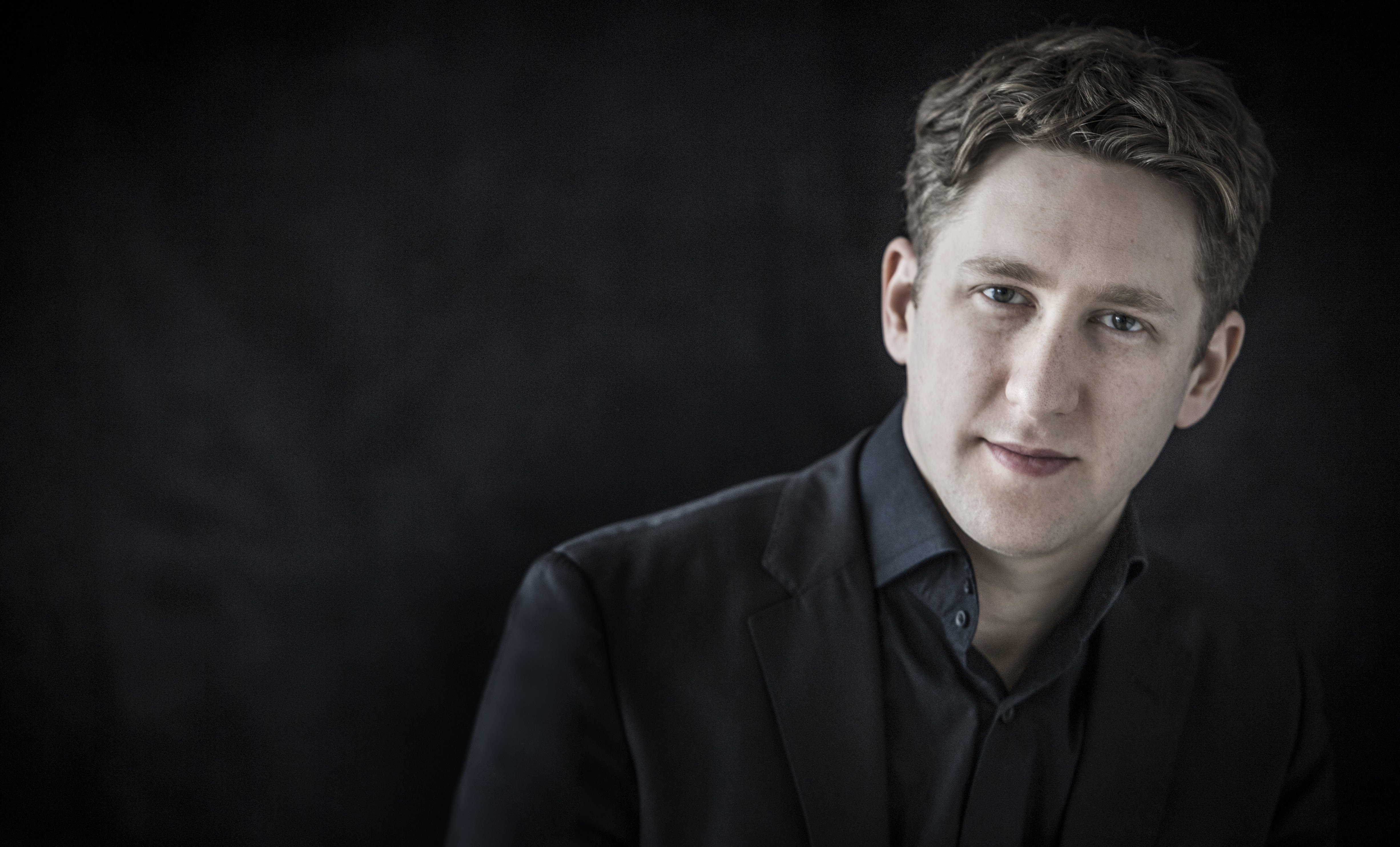
Joshua Weilerstein 58_credit Sim Canetty-Clark

Alina Ibragimova (violin, below), City of Birmingham Symphony Orchestra / Joshua Weilerstein

Weir Heroic Strokes of the Bow (1992)
Prokofiev
Violin Concerto no.1 in D major Op.19 (1915-17)
Beethoven
Symphony no.7 in A major Op.92 (1811-12)

Symphony Hall, Birmingham
Wednesday 7 July 2021 (6.30pm)

Written by Richard Whitehouse Photo of Joshua Weilerstein courtesy of Sim Canetty-Clark; Alina Ibragimova courtesy of Giorgia Bertazzi

While not the centenary season as had been anticipated, the City of Birmingham Symphony Orchestra’s current run of live concerts has nevertheless found the orchestra in great shape, reinforced by the final event that marked an equally unexpected if auspicious debut for Joshua Weilerstein.

He may have substituted the planned account of Schubert’s Fourth Symphony, but Weilerstein retained Judith Weir’s Heroic Strokes of the Bow to begin the programme. Although written before her spell as the CBSO’s Composer-in-Residence (1995-8), the present piece is among her most characteristic larger works – taking its cue from Paul Klee’s similarly titled painting for a 15-minute study in frustrated momentum, whereby violins pursue an eventful trajectory constantly undermined by rhythmic discontinuity. A belated coming to the fore of woodwind propels this music towards a peroration which never quite materializes prior to its subsiding then terse pay-off. Not a straightforward or necessarily rewarding piece to tackle, the CBSO strings still sounded engaged throughout a piece typical in its sense of ultimate anti-climax.

Alina Ibragimova then joined the orchestra for Prokofiev’s First Violin Concerto, its modest scale and prevailing inwardness only partly belying technical demands that were confidently surmounted here. The partnership with Weilerstein, moreover, was a good one – whether in the first movement’s gradual expressive opening-out from, then retreating-back to sustained lyricism, or the Scherzo’s cavorting high-jinx and playful nonchalance. Ibragimova’s tempo for the finale seemed initially a little too deliberate, but the panache of those brief orchestral tuttis then stealthy intensification to the rapturous return of the opening theme left no doubt as to either soloist’s or conductor’s sense of exactly where the music was going – the violin’s airy arabesques melding into the deftest of orchestral textures for the spellbinding final bars.

The inclusion of Beethoven’s Seventh Symphony made for a near full-length concert which, being given twice, says much for the CBSO’s collective stamina. Ensemble faltered slightly in the first movement’s introduction, relatively weighty as Weilerstein heard it, but the main Vivace proved unanimous in response as it was trenchant in conception – highlights being an uninhibited transition to the reprise, then inexorable build-up toward a coda whose clinching of the overall design felt more potent through a slight if perceptible acceleration at the close.

Weilerstein (rightly) went directly into the Allegretto, its alternation of pathos and sanguinity ideally gauged, then the scherzo exuded a joyous animation and its trio an eloquence which was no less apposite. The finale may have lacked its exposition repeat, but the seamlessness with which this movement unfolded left no feeling of its being sold short – not least through an astute judging of dynamic contrasts then a final peroration which, if it lacked for a degree of visceral excitement, none the less concluded this symphony with unwavering affirmation. Hopefully, Weilerstein will soon be returning to this orchestra. Next month, though, the CBSO heads to the Proms for a programme featuring Ruth Gipps’s Second Symphony and Brahms’s Third, along with a delayed premiere for Thomas Adès’s The Exterminating Angel Symphony.

You can find information on the CBSO’s appearance at the Proms at the festival’s website.

In concert – Jonathan Martindale, CBSO / Michael Seal: Summer Classics

michael-seal

Jonathan Martindale (violin, below), City of Birmingham Symphony Orchestra / Michael Seal (above)

Dvořák Carnival Op.92 (1891)
Vaughan Williams
The Lark Ascending (1914/20)
Elgar
Chanson de matin Op.15/2 (1889)
Grieg
Peer Gynt Suite no.1 Op.46 (1875/88) – no.1, Morning; no.4, In the Hall of the Mountain King
Mendelssohn
A Midsummer Night’s Dream Op.21 (1826)
Vivaldi
The Four Seasons Op.8 (1718/20) – no.2 in G minor RV315 ‘Summer’
Price
Symphony no.1 in E minor (1931-2) – Juba Dance
Tchaikovsky
The Nutcracker Op.71 (1892) – Waltz of the Flowers

Symphony Hall, Birmingham
Friday 2 July 2021 (2pm)

Written by Richard Whitehouse Photo of Jonathan Martindale courtesy of Upstream Photography

The penultimate event in the City of Birmingham Symphony Orchestra’s current season, this afternoon’s Summer Classics featured a wide-ranging selection of pieces that between them spanned over two centuries, and whose ‘feel good’ factor at no time precluded stylish or committed playing.

With longstanding associate director Michael Seal at the helm, the orchestra made the most of Dvořák’s effervescent Carnival overture; the alluring pathos of its central interlude accorded due emphasis, and with some eloquent woodwind solos. Its popularity during recent years has made Vaughan Williams’s The Lark Ascending a regular inclusion in such programmes, and Jonathan Martindale (below, who also led the concert) gave a thoughtful while never flaccid reading – most perceptive in the middle section with its folk-like whimsy and fanciful evocations of birdsong. The CBSO responded with limpid dexterity, the whole performance a reminder that this work is best tackled as a concertante piece and by a player (recalling such as Hugh Bean, Iona Brown and, more recently, Richard Tognetti) who knows the orchestra from the inside.

Next came an ingratiating take on Elgar evergreen Chanson de matin, then excerpts from the First Suite of Grieg’s incidental music to Peer Gynt – a rapturous Morning and stealthy In the Hall of the Mountain King skirting headlong terror at the close. Mendelssohn’s overture to A Midsummer Night’s Dream made for an unlikely but effective centrepiece – the highlight being those fugitive imaginings towards its centre, along with the disarming eloquence of its final bars where the teenage composer conjures a fulfilment he was only rarely to recapture.

The Summer concerto from Vivaldi’s The Four Seasons again saw Martindale as soloist in an account that lacked little of that rhythmic vitality his contemporaries (notably Bach) seized on with alacrity; nor was there any absence of poise in its atmospheric second movement. One who has come in from the cold partly through the recovery of her manuscripts, Chicago-based Florence Price broke with convention by introducing the Juba Dance into her symphonies in lieu of a scherzo; the CBSO responding in full measure to its rhythmic verve. A winning harp solo from Katherine Thomas launched Waltz of the Flowers from Tchaikovsky’s ballet The Nutcracker and ended the main programme in fine style – Seal and the CBSO acknowledging the applause with the final ‘galop’ from Rossini’s William Tell overture as a dashing encore.

Throughout the concert, film expert Andrew Collins interspersed proceedings with his remarks and recollections (not least on that seminal 1970s supergroup The Wombles). The music itself was accompanied by varying shades and colours of lighting, but these rarely seemed intrusive – not least compared to the garish ‘Moulin Rouge’ effects routinely encountered nowadays at the Proms. Certainly, anyone in the process of getting the know just what classical music was all about, and those merely in search of a pleasurable afternoon’s listening, were well served.

Next Wednesday brings the last in this current series of concerts, the CBSO being conducted by Joshua Weilerstein (who is replacing an ‘unable to travel’ Edward Gardner) in an enticing programme of Judith Weir, Prokofiev (with the violinist Alina Ibragimova) and Beethoven.

You can find information on the final concert in the CBSO’s season at their website. For more information on composer Florence Price, click here

Playlist – The Rustle of Spring

Welcome to The Rustle of Spring.

This is a playlist designed to look at the positive, to anticipate our emergence from what has been an incredibly difficult winter for many.

Although we are not out of it yet nature is doing its best, with green shoots making themselves known, birds and animals starting to flex their muscles, the nights drawing out a bit and the weather – hopefully – improving.

This selection offers a range of responses to spring from classical composers. We have the outright optimism of Schumann’s Spring Symphony, his first, alongside more mysterious responses to the season from Lili Boulanger and John Foulds. Spring doesn’t have to mean orchestral music, either – there are intimate thoughts from the piano works of Grieg, Sinding and Tchaikovsky, while rarely heard choral pieces from Holst and Moeran lend an exotic air.

We finish with two very different portrayals of spring, in the form of one of Johann Strauss II’s best-known waltzes, Voices of Spring, and an all too rarely heard tone poem by Frank Bridge, Enter Spring. There isn’t even room for Vivaldi’s Four Seasons!

I hope you find something to enjoy.

Ben Hogwood

Playlist – Sound of Mind 7: Strings and things

Here is another playlist for your delectation, in the new age of ‘staying in’.

This one features works for strings of very different character, from the energetic works by John Adams and Tchaikovsky to a more reflective, serene approach from Philip Glass and Sir Edward Elgar. You get an idea here of the versatility of the string orchestra, which can be by turns sombre and bracing.

Enjoy the music!

Ben Hogwood

Wigmore Mondays – Louise Alder & Joseph Middleton: Lines written during a sleepless night

Louise Alder (soprano), Joseph Middleton (piano)

Wigmore Hall, Monday 6 January 2020 (lunchtime)

You can listen to this concert on the BBC Sounds app here (opens in a new window)

Review and guide by Ben Hogwood

This was a concert with an especially personal link for soprano Louise Alder. The Russian Connection – subtitle of her first album for Chandos – goes much further than the repertoire chosen. It reflects Alder’s Russian ancestry, with generations of her family, up to and including her grandfather in 1914, born in the country.

In addition to that, Alder and regular recital partner Joseph Middleton have created a captivating program linking Grieg, Medtner, Tchaikovksy, Britten, Rachmaninov and Sibelius through their choice of poets and their use of a language outside of their own. Six composers, four languages (at last count!) and some richly descriptive writing all made for a particularly memorable concert, especially when performed with the passion and musicality on show here.

Alder and Middleton judged their program to perfection, bringing in the new year with a spring in its step as Grieg’s Heine setting Gruß (Greeting) tripped into view (2:33 on the broadcast link). This is the first song in a compact but deeply descriptive cycle of six from the composer, setting German poetry with his typical melodic freshness and flair. Alder shows lovely control on the final ‘Gruß’ word, before applying a slight husk to the deeply felt Dereinst, Gedanke mein (One day, my thoughts) (3:40), which made a striking impact here. Lauf der Welt (The Way of the World) (6:23) has heady urgency, singer and pianist working as one, while the evocative Die verschwiegene Nachtigall (The secretive nightingale) (8:01) is a sultry, sensual setting in these hands, the initial picture beautifully painted by Middleton. Zur Rosenzeit (Time of roses) (11:40) is filled with intense longing, while Alder’s tone in Ein traum (A dream) (14:55) is particularly beautiful, working through to a powerful finish.

Nikolai Medtner is a Russian composer known for his piano music rather than his songs, so it was gratifying to have Alder and Middleton (above) include two here. They are fine pieces of work, too, with an impressively fulsome piano part that Middleton tackled with deceptive ease and clarity. Mailied (May song) (18:15) holds an intense vocal line over its catchy piano part, while Meeresstille (Calm sea) (20:10) is really well controlled by Alder here.

Tchaikovsky’s numerous songs contain many treasures, and the two French language examples here were no exception. The Sérénade (23:22) dances in the bright light of dawn, with a slightly furtive piano, while Les Larmes (The tears) (25:02) provides much darker soul searching.

Britten’s Russian-language song cycle The Poet’s Echo is a relative rarity in the concert hall, but as Alder and Middleton showed here it contains music of typically fearsome and compressed intensity. The spirit of Musorgsky is evident not just in the choice of poet (Pushkin) but in the bare piano lines, rumbling in the deep for the first song Echo (29:22). Alder’s line is fearlessly delivered, with songs like My heart… (32:17) and Angel (33:48), with its quasi-orchestral piano part, making a powerful impression. The nightingale and the rose (36:20) take powerful flight, the piano gnawing at the heel of the vocal line, while the strange Epigram (40:13) has a striking reverberation achieved through the open piano lid. The final song, Lines written during a sleepless night (41:07) captures the supreme irritation of insomnia through the ‘monotonous tick of the clocks’, with a chilling piano postlude. This work remains a difficult nut to crack, listening-wise, but this is the sort of performance to do it.

We then heard two songs by Rachmaninov, both again setting Pushkin texts. Sing not to me, beautiful maiden (46:44), an early song from the composer’s late teens, receives a fulsome account here with Alder capturing the devastating beauty of the song. The later How fair this spot (51:56), taking the mood from darkness to relative light, is even better, Alder’s top ‘B’ a note of extraordinary clarity.

The generously packed concert concluded with three Sibelius songs, sung in Swedish. Once again these songs are found to be fiercely intense, often expressed through the bare minimum of means. The tempestuous Säv, säv, susa (Sigh, rushes, sigh) (54:02) is heady stuff, while the dynamic range achieved by both performers in Våren flyktar hastigt (Spring is swiftly flying) (56:27) is hugely impressive. Finally Flickan kom ifrån sin älsklings mote (The girl came from her lover’s tryst) (57:49) has a huge, orchestral scope, a reminder that the Second Symphony is not far away in the composer’s output. The song chills to the bone when turning tragically into the minor key for its third verse and the lover’s treason.

This was a simply outstanding concert from Alder and Middleton, deeply intimate yet including the audience in all of their asides. These qualities extended to the wonderful encore, Rachmaninov’s A Dream, where the rippling piano part and exotic harmonies supported Alder’s heavenly soprano line.

If more of the Wigmore Hall Monday lunchtime concerts are as good as this in 2020, we are in for many treats indeed! It only remains for you to listen on BBC Sounds if you haven’t already…and to keep up with the series as it progresses.

Repertoire

This concert contained the following music (with timings on the BBC Sounds broadcast in brackets):

Grieg 6 Songs Op.48 (1884-8) (2:33)
Medtner Mailied Op.6/2 (1901-5) (18:15), Meeresstille Op.15/7 (1905-7) (20:10)
Tchaikovsky Sérénade Op.69/1 (1888) (23:22), Les Larmes Op.69/5 (1888) (25:02)
Britten The Poet’s Echo Op.76 (1965) (29:22)
Rachmaninov Sing not to me, beautiful maiden Op.4/4 (publ.1893) (46:44), How fair this spot Op.21/7 (1902) (51:56)
Sibelius Säv, säv, susa Op.36/4 (1900) (54:02), Våren flyktar hastigt Op.13/4 (1891) (56:27), Flickan kom ifrån sin älsklings möte Op.37/5 (1901) (57:49)
Encore – Rachmaninov A Dream Op.38/5 (not on the broadcast)

Further listening

Most of the music from this concert is part of Louise Alder and Joseph Middleton’s new disc for Chandos, Lines Written During A Sleepless Night: The Russian Connection, with the exception of the two Rachmaninov songs. The full playlist is here:

If you enjoyed Alder and Middleton in this concert – which I’m sure you did! – their previous outing together is a sumptuous collection of songs by Richard Strauss for Orchid Classics which is bound to appeal, and certainly plays to their strengths:

Meanwhile to enjoy the Rachmaninov song output in its entirety there are few better historical guides than soprano Elisabeth Söderström and pianist Vladimir Ashkenazy: