
In concert – Raphael Wallfisch, CBSO / Gergely Madaras: New Worlds – Sibelius, Jonathan Dove & Dvořák

gergely-madaras

Sibelius Finlandia Op.26 (1899)
Dove In Exile (2020) [CBSO Centenary Commission: UK Premiere]
Dvořák Symphony no.9 in E minor Op.95 ‘From the New World’ (1893)

Sir Simon Keenlyside (baritone), Raphael Wallfisch (cello, below), City of Birmingham Symphony Orchestra / Gergely Madaras

Symphony Hall, Birmingham
Thursday 9 December 2021

Written by Richard Whitehouse

Tonight’s concert from the City of Birmingham Symphony Orchestra amounted to a themed programme with late 19th century evergreens by Sibelius and Dvořák framing another of this orchestra’s Centenary Commissions in the first UK performance of a major work from Jonathan Dove.

In his introductory remarks, Dove spoke of In Exile as a hybrid of cantata, operatic scena and concerto; a fusion that has surprisingly few antecedents – one being Concerto on Old English Rounds by William Schuman, with viola and chorus as ‘soloists’. Here the roles were taken by baritone and cello during a half-hour piece whose texts, adapted by Dove’s regular librettist Alasdair Middleton, examine the state of exile from a perspective less about those emotions experienced in the adoptive country than of sensations evoked by what has been left behind.
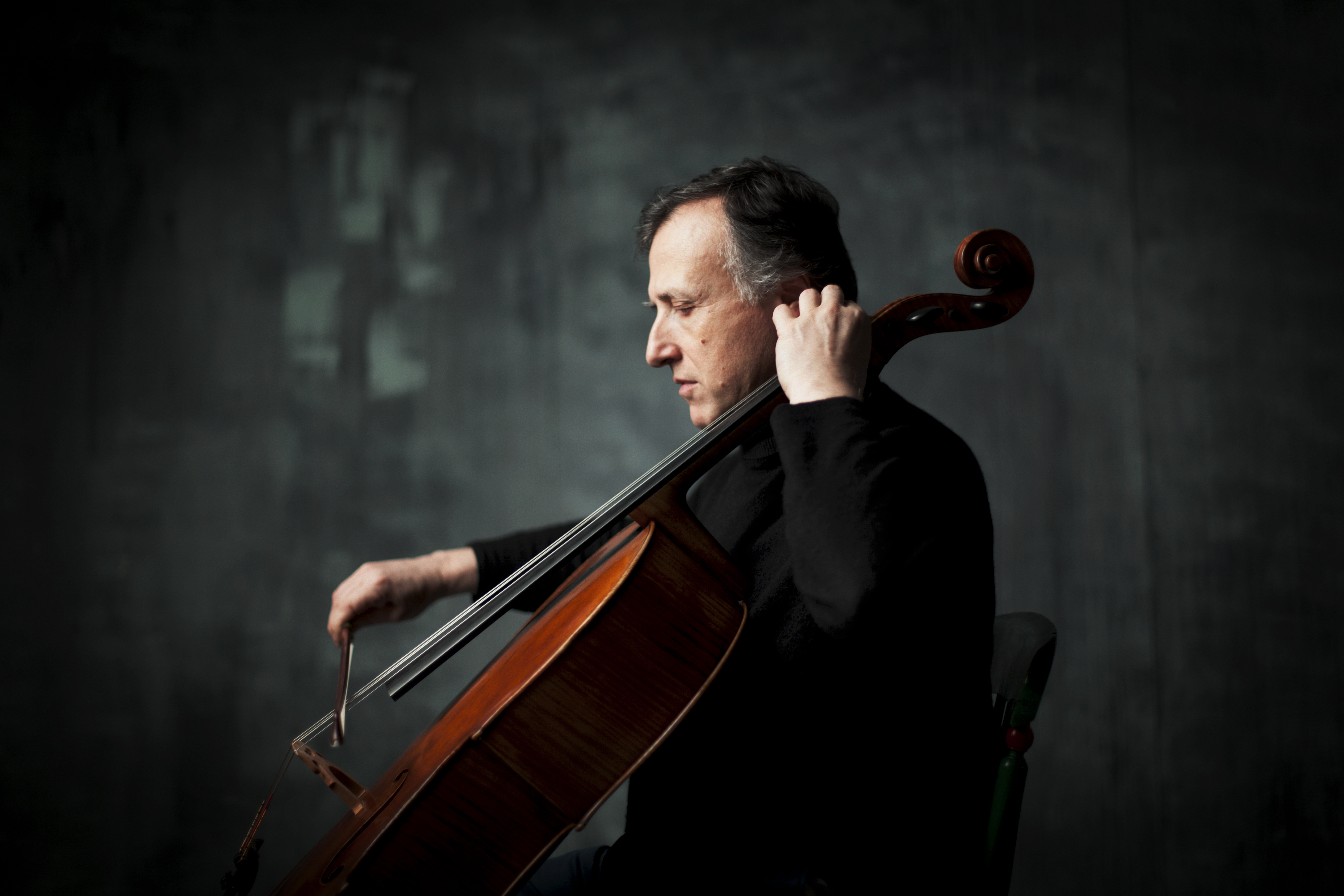
Drawing on Medieval sources, Dante and Shakespeare then, from the early 20th-century, the Lebanese poet Kahlil Gibran and Irish scholar Douglas Hyde, to the Iranian-American Kaveh Bassiri, In Exile unfolds as a formally continuous and emotionally cumulative sequence whose traversal from the general to the specific is complemented by its undulating texture, enhanced with resourceful writing for strings and tuned percussion, which graphically evokes a journey of the mind as well as body. Simon Keenlyside gave a powerful rendering of the vocal part in all its burnished rhetoric, while Raphael Wallfisch (to whose mother, the cellist Anita Lasker-Wallfisch, this piece is dedicated) was no less searching as his ‘alter ego’ whose role takes in several exacting cadenza-like passages. Certainly, a work that should bear repeated hearings.

Making his debut with the CBSO, Gergely Madaras conducted with a sure sense of where this piece was headed, having opened the concert with a gripping account of Finlandia. Sibelius’s apostrophizing of his homeland can descend into bathos – Madaras ensuring otherwise in this tensile reading whose sombre brass, supplicatory woodwind and strings, then dashing central episode led into a lilting take on what became Finland’s unofficial national anthem, before the peroration urged the music on to a conclusion whose grandeur was shot-through with defiance.

There was equally much to admire in Dvořák’s New World after the interval, even though this was essentially a performance of two halves. Madaras’s listless way with the first movement’s introduction set the tone for a rather terse and short-winded account (made the more so by its lack of exposition repeat) of the Allegro, while Rachael Pankhurst’s eloquent rendering of the Largo’s soulful melody was hardly enhanced by peremptory changes in tempo, notably in the tense middle section. Not so the Scherzo, its coursing outer sections ideally complemented by the whimsical trio at its centre, then the final Allegro brought an impulsive response that kept its histrionics on a firm rein yet without losing sight of an intently growing momentum whose outcome was a powerfully wrought apotheosis – its radiant closing chord judged to perfection.

So, a well-conceived and finely executed concert featuring a conductor who will hopefully be returning in due course. The CBSO has three Choral Christmas concerts coming up later this month, then can be heard on January 9th in a Viennese New Year programme to see in 2022.

For more information on ‘A Choral Christmas’ click here. For more information on the January – July 2022 CBSO season, you can visit the orchestra’s website. Meanwhile click on the links for information on Jonathan Dove, Gergely Madaras, Sir Simon Keenlyside and Raphael Wallfisch.

Live review – Raphael Wallfisch, English Symphony Orchestra / Kenneth Woods: Elgar Reimagined Part 1

raphael-wallfisch

Raphael Wallfisch (cello), English Symphony Orchestra / Kenneth Woods

Elgar, arr. Fraser Miniatures for cello and strings
Chanson de Matin, Op.15 No.2 (1899)
Chanson de Nuit, Op.15 No.1 (1899)
The Wild Bears, Op, 1b No. 6 (1908)
Nimrod, Op.36 No. 9 (1899)
Romance in D minor, Op.62 (1910)
Sospiri, Op.70 (1914)
Mazurka, Op.10 No.1 (1899)
Pleading, Op.48 (1908)
In Moonlight (1904)
Salut d’Amour, Op.12 (1888)
Adieu (1933)

Wyastone Concert Hall, Monmouth
Recorded October 9 2020 for online broadcast from Wednesday 19 March 2021

Written by Richard Whitehouse

This latest in the English Symphony Orchestra’s online concerts focussed on Elgar – namely a series of miniatures for cello and strings arranged by Donald Fraser and played by Raphael Wallfisch, whose commitment to and conviction in this music hardly needs reiterating here.

Chanson de Matin launched proceedings in mellifluous fashion, and if the cello’s assuming of the melodic line was slightly to the detriment of the original scoring, that could hardly be said of Chanson de Nuit whose more sombre contours and ruminative character were ideally realized. Nor did The Wild Bears lose out on vivacity, and if this arrangement brought it into the orbit of Saint-Saëns, that served to underline the significance of ‘Second Empire’ French music on Elgar’s own thinking. In Nimrod, the cello’s dominance rather detracted from the subtlety of the original instrumentation; conversely, Fraser’s take on the Romance brought soloist and strings into even closer accord than the composer’s own version with orchestra.

Nevertheless, the undoubted highlight here was Sospiri – the cello’s subsuming of the harp’s crucial contribution just one aspect of an arrangement which presented one of Elgar’s finest inspirations (miniature or otherwise) in a striking new light. Lighter fare next with the robust tread of the Mazurka, proceeded by a rendering of the song Pleading of unforced eloquence. The evergreen In Moonlight (adapted from the overture In the South) responded well to this suitably limpid treatment, as did Salut d’Amour to one that underlined its wholly un-cloying essence. A wistful take on the piano piece Adieu saw this programme to an affecting close.

Throughout, the idiomatic feel of Wallfisch’s playing was complemented by that of the ESO under Kenneth Woods, as discreet or understated as the music requited. Forty minutes came and went effortlessly – the ‘Part 1’ designation happily meaning there will be more to come.

You can watch the concert on the English Symphony Orchestra website here

For more information on the English Symphony Orchestra you can visit their website here

Live review – Raphael Wallfisch, English Symphony Orchestra / Kenneth Woods: Meditations for Armistice Day

Raphael Wallfisch (cello, above), English Symphony Orchestra / Kenneth Woods

Wyastone Concert Hall, Monmouth
Sunday 8 November 2020 (online)

Adrian Williams Russells’ Elegy (2009/11)
Elgar arr. Fraser Variations on an Original Theme, Op. 36 (1899) – Variation IX, ‘Nimrod’ (1899)

Written by Richard Whitehouse

Remembering the Armistice – and just what it represents in human terms – is a regular fixture on the English Symphony Orchestra’s schedule. This year featured two pieces for strings that complemented each other well, whether in terms of their overall mood or underlying aesthetic.

Adrian Williams is contributing several works as the ESO’s current John McCabe Composer-in-Association, with Russells’ Elegy apposite in its ‘remembrance’ context as well as being a commemoration of pianist-conductor John Russell and director Ken Russell (hence the plural of the title). Audibly in a long lineage of British works for strings, the 10-minute piece moves between passages for ensemble and those where solo strings dominate with no mean subtlety and finesse, culminating in a sustained tutti that fades thoughtfully yet inevitably into silence.

Those encountering Williams’s music for the first time will hopefully have been encouraged to investigate further, and they will doubtless have responded to Elgar’s Nimrod as arranged for cello and strings by Donald Fraser (who has previously orchestrated the composer’s Piano Quintet and Sea Pictures). The result is comparable to the version of Tchaikovsky’s Andante cantabile from his String Quartet no.1 in the cellist’s discreet elaboration of a melodic line without detriment to the existing instrumental texture, and it would certainly make for an ideal encore.

This arrangement was eloquently rendered by Raphael Wallfisch, whose advocacy of British music over the years cannot be gainsaid, and the performances given added resonance by the photographs of soldiers and images from the Great War as accompanied this touching tribute.

You can watch the concert on YouTube here:

For more information on the English Symphony Orchestra you can visit their website here