Switched On – Nathan Fake: Evaporator (InFiné)

Reviewed by Ben Hogwood

What’s the story?

Nathan Fake’s electronica has found a new home, with Evaporator his first album released on the InFiné label.

It is an instinctive work, written during the summer of 2024 and wrapped up in just six weeks. He describes it as “airy daytime music,” which is “not overtly confrontational electronic club music, it’s more accessible.” Continuing the instinctive approach, Evaporator was mostly recorded in single takes on a Cubase set up, with Fake employing synths and even a toy Casio keyboard on Yucon, which has become one of his most treasured compositions.

What’s the music like?

Evaporator engages both the mind and the feet in an easy and frequently appealing way. On many occasions it promises the joy of dancing, but there are moments where Fake’s music is aimed straight at the mind, specifically in removing tension and providing musical company.

Both elements combine in the loping beats and lush textures of You’ll Find A Way, while Fake’s clever trick of employing two paces at once works on the implied Euro riffing of Hypercube, where a distinctive five-note rhythm is punched out, and Aiwa, with its slow beats but busy percussion. Yucon has real presence, as well as the childlike simplicity from the toy keyboard, while Bialystok is really strong, led by a powerful and almost primeval kick drum.

Later on in the album, two collaborations make their mark. The weather-beaten Baltasound, with Dextro, appears to be a portrait of a Shetland settlement. On it, the pair create a massive pillow of sound out of which emerges a beat of reassuring depth. Orbiting Meadows features another good friend, Clark, and hints at music heard further afield, with mysterious bells above a broad canvas. Saving one of the very best tracks for last, Slow Yamaha is a beauty, a loping disco number with a rolling beat that works for all of its nine minutes.

Does it all work?

It does. Nathan Fake’s freedom of expression is key here, and the combination of intimacy and wide-open, elemental sound pictures are managed in a really satisfying way.

Is it recommended?

It is. This is another very strong addition to the Nathan Fake canon, another winner from Norfolk. The instinctive approach suits him well!

Listen / Buy

Published post no.2,818 – Tuesday 3 March 2026
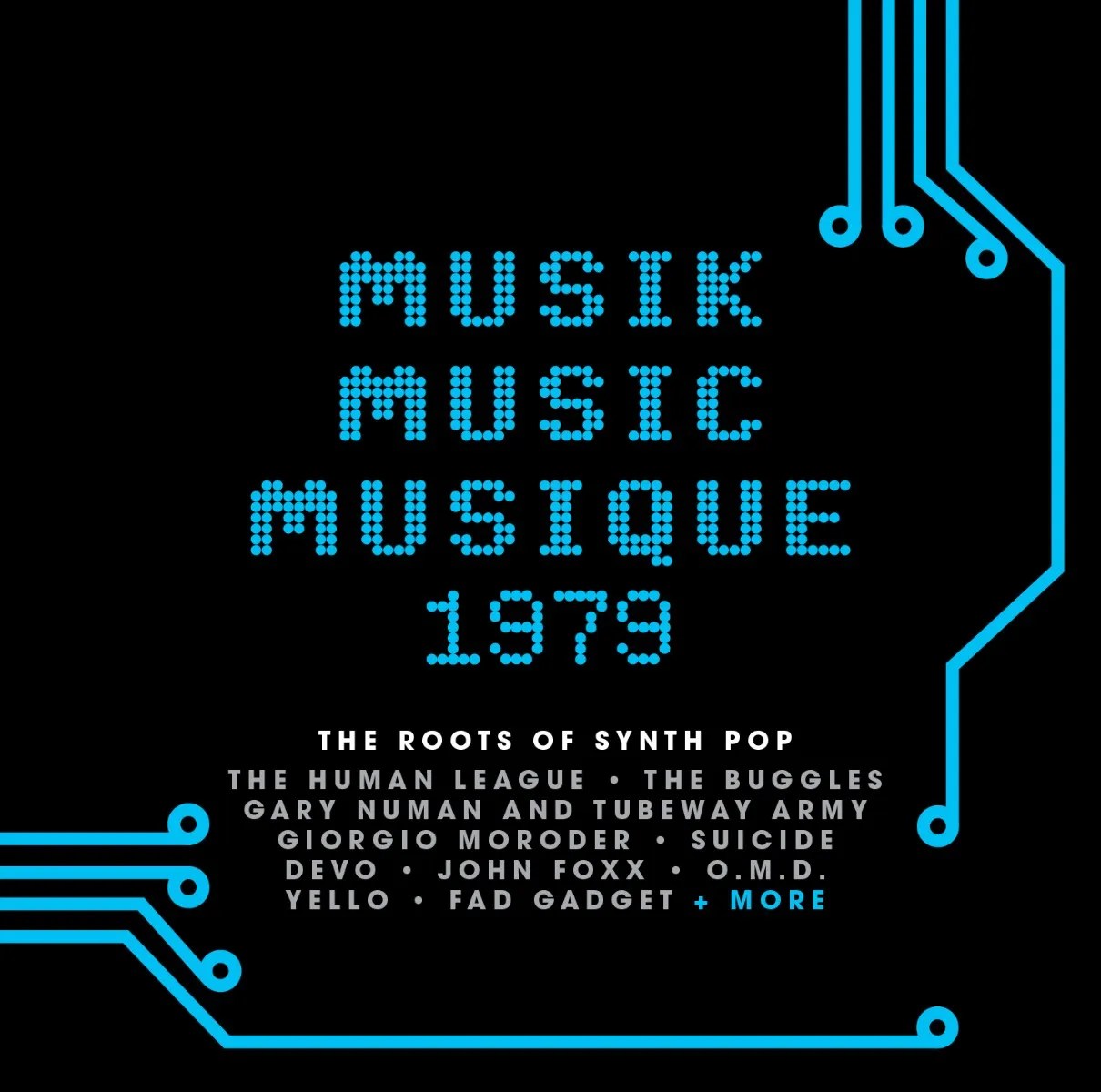
Switched On – Various Artists: Musik Music Musique 1979: The Roots Of Synth Pop (Cherry Red)

Reviewed by Ben Hogwood

What’s the story?

The fourth in Cherry Red’s Musik Music Musique series, this edition from 1979 acts as a prequel, an anticipation of a decade where electronic music moved decisively into the mainstream of pop music once and for all.

Between them Richard Anderson and John Reed have assembled 60 tracks spanning a wide range of styles and sounds, some of them heard on our radios to this minute, others that have almost disappeared. The combination makes for over three hours of very intriguing and instructive listening.

What’s the music like?

When I say, “Of its time”, that is a compliment – and in all honesty, a lot of the music on this collection could have dated from this year. Such is the reflection of how often a good deal of new music looks back to the pioneering spirits of 1979 for its inspiration.

There are so many highlights that it would be impossible to include them all, but safe to say the big hitters from Gary Numan (both Are ‘Friends’ Electric? and Cars) continue to hit the spot in spite of the regular presence on radio, while electro royalty The Human League, Moebius, John Foxx, Steve Hillage, Yello, Japan and Devo all impress, the latter with the fantastically grubby beat of Strange Pursuit. Suicide’s Dream Baby Dream is sublime, too.

More rewarding, surely, to find the outliers that have aged really well, and whose story is so well told by Mat Smith in the generous booklet accompanying the release. We get to learn about Fad Gadget, whose stately Back To Nature is a highlight of CD3. The perky M inclusion Made In Munich is fun, while Metal VoicesAt The Banks Of The River shows that electronic music can be graceful too. The storytelling of Quantum Jump‘s The Lone Ranger is memorable, Karel Fialka’s Armband pre-dated his only big hit Hey Matthew by some eight years, and Jude’s Mirror Mirror contains some brilliant soundbites.

Giorgio Moroder’s E = MC2 still sounds fresh off the page, while Telex offer an excellent cover of Rock Around The Clock. The BugglesTechnopop is breezy pop perfection, while Visage’s Frequency 7 is a deadpan vocoder-fest. The brightly voiced Hammer (named after Jan) contribute a treat in Forever Tonight, as do the brilliant After The Fire with One Rule For You. A word also for The Men, whose I Don’t Depend On You struts its stuff to funky effect.

Does it all work?

There are some less successful tracks, but to be honest they are of benefit to the collection, as it means the year is presented warts and all, and is all the more realistic for the inclusion of the tunes that haven’t aged as well. Be warned that the earworm of Black Rod’s Going To The Country will stay all day, while there really isn’t a category to describe Fashion’s Technofascist, with its uptight vocal and odd marching beat.

Is it recommended?

Yes, enthusiastically. MMM is the most fun you’ll ever have in a history lesson!

Listen / Buy

You can explore purchase options at the Cherry Red website

Published post no.2,817 – Monday 2 March 2026

Introducing…Our Friends Electric!

Today is known as Blue Monday, the day where New Year’s resolutions have traditionally worn off…and people have had enough of January. It happens also to be the name of one of the best electronic music songs ever made…so it seems right to make it the launch day for Our Friends Electric!

This will be Arcana’s celebration of electronic music in all its forms, where I will be listening to and writing about electronic music across the spectrum. It will be an expedition from early ventures in the 1920s to the most recent tracks from present day technology. Along the way there will be interviews, playlists, thoughts and music – so much music.

Lev Termen demonstrating the theremin, December 1927 by Bettmann, Corbis

It would be great to think we could cover all the electronic music there is, but that’s clearly impossible – so the focus will be on key works and albums, listening chronologically from early on in the 20th century. We will move from Varèse to Kraftwerk, from Delia Derbyshire to Kelly Lee Owens, taking in classical and pop pioneers side by side. We will also moving off-piste here and there, to take in all manner of successful – and failed – experiments with early computer music. There will be interviews, too!

To start, I plan to take a look at the music of Erik Satie and his influence, a composer who opened his mind to using mechanics and technology in music, and who looked to embrace new inventions. I will try to do the same.

My perspective is a Western one, so viewpoints from across the globe will be especially welcome. Please do contribute as much as you would like, from listening along on the playlists provided, to commenting on the findings and sharing in the delights we uncover. It promises to be a huge amount of fun.

So let’s switch on, power up and get listening!

Ben Hogwood, editor Arcana.fm

P.S.…for those of you following the Beethoven project – thank you! – I can promise you it hasn’t been cancelled but will resume in the composer’s ‘other’ anniversary year, 2027.

Published post no.2,772 – Monday 19 January 2026

Switched On – Death In Vegas – Death Mask (Drone)

by Ben Hogwood

What’s the story?

Nine years have passed since Richard Fearless released a Death In Vegas album. That’s an awful lot of life – and a good deal of it has been packed into the nine tracks making up Death Mask.

For it is an autobiographical album, with explicit references to his nearest and dearest, yet all the while staying true to its musical function, ranging from drones to danceable beats. Fearless was keen to leave his output unpolished, a refreshing approach for an electronic music producer – so that means ‘dirty circuitry and rough-hewn textures at the fore’. These are helped by the inclusion of natural feedback and white noise from his Thameside Metal Box studio, a musical instrument every bit as important as the keyboards and electronics that output the music.

What’s the music like?

Very dark…and yet, ultimately, empowering.

As its title implies, Death Mask isn’t an album to shy away from thoughts about the end of life – but nor is it going to sit there and mope. For when Fearless drops some of the massive beats here there is a barely restrained euphoria that kicks in, a feeling that we’re dancing for our very existence.

That certainly happens on the epic Roseville, which goes for broke, but also on the warmer Your Love. Hazel is a multilayered track, a whirlwind rhythm section contrasted by a fuzzy drone, an uncannily effective portrayal of the emotions at play in the funeral of a close friend – in this case, Richard’s own father.

The studio makes its presence felt in the remarkable While My Machines Gently Weep, the rhythm section positively primal and the distortion turned up to the max.

Influences on Fearless’s work here range far and wide, with healthy nods to dub and techno. He credits Ramleh, Terrence Dixon, Jamal Moss, Mika Vanio and TM 404 explicitly as inspirations – though a name not mentioned but surely in his mind is that of Andrew Weatherall.

Does it all work?

It does – though Death Mask is certainly not for every mood. It’s a heavy-set album at times, but for every bit of darkness there are shards of dazzling light.

Is it recommended?

It certainly is. Richard Fearless has taken Death In Vegas on quite the journey since it began in the mid-90s, but this is arguably the album that has the greatest substance. Power and grace, rolled into one.

For fans of… Andrew Weatherall, Trentemøller, Luke Slater, Black Dog, Cabaret Voltaire

Listen / Buy

Published post no.2,568 – Thursday 19 June 2025