Two years ago, in the midst of the pandemic, I wrote a piece for Arcana FM on ‘Mahler’s Eighth and coming out of COVID-19’. I concluded by saying that I wouldn’t get to see a performance of this epic ‘Symphony of a Thousand’ – and complete my personal Mahler live symphony cycle – any time soon, but that when I did it would have a very particular significance.
I certainly didn’t know that the performance would be by the Royal Philharmonic Orchestra conducted by Vasily Petrenko at the Royal Albert Hall on a Sunday afternoon in late October 2022, a concert that was itself rescheduled due to the pandemic.
And what a performance it was. The Royal Albert Hall could be said to be purpose built for this work, accommodating not just an expanded orchestra (including seven off-stage brass players in the gods) but three choirs, two boys’ choirs, eight soloists and a huge concert organ (the Royal Albert Hall’s was once the largest instrument in the world).
You get the full blast of the organ from the off with the tumultuous opening of Part 1’s Veni Creator Spiritus. It’s quite a ride from there on in, and Petrenko and the RPO handled it superbly all the way through to the powerful finale of Part 2’s setting of the end of Goethe’s Faust. This was not just about the big sections, the delicate moments were deftly done too.
But this work is really all about the singing, and the assembled choirs of the Philharmonia and Bournemouth Symphony Choruses and City of London Choir, as well as the Tiffin Boys’ Choir and Schola Cantorum of the Cardinal Vaughan Memorial School were magnificent.
And it wasn’t just the massed voices, as glorious as they were. The soloists – and let’s name them (above): Sarah Wegener (Magna Peccatrix), Jacquelyn Wagner (Gretchen), Regula Mühlemann (Mater Gloriosa), Jennifer Johnston (Mulier Samaritana), Claudia Huckle (Mary of Egypt), Vincent Wolfsteiner (Doctor Marianus), Benedict Nelson (Pater Ecstaticus) and James Platt (Pater Profundus) – were excellent too.
I made the point in my earlier piece that there is something about the combination of the mass assembled forces performing together and being joined by an audience in an even bigger collective. I think the standing ovation from the near sell-out crowd at the end was testimony to this.
Mahler’s Eighth is definitely one of those pieces that you need to see performed live. I’m so glad that I finally did.
John Earls is Director of Research at Unite the Union and tweets at @john_earls
Williams Penillion (1955) Grieg Piano Concerto in A minor Op. 16 (1868) Sibelius Symphony no. 5 in E flat major Op. 82 (1919)
Jayson Gillham (piano), Royal Philharmonic Orchestra / Owain Arwel Hughes
Cadogan Hall, London Tuesday 12 April 2022
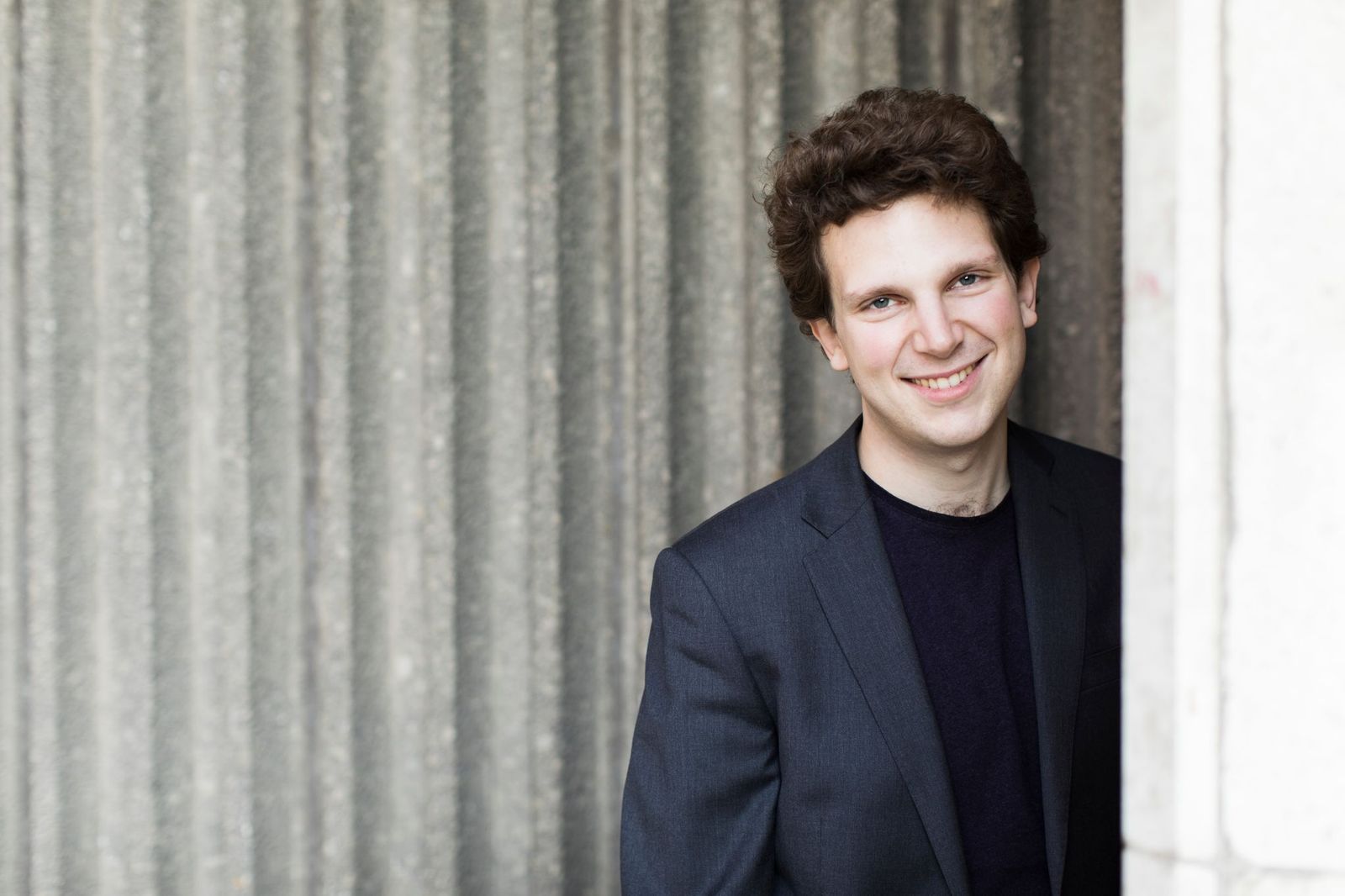
Written by Richard Whitehouse. Photos (c) Benjamin Ealovega (Jayson Gillham)
Its high-profile concerts may currently be elsewhere in London, but the Royal Philharmonic Orchestra continues its schedule of regular performances at Cadogan Hall, and this evening was heard under the direction of former principal associate conductor Owain Arwel Hughes.
Hughes has rightly featured Welsh music whenever possible, and this programme began with Penillion that Grace Williams wrote for National Youth Orchestra of Wales. Two symphonies aside, several other of Williams’s pieces are inherently symphonic – not least her ‘symphonic poem in four movements’ whose title infers the Welsh tradition of singing against an existing melody. This is heard at its most evocative in the initial Moderato with solo trumpet intoning its (original) theme in the context of ethereal contributions from woodwind, harp, and strings. There follows a tensile Allegro then haunting Andante as ‘scherzo’ and ‘slow movement’ of a piece where the trenchant final Allegro proceeds toward a gently fatalistic close. Certainly, this is music such as warrants frequent hearings – irrespective of the present cultural climate.
Hard to imagine Grieg’s Piano Concerto undergoing a period of neglect, yet familiarity need not breed contempt at the hands of a skilled and sensitive exponent which Australian-British pianist Jayson Gillham assuredly is. After a commanding start the first movement felt unduly sectional in its unfolding, its orchestral tuttis a little overwrought, but the second main theme was limpidly rendered then Gillham came into his own with a cadenza whose developmental aspect was as audible as its virtuosity. With its poetic contributions from solo horn and cello, the Adagio was no less affecting, then the finale’s lyrical middle section threw into relief the combative dialogue either side. Its flute melody returns in a peroration whose grandiloquence found effective contrast with the Notturno in C (Op.54 No 4) that Gillham gave as an encore.
Even if Sibelius’s Second Symphony had been replaced by his Fifth during the run-up to this concert, the latter’s inclusion played no less to the RPO’s collective strengths. Building those earlier stages of the first movement’s intricate evolution patiently and methodically, Hughes amply brought out this music’s epic as well as ruminative qualities on the way to a powerful central climax – from where its scherzo-like continuation headed stealthily and purposefully to a coda that, if it lacked the last degree of visceral impact, generated undeniable dynamism.
The highlight was an Andante enticingly poised between intermezzo and slow movement – its plaintive repartee of not without its more ominous moments, yet whose winsome essence was itself a telling foil to the finale. Here the coursing interplay of strings and enfolding eloquence of its ‘swan theme’, horns magnetically to the fore, set in motion the eventful progress toward an apotheosis whose affirmation was never in doubt. If some of those concluding chords were not quite unanimous, this hardly detracted from the majesty of Sibelius’s overall conception.
A memorable ending, then, to an appealing programme that found the RPO on fine form and confirmed Hughes’s insights. The orchestra returns here next week in a concert of Schumann, Brahms and Dvořák with the violinist Fumiaki Miura and the conductor Domingo Hindoyan.
The inclusion of Penillion was made possible with funding from the ABO Trust’s Sirens programme, a ten-year initiative to support performance and promotion of music by historical women composers. Further information can be found by clicking here For further information on the Royal Philharmonic Orchestra’s 2021/22 season, click here Click on the performer names to read more about Jayson Gillham and Owain Arwel Hughes, and for more on Grace Williams click here
Brian Symphony No. 3 in C sharp minor (1931-2) Symphony No. 17 (1960-61)
Ronald Stevenson, David Wilde (pianos, Symphony no.3); New Philharmonia Orchestra (Symphony no.3), Royal Philharmonic Orchestra (Symphony no.17) / Stanley Pope
Heritage Records HTGCD153 [67’26”]
Recorded 12 January 1974 and 23 June 1976 at BBC Maida Vale Studios, London
Written by Richard Whitehouse
What’s the story?
Heritage has followed its release of Charles Groves’s centenary accounts of Havergal Brian’s Gothic Symphony (Part One) and In Memoriam with this first official issue of the composer’s Third and Seventeenth Symphonies, as given in their first performances under Stanley Pope.
What’s the music like?
Although he left few commercial recordings, the London-born and Geneva-based conductor Pope (1916-95) was highly regarded in music from the 19th and 20th centuries. These studio performances are among the best premieres that Brian received, not least the Third Symphony which at almost 55 minutes is his lengthiest after the Gothic. Little is known about its genesis, but the 20-minute opening movement has a complexity and emotional breadth that suggest a suitably high-flown inspiration. Two pianos mark off crucial junctures in its formal trajectory, besides enriching the texture vis a concertante underpinning such as surges forth in the stark chordal cadenza prior to the coda. Had Brian stopped there, this would still have been among his most ambitious symphonies, and the three remaining movements afford intrigues aplenty.
The slow movement continues in similar fashion in its combining of textural audacity with a melodic immediacy (notably for flute and violin) as makes this an ideal entry-point for those new to Brian, and though its expressive ambience is by no means easy to define, a feeling of heroic fatalism comes to the fore during the climactic stages and in a coda of moving pathos. By contrast the scherzo is as direct in its appeal as anything that Brian wrote, not least a trio whose ingratiating charm provides suitable contrast with the boisterous music on either side. With its slow overall tempo, the finale builds in sonorous paragraphs – to whose Brucknerian grandeur Pope is especially attentive – toward a stormy culmination and heightened recall of earlier ideas; thence into an epilogue whose unequivocal finality is rare in Brian’s maturity.
Nearly three decades later, the Seventeenth Symphony offers a very different perspective on Brian’s creative outlook. Last in a series of five single movement such pieces, it is markedly elliptical as to formal unfolding and expressive follow-through – yet, even more than with its masterly predecessor, a continuous and metamorphic ingenuity is perceivable right from the pensive introduction then throughout the three- (or even four-) in-one sequence that follows. Confident and yet ruthless in its triumphalism, the coda is decidedly music for its ‘present’.
Does it all work?
Almost. The Third is the most inclusive of Brian’s orchestral symphonies in its intricacy of texture and (ambivalent) range of expression. Drawing four such diverse movements into a cohesive whole is no easy task, but Pope succeeds more completely than does Lionel Friend (Hyperion) and probes more fully than Adrian Leaper (Naxos) the disquieting obliquities of the Seventeenth. The playing of the New Philharmonia and Royal Philharmonic orchestras is testament to the skill of British players in tackling such complex music on limited rehearsal.
Is it recommended?
Yes. Heritage has done a fine job in opening-up the 1970s sound (the BBC’s notoriously dry Maida Vale studio) and John Pickard contributes his usual insightful notes. The 1974 account of Brian’s choral Fourth Symphony would be an ideal next candidate for such rehabilitation.
Listen
Buy
You can discover more about this release at the Heritage website, and you can read more about Havergal Brian here
Howard Ellipsis (2021) [RPO Commission: World Premiere] Rachmaninov Rhapsody on a Theme of Paganini, Op. 43 (1934) Holst The Planets, Op. 32 (1914-17)
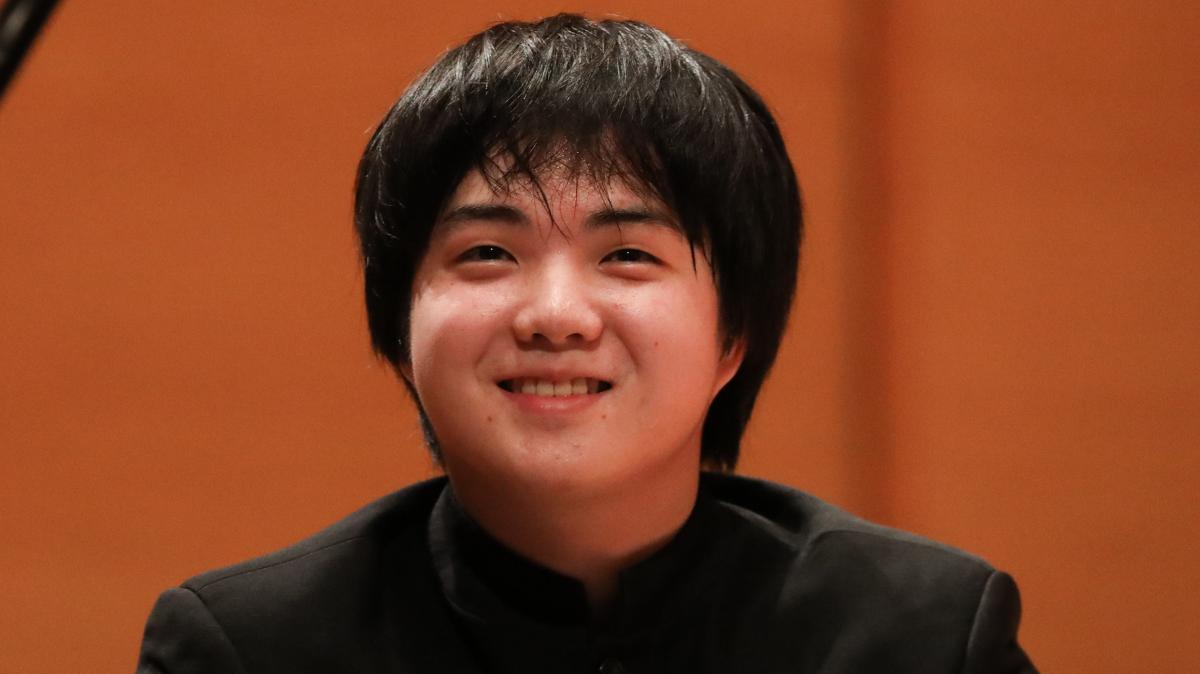
Mao Fujita (piano, above), Royal College of Music Chamber Choir, Royal Philharmonic Orchestra / Vasily Petrenko (below)
Royal Festival Hall, London Thursday 3 February 2022
Written by Richard Whitehouse. Photo credit (Mao Fujita) Vyacheslav Prokofyev / Getty Images
Great British Music is the theme underlying the Royal Philharmonic Orchestra’s current series of concerts at Royal Festival Hall – a major work of the earlier 20th century complemented by music elsewhere in Europe and, in this instance, a commission from a young British composer.
Her output widely championed, not least by the RPO’s new music director Vasily Petrenko, Dani Howard is already master of the curtain-raiser. Hence the engaging yet never superficial effect of Ellipsis – her tribute to this orchestra in its 75th anniversary which alludes to various pieces and personages in its history, with a deftness that made for an appealing if not overly memorable listen. Not in doubt, though, was the keen motivic resource with which the piece unfolded from its fanfare-like opening bars towards the fervent apotheosis at its culmination.
Only caution through its origins in borrowed material can have prevented Rachmaninov from designating Rhapsody on a Theme of Paganini as his ‘Fifth Piano Concerto’. Certainly, those volatile mood-swings of its initial 15 variations, inward rapture of the next three then tensile incisiveness of the closing six variations constitute a three-movement design whose Classical proportions are informed by the developmental ingenuity of a later era. Qualities Mao Fujita brought out in notable measure during a performance which lacked little in technical finesse.
One of a handful of pieces whose all-round audacity was the incentive rather than deterrent to its immediate acceptance, The Planets was destined to prove the defining work of Holst’s career whose sheer impact a century and more has not diminished. Petrenko was evidently keen to emphasize its symphonic dimension through allying its seven movements to a broad consistency of pulse – witness the follow-through from his remorseless while never unduly histrionic take on Mars to his sensuous if never cloying approach to Venus. The former saw a suitably galvanic response from the RPO brass, the latter an elegance and poise from its strings which was no less evident in Petrenko’s lithe Mercury, then a Jupiter whose impetuous outer sections framed an eloquent and unaffected handling of the indelible trio.
Even the (doubtless) spontaneous applause which greeted this most familiar section did not undermine contrast with the emotional starkness of Saturn as it headed towards a climax of wrenching plangency, before finding release in a final stage that was nothing if not cathartic. The only passing disappointment came with Petrenko’s skittish and over-hasty rendering of Uranus, such as forced the martial main theme into a rhythmic straitjacket (for all that the climactic organ glissando made its mark) then detracted from the emptiness of its final bars. Not that this prevented Neptune from casting an otherworldly spell – whether in the modal musing at its start, those ethereal textures near its centre, or the gentle evanescing into which orchestra and wordless voices (the laudable RCM Chamber Choir) withdraw toward its close. If not a revelatory account, this was nevertheless a committed and involving performance that renewed admiration for Holst’s magnum opus as well as reinforcing the overall excellence of the Royal Philharmonic in the early stages of what looks set to be an era of real achievement.
For more information on the Royal Philharmonic Orchestra’s 2021-22 season, visit their website. Meanwhile click on the links for information on the artists Mao Fujita and Vasily Petrenko.
Vaughan Williams Fantasia on a Theme by Thomas Tallis (1910) Respighi Concerto gregoriano (1921) Mendelssohn Symphony no.5 in D minor Op.107 (1830)
Royal Albert Hall, London Wednesday 4 August 2021
Written by Ben Hogwood
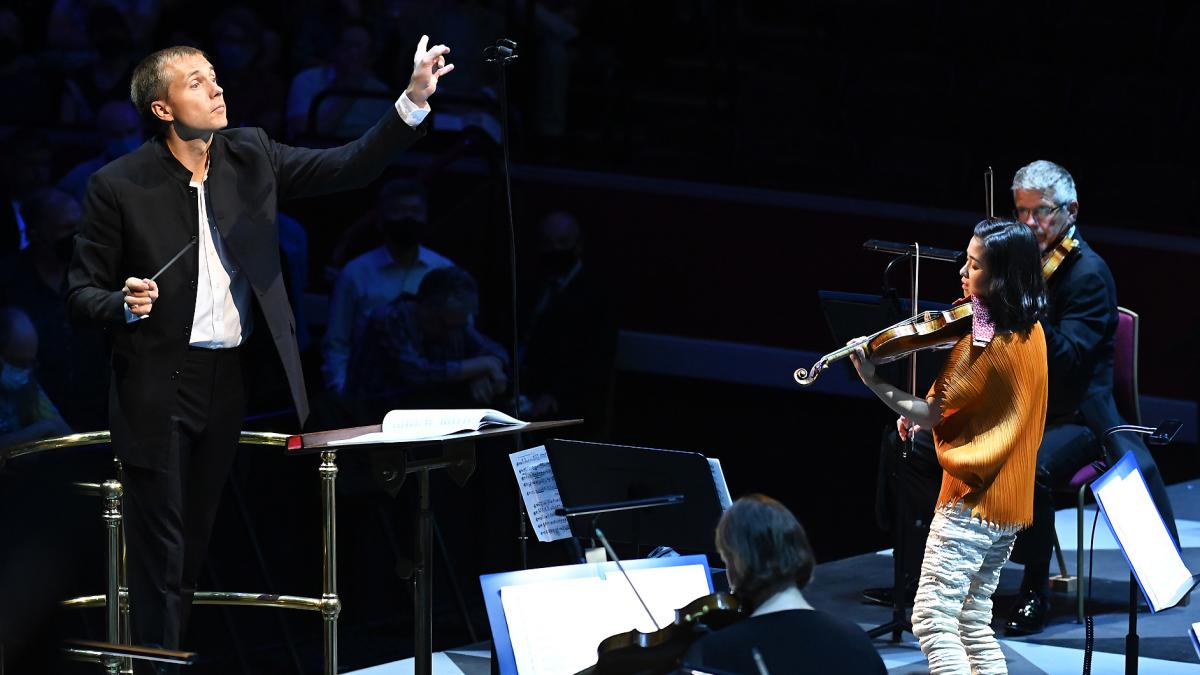
A fascinating concert, notable on several counts. It marked the first Prom for Vasily Petrenko, recently transferred from Liverpool, in his new role as the Royal Philharmonic Orchestra’s music director. It featured three works paying tribute to a distant musical past – Vaughan Williams, Respighi and Mendelssohn expressing their admiration in very different ways. By way of an aside, it was your correspondent’s first live music in 17 months. A happy experience indeed!
In a sense my ears were in alignment with those who would have been at Gloucester Cathedral on 6 September 1910, for the world premiere of Vaughan Williams’ Fantasia on a theme by Thomas Tallis. The Royal Albert Hall, in its current reduced capacity, offered a similar acoustic, suitable for a performance where the quietest statements could be clearly heard. In the wake of a pandemic, this was wholly appropriate music to be listening to.
The Fantasia is written for two string orchestras, the second of which, nine players strong, might normally be distributed high in the gallery. Here they were positioned on stage, upper left from the conductor’s viewpoint, and projected beautifully to the back of the arena. Petrenko did not linger over the serenity of the opening, but allowed Vaughan Williams’ invention plenty of space to breathe as the Fantasia formed. A sensitive audience ensured every little nuance could be heard, and the RPO strings – in particular the solo quartet within the main orchestra – played beautifully. Petrenko has recorded a good deal of Elgar with the Royal Liverpool Philharmonic, so it will be interesting to see if he decides to look at Vaughan Williams in equivalent detail.
There followed a Proms premiere of a work written 100 years ago. As David Gutman’s excellent programme footnotes pointed out, Respighi has not enjoyed good representation at the festival over the years, and in general his music still languishes in the repertoire. This first account of the Concerto gregoriano could hardly have been more persuasive, with a passionate advocate in violin soloist Sayaka Shoji, who quarantined on her arrival in the UK prior to this performance. Respighi was a violinist, writing with skill for the instrument, but chose not to use this concerto as a display piece. Rather he paid homage to the Gregorian chants with which he had had been preoccupied in recent years, and he used these as the basis for a piece containing some particularly lush harmonies and idiosyncratic rhythms.
This was a compelling performance, Shoji soon into her groove and leading with faultless intonation in the high passages of the slow movement, carrying beautifully into the wide open spaces of the hall. She was aided by the horns and trombones of the RPO, positioned along the back of the orchestra, the punctuation of harp and celesta adding glitter to the edge of the sound.
The first movement found nicely judged contributions from oboe (John Roberts) and cor anglais (Patrick Flanaghan), with a sheen from the strings not unlike that of the Vaughan Williams. The third movement presented faster music and a greater sense of drama from its main theme, the brass again involved. This pulled back to peaceful climes, and a recap of the second movement material. Concerto gregoriano was certainly a work benefiting from a live performance, deserving of a higher profile.
Shoji was a sensitive performer, allowing Respighi’s music star billing, a sign of her maturity as a soloist. She also chose a wholly appropriate encore, the soft pizzicato beginning the Sarabande from Ysaÿe’s Sonata for solo violin no.4 (À Fritz Kreisler) the only audible noise in a rapt hall.
Mendelssohn wrote his Reformation symphony in 1830, making it the second in his output chronologically, but it was not published until long after his death. He appears not to have been wholly satisfied with it, leaving it unperformed. It carries a powerful impact, anticipating Schumann’s own D minor symphony (no.4) while including the Lutheran chorale Ein feste Burg ist unser Gott (A mighty fortress is our God). In this the composer, perhaps inevitably, was including Bach in his homage.
Petrenko had the work’s measure, leading us straight into the ‘sturm und drang’ of the first movement with its grim, D minor struggles. They were captivating, especially at the end of the introduction when rapt strings introduced the ‘Dresden Amen’, a striking alternative to the flurry of activity around them. The second movement had an attractive lilt, the third a nicely poised subject, before flautist Emer McDonough gave an impeccable solo to lead us into the finale. It fell to her to present the chorale theme, taken up with greater number and power by the rest of the orchestra. The mood turned from struggle to victory. Petrenko’s pacing was ideal, as was the phrasing, while the final reverberations of the chorale were more than sufficient in lieu of an encore.
This was a very fine if slightly understated first Prom for the RPO conductor in his new role, bringing the ideal combination of new and familiar. The orchestra appear to be in very good hands.
You can listen to a playlist of the works featured in this concert, including the violin encore, on Spotify below:
You can find more information on the BBC Proms at the festival’s homepage