
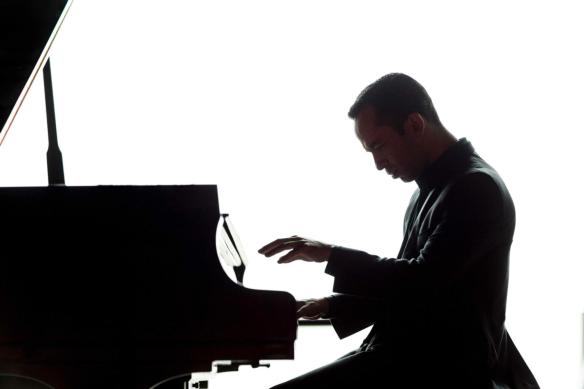
Inon Barnatan (piano, above)
J.S. Bach Toccata in E minor BWV914 (c1710) (6 minutes)
Franck Prelude, Choral et Fugue (1885) (18 minutes)
Barber Piano Sonata in E flat minor Op.26 (1949) (20 minutes)
Wigmore Hall, London; Monday 15 January 2018
Written by Ben Hogwood
The broadcast can be heard on the BBC iPlayer by clicking here
This was a fascinating hour in the company of American-Israeli pianist Inon Barnatan, exploring the role of the fugue in piano music while showing off considerable artistry and technical control of his instrument.
He began with Bach, and one of the lesser heard Toccatas for keyboard. This fell into three parts (starting at 4:06 on the broadcast) and initially took on quite a serious tone before relaxing for the fugue (which begins at 5:04). Barnatan signed off expansively, in a sense preparing for what was to come.
This proved to be Franck’s three-movement Prélude, Choral et Fugue, surely written in homage to organ pieces such as Bach’s Toccata, Adagio and Fugue, but working particularly well on the piano. Barnatan gave a performance of impressive stature, really getting to the nub of the deep and almost religious expression the Belgian composer achieves.
An expansive Prélude (from 12:40) was followed by a reverent statement of the Chorale in hushed tones (at 18:18), before this grew inexorably in stature, leading to a superbly controlled peak at 21:10. The Fugue was confidently delivered, gaining intensity from its initial statement (23:50) until the final peal of bells signalled its triumphant switch from B minor to B major (30:11).
The Barber Sonata was simply superb, and a timely reminder that this is a composer worth so much more than simply the Adagio for Strings. Good though that piece is, the Sonata explores much more aggressive and twisted musical thoughts, perhaps a surprising response to a commission from Irving Berlin and Richard Rodgers, in honour of the League of Composers’ twenty-fifth anniversary. As announcer Clemency Burton-Hill says in the radio introduction it is a formidable work, perhaps not surprisingly given its dedicatee, Vladimir Horowitz.
It is difficult to imagine a better performance than Barnatan gave here, setting the tone immediately with the jagged outlines of the first movement’s main material (marked Allegro energico, from 32:40). There was considerable drama as this tumultuous piece of music unfolded, with bits of occasional lyrical repose but ultimately big outbursts in the form of the inspiration behind the piece, Beethoven’s Hammerklavier Piano Sonata.
All were given with the utmost clarity by Barnatan, who softened the mood for the second movement Scherzo (40:39), then the intimate slow movement (Adagio mesto, from 42:52) which nonetheless reached a hair raising climax some three minutes or so later. Barnatan was totally inside the music, this passage described by Barber’s biographer as ‘the most tragic’ of the composer’s slow movements. Finally a terrific final movement Fuga, brilliantly played and with some complex figurations made to look easy!
The encore (from 54:00) was wholly appropriate, Busoni’s transcription for piano of the J.S. Bach choral prelude Nun Komm der Heiden Heiland, in which a sense of stillness returned.
Further listening
The music from this concert can be heard on the Spotify playlist below. Inon Barnatan has not recorded any of this repertoire to date, so the versions chosen here are by established pianists Glenn Gould, Jorge Bolet and Joanna MacGregor:
You can also see for yourself what the fuss is about by watching Inon Barnatan playing the first movement of Schubert’s C minor Piano Sonata below:
Meanwhile if you want an introduction to the music of Samuel Barber, starting with the Adagio for Strings, look no further!
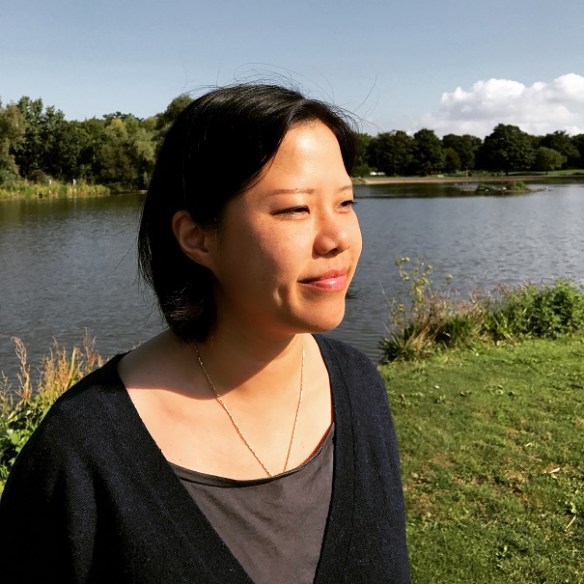 The final Ask The Audience from the 2017 BBC Proms is with Leanne Mison, who promotes and endorses an impressive roster of electronic music artists for Bang On PR. Leanne talks to Arcana about a Prom given by the Royal Stockholm Philharmonic Orchestra and their chief conductor Sakari Oramo, – with two solo vocal turns from the superstar New York soprano Renée Fleming.
 Fleming’s contributions grouped into a loose theme of distant light and transformation. Barber’s Knoxville: Summer of 1915 is a love letter to the American home, and its dappled evening sunlight flickered beautifully under the hands of Oramo, the composer’s warm harmonies setting the scene for Fleming’s characteristically full bodied interpretation. She inhabited the storyteller’s guise with effortless and instinctive calm, though the animated middle section was also very well judged. With just the right amount of sentimentality, this was an ideal performance, and an aptly chosen encore of the song Sure on this shining night blazed a similar trail.
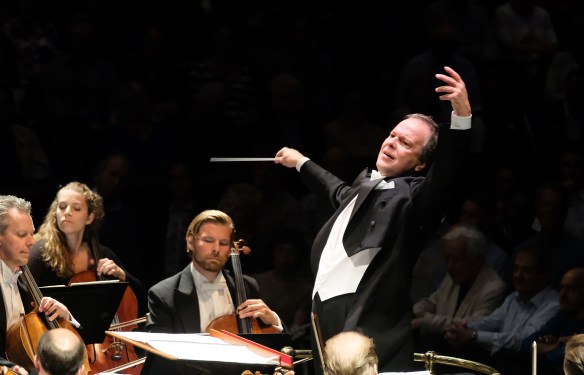 Finally we heard Carl Nielsen’s Second Symphony, ‘The Four Temperaments’, receiving its second Proms performance in three years after the festival’s complete neglect of it in the 20th century. It is a powerful piece, and this account made a strong impression. Although the feverish first movement (Choleric) was convincing and brilliantly played the emotional centre lay in the Melancholic third movement, where Oramo wrought music of impressive angst and depth. Nielsen’s struggles were resolved by the Sanguine finale, where the composer lets rip perhaps a little too easily, but again the structure and the melodic groups made perfect sense. Oramo has built a strong affinity with the Danish composer’s music over the years, and there was something very satisfying in these days of disunity at seeing a Finn conduct a Swedish orchestra in Danish music.
 Arcana.fm