In concert – Baiba Skride, CBSO / Andrew Gourlay: Rossini, Mozart, Berlioz & Prokofiev

Rossini Guillaume Tell – Overture (1829)
Mozart
Violin Concerto no.5 in A major K219 (1775)
Berlioz
Le carnaval romain, Op.9 (1844)
Prokofiev
Romeo and Juliet – Suite no.2 Op.64ter (1936)

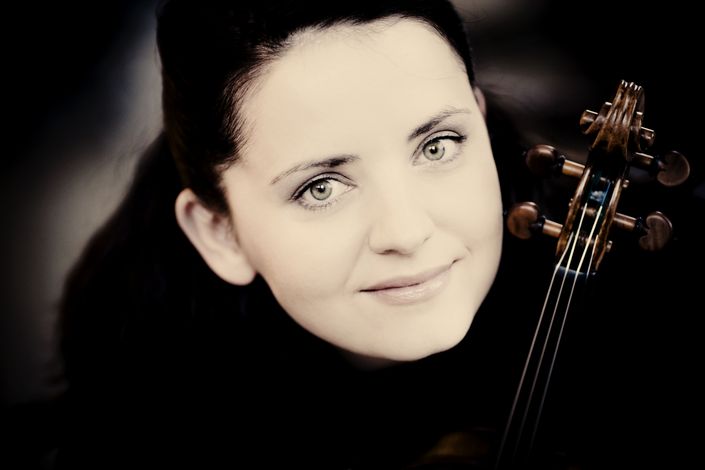
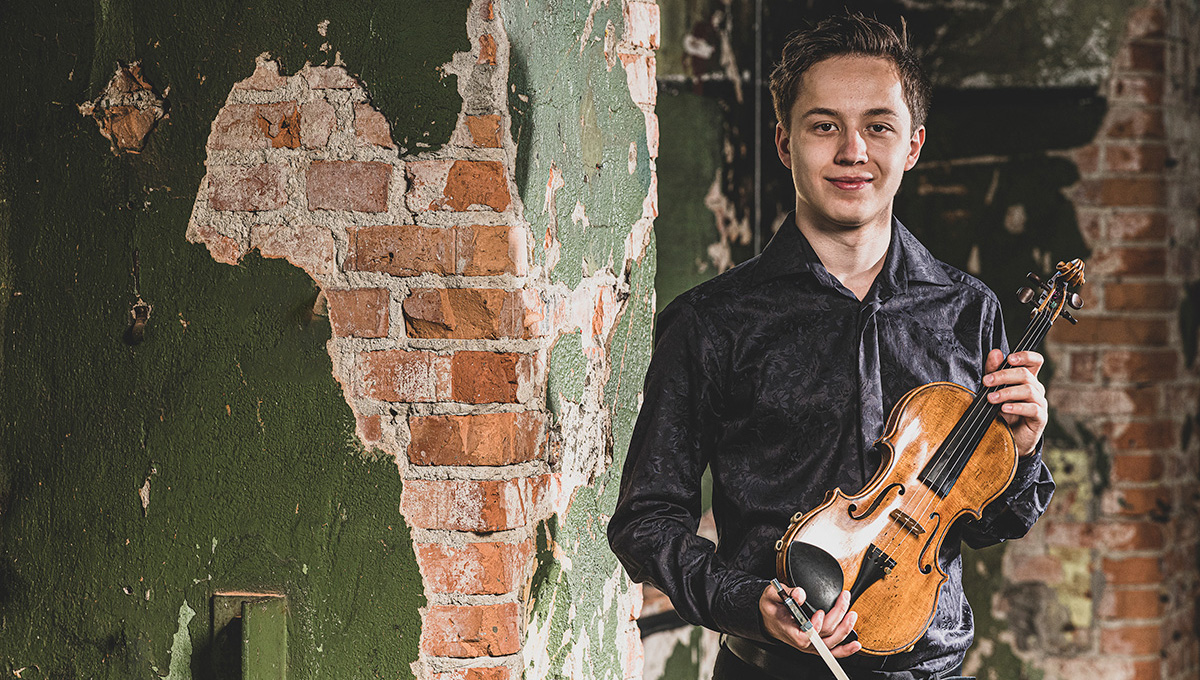
Baiba Skride (violin, below), City of Birmingham Symphony Orchestra / Andrew Gourlay (above)

Symphony Hall, Birmingham
Wednesday 13 October 2021, 2pm

Written by Richard Whitehouse; Picture of Andrew Gourlay (c) Kaupo Kikkas, Baiba Skride (c) Marco Borggreve

This afternoon’s concert by the City of Birmingham Symphony Orchestra saw an unexpected but welcome return from Andrew Gourlay (replacing an indisposed François Leleux) for this diverse programme as worked much better as a concert than it might have appeared on paper.

Its fame as a novelty item in cartoons et al can easily obscure the innovative qualities of the Overture to William Tell, last and most ambitious of Rossini’s operas, in terms of its eliding between curtain-raiser and symphonic poem; which latter aspect Gourlay emphasized in this evocative but cohesive account – whether in the ruminative calm of its opening section with the CBSO cellos eloquently fronted by Eduardo Vassallo, a scrupulously controlled ‘storm’ episode, a not unduly mawkish ‘lullaby’ then a closing galop free from Hollywood overkill.

Mozart was barely out of his teens on writing his Fifth Violin Concerto, if not the finest then certainly the most eventful of his cycle through such as the soloist’s alluring first entry in the opening Allegro with music not directly related to either of the main themes and rendered by Baiba Skride with real finesse. Equally successful was her succinct yet ideally proportioned cadenza prior to its close; after which, the Adagio had elegance without excessive sweetness. In the final Rondeau, others may have made more of that contrast between graceful lyricism and the robust humour of its central section’s stylized Turkishness, but Skride brought these into complete accord and, with Gourlay securing limpid playing from a scaled-down CBSO, this was a persuasive performance of music whose felicities can easily be taken for granted.

Formerly ubiquitous as a concert-opener, Berlioz’s Roman Carnival – the inspired recycling of music from his opera Benvenuto Cellini – launched the second half to striking effect. If the soulful introduction took a little time to settle (doubtless occasioned by a soon extinguished onstage rebellion before Gourlay’s return), what ensued was not lacking rhythmic elan or that scintillating interplay of orchestral timbres as was Berlioz’s gift to the orchestra. Effecting a tangible crescendo into the blazing peroration, Gourlay undoubtedly saved the best until last.

Ad hoc selections from Prokofiev’s Romeo and Juliet rarely provide a satisfying second half, making one of three suites the composer extracted from his ballet the more viable option. Of these the Second Suite is the best overview, and this account quickly found its stride with a visceral take on the music which opens Act Three, the grinding progress of Montagues and Capulets proving no less forceful. Juliet as a young girl exuded the right insouciance and pathos, as did Friar Laurence that of earnest authority. The lithe Dance made a telling foil to Romeo and Juliet before parting, its fraught rapture potently conveyed here, then Dance of the girls with lilies made for an appealingly wistful entrée into Romeo at Juliet’s grave with its searing anguish that only gradually subsides into expectant calm towards the close.

Gourlay had previously directed a fine account of Rachmaninov’s Third Symphony with this orchestra and the Prokofiev confirmed his prowess in Russian music. The CBSO, meanwhile, returns next Wednesday for a varied American programme with the saxophonist Jess Gillam.

Further information on the CBSO’s current season can be found at the orchestra’s website. For more on Baiba Skride, click here – and for more information on Andrew Gourlay, head to the conductor’s website

In concert – Aris Quartet play Schulhoff, Kurtág & Mendelssohn @ Wigmore Hall

Aris 5

Schulhoff 5 Pieces for String Quartet (1924)
Kurtág Officium breve in memoriam Andreae Szervánszky Op.28 (1988-9)
Mendelssohn String Quartet No. 3 in D major Op.44/1 (1838)

Aris Quartet (above, photograph (c) Sophie Walter) [Anna Katharina Wildermuth, Noémi Zipperling (violins), Caspar Vinzens (viola), Lukas Sieber (cello)]

Wigmore Hall, London
Monday 11 October 2021, 1pm

Written by Ben Hogwood (reviewed live from online stream below)

The Aris Quartet are part of the BBC Radio 3 New Generation Artists scheme, and this was their first appearance at the Wigmore Hall. They presented themselves as a lively ensemble who clearly enjoy their music, and they played with sensitivity and panache

Also revealed was a strong instinct for programming. Schulhoff’s 5 Pieces for String Quartet are beginning to make themselves known more in the concert hall, presenting as they do a number of sides of this unique musical personality. The Czech composer was arrested in Prague before he could be issued with a visa to emigrate to Moscow in the Second World War, and died at the Wülzburg concentration camp at the age of 48. His music is still relatively young in its exposure because of this, only really coming through in the 1990s. Initial criticism from those sceptical at his integration of jazz and dance forms is giving way to more outright respect, and – as could be seen here – the 5 Pieces make a great start to a concert.

The Aris Quartet gave a vibrant account of the first movement, marked Alla Valse viennese, but soon a chill was forming as the Alla Serenata progressed, its ghostly presence reminiscent of early Shostakovich. The muted instruments danced over a distracted drone from the cello before biting hard in a sequence that was almost anti-lyrical. There was an impressive cut and thrust to the Alla Czeca, bringing out the composer’s heritage, then an attractive sway to the Alla Tango milonga, beautifully played but with an unexpectedly ominous finish. Finally the buzz of the lively Alla Tarantella set a strong unison violin melody against brisk viola and cello.

Officium breve by György Kurtág was next, a requiem to fellow Hungarian composer Andreae Szervánszky. By his standards it is a lengthy piece indeed, but with 15 sections in barely 12 minutes it was packed with compressed melodies of great intensity. Kurtág is a master in obtaining deep expression from the shortest of phrases, achieving this through carefully pointed melodies and highly imaginative quartet textures. Such a thorough knowledge of string quartet capabilities informs the many sides of grief felt here, and the Aris Quartet reveled in the nuances of the piece. The gripping account took hold from the distracted opening, where cellist Lukas Sieber effectively set out the pitches of the open strings of hit instrument, to savage chords wrought with pure anger later on. The composer’s use of microtones was deeply expressive, as were the ‘double stopping’ passages, the quartet playing as one instrument with eight or more voices. It was a moving and mind-expanding performance.

A wholesale change of mood took us to Mendelssohn, and the joyous outpouring of the first in his trio of quartets published as Op.44. Anna Katharina Wildermuth’s songful first violin was key here, but so were the quartet textures, with lots going on but impressive clarity to reveal the dialogue between the instruments. This was a lovely, fluid performance, with a sunny first movement giving way to a less excitable but equally persuasive Menuetto, showing off its rhythms and soft-hearted theme. Feelings ran deep in the slow movement, especially in the minor key episode, where Wildermuth probed deeper with her phrasing. The finale recaptured the mood of the first movement, good spirits bubbling over to cap an affectionate and energetic performance.

It was great to see an ensemble playing as one with such obvious enthusiasm and commitment for the music, and based on this evidence the Aris Quartet have a bright future indeed. Watch the concert stream and see for yourself!

You can also listen to the repertoire from the Aris Quartet’s concert on this Spotify playlist:

For more information on the Aris Quartet visit their website

In concert – Boris Giltburg plays Ravel, Schumann & Prokofiev @ Wigmore Hall

boris-giltburg

Prokofiev Piano Sonata no.6 in A major Op.82 (1939-40)
Ravel Valses nobles et sentimentales (1911)
Schumann Carnaval Op.9 (1834-5)
Ravel La valse (1920)

Boris Giltburg (piano, above)

Wigmore Hall, London
Monday 4 October 2021

Written by Ben Hogwood

This review marks your correspondent’s first visit to the Wigmore Hall for 18 months – after weekly coverage of the hall’s wonderful Monday lunchtime series. It was so good to be back! In that time it seems the core audience has changed, dropping by a couple of decades at least. This could be due to understandable caution on the part of the older members of the audience to get back to the post-Coronavirus version of concert life, but it is more likely to be the regular streaming of concerts that has lured in a much younger generation. This concert was streamed (you can watch below) and, for the record, the audience were enthusiastic and immaculately behaved – in fact there was a celebratory atmosphere.

Boris Giltburg fully inhabited the positivity. The pianist was beginning a new, two-year look at the piano music of Ravel, and if this first instalment was anything to go by, we are in for a treat. Giltburg’s first selection concentrated on the waltz in its many forms – with two very different approaches to triple time from Ravel, complemented by Schumann and Prokofiev.

It was with the coruscating tones of the latter’s Piano Sonata no.6 in A major that Giltburg began, something of a shock to unaccustomed ears with its discordant language. This underrated work is first in a trilogy of sonatas written during World War Two. The impact was immediate and confrontational, delivered with impressive force but also control. The serrated edges of the first movement were complemented by a poetic second theme, and the tension relaxed a little further for the second movement’s witty march. The right hand of the piano drew parallels with the Ballet of the Unhatched Chicks from Mussorgsky’s Pictures At An Exhibition, as the left hand ascended with a probing melody. The slow movement had a softer, yearning heart, though the dissonant harmonies lingered around the edges, before the runaway theme of the finale took hold. This could easily be a silent film soundtrack, but its cat and mouse nature was challenged and ultimately caught by the reappearance of the first movement’s angular melody. Giltburg staged a profound drama between these elements before bringing the sonata to a shattering conclusion.

Ravel’s Valses nobles et sentimentales was next, providing a relatively controlled contrast to the Prokofiev’s unwieldly ways. Giltburg enjoyed the music greatly, swaying to the rhythms as he played. His control was immaculate but the rhythmic profile of the waltzes was instinctive, holding back or pressing forward as appropriate. A tender, intimate second waltz (marked Assez lent – avec une expression intense) brought the audience in closer, while the fourth waltz (Assez animé) twinkled in the night air. Giltburg could be forceful when needed, as in the first (Modéré) and seventh (Moins vif) waltzes, and his Épilogue was exquisitely voiced.

The second half began with Schumann’s Carnaval, a tableau of portraits and personal insights completed in the composer’s mid-twenties. Schumann’s ability to paint vivid pictures at the piano is rightly celebrated, and the sketches here were rich in colour and implied detail. Giltburg relished the extravert Florestan as much as he did the reserved poetry of Eusebius, both sections portraying the personality of Schumann himself. The nagging ‘answer’ motif of Pierrot left its mark, as did the repeated notes of Reconaissance. Meanwhile Papillons quoted from one of Schumann’s first piano pieces with a slightly shy countenance. Schumann’s portraits of Chopin and Paganini were once again fascinating in their insights, while finally the triumphant Marche des Davidsbündler contre les Philistins carried all before it in a triumphant account.

As did Ravel’s La valse, which followed, though here there was a very different outcome. La valse describes the destruction wrought by the First World War, its closing bars collapsing in vivid imagery, but it could just as easily describe elements of our civilization over the last few years. Giltburg seemed to inhabit that possibility, the warm-hearted dance dropping in temperature as his account progressed, until the end when it was rumbling throughout the piano in a self-destructive whirlpool. This is a fiendishly difficult transcription, but Giltburg made it seem effortless as he inhabited each and every twist and turn, hurling out the final pages with formidable power.

After this alarming turn of events we returned to the solace of Giltburg’s first encore, a limpid Intermezzo in A major Op.118/2 by Brahms, then marvelled at the passion in his second choice, Rachmaninov’s Prelude in G# minor Op.32/12. A memorable recital, and an auspicious start to what promises to be a great series. Best experienced in person rather than online though!

You can listen to the repertoire from Boris Giltburg’s concert on this Spotify playlist, which includes the pianist’s recordings of the Prokofiev, Schumann and Rachmaninov:

For more information on Boris Giltburg you can visit his website

BBC Proms – Víkingur Ólafsson, Philharmonia / Paavo Järvi: Bach, Mozart, Prokofiev & Shostakovich

olafsson-jarvi

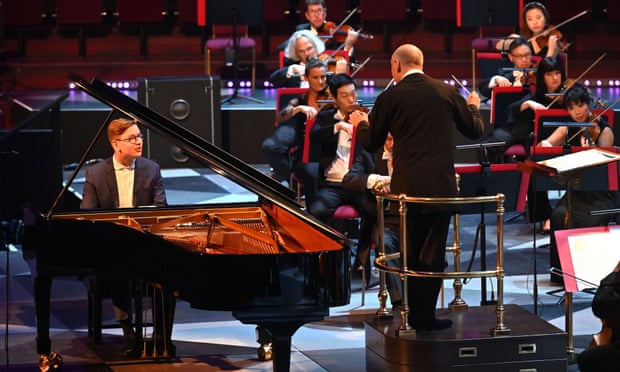
Víkingur Ólafsson (piano), Philharmonia Orchestra / Paavo Järvi

Prokofiev Symphony no.1 in D major Op.25 ‘Classical’ (1916-17)
J.S. Bach Keyboard Concerto in F minor BWV1056 (c1738-9)
Mozart Piano Concerto no.24 in C minor K491 (1786)
Shostakovich Symphony no. 9 in E flat major Op.70 (1945)

Royal Albert Hall, London
Saturday 14 August 2021

Written by Richard Whitehouse

Tonight’s Prom brought change of conductor, the always reliable Paavo Järvi stepping in for Santtu-Matias Rouvali in what would have been the latter’s Proms debut, but not of soloist – Icelandic pianist Víkingur Ólafsson duly making his first appearance at these concerts with concertos which, for the most part, played to his strengths.

The number of times that Bach’s keyboard concertos have been heard here on piano in recent decades can be counted on the fingers on one hand (Tatiana Nikolayeva’s D minor resonates in the memory), but that in F minor was a good choice in terms of its succinctness – the outer movements pitting soloist and (sizable body of) strings against each other with a trenchancy as was vividly conveyed here, with the central Andante an oasis of serenity that was not without its plangent asides.

Placing this piece before the interval, however, made for a distinctly short first half – given the relative length of Mozart’s C minor Concerto after the interval. There were many good things in this latter, Ólafsson keeping the first movement on a tight yet never inflexible rein so that its inclination to pathos – if not always its portentous undertones – came through in ample measure; not least in a coda that had been cannily prepared by the soloist’s cadenza. The central Larghetto was none the less the highlight – Ólafsson varying his tone such that piano melded into the woodwind for an early and defining instance of timbral colouration, with its limpid elegance never undersold. Maybe the finale was a little staid in the overall unfolding of its variations, but the coda’s strangely ambiguous poise was tangibly realized.

An auspicious debut, then, for Ólafsson, who underlined his prowess with affecting readings of the slow movement of Bach’s Fourth Organ Sonata (BWV526) in August Stradal’s chaste transcription and Liszt’s not unduly mawkish version of Mozart’s Ave Verum Corpus (K617). These further extended the disparity between each half – the first of which had commenced with Prokofiev’s ‘Classical’ Symphony, not in the least small of scale or mimsyish as Järvi heard it; witness his acerbic and impetuous take on the initial Allegro, trumpets and timpani to the fore, then a Larghetto whose swift underlying tempo left little room for any harmonic piquancy to emerge. The Gavotte was slightly marred by several mannered agogics which tended to impede its rhythmic profile, but the Finale lacked little in sparkle or insouciance.

Among the most travelled and recorded conductors of today, Järvi can seem detached or even aloof in manner – but there was no such reticence evident in Shostakovich’s Ninth Symphony as ended this programme. After a tensile and assertive Allegro, which audibly benefitted from the sizable forces onstage, the Moderato recalled Efrem Kurtz’s classic recording as to overall restraint and a dark-hued introspection rising to anguish in its twin climaxes. Playing without pause, the other movements were of a piece with the foregoing – a driving and almost manic Presto subsiding into a Largo, whose ruminative bassoon soliloquys were eloquently taken by Emily Hultmark, then an Allegretto whose capriciousness was acutely gauged through to its bitingly sardonic climax and breathless final payoff. Undoubtedly a performance to savour.

You can find more information on the BBC Proms at the festival’s homepage

In concert – Alina Ibragimova, CBSO / Joshua Weilerstein: Weir, Prokofiev & Beethoven

Joshua Weilerstein 58_credit Sim Canetty-Clark

Alina Ibragimova (violin, below), City of Birmingham Symphony Orchestra / Joshua Weilerstein

Weir Heroic Strokes of the Bow (1992)
Prokofiev
Violin Concerto no.1 in D major Op.19 (1915-17)
Beethoven
Symphony no.7 in A major Op.92 (1811-12)

Symphony Hall, Birmingham
Wednesday 7 July 2021 (6.30pm)

Written by Richard Whitehouse Photo of Joshua Weilerstein courtesy of Sim Canetty-Clark; Alina Ibragimova courtesy of Giorgia Bertazzi

While not the centenary season as had been anticipated, the City of Birmingham Symphony Orchestra’s current run of live concerts has nevertheless found the orchestra in great shape, reinforced by the final event that marked an equally unexpected if auspicious debut for Joshua Weilerstein.

He may have substituted the planned account of Schubert’s Fourth Symphony, but Weilerstein retained Judith Weir’s Heroic Strokes of the Bow to begin the programme. Although written before her spell as the CBSO’s Composer-in-Residence (1995-8), the present piece is among her most characteristic larger works – taking its cue from Paul Klee’s similarly titled painting for a 15-minute study in frustrated momentum, whereby violins pursue an eventful trajectory constantly undermined by rhythmic discontinuity. A belated coming to the fore of woodwind propels this music towards a peroration which never quite materializes prior to its subsiding then terse pay-off. Not a straightforward or necessarily rewarding piece to tackle, the CBSO strings still sounded engaged throughout a piece typical in its sense of ultimate anti-climax.

Alina Ibragimova then joined the orchestra for Prokofiev’s First Violin Concerto, its modest scale and prevailing inwardness only partly belying technical demands that were confidently surmounted here. The partnership with Weilerstein, moreover, was a good one – whether in the first movement’s gradual expressive opening-out from, then retreating-back to sustained lyricism, or the Scherzo’s cavorting high-jinx and playful nonchalance. Ibragimova’s tempo for the finale seemed initially a little too deliberate, but the panache of those brief orchestral tuttis then stealthy intensification to the rapturous return of the opening theme left no doubt as to either soloist’s or conductor’s sense of exactly where the music was going – the violin’s airy arabesques melding into the deftest of orchestral textures for the spellbinding final bars.

The inclusion of Beethoven’s Seventh Symphony made for a near full-length concert which, being given twice, says much for the CBSO’s collective stamina. Ensemble faltered slightly in the first movement’s introduction, relatively weighty as Weilerstein heard it, but the main Vivace proved unanimous in response as it was trenchant in conception – highlights being an uninhibited transition to the reprise, then inexorable build-up toward a coda whose clinching of the overall design felt more potent through a slight if perceptible acceleration at the close.

Weilerstein (rightly) went directly into the Allegretto, its alternation of pathos and sanguinity ideally gauged, then the scherzo exuded a joyous animation and its trio an eloquence which was no less apposite. The finale may have lacked its exposition repeat, but the seamlessness with which this movement unfolded left no feeling of its being sold short – not least through an astute judging of dynamic contrasts then a final peroration which, if it lacked for a degree of visceral excitement, none the less concluded this symphony with unwavering affirmation. Hopefully, Weilerstein will soon be returning to this orchestra. Next month, though, the CBSO heads to the Proms for a programme featuring Ruth Gipps’s Second Symphony and Brahms’s Third, along with a delayed premiere for Thomas Adès’s The Exterminating Angel Symphony.

You can find information on the CBSO’s appearance at the Proms at the festival’s website.