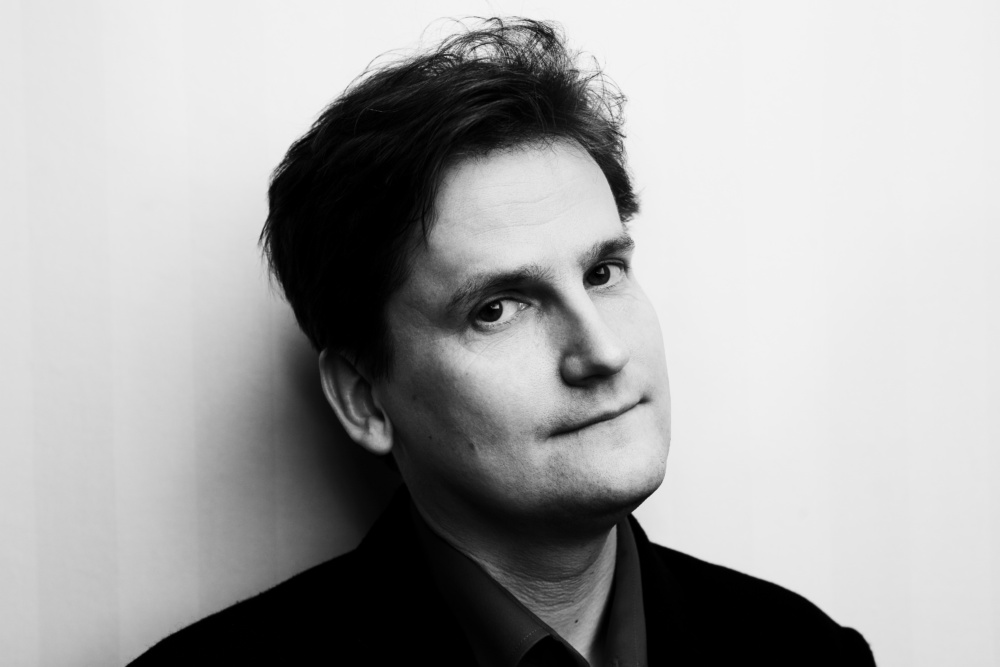
This week, Arcana will be visiting the Wigmore Hall to hear the complete piano sonatas of Prokofiev, played over two nights by Olli Mustonen.
The Finnish pianist is a specialist in the Ukrainian-born composer’s music, and it looks set to be a fascinating pair of concerts, offering a rare chance to appraise the complete works in this area of Prokofiev’s output. As a taster to illustrate his natural rapport with Prokofiev’s writing for the keyboard, here is Mustonen performing the Piano Concerto no.2 in G minor with the Singapore Symphony Orchestra and Hannu Lintu:
Olli Mustonen plays the complete sonatas at the Wigmore Hall, over two nights – for information click on the links for Monday 31 October and Tuesday 1 November:
Mustonen has also recorded the five piano concertos for Ondine, with Lintu and the Finnish Radio Symphony Orchestra. You can hear these dynamic accounts below:
Prokofiev Symphony no.1 in D major Op.25 ‘Classical’ (1916-17) Bruch Violin Concerto no.1 in G minor Op.26 (1866-8) Mendelssohn Symphony no.3 in A minor Op.56 ‘Scottish’ (1829-42)
Daishin Kashimoto (violin, below), City of Birmingham Symphony Orchestra / Kazuki Yamada (above)
Symphony Hall, Birmingham Wednesday 4 May 2022, 2.15pm
Written by Richard Whitehouse
Just under a year before he becomes chief conductor, Kazuki Yamada was back with the City of Birmingham Symphony Orchestra for a programme of well-established favourites, which no doubt accounted for the gratifyingly full house that duly greeted his arrival on the podium.
There was humour aplenty in this account of Prokofiev’s Classical Symphony – not least with Yamada almost acting out the initial Allegro’s whimsical second theme, but the highlight was a Larghetto whose sometimes disjunct episodes came together effortlessly. The outer sections of the ensuing Gavotte seemed a little too mannered to be convincing, but the Finale found conductor and orchestra at one in conveying the scintillating wit but also winsome pathos of its main themes, with a pointing of incidental detail then audible ‘lift off’ to the closing bars.
His decade as first concert-master of the Berlin Philharmonic likely accorded him less profile as a soloist, but his take on Bruch’s First Violin Concerto confirmed Daishin Kashimoto as a force to be reckoned with. Determined not to undersell the Prelude, he and Yamada brought out this music’s sombreness as keenly as its lyricism and, at its climax, a tempestuous energy that found the CBSO at its collective best. Nor was there any lack of emotional gravitas in the Adagio, Kashimoto drawing out its rapturous lyricism without neglecting those more intimate asides which resonate long after the music ceases. Emerging with real anticipation, the final Allegro had no lack of underlying impetus and, in its second theme, a high-flown eloquence that set the seal on this movement, and this piece overall, going into the decisive closing bars.
If the second-half performance of Mendelssohn’s Scottish Symphony was not so consistently satisfying, it reaffirmed just why this work (and this composer) has remained a favourite of Birmingham audiences over the decades. Many latter-day accounts tend toward a decidedly Classical brusqueness, but Yamada chose never to rush the opening movement such that the poignancy of its introduction (rightly) persisted through those agitated contrasts of its main Allegro – the absence of an exposition repeat barely detracting from the music’s emotional weight. Effervescent without being overdriven, the scherzo provided ideal contrast between this and an Adagio whose alternate fervour and rhetoric never skirted that sentimentality as was once all too familiar – with Yamada ensuring clarity through even the densest textures.
As in the Bruch, this performance adhered to the ‘attacca’ indications by which Mendelssohn helps to maintain long-term cohesion. That into the finale launched this movement in bracing fashion and if impetus marginally faltered over the latter stages, the pathos at the outset of its coda made for an ideal transition into the peroration which, uplifting or grandstanding as one hears it, ensures a rousing conclusion that seldom fails to bring the house down. Which it did at the close of a reading that found the burgeoning CBSO/Yamada partnership in fine fettle.
Yamada will be back with this orchestra for the start of the 2022/23 season (details of which have just been announced), while next week brings the season’s last appearances with Mirga Gražinytė-Tyla for a brace of programmes that feature Tchaikovsky, Bruckner and Brahms.
For more information on the CBSO’s 2021/22 season, visit their website, and for details on the newly announced 2022/23 season clickhere. Meanwhile for more information on the artists, click on the names to access the websites of Kazuki Yamada and Daishin Kashimoto
Granados Goyescas: Quejas, o La maja y el ruiseñor (1909-12) Albéniz Iberia (Book 3): El Albaicín (1907) Ravel Miroirs (1904-5) Rachmaninov Moments musicaux Op.16: no.2 in E flat minor, no.3 in B minor, no.4 in E minor (1896) Prokofiev Piano Sonata No. 8 in B flat major Op. 84 (1939-44)
Boris Giltburg (piano, above)
Wigmore Hall, London Monday 14 March 2022
Written by Ben Hogwood
Boris Giltburg
14 March 2022 22:19
This was the second concert in Boris Giltburg‘s Ravel series at the Wigmore Hall – but as he eloquently explained in the programme and from the stage, it was impossible to proceed without responding to the situation in Ukraine.
Born in Russia but of Israeli nationality, Giltburg’s judgement in this was carefully considered. Reminding us that music has the overwhelming ability to reflect conflict as well as providing an appropriate response to it, in Prokofiev‘s Piano Sonata no.8 he had found the most accurate reflection imaginable. Ukrainian-born Prokofiev wrote the piece during the Second World War, and it was premiered by Sviatoslav Richter in Moscow in 1944. Here its resonance was unmistakable, the work unfolding with a mixture of uncertainty and resolve, with searing outbursts and anguished thoughts that spoke of oppression and tragedy. Prokofiev’s trademark dissonances were descriptive, the percussive rhythms laden with military power. The second movement relented a little in search of lyricism, Giltburg finding parallels with the composer’s ballet scores of the period, with hints of Romeo & Juliet carried on the air. Meanwhile the third movement, a powerful presto, tore up the tarmac in its relentless drive forward while finding time to consider the repercussions. Giltburg’s precision and power were beyond reproach here, his performance incisive but deeply reflective of current events. The Wigmore Hall listened closely, moved to silence throughout but responding with sympathetic applause.
Because of this performance the rest of the concert could have paled into insignificance, but that would reckon without some powerhouse performances of music from earlier in the century. It was refreshing to hear two Spanish works for starters. The music of Granados and Albéniz does not get enough exposure, and it should do – both wrote under the influence of Debussy but had something of the French master’s gift for picture painting. Giltburg caught the baleful tones of Quejas, o La maja y el ruiseñor (Lament, or the maiden and the nightingale), while the sultry El Albaicín was vividly descriptive and alluring.
Ravel may have written Miroirs in 1905 but in these hands it still sounded so modern. Noctuelles (Moths), a remarkable piece of picture painting from the French composer, found its match here, Giltburg delighting in its irregular contours, while the cleaner lines of Oiseaux tristes were no less effective. The much-loved duo of Une barque sur l’océan and Alborada del gracioso were brillianly performed – the former capturing the rocking of the boat with uncanny accuracy, surging forward before checking against the spray – and the latter exploring syncopations and dynamic variations to thrilling effect. Finally La vallée des cloches was both reverent and mysterious, notable for meticulous pedal work from Giltburg to maintain the atmosphere.
Immediately before the Prokofiev we heard three of the young Rachmaninov‘s six Moments Musicaux, a breakthrough collection that helped establish him as a serious composer for the piano in 1896. They are of similar design to the pieces of the same name by Schubert, in a group of six but giving the pianist freedom through varying dimensions and moods. These are pieces Giltburg holds close to his heart, and a whirlwind account of the second piece was checked by the darker hues of the third, a funeral march. This provided much food for thought with its nagging motifs, the music returning to the same itch with ominous regularity, before the fourth piece took off at a rate of knots, fearsome virtuosity tempered by immaculate melodic phrasing.
After the Prokofiev had made its mark we heard the ideal foil as an encore, Giltburg playing the Bagatelle no.1 by Valentin Silvestrov. A Ukrainian composer, Silvestrov was born in 1937 and – according to a conversation between Giltburg and a member of the audience – appears to have safely relocated to Poland. The simplicity of this piece, after the crunch of the Prokofiev, was doubly moving.
For more information on Boris Giltburg you can visit his website
Tailleferre Ouverture (1931) Prokofiev Romeo & Juliet Suite no.2 Op.64b (1936) Rachmaninov Piano Concerto no.2 in C minor Op.18 (1900-01)
Jong-Gyung Park (piano), Tonbridge Philharmonic Orchestra / Naomi Butcher
Chapel of St Augustine, Tonbridge School, Tonbridge Saturday 19 February 2022
Written by Ben Hogwood
For the first concert of their 2022 season, the Tonbridge Philharmonic Orchestra and conductor Naomi Butcher focused on Russian Romantics, with red-blooded works from Prokofiev and Rachmaninov drawing a capacity audience to the Chapel of St Augustine.
They began with a rarity, the Ouverture of 1931 from Germaine Tailleferre, the only female member of the celebrated group of French composers known as Les Six. This attractive piece proved the ideal concert opener, a bustling five minutes of music with compact melodies and busy exchanges between the orchestral groups. Tailleferre’s skilful writing has echoes of contemporaries Ravel and Satie, even drawing a line back to Chabrier. There was plenty to admire and enjoy in the piece and in this bracing performance.
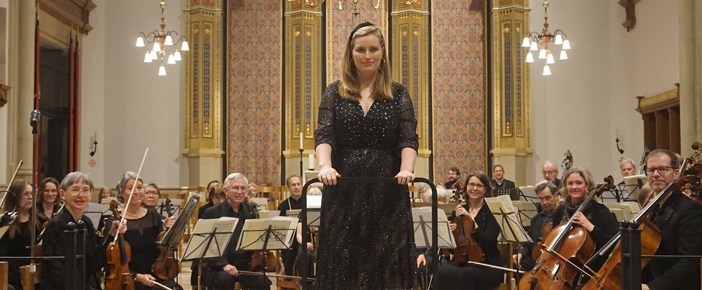
Prokofiev made three concert suites of his successful ballet Romeo & Juliet, the second of which is the most often performed. Containing six movements, it opens with the famous Dance of the Knights (known as The Montagues & Capulets in the suite) – and how refreshing to hear this in its proper context, rather than cueing up another episode of the BBC TV programme The Apprentice! The lower end of the orchestra was on fine form here, driving the music forward but never over-reaching, and Naomi Butcher (above) found just the right tempo. It was also heartening to hear the rich tones of Nicholas Hann’s tenor saxophone when the theme returned. Juliet as a Young Girl was next, taxing the strings with Prokofiev’s fiendishly difficult writing but drawing affectionate phrasing and a light touch nonetheless.
The heart of this performance lay in the two slow movements. Romeo and Juliet before parting featured a poignant flute solo from Lucy Freeman, before revealing Prokofiev’s rich orchestral palette. Ideally paced again by Butcher, the emotive phrasing brought out the best from the woodwind and brass, as well as the composer’s unique string colours. Romeo at Juliet’s grave, which closed out the suite, had an appropriately tragic undercurrent, deeply felt and lovingly phrased by the strings.
After the interval the Tonbridge Philharmonic Choir’s rehearsal pianist, Jong-Gyung Park (above), took a solo role for Rachmaninoff’s Piano Concerto no.2. As the detailed programme notes revealed, she has an illustrious background of worldwide musical experience, belying the modesty with which she took to the stage. This however was a commanding performance, Park taking the piece in her grip from those famous nine solo chords at the beginning. These were deliberately paced for dramatic effect, building the tension inexorably until the arrival of the strings who were ardent in their phrasing, the music surging forwards.
Technically Park was superb, but she was careful not to apply too much weight to her part or use the concerto as a vehicle for display, which so many pianists fall into the trap of doing. This ensured the passion essential to Rachmaninoff’s writing was always near the surface. Pianist and orchestra had a strong rapport, thanks to Naomi Butcher’s keen ear, and in the slow movement this yielded a soft-hearted performance that was not afraid to linger, making the most of the rich colours and some exquisitely phrased melodies from the pianist.
The transition to the finale was nicely done, rhythms stretched for a little while but settling into a punchy account that Park once again led from the front. This time a little acceleration went a long way, with pianist and orchestra quickly aligned. This was a tour de force performance from Jong-Gyung Park, whose love for this music shone through in an account of high class and fresh dexterity.
The Tonbridge Philharmonic will return to Tonbridge Parish Church for another imaginative program on Saturday 21 May, where music from Nielsen and Sibelius will be complemented by a rare performance of Nino Rota’s Double Bass Concerto. It promises to be an equally memorable night if the orchestra’s current form continues!
For further information on the Tonbridge Philharmonic Society clickhere
Domenico Scarlatti Sonata in C minor Kk56; Sonata in C Kk159 ‘La caccia’; Sonata in B minor Kk27; Sonata in B minor Kk87; Sonata in G Kk427 (exact dates unknown) Mozart Piano Sonata in A minor K310 (1778) Ravel Sonatine (1903-05) Prokofiev Piano Sonata no.3 in A minor Op.28 (1917)
Wigmore Hall, London, 24 January 2022
reviewed by Ben Hogwood from the online broadcast
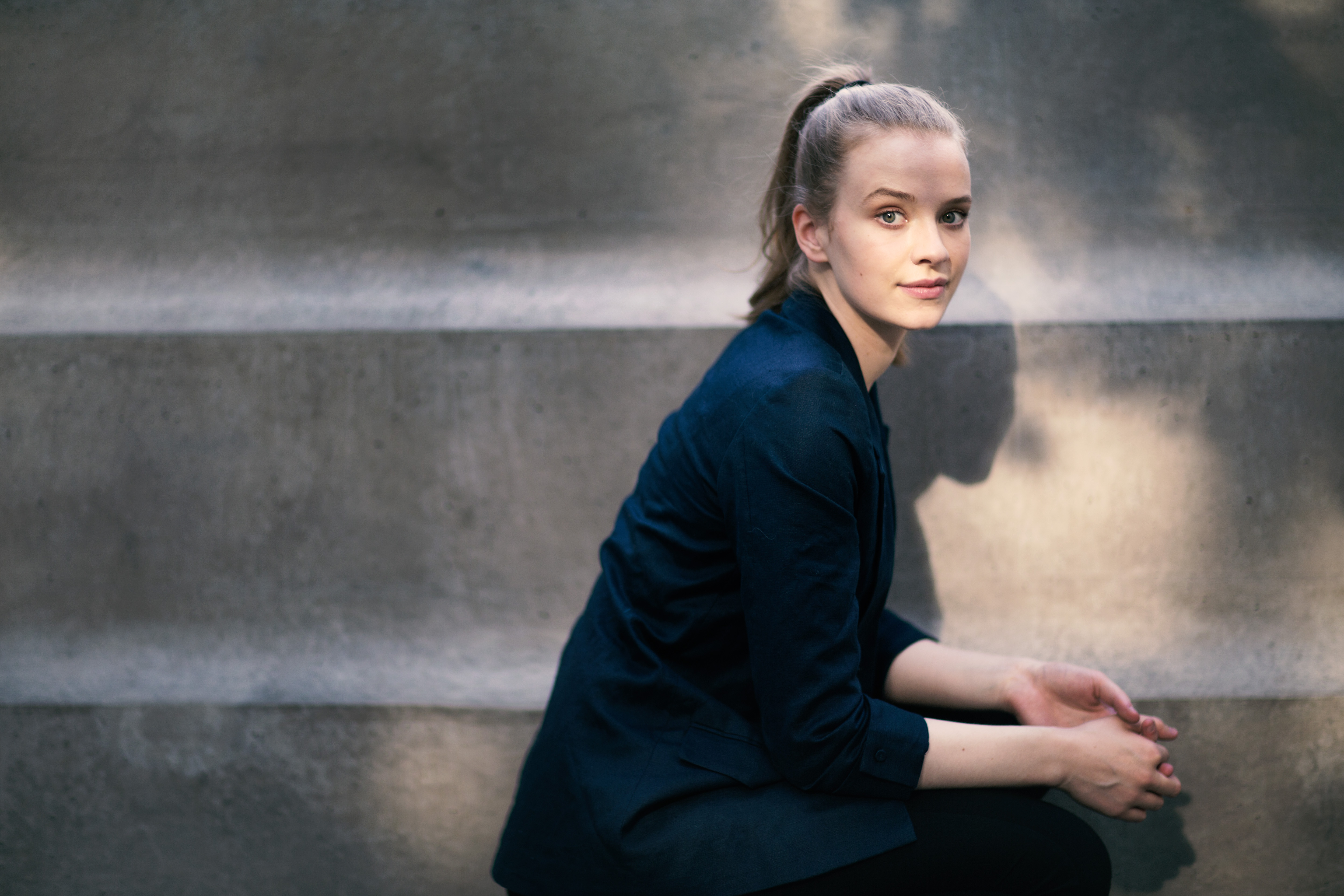
Seven sonatas and a sonatine in the space of an hour represents good value for a lunchtime concert – and even more so when the works in question span nearly two centuries. This was down to the clever programming of German pianist Elisabeth Brauß, a member of the BBC New Generations Scheme. She presented a potted history of the development of the sonata, moving as it did to the very centre of the concert platform by the twentieth century.
Brauß began her imaginatively thought-out hour with five sonatas by Domenico Scarlatti, just under 1% of the composer’s remarkable output in the form. Within his 550 or so published works there is an inexhaustible variety, and Brauß gave us some fine examples. Her crisp delivery of the C minor work was complemented by the playful ‘Caccia’ sonata, Scarlatti’s writing of parallel thirds tastefully ornamented in the right hand. Slipping into B minor, there was a more obvious Bach influence in an elegant performance of the Kk27 sonata, before a more reflective example in the same key, given plenty of room with ideally weighted inside parts. This thoughtful and emotive account was swept to one side by the showy G major sonata, chasing the clouds away.
Mozart‘s A minor sonata followed, a profound work written in the wake of the sudden illness and death of the composer’s mother Anna Maria in Paris, 1778. The principal phrase of the first movement is conspicuous for a ‘wrong’ note, an E flat played at the same time as an A minor chord, which can throw the listener. Brauß did well to give it the surprise factor, resulting in quite an unnerving and uncertain mood.
The second movement was initially calm, bringing out the singing style of Mozart’s marking of Andante cantabile con espressione rather beautifully. There was a refreshing lack of weight to this performance, the melodies floating on air, in contrast to a heavy-set middle section. The Presto finale, initially serious, brightened as the tonality moved into the major key, Brauß sensing hope in Mozart’s writing.
There was clarity in her Ravel, too, which found the right combination of technical flair and intimacy. Brauß portrayed the questioning nature of the first movement, just before its main theme returns and resolves. A limpid second movement was followed by a finale notable for its virtuosity – following the Animé marking – but which kept its conversational qualities.
Prokofiev’s Piano Sonata no.3 is a compressed firecracker, a work with plenty to say in its eight minutes. This performance was very impressive if holding back a little in the more raucous moments. Brauß was a more than capable guide to this impetuous piece, however, finding the heart of the adventurous coda, which sounds a lot newer than its 1917 composition date would suggest.
She clearly loves Prokofiev, as the Prelude in C major Op.12/7 made an ideal encore, bringing out the composer’s balletic side. There was less percussiveness in this lyrical account, notable for some lovely melodic phrasing.
Watch and listen
You can listen to the repertoire from this concert in choice recordings on the Spotify playlist below (Elisabeth has not yet recorded any of the pieces):