
In Concert – Silesian Quartet & Wojciech Świtała: Bacewicz, Weinberg & Zarębski

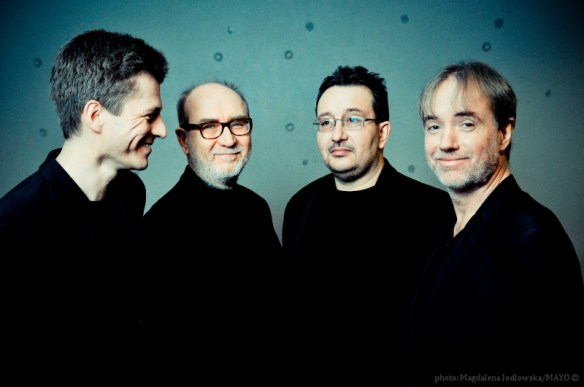
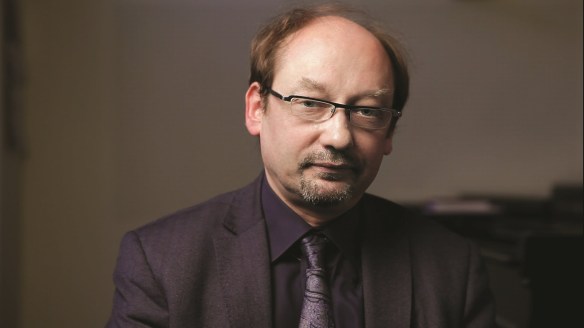
Wojciech Świtała (piano, below), Silesian Quartet [Szymon Krzeszowiec and Arkadiusz Kubica (violins), Łukasz Syrnicki (viola), Piotr Janosik (cello)]

Bacewicz String Quartet No. 4 (1951)
Weinberg String Quartet No. 3 in D minor, Op. 14 (1944)
Zarębski Piano Quintet in G minor, Op. 34 (1885)

Wigmore Hall, London
Monday 17 October 2022

Reviewed by Richard Whitehouse

In existence now for 44 years and with only a change of leader during that time, the Silesian Quartet has amassed a broad repertoire taking in the extent of the Austro-German tradition along with that of its Polish heritage – as was evident from this latest Wigmore Hall recital.

The rapid upsurge of interest in women composers has been of real benefit to those such as Grażyna Bacewicz, whose sizable output of essentially abstract music went too long under the radar and not least a minor masterpiece as her Fourth Quartet – its first prize at the Liège Competition in 1951 vindicated. Its three movements are dominated by the first of these – a sombre Adagio introduction as variously infiltrates the lively ensuing Allegro, such that the coda essentially becomes a stretto between such contrasted expression. The central Andante finds this composer at her most lyrical, with the ‘giocoso’ marking of the final Allegro not necessarily implying any lessening of formal and emotional focus, as this builds toward an impetuous conclusion that clinches the unorthodox if methodical design of the whole work.

The Silesian gave a superb account of a piece it knows well – having recorded all Bacewicz’s quartets – as it did of Mieczysław Weinberg’s Third Quartet. On a similar scale, this also has a similarly overarching intensity – not least when attacca markings between movements were scrupulously observed as to give the overall design its unity within diversity. The unchecked energy of the initial Presto is by no means offset by the bittersweet poise of the Andante – its taciturn unease continued in an Allegretto affording only the most tenuous, even provisional closure. One reason, surely, why the composer restructured this piece when recasting it more than three decades later as his Second Chamber Symphony, which is hardly to deny the sheer fascination of the music at a crucial stage on the way to Weinberg’s mastery of this medium.

Had he died before writing his last work, Juliusz Zarębski would barely have been a footnote in musical history. His Piano Quintet confirms an acute feeling for Lisztian harmony, allied to a commanding formal sense as should have been the springboard into an eventful maturity and is not so far behind those by Brahms, Dvořák and Franck in being a major contribution to its medium. The Silesian had the measure of the first movement’s quirky take on sonata form – its vividly contrasted ideas merged in a tensile development then varied reprise and dynamic coda. The Adagio frames its lilting central section with a melody of rapt fervency, as is itself framed by music of ‘Forest murmurs’ aura, while the Scherzo likewise frames its wistful trio with music of an intently rhythmic propulsion. The final Presto is essentially a cyclical reprise of earlier ideas as this picks up where its predecessor left off, before pursuing a sonata-rondo trajectory such as culminates in a fervent recollection of the work’s opening theme. That this piece remains the summa of Zarębski’s creativity does not lessen the extent of its attainment.

The Silesian and Wojciech Świtała had prepared no encore, instead reprising the final pages of the Zarębski to close this programme in fine style. It is part-way through a recorded cycle of Weinberg’s quartets, another of which will hopefully feature in a future Wigmore recital.

For more information on the performers, click on the names to visit the websites of the Silesian Quartet and Wojciech Świtała – and for more on the composers, click on the names of Juliusz Zarębski, Mieczysław Weinberg and Grażyna Bacewicz
Proms at … Cadogan Hall 7: Wojciech Świtała & the Silesian String Quartet play Weinberg & Bacewicz

Silesian String Quartet [(Szymon Krzeszowiec, Arkadiusz Kubica (violins), Łukasz Syrnicki (viola), Piotr Janosik (cello) (above)], Wojciech Świtała (piano, below)

Weinberg String Quartet no.7 (1959) (2:47 – 26:49 on the broadcast link below)

Bacewicz Piano Quintet no.1 (1952) (30:36 – 53:10)

Cadogan Hall, Monday 2 September 2019

Reviewed by Ben Hogwood

Photo credit Magdalena Jodłowska (Silesian String Quartet)

You can listen to this Prom on BBC Sounds here

For this listener at least, it has taken a while for the Proms At…Cadogan Hall theme to catch on this season. However the BBC’s traversal of 800 years of musical history has turned out to be both original and interesting, touching on areas of music not often heard or given top billing. By grouping these two anniversary composers together a cogent and thought provoking program was the result; a concert subdued in delivery but high on musical and emotional substance.

Both Polish composers featured are not thought of as front rank examples of their country’s classical music tradition, but on this evidence both should be brought forward. There are past reasons for that relative neglect, in the relative unavailability of Weinberg’s music to western ears, and the effective suppression of his and Grażyna Bacewicz’s music, but as classical music looks to remove boundaries and stereotypes, these are exactly the type of musical figures that should benefit from such a move.

We heard Weinberg first, and the seventh of his impressive output of seventeen string quartets (from 2:47 on the broadcast link above). It is perhaps the one that sails closest to the style of his friend and protector Shostakovich, especially in the second movement where it quotes from his String Quartet no.3. As the Adagio first movement (2:47 on the broadcast) shows, the two composers have much in common in mood if not execution. Weinberg’s bittersweet lyricism is to the fore here, the radiance of pure C major at the very beginning reminiscent of Shostakovich’s own first string quartet in the same key from 20 years later.

As the music progresses however there are more troubled offshoots and episodes, the players digging deeper and the music lost in thought. Weinberg does still keep his audience in mind of the brighter sound of the opening material, which returns at 8:18.

The second movement (marked Allegretto, 9:24) has shadowy outlines from the cello, the music again wary but prone to quick and nimble outbursts from second violin (the excellent Arkadiusz Kubica) – very much in the vein of a Shostakovich scherzo, but with less bite to its execution.

The third and final movement (15:24), a substantial set of 23 variations on a theme, feels like the emotional crux of the work, and was performed as such here by the Silesians. Passionate solos from first violinist Szymon Krzeszowiec and viola player Łukasz Syrnicki (an extended dialogue from 24:20) took place in the Adagio sections, and were complemented by some really concentrated and increasingly fraught quartet episodes in the Allegro, the melodies compressed and tense. In keeping with the movement’s arch structure this tension built towards the viola solo, which marked the passionate final section and a resolution in C major. The feeling was that of a battle won, but at a cost.

Bacewicz contributed two piano quintets to her sizeable chamber music output, and both are works of originality and style. While many piano-led works such as these go for volume and bluster in the keyboard part there is more poise and reserve here, the piano and strings complementing each other on an equal footing.

There is a light touch to the music too, especially in the dance music of the second movement. Before then the first movement (initially marked Moderato by the composer) sets a relatively austere scene, though the string glints at the edges. A faster central section hints at a dance and certainly gains more energy before falling back to the slower approach, albeit with more depth this time, certainly as performed here.

The second movement (marked Presto, 37:47) takes the Polish oberek dance as its inspiration, the forthright piano melody supported by lilting, syncopated strings before summoning itself for a dramatic finish. The slow movement (Grave, 42:09) is every bit as powerful, though here the steps are very slow and steady to a stern, full-bodied climax.

The finale (48:35) had great purpose and originality of texture, the quartet busying their musical arguments against an increasingly outspoken piano part. A set of quick fire exchanges and bustling figures among the strings were harnessed for a full bodied closing statement.

Both pieces were superbly played in this concert, the commitment of the Silesian String Quartet beyond contention – as was also the case for pianist Wojciech Świtała. If the music itself was a little straight faced, it was a timely reminder that only 80 years ago (to the week) the Second World War had begun. The music therefore served as a warning for lessons that appear not to have been heeded!

Listen

The music in this concert can be heard on Spotify below:

The Silesian String Quartet have also recorded a good deal of Weinberg’s chamber output. Here is a disc of the composer’s String Quartets nos. 9 & 10:

They have also recorded all seven string quartets by Bacewicz, in an award winning double album for Chandos which you can hear below: