
In concert – Simon Höfele, CBSO / Kevin John Edusei: Street Music – Stravinsky, Ellington, Zimmermann & Rota

Rota La Strada – Suite (1954, rev. 1966)
Zimmermann Trumpet Concerto ‘Nobody Knows de Trouble I See’ (1954)
Ellington (orch. Henderson) Harlem (1950-51)
Stravinsky Petrushka (1910-11, rev. 1947)

Simon Höfele (trumpet), City of Birmingham Symphony Orchestra / Kevin John Edusei

Symphony Hall, Birmingham
Thursday 1 December 2022

Reviewed by Richard Whitehouse

Tonight’s concert by the City of Birmingham Symphony Orchestra was one with a difference, Kevin John Edusei directing a programme which avoided the Austro-German mainstream with a vengeance as it surveyed music with a distinctly ‘alternative’ outlook.

Federico Fellini’s La Strada accords with the realism of post-war Italian film, yet its acutely emotional undertow makes it equally prophetic and Nino Rota’s score embodies both aspects with its heady dance-music but also a plangent inwardness in those passages for solo violin (eloquently rendered here by Philip Brett) where the tragic relationship between Gelsomina and Zampanò is made explicit. The suite Rota subsequently derived from the music’s later incarnation as a ballet remains among the most significant of his output for the concert hall.

While Rota looks to popular idioms, Bernd Alois Zimmermann utilizes jazz in his Trumpet Concerto, its (later appended) subtitle denoting the spiritual as underpins much of its content and comes to the fore at crucial junctures. The subtly varied orchestration – with saxophones, Hammond organ and ‘rhythm section’ featuring electric guitar – is complemented by that for the soloist with its range of mutes and a virtuosity new to the classical domain which Simon Höfele despatched with alacrity born of conviction. The respectively brooding and headlong initial sections created an expectancy fulfilled by a climactic episode which was taken a little too fast for its layering of jazz rhythms to come through unimpeded, though the final section lacked nothing in evocative power as it subsided edgily towards a close of muted anguish.

Duke Ellington’s Harlem may now have become relatively familiar in concert, but few such performances can have conveyed the sheer panache as was evident here. Edusei traversed the numerous brief sections of this ‘Tone Parallel’ (commissioned but never conducted by Arturo Toscanini) with innate appreciation of their musical as well as scenic potency that culminates with a rhythmic energy whose effect was undeniably visceral. A little audience participation, moreover, did not go amiss in the final pages where the orchestra duly gave its collective all.

From social, via racial and cultural to psychological alienation. Stravinsky may have intended Petrushka as a vehicle primarily for balletic or orchestral display, but the inner two of its four tableaux, defining the contrasting psyches of Petrushka and the Moor as they compete for the attentions of the Ballerina, provide acute character portraits delineated here with needle-sharp clarity (not least by pianist James Keefe – his crucial obligato contribution vividly embedded within the orchestral texture). Nor did the outer tableaux lack for atmosphere – the sights and sounds of St Petersburg’s Shrovetide Fair palpably in evidence, Edusei securing more poise and pathos than was usual from the relatively utilitarian orchestration as Stravinsky revised it. The closing stages of Petrushka’s death and apparition felt spine-tingling in their immediacy.

This resourceful reading concluded what is sure to prove a highlight of the orchestra’s current season. Other concerts might attract larger attendances, but the attentiveness of those younger listeners present confirmed this as precisely the kind of event the CBSO should be presenting.

You can read all about the 2022/23 season and book tickets at the CBSO website. Click on the artist names for more on Simon Höfele and Kevin John Edusei
Wigmore Mondays – Simon Höfele & Frank Dupree in 20th century works for trumpet and piano

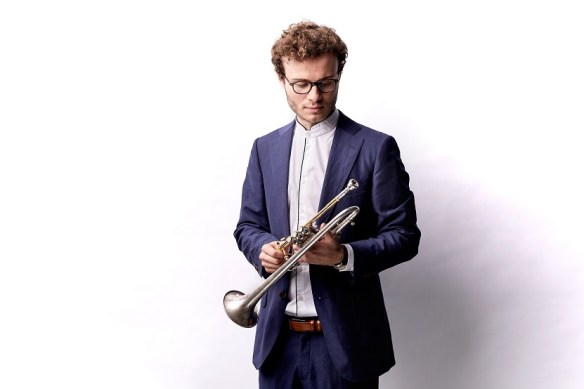
Simon Höfele (trumpet, above) & Frank Dupree (piano, below)

Enescu Légende (1906) (2:07-8:20)
Takemitsu Paths (In Memoriam Witold Lutoslawski) (1994) (8:39-14:48
Hindemith Trumpet Sonata (1939) (16:56-33:30)
Savard Morceau de Concours (1903) (35:20-41:05)
Gaubert Cantabile et scherzetto (1909) (41:33-46:20)
Charlier Solo de Concours (1900) 47:39-54:26)

Wigmore Hall, London
Monday 28 January 2019

To hear the BBC broadcast through BBC Sounds, please follow this link

Photo credits Sebastian Heck (Simon Höfele)

Commentary and Review by Ben Hogwood

There is more music for the combination of solo trumpet and piano than you might think – and how gratifying for the BBC New Generation Artist Simon Höfele to remind us of that on his debut at the Wigmore Hall. Forming a most impressive partnership with pianist Frank Dupree, he gave us four works from the first decade of the 20th century, three by composers new to Arcana pages – and a masterpiece of the century’s repertoire.

Initially playing a trumpet ‘in C’ (that is, calibrated to sit naturally in the key of C major), Höfele listened to Dupree solemnly intoning the opening chords of the Enescu Légende (from 2:07 on the enclosed BBC Sounds link). A competition piece written by the Romanian composer for the 1906 trumpet competition (concours) at the Paris Conservatoire, it begins in a deceptively languid mood, the trumpet low in its register, but soon begins to stir, Höfele hitting a faultless top ‘C’ around 5:50. Then the thoughtful mood returns, the trumpet using the mute at the very end.

From this soft dynamic comes the beginning of the next piece, Takemitsu’s Paths (8:39). The paths in question are very separate – soft, ruminative phrases using the mute, answered by much bolder and generally higher writing. The piece ascends to the relative heights, the piercing rasp of the mute-inflected phrase brings it towards earth, but it ultimately ends in mid-air contemplation.

Hindemith was an incredibly versatile composer, in his career writing sonatas for no fewer than 16 of the instruments of the orchestra. His Trumpet Sonata is one of the finest examples of this canon, and betrays its 1939 origins with frequent references to the actions of his ‘home’ country Germany. At this point the composer was an exile in Switzerland, and this work effectively shows both his horror and sorrow at the annex of Austria, the occupation of Czechoslovakia and ultimately the invasion of Poland.

Turning to a trumpet ‘in B flat’, Höfele leads a brisk and busy start (from 16:56), though signs of the composer’s tongue-in-cheek writing are never far from the surface, peeking through at 17:50. Once reasserted, however, the main thematic material is impossible to shift.

The second movement (22:26) has a spirit of soft-hearted lazy play about it initially, with light hearted piano comments (ideally voiced by Dupree here) that are punctuated by the trumpet. From 29:19, the last movement, the piano distractedly accompanies the long trumpet phrases in lamentation, using as their source a chorale. Then the music builds to a resentful peak before fading away.

Very little is known of the French composer Augustin Savard – though he did win the coveted Prix de Rome with his oratorio La Vision de Saül in 1886. This Morceau de Concours is a competition piece for the trumpet that shows an impressive grasp of the instrument, not to mention drama in the slow introduction (35:20). By 39:06 the music has worked its way round to a genial theme for the faster section, after which trumpet and piano enjoy some light hearted exchanges.

Philippe Gaubert’s Cantabile et scherzetto, published six years later, enjoys a similar profile. Gaubert’s output is mostly directed towards the flute, but he too wrote a competition piece with a serious introduction (41:33) and a playful counterpart (44:20), packed with repeated triplets.

For the Solo de Concours by Belgian composer Théo Charlier (47:39) a slow introduction is not necessary, the piano firmly setting the scene before the trumpet’s arrival. An attractive slower theme (50:15) gives the other side of the story. A poignant aside from the muted trumpet follows before all the shackles are cast off in the final section (52:44) Just occasionally here Höfele felt as though he was overreaching with some of the more complicated phrases, but this – as with all the other pieces – was brilliantly handled.

The encore was a great choice, a Song Without Words by Russian composer Sofia Gubaidulina (56:03-58:30), a solemn tune spiced with the odd ‘wrong’ note in the piano accompaniment, almost in the manner of Charles Ives.

Further listening

Simon Höfele and Frank Dupree have not yet recorded any of the repertoire performed in this concert. However the playlist below assembles the music in a number of different recordings, headed by Alison Balsom and Tom Poster in the Hindemith Trumpet Sonata:

Höfele does however have an extremely impressive disc of modern works in the bag, including music by HK Gruber, Takemitsu, Jolivet and Iain Hamilton:

Hindemith’s sonatas are intriguing pieces that combine flair and depth with concise writing structures. This disc, commonly linked by pianist Alexander Melnikov, is a winner: