In concert – Vilde Frang, CBSO Chorus and Orchestra / Mirga Gražinytė-Tyla – Elgar: Violin Concerto; The Panufniks & Schumann

Vilde Frang (violin), City of Birmingham Symphony Orchestra / Mirga Gražinytė-Tyla

Elgar Violin Concerto in B minor Op.61 (1909-10)
Andrzej & Roxanna Panufnik Five Polish Folk Songs (1940, rec. 1945, rev, 1959, orch. 2022) [CBSO Centenary Commission: World Premiere]
Schumann Symphony no.1 in B flat major Op.38 ‘Spring’ (1841)

Symphony Hall, Birmingham
Wednesday 8 March 2023

Reviewed by Richard Whitehouse

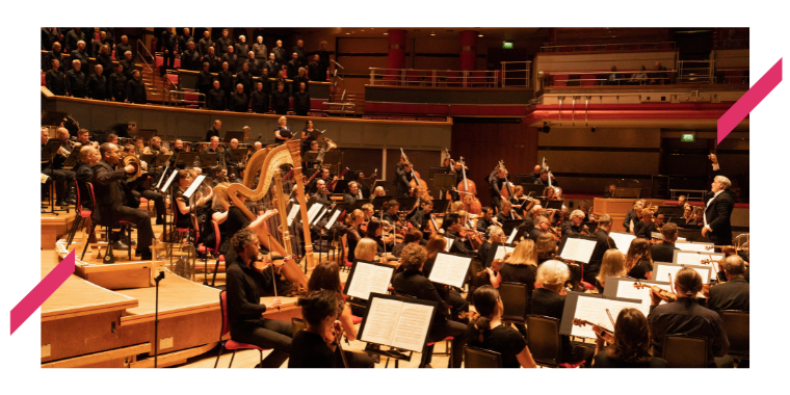
The relationship between Elgar and Schumann is a fascinating one, aspects of which surfaced in this coupling of the former’s Violin Concerto with the latter’s First Symphony; the City of Birmingham Symphony Orchestra joined by principal guest conductor Mirga Gražinytė-Tyla.

As with Sibelius not long before, Elgar was an able violinist whose solitary concerto for his instrument makes no technical concessions. There is also a symphonic dimension as seemed uppermost in the thoughts of Vilde Frang, her formidable technique (rightly) geared towards the work’s conveying emotions within an expansive while methodical framework. This was evident in the opening Allegro, the impetus of its initial tutti maintained by flexible handling of contrasted themes on to a climactic development whose intricacy was abetted by the clarity of the orchestral playing. Even finer was a central Andante whose main melodies, among the composer’s most affecting, were never indulged across the course of a movement where the expressive profile remains teasingly intangible right through to those soulful concluding bars.

Maybe the balance between display and insight slipped in the final Allegro molto, with Frang losing focus slightly during its more extrovert passages. Once the accompanied cadenza was underway, however, there was no doubting the rapport of soloist and orchestra as earlier ideas are recalled and speculatively transformed in what comes near to being a confession of intent. Nor was the sudden re-emergence of that earlier energy at all underplayed as the coda heads to its affirmative resolution: one whose conviction duly set the seal on a memorable reading.

After the interval, an additional item in the guise of Five Polish Folksongs written by Andrzej Panufnik after the outbreak of war, reconstructed at its close and orchestrated by his daughter Roxanna so the stark originals for children’s or female voices – with pairs of flutes, clarinets and bass clarinet – were cushioned by these richer orchestral textures. The CBSO Youth and Children’s choruses (finely prepared by Julian Wilkins) gave their all in what were appealing yet at times overly diffuse arrangements of settings that are best heard in their original guise.

So to Schumann’s ‘Spring’ Symphony, a piece whose encapsulating mid-Romantic sentiment seemed uppermost in MG-T’s insightful and, for the most part, convincing account. Evocative fanfares launched the opening Allegro in fine style, the often fitful momentum of its lengthy development vividly maintained through to a sparkling coda. Arguably too slow for its ‘song without words’ format, the Larghetto yet exuded undeniable pathos and made a spellbinding transition into the Scherzo. A (too?) leisurely take on its first trio took the listener unawares, but the winsome closing bars prepared well for a final Allegro whose animated progress was enlivened by delectable woodwind and horn playing on the way to its decisive close. Should MG-T return in future seasons, further Schumann symphonies would be more than welcome.

The CBSO returns next week in a rare UK hearing of Weinberg’s First Sinfonietta, alongside Schumann’s Piano Concerto with Kirill Gerstein and an extended selection from Prokofiev’s Romeo and Juliet – this latter and the Elgar also featuring in a Barbican concert the next day.

You can read all about the 2022/23 season and book tickets at the CBSO website, and click here for the Romeo and Juliet concert, repeated at the Barbican here. Click on the artist names for more on Vilde Frang and Mirga Gražinytė-Tyla, or composer Roxanna Panufnik
In concert – Alice Coote, Brenden Gunnell, Ashley Riches, CBSO Chorus and Orchestra / Ryan Wigglesworth – Elgar: The Dream of Gerontius

Alice Coote (mezzo-soprano), Brenden Gunnell (tenor), Ashley Riches (bass-baritone), CBSO Chorus, City of Birmingham Symphony Orchestra / Ryan Wigglesworth

Elgar The Dream of Gerontius Op.38 (1899-1900)

Symphony Hall, Birmingham
Thursday 2 March 2023

Reviewed by Richard Whitehouse

It may have had a disastrous premiere here in October 1900, but Birmingham has more than made amends to The Dream of Gerontius through many subsequent performances by the City of Birmingham Symphony Orchestra with conductors ranging from Vernon Handley to John Eliot Gardiner, two recordings from its previous chief conductors (Simon Rattle and Sakari Oramo), and tonight a reading which more than confirmed that this ground-breaking piece remains a touchstone of the choral repertoire almost 125 years on from that initial failure.

Although the innate Catholicism of John Henry Newman’s text no longer presents obstacles, the work’s technical demands remain considerable. Not least the characterizing of Gerontius himself, in which Brenden Gunnell acquitted himself with conviction – whether his wearied pallor then combative reckoning with Sancta fortis in Part One, or his wonderous musings then anguished acceptance of his purgatorial fate with Take me away in the longer second part. This role was consequently more believable and more empathetic because more human.

Not a little of that impression was abetted by Alice Coote’s contribution as the Angel. Less imperious than many predecessors (or contemporaries), the extent of her involvement only deepened as Part Two unfolded – the restraint, even reticence, of My work is done taking on heightened eloquence during There was a Mortal, before the Softly and gently of her farewell brought with it a transfiguring radiance as carried through to the close. This was a thoughtful and, increasingly, affecting approach to some of this work’s musical highpoints.

Nor should the contribution of Ashley Riches be underestimated, even though this is limited   to two, albeit crucial, appearances in either part. Arresting and suitably proclamatory at the Priest in Proficisere, anima Christiana, he brought unfailing gravity and powerfully wrought rhetoric to Angel of the Agony – the substance of whose musical presentation can be heard in Elgar’s music across the decades to come, whatever the extent to which the composer moved away from accepting those tenets of Catholic orthodoxy that are set out in Newman’s poem.

One of several works to which it has returned regularly over its half-century of existence, the CBSO Chorus brought its wealth of experience to a piece whose difficulties of ensemble and intonation cannot be gainsaid. From the halting appearances of the Assistants, through to the intricate polyphony of the Demons then cumulative grandeur of the Choir of Angelicals and distanced poise of the Souls in Purgatory, the authority of its contribution – prepared on this occasion by Julian Wilkins – added in no small measure to the impact of the performance.

As, of course, did that of the CBSO. Any regret over Andrew Davis’s indisposition was duly tempered by Ryan Wigglesworth’s tangible immersion and belief in this score – to which he brought a composer’s concern for clarity and cohesion, with a sense of pacing and a placing of its emotional climaxes which made appreciate anew the ambition and audacity of Elgar’s overall conception. Birmingham will doubtless hear many more performances of Gerontius over ensuing decades, with this one a marker as to what the work can and should represent.

You can read all about the 2022/23 season and book tickets at the CBSO website. Click on the artist names for more on Alice Coote, Brenden Gunnell, Ashley Riches and the CBSO Chorus. Meanwhile you can read more about Ryan Wigglesworth at two different locations – his composer profile from publisher Schott, and his conductor profile

In concert – Alice Coote, Philharmonia Orchestra / John Eliot Gardiner: The Sea and the Land: Mendelssohn, Elgar & Dvořák

Mendelssohn Hebrides Overture Op.26 ‘Fingal’s Cave’ (1830, rev. 1832)
Elgar Sea Pictures Op.37 (1899)
Dvořák Symphony no.5 in F major Op.75 (1875, rev. 1887)

Alice Coote (mezzo-soprano), Philharmonia Orchestra / John Eliot Gardiner

Royal Festival Hall, London
Thursday 16 February 2023

Reviewed by Ben Hogwood Picture credits – John Eliot Gardiner (c) Sim Canetty-Clarke; Alice Coote (c) Jiyang Chen

This was an ultimately invigorating concert, using a cleverly constructed programme to look at how composers respond to the earth itself.

We began off the west coast of Scotland, the Inner Hebrides to be exact – and the uninhabited island of Staffa. Here it was that Mendelssohn saw Fingal’s Cave (above) in the summer of 1829. His musical response has become one of the composer’s best-loved pieces, an early and remarkably vivid example of the symphonic poem. Under John Eliot Gardiner, the Philharmonia Orchestra recounted the scene with remarkable accuracy, capturing the unusual, organ-like appearance of the landmark as well as the sea spray crashing around it. Gardiner steered a sure-footed and clear course through the water, aided by a wonderful clarinet duet from Mark van de Wiel and Laurent Ben Slimane in the second theme.

Alice Coote (above) then joined the orchestra, transporting us to the rarefied waters of Elgar’s Sea Pictures, the mezzo-soprano bringing to life five carefully chosen gems that took the composer far from his desk in Malvern in 1899. It took a while for singer and orchestra to achieve the optimum balance, so the words on the screen above were helpful as Coote found her feet. She did so quickly, and the somnambulant atmosphere of Sea Slumber-Song was cast, the strings lapping at the edges of Coote’s beautifully placed words. As she grew into the role so the gently rocking In Capri was attractively weighted and subtly intense.

Sabbath Morning At Sea was solemn yet soon reached for the heights, Coote’s innate grasp of the text matched by Gardiner’s control and shaping of the melodic line from the orchestra. The celebrated Where Corals Lie was perhaps inevitably the highlight, but The Swimmer ran it close, running all the way to a richly coloured high register from the singer at the end. Support came from the depths, too, with Alistair Young’s sensitive contribution on the Royal Festival Hall organ one to savour.

We returned to land for Dvořák’s Symphony no.5, the work with which he ‘rebooted’ his career as an orchestral composer in 1887, his publisher having spotted an opportunity to re-promote a piece finished in 1875. In this concert the parallel with the seasons was irresistible, the symphony’s first movement in particular resembling the flourishing of flowers in spring. Fleet footed strings were complemented by fresh faced woodwind, headed by the burbling clarinets who shone once again in the opening theme.

The Fifth is a sunny work, sitting in the shadow of the last three symphonies (nos.7-9) where live performances are concerned. As this concert revealed, however, it is a descendant of Beethoven’s Pastoral symphony, a work with considerable depth of its own and many different orchestral colours in which to revel. After a vivacious first movement, where Dvořák’s themes were given the best possible chance to shine, the cellos took the lead in their burnished opening to the romantic slow movement. This serious, minor key theme – surprisingly similar to the main tune of the Mendelssohn – was supplemented by an attractive, triple-time dance in the major key.

The slow movement segued effortlessly into the Scherzo, where the flurry of violins conjured up a vision of dancers trying to find their feet on the floor. The give and take between orchestral sections was a delight both to hear and to watch, as it was in the finale. The material here turns a little sour initially, Dvořák struggling manfully to regain the positive demeanour of the first movement. In Gardiner’s hands this was a compelling argument, ultimately won with the help of the superb Philharmonia brass, trombones punching out their melodies to thrilling effect. Once the ‘home’ key was reached the winter storms retreated and we basked in glorious musical sunshine, capping a fine evening where spring really did seem within touching distance.

You can read all about the 2022/23 season and book tickets at the Philharmonia Orchestra website.

In concert – Zoë Beyers, English String Orchestra / Kenneth Woods – Journeys of Creation and Renewal: Vaughan Williams, Pritchard, David Matthews and Elgar

Vaughan Williams Fantasia on a Theme of Thomas Tallis (1910)
Pritchard Violin Concerto ‘Wall of Water’ (2014)
David Matthews Shiva Dances Op.160 (2021)
Elgar Introduction and Allegro Op.47 (1905)

Zoë Beyers (violin), English String Orchestra / Kenneth Woods

Holy Trinity Church, Hereford
Thursday 24 November 2022

Reviewed by Richard Whitehouse

Just a day after The Journey Home, the ESO reverted to its ‘String’ guise for this judiciously sequenced programme with two contrasted commissions framed by classics of the repertoire for string orchestra – these latter written not so far away from where this concert took place.

Acclaimed at its premiere in Gloucester Cathedral some 112 years ago, Vaughan Williams’s Fantasia on a Theme of Thomas Tallis has never been so popular as it has become this past decade. This performance did it justice – the placing of the ‘echo’ orchestra, behind the altar-screen in the imposing Victorian confines of Holy Trinity Church, abetting those antiphonal exchanges in the central section. Solo string quartet building steadily toward an impassioned culmination, from where Tallis’s theme is movingly recalled prior to the final evanescence.

Next came the welcome revival of an earlier ESO commission by Deborah Pritchard. Inspired by an eponymous series of paintings by Maggi Hambling, Wall of Water is a violin concerto which makes tangible reference to these 13 canvases as it unfolds. Their projection to the rear of the orchestra underlying a visceral as well as imagistic allure, even though the work itself is fully intelligible on its own terms – not least with a three-movement trajectory coalescing out of continuous 13 sections. Elements of Penderecki and Lutosławski can be discerned over its course, but a distinct and engaging personality is also in evidence along with a technical finesse with regard both to the solo writing and that for the strings. Zoë Beyers gave a superb account of a piece which seems sure to enter the repertoire of 21st-century violin concertos.

As too does Shiva Dances by David Matthews. The combination of string quartet and string orchestra is a potent one (see below), of which the composer has availed himself fully in this continuous sequence likely inspired as much in a description of Hindu god Shiva by Aldous Huxley as by Indian classical music. Proceeding from a slow introduction given piquancy by its modal intonations, the work comprises four dances which between them outline the four elements: an impetuous workout that represents ‘earth’, a quixotic interplay for soloists and ensemble that of ‘water’, the scherzo-like agility of ‘air’, then a lively waltz for ‘fire’ – this latter building to a forceful restatement of the opening theme, before the coda opens-out the overall expression such that what went before is rendered from a more ethereal perspective.

Kenneth Woods secured an engaging account of this appealing work, as he did of Elgar’s Introduction and Allegro that concluded the evening. As he pointed out, its main melody is a rare instance of this composer using an actual folksong, yet that never entails a lessening of formal intricacy in what becomes a latter-day recasting of the concerto grosso – reaching its emotional apex in a developmental fugue that bristles with technical challenges. A tough test for the London Symphony Orchestra, with whom Elgar enjoyed a productive association.

Suffice to add the ESO was equal to this task as in the sustained fervency of the final pages. It rounded off another worthwhile evening from this always enterprising ensemble. December brings the seasonal performance of Handel’s Messiah, with further concerts in the new year.

For more information on the artists in this concert, click on the links to read about Zoë Beyers, Kenneth Woods and the English Symphony Orchestra. For more on the composers, click on the names Deborah Pritchard and David Matthews

In concert – Kathryn Rudge, English Symphony Orchestra / Kenneth Woods – Across The Sea: Mendelssohn, Elcock, Britten & Elgar

Mendelssohn Calm Sea and Prosperous Voyage Op.27 (1828)
Elcock Wreck Op.10 (1998) [World Premiere]
Britten Four Sea Interludes from Peter Grimes Op.33a (1945)
Elgar Sea Pictures Op.37 (1899)

Kathryn Rudge (mezzo-soprano), English Symphony Orchestra / Kenneth Woods

Malvern Theatres, Great Malvern
Saturday 15 October 2022

Reviewed by Richard Whitehouse

This first full-length concert in the English Symphony Orchestra’s new season focussed on the sea in all its varied qualities, taking in four works whose encompassing a span of almost two centuries also identified crucial aesthetic differences as to what music itself can express.

Not least as it comes between masterpieces of the early Romantic era (A Midsummer Night’s Dream and The Hebrides), Mendelssohn’s Calm Sea and Prosperous Voyage has often been overlooked on its own merits. Yet this concert overture, as inspired by two of Goethe’s best- known poems, is a fine example of the still-teenage composer’s prowess – Kenneth Woods securing a rapt intensity in its introductory phase, then steering its characterful continuation through to a grand while not unduly bathetic peroration with the sea accorded the final word.

From here to Steve Elcock’s Wreck is to encounter more elemental, even existential forces – what the composer refers to as a ‘‘symphonic allegory’’ portraying a ship’s struggle against intemperate weather at sea. This unfolds as a constantly evolving design, juxtaposing music of unchecked aggression with that of fraught serenity, while highlighting Elcock’s mastery of large-scale formal and expressive contrasts, toward a seismic culmination whose gradual subsidence makes possible the sustained closing section. Here, off-stage mezzo sings in an invented (hence unknown) language what he describes as ‘‘a message of salvation beyond despair, of consolation beyond grief’’ but even this is tempered by encroaching doubt. The ESO gave its all in a piece as demonstrably commended itself to the appreciative audience.

Marine vignettes rather than epics came after the interval. Woods had an audible grasp of the diverse moods in the Four Sea Interludes that Britten drew from his opera Peter Grimes, but more notable was his successful segueing between them – the keening plangency of Dawn leading into the equivocal assurance of Sunday Morning, emergent tonal and emotional blur of Moonlight, then the visceral conflict of Storm with its yearning oasis of calm and brutal closing onslaught. A few failings of ensemble hardly offset the intent continuity of the whole.

The ESO previously recorded Elgar’s Sea Pictures in an arrangement with chorus by Donald Fraser, but it was good to hear this song-cycle as Elgar realized it for mezzo – not least when Kathryn Rudge (taking her customary place at front of stage) proved so eloquent an exponent. The troubled pathos drawn from Roden Nole’s Sea-Slumber-Song was duly complemented by the whimsical charm of Alice Elgar’s In Haven (Capri) – tension rising accordingly for Elizabeth Barrett Browning’s Sabbath Morning at Sea, its larger emotional contrasts well defined. Expressive nuances in Richard Garnett’s Where Corals Lie might have been more subtly pointed, but there was no doubt as to Rudge’s identification here or in Adam Lindsay Gordon’s The Swimmer with its anxious though determined progress to certain affirmation.

It set the seal on a rewarding programme and fine start to what will hopefully be an eventful season for the ESO. More concerts will be announced soon, but for now the recent release of Adrian Williams’s First Symphony (Nimbus NI6432) confirms this as an orchestra on a roll.

For more information on the artists in this concert, click on the links to read about Kathryn Rudge, Kenneth Woods and the English Symphony Orchestra. For more on composer Steve Elcock, click here