In concert – BBC Scottish SO / Ryan Wigglesworth @ BBC Proms: Birtwistle Earth Dances & Beethoven ‘Eroica’ Symphony

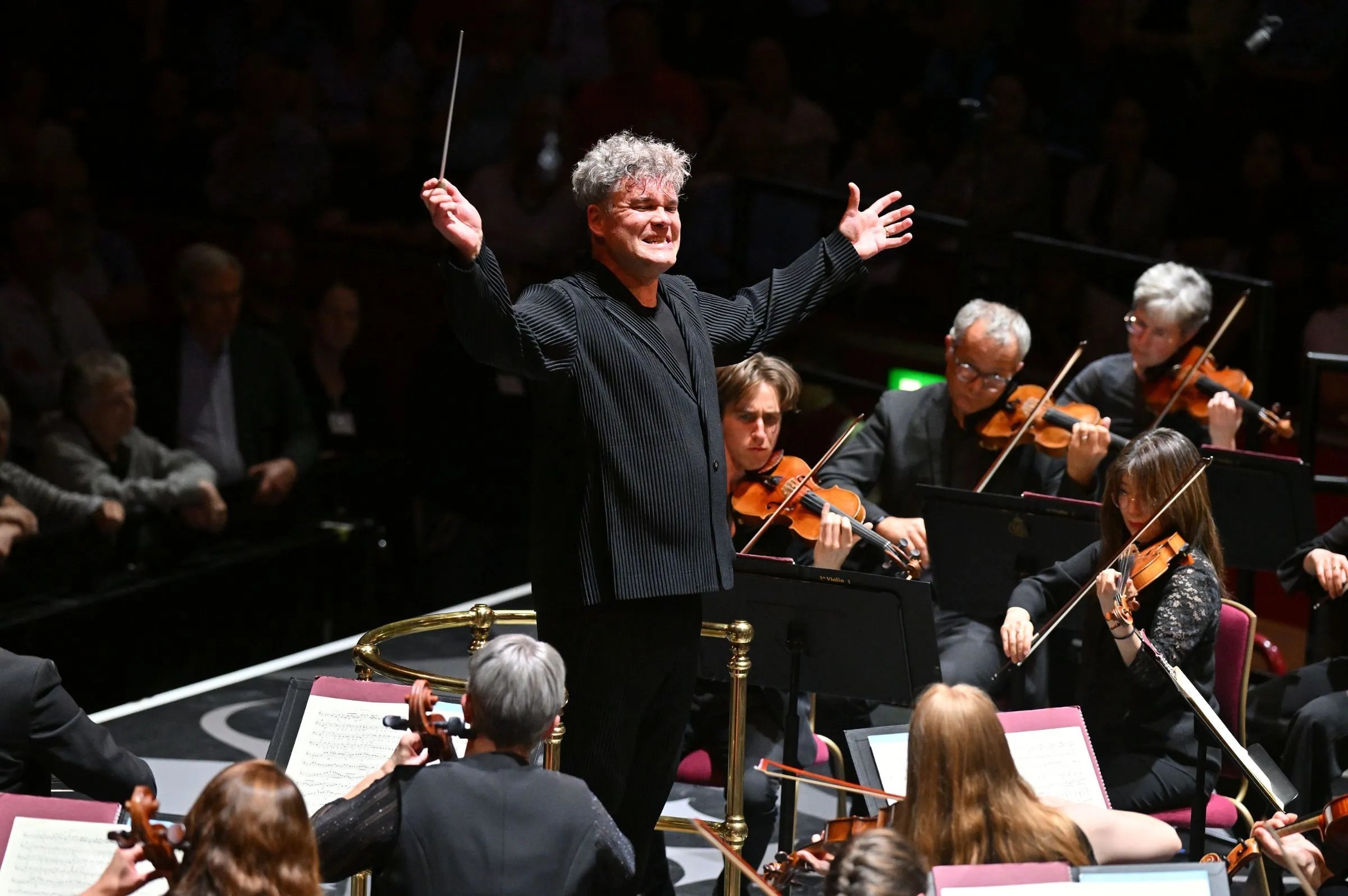
BBC Scottish Symphony Orchestra / Ryan Wigglesworth (above)

Birtwistle Earth Dances (1985-6)
Beethoven Symphony no.3 in E flat major Op.55 ‘Eroica’ (1802-4)

Royal Albert Hall, London
Monday 28 July 2025

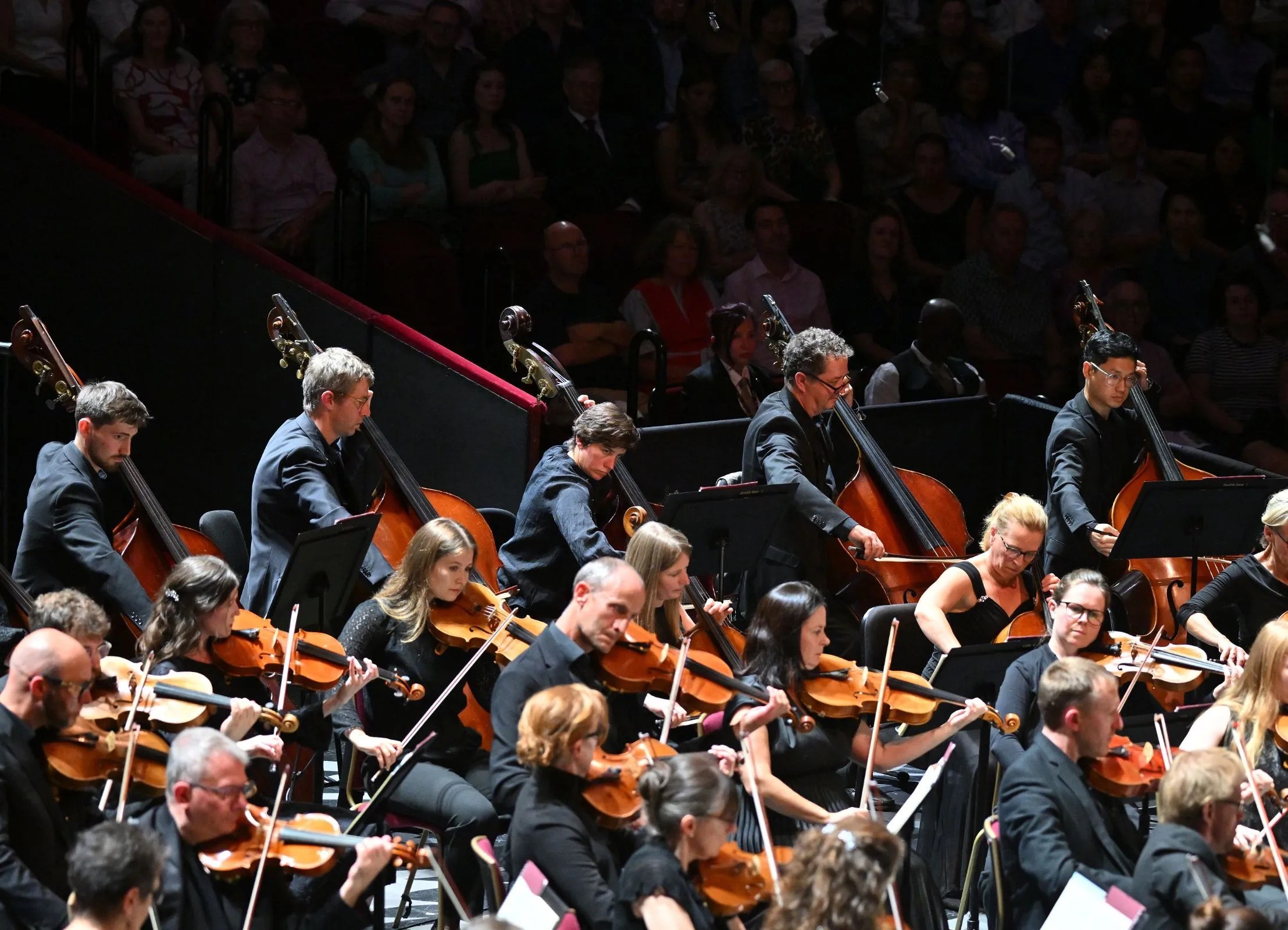
Reviewed by Richard Whitehouse Photos (c) BBC / Mark Allan

The emphasis on Ryan Wigglesworth’s activities may have changed during recent years, but this is certainly no hardship when his conducting of so broad a repertoire is as convincing as in his brace of concerts from this year’s Proms with the BBC Scottish Symphony Orchestra.

Performed three times at the Proms during its first decade of existence, Sir Harrison Birtwistle’s Earth Dances tonight reappeared after 31 years. Much may have changed over that time (not least the passing of the composer), though this piece remains a sure highpoint of his output as of British music from the period. Premiered by the late Peter Eötvös before being taken up by Christoph von Dohnányi, Peter Boulez and Simon Rattle, it has now found an ideal advocate in Wigglesworth who surely gets to the heart of this particular matter like no-one before him.

Essentially this is about finding a balance between the facets of its title – those often densely arrayed yet always sharply differentiated strata of the orchestral texture, allied to a rhythmic fluidity which keeps the music moving forward even during its most intricate passages. Not an easy task such as previous exponents have conveyed with varying degrees of success, but Wigglesworth had the work’s measure from the beginning. Rather than a set of more or less complex episodes that follow on sequentially, what came across was a series of interrelated layers fused in an audible process of continual variation – one, moreover, in constant motion to a point at which it did not so much end as disperse into silence. Almost four decades after its premiere, Earth Dances has now emerged as that multi-faceted masterpiece it always was.

It likely took at least as long for the Eroica to be rendered, rather than merely recognized, as such – which could be a factor with their being juxtaposed in the same concert. Whatever the case, it made for judicious programming with Wigglesworth and the BBCSSO rising to their comparable challenges. First performed at these concerts 129 years ago then subsequently in almost every season, Beethoven’s Third Symphony is a testing assignment conceptually and interpretatively – as was not shirked by this involving though often understated performance.

An understatement evident in the opening Allegro, with its subtly modified exposition repeat, the more involving for rendering this movement as an unbroken while cumulative continuity through to an affirmative if not wantonly triumphal coda. Even finer was the Marcia funèbre, its steady undertow flexible enough to accommodate the lilting counter-theme as well as the intensifying fugato at its centre on route to a conclusion the more affecting for its emotional deftness. Nor was this latter quality absent from a Scherzo whose shimmering outer sections found ideal contrast in the trio, its incisive part-writing for three horns buoyantly articulated. The Finale was all of a piece with what went before, its variations on the ‘Prometheus’ theme enticingly characterized but with a keen underlying momentum toward the joyous apotheosis. While no single account of so trail-blazing a work could possibly convey all the answers, this was impressive in its formal focus and expressive balance as saw the symphony whole. Make no mistake, Ryan Wigglesworth now numbers among the finest conductors of his generation.

You can listen back to this Prom concert on BBC Sounds until Sunday 12 October – or listen to recommended recordings of the two works from the Cleveland Orchestra on Tidal here

Click on the artist names to read more about the BBC Scottish Symphony Orchestra and their chief conductor Ryan Wigglesworth. Click also for more on the BBC Proms

Published post no.2,613 – Friday 1 August 2025

In appreciation – Amelia Freedman

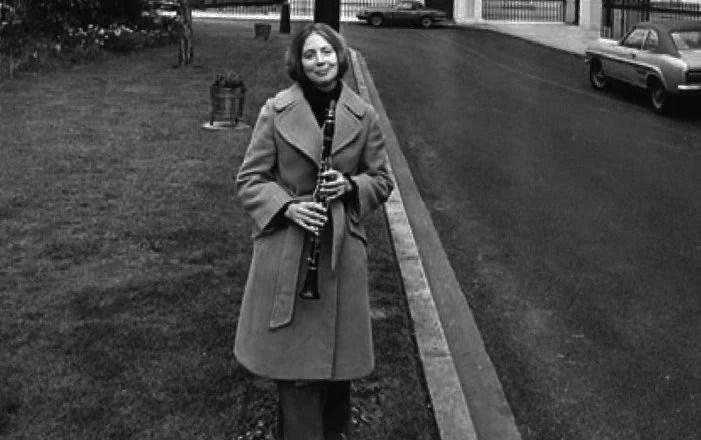
by Ben Hogwood Photo (c) The Nash Ensemble

Earlier this week we learned of the sad news of the death of Amelia Freedman. In a post on their website, the Nash Ensemble describe Amelia as their “creator and guiding light”, with “an extraordinary gift for creative programming that was appealing as well as broadening musical horizons”. In their obituary of Amelia, the Daily Telegraph described her as “the most influential British classical music impresario of the late 20th century”.

Her work bore fruit both in the concert hall, through the Nash Ensemble’s long relationship with Wigmore Hall that began in 1967, and a long recording career that is noted for its inventiveness and high performing standards.

The discography below is just a hint of what the Nash Ensemble have achieved on record, including a work by Amelia’s good friend, the late Sir Harrison Birtwistle, as well as the String Trio by David Matthews, which he dedicated to Freedman. Also included are a recent recording of Debussy’s Sonata for Flute, Viola and Harp, a pioneering recording of the attractive Nonet by Sir Arnold Bax, and the vibrant Piano Quartet in B flat major by Saint-Saëns:

Published post no.2,588 – Monday 7 July 2025

In appreciation – Elgar Howarth

by Ben Hogwood

This week we have learned the sad news of the death of Elgar Howarth at the age of 89.

Howarth was a master of many disciplines, as this detailed obituary on the brass website 4barsrest outlines. Not only was he an inspired trumpet player, especially with the Philip Jones Brass Ensemble, but he was a fine composer and arranger for brass band and an outstanding conductor of music old and new. As a regular conductor of the London Sinfonietta he forged close musical relationships begun in Manchester with the likes of Sir Harrison Birtwistle, Sir Peter Maxwell Davies and Alexander Goehr.

The playlist below attempts to recognise Howarth’s achievements as a player, arranger and conductor, with a wide range of music from Gibbons and Handel to Maxwell Davies and Birtwistle, via Sousa and Copland. Do give it a listen!

Published post no.2,413 – Wednesday 15 January 2025

In concert – Mimi Doulton, Thando Mjandana, BCMG: Songs at Day, Songs at Night

Mimi Doulton (soprano), Thando Mjandana (tenor), Birmingham Contemporary Music Group / Vimbayi Kaziboni

Kidane Primitive Blaze (2022)
Birtwistle Today Too (2004)
Birtwistle …when falling asleep (2018)
Kendall Tuxedo: Between Carnival and Lent (2022)
Kidane Cradle Song (2023) [BCMG Sound Investment commission: World premiere]
Anderson Mitternachtslied (2020) [UK premiere]
Anderson THUS (2023) [World premiere of final extended version]

Elgar Concert Hall, University of Birmingham
Wednesday 18 October 2023

Reviewed by Richard Whitehouse

A varied programme greeted attendees at tonight’s concert from Birmingham Contemporary Music Group (to be repeated in Bristol on October 29th), consisting largely of vocal pieces and directed with precise assurance by the highly regarded (justifiably so) Vimbayi Kaziboni.

Equally well regarded at present, Daniel Kidane (recently signed to Schott) was represented by two works – of which Primitive Blaze made for an effective curtain-raiser with its array of interlocking rhythmic patterns whose elaboration brought greater emphasis on a linear continuity in its wake. Both the electric guitar and tenor saxophone were prominent within this ensemble – the latter instrument emerging at the forefront in the final stages, when its plangent tones signified a closure as decisive formally as it sounded decidedly equivocal.

Next came settings by Harrison Birtwistle. To a text by the 18th-century Japanese poet Tanko (translated by Joel Hoffman), Today Too found tenor, flute and guitar evoking a twilit scene whose ominous elements are subsumed into an aura of shimmering, even sensuous stillness.

Rehearsal considerations necessitated exclusion of the David Harsent setting From Vanitas (hopefully not in Bristol) but not of …when falling asleep – Birtwistle’s last completed work, which intersperses lines by Rilke (translated by Jochen Voigt) with those by Swinburne in a sequence the more affecting for its understatement. Mimi Doulton brought a keen eloquence to the sung component, though Thando Mjandana seemed a little tentative with those spoken in parallel, and quite why the final lines of his contribution had been excluded was unclear.

Doulton returned for Between Carnival and Lent – one of Hannah Kendall’s ongoing Tuxedo series drawing on the art-print of that name by Jean-Michel Basquiat; abrupt juxtaposition of keening melisma with spoken polemic rather tending to cancel out each other as it proceeded.

Mjandana duly came into his own with the premiere of Cradle Song, Kidane’s setting of verse from the poem by Blake, though an evident desire to avoid the winsomeness associated with ‘innocence’ led to a highly rhetorical vocal line surely at odds with the semantics of this text.

The evening closed with two settings by Julian Anderson, both from his song-cycle In statu nascendi and drawing on a linguistic variety of verse in the context of an ensemble similar in line-up while not in usage to that of Schoenberg’s Pierrot Lunaire. Nietzsche (in the original German) was the basis for Mitternachtslied, familiar lines here exuding an anguished elation wholly different from that encountered in Mahler or Delius. Longfellow at his most visionary was the starting-point for THUS, building gradually from speculative beginnings towards a climactic section whose visceral impact felt less a setting than an intuitive riposte to its text. This premiere of the ‘final extended version’ drew a forceful though slightly self-conscious response from Doulton, in what seems the likely culmination of the song-cycle in question.

It certainly brought to a striking close a programme whose relative short measure was more than outweighed by its variety or its intrinsic interest. Hopefully those who hear it in Bristol will be equally responsive to its enticements as those who were present at Elgar Concert Hall.

For ticket information on the forthcoming Bristol concert on Sunday 29 October, click here, and click here for more information on the Birmingham Contemporary Music Group. Click on the artist names for more information on Vimbayi Kaziboni, Mimi Doulton and Thando Mjandana, and on the composer names for more on Julian Anderson, Harrison Birtwistle, Hannah Kendall and Daniel Kidane

Published post no.1,986 – Sunday 22 October 2023

In appreciation – BBC Singers

by Ben Hogwood

Yesterday we learned of the almost incomprehensible decision by the BBC that they were planning to close the BBC Singers. The choir is one of the leading ensembles of its type in the UK – if not the leading example – and have been responsible for many important premieres and landmark concerts over their 99-year existence.

Only in 2020 they were on stage as the Proms concerts returned, with a memorable performance of Eric Whitacre‘s Sleep, while if you want proof of their versatility from this year, watch this video of an arrangement of ABBA‘s Little Things:

The Spotify playlist below celebrates just some of the recordings made by the BBC Singers, in the hope that they will somehow be able to continue their invaluable service to British music. Included are shorter works by John McCabe, Sir Michael Tippett, Elizabeth Maconchy and Diana Burrell, alongside excerpts from Mozart’s Requiem, under Jane Glover, Janáček’s The Excursions Of Mr. Brouček, in a Proms performance under Jiří Bělohlávek, and the same forces at work in Smetana’s large scale opera Dalibor.

Finally the Singers can be heard in the striking Moth Requiem by Sir Harrison Birtwistle, which they premiered at the Proms in 2013.

If you do listen, please also make sure you sign the petition calling for the BBC to reconsider their decision,