The Gould Piano Trio play Schubert at the Wigmore Hall
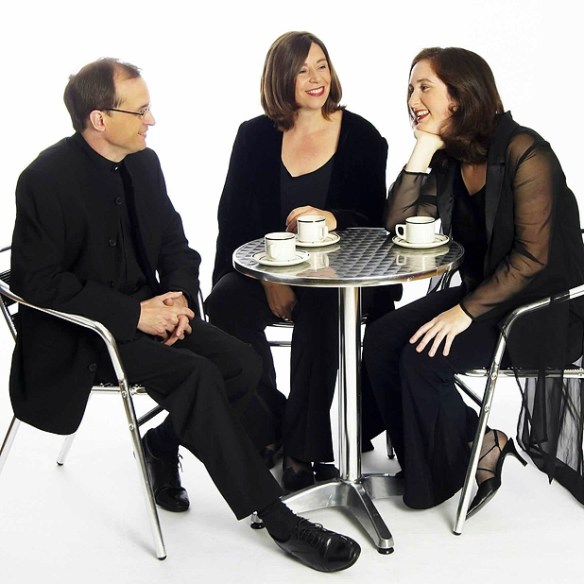
The Gould Piano Trio (Lucy Gould (violin), Alice Neary (cello), Benjamin Frith (piano) – Wigmore Hall, London, live on BBC Radio 3, 15 June 2015
Listening link (opens in a new window):
http://www.bbc.co.uk/programmes/b05y61y9
on the iPlayer until 15 July
Spotify
In case you cannot hear the broadcast, I have put together a Spotify playlist of most of the music in this concert, including recordings the artists have made where possible. The playlist can be found here:
Meanwhile clips of the Gould Piano Trio playing the music of York Bowen on a recent release for Chandos can be found here
What’s the music?
York Bowen: Rhapsody Trio (1926) (13 minutes)
Schubert: Piano Trio no.1 (1827) (40 minutes)
What about the music?
A nicely balanced hour of chamber music, with one classic of the piano trio repertoire complemented by a very little-known work.
That said, the music of York Bowen has received a lot of exposure of late – too much, some would say! At its best though Bowen’s writing shows that his high regard from composers such as Camille Saint-Saëns was not misplaced. It is chamber music that seems to be the most consistent part of his output. This Rhapsody Trio – written in a single movement format popular with English composers in the early decades of the twentieth century – was premiered at the Savoy Hotel early in 1926 at the annual dinner of the Federation of British Music Industries.
Schubert’s two big works for piano trio are justly celebrated, being two of the best and most substantial pieces for the form. The first was written a year before the composer’s death, for the same trio that gave the first performance of Beethoven’s Archduke piano trio. Incidentally that work is set in the same key, B flat major, leading to the drawing of similarities between the two. The works are similar length, but Schubert imposes his own distinctive style here, writing music that seems on the face of it to be very optimistic – but which can on closer inspection have a few worrisome moments. There is no shortage of tunes, though, and in the slow movement especially Schubert brings his song-writing prowess to bear in some beautifully written duet work for violin and cello above the piano.
Performance verdict
Watching this performance from The Gould Trio it was immediately clear just how much enjoyment they took from the music. The Schubert was full of sleights of humour but was also very detailed, and pianist Benjamin Frith demonstrated an uncanny instinct for knowing when to hold back slightly in a phrase, or when to push on.
The first movement emphasised how gracefully Schubert writes for strings, even in the midst of a lot of bluster, while the song-based second movement lived up to its billing. The ‘Scherzo’ was witty and took time over the longer notes of his contrasting ‘trio’ section, while as the curious last movement wended its way through all sorts of different keys the trio always had a firm hand on the tiller.
Meanwhile the Bowen was given the conviction and passion his music needs, emerging as a really fine piece of music. The end in particular was extremely well done, thoughtful but holding the audience in the palm of its hand.
What should I listen out for?
Bowen
2:23 – the music begins as though emerging from a dream into the morning light. Held notes from the strings and some lazy thoughts from the piano are initially quite unfocused, but gradually the trio find their footing and a bold, louder passage ensues. At 4:34 a fetching melody can be heard on violin and cello in unison.
The music gradually picks up speed, the instruments now a lot more independent and the piano part more demanding. Although the comparisons are often between Bowen and Rachmaninov, I find the appealing unison passage from 9:30 to be like Fauré.
After another passionate section the music seems to be spent, but Bowen brings out a really atmospheric and rather affecting ending from around 14:00 onwards, all three instruments seemingly lost in thought.
Schubert
17:55 – Few chamber works begin with this much positivity! Here the Gould Piano Trio are at pains to stress this music can also be graceful – a lot of trios give the opening of the first movement too much oomph. Here though the tune shines through, and is nicely articulated by pianist Benjamin Frith at 18:49.
19:49 – Schubert’s light and songful second main tune appears on the cello. The trio repeat the first section of this movement at 21:49.
25:35 – Schubert now takes the music further from home, moving through a number of different keys as the main tune gets distorted and more worked up. Eventually this leads back to ‘home’, and the main tune in its original state, at 29:01, from the piano with soft accompaniment. Then at around 31:40 the music pulls back, leading through to an emphatic finish at 32:46.
33:12 – the second movement – marked Andante (at a walking pace) – begins with a cello solo and soft piano accompaniment. The cello is soon joined by the violin with the same melody. The atmosphere is relaxed and nocturnal. However there are shadows that occasionally fall over the music. A good example is at 36:11, where a minor chord introduces a much colder edge. Everything is suddenly less certain, and Schubert alternates between these moods – mostly touching on the positive, and especially so as the movement subsides to a gentle close (from 42:20)
42:55 – the third movement begins. This is a ‘Scherzo’ (normally a jokey kind of movement) and it begins here with an innocent sounding melody. Then Schubert develops a kind of melodic cell that gets passed between the three instruments. The humour – exploited by The Gould Trio – comes mostly in the stop-start nature of the music. The trio section – usually a contrast – begins at 46:14 and is graceful, with long notes in the strings. The scherzo section returns at 48:05.
50:09 – the last movement begins with a sweet tune from the violin, then moves onto a more obviously dance-based second tune (50:49) Schubert then takes the music on a tour of some pretty distant tonal centres, setting his tunes in increasingly playful formats but keeping in the spirit of the dance. Then as the end approaches Schubert keeps pretending to finish before moving off in contrary directions…until he finally does at 59:02, setting off on a quick coda.
Further listening
Two bits of further listening for you this week – if you particularly enjoyed the Schubert, then The Gould Trio have a recording of the second piano trio made at the Wigmore Hall. It can be heard on Spotify below, occupying the last four tracks:
Meanwhile the Gould Piano Trio’s most recent recording, to be reviewed shortly on Arcana, is a fascinating collection of works for piano trio by three British composers – Sir Peter Maxwell Davies, the recently knighted Sir James MacMillan and Sally Beamish. That disc can be heard on the Spotify link below:
For more concerts click here


 Arcana.fm