Live review – Soloists, CBSO and Chorus / Kazuki Yamada – Mendelssohn’s Elijah

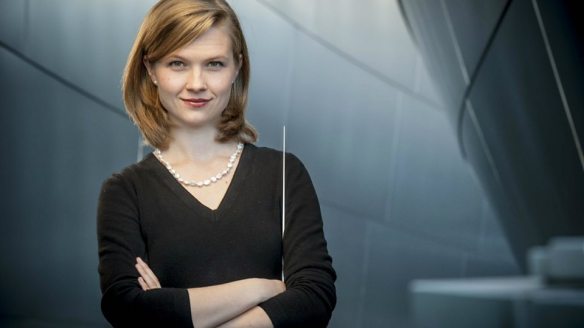
Keri Fuge (soprano), Karen Cargill (mezzo-soprano), Robert Murray (tenor), Matthew Brook (baritone), CBSO Chorus, City of Birmingham Symphony Orchestra / Kazuki Yamada (above)

Symphony Hall, Birmingham
Thursday 7 November 2019

Mendelssohn
Elijah Op.70 (1846)

Written by Richard Whitehouse

Although 173 years have passed since it first echoed around the Town Hall, Mendelssohn’s oratorio Elijah remains synonymous with Birmingham’s cultural tradition. Performances may be fewer than in its 19th-century heyday but there have been memorable ones – not least that in 1989 with Raphael Frühbeck de Burgos, for whom this piece was a speciality – and tonight saw a memorable account by the City of Birmingham Symphony Orchestra‘s principal guest conductor Kazuki Yamada, who duly banished any notions of this being a mid-Victorian period piece.

Whatever his failings on a broader aesthetic level, Mendelssohn was nothing if not creatively pragmatic when it came to a big occasion, and Elijah accordingly fulfilled its remit. Whereas the composer’s earlier oratorio St Paul had given notice of his abiding interest in the Passions of Bach, here he drew on the exemplar of those biblical epics through which Handel shaped English musical taste over the ensuing 150 years; enhanced by the rhythmic poise of Mozart and the harmonic subtleties of Beethoven to result in music wholly representative of its era.

Structured in two parts of almost equal duration, Elijah charts the trials of its eponymous hero as he draws the Israelites away from the pagan enticements of Baal and back to the true faith before himself ascending on a fiery chariot to Heaven. Julius Schubring‘s text (as sung in the idiomatic translation by William Bartholomew) fashions out of Kings and associated biblical sources a framework whose emotional rhetoric is balanced by a keen underlying momentum and unfailing sense of when to open-out the narrative to allow for more intimate expression.

The score implies eight soloists, but the four on hand (the brief role of ‘The Boy’ affectingly taken by chorus soprano Ella McNamee) proved more than able. As Elijah, Matthew Brook conveyed the anguish and the ecstasy of his part with unwavering assurance, while Robert Murray overcame initial strain to give commanding portrayals of his advocate Obadiah and detractor Ahab. Keri Fuge brought due pathos to the Widow, with Karen Cargill eloquent as the Angel – having stolen the show as the Queen who vents her wrath in unequivocal terms.

As with most of its forerunners, of course, Elijah is defined by a choral contribution in which the CBSO Chorus was not found wanting. Having recently sung the work with Yamada (and these soloists) in Monte Carlo, it conveyed the anger and supplication of the forsaken People with audible conviction, while being no less assured in those intricate choral items by which Mendelssohn frames and punctuates the drama. If choral numbers were appreciably less than the composer might have expected, then this was undoubtedly a case of less equalling more.

Neither should there have been any surprise as to the degree of Yamada’s identity with this music. Japan has produced notable exponents of Mendelssohn’s oratorios, with the present conductor evidently following in their wake. If those choruses ending each half summoned not quite the intensity evinced by Frühbeck all those years ago, the clarity and incisiveness he drew from both chorus and orchestra was hardly to be gainsaid – so setting the seal on a memorable reading of a work sure to wear its Birmingham credentials well into the future.

Listen

(Ben Hogwood writes…) Among the many available versions of Mendelssohn’s great oratorio, sadly none of these appear to yet include the City of Birmingham Symphony Orchestra – though one wonders if an extension to their Mendelssohn in Birmingham series will be forthcoming under Edward Gardner.

Spotify does however have a recent recording of Elijah from the Gabrieli Consort & Players under the direction of Paul McCreesh, with Robert Murray once again in the roles of Obadiah and Ahab. The organ itself was recorded in Birmingham Town Hall:
Live review – Renaud Capuçon, CBSO / Anja Bihlmaier: Dvořák, Ravel, Chausson & Bizet

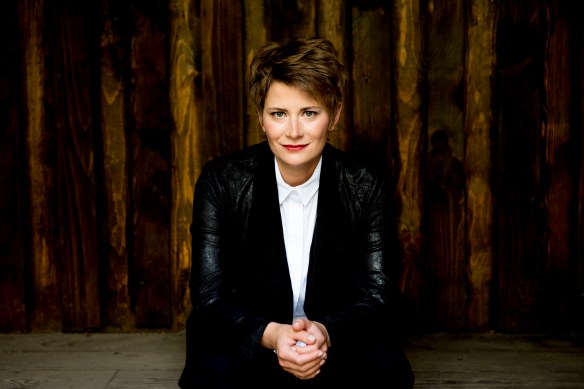
Renaud Capuçon (violin), City of Birmingham Symphony Orchestra / Anja Bihlmaier

Symphony Hall, Birmingham
Wednesday 30 October 2019 (2.15pm)

Bizet arr. Hoffman Carmen Suite no.2 (1887)
Chausson Poeme Op.25 (1896)
Ravel Tzigane (1924)
Dvořák Symphony no.7 in D minor Op.70 (1885)

Written by Richard Whitehouse

This afternoon concert by the City of Birmingham Symphony Orchestra brought a welcome appearance from German conductor Anja Bihlmaier, presiding over an unlikely yet appealing programme as juxtaposed French and Russian music of the late 19th and early 20th centuries.

Bizet‘s Carmen has maintained its hold on the operatic repertoire such that individual items are seldom encountered in concert other than as encores. As arranged by Fritz Hoffmann, this Second Suite astutely alternates entr’actes with vocal numbers. Thus the purposeful Marche des contrebandiers (akin to an offcut from Elgar’s Wand of Youth) precedes the smouldering Habanera, then a Nocturne which is Micaela’s third act aria with its vocal line transferred to violin and soulfully rendered by guest leader Tamas Kocsis. That of the evergreen Chanson du toreador is similarly heard on trumpet, which instrument is duly partnered by flutes in the infectious La garde montante, before wind instruments variously come to the fore during the Danse boheme which rounded off the present selection in appropriately exhilarating fashion.

Renaud Capuçon then joined the orchestra for an unlikely coupling of concertante pieces that is highly effective in concert. It may have been inspired by a Turgenev story, but Chausson‘s Poème is an autonomous entity whose rhapsodic impulses are balanced by formal rigour and an organic evolution as elides between the introspective and ecstatic – a trajectory conveyed with due eloquence by Capuçon, his fastidious tonal shading deftly reinforced by Bihlmaier’s nuanced direction. What is so often an elusive work left a powerful and enduring impression.

As, albeit in its rather more demonstrative way, did Ravel‘s Tzigane. Effectively the result of a bet with violinist Jelly d’Aranyi that this composer could come up with a rhapsody inspired by Hungarian gypsy music, the piece wears its Lisztian antecedents lightly while pointing the way toward the similarly conceived rhapsodies of Bartók. Capuçon teased out the high-drama of its unaccompanied initial section, then – with harpist Alma Klemm – made a breath-taking transition into its heady medley of gypsy-inflected themes prior to the rousing final flourish.

After the interval, Dvořák’s Seventh Symphony came almost as a corrective in its seriousness of purpose and powerful formal logic. Bihlmaier directed a performance as left no doubt as to such qualities, at its best in a thoughtful while never staid account of the slow movement – its brief yet elated climax ideally judged – then a scherzo whose underlying furiant rhythm was suffused with Brahmsian trenchancy (one reason this piece displeased the anti-Dvořák faction decades hence). Not that there was much lacking with the outer movements, though the coda of the initial Allegro was a little too deadpan for its ominousness fully to register, and that of the finale felt too reined-in emotionally; those granitic cadential chords marginally failing to clinch what is surely the most fatalistic of any major-key ending in the symphonic repertoire.

Even so, this was a finely realized account of a work as can all too often misfire. Bihlmaier will hopefully return before long: next week, the CBSO’s principal guest conductor Kazuki Yamada directs a performance of Mendelssohn‘s Elijah, premiered in this city 173 years ago.

Live review – Lucy Crowe, Karen Cargill, CBSO / Mirga Gražinytė-Tyla: Mahler Symphony no.2

Lucy Crowe (soprano), Karen Cargill (mezzo-soprano), CBSO Chorus,
City of Birmingham Symphony OrchestraMirga Gražinytė-Tyla (above)

Symphony Hall, Birmingham
Thursday 13 June 2019

Mahler
Symphony No. 2 in C minor, ‘Resurrection’ (1888-95)

Written by Richard Whitehouse

Almost 46 years since this orchestra first played it, then 39 years since Sir Simon Rattle made it his mission-statement, Mahler’s Resurrection is one of those pieces which constitutes a ‘rite of passage’ for conductors at the helm of the City of Birmingham Symphony. Tonight it was the turn of Mirga Gražinytė-Tyla – who, coming towards the end of her third season as music director of this orchestra, presided over a reading which assuredly had the measure of a work that, over recent decades, has too often felt in danger of becoming a classy lifestyle accessory.

If there was anything at all lacking (aside from a handful of imprecisions as would only have surprised those drawn to this music for its showpiece potential), it was of the piece evolving as a cumulative and inevitable unity. As often, the first movement brought most reservations – Gražinytė-Tyla’s handling of its long-term momentum being slightly less convincing than her characterization of its individual components; though at its best, as in her easing into the ruminative second subject or her sustaining of tension going from the eruptive climax of the development into the reprise, this was highly impressive. Mahler seldom approached sonata design other than obliquely, and the deadpan fatalism conjured from its final pages suggests this conductor already has the measure of its expressive range if not yet its formal cohesion.

Coming after a judicious pause, there was little to fault in the Andante – its lilting main theme as felicitous as the counter melody with which it finds common cause, and with the animated secondary theme sounding suitably crepuscular. More unexpected was the scherzo, exuding a suave and even phlegmatic air as Gražinytė-Tyla hears it – though few could have objected to the aching nostalgia of its trio, even if tempo elisions during its final stages were just a touch awkward. Karen Cargill (left) then brought out the tenderness and intimacy of the Urlicht setting.

It was in the epic expanse of the finale, however, that this performance readily came into its own. Launched with explosive intent, its starkly contrasted constituents were drawn together so that the sense of a steadily evolving whole was never in doubt. Such as the baleful chorale passage and the ‘last judgement’ frenzy which duly parodies it were judiciously realized, as was the contribution of offstage brass and percussion in opening-out its emotional remit on the way to the (partial) setting of Friedrich Klopstock’s Resurrection Ode which forms the culmination.

Tellingly, Gražinytė-Tyla had the chorus remain seated for most of its length – building gradually but intently towards its blazing affirmation of the beyond. Lucy Crowe (left) was a little overwrought in her initial entries, while joining ecstatically with Cargill in their subsequent duet, yet it was the CBSO Chorus (who must have sung this music more often than almost any other such group) that ensured a truly blazing culmination; after which, the brief orchestral postlude unfolded swiftly and headily toward those majestic closing chords.

Eschewing bathos, and shorn of any tendency to grandstanding, this was a powerful end to what is an impressive interpretation in the making, besides confirming the rapport between orchestra and conductor that is audibly on the incline as the CBSO approaches its centenary.

Further listening

You can listen to the City of Birmingham Symphony Orchestra‘s recording of the Resurrection Symphony with Sir Simon Rattle on Spotify below:

Live review – CBSO / Mirga Gražinytė-Tyla: Honegger, Ravel & Brahms Second Symphony

City of Birmingham Symphony OrchestraMirga Gražinytė-Tyla (above)

Symphony Hall, Birmingham
Friday 31 May 2019

Honegger Pastorale d’été (1920)
Ravel Introduction and Allegro (1905); Le tombeau de Couperin (1919)
Brahms Symphony no.2 in D major Op.73 (1877)

Written by Richard Whitehouse

Back from their extensive European tour, the City of Birmingham Symphony Orchestra and their music director Mirga Gražinytė-Tyla returned to home-base with this arresting programme of early 20th-century French music and a classic of the Austro-German symphonic repertoire.

Most understated among curtain-raisers, Honegger’s Pastorale d’été is always a pleasure to encounter and this account had its measure – whether in the evanescent outer sections with their intangible aura, or livelier central episode with its fleeting allusions to Swiss folksong. Gražinytė-Tyla has spoken of her desire to investigate composers ‘off the beaten track’ and Honegger would seem a plausible candidate; such works as the capricious Cello Concerto or anguished Fifth Symphony fairly crying out for reassessment and considered advocacy.

Ravel’s Introduction and Allegro enabled the conductor to take a break while a seven-strong ensemble from the CBSO gave this perfect marriage of formal lucidity and expressive poise; at its most perceptive in the wistful opening music that returns even more hauntingly towards mid-point, with a harp cadenza that Katherine Thomas rendered precisely while delicately. It duly prepared for Le tombeau de Couperin, Ravel’s highly oblique response to the enveloping tragedy of the First World War in an account that defined more fully than usual the character of its middle movements. The astringent irony of the Forlane became more so at Gražinytė-Tyla’s swift tempo, with the Menuet allowed space for its pathos and tenderness to register. If the Prélude and Rigaudon left less of an impression, there was little to fault with either.

After the interval, a performance of Brahms’s Second Symphony that went much of the way towards conveying those passing yet always tangible ambiguities which offset any general equanimity of mood. The opening movement felt not quite the sum of its parts – Gražinytė-Tyla tending to rush headlong into climaxes, and with a curiously indecisive transition into the development as suggested she might still be pondering over that repeat of the exposition. Yet such as the stark transition into the reprise (those granitic harmonies of trombones and tuba really hitting home) then the suffused eloquence of the coda were perfectly achieved, as was the slow movement which here emerged as a more complex amalgam of agitation and resignation than is often the case, not least in those fatalistic intimations towards the close.

Next came a winsome take on the Intermezzo, its pert alternations of elegance and animation deftly while never too knowingly rendered; after which, the finale had energy to spare, if not at the expense of that ambivalence as is made explicit with the mysterious transition into the reprise (a passage of which Mahler could hardly have been unaware). From here Gražinytė-Tyla steered a secure course through to the closing peroration, its exhilaration never risking bombast when emphatic brass chords drove home the prevailing tonality in bracing fashion.

An absorbing performance, then, bolstered by some consistently fine playing from the CBSO. Gražinytė-Tyla returns one final time this season when, in the middle of June, she tackles a piece that has become synonymous with this orchestra – Mahler’s Resurrection Symphony.

Further listening

You can hear a playlist of the pieces heard in this concert on Spotify below – none of which appear to be available in recordings made by the CBSO as yet:

Live review – Patricia Kopatchinskaja, CBSO / Mirga Gražinytė-Tyla: Tchaikovsky: Violin Concerto; Stravinsky: The Firebird

Patricia Kopatchinskaja (violin), City of Birmingham Symphony OrchestraMirga Gražinytė-Tyla

Symphony Hall, Birmingham
Thursday 2 May 2019

Weinberg Rhapsody on Moldavian Themes Op.47/1 (1949)
Tchaikovsky Violin Concerto in D major Op.35 (1878)
Stravinsky The Firebird – complete ballet (1910)

Written by Richard Whitehouse

With a European tour imminent and details of next season just out, the City of Birmingham Symphony Orchestra and music director Mirga Gražinytė-Tyla was evidently on a high when tackling this afternoon’s programme of contrasted works by Russian and Soviet composers.

His centenary may not fall until December, but Mieczysław Weinberg has been a mainstay of the CBSO’s current season (with the Third Symphony to follow at this year’s Proms), and the Rhapsody on Moldavian Themes was a welcome addition. At a time when Soviet composers were under intense pressure to write music of an inherently populist nature, its deployment of melodies from the territory of Bessarabia (from where his parents hailed, but not the Warsaw-born composer) draws unashamedly on a lineage from Liszt to Bartók – Weinberg’s handling of these, in what is a subtle take on the slow-fast archetype, being a stylish and personal one. Gražinytė-Tyla duly had its measure, whether in the ruminative opening with its plangent solo woodwind or the boisterous later stages when brass comes vividly and irresistibly to the fore.

An evergreen such as Tchaikovsky’s Violin Concerto should have presented no surprises, but that was to bargain without Patricia Kopatchinskaja (above) as soloist. Incapable of giving a routine performance, her sometimes reckless while always compulsive account of the first movement left little doubt as to her ringing of the changes – above all, in a spontaneous rendering of the cadenza such as convincingly brought out its improvisatory nature. Not was there any lack of inwardness in the Canzonetta, its chamber-like textures delectably drawn, and though tempi in the finale were almost self-consciously extreme, the frisson as generated by its ever-faster refrain seemed all but tangible. Gražinytė-Tyla drew an alert and attentive response from the CBSO, consistently making the most of Tchaikovsky’s delicate yet also incisive orchestration.

Only Kopatchinskaja could have come up with an encore where she, the conductor, violinist Kate Suthers and cellist Eduardo Vassallo engaged in something between a Ligeti madrigal and a Cathy Berberian improv. Something about the planet being round? It hardly mattered.

Stravinsky’s The Firebird is a piece of which all recent CBSO chief conductors have made a virtue, with Gražinytė-Tyla no exception. Perhaps surprisingly, this was an interpretation that emphasized the score’s formal unity and motivic ingenuity rather than any overly illustrative aspect; not least in the lengthy sequence between the Khorovod and Infernal Dance as can often seem to mark time judged purely as music.

Conversely, there was on occasion a lack of theatrical immediacy or evocative poise needed if the full ballet is to convince away from the stage. Highlights were a Supplication with the Firebird’s entreaties were alternately soulful and alluring, then a Berceuse whose rapt response from muted strings held the periodically restive audience in its thrall prior to an energetic while slightly matter-of-fact Apotheosis.

Any imprecisions will doubtless be ironed-out during the repeat performance on Saturday. A reminder, too, that Gražinytė-Tyla’s memorable reading of Weinberg’s 21st Symphony with the CBSO has just been released as the first fruit of her contract with Deutsche Grammophon.

Further information on this concert can be found at the CBSO website, and on the Weinberg release over at Deutsche Grammophon

Further listening

You can hear a playlist of the pieces heard on Spotify below, including Patricia Kopatchinskaja’s recording of the Tchaikovsky and the CBSO in The Firebird under Sir Simon Rattle: