
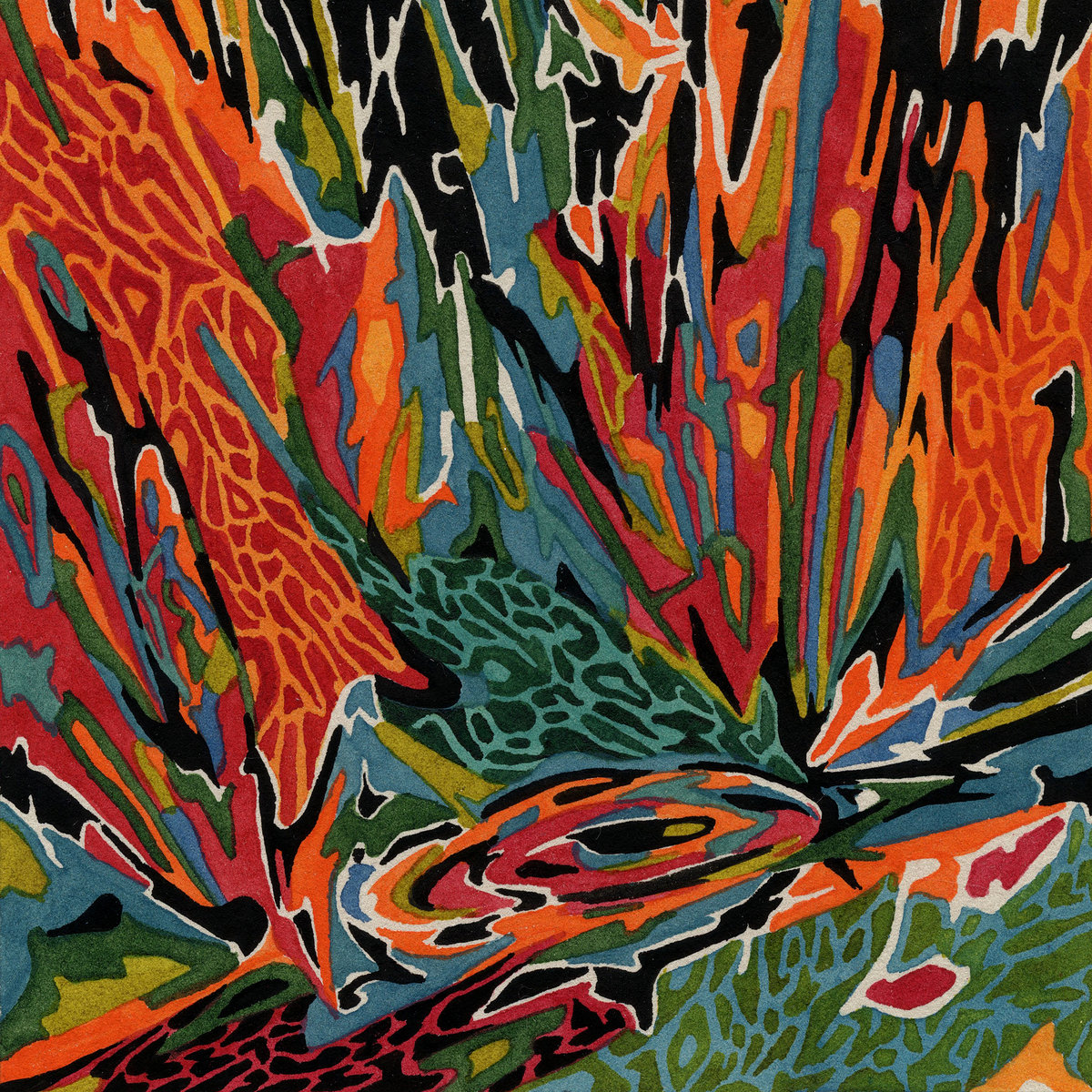
On Record: Akusmi – Terra Incognita (Tonal Union)

Reviewed by Ben Hogwood

What’s the story?

Akusmi, the vehicle of London-based French composer Pascal Bideau, looks to match the impact and ambition of its first two albums with a third instalment.

The press release promises a great deal, namely an invitation to “seven faraway sonic imaginariums fusing global and spiritual jazz with life affirming minimalism into a hypnotic, polyrhythmic odyssey”.

Joining Bideau on this odyssey are a host of musicians, even though he himself is something of a one-man band. Terra Incognita features Sarathy Korwar (tabla), Dudú Kouate (percussion, ngoni and flutes), Levitation Orchestra’s Marysia Osu (harp) and Lluís Domènech Plana (flutes) and Daniel Brandt, providing electronics on Anima.

What’s the music like?

Richly colourful. There is a lot going on in Akusmi’s music, a hive of activity that rewards repeated listening, where the intricate inner parts and the freedom of the outer voices can be fully appreciated. The methods and techniques have deepened since previous album Fleeting Future, so the sound is more intricate, but the joy and warmth that make his music so attractive are here again in generous measures.

A Waking Dream is indeed like the start of a new day, starting with nocturnal rustlings but settling into a groove of crossrhythms and bright instrumental colours. Anima and Pleine Lune build on this, the latter especially a riot of colour, with the saxophone flying free up above. Rain Dance is even more propulsive, the ensemble swaying in a dazzling show of unity, while everything comes to a head in Dawning Dusk, an exhilarating track topped by Dudú Kouate’s multi-layered vocal. Kouate it is who secures the swagger to Drongo’s Flute, where the saxophone enjoys further freedom above the groove set by the Senegalese percussionist.

While jazz and Afrobeat are obvious influences here the musical processes Bideau uses are aligned closer to Reich or Glass, taking minimal riffs and developing them through communal means that build the musical intensity. The instrumental colours charm and bewitch, the musical equivalent of throwing open the windows on a sunny day.

Does it all work?

It really does, as Terra Incognita becomes an album of enduring positivity.

Is it recommended?

Yes, wholeheartedly. This is music with the most vibrant colours, reflecting its cover through grooves that sing and dance in unity. A life-affirming album reaffirming Pascal Bideau as a composer who knows no boundaries.

For fans of… Floating Points, Brandt Brauer Frick, Christian Prommer, Philip Glass, Terry Riley

Listen / Buy

Published post no.2,957 – Friday 24 July 2026

Switched On – Akusmi: Fleeting Future (Tonal Union)

reviewed by Ben Hogwood

What’s the story?

Fleeting Future may be the title, but the debut album from Akusmi – aka multi-instrumentalist Pascal Bideau – was actually recorded between 2017 and 2019 in North London.

You would also be hard-pressed to guess the location of the recording, for Akusmi’s music falls heavily under the influence of gamelan writing. For his colourful scores, Bideau linked up with Berlin to include contributions from saxophonist Ruth Jelten, trombone player Florian Juncker and drummer / percussionist Daniel Brandt, of Brandt Brauer Frick.

As well as taking on gamelan principles, Fleeting Future draws on Japanese culture and art for its inspiration. Neo Tokyo is a reference to Katsuhiro Otomo’s Akira, set in a futuristic metropolis, while Yurikamome is an imaginary visit to Japan. Throughout, Bideau brings the worlds of fantasy and future reality into close alignment, writing in a style that suggests the influence of so-called ‘minimalist’ composers.

What’s the music like?

To call this music minimalist would do it a disservice, however – for there is a lot going on here, with bright colours and strong motifs blending in together.

There is also a genuine feeling of excitement coursing through this music, with the spirit of discovery at every turn. The pocket-sized melodies of the title track, placed first, are maximal rather than minimal, with a very strong forward momentum driven by the saxophone and trombone lines. Here Bideau evokes the shorter works of composers such as Michael Torke.

The multilayered Sarinbuana is more complicated, with a taught rhythm section under the watchful eyes of Daniel Brandt and long phrases from the saxophone stretching over the top. Divine Moments of Truth is guitar-based, its counterpoint expanding into more electronic guises, while Neo Tokyo begins with stop-start phrases, quickly picking up potential energy in the manner of a rapidly accelerating train. Longing For Tomorrow brings the rasp of the trombone to the front, while Cogito does the same with a cheery saxophone riff. Concrescence shows off some lovely colours, powered by marimbas but blossoming with rich woodwind.

Does it all work?

It works incredibly well. Bideau’s music has a vitality and verve about it that is all too often lacking with instrumental music, and the jazzy touches around the edges – which sometimes come to the fore – show that he can be relied upon to deliver improvisations of the highest quality too.

Is it recommended?

Yes. One of the freshest albums I have heard in a long time, with a great deal of infectious, positive energy.

Listen

Buy