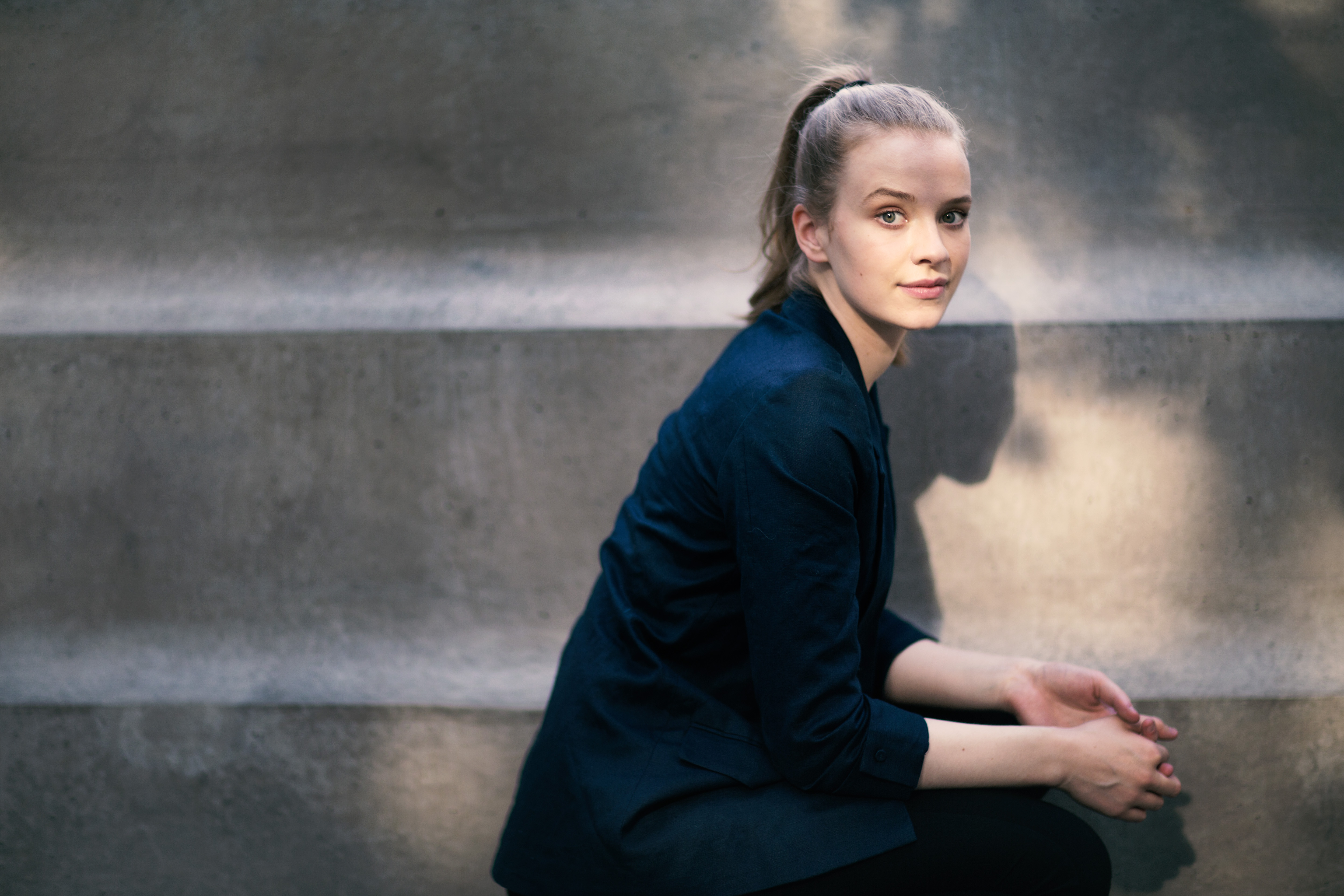
In concert – Elisabeth Brauß @ Wigmore Hall – Domenico Scarlatti, Mozart, Ravel & Prokofiev

Elisabeth Brauß (piano)

Domenico Scarlatti Sonata in C minor Kk56; Sonata in C Kk159 ‘La caccia’; Sonata in B minor Kk27; Sonata in B minor Kk87; Sonata in G Kk427 (exact dates unknown)
Mozart Piano Sonata in A minor K310 (1778)
Ravel Sonatine (1903-05)
Prokofiev Piano Sonata no.3 in A minor Op.28 (1917)

Wigmore Hall, London, 24 January 2022

reviewed by Ben Hogwood from the online broadcast

Seven sonatas and a sonatine in the space of an hour represents good value for a lunchtime concert – and even more so when the works in question span nearly two centuries. This was down to the clever programming of German pianist Elisabeth Brauß, a member of the BBC New Generations Scheme. She presented a potted history of the development of the sonata, moving as it did to the very centre of the concert platform by the twentieth century.

Brauß began her imaginatively thought-out hour with five sonatas by Domenico Scarlatti, just under 1% of the composer’s remarkable output in the form. Within his 550 or so published works there is an inexhaustible variety, and Brauß gave us some fine examples. Her crisp delivery of the C minor work was complemented by the playful ‘Caccia’ sonata, Scarlatti’s writing of parallel thirds tastefully ornamented in the right hand. Slipping into B minor, there was a more obvious Bach influence in an elegant performance of the Kk27 sonata, before a more reflective example in the same key, given plenty of room with ideally weighted inside parts. This thoughtful and emotive account was swept to one side by the showy G major sonata, chasing the clouds away.

Mozart‘s A minor sonata followed, a profound work written in the wake of the sudden illness and death of the composer’s mother Anna Maria in Paris, 1778. The principal phrase of the first movement is conspicuous for a ‘wrong’ note, an E flat played at the same time as an A minor chord, which can throw the listener. Brauß did well to give it the surprise factor, resulting in quite an unnerving and uncertain mood.

The second movement was initially calm, bringing out the singing style of Mozart’s marking of Andante cantabile con espressione rather beautifully. There was a refreshing lack of weight to this performance, the melodies floating on air, in contrast to a heavy-set middle section. The Presto finale, initially serious, brightened as the tonality moved into the major key, Brauß sensing hope in Mozart’s writing.

There was clarity in her Ravel, too, which found the right combination of technical flair and intimacy. Brauß portrayed the questioning nature of the first movement, just before its main theme returns and resolves. A limpid second movement was followed by a finale notable for its virtuosity – following the Animé marking – but which kept its conversational qualities.

Prokofiev’s Piano Sonata no.3 is a compressed firecracker, a work with plenty to say in its eight minutes. This performance was very impressive if holding back a little in the more raucous moments. Brauß was a more than capable guide to this impetuous piece, however, finding the heart of the adventurous coda, which sounds a lot newer than its 1917 composition date would suggest.

She clearly loves Prokofiev, as the Prelude in C major Op.12/7 made an ideal encore, bringing out the composer’s balletic side. There was less percussiveness in this lyrical account, notable for some lovely melodic phrasing.

Watch and listen

You can listen to the repertoire from this concert in choice recordings on the Spotify playlist below (Elisabeth has not yet recorded any of the pieces):

In concert – Sandrine Piau & David Kadouch @ Wigmore Hall – Journeys: Longing and Leaving

Sandrine Piau (soprano), David Kadouch (piano)

Schubert Mignon (Kennst du das Land) D321 (1815), Gesänge aus Wilhelm Meister D877: Heiss mich nicht reden; Nur wer die Sehnsucht kennt (1826)
Clara Schumann Er ist gekommen Op. 12 No. 1 (1841); Sie liebten sich beide Op. 13 No. 2 (1842); Lorelei (1843)
Robert Schumann Lieder und Gesänge aus Wilhelm Meister Op. 98a: Kennst du das Land (1849)
Duparc La vie antérieure (1884); L’invitation au voyage (1870)
Lili Boulanger Clairières dans le ciel (1913-14): Si tout ceci n’est qu’un pauvre rêve; Je garde une médaille d’elle; Vous m’avez regardé avec toute votre âme
Debussy Les soirs illuminés par l’ardeur du charbon (1917); 5 poèmes de Baudelaire (1890): Le jet d’eau; Recueillement; La mort des amants

Wigmore Hall, London, 17 January 2022

reviewed by Ben Hogwood from the online broadcast

It was heartening indeed to see the Wigmore Hall at capacity for the visit of soprano Sandrine Piau and pianist David Kadouch, bringing with them a new program with the theme of Journeys: Longing and Leaving.

They delivered the songs in two ‘halves’, one of German Lieder drawn  from the first half of the 19th century, the other of French song from the late 19th and early 20th centuries, giving us a smooth trajectory from Schubert to Debussy.

Refreshingly the journey took in substantial contributions from Clara Schumann and Lili Boulanger, three songs from each – as well as showing the increasing influence of Wagner on even the smallest forms of vocal music as the century turned.

Singing from a tablet, Sandrine Piau gave heartfelt performances and had the ideal foil in David Kadouch, whose brushstrokes on the piano were immediately telling. His chilly introduction to the third song in the Schubert group, Nur wer die Sehnsucht kennt, set the tone after a characterful first song and a sorrowful second, with a soaring vocal line from the soprano. Piau sang with arms outstretched, expressively capturing all the ornamentation and hitting the depths of the song’s turbulent middle section.

The Clara Schumann selection was fascinating, especially given the context of husband Robert’s well-known productivity in the years 1841-1843. The urgent Er ist gekommen was first, a heady song sitting high in the range, before a setting of Heine from just after Schumann’s celebrated year of song, a yearning and ultimately tragic number with a limpid commentary from the piano. The Loreley started in the same key, pushing restlessly forward. The only Schumann song in the program retained its intensity despite a noisy mobile phone introduction, a very different setting to the same text as tackled by Schubert at the start.

Turning to France, we heard two from the small output of Henri Duparc, whose entire output barely covers the length of a single concert. There is quality rather than quantity, however, and we heard the celebrated L’invitation au voyage, sumptuously performed with great poise. The two found the ideal pacing for La vie antérieure before it, solemn but quite open, and building to a powerful declamation.

Lili Boulanger wrote powerfully original music before her tragic death at the age of 24. Her orchestral tone poems have received greater exposure of late but the songs have remained relatively hidden. Piau and Kadouch put that to rights with three songs drawn from the wartime collection Clairières dans le ciel. They found an ominous tone in the lower vocal register from Piau, all the more so given the retrospective knowledge that Boulanger would only live for another three years from when the songs were written. The pained complexion at the end of Si tout ceci n’est qu’un pauvre rêve from Piau was profoundly affecting, then a slightly more optimistic Je garde une médaille d’elle led to the purity of Vous m’avez regardé avec toute votre âme.

Finally a selection from Debussy, prefaced by his final published piano piece Les soirs illumines par l’ardeur du charbon. This was a nice touch as an interlude, and was beautifully played. by Kadouch, We then heard three of the five Baudelaire poèmes, beginning with a babbling fountain shaded by Kadouch as Piau’s voice floated easily above. Recueillement (Meditation) found stillness initially but with the poet, distracted by darker thoughts, was mirrored by the music breaking from its reverie. Piau judged the awkward intervals perfectly, especially the final words with their harmonic transformation. The ultimate farewell was saved for last, La mort des amants quite a complex song. As with much early Debussy the harmonies travelled far but arrived at a strangely logical end point, both performers exhibiting exceptional control at journey’s end.

Piau spoke of the program giving ‘therapy after these two long years’, after which Beau Soir – one of Debussy’s celebrated songs – proved the ideal encore, though as the soprano warned, it was essentially saying, “Look at these beautiful things, because everybody goes in the same direction – death!”

Watch and listen

Online concert – Steven Isserlis & Connie Shih mark the centenary of Saint-Saëns @ Wigmore Hall

steven-isserlis

Saint-Saëns Cello Sonata no.1 in C minor Op.32 (1872)
Liszt Romance oubliée S132 (1880)
Fauré Romance Op.69 (1894)
Saint-Saëns Romance in F major Op.36 (1874)
Bizet arr. Hollman Carmen fantaisie (not known)
Willaume La noce bretonne Op.14 (pub. 1924)
Holmès arr. Isserlis Noël d’Irlande (1897)
Hahn 2 improvisations sur des airs irlandais (1894 rev. 1911)
Saint-Saëns Cello Sonata no.2 in F major Op.123 (1905)

Steven Isserlis (cello, above), Connie Shih (piano, below)

Wigmore Hall, London
Thursday 16 December 2021

Written by Ben Hogwood

This well-devised program to mark the centenary of the death of Saint-Saëns was put together by cellist Steven Isserlis and his regular partner, pianist Connie Shih. They presented the composer’s two cello sonatas, the first of which was recorded by Isserlis back in 1992, in an intriguing historical context.

There is no room for shrinking violets in the first movement of the Cello Sonata no.1 in C minor Op.32, a relatively early work, and both performers threw themselves headlong into the music. Saint-Saëns was a virtuoso pianist, and on occasion his writing for the instrument is as demanding if not more so than the instrument it is ‘accompanying’. Here however the two were on equal terms, with plenty of cut and thrust in a dramatic first movement. The C minor casting and stormy start draw parallels with Beethoven, and these were built upon in the players’ compelling dialogue. The improvisatory slow movement was ideally poised, with an air of mystery in its central section where the cello was in its lowest register, complemented by twinkling figures from the piano. The Allegro moderato third movement returned us to powerful, passionate music, Isserlis’ double stopping passages immaculately delivered and Shih finding the necessary definition and phrasing in a superbly played piano part.

A full 32 years elapsed between the first sonata and its sequel, the Cello Sonata no.2 in F major Op.123. By this time the 70 year-old composer’s style had developed considerably. It is a substantial piece, running over 35 minutes, and is perhaps less-performed on that basis, not to mention the demands made on the performers. Isserlis and Shih showed what a fine work it is, however, in a performance that was gripping from the off, full of passion but also finding the more elusive statements in the quieter music, where Saint-Saëns could be found writing subtle but far-reaching sleights of harmony.

A joyous opening paragraph surged forward with considerable energy, powering an impressive and flowing first movement, Shih harnessing the power of the piano but continuing to hold a sensitive balance. She led off a capricious scherzo, whose variations were brilliantly characterized, from a limpid third variation (marked Tranquille) to a rippling Molto allegro that followed.

The heart of the piece, however, lies in the substantial Romance, a dreamy slow movement with a beautiful melody and a profound middle section turning towards the minor key. Both played with poise and affection, finding the centre of music the audience could fully lose themselves in. The last movement, which the composer promised ‘will wake anyone who’s slept through the rest of the piece’, was terrific, working from its deceptively innocuous opening phrase to throw off the shackles and end in celebratory mood. Isserlis was typically generous with his expression, with Shih deserving credit for her technical command and shapely melodic phrasing. The octaves towards the end were especially well-handled.

While the two sonatas were the main works of the concert, the complementary pieces were no less involving, providing an ideal foil. Firstly we heard from Saint-Saëns’ close friend Liszt, one of his few works for cello and piano. The Romance oubliée began with a recitative, with beautiful tone in the held notes from the cello, setting the (intense) mood. Then another great friend (and pupil), Fauré – whose Romance uses the whole range of the cello, starting in the mysterious depths and ending in the rarefied upper register. Saint-Saens’ own warm-hearted Romance in F major Op.36 was affectionately recounted, before the showstopping Carmen fantasie from Saint-Saëns’ friend and regular recital partner, Joseph Hollman. This was a showstopper, with quickfire dances and a pizzicato Habanera, stylishly done by Isserlis.

Shorter pieces followed from Gabriel Willaume, Reynaldo Hahn and Augusta Holmès, each with fascinating connections to the composer. Willaume’s La noce bretonne (The Breton wedding) was rather moving, its distant drone growing in feeling and power before passing by and disappearing again. Hahn’s 2 improvisations were songlike and affecting in their simplicity, a soulful Willow Tree especially, before an arrangement by Isserlis of Holmès song Noël d’Irlande, its pentatonic language easy to absorb.

This was a very fine concert, with playing of an exceptionally high standard by both artists, but crucially with the involvement that told us how Saint-Saëns, in particular, could combine virtuosity with deep feeling, contrary to some opinion. It is hard to imagine how his centenary could have been better observed – and it ended with a perfectly weighted account of The Swan, one of his most famous shorter pieces – taken as it is from Carnival of the Animals. Isserlis needed only to introduce it with a wave of the hand.

You can watch this concert on the Wigmore Hall website for the next 28 days – and you can hear most of the music played by Isserlis and Shih on the Spotify playlist below, with some of the recordings drawn from their recent album Music from Proust’s Salons. That disc can be heard (and purchased) from the BIS website

In concert – Johan Dalene & Nicola Eimer play Ravel, Rautavaara & Prokofiev @ Wigmore Hall

johan-dalene-fredrik-schlyter

Ravel Violin Sonata in G major (1923-27)
Rautavaara Notturno e danza (1993)
Prokofiev Violin Sonata no.2 in D major Op.94b (1944)

Johan Dalene (violin, above), Nicola Eimer (piano, below)

Wigmore Hall, London
Monday 22 November 2021

Written by Ben Hogwood. Photos by Fredrik Schlyter (Johan Dalene) and Hedley Dindoyal (Nicola Eimer)

This was the first Wigmore Hall recital for talented Swedish violinist Johan Dalene, the BBC New Generation Artist performing a lunchtime concert with British pianist Nicola Eimer. It was a programme matching the music to the bright November sunlight visible through the roof of the hall.

Unfortunately the concert programme did not contain any biographical artist information, which was a shame as Dalene has already achieved a great deal by the age of 21. By no means the least of his achievements is a fine album for BIS Records with Christian Ihle Hadland, Nordic Rhapsody – where he juxtaposes fine works for violin and piano by Grieg, Stenhammar, Sinding, Sibelius and Rautavaara.

The latter composer provided the Notturno e Danza at the centre of today’s programme, an appealing piece for students that is deceptively difficult to get right. Dalene’s tone carried an atmospheric Notturno capturing the composer’s depiction of changing light patterns, and shaded the quick Danza beautifully and with impressive volume.

Before the Rautavaara we heard an excellent performance of Ravel’s second Violin Sonata, as it is now recognised. This work was completed in spite of the composer’s frank admission that he didn’t think violin and piano were a good match – but here they united in a compelling account. This was in spite of the first movement, where both instruments essentially go their own way. The musical material is elusive, worrisome even, but with the clarity of Dalene’s bow strokes, Ravel’s thoughts were never anything less than convincing. Eimer’s attentive piano part pulled the music towards different tonalities, as Ravel would have wished.

The second movement relocated us to New York with bluesy incantations and jazzy rhythms. It fell naturally under Dalene’s spell, with a wide range of colours and shades on display, while Eimer provided beautifully judged punctuation to bring the syncopations to the fore. Only the last movement was able to break free of these sleights of hand, its moto perpetuo brilliantly judged and fearlessly executed, both players brilliant in their virtuosity.

Another sonata formed the third work in the programme. Prokofiev’s Violin Sonata no.2 in D major may be an arrangement, being a re-edit of his Flute Sonata at the request of David Oistrakh in 1944, but it is a most genuine work for the two instruments. Dalene and Eimer gave a sunlit performance, enjoying the melodic abundance Prokofiev lends the violin, but were wary too of the shadowy presence beneath the surface of the scherzo and the slow movement in particular. Dalene’s tone was ideally suited to the occasionally barbed lyricism of the former, while the lyrical slow movement had a sunlit warmth to go with the weather. So, too, did the finale, capping a wonderful performance where the rustic theme stayed in the mind for long after the concert had finished.

As a thoughtful encore Dalene and Eimer included Lili Boulanger’s Nocturne, a starry-eyed diversion of subtle beauty, the harmonic shifts tastefully secured. Both players made a very strong impression throughout the concert, their natural partnership blossoming on the stage. Watch it online if you can!

You can watch this concert on the Wigmore Hall website for the next 28 days – and you can hear the music played by Mischa and Lily on the Spotify playlist below, including Johan’s recording of the Rautavaara:

The 2021 Royal Philharmonic Society Awards – saluting musical heroes

written by Ben Hogwood

If an awards ceremony does its job properly, it should provide those attending and watching with lasting feelings of inspiration, hope and even wonder.

The Royal Philharmonic Society Awards did just that at the Wigmore Hall on Monday, recognising some superhuman musical achievements as we dared to think in more hopeful terms of classical music emerging from the pandemic.

Restrictions such as those imposed in lockdown can often bring out the best in creative minds, and the 13 awards made during the evening showed this time and time again. When such minds are backed into a corner, some of the solutions can be truly mindboggling. You can judge for yourself when the Awards are published online next week, and aired on BBC Radio 3 on Monday 8 November (to open in a new window click here)

Perhaps the most striking and wide reaching initiative on show was ENO Breathe, the program set up for sufferers of long-Covid to help with breathing and anxiety, and now rolled out to 50 NHS Trusts across the UK. All the people involved in its creation were rightly acknowledged here, praising a program which has benefited from the expertise of opera singers and colleagues at Imperial College Healthcare:

It was indeed a night to acknowledge the tireless work of those behind the scenes, who effectively enable their organisations or teams to give the appearance of a swan while they work feverishly beneath the surface. Bassoonist Ashby Mayes is a prime example. He gave a bubbly performance of Weber’s Rondo Ongarese with pianist Kumi Matsuo, but then violinist Nicola Benedetti revealed his ‘other’ vocation as technology inventor and troubleshooter as part of The Benedetti Foundation’s online work.

Benedetti rightly added the Instrumentalist Award to her already impressive armoury, for she is a true modern ambassador for classical music. With the ability to face outwards to politicians but also inwards to those at early or difficult stages in their musical journey hers is a consistently inspiring presence.

As the evening progressed it became ever clearer that each category had three nominations that were effectively winners, and they were recognised as such in the excellent presentations from RPS Chief Executive James Murphy, RPS Chairman and Director of Wigmore Hall John Gilhooly and BBC Radio 3 presenter Katie Derham. They all brought a fresh and enthusiastic approach to the awards, sharing with us the delight of simply being in the same room again.

Further inspiration came from Kadiatu Kanneh-Mason, winner of the Storytelling Award for her book House of Music. In revealing just how many publishers had turned down the volume ‘because black people don’t play classical music’ (!) she illustrated just how persistence and endurance can overcome such ridiculous hurdles. Peter Brathwaite, nominated for his Radio 3 program In Their Voices, showed the same thing

Elsewhere there were joyous stories of music making in lockdown, providing solace to everyone. The World How Wide, led by the Chorus of Royal Northern Sinfonia, won the Series and Events Award with a vibrant recasting of Vaughan Williams’ Tallis Fantasia, showing off the region’s natural beauty with a film directed by NOVAK that made you want to be there:

Meanwhile Hilary Campbell and the Bristol Choral Society used online resources in the best possible way to launch a new CD and a Christmas carol competition for new composers. They won the Inspiration award, showing in the process how amateur music making is so important to the mental and physical health of all the country’s musicians. Good CDs can enlighten and inspire us, but first-hand musical experiences can rarely be bettered.

This can be felt throughout the Bold Tendencies initiative in Peckham, Hannah Barry’s transformation of a disused multistorey car park claiming the Gamechanger Award. Dani Howard’s Trombone Concerto, written for Peter Moore and the Royal Liverpool Philharmonic Orchestra, confirmed its status as a powerful new vehicle for the instrument, while Jennifer Johnston won the Singer Award for her artistry and services to the same city. Back online, meanwhile, Vopera claimed the Opera and Music Theatre Award for their vibrant and imaginative digital production of Ravel’s L’enfant et les sortilèges, brilliantly backed by musicians from the London Philharmonic Orchestra:

Other winners – last but certainly not least – included Laura Bowler, who won the Chamber-scale Composition Award for her remarkable work Wicked Problems, the composer performing with bass flautist Ruth Morley at the ‘sound’ festival in Aberdeenshire. Ryan Bancroft won the Conductor Award to supplement his burgeoning reputation with the BBC National Orchestra of Wales, and Edinburgh’s Dunedin Consort capped a year of stellar online music making, including the premiere of Errollyn Wallen’s opera Dido’s Ghost, with the Ensemble Award:

Finally we heard from the Hermes Experiment, winners of the Young Artist Award. This exciting and highly original ensemble comprises soprano (Heloise Werner), clarinet (Oliver Pashley), double bass (Marianne Schofield), harp (Anne Denholm) and co-director Hanna Grzeskiewicz. The group stand for original creation of mostly new music in an open and diverse musical setting. Their contagious love and boundless enthusiasm was at the heart of Pashley’s arrangement of Piazzolla’s Concert d’aujourd’hui, capturing the spirit of a bright and uplifting evening.

Our wholesome congratulations go to all the nominees for the RPS Awards – and indeed to all of those unnamed who did not quite make the shortlist. You are all winners in our eyes!

To learn more about the Royal Philharmonic Society visit their website