In Concert – Pavel Haas Quartet @ Wigmore Hall: Haydn, Prokofiev & Haas

Pavel Haas Quartet [Veronika Jarůšková, Marek Zwiebel (violins), Karel Untermüller (viola), Peter Jarůšek (cello)

Haydn String Quartet in G major Op.76/1 (1979)
Prokofiev String Quartet no.2 in F major Op.92 (1941)
Haas String Quartet no.2 Op.7 ‘From The Monkey Mountains’ (1925)

Wigmore Hall, London
Thursday 24 November 2022

Reviewed by Ben Hogwood

The Pavel Haas Quartet often cause a stir on their visits to the Wigmore Hall, and this concert was no exception for the Czech ensemble.

Many of Haydn’s mature string quartets begin with a trio of chords effectively designed to hush the audience and guide their ears towards the performance getting underway. The first in his crowning set of six quartets published as Op.76 is no exception, though in this red blooded account the Pavel Haas Quartet pinned the audience back in their seats, such was the vigour with which this performance began.

There were some ragged edges to their interpretation, and less evidence of the genial Haydn that makes himself known with the conversational melody of the first movement. We did however get more exposure to his experimental side, through an interpretation pointing the music forward towards middle period Beethoven. The quickstep third movement, very much a scherzo rather than a minuet, pointed up Haydn’s daring harmonic excursions and dalliances, as did the finale, based mostly in the minor key and featuring a number of brisk about-turns. Stemming the tide was the second movement Adagio, a reverent account with a solemn air to its central section in particular.

There followed a superbly played account of Prokofiev’s String Quartet no.2. This attractive work is not often heard in concert, which is a shame for it has a good deal of spice and charm through its investment in folk tunes from the Northern Caucausian region, where the composer was evacuated in 1941. Encouraged by his new neighbours, Prokofiev achieved a very satisfying blend of the original tunes with spiky good humour and scrunched up harmonic dissonances, always in thrall to the highly melodic content.

The first movement revelled in the abundance of good tunes, bringing the Pavel Haas Quartet’s Slavonic instincts into play. The mood softened for a heartfelt cello solo from Peter Jarůšek, setting a thoughtful and delicately nostalgic tone for the Adagio. Here more time was taken for reflection, with a noticeable chill running through Prokofiev’s writing.

Within the folk references it is possible to discern the worrisome mood of the time, with World War Two underway. The third movement however felt like a show of resolution in the face of this threat, laced with humour that in this performance could have been exploited to greater effect. It was however a fine performance, with terrific ensemble playing.

The main event of the concert was undoubtedly a performance of music from the quartet’s namesake. Pavel Haas, born in Moravia, studied with Janáček between 1920 and 1922, completing his String Quartet no.2 three years later. Tragically in 1941 he was deported to the Theresienstadt concentration camp, and died in Auschwitz three years later. Much of his work lay in neglect but has in the last thirty years enjoyed an extremely welcome renaissance, led by a number of enterprising recordings made in the 1990s, not least that of this work for Decca’s Entartete Musik imprint in the 1990s by the Hawthorne String Quartet. Since then the second quartet has gone on to gain a welcome foothold in the concert hall.

It would be difficult to contemplate a better performance than this one from the Pavel Haas Quartet. Led assertively by Veronika Jarůšková, they showed what an assured and imaginative piece it is, a travelogue giving the listener a tour of the sights and sounds of the famous Monkey Mountain range in Moravia.

The musical language is a curious but highly engaging hybrid of influences, drawing on the music of Dvořák and Smetana but in compressed melodic pockets of heightened intensity. Janáček, too, is an influential voice, but Haas’s unusual phrasing and distinctive rhythms make for a unique and enjoyable style.

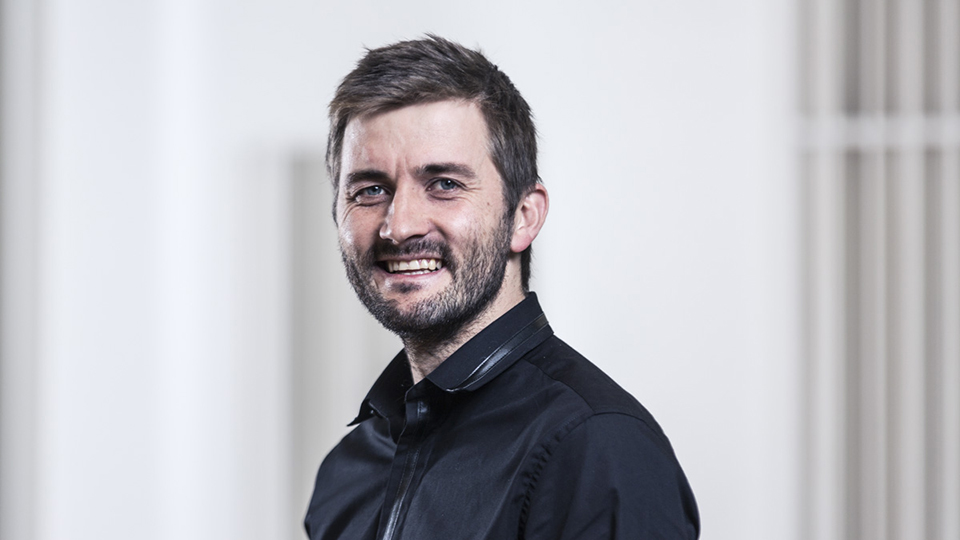
The Pavel Haas Quartet enjoyed it greatly, the first two movements (Landscape and Coach, Coachman and Horse) enjoying the rarefied outdoor air and some crisply secured dance rhythms. The third movement, subtitled The Moon and I, was much colder to the touch, the muted strings taking time for introspection and creating some striking colours along the way. Their beautifully poised playing set up a riotous Wild Night finale where they were joined by percussionist Owen Gunnell (above), whose battery of instruments were expertly marshalled to bring the sounds of 1920s jazz into the fray.

The riotous closing pages brought the swaying Moravian dances and jazz rhythms to the foundations of the Wigmore Hall, brilliantly played and ideally balanced. So good was this section that the five performers gave us a quick reprisal as an encore, reminding us in the process of the fiercely original writing from a composer whose resurgence is to be greatly welcomed.  

In Concert – Olli Mustonen plays Prokofiev Piano Sonatas @ Wigmore Hall

Prokofiev

Piano Sonata no.4 in C minor Op.29 (1917)
Piano Sonata no.2 in D minor Op.14 (1912)
Piano Sonata no.9 in C major Op.103 (1947)
Piano Sonata no.6 in A major Op.82 (1939-40)

Olli Mustonen (piano)

Wigmore Hall, London
Monday 31 October 2022

Reviewed by Ben Hogwood; Photo of Olli Mustonen (c) Heikki Tuuli

Sergei Prokofiev is a composer whose music responds well to a ‘completist’ treatment. In the last decade London has seen cycles of his seven symphonies (from Valery Gergiev and the Mariinsky Orchestra) and his five piano concertos, given in a memorable Prom in 2015 with the London Symphony Orchestra supporting five different soloists. Now came the chance to look more closely at the composer’s writing for piano in a two-night performance of the nine solo sonatas, given by a specialist of the composer’s music.

Olli Mustonen has recorded the Prokofiev concertos but not yet committed his thoughts on the sonatas to disc. Should he do so the results will be fascinating, for he has a highly individual and uniquely compelling take on this composer’s music. His is an energetic approach, and even by the end of the first movement of the Piano Sonata no.4 he was mopping a fevered brow. Fourteen movements later he had delivered a revealing look at music whose power to reflect its time and place of composition is remarkably strong, carrying profound messages forward to the present day.

Born in what is now Ukraine, Prokofiev experienced great trials and separations throughout his life. Those tensions are felt in his music, where they are offset by a ready sense of humour, expressed through piano writing that emphasises athleticism but makes room for tender lyricism, backed by an instinct for concise yet developed frameworks in which the music can sit. As a result, pieces and movements rarely overstate their welcome.

Piano Sonata no.4 was a good choice with which to start, a collection of old jottings sometimes subtitled D’après des vieux cahiers (After Old Notebooks). Using material dating back to 1908, Prokofiev assembles a selection of inner thoughts and bittersweet memories. Mustonen expressed these first hand, taking liberties with the rhythm and note emphasis on occasion but wholly in the spirit of the music. The language, initially gruff, melted to an emotive and balletic slow movement with an expressive tune using the white notes on the keyboard. The bustling finale exhibiting a common language with the contemporaneous Piano Concerto no.3.

Like the fourth sonata, the Piano Sonata no.2 bears a dedication to Prokofiev’s friend from the St Petersburg Conservatory Maximilian Schmidthof, tragically lost to suicide in 1913. The language here is more obviously Romantic, with elements of Chopin and Scriabin, but the tart lyricism in the right hand could only be from Prokofiev, and Mustonen brought it out with often startling clarity. There was a whirlwind scherzo, like a devilish skaters’ dance, before a cold melancholy encased the slow movement, which sounded like a distant relative of The Old Castle from Mussorgsky’s Pictures At An Exhibition. The helter-skelter finale, brilliantly played, took the audience on a fairground ride.

After the interval Mustonen gave a rare performance of the Piano Sonata no.9, an elusive work whose dedicatee, Sviatoslav Richter, confessed to finding it a difficult work to understand. Its music hints at a new simplicity, emphasised by the choice of C major as the ‘home’ key, but the awkward complexion of the music tells of a troubled mind, Prokofiev seemingly thrown by the end of the Second World War and yet another set of restrictions on musical style from the Russian authorities.

The faster figures in the first movement soon tired of their attempts to run away from this, but the macabre second movement suggested a restless toy shop after dark. Throughout the work, bursts of brittle melody threatened to extinguish the more songful elements of Prokofiev’s writing, though the forceful finale was typical of the composer in its power and obduracy. Mustonen did well to communicate what seemed to be a dip in the composer’s energy towards the close.

Finally we heard the Piano Sonata no.6, a work speaking directly to the wartime climate today. Written as the Second World War was raging, it is closely linked with the seventh and eighth sonatas, works that also tell of conflict, anger and desolation. The opening salvo of the Sixth was chilling indeed, but in Mustonen’s hands it became an outright assault, the treble notes biting through with such power that the ‘A’ on the piano lost its tuning as the sonata progressed. If anything this made the impact of Prokofiev’s writing even stronger, the scrunched-up harmonies raw and dissonant.

The Sixth is not a depressing work, however – as its stuttering Scherzo told, wrenched this way and that by a left-hand melody. The lyrical power of the third movement, initially subtle but then more overtly passionate, looked ahead towards the composer’s colourful ballet scores. Mustonen felt that connection, conducting himself whenever a hand was free, and sensing the orchestral connections for the voices in front of him. The finale had a curiously phrased but highly effective main theme, and when the artillery from the first movement returned it brought with it an even greater chill than before. The sonata ended in a cacophony of noise, powerfully wrought and given without quarter.

Taking the white heat out of the sonatas a little, Mustonen proceeded to charm with an encore of the Prelude Op.12/7, published in 1913 and often used as an encore by the great Russian pianist Emil Gilels. It was an unexpected treat, capping an evening of exceptional pianism.

You can hear Olli Mustonen’s recording of the Prelude, part of a Prokofiev miscellany recorded for Ondine, below:

In Concert – Silesian Quartet & Wojciech Świtała: Bacewicz, Weinberg & Zarębski

Wojciech Świtała (piano, below), Silesian Quartet [Szymon Krzeszowiec and Arkadiusz Kubica (violins), Łukasz Syrnicki (viola), Piotr Janosik (cello)]

Bacewicz String Quartet No. 4 (1951)
Weinberg String Quartet No. 3 in D minor, Op. 14 (1944)
Zarębski Piano Quintet in G minor, Op. 34 (1885)

Wigmore Hall, London
Monday 17 October 2022

Reviewed by Richard Whitehouse

In existence now for 44 years and with only a change of leader during that time, the Silesian Quartet has amassed a broad repertoire taking in the extent of the Austro-German tradition along with that of its Polish heritage – as was evident from this latest Wigmore Hall recital.

The rapid upsurge of interest in women composers has been of real benefit to those such as Grażyna Bacewicz, whose sizable output of essentially abstract music went too long under the radar and not least a minor masterpiece as her Fourth Quartet – its first prize at the Liège Competition in 1951 vindicated. Its three movements are dominated by the first of these – a sombre Adagio introduction as variously infiltrates the lively ensuing Allegro, such that the coda essentially becomes a stretto between such contrasted expression. The central Andante finds this composer at her most lyrical, with the ‘giocoso’ marking of the final Allegro not necessarily implying any lessening of formal and emotional focus, as this builds toward an impetuous conclusion that clinches the unorthodox if methodical design of the whole work.

The Silesian gave a superb account of a piece it knows well – having recorded all Bacewicz’s quartets – as it did of Mieczysław Weinberg’s Third Quartet. On a similar scale, this also has a similarly overarching intensity – not least when attacca markings between movements were scrupulously observed as to give the overall design its unity within diversity. The unchecked energy of the initial Presto is by no means offset by the bittersweet poise of the Andante – its taciturn unease continued in an Allegretto affording only the most tenuous, even provisional closure. One reason, surely, why the composer restructured this piece when recasting it more than three decades later as his Second Chamber Symphony, which is hardly to deny the sheer fascination of the music at a crucial stage on the way to Weinberg’s mastery of this medium.

Had he died before writing his last work, Juliusz Zarębski would barely have been a footnote in musical history. His Piano Quintet confirms an acute feeling for Lisztian harmony, allied to a commanding formal sense as should have been the springboard into an eventful maturity and is not so far behind those by Brahms, Dvořák and Franck in being a major contribution to its medium. The Silesian had the measure of the first movement’s quirky take on sonata form – its vividly contrasted ideas merged in a tensile development then varied reprise and dynamic coda. The Adagio frames its lilting central section with a melody of rapt fervency, as is itself framed by music of ‘Forest murmurs’ aura, while the Scherzo likewise frames its wistful trio with music of an intently rhythmic propulsion. The final Presto is essentially a cyclical reprise of earlier ideas as this picks up where its predecessor left off, before pursuing a sonata-rondo trajectory such as culminates in a fervent recollection of the work’s opening theme. That this piece remains the summa of Zarębski’s creativity does not lessen the extent of its attainment.

The Silesian and Wojciech Świtała had prepared no encore, instead reprising the final pages of the Zarębski to close this programme in fine style. It is part-way through a recorded cycle of Weinberg’s quartets, another of which will hopefully feature in a future Wigmore recital.

For more information on the performers, click on the names to visit the websites of the Silesian Quartet and Wojciech Świtała – and for more on the composers, click on the names of Juliusz Zarębski, Mieczysław Weinberg and Grażyna Bacewicz

Online concert review – Louise Alder & Joseph Middleton @ Wigmore Hall – Songs by Amy Beach, Clara Schumann, Lili Boulanger, Alma Mahler & Libby Larsen

Louise Alder (soprano, above), Joseph Middleton (piano, below)

Beach 3 Browning Songs Op. 44 (1889-1900)
Clara Schumann Er ist gekommen Op. 12 No. 1; Warum willst du and’re fragen Op. 12 No. 3; Liebst du um Schönheit Op. 12 No. 2 (1841)
Lili Boulanger Clairières dans le ciel (excerpts): Elle était descendue au bas de la prairie; Vous m’avez regardé avec toute votre âme; Au pied de mon lit; Nous nous aimerons; Si tout ceci n’est qu’un pauvre rêve (1913-14)
Alma Mahler Laue Sommernacht (1910); Ich wandle unter Blumen (1910); Licht in der Nacht (1915)
Libby Larsen Try Me, Good King: Last Words of the Wives of Henry VIII (2000)

Wigmore Hall, London, 21 March 2022

Watch and listen

review of online broadcast by Ben Hogwood Picture of Louise Alder (c) Gerard Collett

Soprano Louise Alder and pianist Joseph Middleton are renowned for consistently original programming, and this recital for a BBC Radio 3 Lunchtime Concert at the Wigmore Hall recital was no exception. Assembling songs by five women composers, they offered a fascinating juxtaposition of style and text setting, offering further proof that the music of Clara Schumann and Alma Mahler need no longer operate in the shadows of their husbands.

Given the freshness of the air in Southern England it was entirely appropriate that the pair should begin with a vibrant song from Amy Beach, The year’s at the spring. The first in a trio of Robert Browning settings, it had a sprightly tread, in contrast to the Ah, Love, but a day! of Beach’s short cycle, where ‘summer has stopped’, which found the singer in a worrisome state but easily negotiating her higher range. The third song, I send my heart up to thee, was subtly prompted by Middleton’s arpeggiated piano

The Schumanns’ year of song was not just exclusive to Robert, with Clara publishing three settings of Friedrich Rückert that year. They made a powerful impact in this concert, with a tempestuous account of Er ist gekommen (He came in storm and rain). There was an intimate air to Warum willst du and’re fragen (Why enquire of others), tinged with longing and sung by Alder with a beautiful, natural tone. Liebst du um Schönheit (If you love for beauty) was lost in love, prompted by Middleton’s easily flowing piano.

In her all too brief life, Lili Boulanger gained for herself a reputation as a vocal composer of impressive standing, a view boosted by this quintet taken from Clairières dans le ciel, settings of 13 poems by Francis Jammes. When singing of the ‘girls who are too tall’ in Elle était descendue au bas de la prairie (She had reached the low-lying meadow), Alder soared to the heights, while the pair enjoyed Boulanger’s harmonically elusive writing, Middleton upholding the tension beautifully in Vous m’avez regardé avec toute votre âme (You gazed at me with all your soul).

Au pied de mon lit (At the foot of my bed) stood out as one of the most memorable songs of the recital. A character picture, it was vividly painted by the pair before a turbulent and passionate episode, notable for Alder’s sublime vibrato control at the end. The anticipation of Nous nous aimerons (We shall love each other) hung heavy on the air, with appropriately rich harmonies, before the singer’s lower range brought rich colour and notable control to the slow Si tout ceci n’est qu’un pauvre rêve (If all this is but a poor dream).

We then heard a trio of Alma Mahler settings, strongly chromatic and – in the case of Laue sommernacht (Mild summer night) – particularly sultry. The Heine setting Ich wandle unter Blumen ( I wander among flowers) was short but urgent, before a second setting of Bierbaum, Licht in der Nacht (A nocturnal light) brought us back to earth for deep contemplation. The song rose briefly to acknowledge the rapturous brightness of the star ‘above the house of our Lord Jesus Christ’ before sinking into the dark lower end of the piano once again.

Libby Larsen’s song cycle Try Me, Good King took as its inspiration the last words of the five executed wives of Henry VIII, giving Alder the opportunity to characterise each of the fated women. She did so with impressive power and guile, Katherine of Aragon hanging on high above a worrisome chord, with Anne Boleyn then fraught with trouble. As with the earlier songs Alder’s body language was a powerful visual aid, taking Boleyn’s words ‘Try me’ up to the very skies above. Larsen’s setting for Jane Seymour exhibited a special radiance, while Anne of Cleves was given a resolute if ultimately skewed march. The final Katherine Howard proclaiming her innocence to ultimately deaf ears, insisting her innocence before really scaling the heights of anguish.

As an encore, Alder and Middleton gave us Florence Price’s Night, a chance for the soprano to spread her wings with longer phrases. Perhaps surprisingly there was a hint of Richard Strauss here, enjoyed in the piano part by Middleton – the song capping an hour of discovery and vivid storytelling.

For information on Louise and Joseph’s album of French song on Chandos Records, Chère Nuit, click here

In concert – Boris Giltburg plays Granados, Albéniz, Ravel, Rachmaninoff & Prokofiev @ Wigmore Hall

BorisGiltburg2-1440

Granados Goyescas: Quejas, o La maja y el ruiseñor (1909-12)
Albéniz Iberia (Book 3): El Albaicín (1907)
Ravel Miroirs (1904-5)
Rachmaninov Moments musicaux Op.16: no.2 in E flat minor, no.3 in B minor, no.4 in E minor (1896)
Prokofiev Piano Sonata No. 8 in B flat major Op. 84 (1939-44)

Boris Giltburg (piano, above)

Wigmore Hall, London
Monday 14 March 2022

Written by Ben Hogwood

Boris Giltburg

14 March 2022
22:19

This was the second concert in Boris Giltburg‘s Ravel series at the Wigmore Hall – but as he eloquently explained in the programme and from the stage, it was impossible to proceed without responding to the situation in Ukraine.

Born in Russia but of Israeli nationality, Giltburg’s judgement in this was carefully considered. Reminding us that music has the overwhelming ability to reflect conflict as well as providing an appropriate response to it, in Prokofiev‘s Piano Sonata no.8 he had found the most accurate reflection imaginable. Ukrainian-born Prokofiev wrote the piece during the Second World War, and it was premiered by Sviatoslav Richter in Moscow in 1944. Here its resonance was unmistakable, the work unfolding with a mixture of uncertainty and resolve, with searing outbursts and anguished thoughts that spoke of oppression and tragedy. Prokofiev’s trademark dissonances were descriptive, the percussive rhythms laden with military power. The second movement relented a little in search of lyricism, Giltburg finding parallels with the composer’s ballet scores of the period, with hints of Romeo & Juliet carried on the air. Meanwhile the third movement, a powerful presto, tore up the tarmac in its relentless drive forward while finding time to consider the repercussions. Giltburg’s precision and power were beyond reproach here, his performance incisive but deeply reflective of current events. The Wigmore Hall listened closely, moved to silence throughout but responding with sympathetic applause.

Because of this performance the rest of the concert could have paled into insignificance, but that would reckon without some powerhouse performances of music from earlier in the century. It was refreshing to hear two Spanish works for starters. The music of Granados and Albéniz does not get enough exposure, and it should do – both wrote under the influence of Debussy but had something of the French master’s gift for picture painting. Giltburg caught the baleful tones of Quejas, o La maja y el ruiseñor (Lament, or the maiden and the nightingale), while the sultry El Albaicín was vividly descriptive and alluring.

Ravel may have written Miroirs in 1905 but in these hands it still sounded so modern. Noctuelles (Moths), a remarkable piece of picture painting from the French composer, found its match here, Giltburg delighting in its irregular contours, while the cleaner lines of Oiseaux tristes were no less effective. The much-loved duo of Une barque sur l’océan and Alborada del gracioso were brillianly performed – the former capturing the rocking of the boat with uncanny accuracy, surging forward before checking against the spray – and the latter exploring syncopations and dynamic variations to thrilling effect. Finally La vallée des cloches was both reverent and mysterious, notable for meticulous pedal work from Giltburg to maintain the atmosphere.

Immediately before the Prokofiev we heard three of the young Rachmaninov‘s six Moments Musicaux, a breakthrough collection that helped establish him as a serious composer for the piano in 1896. They are of similar design to the pieces of the same name by Schubert, in a group of six but giving the pianist freedom through varying dimensions and moods. These are pieces Giltburg holds close to his heart, and a whirlwind account of the second piece was checked by the darker hues of the third, a funeral march. This provided much food for thought with its nagging motifs, the music returning to the same itch with ominous regularity, before the fourth piece took off at a rate of knots, fearsome virtuosity tempered by immaculate melodic phrasing.

After the Prokofiev had made its mark we heard the ideal foil as an encore, Giltburg playing the Bagatelle no.1 by Valentin Silvestrov. A Ukrainian composer, Silvestrov was born in 1937 and – according to a conversation between Giltburg and a member of the audience – appears to have safely relocated to Poland. The simplicity of this piece, after the crunch of the Prokofiev, was doubly moving.

For more information on Boris Giltburg you can visit his website