
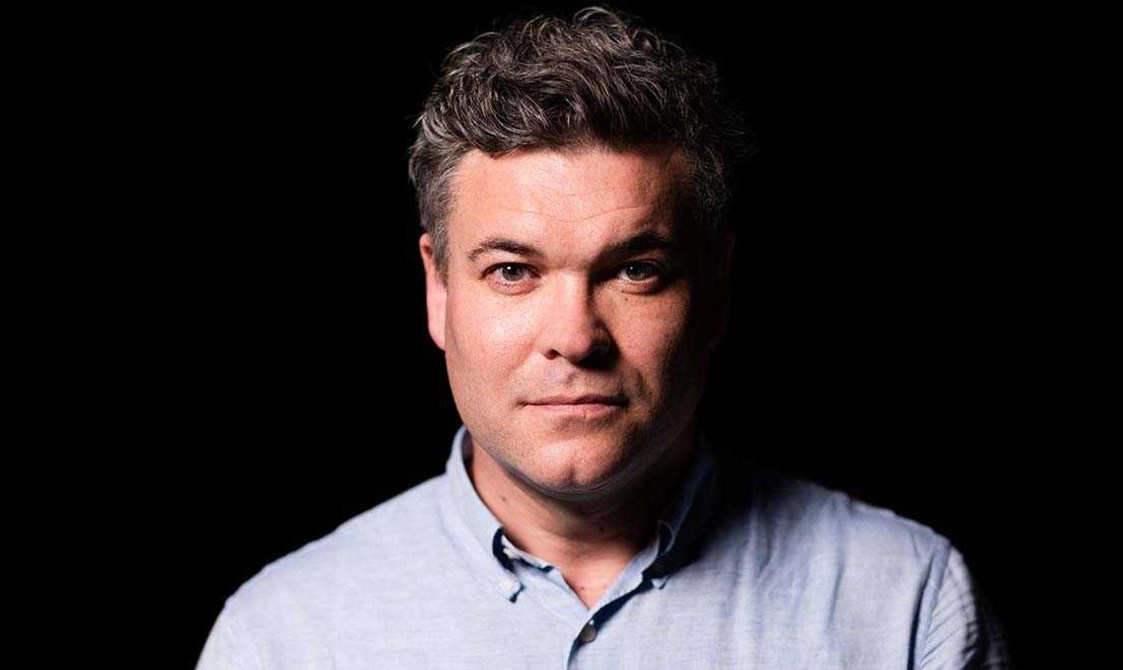
In the first of two interviews themed around the Aldeburgh Festival, Featured Artist Ryan Wigglesworth talks to Ben Hogwood about the influence of his mentor, Oliver Knussen, and the inspiration he takes from the music of Britten, Debussy and Bruckner.
Picture credits: Benjamin Ealovega (Ryan Wigglesworth, Steven Osborne), Mark Allan (Oliver Knussen), Sussie Ahlberg (Sophie Bevan), Lawrence Power (Giorgia Bertazzi)
Ryan Wigglesworth is a musician of many disciplines – and for half an hour he has joined us to talk about his work as a composer, conductor and pianist, specifically within the rarefied world of the Aldeburgh Festival, where he is a Featured Artist for 2026.
The festival has played a key part in his career, as I ask him to cast his mind back to the first time he visited. “My first contact with Aldeburgh was through the young artists programme, which is where I first met Ollie Knussen – that would have been 2000 or 2001. I had forced my parents, when I was much younger, to take me to Aldeburgh. It must have been the time when the Humphrey Carpenter biography of Britten came out. I read that biography and begged my parents to drive from Sheffield so I could see the place and go on a pilgrimage. It’s been a very special place to me for such a long time, and since the turn of the century, when I met Ollie, that became the most important musical friendship and mentorship of my life. I spent so much time there and was virtually living at his house for a period. It’s a home to me.”
It is striking in conversations with artists that worked with Knussen, the speed with which his name comes up, and the affection it provokes. In this case, Wigglesworth met his mentor through the soprano Claire Booth. “Claire and I were undergraduates together”, he says, “and she was on the course at Snape. I tagged along, because I wasn’t officially there as a student that first year. Claire and I had already learned his Whitman Settings, and we kept asking if we could sing it to him. He was dreading it was going to be awful, but he finally caved in, and we performed it. I think he was very touched, and I think that was the beginning of him thinking, “Maybe they’re not so bad, these two!”

As with fellow-students, Knussen (above) left a lasting musical and personal footprint. “It was my education. I must have sat in hundreds of hours of rehearsals with the London Sinfonietta and the BBC Symphony Orchestra. I could never understand why no-one else was there, and it was the same when I used to go to Boulez’s rehearsals. That was my education, because Ollie’s rehearsals were masterclasses in time management, efficiently sorting our problems, and that pristine conducting technique. I’m so grateful to have had that as my starting point, and with such a dominant creative force in your life, it takes a while to free yourself from their way of doing it, and finding your own way, but it still informs everything I do. When it comes down to it, it’s still about respect for the text, and that the composer is the most important thing – not the performer’s ego!”
He considers further. “You couldn’t not be learning, just spending time with him, sitting at the kitchen table. As everyone knew him understood, he had obsessions at a particular moment in time. He would be gorging on the music of Busoni, or whatever it happened to be that week, so we’d go through tonnes of his music – and that’s an incredible education, going through those scores together – and learning how he marked up scores. It was my starting point, and I’ve developed it in how to learn a score thoroughly, especially when I’ve had to learn something quite quickly, stepping in for a cancellation. I remember having to learn Elgar’s The Dream of Gerontius in two days, and it was incredible to fall back on that technique of inhabiting a score.”
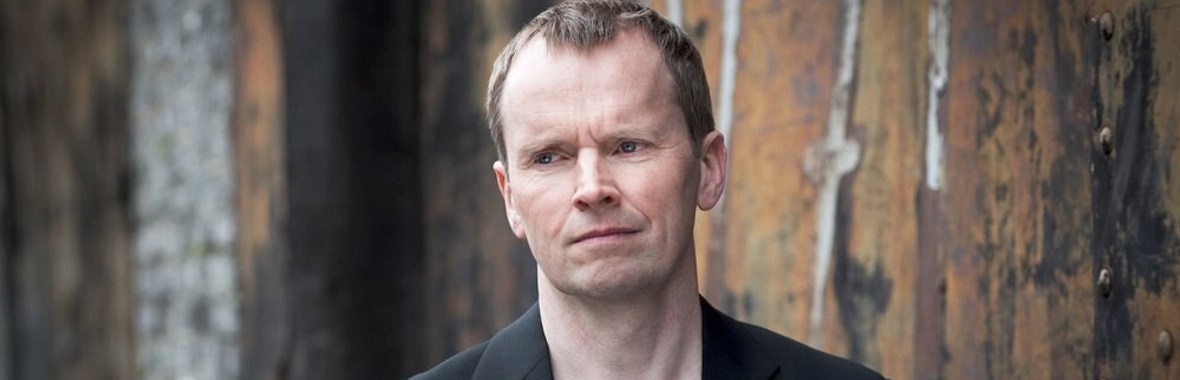
The influence of Knussen spreads to the programming for the 2026 Aldeburgh Festival, where his innovations can be felt in Wigglesworth’s repertoire choices – such as the pairing of his own Piano Concerto and that by Ravel, both to be performed with Steven Osborne (above) as soloist. “It’s a bit of a risk, that one!” laughs Ryan, “putting your piece alongside one of the greatest concertos ever written. That was something I began to think about much more deeply spending time with him, the way pieces resonate together. It’s a very subtle and complex business, and of course you get it wrong sometimes, but that’s fine because you don’t know until you do it, very often. It’s one of the great pleasures to have the freedom you have at Aldeburgh where your wings aren’t clipped. It’s worrying that so much of concert life is becoming so narrow, reduced in its scope and imaginative adventure.”
We reflect on his role as Featured Artist at Aldeburgh this year – a chance to spread musical wings? “It’s very special to be able to think about bringing the different aspects of what I do under one roof, because they’re all sides of the same business of making music. Of course they feature in different ways. Playing chamber music is so important because it’s my only direct contact with producing the sound, and I need that. Yet at the same time, if I’m conducting Pelléas et Mélisande, I hope I’m becoming a better composer as a result!”
His reference is to Debussy’s only opera, with which the festival opens on Friday 12 June. “You can’t not learn from every page of a score like that”, he says, “about how to be a better composer and holding the mystery. I don’t think I’ve ever met a composer for whom that’s not the greatest opera ever written, because it’s so difficult to fathom how he did it! It is so elusive, you can’t see how he put it together. The more time you spend in the orbit of masterpieces like that, it’s stimulating for me as a composer, and to spend time with the orchestra. It’s such an organism, this group of individual musicians with a collective personality, sound and ethos – it’s extremely mysterious! That was the great thing about spending all those hours in rehearsal with Ollie”, he reflects, “that’s what you’re soaking up, how these groups function, and how you balance the double basses and harps – what needs to be done on the most basic practical level.”
The orchestra to which he refers in Pelléas is the BBC Scottish Symphony Orchestra, of whom he has been chief conductor since September 2022. “They are uniquely versatile”, he says, “When you think of what they do in the Tectonics festival, with Ilan Volkov, from the most experimental new music – from that to Bruckner’s Seventh Symphony – and they approach it with care and flair. City Halls is so good for classical repertoire, too, and they are incredibly stylish in Mozart, which is such a difficult thing. It’s incredible what they can do, and in such short spaces of time. To be able to flick the switch is amazing, with something like Birtwistle’s Earth Dances, which we performed with Beethoven’s Eroica Symphony at the BBC Proms last year. To achieve that in such little rehearsal time would have been almost unimaginable in the mid-1980s. The speed with which things are inhabited is incredible.”
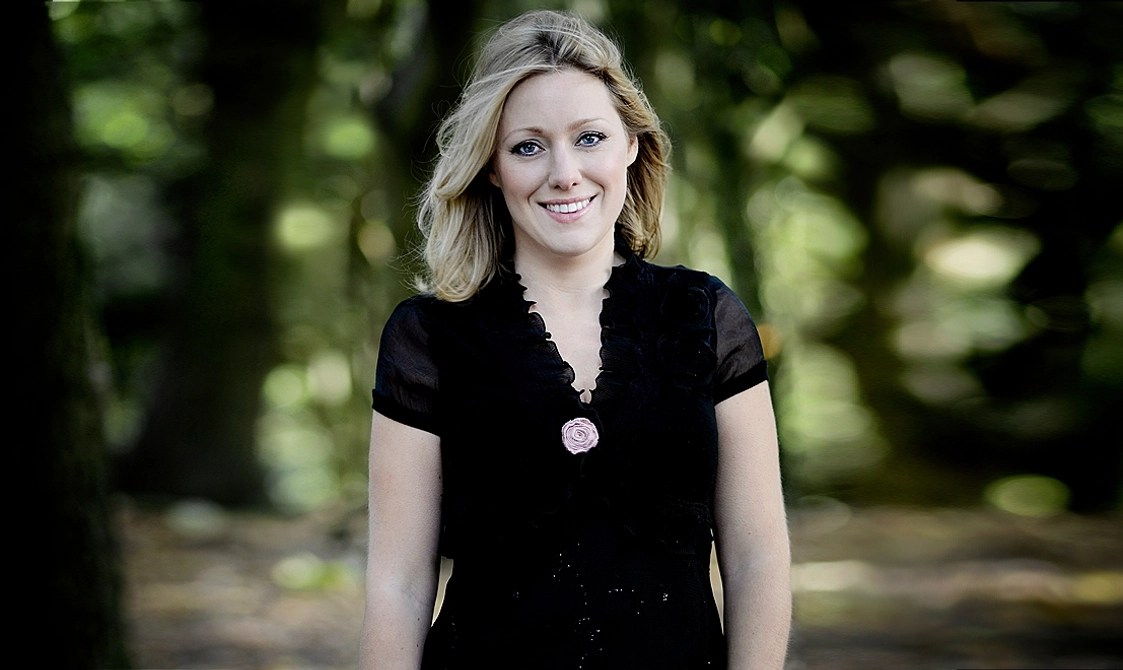
On a much smaller scale is The Poet’s Echo, a concert where Wigglesworth will take to the piano, joining soprano Sophie Bevan – his wife – in a programme marking the centenary of the birth of Russian powerhouse Galina Vishnevskaya. Along with her own husband, Mstislav Rostropovich, Galina played an important role in the career and life of Benjamin Britten. Britten’s song cycle The Poet’s Echo was completed in 1965 for Vishnevskaya, and will feature alongside Wigglesworth’s own settings of George Herbert, Till Dawning – written for Sophie (above). “The Poet’s Echo is new for both of us”, he says, “and it is wonderful to have a major work of Britten’s to come to fresh and learn together. We’ve done selections of the folksongs for a good few years, now.”
He has great affection for them. “I love them so much – and those accompaniments in the Britten folk song arrangements, each one is a sort of bull’s eye! There are one or two very focused, simple ideas, and it comes back to Britten’s economy.” A quality Britten and Knussen shared? “Exactly – a supremely practical approach. I learned from Ollie, and almost at Britten’s feet. Ollie’s Dad was so involved with Britten as a conductor, taking part in the premiere of works like Curlew River, and Ollie was there as a kid, taking all this up. He always said about Britten that he could have been a grandmaster chess player, or even an army general. The ability to move things in the abstract, in his head, was so strong, and that extends to planning the entire act of an opera in his mind before committing it to paper. He had an extraordinary ability to manipulate things in space and knowing, in the operas, when to introduce a colour, treating the instruments of the orchestra like individual characters, and knowing when to hold one back for dramatic purposes.”
He reflects further. “It’s about finding the off-kilter but logical solution. A great example is the ‘interview chords’ in Billy Budd – they’re every way of harmonising the F major triad. He’s working through a secret, and it’s absolutely right, a key emotional part of the opera.”
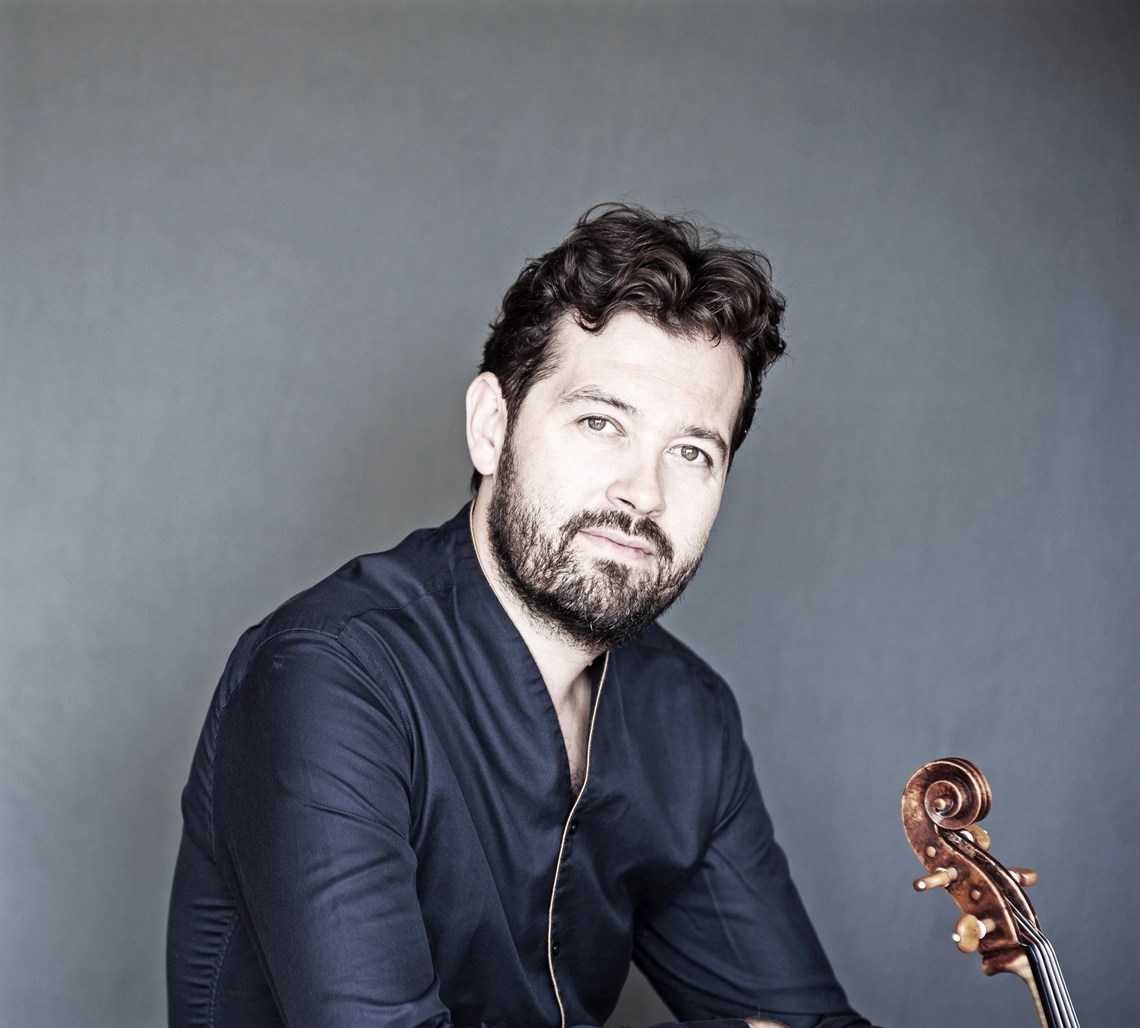
Returning to Wigglesworth’s own music, there is a significant premiere with the Knussen Chamber Orchestra on Saturday 27 June, in the form of his Viola Concerto, written for Lawrence Power (above). “It’s quite difficult to talk about, because I’ve not long finished it!” he confesses. “I’m still too close to the process of having written it, but I haven’t heard it yet. Like all of my recent pieces, and I hope my pieces in the future – they’re all my reactions to who is performing, and who I’m writing for. I think I would struggle now if I were commissioned by a musician or orchestra I don’t know, I’d struggle to have ideas. I’m so lucky with Sophie, or Steven Osborne, who’s playing my piano concerto at the beginning of the festival, to have these long term, meaningful relationships. With Laurence, we first worked together years ago. I wrote these Five Little Waltzes for him during lockdown. He’s such a one-off, and his artistic personality is so strong. He has this incredible sound, and variety of colour, and the piece came from my reaction to that.”
He describes the work. “It’s slightly unusual – in three movements, which sounds very standard, but it’s slow-fast-slow. It was a deliberate attempt to try to achieve something a bit more spacious than anything I’ve attempted before. I suppose it allows the viola to occupy a lyrical space. It’s not a battle between soloist and orchestra, more a fluid relationship. It comes back to the music that becomes more meaningful as a performer. Like Bruckner – I love this music so much, and what can I learn from it? Bruckner’s vision is so personal, but there are things to be learned – how to create a long wave, a big paragraph. It’s finding the things that challenge you, because in the past I’ve struggled to create a genuinely long line. You could say Britten concentrated on little cells of ideas, but it’s nice to think about how to achieve something that doesn’t come naturally, that can become more a part of your make-up.”
Debussy comes to mind as a composer capable of uniting the two ways of working, which returns us to the festival’s opening night. “To have created Pelléas as his first dramatic work, and to have got it that right… it was a long gestation process written it a long time before it was premiered, but it’s unlike anything else!” he says, under Debussy’s spell. “As he admitted himself there is a lot of Mussorgsky’s Boris Godunov in it, but these scenes tend to be conversations between two characters, with the function of these orchestral interludes, which seem so necessary. To think they were added so late on in the process, just to cover the stage move time, is remarkable – but you need them because of the intensity of each scene. You need the space afterwards to process what you’ve just heard, for the brain to catch up. It’s an incredible living organism, when you’re in it – and it really does grip you! This score is just as much like a drug as Wagner is said to be. The more you spend time with it, the more you need it!”
You can read more about this year’s Aldeburgh Festival at the Britten Pears Arts website, with full concert information and details. For biographical information on Ryan Wigglesworth himself, you can visit his artist page
Published post no.2,915 – Friday 12 June 2026

