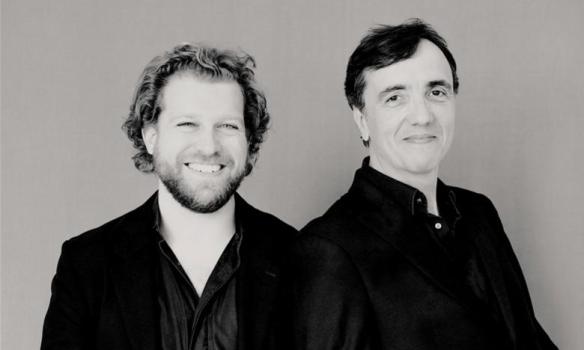
Wigmore Mondays – Nicolas Altstaedt plays Bach & Dutilleux

Nicolas Altstaedt (cello)

Dutilleux 3 Strophes sur le nom de SACHER (1976) (1:36 on the broadcast link below)
J.S. Bach Cello Suite No 1 in G major BWV1007 (c1717-23) (12:54)
Cello Suite No 5 In C minor BWV1011 (c1717-23) (32:13)

Wigmore Hall, London
Monday 17 June 2019

To hear the BBC broadcast through BBC Sounds, please follow this link

Commentary and Review by Ben Hogwood

The Wigmore Hall is an ideal venue for solo cello, as Nicolas Altstaedt showed in this BBC Radio 3 Lunchtime Concert. Yet before we heard his solo Bach he switched the order of the program slightly, placing the Dutilleux piece first. I must admit I had thought it would be even more effective in between the two Bach suites, but with playing of this insight and quality it soon seemed harsh to quibble.

Along with eleven other composers, Henri Dutilleux wrote a piece to celebrate the 70th birthday of the Swiss conductor and patron Paul Sacher. The brief was to construct a solo cello work using the intials of the conductor’s name (Eb – A – C – B – E – R). Dutilleux was in exalted company – Britten, Boulez, Lutoslawski and Ginastera were some of the other names involved – but he constructed 3 Stophes sur le nom de SACHER, three short but deeply expressive pieces.

Altstaedt played them passionately, immediately enjoying Dutilleux’s ways of exploiting the instrument’s colour through pizzicato, harmonics and a detuned ‘C’ string. The first piece (from 1:36 on the broadcast link) created a heady atmosphere but with plenty of nervous energy, before retreating to a distance. The second piece (4:45) brooded in the cello’s lower register before ascending to a lonely-sounding melody on high. The third (7:20) went at a terrific rate, scurrying figures down the cello punctuated by plucking, then reaching dizzy heights with harmonics that could almost have been from another planet, before swooping down and finishing with aplomb.

Moving to J.S. Bach, the mood eased for a wonderful performance of the Cello Suite no.1. Altstaedt played at a lower ‘baroque pitch’, with very little vibrato and with relatively little flamboyance, happy to let the music do the talking. With an airy Prelude (12:54) followed by a softly voiced Allemande (15:29) and light footed Courante (20:35), notable for its tasteful ornamentation, he was allowing Bach’s dance movements every chance to express their graceful side.

When it came to the slow Sarabande (22:56), he resisted the temptation to do what a lot of cellists do and overplay the double stopped chords, again letting the music speak in quiet, thoughtful tones.

He decided against using the Minuet repeat – a minor shame, as it is such good music! – but the light and shade with the trio section (25:48 and then 26:33) was exquisitely judged, before the Gigue (28:19) danced its way into the distance.

Altstaedt’s choice of suites was very much light and shade, for there is little in Bach with a darker colour than the Solo Cello Suite no.5. The Prelude (32:13) of this suite is austere in the extreme, and again a slightly reserved approach dynamically played to the music’s strengths. The Allemande (37:40) and Courante (43:32) were stern, each dance movement given the appropriate room but very darkly coloured, the rich chords beautifully judged.

The famous Sarabande (45:27), which some have compared to the falling of tears, was suspended in mid-air, time almost stopping as the feather light notes traced their bare outlines. After this a slight pick me up came in the shape of the first Bourrée (49:18), but the second was wispy and elusive (50:48). The concluding Gigue (52:35) gave us more closure but retained the serious air of the suite.

After these performances the lack of an encore was completely understandable, heightening the impact of the music we had heard. It was a very fine concert, and one would hope when he is ready Altstaedt will commit his striking Bach interpretations to disc.

Further reading and listening

You can watch Nicolas Altstaedt play the Dutilleux Strophes here:

The music in this concert can be heard here, in the available versions:

Altstaedt has not yet committed any of the Bach suites to record yet, but he has released a disc of the Sonatas for viola da gamba and harpsichord, with Jonathan Cohen. They can be heard on Spotify here:

The Bach Cello Suites are wide open to interpretation, not just from cellists but from the wider electronic music community. Peter Gregson has a foot in both camps, and last year’s addition to Deutsche Grammophon’s ‘Recomposed’ series was both imaginative and respectful:
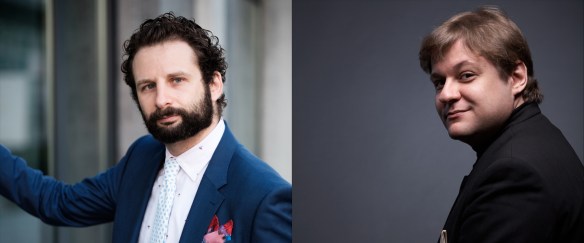
Wigmore Mondays – Ilya Gringolts & Peter Laul: Stravinsky for violin and piano

Ilya Gringolts (violin), Peter Laul (piano)

Stravinsky
Suite italienne (1925) (1:17-16:57 on the broadcast link below)
Three movements from The Firebird (1926-32) (19:18-29:58)
Ballade from The Fairy’s Kiss (1947) (31:58-35:15)
Divertimento from The Fairy’s Kiss (1934) (35:22-55:21)

Wigmore Hall, London
Monday 3 June 2019

To hear the BBC broadcast through BBC Sounds, please follow this link

Commentary and Review by Ben Hogwood

Stravinsky had a chequered relationship with stringed instruments, once describing them as ‘much too evocative’ in tone, but ultimately writing for them with the same level of skill he applied to the rest of the orchestra. Most of his writing for the violin in a solo capacity had Samuel Dushkin in mind.

Dushkin was introduced to Stravinsky by his German publisher in 1930, and Stravinsky wrote a concerto for him, before turning to smaller scale works for the pair to tour together. Many of these are smaller pieces taking stage works as their inspiration – and this BBC Radio 3 Lunchtime Concert from the Wigmore Hall programmed music from three such works.

The Suite italienne actually predates the Dushkin collaborations. To give it its full title, the Suite d’apres des themes, fragments et morceaux de Giambatista Pergolesi, brings together an Introduction and four dance movements from the Pulcinella ballet, retaining their lyricism but adding a certain spikiness in the new format.

Ilya Gringolts and Peter Laul play them with great character here, from the breezy and catchy Introduzione (1:17), through the Serenata (3:26), to a Tarantella in a hurry (6:16). While the Introduzione sees Gringolts still finding his feet, the Gavotte con due variazioni (8:22) is really nicely done, as are the Scherzino () and Minetto e finale (12:28), where Stravinsky can’t resist the odd sardonic touch.

The three movements from The Firebird are more substantial, beginning with a Prélude et ronde des princesses (19:18) which has a cold shiver in tale. The Berceuse () has a thick, heady atmosphere, while the Scherzo (27:32) feels like it has to be somewhere in a hurry and is a thrilling chase between the two instruments, brilliantly played.

The Divertimento known as The Fairy’s Kiss was Stravinsky’s homage to his biggest Russian inspiration, Tchaikovsky. It is an exciting and winsome orchestral ballet, one of his more romantic creations based as it is on a selection of the senior composer’s songs and piano pieces. The arrangements here work well in the more intimate confines, and again Gringolts and Laul have their measure. The Ballade (31:58) is at times languid but then quite restless, while the Sinfonia (35:22) employs typical Stravinsky textures of bare octaves occasionally audible.

Otherwise the violin writing is perhaps surprisingly ardent, then we progress to a busy section of brusque statements before returning to the slower music. The Danse suisses have some fun figures and exchanges, Stravinsky unable to resist a toe-tapping march with a rustic feel (41:20) before the lively Scherzo (46:01). The searching melodies of the Pas de deux (48:57) lead to a feathery scherzo (52:08) then a brisk Coda, the rustic mood returning (53:19)

BBC Radio 3 went off air before there was a chance for listeners to hear the bracing encore from Gringolts and Laul. Their Danse russe, arranged from Petrushka, was a fitting end to a very well executed recital.

Further reading and listening

Ilya Gringolts and Peter Laul have completed two discs of the complete Stravinsky works for violin and piano. The selection making up this concert and its encore can be heard on this Spotify playlist:

Meanwhile the below collection brings together Stravinsky’s Violin Concerto and also the three ballets from which the music for this concert derives, The Firebird, Pulcinella and The Fairy’s Kiss:

Wigmore Mondays – Gould Piano Trio play Kirchner & Brahms

Gould Piano Trio (Lucy Gould (violin), Richard Lester (cello), Benjamin Frith (piano)

Kirchner Excerpts from Bunte Blätter Op.83 (1888) (1:48-16:40 on the broadcast link below)
Brahms Piano Trio no.1 in B major Op.8 (1854, revised 1888) (18:53-54:50)

Wigmore Hall, London
Monday 13 May 2019

To hear the BBC broadcast through BBC Sounds, please follow this link

Commentary and Review by Ben Hogwood

It was refreshing to hear the music of Theodor Kirchner in this concert, especially in the context of his friendship with the infinitely better known Johannes Brahms. Kirchner was a friend not just of Brahms but of Robert and Clara Schumann. His relative lack of lasting success is regrettable, due in part it seems to an addiction to gambling, yet his output includes a large amount of piano music. He has notably arranged both Brahms String Sextets for the piano trio combination, which suits his music well.

The Bunte Blätter (Coloured Leaves) is a collection of attractive miniatures that work well in concert, and the Gould Piano Trio chose seven of the twelve available for this concert. The first, Zwiegesang (from 1:48 on the broadcast link), is notable for the sweetly romantic notions of its duet between violin and cello. A Novellette (no.5, 3:49) takes a more playful air, while Mädchenlied (no.10, 6:30) is graceful and open. The Humoreske (no.2, 9:30) is bright, especially from the piano, but the Barcarola (no.7, 10:10) is much less charming than a normal example in this form would be – a real straight-faced affair.

Finally the Scherzino (no.4, 13:15) is a charming affair and the last piece, Abendmusik (14:13) has more obvious, heart on sleeve passion to complete a lovely set of miniatures, beautifully performed.

The short forms contrasted nicely with Brahms’ Piano Trio no.1 in B major Op.8, a much more substantial affair. Lasting 36 minutes in this performance, with a judicious use of repeats in the score, it is one of several powerhouses the composer published early on in his life. He returned to it nearly 35 years after composition, applying some extensive editing to all the movements save the second.

The first few bars (from 18:53) give an immediate impression of Brahms’s scope and ambition – and it is worth bearing in mind that this version is still truncated from what he originally wrote. Richard Lester’s expressive cello melody is beautifully phrased, and the ardent writing is handled with an ideal balance of romance and poise. The aching second theme (21:23) offers a nice contrast, after which the music becomes fraught, before the trio’s entire first section is repeated. Elements of mystery come into the middle section, where Brahms develops his melodic ideas, before a return to the theme brings stability (29:25 onwards). Pianist Benjamin Frith should be praised here for his combination of technical control and full expression.

The second movement, a Scherzo, has a detached theme first heard low down in the register (33:48). Contrasting with this are sweeping contours for the flowing ‘trio’ section, its long phrases responding well to the strings’ unison (36:57), though the tuning is tricky here. There is a lovely blend of light and shade at the end, a respite from the heady music of the first movement.

The slow movement (40:44) is intimate and heartfelt, with some particularly touching moments from the strings, from the cello melody with which it begins. Set in the ‘home’ key of B major, it unfolds with a natural grace, but also hints at the romantic thoughts of the young composer. It is a movement in which to completely lose yourself before the drama of the finale begins at 48:25.

This movement is a little unconventional for its time, Brahms reverting to the minor key in music notable for its stormy passion. Despite the heaviness of texture at times, Frith’s lightness of touch again helps focus the phrasing of the melodies and the substantial counterpoint that underpins them. By the end there is a powerful feeling of a victory hard won, the emphatic closing chords sealing the deal.

Further reading and listening

The music in this concert can be heard here, in the available versions:

The full Kirchner collection of pieces can be heard here:

Meanwhile the original version of the Brahms Piano Trio no.1 can be heard on this album below from Trio Opus 8, seemingly named after the piece itself:

Early Brahms is notable for its stature and heroic passion – and the playlist below brings together some of the works falling into this category, including the Piano Sonatas nos.1 & 3, the String Sextet no.1 in B flat major & the wonderful Serenade no.1 in D major for orchestra:

Wigmore Mondays – Julian Prégardien & Éric Le Sage: Schumann ‘Liederkreis’ & Fauré ‘La bonne chanson’

Julien Prégardien (tenor), Éric Le Sage (piano)

Schumann Liederkreis Op.24 (1:21-20:44 on the broadcast link below)
Fauré Nocturne no.6 in D flat major Op.63 (22:32-30:36)
Le Bonne Chanson Op.61 (32:13-52:38)

Wigmore Hall, London
Monday 15 April 2019

To hear the BBC broadcast through BBC Sounds, please follow this link

The words to the song cycles can be found here for the Schumann and here for the Fauré

Commentary and Review by Ben Hogwood

Julien Prégardien and Éric Le Sage began their double header of Romantic song cycles with a lesser known collection from Schumann. The Liederkreis he published as Op.24 in 1840, his celebrated ‘year of song’, sets poetry by his contemporary Heinrich Heine – specifically the Buch der Lieder, where writer Richard Wigmore identifies common ground of ‘extremes of elation and despair and their mingled sentimentality, self-pity and ironic self-mockery’.

These are relatively short but emotive songs, the end of one often linking to the start of the next through key and mood. The first song, Morgens steh’ ich auf und frage (Every morning I awake and ask) (1:21 on the broadcast) is carefree with an accompaniment from Le Sage that trips along relatively happily, then Es treibt mich hin (I’m driven this way) (2:22) recounts the giddy excitement of waiting to see a loved one. By contrast, Ich wandelte unter den Bäumen (I wandered among the trees) (3:25) finds the subject in deeply introspective and almost resentful mood, despite the relatively calm music. Prégardien reaches some effortless high notes here, and also adopts a suitably flat tone towards the end.

Lieb Liebchen, leg’s Händchen (Just lay your hand on my heart) (7:00) is a short but rather macabre poem, given with halting piano from Le Sage, after which Schöne Wiege meiner Leiden (Lovely cradle of my sorrows) (7:45) follows immediately, offering consolation in the major key.

Warte, warte, wilder Schiffmann (Wait, o wait, wild Seaman) (11:06) stays in the same key but throws off the shackles with a brilliantly descriptive piano part from Le Sage. Berg’ und Burgen schaun herunter (Mountains and castles gaze down) (13:08) describes the ‘mirror-bright Rhine’ with effortless romanticism, but almost unwittingly prophesies Schumann’s attempt on his life with the words, ‘The river’s splendour beckons; But I know it – gleaming above it conceals within itself Death and Night’.

Anfangs wollt’ ich fast verzagen (At first I almost despaired) (16:49) is sombre in mood but quickly cast off by Mit Myrthen und Rosen (With myrtles and roses) (17:43), a light and spring-like conclusion to the cycle.

As a satisfying bridge from Liederkreis to Fauré’s most successful cycle Éric Le Sage – a specialist in the music of both composers – gives a fluid performance of the sixth of Fauré’s thirteen Nocturnes for piano, works that span his whole career. No.6 in D flat major (22:32) is probably the best known, and while its Chopin influences are evident its harmonies bear the French composer’s stylistic imprint. It has a long melody in the right hand from the start, and reaches an impressive climax at 28:20.

La bonne chanson is close to the Nocturne in Fauré’s output, and was intended for his mistress Emma Bardac. It sets nine of the 21 poems from Paul Verlaine’s collection, but it was not initially well received due to its elusive harmonies and longer phrasing. In the cycle Fauré uses recurring melodies to bind the collection together.

The cycle begins in radiant light with Une sainte en son aureole (A saint in her halo) (from 32:13 on the broadcast). The mood is cast, and Puisque l’aube grandit (The day is breaking) continues the bright atmosphere with flowing piano from Le Sage (34:16), and Prégardien copes well with the demands on the lower register of his voice half way through.

La lune blanche (The white moon) casts its spell from 36:14, the pure tone of Prégardien unforced but gaining strength on the higher notes. J’allais par des chemins perfidies (I walked along treacherous ways) is more forceful (38:17), then J’ai presque peur, en vérité (In truth, I am almost afraid) (40:12) has a nervous energy and won’t stay still, before proclaiming its love at the end.

Avant que tu ne t’en ailles (Before you fade) (42:27) is a lovely song, initially harking back to the Nocturne in both key and mood, before Fauré breaks off, propelling it away in another fit of restlessness describing the ‘thousand quail singing in the thyme’. The composer keeps the piano busy once more in Donc, ce sera par un clair jour d’été (So, on a bright summer day it shall be), though Prégardien is much more powerful here too (44:58).

N’est-ce pas? (Is it not so?) is richly romantic, retaining the subtlety of Fauré’s best songs (47:28), while the cycle concludes with L’hiver a cessé (Winter is over) (49:47). Beautifully phrased and paced by Le Sage, the introduction sets the scene for a song that pulls together all the separate elements of the cycle.

For an encore Prégardien and Le Sage gave us three Schumann songs – the first three from his cycle Dichterliebe in fact (54:24 onwards).

Further reading and listening

The music in this concert can be heard here, in the available versions:

Although Julien Prégardien has not recorded Liederkreis, he has a good deal of Schumann under his recorded belt – including this attractive collection with Le Sage and Sandrine Piau, which includes the masterly song cycle of Heine settings Dichterliebe:

You can also watch the album promo here:

Wigmore Mondays – Adam Walker, Tabea Zimmermann & Agnès Clément: Music for flute, viola and harp by Bax, Debussy & Gubaidulina

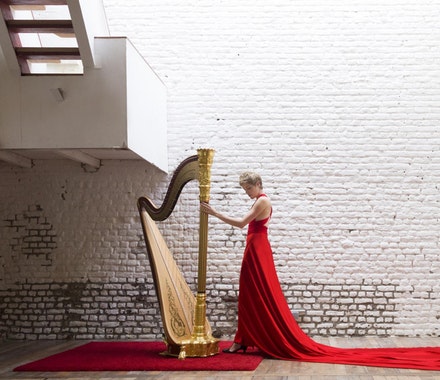
Adam Walker (flute, above), Tabea Zimmermann (viola) & Agnès Clément (harp) (both below)

Bax Elegiac Trio (1916) (1:40 – 11:15 on the broadcast link below)
Debussy Syrinx (1913) (12:47-14:28; Sonata for flute, viola and harp (1915) (17:34 – 35:44)
Stravinsky Elégie for viola (1944) (37:21-43:24)
Gubaidulina Garten Von Freuden Und Traurigkeiten (Garden of Joy and Sorrow) (1980) (45:38-1:02:34)

Wigmore Hall, London
Monday 15 April 2019

To hear the BBC broadcast through BBC Sounds, please follow this link

Photo credits: Adam Walker (c) Marco Borggreve, Agnès Clément (c) Tysje Severens

Commentary and Review by Ben Hogwood

The combination of flute, viola and harp is relatively unusual but has inspired some extremely forward-looking music since the second decade of the 20th century. Within two years of each other Bax and Debussy wrote independently for the combination, responding very differently to the potential of new and open textures.

Sir Arnold Bax was in fact the first to publish, and his Elegiac Trio immediately casts its spell through the rippling adagios of Agnès Clément’s harp (from 1:40 on the broadcast). Above this the flute of Adam Walker and viola of Tabea Zimmermann exchange airy thoughts, introspective but also free of constraint. The watery sound is beautiful and weightless, but Bax’s thoughts become more substantial. The music comes to rest in the major key, having started in the minor, with the feeling of troubles put to rest.

Of all the pieces written for solo flute, Debussy‘s Syrinx (12:47) is both the most magical and the most innovative. And yet when you listen to it there is no effort at all required, the languid lines instinctive but leading to an impressive climax. Adam Walker plays superbly here, ending in the lower register lost in thought.


Debussy’s Sonata for flute, viola and harp (from 17:34) is also a piece deserving of its description as magical, and is regarded as one of the signposts to modern 20th century music for its innovations in sound, harmony and melody. It is ideal when heard after Syrinx, as the flute begins – then the viola. As the programme booklet writer Paul Griffiths vividly observes, this first movement, marked Pastorale, takes time to pause in reflection, while demonstrating Paul Klee’s idea of ‘taking a line for a walk’. It’s elusive yet captivating.

The second movement Interlude (24:50) is graceful and a little dance like. Again the textures are beautifully open, helped by the tone quality of the three soloists, who bring to Debussy’s music that wonderful hazy warmth we associate with the composer at times. Then from 27:38 we hear a joyous tune from flute and viola together, over flowing harp, before the movement subsides to a soft end.

The Finale (31:08) is often singled out for its striking sonorities. The harp tremolo gives a rich backing for the very separate thoughts of flute and harp, one enchanting and the other relatively scratchy with the bow towards the bridge. At all times Debussy is keenly aware of the colours he wants to portray and the three players here respond superbly, bringing their close attention to sonic detail with a convincing unison.

Tabea Zimmermann then goes alone for the understated but striking Elégie of Stravinsky – striking because it is scored for solo, muted viola and sounds as though it has been imported from another civilization. It is also in two parts, so the initial idea (37:21) gives way to an austere dialogue between different ‘voices’ on the same instrument. The end recaps the mournful opening before dying away.

A world very far from the Wigmore Hall is also the destination for the unusual colours (for classical audiences at least) conjured up by Sofia Gubaidulina. East frequently meets West in her compositions, and in Garten Von Freuden Und Traurigkeiten (Garden of Joy and Sorrow) the East is most obviously present in the harp, plucking its responses to the flute’s decorations with slides of pitch. It is eerie but also compelling.

Then from around 50:15 the viola explores its harmonics – the fingers resting very lightly on the string to get a glassy sound that appears to be far-off, but which Gubaidulina uses cleverly. The flute is still the most prominent instrument, but increasingly the viola’s ‘voices of the night’ and the harp’s insistent plucking make themselves known. The music gets more animated, taking the harp right down to its lowest range – from where the flute starts a solo ‘cadenza’ (54:00)

The garden then seems to fall under its own spell, with night noises from all three instruments, until the viola plays a powerful line rising to a height. After this the music of the opening returns, with the striking harp slides again in evidence, before fading to the middle distance.

A superb performance of this piece from three friends, for whom this was their first ever concert as a trio. That would explain the wonderful spontaneity on show, for you would never have known!

Further reading and listening

The music in this concert can be heard here, including a live recording of the Gubaidulina and a legendary recording of the Debussy from the Melos Ensemble:

If Gubaidulina is a new name to your ears, then the strongest possible recommendation can be made for this recording of her Offertorium for violin and orchestra from Gidon Kremer, coupled with the Hommage à T.S. Eliot – a cycle for soprano and an octet featuring today’s viola player Tabea Zimmermann:

For more chamber music featuring the harp, this lovely collection from the Academy of St. Martin-in-the-Fields Chamber Ensemble is a treat. It includes two works by Debussy, the beautiful Introduction and Allegro by Ravel and the delightful Serenade for flute, harp and string trio by this year’s centenary composer Roussel: