
Wigmore Mondays: Gabriela Montero plays Schumann, Shostakovich and her own improvisations

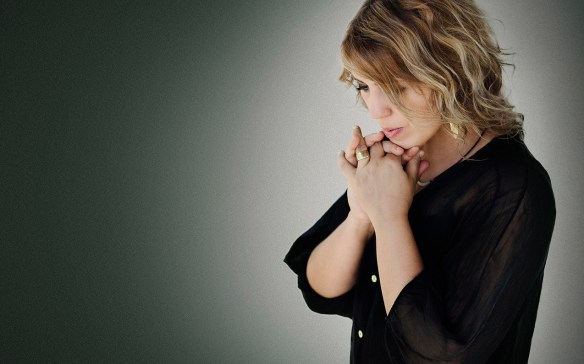
Gabriela Montero (above, piano)

Schumann Kinderszenen (Scenes from Childhood), Op.15 (1838)
Shostakovich Piano Sonata no.2 in B minor, Op.61 (1943)
Gabriela Montero Improvisations (2017)

Wigmore Hall, London; Monday 13 November 2017

Written by Ben Hogwood

The broadcast can be heard on the BBC iPlayer by clicking here

Schumann’s piano pieces were written for his beloved Clara to play, in the early stages of their courtship – when he was far from flavour of the month in the Wieck household. They are reminiscences of childhood life and were not intended for children to play as such. Happily some of them are a bit easier, but they are viewed through adult frames.

Shostakovich, meanwhile, wrote his Piano Sonata no.2 in memory of his former Leonid Nikolayev, at a time of particular hardship with World War II at its height. The substantial work a much more mature piece than his First Sonata, set in one movement, and it sits between two massive symphonies in the Seventh (Leningrad) and Eighth. Perhaps because of the enormous dimensions of those pieces the Sonata is a thoughtful and almost fiercely intimate work that has the listener subconsciously leaning in to listen to the quieter moments.

Gabriela Montero is one of the few classical pianists to actively practise the art of improvisation in concert, and as she told the booklet writer Jessica Duchen she finds a ‘different state of consciousness…like an open vessel’.

Follow the music

The times used relate to the broadcast link above.

Schumann Kinderszenen, Op.15 (from 1:52) (20 minutes)

Rather than describe each piece for you, I have elected simply to list the titles Schumann assigns the pieces and the time at which they appear in the broadcast. His writing is so descriptive it will conjure all sorts of pictures in the imagination! The movements are:

  1. Von fremden Ländern und Menschen (Of Foreign Lands and Peoples) (from 1:52)
  2. Kuriose Geschichte (A Curious Story) (3:49)
  3. Hasche-Mann (Blind Man’s Bluff) (4:56)
  4. Bittendes Kind (Pleading Child) (6:21)
  5. Glückes genug (Happy Enough)
  6. Wichtige Begebenheit (An Important Event) (7:32)
  7. Träumerei (Dreaming) (8:32)
  8. Am Kamin (At the Fireside) (11:30)
  9. Ritter vom Steckenpferd (Knight of the Hobbyhorse) (12:26)
  10. Fast zu Ernst (Almost Too Serious) (13:03)
  11. Fürchtenmachen (Frightening) (15:17)
  12. Kind im Einschlummern (Child Falling Asleep) (16:53)
  13. Der Dichter spricht (The Poet Speaks) (19:22)

Shostakovich Piano Sonata no.2 in B minor, Op.61 (1943)

The sonata starts like a cold wind blowing into the concert hall, with rapid figurations in the left hand, but soon develops into a driving march (around 24:00) with the right hand of the piano striking notes an octave apart. At 26:53 it comes back to an emphatic statement of the main tune, now lower in the left hand, before an introspective passage of thought and then an emphatic finish

The second movement, marked Largo (29:47) is one of Shostakovich’s characteristically intimate elegies, notable for its slow tempo and recurring pulse. The performer here is lulled into quiet thought.

In the third movement Shostakovich delivers one of those nagging themes in which he excels, given out by the right hand alone (from 36:27). Once heard it dominates proceedings, no matter what other music Shostakovich introduces – it all comes back to that theme, blurring the boundaries between minor and major keys and wavering uncertainly whenever it appears. The melodic material is made up of variants on that tune, the music becoming increasingly twisted and anguished before burning out, spending time in downcast thought and then recovering for a final, furtive statement of the theme.

Gabriela Montero Improvisations (from 50:34) (4 minutes)

In a spoken introduction, Venezuelan pianist Montero describes the improvisation offered here as a reaction to ‘my broken country’. It adopts the same tonality of the Shostakovich, B minor, and sets out its thoughts in a way that the Russian composer would surely recognise. The fluid and heartfelt musical progressions are all the more meaningful for being of the moment.

Thoughts on the concert

A recital of contrasts from Gabriela Montero. Schumann’s Kinderszenen provided the audience with a lot of fun through its wistful reminiscences, though at times Montero did stretch out the tempo rather, especially in the opening number. The characterisations were very enjoyable though, and Wichtige Begebenheit had a proud step, while Träumerei was appropriately dreamy. Montero also captured the melancholy that can come with rose-tinted recollections such as these, especially in Schumann, and the final Der Dichter spricht was ideally pitched.

Shostakovich’s Second Sonata crackled with atmosphere, and the presence of an unnamed menace that marks his most private works was here throughout. The bluster of the first movement was fooling nobody with its resolve, for the heart of Shostakovich’s music here lay in the bare outlines of the finale, where Montero excelled, and in the unexpected ghostly chord that arrives just before the end.

It was refreshing to hear an improvisation from Montero that seemed to take its lead from this work in professing its despair at the political and economical state of her home country, and this music was made all the more memorable by her relative restraint in its execution. More performers would do well to follow her lead.

Further listening and reading

You can read more about Gabriela Montero at her website, while the Spotify album below couples her interpretation of Rachmaninov‘s Piano Concerto no.2 with three of her Improvisations:

Montero has not recorded the Shostakovich sonata, but you can hear a new album from Peter Donohoe that brings both concertos and sonatas together in one collection:

Alina Ibragimova & Il Pomo d’Oro – Michael Haydn & Mendelssohn at the Wigmore Hall

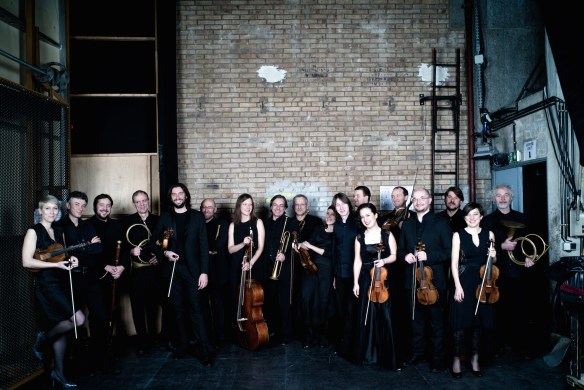
Alina Ibragimova (violin, above), Il Pomo d’Oro (below) / Frederico Guglielmo

Michael Haydn Violin Concerto in G major (c1757-64)
Mendelssohn String Symphony no.10 in B minor (1823)
Mendelssohn Violin Concerto in D minor (1822)

Wigmore Hall, London; Tuesday 7 November 2017

Written by Ben Hogwood

A relatively rare Tuesday lunchtime treat from the Wigmore Hall took the form of an hour of music from the late classical period from Il Pomo d’Oro, their concertmaster Federico Guglielmo and violinist Alina Ibragimova.

It would have been all too easy for them to program Mendelssohn’s much-loved Violin Concerto in E minor as the main work, but Ibragimova has a special affinity with a much earlier work in the same form. The Violin Concerto in D minor, accompanied by a smaller force of string orchestra, was written when the composer was just 13, and is a spiky, energetic piece channeling the spirit of C.P.E. Bach’s ‘Sturm und Drang’ period from the 1770s.

In this performance the notes fairly leapt from the page, with quick tempo choices demanding and receiving dextrous fingerwork from all the string players. Il Pomo d’Oro were an equal match for Ibragimova’s pyrotechnics, which were delivered with deceptive calm but communicated the passionate music within the fast movements. A sanguine slow movement offered sunnier, breezier climes before the energetic finale took a catchy tune and spun it so that Mendelssohn’s melodic invention stayed rooted in the mind long after the concert.

Providing a rather lovely contrast was the Violin Concerto in G major from Michael Haydn, Franz Joseph’s older brother. Often the poor musical relation of the family, he nonetheless wrote some fine works himself, particularly in the choral field, with memory recalling a fine Requiem performed relatively recently by the King’s Consort at the BBC Proms.
This performance at the Wigmore Hall was notable for its lively interplay and distinctive melodies, and the interactions between violinist and orchestra showed their mutual enjoyment of Haydn’s music, especially in the jaunty finale. Here Ibragimova took the lead, as she did in the aria-like slow movement, where the violin sang more graciously, ideal in the hall’s acoustic.

Between the two concertos we heard the String Symphony no.10 in B minor, another remarkable example of Mendelssohn’s promise as a teenager. This one was written a year after the Violin Concerto, and quite how a teenager could achieve such an assured standard with such substantial melodies remains a mystery! The language again is direct, as are all the minor key works from this period. Il Pomo d’Oro played with poise and guile, paying sensitive attention to their melodic phrasing through selective vibrato, led by Guglielmo. It helped define their colourful sound, a complete rebuff to those who might suggest ‘period instrument’ ensembles are lacking in subtlety and variation. Here we had those qualities in abundance, the best possible advocates for Mendelssohn’s well-spent youth!

Unfortunately this concert is not available online, but you can listen to clips of Alina Ibragimova’s recording of Mendelssohn’s Violin Concertos at the Hyperion website. Meanwhile a Spotify playlist including the works from this concert can be enjoyed below:

Wigmore Mondays: Florilegium visit Paris and Germany

Florilegium (Ashley Solomon (flute, director), Bojan Čičić (violin), Reiko Ichise (viola da gamba), Stephen Devine (harpsichord)

Telemann Paris Quartet No.4 in B minor, TWV43:h2 (1738)
J.S. Bach Trio Sonata in G major, BWV1038 (1732-35)
Rameau Pièces de clavecin en concerts – Suite No.5 in D minor (1741)
Rebel Les caractères de la danse (1715)

Wigmore Hall, London; Monday 30 October 2017

Written by Ben Hogwood

The broadcast can be heard on the BBC iPlayer by clicking here

This year marks the 250th anniversary of the death of Georg Philipp Telemann. If that name doesn’t mean anything to you, then perhaps it should – especially if you are a follower of the music of Bach or Handel. Telemann, so the concert note for this recital informed us, wrote more than the two composers combined – an extraordinary feat when you think that he wrote a number of large scale stage and sacred works.

Some of his most admired works are on a smaller scale however, such as the collection of Paris Quartets he published in two parts, in 1730 and 1738. They are intimate works for flute, violin, viola da gamba and continuo (usually harpsichord) that allow a great deal of flexibility for the performers, subtly pushing the boundaries Baroque chamber music was exploring at the time.

Complementing the Telemann in this concert are works by J.S. Bach – a Trio Sonata co-written with son Carl Philipp Emanuel – and works by the Frenchmen Rameau and Rebel, each bringing the spirit of the dance to an intimate grouping of musicians.

Follow the music

Telemann Paris Quartet No.4 in B minor, TWV43:h2 (from 1:41) (19 minutes)

A bright and brisk Prelude gives a good illustration of how Telemann writes so well for strings and wind, but the performers often have difficult lines to play, as in the passage from 5:09 where the tempo quickens. After the Prelude the quartet moves into a series of dances, with an elegant Coulant led by the flute (7:26), then movements entitled Gai, Vite (11:18), Triste (a sombre, melancholy dance from 13:19) and finally a Menuet (15:55) that proves to be much lighter on its feet, especially in its quick middle section.

J.S. Bach Trio Sonata in G major, BWV1038 (from 23:32, 7 minutes)

Bach was always aware of musical developments in his age, and with this particular Trio Sonata it appears he only wrote one part of the three, delegating the other two for son Carl Philippe Emmanuel to complete. Although there are three parts, typically with Baroque instrumental pieces there are actually four instruments taking part – the harpsichord and viola da gamba (an early form of cello without a spike, and in this case with five strings) share the bass / harmony roles.

This piece starts with an attractive, languid line on the flute that the violin shadows. The mood is – perhaps for Bach – surprisingly relaxed. A quick movement, marked Vivace (lively) follows from 26:42, but it’s gone in a flash – and a much slower Adagio movement begins at 27:38, with thoughtful interplay between flute and violin. Then at 29:40 a more substantial quicker movement, marked Presto, features typical Bach figures passed between each of the four instruments.

Rameau Pièces de clavecin en concerts – Suite No.5 in D minor (from 32:31, 13 minutes)

Rameau named the three movements of this suite after his fellow composers, although it doesn’t suggest in the concert note if he was painting a character portrait of each. If he was, then Forqueray, the first subject, would be a genial sort with a memorable hook – in this case introduced by the harpsichord from 32:31. Cupis (from 37:10) would be a thoughtful, deep kind of person, prone to a few bouts of melancholy, while Marais (42:34) would be a bright, energetic figure, again with a catchy tune with frequent and highly enjoyable repeats!

Rebel Les caractères de la danse (from 46:00, 8 minutes)

An early medley, if you like – a collection of short dances all rolled up into one. In the course of a fun-packed eight minutes, Rebel fills the music with eleven different dance forms, both slow and fast, giving his ensemble plenty to do. The harpsichord provides the crisp rhythmic emphasis, along with the viola da gamba, but is also given the tune at times, and invited to show off. The piece ends with a rapid dance with which only the quickest of feet could keep up!

Encore

A Bolivian dance from one of Florilegium’s three albums of Bolivian Baroque music (55:10), with some lively lines for violin and flute – and Reiko Ichise ditching the viola da gamba for shakers!

Thoughts on the concert

This was a very stylish and enjoyable concert. Florilegium have been together since 1991, and their performing style shows them totally at ease with the music of the Baroque period. Here they flourished especially in the Rameau and Rebel dance-based works, where harpsichordist Stephen Devine prompted and probed with tasteful, rhythmic playing.

The Telemann was a charming performance, the seriousness of its home key of B minor given a lift in the dance movements, while the Bach was unusually lyrical for the trio sonata form. A concert played with good humour and considerable panache, topped off by the exoticism of the Bolivian encore.

Further listening and reading

You can hear Florilegium’s recordings of the complete Telemann Paris Quartets in three volumes on Spotify. The third volume includes the quartet heard in this concert:

Meanwhile their explorations of the Bolivian Baroque can also be heard here, a first disc of three:

Telemann’s Water Music is one of his best loved works, and makes an excellent companion piece to the Handel. From experience I can say it is a thrilling work to be part of, as this performance from the Musica Antiqua Köln and Reinhard Goebel illustrates!

Steven Isserlis & Olli Mustonen at the Wigmore Hall – A Revolutionary cello recital

Steven Isserlis (cello) and Olli Mustonen (piano)

Prokofiev Ballade, Op.15 (1912)
Mustonen Chanson russe & Danse Oriental (1995)
Kabalevsky Cello Sonata in B flat major Op.71 (1962)

Wigmore Hall, London; Sunday 29 October 2017

Written by Ben Hogwood

A chamber concert with revolution in the air. This carefully chosen recital was short and to the point, but contained some deeply meaningful music lying just outside of the normal repertoire for cello and piano. Just before Steven Isserlis and Olli Mustonen played an early Sibelius Waltz as their encore, the cellist explained the programme’s themes of revolution, both in Russia and Finland.

They began with a startling performance of Prokofiev’s Ballade in C minor, startling in the sense that this music was brought to life with an intensity rarely experienced in this or any of the composer’s music. Isserlis was at his probing best, particularly in the pizzicato sections, but Mustonen took the lead, bringing out the composer’s phrasing as only he can, with heavily weighted emphasis on the most important harmonic notes. Thus the piece became a Ballade in the truest sense of the word – dark, passionate and stormy.

Mustonen’s joining of links between his own Finland and Russia was next, the Chanson russe surprising in its simplicity, which was touchingly effective, before a whirlwind Danse Oriental that could have been contemporaneous with the Prokofiev. It made a highly effective concert piece, and both performers clearly enjoyed it.

The most substantial piece was Kabalevsky’s Cello Sonata, written perhaps inevitably for the great cellist Mstislav Rostropovich in 1962. With some of the Rostropovich dedications the cellist’s spirit hangs heavily over the music, and it was easy to imagine his larger than life projections of the melodies. While Isserlis may not have the sheer volume of the late Russian (who does?!) he has sensitive phrasing and a lovely tone at his disposal, and, at the beginning of the second movement, produced a feather-light touch on the tremolos that sent a shiver down the spine.

Again it was satisfying to experience a piece packed full of melody, and with more harmonic sleights that Mustonen inevitably brought to the fore. The style could be viewed as a hybrid of Prokofiev and Shostakovich – no bad thing, certainly! – and the main melody, which reappeared at the end, had a harmonic twist and simplicity that pulled subtly at the heartstrings.

The major-minor subtleties of the writing were fully explored, and while Mustonen often took the lead rhythmically this felt wholly appropriate. Kabalevsky is a composer whose music works well in the concert hall, with memorable tunes, a sense of humour and pockets of unexpected poignancy. It is less obviously weighted than Prokofiev but extremely enjoyable on its own terms.

Gratifyingly, Isserlis and Mustonen explored those qualities to the full, and with their virtuosity and drive they gave the composer the best possible advocacy. The Sibelius waltz, known as the Lulu Waltz, was economy itself, over in a minute – but leaving a strong impression.

Further listening and reading

Unfortunately this concert is not available online, but you can hear the premiere recording, made by cellist Mstislav Rostropovich with the composer at the piano, on the Spotify link below:

In addition the Kabalevsky Cello Concertos are highly recommended – and they can be heard in these recent recordings by Torleif Thedéen and the Hannover Radio Philharmonic Orchestra, conducted by Eiji Oue:

Wigmore Mondays: Trio Jean Paul play Haydn & Brahms / Kirchner

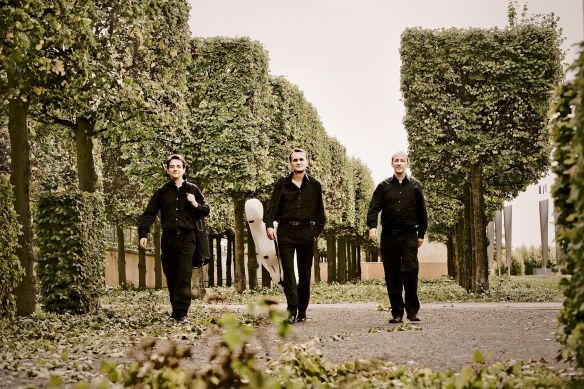
Trio Jean Paul (above) (Ulf Schneider (violin), Martin Löhr (cello), Eckhart Heiligers (piano) Photo (c) Irene Zandel

Haydn Piano Trio in F# minor, HXV:26 (1795)
Brahms, arr Kirchner String Sextet no.2 in G major Op.36 (1864-5)

Wigmore Hall, London; Monday 23 October 2017

Written by Ben Hogwood

The broadcast can be heard on the BBC iPlayer by clicking here

In recent years the piano trio format – piano, violin and cello – has suffered a little in live performance, due to the retirement of the magnificent Beaux Arts and Florestan Trios, arguably the two best established groups in the form.

That effectively promotes the Trio Jean Paul to the forefront of the established piano trios, and their performing chemistry, built over two decades, was there for all to see in this BBC Radio 3 Lunchtime Concert.

They began with Haydn, godfather of the piano trio, who effectively introduced the form with his 30 or so works for the combination. At this point in musical history the piano was the dominant force, the violin and cello effectively building on its melodic ideas. All that was to change with Beethoven, but even in Haydn’s works the spirit of exploration is making itself felt. In the unusual F sharp minor work, one of three the composer wrote in London in 1794, the ‘new’ can be felt in the strangely elusive mood and the unusual choice of keys that are much less friendly for the string players.

Contrasting with this was the massive String Sextet no.2 of Brahms, its instrumentation condensed by the composer’s friend, fellow-composer Theodore Kirchner. The arrangement had Brahms’ approval, and was made along with an arrangement of the first sextet to open up the music to amateur musicians. However it must have been a difficult beast to master with so much music for three performers! With Brahms having already written three published piano trios, and one unpublished, the need for two more is debatable – but it was interesting to hear it at this concert nonetheless.

Follow the music

The times used relate to the broadcast link above.

Haydn Piano Trio in F# minor, HXV:26 (from 2:47) (14 minutes)

This particular trio is surprisingly sombre in its demeanour, and even though the piano looks to explore some brighter passages in the first movement (from 3:36) the minor key harmonic language returns to keep things relatively straight faced. The second movement, marked Adagio cantabile (from 8:22) is a different story. Set in the exotic key of F sharp major, it brings a radiant, singing line to the melody, in music that Haydn also uses as the third movement of one of his ‘London’ symphonies, no.102 in B flat major. For the finale, a kind of minuet (from 12:11), we return to a dissonant and uncertain outlook, still relatively downcast at the end.

Brahms, arr Kirchner String Sextet no.2 in G major Op.36 (from 19:06)

The work opens with quite an imposing stance, its first theme given an airy tone by the first violin. This is countered by the cello, with a rich second theme at 21:25. Brahms develops these themes intensively as the movement progresses. Then at around 29:15 the mood becomes much more thoughtful as Brahms recaps the original melodies, and this section leads to a strong, richly coloured close of a really substantial movement (33:16) – at 14:10, longer than the entire Haydn!

The second movement is a Scherzo, and is beautifully scored at the outset by Kirchner, with violin and cello pizzicato (plucking). This slightly furtive section is contrasted by a vigorous trio section (37:05) before the music subsides again to the mood of the opening – though it gathers itself once more at 40:54 to sign off in style.

From 41:35 we move into the slow movement, which is harder to define in the shadowy outlines of the melodies we hear on the stringed instruments. The underlying tension within the music is suddenly released with a quicker section at 44:56, the piano jousting with the strings, before the slow music comes back, more restful this time.

At 50:56 the final movement begins, initially in an outlying harmony but moving to G major where the music can assert itself. The energy gathers from then on, the last few minutes a triumphant assertion of the melodic ideas and the home key, signing off at 57:42.

Thoughts on the concert

Despite a very strong technical performance, it was still quite difficult to warm to Theodore Kirchner’s arrangement of Brahms’s Second Sextet. This was probably because of the knowledge that the glorious colours of the original are to an extent compromised in the arrangement, and that changing from six instruments to three makes the music sound a lot more congested.

With that said the Trio Jean Paul gave an excellent, forthright performance that took Brahms’s challenges head on, and also left room for the shadowy outlines of the third movement – where we did admittedly lose the underlying pulse for a little while. Ulf Schneider’s sweet tone at the opening of the first movement was rather beautiful however, matched in the second theme by cellist Martin Löhr. Pianist Eckhart Heiligers did extremely well with the busy part he was assigned, and the weighty finish to the work was most impressive.

The Haydn felt ‘authentic’ and captured what seems to be an awkwardness on the composer’s part in writing this work, a blend of adventurous harmonic writing and seemingly confused emotions.

Further listening and reading

You can hear Trio Jean Paul’s recording of both Kirchner arrangements of the Brahms String Sextets on Spotify below:

You may also wish to compare them with the richly scored originals, given here in a new recording by an ensemble including the Capuçon brothers, violinist Renaud and cellist Gautier:

Meanwhile for fans of the Haydn Piano Trios – which make wonderful music to work to – here is a disc the Trio Jean Paul released in 2013, including the works performed in this concert: