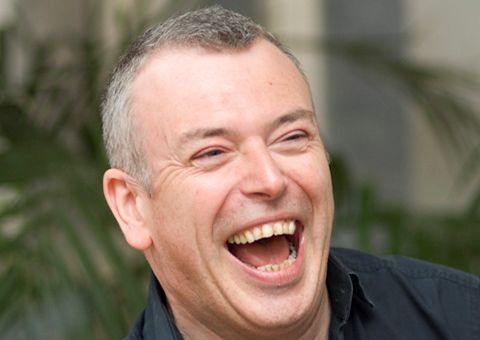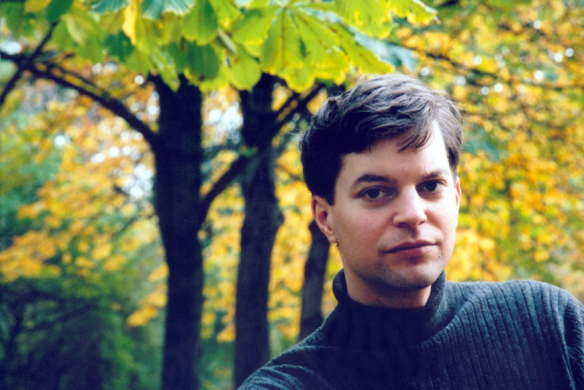
Wigmore Mondays – Till Fellner plays fantasies by Beethoven and Schumann

TF_photo_Monika_Groser2

Till Fellner (piano)

Wigmore Hall, London, 30 May 2016

written by Ben Hogwood

Audio (open in a new window)

http://www.bbc.co.uk/programmes/b07cyk0n

Available until 27 June

What’s the music?

Beethoven – Piano Sonata in E flat major Op.27/1 Quasi una fantasia (1800-1801) (16 minutes)

Schumann – Fantasy in C major, Op.17 (1836-1839) (32 minutes)

Spotify

In case you cannot hear the broadcast, recordings of the music played can be found on the Spotify playlist below. Till Fellner has not yet recorded either of the works, so recommended alternative versions have been used:

About the music

The subtitle for Beethoven’s Piano Sonata no.13 gives him permission to stray from the norm. By this time he had twelve piano sonatas already published, and so it would seem to be a reasonable time for experimentation. This is the first of two works bearing the subtitle Quasi una fantasia, the second of which is one of Beethoven’s most famous compositions, the Moonlight sonata. That should not overshadow this piece though, which is – as with all of Beethoven’s 32 sonatas – a very fine work.

Schumann’s Fantasy in C was meant to be dedicated to Beethoven as part of a memorial to the composer in Bonn, but as it turns out is an outpouring of love for his wife to be Clara. It is a kind of reverse of Beethoven’s ‘sonata like a fantasy’, being a ‘fantasy with the form of a sonata’. Despite the outpouring for Clara it is officially dedicated to Liszt, who was tasked with organising the memorial.

Performance verdict

Arcana was not present in the Wigmore Hall for this concert. However even on the radio it is clear that Till Fellner has great empathy with this music. While he is not massively demonstrative he plays with great clarity and a really impressive sense of melodic line, so that even in the most crowded of textures that Beethoven and Schumann employ, the tunes can still clearly be heard.

The link between the two pieces is a fascinating one and makes for a thoroughly rewarding program, whether in Beethoven trying to escape his formal constraints, or Schumann applying them to a loose-limbed fantasy.

What should I listen out for?

Beethoven

1:46 The first movement begins softly, with an Andante tempo marking (at a walking pace). Gradually the intensity grows, but the sudden jump to Allegro in C major at 4:26 still comes as a big surprise. The music returns to the mood of the beginning.

6:37 The second movement is in C minor, a kind of modified Scherzo that actually sounds quite stern.

8:42 A slow third movement in A flat major, which brings back a few memories of Beethoven’s earlier Pathetique sonata, which had a slow movement in the same key. This one is expressive and thoughtful but with more forward movement than in that piece.

11:52 – a transition from the slow movement takes place without a break, moving into a positive and much quicker finale. Beethoven writes this in a ‘rondo’ form – which means we hear the main theme (‘A’) a lot – but we also hear the theme from the slow movement again (‘C’). The form is A-B-A-C-A-B.

Schumann

19:55 – few pieces for piano start with quite the immediate flow of the Schumann, which has a torrent of notes to begin with, a sea of romantic thought. Gradually the ardour cools a little, but around 25:40 it returns, and the continuous, unbroken stream of Schumann’s inspiration is clear. The movement ends softly, seemingly lost in thought.

33:03 – a triumphant march for the second movement, one of Schumann’s most positive musical thoughts – and set in the key of E flat major, home of Beethoven’s Eroica symphony and, later on, Schumann’s own Rhenish symphony – which this movement seems to anticipate. It is a proud, noble piece of music.

41:19 – the third and last movement starts with cool arpeggios, back in the key of C major, before an ardent tune heard from 41:46 in the right hand, one of the staples of the movement. There follows a long and slow build towards 46:15, where Schumann makes a grand statement, before retreating to more reflective music again. The same happens at 49:57, by which time Schumann has worked his way back to C major. Here the music stays in peace and harmony, one of the composer’s most settled states of mind.

Encore

53:24 More Schumann, this time a brief excerpt (1:40) from Carnaval, his short series of postcard portraits of masked revellers for the piano. This one is the fifth of 21, Eusebius – reflecting the composer’s ‘calm, deliberate side’ according to Wikipedia.

Further listening

The obvious next port of call from the Beethoven is his next piano sonata, also with the title Quasi una fantasia – which is of course the Moonlight. Here it is on Spotify played by Emil Gilels, the last three tracks of a superbly played trio of Beethoven sonatas:

From Schumann’s Fantasy there are two hugely enjoyable next steps – the first a set of eight Fantasiestücke published as Op.12, and another set of eight pieces called Kreisleriana, which end on a haunting note. They can both be heard as part of an Alfred Brendel Schumann collection below:

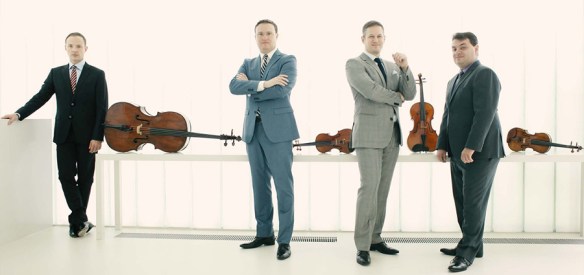
Wigmore Mondays – Pekka Kuusisto & Nicolas Altstaedt: Music for violin and cello

kuusisto-altstaedt

Pekka Kuusisto (violin), Nicolas Altstaedt (cello)

Wigmore Hall, London, 23 May 2016

written by Ben Hogwood

Audio (open in a new window)

http://www.bbc.co.uk/programmes/b07c3r1b

Available until 23 June

What’s the music?

J.S.Bach – Two part inventions (c1720-23) interspersed with Widmann – Duos for violin and cello (2008) (24 minutes)

Ravel – Sonata for violin and cello (1920-22) (23 minutes)

Spotify

In case you cannot hear the broadcast, recordings of the music played can be found on the Spotify playlist below where available. Not all of the Widmann pieces have been recorded yet, but where possible good alternative versions have been used:

About the music

As the Wigmore Hall programme writer Gerald Larner notes, the combination of violin and cello is a surprisingly scarce one in classical music. There are hardly any recognised works for the pairing, the two most notable being duos by Ravel and Kodály, but just recently the German composer and clarinettist Jörg Widmann (b1973) has shown real creativity in his 24 duos.

They make an ideal contrast with the Bach Inventions, which transcribe seamlessly from keyboard to violin and cello, the violin taking the right hand part and the cello the left. In doing so they bring out the counterpoint behind the music. Widmann’s pieces are more about instrumental colour, but they have melody too – and he enjoys sending up particular dance forms and such, especially when he includes a James Bond theme in the final piece!

Even a composer as accomplished as Ravel did not find the combination of violin and cello an easy one. He began the Sonata in 1920 as a tribute to Debussy, but did not finish it for another year and a half, distracted by a house move and fuelled by the need to give his music a new austerity. Despite the use of only two lines the composer’s flair for harmonic movement still comes through, though the piece does still sound impressively modern.

Performance verdict

A wholly enjoyable concert, thanks to the chemistry between two performers who clearly enjoy their craft. Pekka Kuusisto has always been a charismatic violinist but Nicolas Altstaedt more than matched him here, and because they were in close proximity on the Wigmore Hall stage it was easy to see them as one instrument rather than two.

The interpolation of Bach and Widmann was a clever one, because the music of the former was notable for clean lines and impeccably worked out counterpoint, while the latter concentrated on colours, feelings and dance forms. Moving between the two extremes was a constant source of musical stimulation, and was brilliantly performed – especially in the final Widmann piece, a real tour de force.

The Ravel was superb, helped by the ability of these performers to project while playing incredibly quietly. Because of this the slow movement was the most searching of the four emotionally, potentially a tribute to the departed Debussy. The faster movements were thrilling, showing Ravel’s close relationship with differing dance forms but also the many and varied ways in which he extracts instrumental colour.

The encore, Sibelius’ first published piece, was inspired in its simplicity.

What should I listen out for?

Bach / Widmann

1:38 Bach Invention no.1 in C – there is a beautiful simplicity about Bach’s writing as the violin takes what would have been the right hand of the keyboard, and the cello the left. The counterpoint (i.e. the intertwining of melodies between the instruments) is immaculate.

3:19 Widmann Duo no. XIV Capriccio­ – Widmann’s coloristic effects include snapped pizzicato (plucking) and sudden, jarring phrases, as though the instruments are having a bit of a bout.

5:06 Bach Invention no.4 in D minor­ – after the outbursts of the Widmann it is almost a surprise to return to the clean tonality of the Bach, but it works well – and again the cello part finds itself in exact imitation of the violin

6:10 Widmann Duo no. XVI Petit ballet mécanique (Pas de deux) – a short and shady duo this, with short phrases and implied moods that never fully establish themselves.

7:10 Bach Invention no.6 in E – again Bach’s simplicity is all that matters here. The key of E major makes for a nice, open sound as the strings play with little vibrato.

11:17 Widmann Duo no. XXII Lamento – here Widmann is casting his mind back to the Baroque period, and the strings play close together with no vibrato – a stark sound

13:48 Bach Invention no.8 in F – a much quicker invention that works well in its string arrangement, the rapid movement of Bach’s figures passed between the instruments

14:41 Widmann Duo no. XXI Valse bavaroise – an exaggerated form of pastiche from Widmann here, with scratchy discords and long notes flying between the instruments, not to mention some pretty outrageous glissando passages from the cello!

16:46 Bach Invention no.14 in B flat – a quieter, more reverential piece.

18:38 Widmann Duo no. XIII Vier Strophen vom Heimweh – another slow Widmann piece, using a lot of double stopping so that it sounds more like a string quartet. Again the sound is cold, due to the use of mutes and the almost complete lack of vibrato.

20:48 Bach Invention no.15 in B minor – a solemn mood hangs over this invention, which again is played with very little vibrato – though the players do allow themselves a few liberties with variations of speed and volume.

22:31 Widmann Duo no. XXIV Toccatina all’inglese – a tour de force of virtuosity, this is the first of the Widmann pieces to be an obvious display vehicle for the two players, who rush up and down the fingerboard. There is an extended passage of plucking that briefly gives the music a Far Eastern feel, and there is a tune – where can you spot On her Majesty’s Secret Service?

Ravel

29:00 The first movement has shadowy beginnings, emerging as though from the mists – with the violin and cello very close together as they exchange musical thoughts. The clean timbres are a result of the players using harmonics – where the string is very lightly touched with the fingers on the left hand rather than pressed.

35:05 A faster movement that begins with both instruments plucking, and finds Ravel exploring a great many colours and combinations from this seemingly limited instrumental pairing. The sparse texture is a challenge for him, and sometimes he enhances it with scratched phrases and an almost complete lack of sustain, as in the passage from 36:10 onwards, with the cello’s furious chords.

39:08 The slow movement, a bleak utterance – and it is tempting to think it might owe its inspiration to the recently finished First World War. It takes a long time for the mood to rise above anything other than grim contemplation, but when it does there is a passionate piece of writing in the centre of the movement. Ravel, though is ultimately a positive composer, and this can be heard in the last phrases, which effectively shift the music from darkness to light.

46:04 The last movement reasserts a positive frame of mind with a vigorous jig, the two instruments playing with plenty of energy and rhythmic punch. The tune is catchy too! Ravel is the master of using instrumental effects for colour rather than for their own sake, and that is very much the case here, with harmonics, pizzicato, double stopping and different bowing techniques giving him a wide variety of shades. It is partly what makes this duo such compelling listening.

Encore

54:40 The fascinating encore is Water Droplets, the first published piece by the eight year old Jean Sibelius. It is incredibly simple – played entirely in pizzicato – but is all the more effective for that, as it paints such a vivid picture in its minute-long duration!

Further listening

Having mentioned the Kodály Duo for violin and cello it makes sense to include that as the extra listening here – on the same album as a substantial work for the combination by Erwin Schulhoff:

Meanwhile the video clip below gives an introduction to Jörg Widmann’s music for string quartet:

Wigmore Mondays – Jerusalem Quartet play Beethoven & Bartók

jerusalem-quartet

Jerusalem String Quartet (Alexander Pavlosky and Sergei Bresler (violins), Ori Kam (viola), Kyril Zlotnikov (cello)

Wigmore Hall, London, 16 May 2016

written by Ben Hogwood

Audio (open in a new window)

http://www.bbc.co.uk/programmes/b07b28t8

Available until 14 June

What’s the music?

Beethoven – String Quartet in G major, Op.18/2 (1798-1800) (25 minutes)

Bartók – String Quartet no.6 (1939) (32 minutes)

Spotify

In case you cannot hear the broadcast, recordings of the music played can be found on the Spotify playlist below. The Jerusalem Quartet have recently recorded Beethoven’s first published set of string quartets – of which this concert’s work is the second, while the Bartók appears here in a recording made by his fellow compatriots, the Takács Quartet:

About the music

Beethoven took a little while before letting himself on the string quartet discipline. This was in part due to Haydn’s formidable example, but also because he was writing in other forms of chamber music beforehand, such as the string trio, piano trio and wind quintet. When he did finally arrive at the quartet it was with a set of six pieces that gradually challenged several aspects of Haydn’s string quartet model. Perhaps the most obvious was the use of a scherzo (a more witty movement) over the minuet, an approach Haydn was moving towards but which Beethoven perfected.

The sixth and last of Bartók’s ground-breaking string quartets is viewed as the composer’s response to the onset of war. It is a deeply profound work, especially as the composer begins each of the four movements with a slow and sorrowful introduction. In the second and third movements this gives way to energetic Hungarian dance music, with a considerable strength of feeling that on occasion is tinged with bitterness. Once the final movement arrives the slow music has taken over to such an extent that it runs throughout, providing a profound final statement for a fine if occasionally difficult work.

Performance verdict

The Jerusalem Quartet have been playing the music of Bartók for some time now, culminating in a recording to be released in the Autumn. It showed clearly in this performance, for the Sixth String Quartet made a very strong impact. Their cohesion in the slow introductions was admirable, particularly in the power of the viola and cello solos, while the sardonic dance forms accessed by the composer in the middle movements were crisp in their rhythmic execution.

The Bartók made an ideal contrast with the Beethoven, which was good humour personified – with some nice jokes around the edges and a few more brusque statements that gave clues for the master’s future development. Again the quartet have spent a lot of time with Beethoven’s early work, and they clearly enjoyed the high spirited tunes and the poised dialogue that goes with them.

As an encore we had more Bartók, the pizzicato movement from his String Quartet no.4 – and again ensemble and execution were impeccable.

What should I listen out for?

Beethoven

1:21 –  A fresh, genial start. Very polite and charming – with a first section repeated at 3:14. Beethoven then develops his ideas from 4:59 and a slight shadow appears, the music now in the minor key. This does not last long, mind, for Beethoven returns to his original material in exceptionally good humour.

9:22 – The slow movement, an equally bright and positive piece of work. The tune itself is straightforward but memorable. At 11:35 Beethoven presents a much faster interlude, but just a minute later we return to the safety of the slow movement.

15:34 – even compared to the first two movements this one – the Scherzo – has a big smile on its face, and the quartet are huddled closely together, seemingly in discussion. At 17:27 the music takes a new direction, harking back a little to the slow movement – and then at 19:15 Beethoven cleverly works things back around to the main tune.

20:38 – the last movement is again a genial piece of music, though this time there is more of the characteristic Beethoven cut and thrust.

Bartók

28:33 – a slow and sad elegy from the viola begins the Sixth Quartet, the instrument alone for some time before the others join – and from there on the mood is one of restlessness and anguish. Bartók uses some strikingly dissonant chords, but the ensemble is kept close together – and each of the four instruments has its turn to speak. The harmonic language is complex but not without a key centre.

36:59 – this time the sad melody is assigned to the cello, and takes place over an unsettling rustle of tremolos from the other three instruments. Then at 38:23 a sudden change in mood as Bartók introduces a ‘recruiting dance’ (or Verbunkos in Hungarian) – which is the music played during military recruiting. It has a bitter edge but also touches of humour on the edges. Then around 40:50 a passage of extraordinary intensity, where the piercing higher register of the cello completely takes the lead in a striking tune. The movement continues in a fraught mood.

45:30 – the quartet unite in the sadness that begins the third movement, and each movement finds these periods of reflection getting longer. When the focus changes at 47:15 it is to a ‘Burletta’ – and at 47:26 you can hear the first and second violins playing the same melody – almost – as they are separated by just a quarter tone. There is a plaintive, folksy feel to some of this music, while the louder passages have a much more aggressive stance.

53:27 – a fourth slow introduction, and this one is probably the saddest of all in mood and concentrated in feeling. The quartet is close together throughout, at times speaking with one voice.

Further listening

If the Op.18 set of Beethoven appeals then I strongly recommend the Jerusalem Quartet’s new recording of all six works – fresh and vividly recorded.

Recommending a piece to complement the Bartók is very difficult, but it makes sense to explore another work written in 1939 by the composer for strings – his well-loved Divertimento, part of a disc recorded by Pierre Boulez and the Chicago Symphony Orchestra:

Wigmore Mondays – Ailish Tynan & Malcolm Martineau in French song

ailish-tynan

Ailish Tynan (soprano, above), Malcolm Martineau (piano)

Wigmore Hall, London, 9 May 2016

written by Ben Hogwood

Audio (open in a new window)

http://www.bbc.co.uk/programmes/b079m13q

Available until 8 June

What’s the music?

Fauré Cinq mélodies de Venise (1891) (12 minutes)

Debussy Fêtes galantes Set 1 (1892) (7 minutes)

Hahn Fêtes galantes (1892) (2 minutes)

Ravel Sur l’herbe (1907) (2 minutes)

Fauré Clair de lune (1887) (3 minutes)

Hahn À Chloris (1916) (3 minutes)

Poulenc Fiançailles pour rire (1939) (13 minutes)

Spotify

Ailish Tynan has recorded some of the Fauré songs in this recital, and in case the broadcast cannot be heard they are on the playlist below – together with other versions of the songs by Debussy, Poulenc and Hahn:

About the music

The contrast between these Verlaine settings is fascinating. Fauré’s Venetian set is heady music that flows, melodically rich but harmonically even more so, its flowing nature reflecting his ‘barcarolle’ piano writing and the watery setting.

Debussy’s, written just a year later, could almost be from another planet, with deep blue colours invoked by the singer and piano as they explored the mysterious worlds of the poet.

The central selection of songs shows off the abundance of French song writing talent at the turn of the century, while Poulenc’s Fiançailles pour rire, a brief but intensely concentrated cycle and the composer’s most popular for the female voice, explores extremes of emotion. It is a classic example of Poulenc’s bittersweet but utterly compelling ways of word setting.

Performance verdict

malcolm-martineau

Malcolm Martineau (piano)

French song lends itself well to an hour-long recital program, and in Ailish Tynan and Malcolm Martineau’s Wigmore Hall lunchtime concert we explored the extraordinary poetry of Paul Verlaine through the musical eyes of Fauré, Debussy and Hahn.

You would not have known Tynan was standing on for the indisposed Angelika Kirschlagers, so surefooted was her partnership with Martineau, and with her compelling performances, aided by expressive gestures, she took us on an instinctive and fascinating tour.

Fauré’s Venetian songs were glorious, and Tynan’s ability to vary her vibrato was invaluable, while Martineau had the essential Fauré ‘flow’ at the piano.

Debussy’s Fêtes galantes had the requisite mystery, while Hahn’s celebrated A Chloris sparkled in this partnership, but it was in the Poulenc cycle Fiançailles pour rire where Tynan really shone. From the breathless Il vole to the sorrowful Dans l’herbe, where the darkness at the very edge of Poulenc’s music was drawn in, this was a compelling performance. A beautiful encore, Fauré’s Nell, was followed by a characteristically funny introduction to Dave Frishberg’s Another Song About Paris, where both performers’ humour sent the Wigmore Hall audience away smiling.

What should I listen out for?

Fauré

1:38 Mandoline A jaunty song describing the ‘gallant serenaders…beneath singing boughs’. The grey moon at the end is suitably evoked by the flowing piano.

3:32 En sourdine The hazy twilight is immediately obvious in this rather sensual song, with a full timbre from the soprano and an accompaniment typical of Fauré’s broad, flowing style.

6:35 Green A greater urgency to this song, a heady statement of devotion with a spring-like air.

8:25 A Clymène The piano introduction evokes the ‘mystical barcarolles’ of the opening line of this song, an exotic and heavily perfumed statement with some awkward gaps between notes for the singer!

11:05 C’est l’extase This song (translating as ‘It is rapture’) certainly has a rarefied air, the soprano in a higher register as she swoons of the ‘delicate, fresh murmuring’ and the ‘subdued lament’ of two lovers.

Debussy

15:10 En sourdine A very different setting of this poem from Debussy, with a distant, mysterious picture immediately evoked by the piano. The singer is subdued and the tempo is much more deliberate than the Fauré setting.

17:58 Fantoches The swirl of the piano transports us to a completely different world, with quick glances and urgent musical statements, the soprano sweeping up to a top ‘A’ and back towards the end.

19:20 Clair de lune Debussy was to write a more famous Clair de lune for piano alone, but this one is just as evocative of the moonlight, somehow evoking the dark blue colours in its lustrous beauty.

23:29 Hahn Fêtes galantes The clanging octaves of the piano introduce a song that has a similar stop-start feel to the first Fauré song in this concert. The end is brilliantly done.

25:30 Ravel Sur l’herbe This song (which translates as On the lawn) is a rather bizarre Verlaine poem, a conversation between an abbot and some shepherdesses. Ravel captures all the back and forth between the speakers over an elusive piano line.

27:43 Fauré Clair de lune Fauré’s setting of moonlight has more defined lines than Debussy’s, and a longer piano introduction to set the scene, but has an understated beauty, supported again by a flowing accompaniment.

30:47 Hahn À Chloris Hahn’s celebrated love song is clearly influenced by Bach in its stately introduction, after which the soprano sings of pure, unconditional happiness in love. Very much a case of ‘less is more’!

Poulenc

35:09 La Dame d’André A song of uncertainty, describing a man about to marry who worries about his wife and if he’ll love her in the future. Poulenc’s response is appropriately worrisome – but the softer chord at the end suggests he’ll be alright!

36:35 Dans l’herbe A sorrowful and tortured song, particularly in the second verse – though there is a lightness of texture also. This brings in the darkness Poulenc often has at the very edge of his music.

38:38 Il vole Some breathless observations from the soprano in this song, with happiness elusive but not too far away. ‘I want my stealer to steal me’, she concludes.

40:38 Mon cadavre est doux comme un gant Once again a shadow falls over the music, and this strange song of a corpse casts its spell. With long, high notes it is a particularly tricky one for the soprano. Her last note (43:02) is telling, as it resolves the whole song.

43:26 Violon A strange air is around this song, because both soprano and piano operate at the highs and lows of their ranges. There is dark humour, too, as the singer tells of how ‘I love those long wailings’ of the violin. The harmonic language is exotic but restless too, until a clipped chord at the end.

45:27 Fleurs A simple air is around this song, which shows how Poulenc can make beautiful sounds from apparently very little. The text is repeated very quietly to a soft but rather sad close.

Encores

49:02 Fauré Nell (1878) The flowing piano and floated soprano line indicate this is a song of adoration. It is the sort of song that flings the doors wide open, though Fauré’s rapture is always just a little reserved.

51:32 Dave Frishberg Another song about Paris (4 minutes) A classic cabaret song, brilliantly written with just the right amount of humour in text and performance!

Further listening

Ailish Tynan’s disc of Fauré comes highly recommended, and can be heard on Spotify here:

If however you’d like to hear her in the music of her homeland, Ireland, An Irish Album is self-recommending:

Wigmore Mondays – Baiba and Lauma Skride play Nordic works for violin and piano

skride

Baiba Skride (violin) and her sister Lauma (piano, both above)

Wigmore Hall, London, 2 May 2016

written by Ben Hogwood

Audio (open in a new window)

http://www.bbc.co.uk/programmes/b078wy1n

Available until 31 May

What’s the music?

Sibelius Four Pieces Op. 78 (1915-17) (13 minutes)

Vasks Maza vasaras muzika (Little Summer Music) (1985) (10 minutes)

Rautavaara Summer Thoughts (1972/2008) (4 minutes)

Nielsen Violin Sonata No. 2 in G minor Op. 35 (1912) (20 minutes)

Spotify

In case you cannot hear the broadcast, recordings of the music played can be found on the Spotify playlist below. Neither of the Skride sisters have recorded this repertoire before, but there are other versions picked out instead:

About the music

An intriguing program based on the first instrument of composers Sibelius and Nielsen – the violin. While both composers wrote violin concertos that are either extremely well known (Sibelius) or appreciating gradually (Nielsen) their music for violin and piano is almost shrouded in secrecy.

Sibelius wrote a few sonatas but much more in the way of short pieces for violin and piano, many of which were requested as commissions for the salon market. The four here are characteristic examples of a composer who uses economy in his writing, often ending his pieces abruptly but using music of charm and poise – and inventive textures.

Nielsen’s Violin Sonatas are rarely heard, but the second sonata, completed in 1912, is a substantial piece that shows the composer’s ease with dealing in bigger forms of music. The second sonata falls between the third and fourth symphonies in his output.

We also hear shorter pieces for violin and piano by two composers heavily influenced by Sibelius and Nielsen, the Latvian Peteris Vasks and Finnish composer Einojuhani Rautavaara. The warmth felt in both sets of pieces show how Nordic music is not just about the cold!

Performance verdict

Arcana was not at the concert at the Wigmore Hall, but listening to the broadcast it is clear of the involvement both performers have in these works.

The deep-seated passion running through the third of the Sibelius pieces is striking and intense, with the technical mastery of what sounds like a tricky Rigaudon very stylishly achieved.

If anything the Second Violin Sonata of Nielsen carries a greater impact, for this is an impressive piece of work whose stature grows with each hearing. It is unjustly neglected for sure, and the Skride sisters give it an excellent performance here, the violinist’s tone especially impressive in the longer notes used by the composer for many of his themes.

Providing light for the relative shade are the works by Vasks and Rautavaara, full of charm, warmth and melodic invention. They complete a program with an outdoor feel, and both performers give this seldom-heard music the fresh performances it deserves.

What should I listen out for?

Sibelius

1:57 Impromptu The first piece of the four has a dreamy piano and more energetic violin, which feels free spirited over the relatively static harmony.

4:01 Romance The sweet tone of the romance is carried by the violin’s melody over a calm piano accompaniment. There is a childlike quality to the main material reminiscent of Schumann, but the music becomes more passionate.

7:14 Religioso A heavier feel to this, especially in the piano, which uses more of the keyboard in its part, and the lower register of the violin too. A melancholy piece.

12:55 Rigaudon A French dance that starts commandingly in the major key but then has a brief shadow of darkness (13:19) when it shifts into the minor. The rhythm is often syncopated in a way that suggests the tango, and the piece ends abruptly – as so many Sibelius pieces do!

Vasks

16:42 The opening section of this piece (marked Breit, Klangvoll) sounds like bird calls exchanged between the violin and piano.

17:55 A slow episode (marked Nicht Eiland), sweetly sung by the violin.

19:27 A dance, led by the violin, with a rustic, outdoor feel.

21:10 The music takes a serious tone, moving to a minor key, and appears lost in thought.

23:53 –  a glittering descent on the piano (a glissando) introduces another folksy section, with an outdoor feel.

25:21 – once again we hear the first section, with its bird calls.

Rautavaara

27:14 – Rautavaara’s interpretation of summer is a dreamy one, with a wandering line on the piano, but it gradually gathers its intensity for a passionate middle section, falling back and then gathering once again with the violin holding long, lyrical notes. It then fades into the middle distance.

Nielsen

32:25 – initially the mood is calm, starting on the lowest note of the violin, but the music wanders and soon the violinist is taking charge of a passionate section that includes a grand theme in C major around 34:31. By 37:30 the music is a little lighter on its feet but the exchanges continue to brim with passion. The movement ends with reflection at 39:40.

39:55 – the slow movement begins with a broad melody from the violin. The long notes are countered with a restless piano part. That spills over into a fraught statement at 40:48, after which the music calms down. The piano figure can never be fully shaken off however, and even when the movement ends sweetly at 46:48 it does so with the two note progression the piano used almost all the way through.

47:18 – the third and final movement flows with more serenity, and then the piano at 48:44 introduces a jubilant episode, joined in a high register by the violin. By this point the music has reached E major – the same key Nielsen uses as a home base in his exuberant Symphony no.4 (the Inextinguishable). The music gathers greater energy, and at 51:10 the piano hammers out brittle, percussive notes before the music fades to end.

Encore

53:11 – the Mazurka by Sibelius, Op.81/1, the first of five published pieces. This is a piece with plenty of fire in its introduction, but charm when the theme is heard again, softly, at 53:52. The violin has to move between passionate low register tune and a swift upsurge to the high register.

Further listening

Baiba Skride has recorded both the Sibelius and Nielsen Violin Concertos, and these can be heard in company with Sibelius’ 2 Serenades for violin and orchestra. They are on Spotify here: