
In concert – Alisa Weilerstein, CBSO / Joshua Weilerstein: Dvořák, Rachmaninoff & Still

Alisa Weilerstein (cello, below), City of Birmingham Symphony Orchestra / Joshua Weilerstein (above)

Still Poem for Orchestra (1944)
Dvořák Cello Concerto in B minor, B191 (1894)
Rachmaninoff Symphonic Dances, Op. 45 (1940)

Symphony Hall, Birmingham
Wednesday 12 March 2025 (2:15pm)

Reviewed by Richard Whitehouse Picture of Joshua Weilerstein (c) Beki Smith

Joshua Weilerstein is always a welcome returning artist to the City of Birmingham Symphony Orchestra, invariably with artful programmes such as this afternoon’s interplay of American music with that by European composers finding themselves in temporary or permanent exile.

The music of William Grant Still has made a tentative re-emergence over recent years, Poem for Orchestra being typical of that from his maturity in its galvanizing a late-Romantic idiom with an emotional range of almost cinematic immediacy. Weilerstein steered a secure course through a piece whose darkness-to-light trajectory mirrors that of an accompanying poem by the composer’s wife Verna Avery, in which the foreseeable end of world war might yet bring a new unity and compassion as is reflected through the enfolding euphony of its final pages.
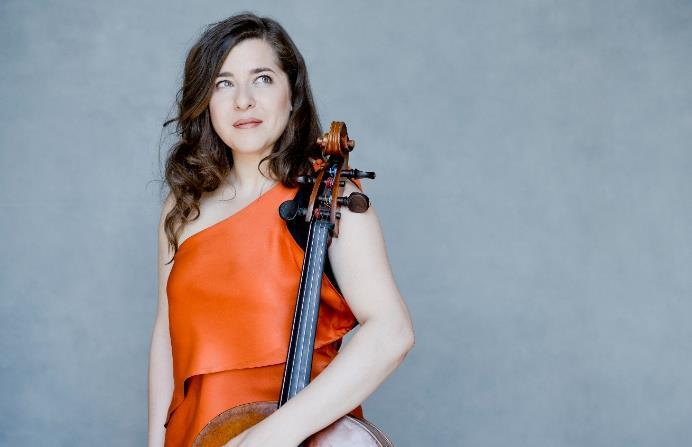
Joshua and his sister Alisa (above) have both appeared often with the CBSO, though Dvořák’s Cello Concerto seems to have been their first Symphony Hall collaboration. Hopefully not the last, their rapport manifest as soon as the opening Allegro’s orchestral tutti has run its purposeful course. Any marginal falling-off of momentum over the latter stages of the development was more than offset by the soloist’s thrilling ascent into the reprise of the easeful second theme, with the coda’s treacherous passagework assuredly negotiated prior to an affirmative ending.

The ensuing Adagio is the work’s emotional heard in all respects, but these siblings rightly refrained from milking the pathos of its ruminative main theme at all times, so throwing the drama of the central episodes then especially the confiding intimacy at its close into greater relief. Lunched directly, the Finale exuded an impetus as sustained this movement through to its extended coda which, more than usually, seemed to warrant a raptly inward outcome – though there was nothing contrived about the heady arrival of those exhilarating final bars.

Rachmaninoff’s Symphonic Dances is hardly a stranger to concert programmes these days, the CBSO having given several memorable accounts in recent seasons. That by Weilerstein was certainly among them, above all with an opening dance whose trenchant outer sections elided perfectly into then out of the central span characterized by Kyle Horch’s soulful alto saxophone. Nor did the Tempo di valse disappoint in its mingled stealth and malevolence, even if the closing pages perhaps dispersed their ominous aura just a little too temperately.

Much the most difficult movement to hold together, the final dance left a potent impression. Its outer sections never rushed and superbly articulated, Weilerstein made the most of that spellbinding transition into a central section where (uniquely with this composer) harmony or texture predominate over melody in defining this music’s expressive persona. From here he ratcheted up tension heading to a seismic confrontation of competing plainchants, then a denouement almost choreographed in its stillness as that final tam-tam echoed into silence.

Directing without a score, this is definitely a work with which Weilerstein feels an especial identity, and the CBSO was unstinting in its collective response. One can only look forward to further concerts between this orchestra and conductor, and hopefully in the coming season.

For details on the 2024-25 season A Season of Joy, head to the City of Birmingham Symphony Orchestra website. Click on the names to read more about conductor Joshua Weilerstein, cellist Alisa Weilerstein and composer William Grant Still

Published post no.2,472 – Thursday 13 March 2025

In concert – Yeol Eum Son, CBSO / Jonathon Heyward: Still, Prokofiev & Sibelius

Yeol Eum Son (piano, below), City of Birmingham Symphony Orchestra / Jonathon Heyward (above)

Still Threnody: In Memory of Jean Sibelius (1965)
Prokofiev Piano Concerto no.2 in G minor Op.16 (1912-13, rev. 1923)
Sibelius Symphony no.5 in E flat major Op.82 (1914-19)

Symphony Hall, Birmingham
Thursday 24 October 2024

Reviewed by Richard Whitehouse Pictures (c) Laura Tiesbrummel (Jonathon Heyward), Marco Borggreve (Yeol Eum Son)

American by nationality, and currently music director of the Baltimore Symphony Orchestra, Jonathon Heyward is no stranger to orchestras in the UK and this afternoon’s appearance with the City of Birmingham Symphony Orchestra confirmed a rapport that will hopefully continue in future seasons.

His symphonic output may now be well covered by recordings, but performances of William Grant Still remain infrequent such that his Threnody came as a welcome novelty. Dedicated to Sibelius in the anniversary year of his birth, this finds its composer in understandably sombre mood (akin to that of his masterly concertante piece Dismal Swamp from two decades earlier) and, while there is little about its content that recalls the Finnish master, the interplay between elegy and processional is effectively handled through to its subdued yet highly affecting close.

It might not have enjoyed the popularity of its successor, but the CBSO has given memorable accounts of Prokofiev’s Second Piano Concerto over the decades and the present reading with Yeol Eum Son (above) was as good as it gets in a piece that does not make things easy technically or interpretatively. Starting reticently, the opening movement duly hit its stride in the capricious second theme before the orchestra made way for Son’s electrifying take on a cadenza which encompasses development and reprise; the orchestra’s climactic return being no less visceral.

Wresting coherence out of the unlikely formal design of this work is hardly an easier task but, here again, there was no doubting Son’s insight as she fairly tore through its Scherzo without loss of clarity; she and Heyward then drawing abrasive irony out of an intermezzo which can easily descend into caricature. Nor was there any lack of focus with a Finale whose headlong outer sections frame one of folk-tinged pathos – afforded a cumulative intensity only outdone by the propulsive closing stage where soloist, orchestra and conductor were thrillingly as one.

If the reading of Sibelius’s Fifth Symphony after the interval did not quite maintain this level of excellence, it was no also-ran as a performance. Heyward might have observed the Tempo molto moderato of its initial movement more literally, as his swift underlying pace made for too precipitate a climax into its scherzo-like second half. The accelerating transition between them was adeptly managed, but there was little room left for manoeuvre during the approach to a coda where not even the CBSO’s unfazed commitment could gain the necessary velocity.

Neither did the second movement lack forward motion, though here Heyward found a viable balance between the andante and allegretto elements – its (mostly) ingratiating poise abetted by felicitous playing from CBSO woodwind. Setting off impulsively, the finale rather lacked eloquence in its ‘swan theme’ but the resourceful evolution of its material was never in doubt. Other performances have conveyed greater emotional breadth thereafter yet, as those indelible six closing chords unfolded, there could be no doubting their decisiveness as parting gestures. Overall, then, this was impressive music-making with Heyward evidently a conductor on a mission. Next Wednesday brings a programme of Spanish evergreens conducted by Kazuki Yamada, with Miloš Karadaglić taking centre-stage in a certain guitar concerto by Rodrigo.

For details on the 2024-25 season A Season of Joy, head to the City of Birmingham Symphony Orchestra website. Click on the names to read more about pianist Yeol Eum Son and conductor Jonathon Heyward – and for a special website devoted to composer William Grant Still

Published post no.2,345 – Monday 28 October 2024

In concert – English Symphony Orchestra / Kenneth Woods – American & Canadian Sounds 2

Roman Kosyakov (piano), Rebecca Wood (cor anglais), Stuart Essenhigh (trumpet), English String Orchestra / Kenneth Woods

Barber Adagio for strings Op.11a (1936)
Still (arr. Zur) Dismal Swamp (1935)
Gershwin (arr. Farrington) Rhapsody in Blue (1924)
Copland Quiet City (1941); Appalachian Spring (1945)

Kings Place, London
Sunday 19 February 2022

Reviewed by Richard Whitehouse

London appearances by the English Symphony Orchestra being so infrequent, it was good to see an (understandably) scaled-down orchestra returning to Kings Place for the series American & Canadian Sounds that is taking place under the auspices of London Chamber Music Society.

The ubiquitous Adagio that Samuel Barber arranged from his only string quartet almost had to feature here, but that was no hardship given the excellence of the ESO’s playing – the silence after its climax rightly made the focal-point around which this whole performance revolved.

Although his music never entirely went away, the extent of William Grant Still’s output has barely been explored so all credit to Kenneth Woods for championing Dismal Swamp (heard here in an effective reduction by Noam Zur). Taking its cue from a short yet intense poem by playwright Verna Arvey (Still’s second wife), this 15-minute tone poem evokes the no-man’s land between Virginia and North Carolina across which escaped slaves once fled to freedom. Its concertante role for piano subtly embedded into the orchestral texture, the music charts a progression from sombre desperation to outward elation through a subtly extended tonality (Still having studied with composers as distinct as Chadwick and Varèse) whose apotheosis elides resolve and equivocation with a fervency which was tangibly in evidence.

Roman Kosyakov was the admirable pianist here as in George Gershwin’s Rhapsody in Blue. This also was heard in reduction, Iain Farrington’s arrangement combining the immediacy of Ferde Grofé’s original scoring with the Europeanized grandeur of his later orchestration. Placing the piano rear-centre of the platform likely accounted for any occasional failings of coordination, but Kosyakov’s characterful playing – not least in the lengthy developmental cadenza and ensuing ‘big tune’ – held one’s attention through to the indelible closing bars.

The play by Irwin Shaw for which he wrote incidental music might have passed into history, but Quiet City is among Aaron Copland’s most effective shorter pieces – its halting dialogue between cor anglais (Rebecca Wood) and trumpet (Stuart Essenhigh) given context by the modal plangency of its string writing.

The programme ended with Copland’s Appalachian Spring – heard here in the familiar suite but in the original orchestration with its prominent part for piano, along with solo woodwind contributions that stand out more clearly against the string nonet. Familiar as this music may be, its understated harmonic shadings and keen rhythmic ingenuity are never easily realized in performance, and it was testament to the ESO’s playing that the piece emerged as vividly and as cohesively as it did. In particular, the penultimate sequence of variations on ‘Simple Gifts’ had an unforced eloquence (the last statement of the Shaker hymn eschewing any hint of bathos) which carried through into the coda – its evocation of community no less affecting for being so idealized, and in music such as more than warrants that misused term ‘iconic’.

A rewarding programme and a welcome London appearance by the ESO, which will be back in action next month with (inter alia) a concert at Oxford’s Sheldonian Theatre that features a major new work by Robert Saxton as part of the orchestra’s ‘21st Century Symphony Project’

For more information on the artists in this concert, click on the links to read about Roman Kosyakov, Kenneth Woods and the English Symphony Orchestra. For more on the London Chamber Music Society, click here – and for more on composer William Grant Still, click here

In concert – Guildhall Chamber Orchestra / Joshua Weilerstein: Music by Andrzej & Roxanna Panufnik, Still & Copland

Joshua Weilerstein 58_credit Sim Canetty-Clark (2)

Heather Brooks (harp), Guildhall Chamber Orchestra / Joshua Weilerstein

Andrzej Panufnik Harmony (1989)
Roxanna Panufnik
Powers & Dominions (2001)
Still
Mother and Child (1943) [UK premiere]
Copland
Appalachian Spring: Suite (1943/5)

Milton Hall, London
Wednesday 27 October 2021

Written by Richard Whitehouse; picture of Joshua Weilerstein by Sam Canetty-Clarke

The Guildhall Chamber Orchestra was heard this evening at its regular base in a programme where works by father and daughter either side of the Millennium complemented music from American composers enjoying their greatest success in the run-up to the Second World War.

A pity that Harmony has remained among the lesser known of Andrzej Panufnik’s works, as this ‘Poem for Chamber Orchestra’ encapsulates traits that define his mature output. Scored for pairs of woodwinds and a group of strings (the size variable according to forces available) placed stereophonically, its 18 minutes effect the gradual coming-together of various textural, harmonic, rhythmic and melodic possibilities in what – unusually for this composer – is less a symmetrical (let alone palindromic) form than a cumulative design unfolding from the most speculative exchanges to sustained outpouring. Commemorating both the 75th anniversary of the composer’s birth and the 25th anniversary of his marriage, it exemplifies those concerns for long-term formal and expressive integration as are achieved here with seamless cohesion.

It received a reading of real commitment by the Guildhall CO under the attentive direction of Joshua Weilerstein (who will hopefully tackle some of the Panufnik symphonies in future), joined by Heather Brooks for Powers & Dominions by Roxanna Panufnik. A composer who has often expressed a love for the instrument, this ‘Concertino for Harp and Orchestra’ falls into two contrasted parts. Enigmatically duly emerges from speculative gestures to take on increasing emotional intensity as melodic elements derived from two of the Psalms come to the fore, while Sinisterly brings a bracing confrontation with the vibraphone and orchestral harp that climaxes in a wide-ranging cadenza then heads into a haunting recessional. Heather Brooks proved an adept and sensitive soloist for one of this composer’s more durable works.

Weilerstein was surely right in his introductory remarks to suggest that William Grant Still’s Mother and Child was tonight receiving its first hearing in the UK. Arranged from the second movement of this composer’s Suite for Violin and Piano and taking inspiration from Sargent Johnson’s eponymous sculpture, its 10 minutes weave diaphanous textures around a melody with overtones of a spiritual and which – as often with this composer – yields an appealing profile. It could yet prove a worthwhile addition to the roster of American works for strings.

The Suite from Copland’s ballet Appalachian Spring may need no such introduction, but it remains a testing assignment which the Guildhall CO tackled with increasing confidence. As a rule it was the more animated episodes that came off best, Weilerstein securing playing of no mean verve and rhythmic definition such as propelled the music forward as a cumulative entity. If the culminating Variations on a Shaker Hymn seemed a little too blatant in overall expression, the ensuing postlude struck a resonance through the sensitivity of its realization.

It certainly made for a fitting conclusion to this concert, and one in which the qualities of the Guildhall CO’s playing were enhanced by the consistency of Weilerstein’s insights across a varied and demanding programme. Hopefully they will be back working together before long.

For further information on the Guildhall current season head to their website. For more Joshua Weilerstein head here