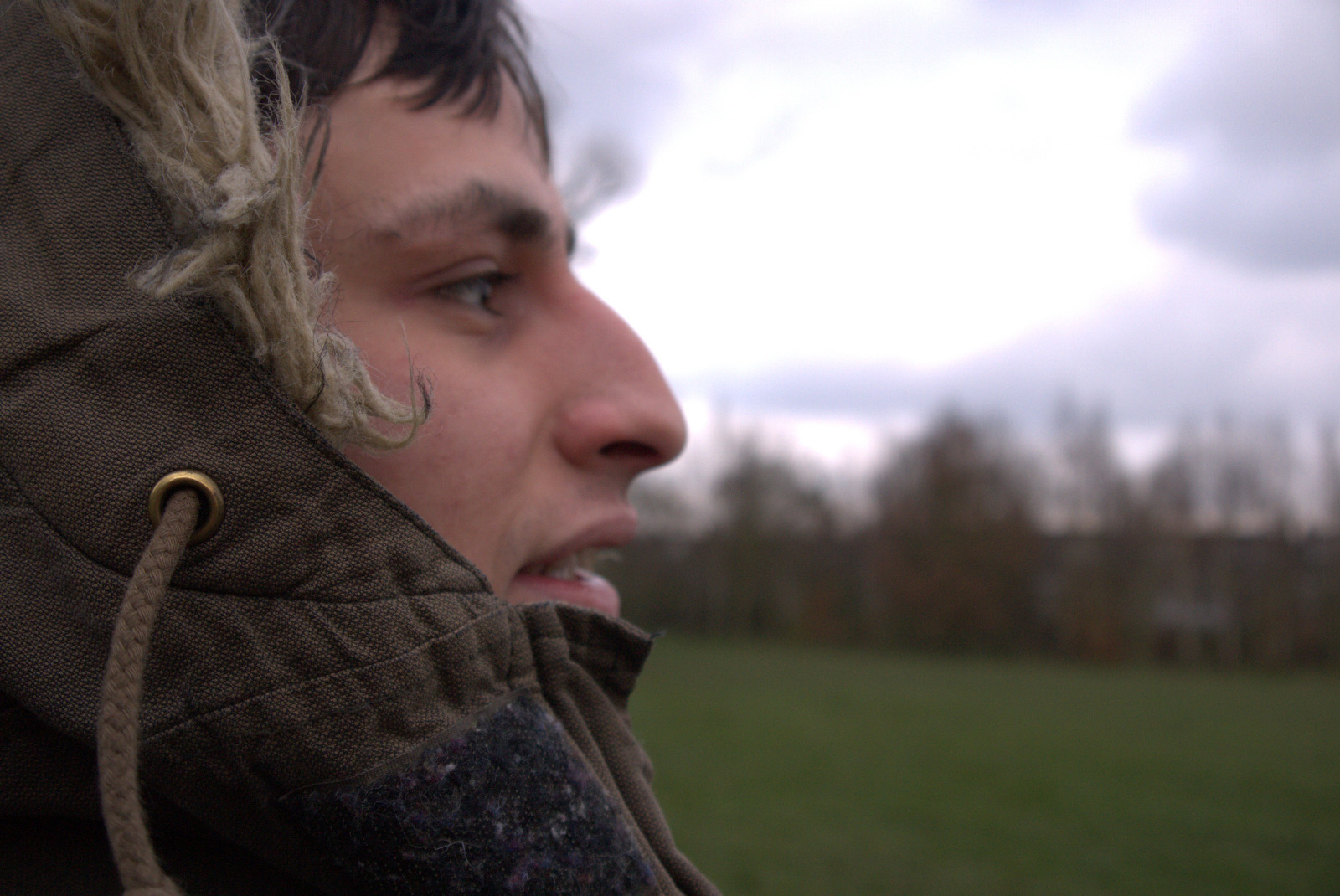
Daniel Patrick Cohen. Picture credit Alexandra Făgărășan
Arcana is delighted to hand our playlist baton over to Daniel Patrick Cohen, whose fascinating new album We Deliver is on our own playlist for review shortly.
Cohen, a Londoner living in Romania, has a particular love for film music and hip hop, and wrote a substantial score for Alfred Hitchcock’s The Pleasure Garden, as part of the British Film Institute’s Rescue The Hitchcock 9 enterprise, where composers were invited to score the director’s silent films.
With We Deliver, Cohen writes a love letter to hip hop in the form of a 32-track album featuring 67 musicians, described as a lo-fi work entirely made up of throwaway-type tracks that a hip hop producer might have written.
His playlist, then, contains 15 such ‘throwaway’ tracks, including inspired examples from the likes of Daft Punk, J Dilla, Radiohead, Björk and even Mozart alongside five of his own compositions blended in to reveal the loose connections. He elaborated for us:
“The idea is that these tracks were moments of magic which I imagine captured the mood on a day so perfectly that they resisted being developed and expanded. I think it’s worth elaborating that there’s nothing “lazy” about them; on the contrary, one could spend a lifetime waiting for these moments!”
Sutton A Fist Full of Fives (2016) Mozart Violin Concerto no.5 in A major K219 ‘Turkish’ (1775) Skalkottas Five Greek Dances (1931-6, arr. 1936) Beethoven Symphony no.5 in C minor Op.67 (1804-8)
Irène Duval (violin), CBSO Youth Orchestra / Michael Seal
Royal Birmingham Conservatoire Saturday 23 July 2022
Written by Richard Whitehouse
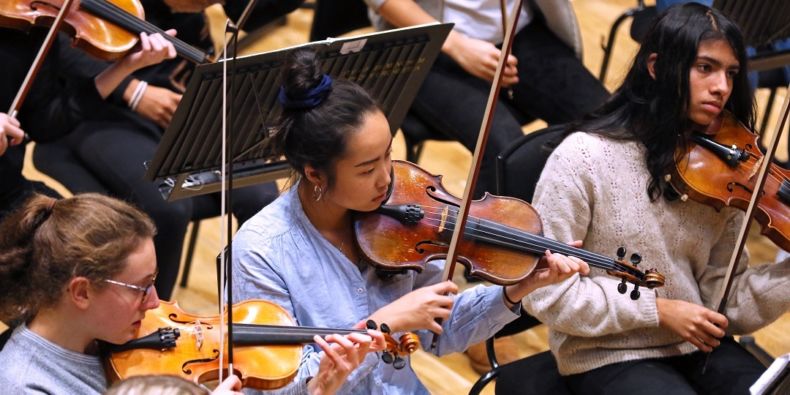
It may be the end of the main season, but that is no reason why the CBSO Youth Orchestra should not have had a concert scheduled for mid-July, with this judiciously contrasted and well-balanced programme assuredly playing to the collective strengths of its present line-up.
Although three of the works had a numerical connection with ‘five’, only the opening piece featured that number in its title. Written for an event featuring Beethoven’s Fifth and scored for similar forces, A Fist Full of Fives finds Adrian Sutton essaying a concert-opener whose interplay of vigorous (even a little martial) and more lyrical ideas evokes a mid-20th century American music evoking Piston or early Carter. Fluent and appealing if far from memorable, it duly put the orchestra through its paces to a degree which the CBSOYO met with alacrity.
Rather more memorable was the Five Greek Dances by Skalkottas which opened the second half. Admittedly the programme note led one to expect a selection from the overall 36 in the versions for full orchestra, rather than the present selection – from a set of seven – for strings. Yet the distinctive character of each dance is hardly diminished in these arrangements by the composer (a proficient violinist), and Michael Seal secured notably characterful playing in a sequence that proceeded from the swaggering Epirotikos, through the stealthy interplay of Kretikos and the bracingly astringent Tsamikos, to the gentle pathos of Arkadikos then the dashing Kleftikos. Fifty years after the CBSO’s world premiere of his First Symphonic Suite, it was good to hear these likely successors tackling Skalkottas with evident enjoyment.
In between those two pieces, Irène Duval gave Mozart’s Fifth Violin Concerto – not exactly underplayed these days, but worth hearing when rendered with such commitment. Not least an opening Allegro whose aperto marking (rightly) encouraged a deftness of phrasing that carried through to the closing bars. The Adagio was ingratiating without any hint of cloying, then the outer sections of the Rondeau an insouciance for which the lively Turkish music at its centre provided a bracing foil. The cadenzas (Duval’s own?) proved unfailingly apposite.
Closing the concert, Beethoven’s Fifth Symphony made a suitably unequivocal impression – not least an opening movement whose rhythmic trenchancy and purposeful rhetoric carried through to a forceful if never hectoring coda. Neither was there any hint of false grandeur in the Andante, its ruminative theme yielding subtlety and not a little humour as it wended its methodical yet never predictable course. Ensemble was a little ragged near the outset of the scherzo, but the transition into the finale had a simmering expectancy that made the latter’s blazing onset more visceral. This music’s familiarity tends to detract from its innovation of form and orchestration, but Seal pointed up such aspects in a reading that never risked losing focus as it headed to a coda whose reiterations of the home key made for a triumphal QED.
A worthwhile programme, then, with performances to match and exactly the sort of concert needed to inject needed impetus into the indolence of summer. The CBSOYO makes its first appearance next season with a programme of Verdi, Bruch and Lutosławski on October 30th.
For more information on the CBSO Youth Orchestra and their next concert, visit the dedicated page on their website. Click on the names for more information on Irène Duval and Michael Seal
Mozart Adagio and Fugue in C minor K546 (1783, rev 1788) Richard Strauss (arr. Burke) Morgen! Op.27 no.4 (1894) Doolittle A Short, Slow Life (2011) Dvořák (arr. Burke) Rusalka B203 – Song to the Moon (1900) Mozart Symphony no.39 in E flat major K543 (1788)
April Fredrick (soprano), English Symphony Orchestra / Kenneth Woods
Great Malvern Priory, Malvern Wednesday 15 June 2022
Written by Richard Whitehouse
This latest concert in its current season found the English Symphony Orchestra back at the Priory in Great Malvern in a programme with, at its centre, a contrasting triptych of vocal items from April Fredrick which continued her Affiliate Artist role in impressive fashion.
At its centre was a performance (the UK premiere?) of A Short, Slow Life, Emily Doolittle’s setting of a poem which finds Elizabeth Bishop at her most Dickinson-like with its reflection on growing up in a seeming Arcady latterly undone as much by existential as environmental factors. Enfolding and intricate, its scoring for nine instruments offers an evocative context for the vocal line to emerge from and with which to interact – Fredrick making the most of their dialogue in this winsome and, thanks to Kenneth Woods, finely co-ordinated reading.
Either side came chamber reductions from Tony Burke. In Morgen!, Strauss’s setting of John Henry Mackay, it was the understatement of Fredrick’s approach that compelled by drawing this relatively early song into the emotional orbit of those from half-a-century later. In ‘Song to the Moon’ from Dvořák’s opera Rusalka, her unaffected eloquence arguably came through more directly in an arrangement that (rightly) predicated the soloistic nature of the orchestral writing. Technically immaculate, Fredrick’s artistry was itself never less than life-affirming.
Framing this programme came two not unrelated works by Mozart. Written in 1783 when the composer was extending the formal and expressive weight of his music by intensive study of Bach and Handel, this C minor Fugue’s two-piano austerity took on a greater richness when arranged for strings and prefaced by a brief if searching Adagio which throws its successor’s contrapuntal density into greater relief. The ESO duly responded with playing of sustained trenchancy that incidentally reminded one no less than Beethoven took its example to heart.
Having given perceptive accounts of Mozart’s 40th and 41st symphonies earlier this season, it made sense that Woods and the ESO to include the 39th as opens what increasingly seems a symphonic triptych in design and intent. This performance was no less idiomatic – the first movement’s introductory Adagio imposing yet flexible so that its ‘heroic’ quality with those wrenching harmonies was never in doubt, the main Allegro building up tangible momentum through a tensile development then an even briefer coda decisive in its impetus and sweep.
Even more than its successors, the Andante is the heart of the work – among the most striking instances of that ineffable pathos Mozart made his own. Inward while with no lack of forward motion, it made a telling foil to the Menuetto with its bracing outer sections and a trio which featured a delectable expressive pause prior to a last hearing of the clarinet’s amiable melody. Nor was there any lack of wit in the scintillating finale, the repeat of its second half necessary for one of Mozart’s rare incursions into the ‘false ending’ beloved of Haydn to leave its mark. A fine conclusion, then, to another worthwhile concert by the ESO which returns early next month for a very different, all-American programme that includes a rare outing for the full-length version (including the ‘hurricane’ episode) of Copland’s ballet Appalachian Spring.
For further information on April Fredrick, click here, and for more on Emily Doolittle click here. To find out more about the artists, click on the names for more Kenneth Woods and the English Symphony Orchestra.
To celebrate the month of May, and what should in theory be a passage of warmer weather (!), Arcana is celebrating the art of the Serenade in a playlist.
Serenades have been a form in classical music for a good 250 years now, elevated to a higher form by Mozart but also perfected by 19th century composers such as Tchaikovksy, Dvorak and Brahms.
This playlist chooses selections from some of the best, venturing into the 20th century for examples by Elgar, Britten and Swedish composer Dag Wirén, while drawing on wonderful ‘drawing room’ music from the 18th century by composers including Mozart, Beethoven and Hummel.
Paul Lewis (piano), City of Birmingham Symphony Orchestra / Christoph König
Mozart Piano Concerto No. 27 in B flat major, K595 (1788-91)
Mahler Symphony No. 5 in C sharp minor (1901-02)
Symphony Hall, Birmingham Wednesday 21 April 2022, 2.15pm
Written by Richard Whitehouse
Back from a first European tour since the pandemic and following the Easter break, the CityofBirminghamSymphonyOrchestra hit the ground running with a programme of contrasts featuring Mozart’s last piano concerto and what is likely Mahler’s most popular symphony.
It may have been finished early during his final year, but Mozart’s27thPianoConcerto was drafted several years earlier, while its relative inwardness as compared to those from 1785-6 need not be read as fatalistic; still less be taken for valediction. This was certainly how PaulLewis approached it with a poised but never flaccid opening Allegro – its subtle contrasts of themes and dynamics creating their own, discreet momentum with an eloquent rendering of the development then a lucid cadenza such as brought the whole movement deftly full circle.
Might it be that this concerto is only as good as the best performances? Thanks to Lewis the central Larghetto never risked seeming plain spun or uniform, piano dovetailing into strings and woodwind to ingratiating effect. In the closing Allegro, ChristophKönig pointed up the dance-like robustness of its rondo theme with a lilting impetus as never faltered. This is one of Mozart’s few concertos where his own cadenzas survive; Lewis’s probing manner in the finale setting the seal on a reading as thoughtfully conceived as it was insightfully realized.
His recent recordings of Louise Farrenc having gained widespread praise, König is evidently a conductor in demand and his account of Mahler’sFifthSymphony provided a decisive, no-nonsense take on this much-played piece. Not least an initial FuneralMarch whose bracing objectivity did not preclude a more visceral response to its frenzied climax or ominous close. Its successor’s competing strands of violence and resignation were purposefully juxtaposed, through to the as-yet provisional emergence of the chorale then a tellingly speculative coda.
Time and again the central Scherzo fails to fulfil its role as this work’s formal or expressive crux, and if König’s approach fell short of the ultimate conviction, it was more than usually cohesive – whether in the discursive unfolding of its ländler-informed sections or the central trio with its rustically evocative overtones. Equally persuasive were those transitions either side, thereby endowing the movement with a cohesive follow-through which paid dividends during a coda whose unalloyed ebullience more than usually indicated what was to follow.
Most conductors now make the famous Adagietto a soulful interlude rather than full-blown slow movement, König going further by making it an extended introduction to the closing Rondo. This evolved almost seamlessly through the gradual intensification of ideas already heard towards the re-emergence of that chorale, here blazing forth with an affirmation that did not pre-empt those final bars in their almost nonchalant affirmation. Mahler might have written deeper finales, but not one whose triumph over adversity was so potently achieved.
An impressive demonstration, too, of the CBSO’s collective prowess (while not neglecting that of trumpeter MatthewWilliams) for what is well worth catching in Saturday’s repeat performance; before this orchestra offers ‘something completely different’ next Thursday.
For more information on the CBSO’s 2021-22 season, click here
Meanwhile for more information on the artists, click on the names to access the websites of Paul Lewis and Christoph König




 Arcana.fm