Listening to Beethoven #173 – 7 Variations on ‘Bei Männern, welche Liebe fühlen’ WoO 46

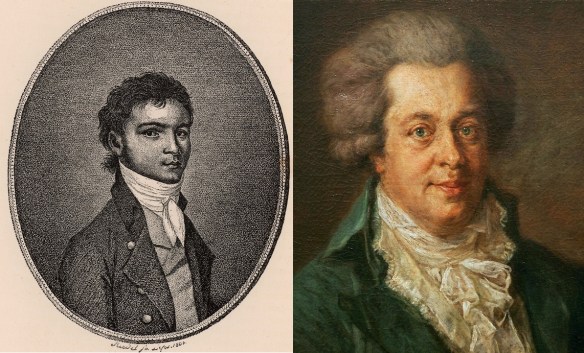
Ludwig van Beethoven and Wolfgang Amadeus Mozart (right, in a portrait by Johann Georg Edlinger)

12 Variations on ‘Ein Mädchen oder Weibchen’ from Mozart’s Die Zauberflöte Op.66 for piano and cello (1796, Beethoven aged 26)

Dedication Count Johann von Brown-Camus
Duration 9′

Listen

What’s the theme like?

The theme is a duet from Act 1 of Mozart‘s opera Die Zauberflöte (The Magic Flute), between the characters Pamino and Papageno, as below. It is an attractive tune in triple time, shared between the piano and cello in its higher register.

Background and Critical Reception

This set of variations is the third and last from Beethoven for piano and cello – and the second to use a theme from Mozart’s Die Zauberflöte. The inspiration is thought to have been two new productions of the opera appearing in Vienna in 1801. Steven Isserlis notes that despite its equal writing for both instruments, the first edition of Beethoven’s new work ‘fails to even mention the cello on its title page: pianistic chauvinism’.

This is all the stranger given the cello’s elevated role in Beethoven’s writing. As Misha Donat observes, writing for Philips’ recording by Heinrich Schiff and Till Fellner, ‘for the first time the two players are treated very much as equals. Their equality is inherent in the theme itself, which is laid out in such a way that the piano takes the part of Pamina, and the cello the answering voice of Papageno.

Isserlis takes the variations ‘depict various aspects of romance – from excited gossip to lofty ardour’. Marc D. Moskovitz and R. Larry Todd, in their wonderful book Beethoven’s Cello, observe how the fourth variation travels through the ‘parallel, though remote and rare, key of E-flat minor’, and Beethoven ‘reaches for the extremes’, the piano in its high register and the cello down low. Then, the three final variations ‘further deconstruct Mozart’s theme’, the last with a coda.

Thoughts

As the authors observe, Beethoven is bringing his ‘duo’ works to an ever more even keel. The theme here is a case in point, piano and cello united in their sharing of melodic material, and some effortless dialogue. Soon Beethoven is working through a busy second variation, before spicing up the melody with some chromatic additions. The questions and answers between the instruments continue, before the striking fourth variation in the minor key – tricky tuning for the cello here!

The two instruments have a lot of fun, finishing each other’s sentences in the fifth variation. Variation 6 is a florid affair, first for piano then cello, before the substantial finale, with the exuberant interplay of its coda – which also goes on a forceful excursion into the minor key. On the music’s return ‘home’ there is a bit more sparkling interplay before the two instruments sign off convincingly.

Recordings used and Spotify links

Adrian Brendel (cello), Alfred Brendel (piano) (Decca)
Mischa Maisky (cello), Martha Argerich (piano) (Deutsche Grammophon)
Miklós Perényi (cello), András Schiff (piano) (ECM)
Steven Isserlis (cello), Robert Levin (fortepiano) (Hyperion)
Nicolas Altstaedt (cello), Alexandre Lonquich (piano) (Alpha)

The Spotify playlist below includes all but one of the versions listed above – with the opportunity to hear a clip from Steven Isserlis and Robert Levin’s version on the Hyperion website

All versions are excellent, with operatic flair in evidence from Perenyi and Maisky. Once again though it is Robert Levin and Steven Isserlis who get to the heart of the piece and the enjoyment it can provide.

Also written in 1801 Woelfl Duo for cello and piano Op.31

Next up Lob auf dem dicken (musical joke) WoO100

Online concert review – Lars Vogt, Estonian Festival Orchestra / Paavo Järvi @ Pärnu Festival – Mozart & Tubin

paavo-jarvi

Lars Vogt (piano), Estonian Festival Orchestra / Paavo Järvi (above)

Mozart Piano Concerto no.24 in C minor K491 (1786)
Tubin Music for strings (1963); Suite from The Goblin (Kratt, 1961)

Pärnu Concert Hall, Estonia
Wednesday 14 July 2021, available online

Written by Ben Hogwood
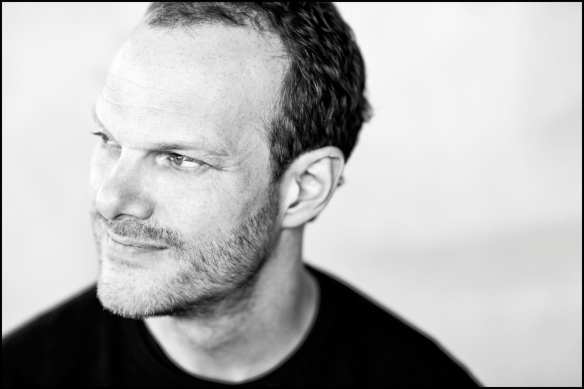
Picture of Lars Vogt (c) Giorgia Bertazzi

This attractive concert was one of the calling cards for the Pärnu Festival, an annual event marking the end of its first decade in the Southern Estonia city. Its patron, conductor Paavo Järvi, was conducting his ‘home’ orchestra, the Estonian Festival Orchestra, inspired by Lucerne’s festival orchestra, in a nicely devised program of Mozart and the seldom-heard composer Eduard Tubin.

To begin with, Järvi and the orchestra were joined by pianist Lars Vogt in one of Mozart’s stormier utterances, the Piano Concerto no.24 in C minor. Vogt has been an inspiration in his career but particularly of late, documenting his battle with cancer in an admirably forthright fashion. Part of his therapy is to play music, to the extent of playing on an upright piano during his chemotherapy sessions, and also to take every chance offered to him to playing music live.

This only heightened the admiration and enjoyment for his performance here, as with heartfelt playing Vogt got right to the centre of this most dramatic of Mozart’s concertos. Järvi followed his lead and was helped by some very fine wind playing, particularly in the slow movement. The first movement had a great deal of Sturm und Drang, the angular contours of the main theme ideally phrased. Vogt’s solo episodes were impeccably delivered but always had an ear towards the orchestra, where the strings gave incisive commentary. The final Allegretto allowed a bit more room for playful exchange, and there was a wonderful shaft of sunlight as the music turned from minor to major key, sensitively engineered by the conductor. As a suitable ⁹encore, Vogt chose Brahms’ Intermezzo in A major Op.118/2, watched appreciatively from the sidelines by Järvi.

Lars-Portrait-3-©-Giorgia-Bertazzi

Eduard Tubin‘s Music for Strings was an intriguing choice just after the interval, representing a desire for the festival to showcase the music of Estonia itself. Tubin, who died in 1982, is still under-represented on the stage, but this was the ideal platform from which to appreciate it. Music for Strings is a slightly elusive but compelling piece, resilient and attractively scored. It brings an economical and slightly classical approach, but with forward looking harmonic language. When the bass strings dug in during the passacaglia first movement the furrowed brow of Shostakovich could be glimpsed, yet the upper reaches of the violins felt as though the music was reaching further north. The second movement was more mysterious and questioning, while the finale, an Adagio, featured excellent solo violin playing from the unnamed Estonian Festival Orchestra concertmaster.

The program finished with a suite from Tubin’s 1943 ballet Kratt (The Goblin). Composition for the whole work began in 1938, making use of melodies from the Estonian Folklore Archive in Tartu. Although the Russian occupation of Estonia in 1940 forbade modern music, Kratt passed the sensors on account of its use of traditional themes, and not the way in which they were treated – which has reminiscences of Stravinsky and Prokofiev. Tubin constructed the shorter suite in 1961, to a commission from the Royal Stockholm Philharmonic Orchestra.

The ballet is based around a peasant who builds a magical figure (Kratt) in order to make him rich – but to do this he has to give three drops of blood to the devil. Perhaps not surprisingly the story does not run smoothly, with the peasant – and his soul – meeting a grisly end at the hands of the goblin. Yet the side plot of a love affair on the farm where the peasant lives brings more light hearted material.

Tubin’s music is ideal concert fayre, tuneful and with lively orchestration. Järvi ensured the syncopations of the dance numbers were sharply rendered, bringing through Tubin’s imaginative writing for wind and brass in particular. The final dance scene was the most captivating, with a soulful cor anglais solo leading into the driven rhythms of the Dance of the Exorcists, featuring the added punch of the orchestral piano. The Goat and The Cock were sharply characterised, bringing reminders of Mussorgsky’s Pictures At An Exhibition, before snarling brass punctuating the outgoing Dance Of The Northern Lights, a more rustic affair. The brass themselves were completely on point, especially in the final statement, warmly received by the audience.

This was a most enjoyable concert, confirming the warm atmosphere in which this festival operates. It is clear Paavo Järvi and friends are building something special here, and it is to be hoped when restrictions are finally lifted that the chance will arise to experience it in person.

You can watch the concert on the festival’s dedicated TV channel here

Lars Vogt talks about his music making after his cancer diagnosis in February and his ongoing treatment with Kate Molleson on BBC Radio 3’s Music Matters, available on BBC Sounds

For more information on the Pärnu Festival you can visit their website

In concert – Paul Lewis, CBSO / Chloé van Soeterstède: Mozart, Beethoven & Mendelssohn

chloe_conductor

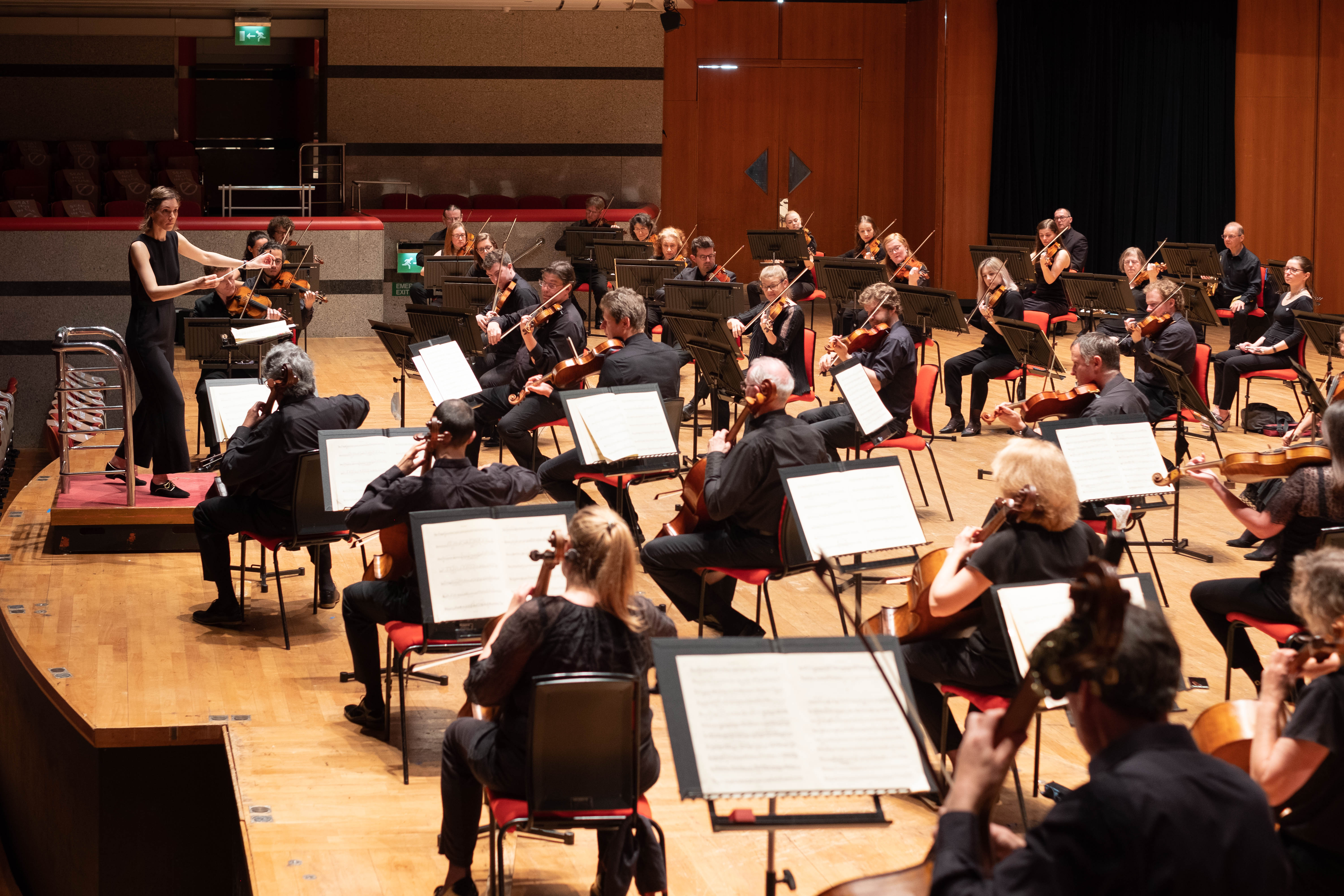
Paul Lewis (piano), City of Birmingham Symphony Orchestra / Chloé van Soeterstède (above)

Mozart Don Giovanni K527: Overture (1787)
Beethoven Piano Concerto no.2 in B flat major Op.19 (1787-9, rev. 1795)
Mendelssohn Symphony no.5 in D minor Op.107 ‘Reformation’ (1830)

Symphony Hall, Birmingham
Wednesday 2 June 2pm

Written by Richard Whitehouse

Photos from Symphony Hall by Hannah Blake-Fathers

‘Heaven and Hell’ might have been too histrionic a title for this latest concert by the City of Birmingham Symphony Orchestra, yet it indicated the trajectory of a programme featuring Mozart at his most Romantic, Beethoven at his most Classical then Mendelssohn at his most Baroque.

Making her debut with this orchestra, French conductor Chloé van Soeterstède played down the rhetoric in those indelible opening chords of the overture to Mozart’s Don Giovanni but maintained impetus throughout the deftly modified sonata design as it sets out the tone if not content of what follows. In its theatrical context the music continues directly into the opening scene, but – despite (or even because?) of its emotional terseness – the ‘concert ending’ is by no means un-effective in its propelling the dramatic focus on towards a decisive conclusion.

Paul Lewis then joined the CBSO for Beethoven’s Second Piano Concerto – actually, the first in chronological terms and easy to underestimate in terms of its stylistic antecedents. Yet, as Lewis demonstrated in engaging terms, this is only incrementally less then characteristic and such as the close of the first movement’s initial tutti and transition into the reprise could only be by Beethoven. Lewis now feels the composer’s 1809 cadenza involves too great a stylistic disparity, and his own solution is formally and expressively consistent with what went before.

The highlight of this performance was nonetheless the Adagio (probably the earliest music in what was a lengthy gestation), limpid and poetic while never cloying – the closing interplay between soloist and orchestra unerringly well judged. Lewis then set a swift if not headlong tempo for the ensuing Rondo which gave full rein to the music’s bracing vigour but also its deftly ironic asides. Not least those tonal sideslips near the outset of the coda, with pianist and conductor at one in projecting an ebullience right through to the spirited final pay-off.

Good to see Mendelssohn’s Reformation reasserting its place in the repertoire after decades at the periphery. With controversies over a Jewish-born composer commemorating a Protestant anniversary (and quoting the ‘Dresden Amen’ of Catholic liturgy) now consigned to history, the innate power of the initial Allegro can readily be appreciated and not least in so assured a reading as this. Van Soeterstède brought out its inexorable onward motion in full measure, the scherzo providing an ideal foil in its infectious gaiety and the whimsical guile of its trio.

Eloquently rendered as a soulful ‘song without words’, the third movement thus balanced the work’s introduction as a searching contrast to what follows – here, a finale which unfolds as an extended paraphrase on the Lutheran chorale Ein’ feste Burg ist unser Gott, its heady if sometimes overbearing emotional force adroitly channelled toward a fervent apotheosis. The CBSO woodwind made a felicitous contribution, not least Marie-Christine Zupanic with the flute’s gentle intoning of that chorale – Mendelssohn’s devotion to Bach here made manifest.

An auspicious showing for Van Soeterstède, who will hopefully be returning in due course. Next week sees a very different programme of Britten’s Nocturne and Malcolm Arnold’s Fifth Symphony, doubly welcome in view of his centenary and its close association with the CBSO.

For further information about the CBSO’s current series of concerts, head to the orchestra’s website

For further information about the next concert on Wednesday 2 June, click here, and for more on conductor Chloé van Soeterstède you can visit her website

Listening to Beethoven #108 – 12 Variations on ‘Ein Mädchen oder Weibchen’ Op.66

Ludwig van Beethoven and Wolfgang Amadeus Mozart (right, in a portrait by Johann Georg Edlinger)
12 Variations on ‘Ein Mädchen oder Weibchen’ from Mozart’s Die Zauberflöte Op.66 for piano and cello (1796, Beethoven aged 26)

Dedication thought to be Friedrich Wilhelm II, King of Prussia
Duration 10′

Listen

What’s the theme like?

The theme is Papageno’s aria, from Mozart’s opera Die Zauberflöte (The Magic Flute), where he expresses his desire for a wife over a glass of wine:

Background and Critical Reception

Beethoven’s flurry of activity writing for the piano and cello in 1796 yielded four works. Alongside the two groundbreaking sonatas published as Op.5 came two sets of unpublished variations, seemingly inspired by the same dedicatee and performers. The first set had fun with music by Handel, yet – as the excellent Beethoven’s Cello book reveals – this one has slightly more serious origins.

‘In all likelihood Beethoven finished these variations after his return to Vienna’, says the book. They were not published until 1819, when they were assigned the opus number 66 – overlooked when the Fifth Symphony was published ten years earlier. The book suggests Beethoven encountered The Magic Flute in Berlin, thanks to Frederick William II’s promotion. The roots of the piece, however, appear to lie in Beethoven’s competitive edge. They may have been designed in response to Abbé Gelinek, a pupil of Beethoven’s teacher Albrechtsberger and a popular piano teacher in Vienna.

Gelinek had already completed a set of ‘frivolous piano variations’ on Ein Mädchen oder Weibchen three years earlier. ‘Beethoven seems to have taken his lead from Gelinek’s six variations by producing twelve’, says the book, ‘starting in the same manner so he could eventually ‘out-compose’ his rival’. Gelinek’s is entertaining and pleasing, but not musically adventurous; Beethoven’s more assertively tests the limits of the theme and probes the possibilities for constructing a little musical drama around it. A contemporary review questioned Beethoven’s potential as a composer, for he was guilty of unusual tonal movements and ‘harmonic harshness’.

Thoughts

Beethoven has a lot of fun here. A perky introduction of the theme sees piano and cello in level partnership, with straightforward musical punctuation. Then, as the variations proceed, both instruments really start to express themselves. The piano offers a nicely weighted variation before the cello shows off its prowess in the higher register. This is Steven Isserlis’ ‘nightmarish’ second variation, the most difficult – and it’s easy to see why, with a high register and some very tricky jumps.

Once that’s over there is a lot for the cello to enjoy in rich, expressive exchanges with the piano, Beethoven’s bubbling stream of ideas showing no sign of letting up. Some are quickfire and virtuosic, others slow and profound, showing off the expressive tone of the cellist. There are also a couple of brisk marches, the second with block chords from the piano. As often seems to be the case with these pieces, the minor-key variation (the tenth) proves pivotal, a plaintive start growing into a substantial and emotional duet with unusual, questioning harmonies. Coming out of this, the two instruments have renewed energy and finish with a flourish.

Recordings used and Spotify links

Adrian Brendel (cello), Alfred Brendel (piano) (Decca)
Mischa Maisky (cello), Martha Argerich (piano) (Deutsche Grammophon)
Miklós Perényi (cello), András Schiff (piano) (ECM)
Steven Isserlis (cello), Robert Levin (fortepiano) (Hyperion)
Nicolas Altstaedt (cello), Alexandre Lonquich (piano) (Alpha)

The Spotify playlist below includes all but one of the versions listed above – with the opportunity to hear a clip from Steven Isserlis and Robert Levin’s version on the Hyperion website

Again it is Robert Levin and Steven Isserlis who get the measure of the piece, from its light hearted moments to the deep and questioning minor key variation.

Also written in 1796 Haydn Saper vorrei se m’ami, Hob.XXVa:2

Next up Ah! Perfido Op.65

Listening to Beethoven #107 – 12 Variations on ‘See The Conquering Hero Comes’ from Handel’s Judas Maccabaeus WoO 45

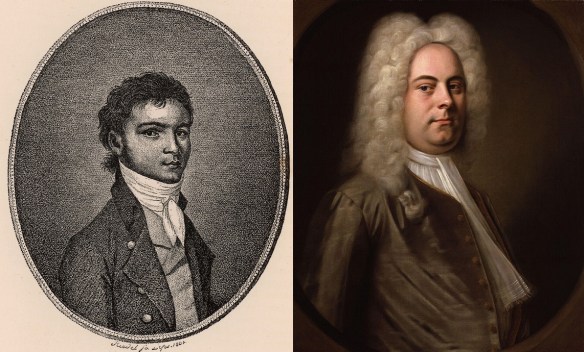
Ludwig van Beethoven and George Frideric Handel (right)

12 Variations on ‘See The Conquering Hero Comes’ from Handel’s Judas Maccabaeus WoO45 for piano and cello (1796, Beethoven aged 26)

Dedication thought to be Friedrich Wilhelm II, King of Prussia
Duration 12′

Listen

What’s the theme like?

Handel’s theme is a chorus from his oratorio Judas Maccabaeus. It is a popular tune which has been turned into a popular Christian hymn, Thine be the glory.

Background and Critical Reception

Soon after the success of his two Op.5 sonatas for piano and cello, Beethoven wrote a couple of sets of variations for the same instrumental combination. The dedicatee appears once again to have been Friedrich Wilhelm II, King of Prussia, with the cello-playing Duport brothers seemingly closely involved.

As Arcana discovered in a previous article, Beethoven’s love of the music of Handel ran deep. Later in his life he was to acquire Samuel Arnold’s first collected edition of Handel’s music (1787-97). Beethoven’s Cello – an excellent and compelling study of his music for the instrument by Marc D. Moskovitz and R. Larry Todd – has an engaging account of the work’s genesis.

It seems likely Beethoven attended a concert of Handel’s oratorio Judas Maccabaeus in Vienna in April 1794, but that his decision to use the ‘conquering hero’ theme came later. There are accounts of a concert in Berlin in 1796, when he improvised on the theme and, as Beethoven’s Cello recounts, ‘his listeners were so moved that they crowded around him and wept’. The decision to include cello ‘is not clear, but perhaps Duport played some role’, says the book.

There are twelve variations, beginning with keyboard-led music but gradually giving greater prominence to the cello. The seventh variation features a challenging display of tumbling triplets in the cello, noted by Moskovitz and Todd as having an affinity with Duport’s sixth etude. This variation is described by Steven Isserlis as the ‘one hideously difficult’ variation of the twelve.

Thoughts

Beethoven’s inspiration flows freely in this immediately likable work. The theme is memorable, one of Handel’s best tunes, and its triumphal air makes an early impact. The two instruments have an enjoyable and lightly spiced interplay, briefly turning baleful in the fourth, minor key variation but resuming its infectious optimism immediately afterwards.

The seventh variation is indeed a nasty one for the cellist, with skittish figures dancing all over the place, but then it’s the pianist’s turn, with a thundering statement. The two resume their ‘dance’, with a triumphant tenth variation – more bravura from the piano – and a substantial coda, with some slower thoughts, which leads to a subtly joyful finish.

Recordings used and Spotify links

Adrian Brendel (cello), Alfred Brendel (piano) (Decca)
Mischa Maisky (cello), Martha Argerich (piano) (Deutsche Grammophon)
Miklós Perényi (cello), András Schiff (piano) (ECM)
Steven Isserlis (cello), Robert Levin (fortepiano) (Hyperion)
Nicolas Altstaedt (cello), Alexandre Lonquich (piano) (Alpha)

The Spotify playlist below includes all but one of the versions listed above – with the opportunity to hear a clip from Steven Isserlis and Robert Levin’s version on the Hyperion website

There are some starry accounts of these variations, from father and son pairing Alfred and Adrian Brendel, from Martha Argerich and Mischa Maisky, and András Schiff with Miklós Perényi to name just three excellent versions. However it may not surprise you to learn that Steven Isserlis and Robert Levin pip them at the post with a thoroughly enjoyable account, recreating something of the air in the concert hall after Beethoven’s instinctive improvising in Berlin. Also highly commended is a new version from Alexander Lonquich and Nicolas Altstaedt.

Also written in 1796 Haydn Guarda qui, che lo vedrai Hob.XXVa:1

Next up 12 Variations on ‘Ein Mädchen oder Weibchen’ Op.66