Joseph Tong – Sibelius and the piano

joseph-tong

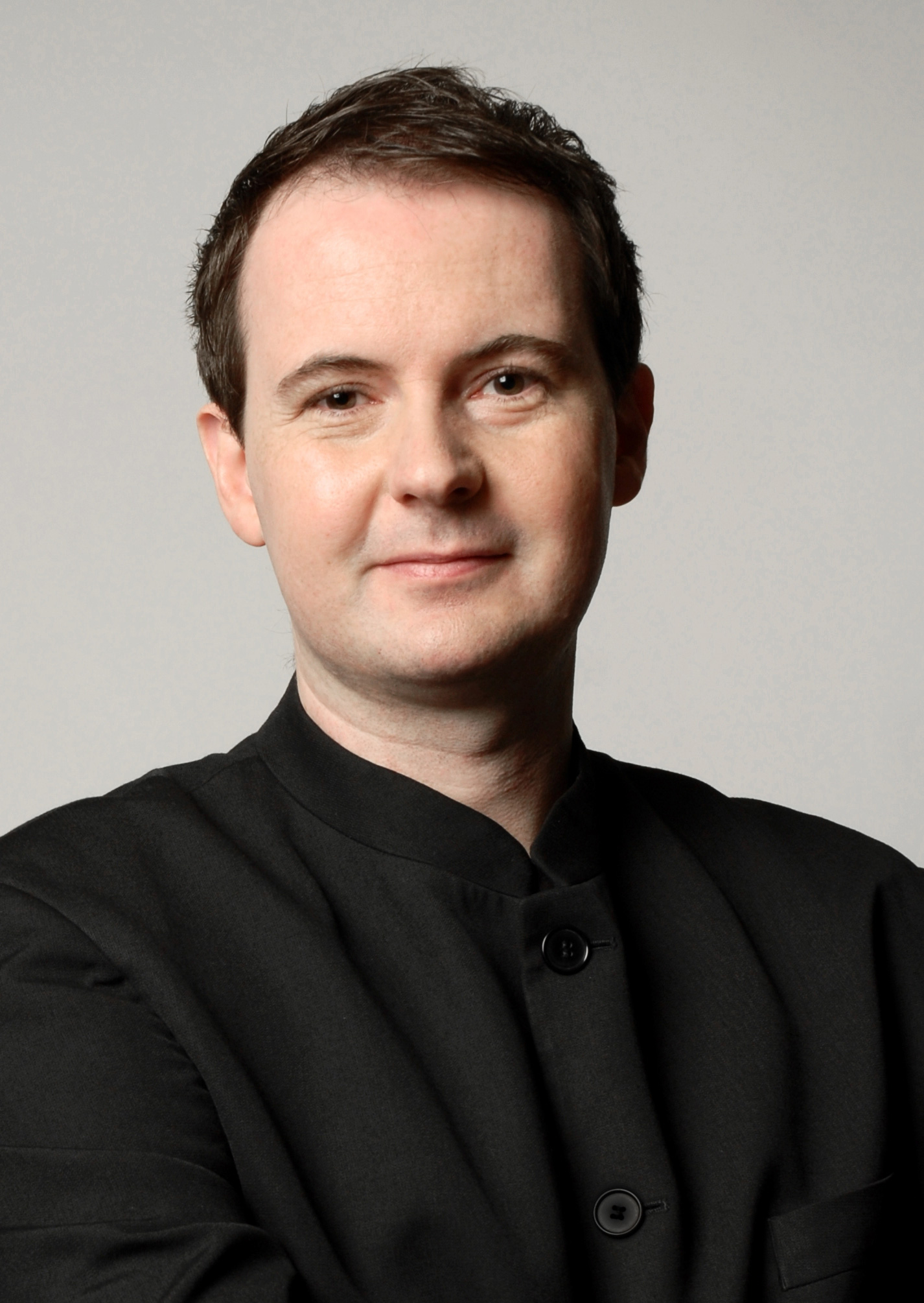
Joseph Tong, St John’s Smith Square, 13 May 2015.

It is surprising, the number of famous composers with piano works that are rarely if ever heard in concert. Tchaikovsky, Elgar, Dvořák and Wagner – all wrote a considerable amount of keyboard music that remains relatively unheard.

To that list can be added Jean Sibelius, whose canon of piano works runs from early juvenilia to the late Five Esquisses of 1929. Sibelius wrote at the piano in his Ainola house, but the suspicion persists that a lot of his work was a necessary complement to the popular orchestral works we do hear a lot of – and that it wasn’t always designed for outings in the concert hall.

sibelius-piano

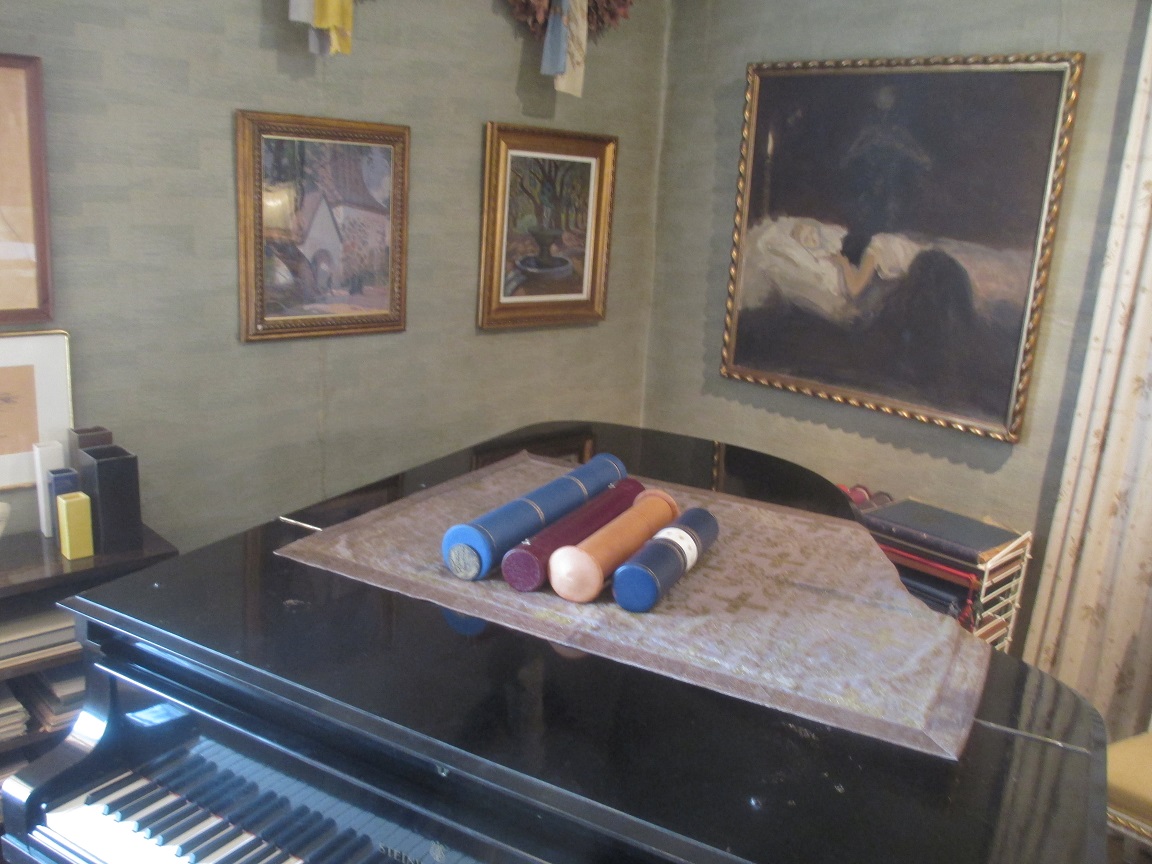
Sibelius’ piano at his Ainola home.

Joseph Tong sought to challenge that notion with a concert composed entirely of Sibelius piano works, given at St John’s Smith Square in the presence of the Finnish Ambassador. While the attendance suggested the music was not a great draw, the end product was never less than intriguing and often provided clues to Sibelius’s overall style.

Tong constructed a logical program that took us to the outer edges of the Finn’s piano output, from earlier pieces with a nationalist bent (the three movement suite Kyllikki and the five-piece suite The Trees) to some of the more rigorously structured pieces from Sibelius’ neo-classical period (a surprisingly touching Sonatina and two Rondinos) and finally to a strikingly effective transcription of the great Finlandia.

Tong was the ideal exponent, enjoying the intimacy of Sibelius’ writing and the occasionally abrupt manner in which he finishes his musical phrases. The Sonatina was a particular treat, its last movement hanging on the air like a branch after a bird has flown from it. Also notable was The Spruce last of The Trees, a popular work Tong played again as an encore. The later works were deeper and darker, suggesting winter claustrophobia in Sibelius’ house at Ainola, with only the hint of brighter times in evocations of spring.

To understand Sibelius as a composer the piano works are an invaluable and private aside, and in the right environment – such as this – they work very well as an intimate concert experience. Even the bluster of Finlandia, brilliantly played here, had its tender moments in the slow chorale theme that Tong gave lovingly. For an anniversary tribute with a difference, the pianist deserves great credit.

Joseph Tong has recorded a CD of Sibelius piano works, structured in a very similar way to the concert. It can be heard here on Spotify, with a second volume apparently in the pipeline for 2016.

Sara Mingardo sings Italian Laments

Sara Mingardo – Italian Laments at the Wigmore Hall

sara-mingardo

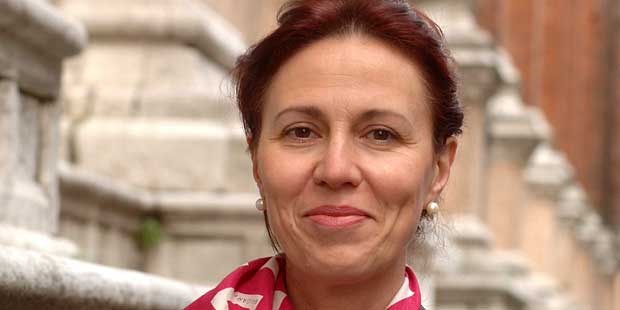
Sara Mingardo (contralto), Ivano Zanenghi (theorbo), Giorgio Dal Monte (harpsichord) – Wigmore Hall, London, live on BBC Radio 3, 11 May 2015

Listening link (opens in a new window):

http://www.bbc.co.uk/programmes/b05tpryp

on the iPlayer until 10 June

Spotify

In case you cannot hear the broadcast, I have put together a Spotify playlist of most of the music in this concert, including recordings the artists have made where possible. The playlist can be found here

What’s the music?

Monteverdi (1567-1643): Quel sguardo sdegnosetto; Voglio di vita uscir, voglio che cadano (8 minutes)

Frescobaldi (1583-1643): Toccata Seconda (5 minutes)

Andrea Falconieri (1586-1656): Vezzosette e care pupillette; Non più d’amore (4 minutes)

Giacomo Carissimi (1605-1674): Deh memoria e che più chiedi? (7 minutes)

Alessandro Piccinini (1566-c1638): Toccata XX; Aria di sarabanda in varie partite (6 minutes)

Salvatore (early 1600s -1688): Allor che Tirsi udia (9 minutes)

Barbara Strozzi (1619-1677): L’Eraclito amoroso (6 minutes)

What about the music?

First, a bit about the voice and instruments in this concert. Sara Mingardo is a contralto singer – that is, lower than a soprano and a little bit lower and richer in colour than a mezzo-soprano. Think of a boy alto, add femininity and a lot of body to the sound and you have something approaching her voice.

In this concert she is accompanied by Giorgio Dal Monte, playing a harpsichord from the late seventeenth century, and Ivano Zanenghi, playing a theorbo. The theorbo is a variation on the lute – which, in case you didn’t know, is a very early equivalent to the guitar. This particular instrument is a recreation and has no fewer than thirteen strings! They are spread over two different frets, rather like the instrument pictured here (photo from Early Music Studio:

theorbo

The music itself is all from the Renaissance and early Baroque periods in Italy. The only composer names likely to be familiar to listeners are Monteverdi and Frescobaldi, both pioneers in their expressive vocal music. The trio perform the music all together, save for a harpsichord solo (the Frescobaldi) and two pieces for the theorbo by Alessandro Piccinini. As you will hear the styles are particularly expressive, particularly in the laments – which most of these songs are.

Performance verdict

If you have yet to see Sara Mingardo perform then I urge you to do so without delay. Everything about her concerts draws the audience in, from the carefully thought out programs to her irresistible performance manner. Everything is delivered with musical freedom, and – text allowing – a modest yet winning smile.

Yet of course the voice is the reason for experiencing Mingardo’s charms in person, for she has an incredibly rich sound especially to the lower register that is rare among singers. Even better, she knows just how to control it.

This concert was beautifully put together and executed, and the laments carried an almost painful intensity that reduced the Wigmore Hall audience to silence. They were countered by airy, improvisatory pieces for harpsichord (Frescobaldi) and theorbo (Piccini) which were stylishly played by Giorgio Dal Monte and Ivano Zanenghi respectively.

This was very much a voyage of discovery, a reminder of just how intense Italian vocal music of the Renaissance and early Baroque periods can be.

What should I listen out for?

Monteverdi

1:34 – Quel sguardo sdegnosetto (A message) This song begins with an amiable figure on harpsichord and theorbo. The rhythms have a gentle lilt and the voice, rich and luxurious, uses melisma – which is a form of writing where a single word is spread over a large number of notes.

4:32 – Voglio di vita uscir, voglio che cadano (I want to leave this life, if by loving you I have offended you) A sprightly second song, cheery in spite of its subject matter. Towards the end it takes on sombre colouring as the harpsichord is replaced by the softer tones of the theorbo, and Mingardo sings ‘S’apre la tomba, il mio morir t’annutio’ (‘The tomb opens, I proclaim my death to you’). The control from Mingardo at the end is heartfelt and exquisite.

Frescobaldi

10:58 – This solo harpsichord piece becomes progressively more elaborate as it progresses. It is not rigid in tempo, which makes it sound improvised, and eventually the writing for right hand sounds like a waterfall of notes.

Falconieri

17:00 – Vezzosette e care pupillette (Bewitching and beloved sparkling eyes) Quite an elaborate theorbo introduction, and Mingardo uses a swooning vocal style here, especially when the text is repeated.

19:48 – Non più d’amore (No more wooing) Another very expressive though song which finds Mingardo in the upper part of her range.

Carissimi

21:26 – Deh, memoria (Say, memory) – a slow introduction reveals the rich tone of Mingardo’s lower range. This is a profound song written in the pain of another’s death, and Mingardo gives a powerful and emotive performance, shadowed beautifully and stylishly by the harpsichord and theobo. The song is especially profound at the end, returning to the singer’s lower range.

Piccinini

29:26 – Toccata XX. This begins almost as though the player was tuning up, with a very relaxed approach. Piccinini makes use of the lowest notes on the theorbo, which gives the music an expansive quality.

31:54 – Aria di Sarabanda in varie partite. The Aria sets out a short loop of music over which there are progressively more complicated variations, rather in the vein of Pachelbel’s Canon which was to follow a number of years later. Some of the variations go up quite high on the instrument.

Salvatore

36:25 – All’hor che Tirsti (When Thyrsis heard) In this declamatory song Sara Mingardo seems to be shaking a fist at the ‘Crudi fati, astri malvagi’ (‘Cruel fates, evil stars’). The accompaniment is initially for harpsichord only, the theorbo making a notable appearance at asdr when Mingardo sings ‘Et tu, caro ben mio’ (‘And you, my dear beloved’). Then she alternates between anger and a deeply mournful tone, with which this extremely expressive song ends.

Strozzi

44:36 – L’Eraclito amoroso (Hear, lovers) There is a florid accompaniment to more cursing of bad fortune. The sobbing nature of melodic writing when Mingardo sings ‘I singulti mi sanano’ (‘Sobs are my healing balm’) is striking. Towards the end Mingardo sings ever so slightly flat, deliberately accentuating the sorrow felt by the subject of the song, before finishing on an extremely low note.

Encore

52:31 – Tarquinio Merula (1594-1665) – Folle e ben che si crede. A more relaxed air to this encore, the voice floating on the higher notes. There is a lovely transition where Mingardo arcs gracefully up to a higher note at the end.

For more concerts click here

Elias String Quartet and Simon Crawford Phillips – Messages Old and New

Messages old and new – the Elias Quartet give an Emily Howard world premiere, and are then joined by Simon Crawford Phillips for Schumann’s Piano Quintet
elias-quartet

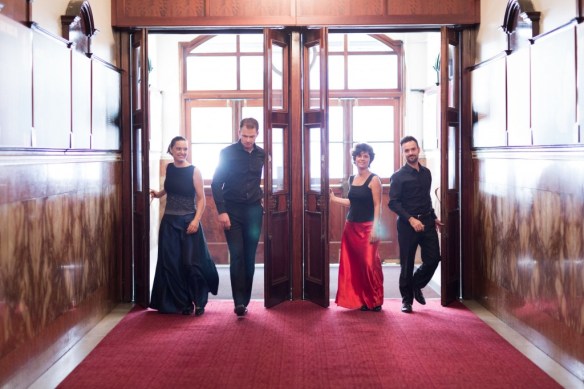
Elias Quartet (Sara Bitlloch, Donald Grant (violins), Martin Saving (viola), Marie Bitlloch (cello), Simon Crawford-Phillips (piano) – Wigmore Hall, London, live on BBC Radio 3, 4 May 2015.

Listening link (opens in a new window):

http://www.bbc.co.uk/programmes/b05qypn8

on the iPlayer until 9 June

Spotify

In case you cannot hear the broadcast, here is a link to a recording of the Schumann (Howard’s pieces is a world premiere so not yet recorded). The Schumann is played here by Sviatoslav Richter and the Borodin String Quartet:

Spotify

What’s the music?

Emily Howard Afference (2015) (22 minutes)

Schumann – Piano Quintet (1842) (32 minutes)

What about the music?

Emily Howard’s new piece Afference, a substantial work for string quartet, is based on a physiological term to describe the way in which the brain processes our experiences of the world. Howard herself has a degree in maths and computer science, something that might lead an audience to expect a very calculated approach to composing music. This is not entirely the case though, as the biography on Howard’s own website suggests.

Afference appears to be her first work for string quartet, commissioned by the Elias Quartet themselves. It joins a canon of pieces that range from large-scale orchestral works (Axon and a symphony called Magnetite) to smaller scale compositions for clarinet and piano.

Schumann’s Piano Quintet was written in 1842, when he was still giddy with love for wife Clara. She was the dedicatee of this work, but as the BBC Radio 3 announcer Georgia Mann details it was first performed with none other than the composer Felix Mendelssohn at the piano.

Performance verdict

A fine concert, with concentrated playing from the Elias Quartet of what is on two listens an engaging new work for string quartet. Emily Howard writes in a distinctive style that the Elias Quartet understand, and the colours she achieves are consistently interesting and imaginative. It helps to know the program for the piece, as there do indeed seem to be a lot of messages transmitted in 22 minutes. Some of them are very nervy, though ultimately the piece feels of a positive nature.

The Schumann receives an excellent performance, the happiness of the first, third and final movements a joy to behold – while the second movement, if a tiny bit slow in its central section perhaps, is uneasy and in need of consolation this ultimately provides. Simon Crawford-Phillips plays brilliantly, with authority but also ensuring the strings are heard at all times. His nimble finger work in the third movement scherzo is especially impressive.

What should I listen out for?

Emily Howard

1:20 – a busy start with all four instruments playing frenetically then cuts to a section with a very small voice, doing battle with the quartet.

5:55 – the instruments all take a melodic line that uses portamento (sliding from one pitch to another) before a more intimate phrase starts to dominate. At this point the instruments are close together in pitch.

8:09 – a much slower section, with an intense violin pitch that grows into what sounds like a sorrowful lament, while the other three instruments give softly breathed harmonies. This leads on to some feverish activity, Howard’s nervous messages transmitted at great intensity.

13:17 – As the second movement starts there is a large gap between the instruments – violins on high and cello down below. The lack of a key centre brings to mind some of the quartet writing of Schoenberg, though Howard’s writing has more pitch-related implications in the cello’s continual return to its low ‘D’.

16:50 – a striking passage for violin with upwards phrases, in which Howard seems to be reaching for higher plains

18:51 – the instruments stick closer together again, but at 19:53 the violin shoots out a much higher phrase. The harmonies still make the music sound quite uneasy, as if in a state of dread.

22:20 – a piercing line on the violin returns to the pitch of D, before the rest of the quartet finish the piece with a short series of comments.

Schumann

26:23 – the first movement begins with a wonderfully positive outpouring of music from piano and strings together. The theme itself is a surprisingly catchy one

27:35 – a lovely tune makes itself known on the cello, Schumann at his most romantic with the music flowing beautifully onwards. This tune is then picked up with a counter melody from the violin.

32:03 – now in the centre of the development section, the music gets more turbulent, the piano lines swirling around those of the string quartet, but then we switch to a triumphant reprise of the opening music at 32:45.

35:33 – the subdued second movement begins. This is a form of funeral march and it has a halting tune, played by both strings and piano with short notes. This is complemented by a much sweeter episode of music that begins at 37:19, still in the spirit of remembrance but with a positive approach. The sombre first theme returns once again at 38:56.

40:10 – a faster episode begins, led by the piano, the strings with much heavier lines alongside – but still the tune persists from the viola at 41:00, picked up by the violin – and the sweeter theme also makes a reappearance (41:49).

44:16 – the third movement, a Scherzo, begins with fizzing interplay led by the piano. Schumann again finds music of great positivity and energy. At 45:34 a second section begins, in the far-removed key of F sharp major, before the main scherzo returns with just as much irrepressible energy at 46:16. At 46:58 a new section is introduced, again with plenty of energy! The main theme returns at 48:02, carrying through to an emphatic finish at 48:57.

49:04 – the last of the four movements begins, and again the energy levels are up – though here we begin in a minor key that briefly recalls the second movement march. Quickly the music moves to E flat major – the ‘home’ key of the piece. The music then becomes more reserved and secretive.

51:24 – the first theme comes back, though the music is still in a minor key and still feels a long way from ‘home’. Gradually though the music gets greater presence in the ‘home’ key, and by the time we get to 54:16 it is rooted here, and sweeps to a decisive finish by way of a fugue, instigated by the piano at 54:41 and rounding off at 56:28.

Want to hear more?

Following the contrasting nature of the two pieces in this concert, the suggested further listening looks to progress from the Howard with Schoenberg’s String Quartet no.2. This famously has a last movement that sets the text ‘I feel the air from another planet…’, sung by a soprano and said to consciously signal the composer’s move away from writing in a particular key (tonality). Here the words are sung by Susan Narucki, in conjunction with the Schoenberg Quartet.

After the Schumann a rewarding next port of call is the Piano Quintet by Dvořák, his second in the form – and once again played by Sviatoslav Richter and the Borodin Quartet. The playlist can be found on Spotify here:

For more concerts click here

A classical day in Tallinn, Estonia – with the Pille Lill Music Fund

A day in Tallinn, 26 April 2015

tallinn-from-baltic

Tallinn skyline, viewed from the Baltic Sea

I haven’t mentioned this on Arcana before, but my day job is as Classical Repertoire Specialist with PPL (Phonographic Performance Ltd), working to ensure performers and record companies get properly paid for the public performance and broadcast of their recordings.

This job – which I am incredibly fortunate to have – leads me to different European destinations once a year as part of the IAMA Conference (the International Artist Managers’ Association). Here I meet classical artist managers, orchestra representatives and more in a chance to ensure their performers are registered with PPL and are receiving their monies.

This year the IAMA Conference was in Helsinki (see the previous entries on Lahti and the Sibelius house at Ainola) but as a considerable bonus we had a day in Tallinn, hosted by the Pille Lill Music Fund

Here we had an insight into Estonia’s extraordinary concentration of talented classical performers – both new and established – as well as a fascinating tour of medieval Tallinn, which comes highly recommended!

The Estonia National Symphony Orchestra and their artistic director and principal conductor Neeme Järvi are based at the Estonia Concert Hall in Tallinn, where our visit began. The hall, a really attractive expanse suitable both for orchestral and chamber concerts, was the venue for a showcase of five up and coming Estonian classical acts the Music Fund looks after.

While all were impressive the standout performer, by a whisker, was Irina Zahharenkova, the unassuming but extremely musical pianist. I use ‘musical’ as a term because whether in solo Chopin or accompanying trumpeter Neeme Ots in a tango by Piazzolla, she had a great instinct for knowing when to hold back slightly or when to push on. Her Chopin – the second half of the Piano Sonata no.3 – was technically assured and deeply felt. Ots himself was also very convincing in the swing applied to Shchedrin’s Imitating Albeniz and Piazzolla’s Oblivion.

Cellist Andreas Lend lived up to his billing as one of Estonia’s rising classical music stars, leading a confident and convincing performance of the little known Suite for Solo Cello by Gaspar Cassadó, a piece from the mid-1920s taking its lead from the Debussy sonata. Lend, a member of the Estonian National Symphony Orchestra until recently, played with a most attractive sound.

We also heard two singers. Soprano Arete Teemets lent wonderful clarity to an aria from Rameau’s Dardanus and a fulsome tone in a Rossini aria, where her accompanist, Ralf Taal, provided subtle humour and excellent definition to a crowded piano part. He also accompanied baritone Atlan Karp, whose rounded tones gave Aleko’s Cavatina from Rachmaninov’s Aleko great depth, before a bracing aria from Verdi’s Otello. Karp has a subtle but commanding stage presence lending authority to a formidable baritone voice.

First – and by a shade the most entertaining – were Hortus Musicus, Tallinn’s medieval past played out on stage in costume in front of us. I swear I could hear early house music at times in their set, but there was so much character, enthusiasm and technical accomplishment the group were a wonder to behold.

tallinn-town-hall

Tallinn Town Hall

Yet even this did not come close to our next musical experience, at the Tallinn Town Hall, where we were wowed by the Estonian Philharmonic Chamber Choir. It is no exaggeration to say I have never heard singing quite like it – and am unlikely to hear a better choir anywhere soon! Dressed in the Estonian colours of black and blue they put every fibre of their collective being into the music, singing the music of their countryman Cyrillus Kreek (1889-1962). His Psalm 104 was so beautifully sung, resolving into a chord of complete purity. We then had the considerable bonus of two short choral pieces from Arvo Pärt and Veljo Tormis, again sung with complete affinity with both text and music.

It was a day, then, to wonder at the sights of medieval Tallinn, but also to appreciate the raw talent within Estonian classical music at this time – and the just enthusiasm with which it is promoted. They have a lot of talent at their disposal!

-Ben Hogwood, with many thanks to the Pille Lill Music Fund for their hospitality and generosity

Ainola – a visit to the house of Jean Sibelius

ainola

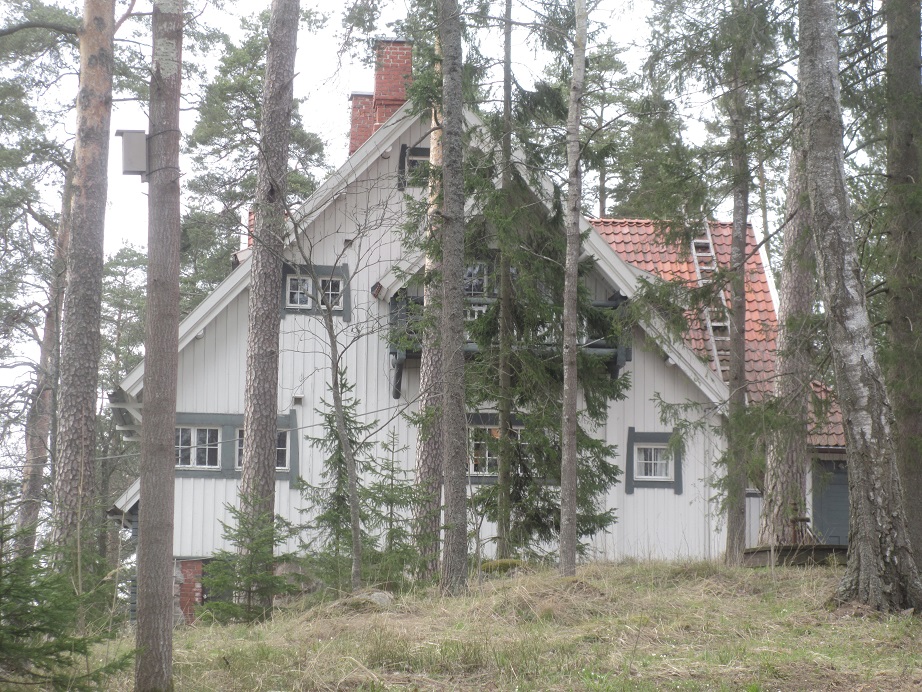
The house of Jean and Aino Sibelius, Ainola

Visiting a composer’s house can be both revealing and alarming. Revealing because you have the chance to peel back the layers behind some of your favourite music; alarming because you might not always like what you see when you get there!

Visiting the Sibelius house in Ainola was a case in point, though ultimately the trip was an overwhelmingly positive insight into the Finnish composer, his mind and the process used to create his wonderful music – or not, of course, as the great man’s pen was famously silent for his final 30 years.

First impressions are key. The house, secluded in the grasp of tall, rangy fir trees, is a calm and uncluttered place, save for a number of intriguing devices on display on the kitchen stove. Built in 1904, it is beautifully preserved, with incredible attention to detail.

Rows of glasses in a cabinet suggest Sibelius and his wife Aino enjoyed entertaining, while looking in the study to see the composer’s hat and stick on the table was strangely comforting, as though he were getting ready elsewhere in the house to go out for a walk.

sibelius-desk

Sibelius’s desk, Ainola

The piles of scores by the piano were illuminating, with Mendelssohn’s Elijah and St Paul not perhaps the first works that might come to mind. The Steinway faces a corner of the sitting room, around which is dotted some lovely landscapes and other works of art from friends of the family. A cold scene with swans, a characteristically blue-bright Finnish sky, green trees and the composer’s portrait are all homely and reassuring. Yet if you sit at the piano and raise your head a sudden chill pierces the air.

Here can be found A Prayer to God by Oscar Parviainen, erected to remind Sibelius of the death of his daughter, Kirsti, when just a year old. In the picture the child is comforted by its mother, but with a chilling figure that looks like Death hovering above.

sibelius-piano

Sibelius’s piano and paintings, Ainola

That Sibelius would always see this when sat at his piano brings new meaning to his darker music, a frisson of danger and deep dread. This impression stayed with me, even beyond the sight of the lake visible from the front room, glinting in the sunshine. This is countered by a softer woodland scene representing the view from the composer’s desk in the back room.

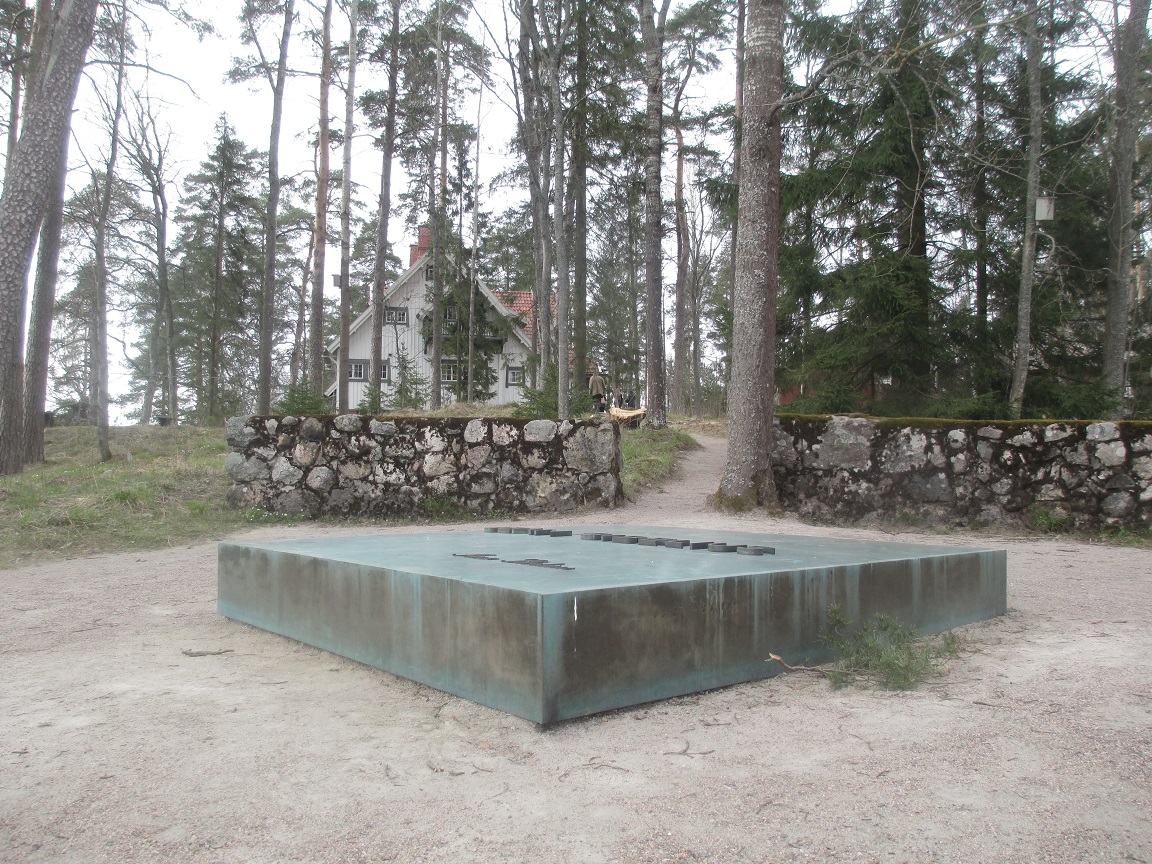
From there the grave of both Sibelius and Aino can be glimpsed, and it is a moving time indeed spent in contemplation in that quiet spot, the wind breathing softly in the branches. A busy road in the middle distance disturbs the peace on occasion – Sibelius would surely not have had that to contend with when living here – but a sense of calm soon returns.

sibelius-grave-house

The grave and house, Ainola

Ainola is utterly inspiring but also deeply troubling in parts – a mirror, then, of its composer’s music. If you are a Sibelius fan I urge you to go there, as it leaves a lasting impression.