
John Foxx – Redefining classical music?

john-foxx

John Foxx, the founding vocalist of Ultravox, is a prolific composer of electronic music, both instrumental and vocal. His recent endeavours include a solo release, London Overgrown, and an album Codex as part of the group Ghost Harmonic, recorded with classical violinist Diana Yukawa and frequent collaborator Benge (with whom he has also recorded as John Foxx and The Maths).

Because of his heritage and continued quest for making new music, Arcana spoke to him about his music, and in particular about the effect classical music has had on his life, in both positive and negative ways.

You seem to be in a very rich creative vein at the moment. Have you always been this productive, or are you finding that collaborations with others are bringing even more music out of you?

Collaboration is a fascinating thing – it’s so productive, but each time you have to figure out a new way to surf along with other people’s energies. You’ve both set yourself up – so then you have to put up or shut up. It puts you right on the spot and is very energising. Plus you both get to share the blame!

What does Diana Yukawa bring to your work with Benge that other classical violinists might not?

She enjoys improvising and enjoys being thrown in at the deep end with technological temporal disorientation devices. Not many classically trained musicians can handle that. She thrives on it and produces surprising results.

Diana has the sort of musical ability and agility that I find enviable. We’ve really only begun to glimpse her potential.

What is it about your relationship with Benge – and his studio – that inspires musical creativity?

It’s great fun – and always fascinating.

At first you think everything sort of half works but then you realise he’s managed to get beautifully rough sounds on sometimes beautifully rough equipment that excite you into the next stage without being able to resort to your own clichés.

When you listen back at home you realise you’ve been creatively misled into something you might have dismissed otherwise. And it all sounds very fine indeed.

I also love his take on mixing. The usual hierarchy gets dismantled and you hear sounds that don’t often get a just exposure. He’s completely fearless in that respect.

https://soundcloud.com/metamatic-records/london-overgrown

With London Overgrown, I first listened to it in bright early morning sunshine journeying into London, and the music and visuals seemed to go very well together. Is that how you see it?

Good – I think there’s a lot of English weather in the music, the sun through clouds and the sort of perspectives you might glimpse calmly gliding through overgrown streets. It is both detached and tranquil. ‘Serene Velocity’ was the phrase that best seemed to describe it.

Was it a conscious move to write music with these projects that seems to be more treble rather than bass?

Well, with London Overgrown the instrument I used most was an old DX7, and that can produce beautifully complex upper frequencies, so I simply enjoyed and went along with that. Many of the pieces were improvised using 30 second delays, and delays so long create their own ecologies. It’s like gardening. You let things grow. In the end I had a city that was completely overgrown.

In the case of Ghost Harmonic we were obviously focussed on Diana’s violin, so that defines the frequencies to a large extent. The bass end was supplied by the big Moog and textural intervals supplied through the interplay between those two and the reverberation and delays. I like the violin’s range – it really is a singing instrument, a human voice extension. I’d like to use a cello against it next time – a marvellous creative groaning device.

Would you say either Codex or London Overgrown are classical in any way – their form or melodic contours, say?

Well, that’s such an interesting question, and to some extent it supplied the reason for this recording.  So I hope you’ll forgive me if I ride my wee hobby horse for a moment.

You see, I think the divisions between classical and other music are really illusory, but nevertheless interesting – ‘classical’ is a sort of ossified form, historically where music began to be written down instead of being played, personal and constantly evolving, as it was before the evolution of the orchestra –  and this is what created all the problems.

You see, orchestras couldn’t improvise any longer because they’d become too big. They have marvellous, unlimited harmonic and melodic potential but they’re like an ocean liner to a canoe – they can’t manoeuvre instinctively.

Orchestras are also very hierarchical and bureaucratic – all instructions have to be written down and adhered to in order to operate effectively, otherwise chaos would ensue because of the sheer number of participants involved.

That’s when orchestral players became more focussed on obedience training than improvisation skills and agility, simply because it was necessary for the successful operation of the music.

Musicians unwittingly became a reproductive device. The conductor assumed the interpretive role, but even he couldn’t fundamentally alter the score. Writing things down also fixes them, it tends to inhibit or prevent any further development, so that’s another reason the whole thing became so inflexible.

I think it’s no accident that the orchestra evolved during the industrial revolution, where factory and bureaucratic systems also had to evolve, to deal with the massive scale of industry and populations.

They are really a sort of model of idealised, organisational harmony created through bureaucracy – powerful, monolithic and effective – but there’s always a price and the price paid here is the sacrifice of individual freedom of interpretation and expression. By logical increments you find we have unwittingly locked ourselves into a sort of bureaucratic form – bureaucratic music.

With Diana we were attempting to steal the fire of some of that marvellous technical skill that classical music demands – and set it free among the fields of infinite sonic possibilities that a modern recording studio can offer. You can change time relationships, even reverse them, and manipulate sequences, perceptual spaces, perspectives, harmonies and textures. You can focus down like a microscope, or out into landscapes and even create occurrences that behave like weather systems.

Of course the act of recording also captures, alters and defines a sort of music, just as written music does, but in very different ways – so there’s still a price for every gain.

We began by simply wanting to see what would happen if we mixed the most intriguing possibilities of both genres, without prejudice. Along the way we also began to realise it might offer a way out of this impasse that so called ‘classical music’ seems to have unwittingly entered.

Can you remember your first encounters with classical music?

Yes – first hearing of Nimrod by Elgar (from the Enigma Variations) and realising the power and subtlety of an orchestra.

I heard older music in church – the sung Latin mass, which was marvellous to hear and that oceanic feeling of dissolving into something greater than yourself. I also begun to understand how chants evolved by harmonising with your own delayed reflections from the architecture – architectural music as opposed to bureaucratic music.

When I hear music by Thomas Tallis I hear the astounding beauty of those interwoven voices, then realising the evolutionary connections between chants and orchestras and architecture.

Then the next thing that really impressed me was Satie‘s piano music. I heard someone play the Gymnopédies one afternoon in the old lecture room at art school.

I can still picture the instant – early summer, big open doors, the view down the marvellous avenue of trees at Avenham, and that beautiful elegant music. It is perfect minimalism, with poise and tranquillity, like distilled civilisation in a few notes and a sound. I was transfixed. it seemed to alter everything. I’ve loved piano ever since. It really is my favourite sound in the world apart from a blackbird’s song.

You said in an interview with me a while back how you liked what John Cage did, and the theory that music is organised noise. Is that how you see it – and is that why the noise of Benge’s studio, for instance, assumes the importance it does?

Yes to both. Understanding that music is organised noise was a great liberation. It enables you to understand and encompass lots of other sources of music from traffic to industrial noise to feedback and other accidental by-products such as tape hiss and glitches etc. Inherent imperfections become part of the landscape, so the landscape immediately becomes bigger and more textured, as well as more fun.

Would you ever consider writing for orchestral forces, or what are seen as more ‘classical’ forces, such as an electronic string quartet?

Maybe – but I’d need to have the motivation – usually some aspect of music that seems to need reconciling or some neglected possibility that intrigues enough to do the work. In the case of Ghost Harmonic, that was supplied by attempting to reconcile classical playing abilities with modern recording and improvisation.

What does classical music mean to you?

Something wonderful that became confined by its own form.

It means great possibilities still unrealised – what might happen if you facilitated a real interplay between the massive harmonic possibilities of orchestras and the full potential of a modern recording studio?

At present the classical world sees recording simply as a means of recording a single performance – any other manipulations are seen as inauthentic. There’s no attempt to access the massive compositional possibilities of modern recording. What a waste!

What are you listening to at the moment, and what piece of classical or modern music would you recommend Arcana readers go out and find?

Ruben Garcia made some beautiful piano and reverberation improvisations on a record called A Roomful of Easels. I often play some of these pieces at home.

There’s one David Darling recording, by the instigator of ECM Records Manfred Eicher, called Cello – improvisations against long delays. It’s a specific mood and poise, perfectly held, beautifully recorded and composed. Sadly, I didn’t much like his other recordings – except perhaps Dark Wood. It seems he needed the austerity of vision enforced by Eicher.

And Satie, always. He’s really the Marcel Duchamp of modern music – the point it all began, for me. His work embodies purity of intention and gorgeous simplicity with elusive intelligence. A benchmark.

London Overgrown is out now on Metamatic Records – and on the same label, the Ghost Harmonic album Codex is also available – their website can be viewed here
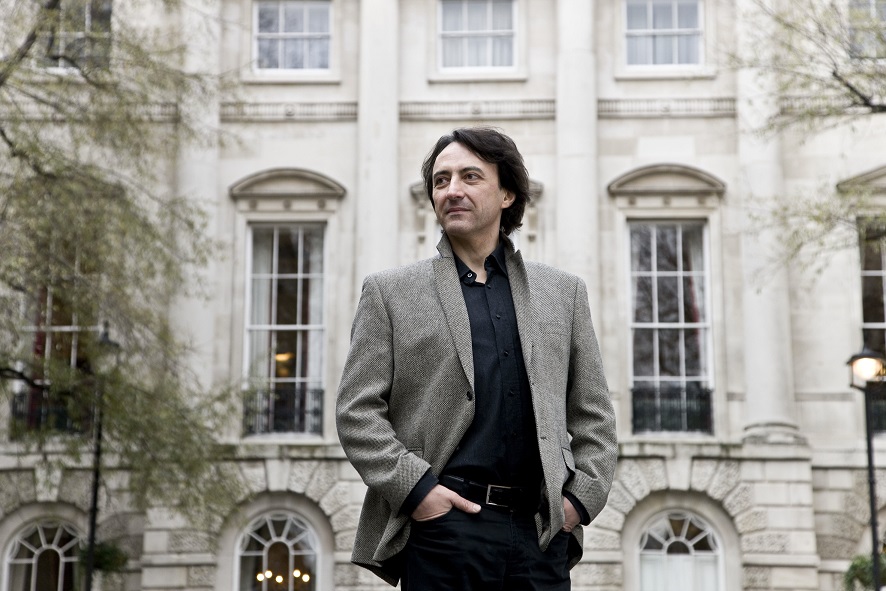

Jean-Efflam Bavouzet at the Wigmore Hall – Imitations and Studies

Imitations and Studies – Jean-Efflam Bavouzet at the Wigmore Hall

Jean-Efflam Bavouzet (piano) – Wigmore Hall, London, live on BBC Radio 3, 25 May 2015

Listening link (opens in a new window):

http://www.bbc.co.uk/programmes/b05w7tdx

on the iPlayer until 23 June

Spotify

In case you cannot hear the broadcast, I have put together a Spotify playlist of most of the music in this concert, including recordings the artists have made where possible. The playlist can be found here

What’s the music?

Beethoven: Piano Sonata No. 24 in F sharp major Op. 78 ‘A Thérèse’ (10 minutes)

Boulez: Piano Sonata No. 1 (11 minutes)

Maurice Ohana: 3 from the 12 Études d’interprétation, Book 1 (Mouvements parallèles; Quintes; Main gauche seule) (15 minutes)

Debussy: 3 from the Etudes Book I (Pour les tierces; Pour les sixtes; Pour les octaves) (10 minutes)

What about the music?

At first glance this program has the appearance of a slightly random but interesting set of composers and works; on closer inspection they are shown to have intriguing connections.

Beethoven’s middle period sonata, subtitled ‘à Thérèse’ in recognition of its dedicatee, Countess Thérèse von Brunswick, is a snip at just ten minutes and is one of the lesser known of the 32 sonatas. It also has a strange key and unusual structure, so to all intents and purposes it feels like an experimental work – yet it is concentrated in its emotion and ultimately rewarding for the listener.

The Boulez sonata, his first of three, was written when the composer – now 90 – was just 21. It was intriguingly modelled on the Beethoven work just heard – both in length and design – so it makes sense to hear the two together. Going further than Beethoven’s unusual key choice, Boulez writes using the ‘twelve-tone’ method – which means each note of the conventional Western notation has to sound before the initial note can be heard again. Twelve-tone pieces can often present challenges for audiences, but this one does still emphasise certain pitches – ‘B’ especially – and uses a wide range of dynamics and expressive nuances that make it much more palatable to the untrained ear.

Maurice Ohana is not a composer often encountered in the concert hall at all. His upbringing as an Andalusian of Jewish descent born in Morocco and eventually settling in France is reflected in the cosmopolitan nature of his music, uniting all these strands. Ohana often makes use of microtonality, using pitches between the semitones we are so used to in Western music. That of course is not possible on a tuned piano as in this concert – but we hear a flavour if his unusual harmonies in this selection of Etudes, modelled on Debussy’s equivalent works for the piano. The final etude is written for the left hand only.

Debussy’s Études are masterpieces that follow Chopin’s lead in making colourful and often emotional pieces from what are ostensibly technical exercises. Jean-Efflam Bavouzet chooses three here.

Performance verdict

An inventive program from Bavouzet, whose relatively recent recordings of Beethoven are complemented by a Boulez piece where the pianist is able to put his friendship with the composer to great authoritative use.

Bavouzet’s technical command is formidable, and comes to the fore in the studies by Ohana and Debussy, where we can hear each composer exploring the limits of the pianist through some particularly athletic writing.

What should I listen out for?

Beethoven

2:04 A short introduction leads to the main theme proper of the first movement (around 2:34). The music is relatively at ease here, but not a note is wasted, especially when Beethoven develops this theme – an intense section where the melody twists around but never beyond recognition. The tune dominates but Beethoven’s continued stress of the unusual F sharp tonality creates an unusual form of tension in this performance.

9:38 Bavouzet moves quickly into the second movement, where the first tune has a clipped melody, then the second sounds like two fingers chasing each other repeatedly around the keyboard.

Boulez

14:13 Like the Beethoven, the music seems very sure of itself right from the off. Although this is what is known as a ‘twelve tone’ piece, certain pitches come to the fore and there is an unmistakeably expressive shape to each statement. As the movement progresses there are some particularly crunchy discords, and often a longer phrase is followed by a flurry of notes in a downward descent. The movement ends convincingly at a lower pitch.

19:46 A wiry sound to the lower edge of the piano as this movement starts, and then the mood gets a bit more frivolous – with the ‘chasing’ around the keyboard as experienced in the Beethoven. This more ‘playful’ movement, which still sounds quite straight faced (in the manner of its creator, perhaps!) leads to an uncompromising and perfunctory finish.

Ohana

26:50 – the first etude, a study in parallel motion, starts at the extremes, with the right hand high and the left hand low. The inflections in the melody are full of Eastern flavour, then some of the chords are clumped together before a firm end. This is a virtuoso piece that has a greater rhythmic profile

31:37 – a cool profile to the beginning of Etude no.5, which is a study in the hands playing in fifths. The irregular rhythms make the music feel less secure, but the Eastern flavour is there once again in some of the softer melodies.

36:54 – a study for the left hand only, beginning immersed right at the bottom of the piano but soon ascending to the heights. Ohana asks a lot of the pianist here, and it is difficult to believe that some of the gymnastics here are for just the one hand, as this study flies along – until a stately slower passage.

Debussy

43:24 (Pour les cinq digits) (For the five fingers) A deceptive piece this, as it starts with a simple scalic motif but then moves about restlessly before filling out considerably.

46:38 (Pour les tierces (For the thirds) As the title indicates, this study uses a lot of smaller chords made up of thirds, Debussy giving a unique rocking motion to the music. If anything by the end the music is also a study in octaves as well as thirds.

50:36 Pour les octaves (For the octaves) Some big stretches for the hands in this piece, often playing an octave apart and at quick motion. Then in a typical move for Debussy we suddenly arrive at an emphatic finish in a key that is at once a logical but also surprising move.

Encore

54:22 An encore of Debussy’s L’isle joyeuse (The joyful island), played with typical pizzazz by Bavouzet!

Further listening

With the emphasis still on studies and modern music, an interesting – if challenging – next step are some Studies by Conlon Nancarrow, arranged for instrumental ensemble. These were originally written for a ‘player piano’ – that is, a piano that plyed itself – because the music was thought to be too difficult for human performance. Some pianists do defy gravity to play it, but the versatility of the music is shown by the ease with which it transfers to instruments. Nancarrow’s fiercely original voice can be heard in technicolour here

For more concerts click here

Steven Isserlis and friends – Czech chamber music

czech-chamber-music
Fate by the Czech artist Alphonse Mucha, 1920

Jeremy Denk (piano), Joshua Bell (violin), Lawrence Power (viola) and Steven Isserlis (cello), Wigmore Hall, 20 May 2015.

As Steven Isserlis wrote so eloquently in the program notes for this concert, ‘Why is it that so much Czech music is loveable in such a unique way?’

This, the first of two parts, revealed a quartet of composers intent on spoiling the listener with a mass of tunes (teacher Dvořák and pupil Suk) or using their music to express the highly charged climate in Europe in the 1920s and 1930s (Janáček and, from a distance, Martinů)

Jeremy Denk, Joshua Bell, Steven Isserlis and Lawrence Power planned this concert to perfection, the abundance of tunes placed first and last, with the deeper moments in between.

It is doubtful Suk’s Piano Quartet, the first published piece of a precocious seventeen year old, has ever had a performance like this, bursting with pride and enthusiasm. After a forthright statement of the first tune from the ensemble, a beautiful solo from Isserlis revealed the work’s softer underbelly, which came to the fore in a similarly affecting tune in the slow movement, the cello releasing a beautiful mellow sound.

Janáček’s Violin Sonata wore a permanently furrowed brow. The icy reach of the muted violin in the last of the four brief movements was key to summing up a work that bristles with anger, though redemption was briefly found in the second movement Balada, with a theme of silvery consolation.

The second of three cello sonatas by Bohuslav Martinů was next. Isserlis has championed these works for more than 25 years, and gave a commanding performance of a moving work. Written in America in 1938, the composer having successfully fled Paris and the Nazis, it is a deeply felt and resilient utterance, especially in the second movement where time stood still.

As far as the tunes were concerned, the best was saved until last. Dvořák’s Piano Quartet no.2 positively bursts with Czech melodies – which are revealed to be surprisingly close in mood and contour to the American tunes he was to use towards the end of his career. Here they were swept along in a wonderful performance of good feeling, played with great sensitivity by Jeremy Denk, whose phrasing was key to the utmost charm of the Scherzo, the tender Adagio and the rustic finale.

Yet this was music for a team of friends to enjoy, the music surging forwards with a positivity rarely experienced to this extent in the concert hall – and happily caught by microphones, hopefully for a future release on Wigmore Hall Live. Those Czechs, they knew a good tune – and these four were the best possible Bohemian Rhapsodists in waiting!

The music from this concert can be heard here on Spotify. Part two of this series is at the Wigmore Hall on Saturday 23 May, and will include the Dvořák Piano Quintet and the Piano Trio by Smetana.

Christoph Prégardien – The Darker Side of Love

The Darker Side of Love – Christoph Prégardien and Daniel Heide at the Wigmore Hall

christoph-pregardien

Christoph Prégardien (tenor), Daniel Heide (piano) – Wigmore Hall, London, live on BBC Radio 3, 18 May 2015

Listening link (opens in a new window):

http://www.bbc.co.uk/programmes/b05tpryp

on the iPlayer until 17 June

Spotify

In case you cannot hear the broadcast, I have put together a Spotify playlist of most of the music in this concert, including recordings the artists have made where possible. The playlist can be found here

What’s the music?

Schubert: An den Mond, D259; Schäfers Klagelied, D121

Schubert: Erster Verlust, D226

Schubert: Rastlose Liebe, D138

Schubert: Wandrers Nachtlied II, D768

Schubert: Willkommen und Abschied, D767 (17 minutes)

Schumann: Dichterliebe, Op.48 (30 minutes)

What about the music?

The relationship between Schubert and the poetry of Goethe was long-standing, beginning in October 1814 and yielding tens of songs. Many of them are darker utterances, and the collection here enjoys the composer’s ability to cast a nocturnal scene for voice and piano seemingly at will. It also celebrates his faster, galloping songs, the singer in the saddle for an action-packed horse ride, while the sheer simplicity of shorter songs such as Erster Verlust is pure and touching.

Schumann’s famous year of song reached its creative peak in May 1840, when he wrote the Liederkreis, published as Op.39, and Dichterliebe, where he sought inspiration once again from the poetry of Heinrich Heine. The quote in the Wigmore Hall program sums it up perfectly, Schumann describing the verses as ‘short, maliciously sentimental, and written in the folk style’. They evoke outdoor scenes but also inward and often crippling emotions, the singer – and possibly the listener! – an emotional liability by the end. Schumann rescues Dichterliebe, however, through the piano postludes he provides to Am leuchtenden Sommermorgen (One bright summer morning) and the closing song Die altern, bösen Lieder (The bad old songs), attempting and largely succeeding to restore stability.

Performance verdict

Christoph Prégardien has been singing these songs (or ‘Lieder’, as we should really call them!) for a long time – he recorded most of them a while back – but he still brings keen emotion to the stage.

The silence of Wigmore Hall during a song as tense as Schumann’s Ich hab’ im Traum geweinet (I wept in my dream), the ninth of Dichterliebe’s dozen, said it all. Here was a performer creating vivid pictures from Heine’s barbed text and Schumann’s equally frosty responses to the dark side.

In Schubert, too, the steely edge of even the most youthful Goethe setting could be glimpsed, brought out in an early song like An den Mond (To the Moon) by pianist Daniel Heide, stressing the notes Schubert brings in to challenge the happier times of the song.

Schubert’s horse-riding songs, Rastlose Liebe and Wilkommen und Abschied, were adrenalin-fuelled dashes into the country, while Schäfers Klaglied brilliantly evoked both the tempest and its subsequent rainbow.

Prégardien is an unfussy singer who communicates with his audience through subtle but meaningful expression, both visually and with the use of his hands. This somehow carries over to the listener too, either in the hall or at home, part of a masterclass in how to sing these songs.

What should I listen out for?

Schubert

1:50 – An den Mond (To the Moon) A calm and seemingly contented song to begin the selection – though there are some warning signs, chiefly in the piano part, to suggest all is not well.

5:27 – Schäfers Klagelied (Shepherd’s lament) A downcast and solemn song, with a vivid depiction of a storm in its central section from the piano (from 6:55), which also somehow describes the resultant rainbow (7:13) before a return to sadness.

8:58 – Erster Verlust (First loss) A song of striking simplicity and sadness, with an aching melody where the purity of Prégardien’s tone really comes through

11:22 – Rastlose Liebe (Restless love) A song that gallops out of the blocks with its rapid movement on the piano, and the breathless voice almost struggles to keep up. Meine signs off beautifully at 12:30.

12:47 – Wandrers Nachtlied II (Wanderer’s Nightsong II) Here we can feel the stillness of a summer evening, the conditions in which Goethe scribbled the verses for this poem as he stood outside in a garden. Prégardien’s higher notes are beautifully tailored.

15:18 – Willkommen und Abschied (Greeting and farewell) Another of Schubert’s quick dashes through the text, though at the end of each verse we have a pregnant pause. Prégardien cries out ‘ihr Götter’ (‘O gods!’) at 17:17. The text at the end translates as ‘what a joy to be loved’

Schumann

The words for Dichterliebe can be found here

21:12 – Im wunderschönen Monat Mai (In the wondrous month of May) A graceful song to begin the cycle, with some beautiful top notes (the translated words ‘blossom’ and ‘desire’) that Prégardien very subtly stresses through a pause.

22:54 – Aus meinen Tränen sprießen (From my tears will spring) The spring-like openness continues, in the same key.

23:51 – Die Rose, die Lilie, die Taube, die Sonne (Rose, lily, dove) A playful song, over in a flash!

24:23 – Wenn ich in deine Augen seh (When I look into your eyes) A tender love song, that tellingly moves to the purity C major to tell of how ‘when I kiss your lips, then I am wholly healed’. There is a yearning postlude on the piano.

26:12 – Ich will meine Seele tauchen (Let me bathe my soul) Another short love song, this time with a flowing, watery piano accompaniment.

27:08 – Im Rhein, im heiligen Strome (In the Rhine, the holy river) The singer adopts a much more imposing tone to evoke the grandeur of the Rhine and the great cathedral of Cologne, where hangs an image of ‘Our beloved Lady’ – which the singer equates to that of his own love. The piano postlude is reminiscent of a Baroque aria.

29:16 – Ich grolle nicht (I bear no grudge) The text turns darker, though the musical language is still generally positive. The tenor has a heavier tone here, the voice more of a baritone in its richness.

30:49 – Und wüßten’s die Blumen, die kleinen (If the little flowers only knew) The piano matches the tenor in this flowing, limpid song – spring like in its subject matter but ultimately sad and regretful at a broken heart. This leads straight into…

32:05 – Das ist ein Flöten und Geigen (What a fluting and fiddling) A proud song but once again with a darker centre.

33:29 – Hör’ ich das Liedchen klingen (When I hear the little song) This is Heine’s poetry at its coldest, and in this brief song it gets a suitably bare response from Schumann, who then attempts some consolation in the extended piano postlude, which in reality says just as much as the song does.

35:47 – Ein Jüngling liebt ein Mädchen (A boy loves a girl) A more positive mood now – but soon the poetry turns dark as well. Schumann keeps his tongue firmly in his cheek, allowing the tenor a bit of sardonic humour and the piano a grand finish

36:47 – Am leuchtenden Sommermorgen (One bright summer morning) A beautifully simple song – though now the mood of sadness is taking hold with greater certainty. Again we have a longer piano postlude, the pianist reflecting the text through music and trying to console.

39:38 – Ich hab’ im Traum geweinet (I wept in my dream) Schumann’s use of silence here is striking and altogether ominous. Prégardien gathers the power of the final verse, the texture sparse as can be, until the music stops abruptly.

42:25 – Allnächtlich im Traume (Nightly in my dreams) An elusive song – another dream but one the poet cannot really remember – which possibly explains why Schumann leaves the music sounding half-finished at the end.

43:54 – Aus alten Märchen winkt es (A white hand beckons) There is greater optimism in this song, using the upper register of the piano for the first time in a while, but once again Heine insists on an ending that takes away the potential for happiness. Schumann’s music rescues this in the postlude however!

46:39 – Die alten, bösen Lieder (The bad old songs) A bit of nostalgia to finish – though this is a purge, the poet casting all his ‘bad and bitter dreams’ away in a heavy coffin. Schumann responds with gallows humour, a song that is bold and defiant in its execution but which fades away to reflection. Once again we have a piano postlude, this one even more meaningful as it tries to draw the cycle to a soft conclusion. In the right performance however, like this one, a level of bitterness remains.

Encore

53:05 – SchumannMit Myrthen und Rosen (With myrtle and roses) (the last song from Liederkreis, Op.24) This has an effortless, upward curve to the melody. Prégardien’s gestures to the audience here were beautifully observed.

Further listening

With Christoph Prégardien demonstrating his almost unparalleled abilities in Schubert, here is a Spotify link to a recent recording of him singing the great Schubert song cycle Winterreise. Again this is music on the dark side, but is greatly inspired at that. Texts can be found http://www.recmusic.org/lieder/assemble_texts.html?SongCycleId=47″>here and the playlist is here

For more concerts click here

A mother’s inspiration

mum

While the object of Arcana is to share music and thoughts, it is also to acknowledge some influential people in the world of music. For many people the most influential people in this field are their parents or grandparents – so I hope you will forgive me for sharing a personal inspiration on all of my work here.

Very sadly my mother Coralie passed away two weeks ago (May 2015). Mum was many things for me, but what I want to praise here is her encouragement of my musical exploits, because without that I would not be writing this piece.

I am fortunate to have grown up in a happy household with brothers Nick and Jonathan and sister Clare, all of us at close quarters in a terraced house in Thetford, Norfolk. Gradually, at the age of four, I was drawn to Mum’s record collection, enjoying the delights of Dvořák’s New World Symphony, Rimsky-Korsakov’s Sheherazade, Tchaikovsky’s Fifth Symphony and Romeo and Juliet and especially Holst’s The Planets. To her credit, though nerves were tested with the frequent repetition of these pieces, Mum encouraged me to keep on listening to them with a patient smile.

Then, at the age of eleven, I started to learn the cello. As anyone that age knows, one of the least attractive things about learning a musical instrument is the practice. Mum nagged me to do scales, arpeggios, proper warm ups, sight-reading and the interminable repetition of the exam pieces themselves, though they must have been driving her crazy. At the time I wasn’t grateful – but I certainly am now!

My cello playing helped get me on to the Music ‘A’ Level course at Norwich City College, where I made it my mission to discover classical music in all its forms – and where Mum and Dad generously invested in a restored cello for me. Then I went on to the University of Surrey at Guildford, where I furthered that education but also discovered a love of dance and electronic music. Then I was fortunate to move on to the jobs I have had since, leading to PPL where I have been for thirteen years – and of course to start with writing about music, which is what I love to do here.

At all these points Mum has been a constant source of encouragement, and we had many long chats about classical music she had heard on Radio 3. If I was reviewing a lunchtime concert at the Wigmore Hall I knew she would be there, on the other end of the radio – which, in a sense, she always will be.

When in Finland recently I was lucky enough to visit the house of Jean Sibelius at Ainola, 20km from Helsinki. Sibelius was Mum’s favourite composer – and is one of mine too. Into this year I hope to start listening to all his works – and at every turn Mum’s smiling face will be there, enjoying the music with me.

So thanks, Mum, from the bottom of my heart. I owe you so much for all you have done for me, and I just hope I can provide similar inspiration for others. I leave below the music played at her funeral service, Farewell to Stromness by Sir Peter Maxwell Davies. It sums up her gentle nature beautifully, and also the sparkle that never left her eyes.