Wigmore Mondays – Esther Yoo & Zhang Zuo play Mendelssohn & Sibelius

esther-yoo

Esther Yoo (violin), Zhang Zuo (piano)

Wigmore Hall, London, 21 March 2016

written by Ben Hogwood

Audio (open in a new window)

http://www.bbc.co.uk/programmes/b07457qx

Available until 20 April

What’s the music?

Bach – Chaconne from the Solo Violin Partita no.2 in D minor, BWV 1004 (c1720) (15 minutes)

Sibelius – Sonatina for violin and piano in E major, Op.80 (1915) (12 minutes)

Glazunov – Grand Adagio from Raymonda (Act 1) (1898) (4 minutes)

Mendelssohn – Violin Sonata in F major (1838) (21 minutes)

Spotify

In case you are not able to hear the radio broadcast, here is a link to a playlist of the music played. Esther Yoo has not recorded any of it in violin and piano form, so substitute versions have been used:

About the music

Sibelius wrote a great deal of music for the violin but other than the famous Violin Concerto, very little of it is heard regularly these days. It is therefore a refreshing change to see the E major Sonatina listed. A relatively short work, it helped Sibelius through a particularly testing time with his finances.

Mendelssohn has a number of parallels with Sibelius where the violin is concerned, writing a famous Violin Concerto that gets played at the expense of pretty much everything else. Once again in this case there are works for violin and piano, and the Violin Sonata chosen for this concert is the most substantial, completed in 1838. For some unexplained reason it was not published in Mendelssohn’s lifetime, and was resurrected by Yehudi Menuhin in the 1950s.

Esther Yoo begins the concert alone, with Bach’s famous Chaconne – taken from his Solo Violin Partita no.2. It is a landmark in solo instrument writing, a tour de force of 64 different versions of the same sequence of chords that Bach develops with ever greater virtuosity.

She complements the Sibelius, meanwhile, with a short piece – an excerpt of a love scene from Glazunov’s ballet Raymonda.

Performance verdict

A refreshing program from Esther Yoo, who has just recorded a very well-received disc of Sibelius and Glazunov with Vladimir Ashkenazy.

It was particularly good to report a rare outing for the Sibelius Sonatina, a piece with energy and fresh invention that definitely sweeps away the cobwebs! Yoo and her musical partner Zhang Zuo (known as ‘Zee-Zee’) gave a performance full of enthusiasm and energy, giving Sibelius’ melodies a real shot in the arm. Prior to this Yoo had greatly impressed with her account of the Bach Chaconne, a deliberately slow and careful start gathering in pace and intensity, taking the fearsome technical challenges in her stride.

Glazunov’s Grand Adagio made a fitting complement to the Sibelius, invested with suitable passion, but the real discovery was the Mendelssohn, a piece of great craftsmanship and, in the slow movement, a depth of feeling unusual even for him. The two performers had great chemistry here and clearly enjoyed their interactions through the faster music, taking time in the slow movement to let the hymn-like passage sing.

An excellent concert concluded with a Korean folksong arranged for violin and piano, played with delicacy and then great gusto!

What should I listen out for?

Bach

1:28 – the violin begins with a grand statement of a chord sequence which it then proceeds to spin out over 64 variations, reaching great intensity in the string crossing around 7:30. The variations are set mostly in the minor key but move to the major at 9:15. Bach gives an enormous variety of colour, speed, attack, repose and musicality, starting relatively slowly but moving to passages of increasing difficulty and intensity, notably the string-crossing passage mentioned above, but this is also one of his most profound pieces of music when interpreted well. The music turns back to the minor key with impressive dramatic effect.

Bach often asks for the violin to employ ‘multiple stopping’; that is, playing more than one note at a time – which means the music can sound as though it is in many parts, despite still being played on the one instrument.

Sibelius

18:49 – a bold start from Sibelius, with the colour from the piano recognisably his. The grand introduction cuts to a quicker theme at 19:30 which suggests the outdoors. The music trips along at quite a pace – as so often Sibelius suggesting quick movement in his music. It also ends with a typical lack of fuss.

22:25 – the thoughtful second movement starts to spread its wings with the emergence of a rather beautiful melody from the violin.

27:03 – a broad melody on the lower register of the violin restores a grand air to the piece, though soon the violin twists upwards. The music gets faster again, returning us to the spirit of the first movement, with energy and grace in equal measure. Up to the end it becomes increasingly breathless, Sibelius throwing in a surprisingly light finish.

Glazunov

31:05 – as you might expect from a declaration of love in a Russian ballet, this is deeply passionate music, with a melody tailor made for the violin. With long phrases and sweeping gestures the music swoons. The violin reaches for the heights around 34:35, before sinking gracefully into a soft coda.

Mendelssohn

36:47 – it is difficult to understand why Mendelssohn did not publish his Violin Sonata when it starts as brightly as it does in this performance. A distinctive theme leads to close interplay between violin and piano. This being Mendelssohn there is a typically busy piano part, but there is a particularly nice, spring-like passage around 40:00 where the music slows and the composer’s lyrical side comes out.

45:38 – the slow movement is an unexpected treat, one of Mendelssohn’s most searching emotionally. It begins with a solemn statement on the piano, joined by the violin in

52:40 – a typically brisk Mendelssohn finale, the violin scampering off with the piano in hot pursuit. Initially there is barely room for breath, right up until a contrasting slower section.

Further listening

Yoo’s new disc would seem the ideal place to go next, containing Glazunov’s Violin Concerto as well as the one by Sibelius. It has been very well received and can be heard here:

Meanwhile you can watch a preview of the disc here:

Wigmore Mondays – Maxim Rysanov & Ashley Wass: Schubert plus

rysanov-wass

Maxim Rysanov (viola), Ashley Wass (piano)

Wigmore Hall, London, 14 March 2016

written by Ben Hogwood

Audio (open in a new window)

http://www.bbc.co.uk/programmes/b0739t8r

Available until 13 April

What’s the music?

Schubert – Sonatina for violin and piano in G minor (arr. Rysanov) (1816) (20 minutes)

Leonid Desyatnikov Wie der Alte Leiermann (1997) (14 minutes)

Sergey Akhunov – Erlkönig (2015) (5 minutes)

Dobrinka Tabakova – Suite in Jazz Style (2008) (15 minutes)

Spotify

Unfortunately most of the music in this concert is not available to stream…but there is a violin version of the Schubert that you can hear on the below playlist – which also contains some recommended listening and the originals of the Schubert songs inspiring the pieces by Desyatnikov and Akhunov:

About the music

This is a concert rather cleverly themed on the music of Schubert. Maxim Rysanov, though still a relatively new performer, has already contributed much to the available repertoire for the viola – and some of these contributions are in the forms of original compositions by Brahms and Schubert.

Schubert wrote three attractive Sonatinas for violin and piano, but their titles are misleading as they were applied posthumously. They are actually quite in depth pieces deserving of a bigger audience, and as Rysanov shows the G minor work transcribes nicely for viola and piano.

Russian composer Leonid Desyatnikov works predominantly in film, but wrote Wie der Alte Leiermann, his take on a song from Schubert’s song cycle Winterreise, for viola and piano. Likewise fellow Russian Sergey Akhunov expanded on Erlkönig, one of the composer’s darkest songs, to create a minimalist spectacular.

Finally Bulgarian composer Donbrinka Tabakova, with whom Rysanov has worked closely on an arrangement of a Schubert sonata for viola and orchestra, contributes a freely formed Suite in Jazz Style, where she looks to combine classical and jazz in a way successfully achieved by the likes of Stravinsky, Milhaud and Duke Ellington to name just a few.

Performance verdict

Maxim Rysanov is without doubt one of the finest viola players around, and he cemented that reputation with a series of powerful and passionate performances at the Wigmore Hall.

He has also gained a reputation for imaginative programming, and that was also in evidence, taking the music of Schubert and projecting it into much newer music and influences. This was a more guarded success, for the piece by Desyatnikov felt too long, despite its dramatic profile, and was rather relentless in its cold and downbeat mood. This does imply it was a successful recasting of the Winterreise song, which is hardly sweetness and light itself, but a little more light amongst the shade would have been welcome.

Akhunov’s Erlkönig was more effective as it had more momentum and rhythmic interest, though this too was starting to test the ear and run thinner on inspiration by the time its five minutes came to a close.

Far more involving was Bulgarian composer Dobrinka Tabakova’s Jazz Suite, for it was more obviously fun, as well as being more immediately emotional. There were some clever syncopations and use of the viola to get some truly unusual sounds, and Rysanov clearly warmed to this, in the company of Ashley Wass’s clear but nicely swung rhythms.

The Schubert with which the two began was very well played and carried an urgent dialogue throughout, reminding us that the three pieces in this form are not trifles, as the Sonatina name implies they should be – they are actually really substantial and memorable works.

What should I listen out for?

Schubert

1:28 – a call to arms to begin (marked Allegro giusto by the composer, which becomes a bit more furtive as the piano takes the lead. This is repeated (2:51) and then developed from 4:14 – before a reprise back in the ‘home’ key at 5:12. Mostly the two instruments are equal partners, though they both become obsessed with the three-note figure that dominates Schubert’s thinking. Rysanov’s arrangement for viola lies relatively comfortably under the fingers.

6:55 – a relaxed Andante forms the slow movement, with a nice and simple theme from the viola. Schubert gives it plenty of space, and the whole movement – though relatively short – has a nice airy profile.

12:57 – the influence of Mozart can be more clearly felt in this brisk Menuetto. You would have to look pretty lively if you were dancing three in a bar! The viola is effective when Rysanov drops down an octave to exploit the lower range (e.g.13:48). A trio section (from 13:59) is nicely poised, before the main theme comes back at 14:54.

15:42 – this sounds more like one of Schubert’s songs, with an offbeat piano accompaniment to the main viola tune. There is a lively secondary tune though, which comes through to dominate – especially when Schubert brings it back in the main key at 19:05, to close what had initially been an uncertain piece in emphatic fashion…or so we thought! He then swings back to the minor key, but ultimately this tune wins through.

Desyatnikov

The inspiration for Desyatnikov’s piece is Schubert’s Der Leiermann, which can be heard here:

23:02 – the harsh tones of the viola’s opening strings evoke the hurdy-gurdy in coarse style. In response the piano line feels very cold, and the two exchange their ideas. Then there is a slow statement from the viola using harmonics () before things get very fraught between the instruments. At 28:43 a new, faster section starts with urgent sounds and a swing to the melody that sounds almost American. In the long closing section, from 33:30, the music’s frosty tone becomes almost devoid of feeling, though some outbursts (34:08) draw vivid parallels with the music of Janáček.

Akhunov

Akhunov’s inspiration is Schubert’s Erlkönig, which can be heard here:

38:48 – a twisted introduction, with plenty of discords, gives way almost immediately to an intriguing development, a pulsating tonal base from the piano and a melodic cell that grows steadily from the viola.

Tabakov

45:35 – this first movement, marked ‘Confident’, starts out with a walking bass in the piano deliberately written to imitate the sound of a plucked bass instrument. Over the top is an airy, improvisatory piece of work from the piano. The pair spar playfully until the viola literally dies away.

49:54 – the second movement is marked ‘Nocturnal’, and treats the viola as though it were a solo jazz singer. After a sultry introduction from the piano the viola comes in with a bluesy tune, moving between the major and minor keys with ease. Tabakova uses some intriguing techniques to vary the sound of the instrument.

56:12 – the third movement has a simple marking – ‘Rhythmic’. It starts almost inaudibly, scratching on the viola, but then the two instruments start trading a syncopated figure. The music has a happy disposition, and both viola and piano dance around each other, the viola becoming ever more expansive in its language. The two are restless bodies right until the end.

Further listening

There is plenty of good music for viola and piano if you look hard enough. Maxim Rysanov has recorded a fair bit of it already – and in a link with the music of this concert, here is an album begun by the Arpeggione Sonata arranged by Dobrinka Tabakova for viola and string orchestra:

Meanwhile you can watch her Suite in Old Style – again with Rysanov – below:

On record: BE – One (Rivertone)

be-one

Ben Hogwood writes about the first release from an environmentally conscious label.

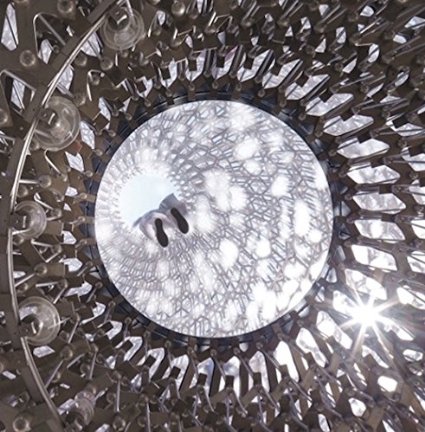
The first long playing release on Caught By The River’s Rivertones imprint, Be is the simply-titled moniker used by a group of musicians assembled to highlight the importance of the honeybee, their aim to provide a soundtrack for the UK pavilion at Expo 2015. The musicians, headed by Wolfgang Buttress, include the Sigur Rós string section Amiina, Jason Pierce of Spiritualized, Youth and cellist Deirdre Bencsik.

What’s the music like?

Extremely restful. The musicians of Be make their points with great subtlety, using field recordings to aid the imagination of natural sounds as they might be heard by the honey bees themselves.

The Journey, the first extended piece of nearly twenty minutes, begins with the clicking sound of the wren, the chirp of a singing robin and the buzz of the bees. Gradually shimmering strings come into view and a pure chord of C major is established, and then sits suspended in mid-air. The music is deceptive, for although it moves very slowly closer inspection reveals a lot of activity – rather like a beehive.

Bencsik’s cello comes into its own on the following piece Into, given expansive freedom over a soft, consoling piano phrase. Each piece of music is lovingly prepared, but given all the room it needs.

Does it all work?

Yes – this is music for the hazy atmosphere of a sunny early morning, requiring absolutely no effort to enjoy. For background listener it provides an ideal and lasting ambience, while closer inspection reveals the detail of the honeycomb in lovely technicolour. As you might expect from anything headed by Caught By The River, there are some beautiful images in the accompanying booklet, given the love and attention the music deserves.

Is it recommended?

Yes. A set of music that will calm even the most anxious of minds!

Listen on Spotify

You can judge for yourself by hearing the album on Spotify here:

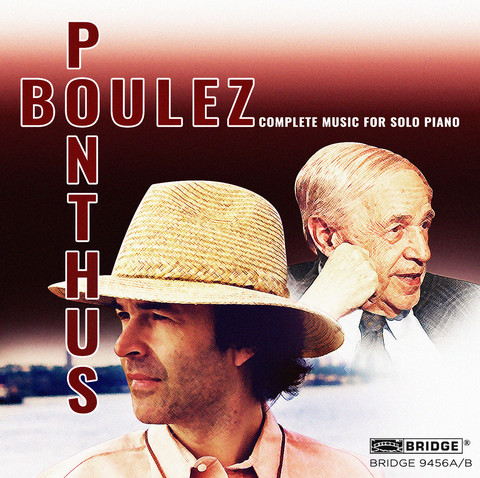
On record: Boulez – Complete Music for Solo Piano (Marc Ponthus) (Bridge)

boulez-ponthuswritten by Richard Whitehouse

Boulez: Complete Music for Solo Piano [Piano Sonatas – No. 1; No. 2; No. 3 (movements 3a and 2). 12 Notations; Incises (revised version), Un page d’éphéméride]
Marc Ponthus (piano)

Summary

Marc Ponthus, an American pianist in the lineage of Charles Rosen and Paul Jacobs, tackles the (nominally) complete piano music of Pierre Boulez – a select though vital body of work particularly in terms of understanding his evolution over the first decade of creative maturity.

What’s the music like?

Boulez’s meteoric rise to the forefront of the European avant-garde is much in evidence here. Withdrawn for over four decades, the set of 12 Notations (1945) is both an investigation and critique of the serial thinking absorbed from Schoenberg and Webern – brief though eventful miniatures at once intriguing and sardonic.

Ponthus renders them with due precision, then is no less perceptive in the First Piano Sonata (1946) whose two compact movements unfold in respectively speculative and incisive terms. The Second Piano Sonata (1948) is the climax of this phase, its outwardly orthodox four-movement design acknowledging while dismantling Classical antecedents via an often assaultive virtuosity of which Ponthus is fully in command. Those who might know Maurizio Pollini’s magisterial 1976 account will find this version a worthy successor.

Boulez’s subsequent piano music parallels the ambivalence of his work as a whole. Envisaged as an ambitious five-movement format, only the second and third movements (the latter in its retrograde version) of his Third Piano Sonata (1957) have been published – Ponthus relishing glacial expressive contrasts in Constellation-Miroir then underlining the ingenious variation process of Trope.

Incises (1994) began as a competition test-piece, expanded with this 2001 version into a fantasy of headlong dynamism and suspenseful inaction. It might have served as springboard for a concertante piece that remained unrealized, while Un page d’éphéméride (2005) was intended as starting-point for a piano cycle that never was; what remains is a four-minute étude whose enticing sonority and glistening filigree denote the sure hand of a master.

Does it all work?

Yes, but just how and why depends on listeners’ insight into and understanding of a tradition such as Boulez approached via an engaged antagonism that did not atrophy so much as open-out experientially over time. Those who value their musical preconceptions should steer clear.

Is it recommended?

Indeed, with the proviso that the original version of Incises might have been included, as also the opening Antiphonie movement (given at Aldeburgh only last year) of the Third Sonata. The sound has unsparing clarity, with the booklet note and interview a mine of information.

Keith Emerson

The sad news today is that Keith Emerson, spearhead of the legendary trio Emerson, Lake and Palmer, has died aged 71.

The group could be regarded as the original pirates of classical music, taking pieces by Sibelius, Prokofiev, Bach, Bartók and – famously – Musorgsky‘s Pictures at an Exhibition, reworking them affectionately for rock band and a new audience.

By way of tribute, here they are in their most famous arrangement of all, Copland‘s Fanfare for the Common Man:

A full appreciation of Emerson’s achievements, especially with regard to his use of classical music, will follow in due course.