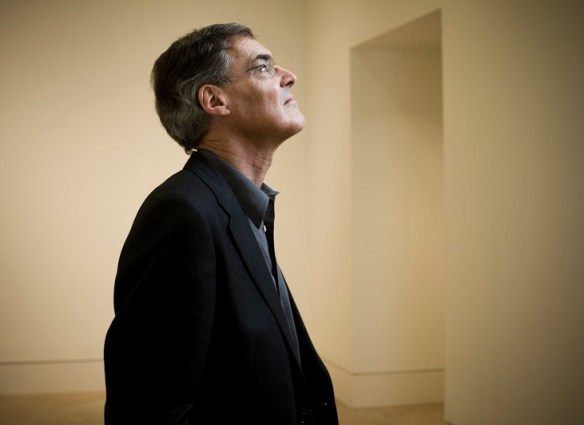
Wigmore Mondays: Karina Gauvin & Maciej Pikulski – French song

Karina Gauvin (soprano, above) and Maciej Pikulski (piano, below)

Hahn Quand je fus pris au pavillon (1899) (1:26-2:41); Si mes vers avaient des ailes (1888) (2:45-5:23; A Chloris (1916) (5:26-8:40)
Debussy Nuit d’étoiles (c1880) (9:59-13:04), Mandoline (1882) (13:09-15:06), Beau soir (1891) (15:10-18:00), L’Enfant prodigue – Récitatif et air de Lia (1884) (18:38-23:44)
Poulenc Trois poèmes de Louise Lalanne (1931) (25:21-26:12, 26:15-27:03, 27:07; Métamorphoses (1943) (29:31-; Deux poèmes de Louis Aragon – C (1943) (34:46-38:18)
Bizet Guitare (1866) (39:57-42:20), La coccinelle (1868) (42:27-47:36), Adieux de l’hôtesse arabe (1867) (47:51-52:55), Ouvre ton Coeur (1859-60) (53:05-55:47)

Wigmore Hall, London; Monday 22 October 2018

You can listen to the BBC Radio 3 broadcast by clicking here

Written by Ben Hogwood

An enjoyable tour around the French ‘mélodie’ from Canadian soprano Karina Gauvin and pianist Maciej Pikulski began with the music of Hahn. A celebrated song composer, his melodic gifts were fully evident in this selection of three, although the wide vibrato Gauvin employed did sometimes lessen its impact. A bright account of Quand je fus pris au pavillon (from 1:26 on the broadcast) showed off the breezy, outdoor approach, but the vibrato was too wide in an otherwise gentle Si mes vers avaient des ailes (2:45). The wonderful A Chloris, with its homage to Bach in the serene piano part, found ideal phrasing from Pikulski and rapturous delivery from Gauvin, if again a little too wobbly.

She was on much more secure ground in a selection of early Debussy. The composer’s first published work, Nuit d’étoiles was especially effective in its evocation of the lyre, where Pikulski was superb and Gauvin had a lovely, floated delivery. Mandoline was also a treat in the unison towards the end of the song, while Beau Soir savoured the heady atmosphere of the sunset. There followed an aria from L’Enfant prodigue (18:38), a dramatic tour de force where Gauvin took complete control, singing powerfully of a mother’s loss.

Poulenc’s songs are never less than entertaining in concert, though you have to be quick to appreciate some as they are gone in mere moments! There was a nonsensical air to two of the three poèmes, whose text are attributed to the fictitious Louise Lalanne. The first two sped by in a blur, nicely pointed and characterised, before the slower Hier went much deeper in its emotional impact.

The first of the Métamorphoses was similarly brief (29:31) but the flowing second (30:43) was a slow and thoughtful utterance, beautifully paced. The third (33:29) raced away from sight, but then as a complete contrast we had the down at heel dfgd (34:46), contemplating Paris in the wake of the Second World War.

Gauvin and Pikulski finished with a very varied quartet of Bizet songs, beginning with the bracing Guitare (39:57), with words by Victor Hugo. The piano imitated the strummed chords of the instrument and turning to sunnier climbs as C major replaced C minor (41:32) Gauvin relished the vocal demands here and in La coccinelle, another Hugo text of curious form which she characterised richly. In Adieux de l’hôtesse arabe (47:51) we had the highlight of the whole recital, and surely one of Bizet’s best songs – a profound departure with a deep sense of longing that Gauvin wholly inhabited, right up to the floated final notes. Then Ouvre ton Coeur (53:05) brought flashes of exoticism with the added notes of Pikulski’s thrummed accompaniment and Gauvin’s vibrato, on this occasion perfectly judged, to the sudden cry of the final note.

Gauvin gave us one of Poulenc’s most popular songs, Les Chemins de l’amour, as an encore (57:44-1:02:24) – and though a slow version it found the bittersweet heart of the song.

Further listening

You can track the repertoire used in this concert via the following Spotify playlist:

(Veronique Gens)

Oxford Lieder Festival – Kai Rüütel and Roger Vignoles: Tallinn to St Petersburg

Kai Rüütel (soprano, above), Roger Vignoles (piano, below)

Härma Ei saa mitte vaiki olla (I cannot stay silent)
Brahms Wie Melodien Op.105/1, Immer leiser wird mein Schlummer Op.105/2, Klage Op.105/3, Auf dem Kirchhofe Op.105/4
Rachmaninov O, dolgo budu ja, v molchan’i nochi tajnoj (In the silence of the secret night) Op.4/3, Poljubila ja (The Soldier’s Wife) Op.8/4, Zdes’ khorosho (How fair is the spot) Op.21/7
Mägi Kolm laulu Betti Alveri luulele (3 songs on poems by Betti Alver) [(Päike paistis, kaste hiilgas (The sun was shining, the dew gleamed), Kui kajab muusika (When music echoes), Uneaknale, uneaknale kevad koputas (On the window of sleep)]
Tormis Nukrad Viivud (Sorrowful Moments) [Kevadpäike, ära looju veel (Spring sun, do not set yet), Sügislaul (Autumn Song), Ei ole roose õitsenud minule (‘No roses have bloomed for me’), Armastus (‘Love’)
Rimsky-Korsakov Plenivshis rozoj, solovey (The Nightingale) Op.2/2, Na kholmakh Gruzii (On Georgia’s Hills) Op.3/4, Serenade Op.4/4, Drobitsya, i pleshchet, i brizzhet volna (The wave breaks) Op.46/1, Kogda volnuyetsya zhelteyushchaya niva (When the ripening wheat fields gently stir) Op.40/1
Mart Saar nnemuiste (In Days of Yore), Kõrs kahiseb (The Straw Murmurs), Kadunud ingel ‘Lost Angel’, Sügismõtted (Autumn Thoughts), Mis see oli? (What was It?), Üks ainus kord (Only Once More)

Holywell Music Room, Oxford
Wednesday 17 October 2018 (evening)

Written by Ben Hogwood

Continuing the Baltic theme of this Wednesday at the Oxford Lieder Festival, Estonian mezzo-soprano Kai Rüütel and pianist Roger Vignoles gave a fascinating concert introducing their audience to Estonian song from the 20th century, helpfully placed in the context of Romantic Russian and German song. Rüütel had very helpfully provided English translations of the Estonian songs, which was particularly useful for those Festival goers who had attended the earlier ‘Language Lab’ in the Ashmolean museum, where we had an introduction to the language from Kerli Liksor.

Rüütel set the tone with the unaccompanied Estonian folk song Ei saa mitte vaiki olla (I cannot stay silent), before four late Brahms songs showed off the rich tones of her mezzo-soprano. Yet there was a feeling these were merely a prelude to the meat of the concert, which really began with a wonderfully evocative account of the first of three Rachmaninov songs, In the silence of the secret night. The value of Vignoles’ scene setting was incalculable both here and in the Brahms, with some complex piano writing handled with apparent ease and an instinctive sense of melody and expression. Rüütel inhabited the character of The Soldier’s Wife with a powerful sorrow, contrasted with a dream-like finish to How Fair Is The Spot.

There followed 3 Songs on poems by Betti Alver from the 96-year old Estonian composer Ester Mägi. These had a very clear sense of location in their folk-inspired melodies, with distinctive inflections that Rüütel was ideally placed to exploit. These were mirrored in the piano part, which provided a particularly dramatic introduction for the second song, Where Music Echoes. The directness of the text was strangely refreshing and was reflected in the economy of the music, slightly redolent of Janáček in its economy but forging a very distinctive path.

The name of Veljo Tormis will be a more familiar name to students of Baltic music. Known primarily for his choral work, he is a fine song composer too – and the 1958 collection Sorrowful Moments left a lasting impression. Its central pair, Autumn Song and No Roses Have Bloomed For Me, were darkly toned, but the final Love offered much greater hope, Rüütel singing from the heart of ‘the stars that light the traveller’s way’.

Photo credit (c) Ben Ealovega

We returned to Russia for the beginning of the second half, with some rarely heard songs from Rimsky-Korsakov. Given the melodic prowess and dramatic scene setting on show in songs like On Georgia’s Hills and The Wave Breaks it remains a mystery that Rimsky’s songs are not heard more in the concert hall. Rüütel sang them with great fullness of tone but also enjoyed the more tender moments of Serenade and When The Ripening Wheat Fields Gently Stir. Vignoles’ tumultuous evocation of The Wave Breaks was a highlight; so too the pair’s account of The Nightingale.

Finally we heard the music of Mart Saar, an Estonian composer from the first half of the 20th century who studied with Rimsky-Korsakov. In one of several helpful introductions Rüütel told of how Saar followed Rimsky’s advice to ‘be himself’ but also to take risks – and those qualities were evident in these deceptive songs. They were deceptive because some of the twists and turns had an individual quirk, Romantic in profile but alighting on unexpected harmonies or melodies. To Rüütel these were second nature, and in Autumn thoughts especially she found a deep, soulful mood. The first song, In days of yore, had more obvious folk music inflections, but perhaps the most dramatic song of all was Lost Angel, where Vignoles’ mastery of the challenging piano part set the way clear for Rüütel’s direct, emotive response.

As an encore Rüütel and Vignoles gave us a timeless account of Richard Strauss’s Morgen which, while brilliantly performed it did not distract from the impact of the Estonian and Russian music we had just heard. Clearly there are many riches to be discovered from the Baltics, and it is to be hoped Rüütel and Vignoles might set these down permanently for a record company such as Hyperion.

This was a memorable concert, and will be broadcast soon on BBC Radio 3. It comes with the strongest possible recommendation!

Further listening

There is relatively little material on streaming services with which to discover Estonian songs – but there is a new series devoted to the songs of Mart Saar that has just begun:

Meanwhile most of the music from the concert can be heard on the below Spotify playlist:

Oxford Lieder Festival – Mr McFall’s Chamber: Solitude

Mr McFall’s Chamber (above – Cyril Garac, Robert McFall (violins), Brian Schiele (viola), Su-a Lee (cello), Rick Standley (double bass), Maria Martinova (piano)

Sallinen Introduction and Tango Overture Op.74a (1997)
Pärt Für Alina (1976)
Tüür Dedication (1990)
Mustonen Toccata (1989)
Pēteris Vasks A Little Summer Music (1985)
Toivo Kärki Täysikuu (1953)
Sibelius Einsames Lied (arranged for piano sextet)
Unto Mononen Satumaa (1955)

Holywell Music Room, Oxford
Wednesday 17 October 2018 – 5:30pm

Written by Ben Hogwood

This recital, given in the intimate surrounds of the Holywell Music Room, was centred on Solitudes, a recent release of Baltic chamber music from Mr McFall’s Chamber, a group founded by violinist Robert McFall and centred around friends from the Scottish Chamber Orchestra.

This is surely how chamber music should be – a group of friends playing music that has mutual appeal – and the chemistry between the group was that of easy familiarity and affection. That affection spread to the audience, thanks to an easygoing set of introductions from McFall to put the music in context.

Over an hour’s concert we had seven very different and well-chosen pieces, linking nicely with the Oxford Lieder Festival’s theme of the Grand Tour and providing context of the Estonian music ahead of the evening concert from Kai Rüütel and Roger Vignoles.

Neighbouring Finland also got in on the act, and the Introduction and Tango Overture from Aulis Sallinen proved a bold opening piece once its persuasive rhythms and bold melodies got going. We heard more of the tango in Finland towards the end, with brilliantly swung versions of Toivo Kärki’s Täysikuu and Unto Mononen’s Satumaa.

Contrasting nicely with this was a brief but very poignant excerpt from SibeliusBelshazzar’s Feast, Einsames Lied (Song of Solitude, giving the concert its name), and a substantial Toccata by Olli Mustonen, which took Bach’s Brandenburg Concertos as its inspiration but used powerfully driven rhythms and motifs to make a punchy piece with full bodied Romantic harmonies. As with the tangos, these were performed with great character and verve by the sextet.

To balance the concert rather nicely there were pieces for reduced instrumental forces. The brief meditation of Für Alina from Arvo Pärt, Estonia’s favourite composer, left a lasting mark through the sustain applied by pianist Maria Martoniva. So too did the powerful Dedication for cello and piano by fellow Estonian Erkki-Sven Tüür, whose output falls under the influence of his time in progressive rock band In Spe. This blended catchy melodic riffs into a powerful call and response between cello and piano, with expressive cellist Su-a Lee and Martoniva quick to get to the heart of the piece.

Meanwhile A Little Summer Music, from Latvian composer Peteris Vasks, offered a sunny counterpart, its six short movements bursting with life and melody. Written as something of a pastiche, this did nonetheless work beautifully as six brief picture postcards of a Baltic summer, the violin imitating insects in the final movement while exploring attractive Latvian dances in the second, third and fifth. Cyril Garac played these with great dexterity and energy, helped with the fulsome accompaniment of Martoniva.

This was a hugely enjoyable concert, opening the door to a number of musical discoveries. Yet Mr McFall’s Chamber had one more trick up their sleeve, an encore of the hymn from SibeliusFinlandia, with the piece de resistance a solo role for Su-a Lee on musical saw. It was strangely moving as well as humorous – and capped a terrific concert.

Further listening

You can hear all of the repertoire from this concert performed by Mr McFall’s Chamber on Spotify. The album was made for Delphian Records:

Oxford Lieder Festival – Alessandro Fisher & Gary Matthewman: An Italian Songbook

Alessandro Fisher (tenor, above), Gary Matthewman (piano, below)

Bellini Malinconia, ninfa gentile, Per pietà bell’idol mio, Ma rendi pur contento (all 1829)
Donizetti Me voglio fa’ ‘na casa (1837), Lu trademiento (1842)
Verdi Il poveretto (1847), Il tramonto (1845), Brindisi (1845)
Tosti ‘A vucchella (1907), Sogno (1886)
Hahn Venezia (1901)

Sheldonian Theatre, Oxford
Wednesday 17 October 2018

Written by Ben Hogwood

The spectacular round of the Sheldonian Theatre proved the ideal setting for tenor Alessandro Fisher and pianist Gary Matthewman, with an attractive Italian recital continuing the Grand Tour theme of the Oxford Lieder Festival.

Fisher proved a consummate storyteller, and his asides to the audience between songs were ideally judged and set the music of the concert in context. There was deep, romantic love, humour and much merrymaking to be had over the course of the hour!

Photo (c) Johan Persson

Fisher and the ever-attentive pianist Matthewman filled the first half of their recital with songs from Italian composers known primarily for their opera – and indeed it did feel as though the tenor was singing excerpts from bigger, stage-bound works. The Bellini songs were straight and to the point – melodic and responsive to their text. Donizetti showed off the voice in Me voglio fa’ ‘na casa (I want to build a house) but cut straight to the heart in Lu trademiento (The treachery).

Three songs by Verdi were of rich variety – the downtrodden Il poveretto (The poor man) led to the rather moving Il tramonto (Twilight) before Fisher and Matthewman cast all cares aside for Brindisi (A toast). Sporting a different musical response to the famous aria of the same name from La Traviata, this was a riotous celebration of wine.

The songs of Tosti are highly respected but still quite rare in concert hall recitals, so it was good to hear a consummate master of the form at work in ‘A vucchella (A sweet mouth) and Sogno (Dream), passionately sung.

The concert’s second part told the story of Hahn’s Venezia, where Matthewman painted the watery settings of the opening song Sopra l’acqua indormenzada (Upon the sleeping waters), the undulations of La barcheta (The little boat) and the heady atmosphere of La biondina in gondoleta (The fair maiden in a gondoleta). Fisher was a very entertaining guide to the ups and downs of love in Venice for the subject, no more so than in Che peca! (What a shame!) where he had all the requisite mannerisms to cast off his ‘only thought’ Nina, to the amusement of the audience – but perhaps the best was left for last, a celebration of La primavera (The springtime) to round off the cycle in some style.

Fisher’s bright tenor sound was also ideally suited to the encore, Leoncavallo’s Mattinata, which provided further evidence of the strength of his partnership with Matthewman. With such colourful song set under the equally bright roof of the Sheldonian, it was a match to remember.

Further listening

You can hear the repertoire from this concert on the Spotify playlist below. Alessandro Fisher has yet to record any of the Italian songs, so leading alternative versions have been used:

Meanwhile Fisher himself appears in a new recording from Classical Opera and Ian Page of Mozart’s Grabmusik and Bastien Und Bastienne:

The Oxford Lieder Festival – why you should go and see it!

written by Ben Hogwood

Sometimes judging a book by its cover can bring the best possible results. For a few years now the immaculate publicity and tempting programmes of the Oxford Lieder Festival have been beckoning me in – and 2018 was at last the year I travelled to Oxford for the day to experience a day in the company of song enthusiasts.

If you had told me 15 years ago that I would be attending a concert of classical song, let alone travelling for three hours to see a couple, I would have politely asked you to leave the room. Yet thanks to the Wigmore Hall I have gradually come to know and in some cases love the ‘Lieder’ repertoire, all the way through from Mozart to the present day.

I attended the festival on Wednesday, where the focus was on Italy, Russia and the Baltic countries, notably Estonia. As you will read in the following three reviews, to be published on Arcana later today, I could not praise the Oxford Lieder Festival highly enough for its ability to appeal to all concertgoers, regardless of what stage in their audience life they are at. A combination of slick organisation, a relaxed approach to concert going and a clear love of their cause shone through at all times. The performers clearly loved to be there too – in each of the three concerts smiles were frequent, long-lasting and genuine.

The ’fringe’ activities excelled too – the Language Labs, where people can get to know the characteristics of the language they will hear in song later in the day, are invaluable. A talk about The Grand Tour from the Ashmolean Museum’s Matthew Winterbottom was entertaining and informative, throwing the Italian vocal compositions of the time into a fresh context. The integration of restaurants and bars into a mix already containing some striking venues was a great plus too, showing the city of Oxford at its best.

The festival, then, is greater than the sum of its many parts – and there really is something for everyone in the twists and turns of its Grand Journey this year. If you are within striking distance of Oxford, I heartily recommend it.