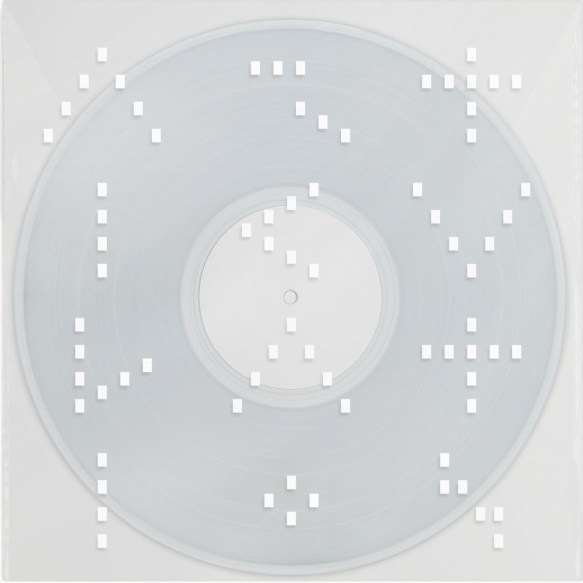
Articulation is the fifth album for Erased Tapes from Rival Consoles, the name under which Ryan Lee West releases much of his music. The inspiration for this album is György Ligeti, not in an explicitly musical sense but in the art of making music from a graphic score. The idea behind this was to get away from the computer and start with patterns, shapes or structures drawn by hand. This would generate musical solutions. Two of the initial scores sketched out by West are shown below:
Articulation
Sudden Awareness of Now
What’s the music like?
Articulation has less obviously musical content than its predecessor Persona. There are admirable and often striking sounds and textures achieved through this music, which often creates powerful pictures and atmospherics. Yet while the chord progressions are strong there is not so much of a melodic strength in depth.
Opening track Vibrations On A String is a study in tonal colour, moving between distortion and a more consonant sound until a forthright beat kicks in. There is a tension between the energy of the beats and the slow four-note progression of the string itself.
Forwardism and Articulation follow similar paths, with relatively minimal means. The former strips back to beats and jagged atmospherics, while the latter takes a more active broken beat and spins threads around it. Melodica is much warmer, the beats retreating and the music panning out a little, the approach allowing for more improvisation, while Still Here resembles an extended peal of mid-range electronic bells, delivered without beats.
Most impressive and enduring is the final Sudden Awareness of Now. With a dazzling array of textures applied to its central riff it crackles with energy, sending out trance-like pulses but surrounded by a warm haze of sound.
Does it all work?
Yes, in terms of conforming to West’s blueprint, but the shift away from computer towards drawings has not necessarily given the music more emotion. If anything, it sounds more processed, a collection of sounds rather than melodies. It is very effective for mood-setting and creating colours but does not always leave a lasting impression.
Is it recommended?
Articulation is an easy recommendation for Rival Consoles devotees, but it does not yet come across as his strongest album. Time will tell if it has the same staying power as other Erased Tapes releases, but for now Articulation is easier to admire than an album with which to form a strong emotional bond.
Jess Gillam’s bright tones will be familiar to many a BBC Radio 3 listener, both as a saxophonist and a regular broadcaster with her program This Classical Life. Often (rightly!) referred to as a breath of fresh air, the Cumbrian-born musician has recently moved to London and is on to the second chapter of her album-making career with Decca. When we talk Kentish Town, where she lives, has just emerged from lockdown. As she confesses, “It’s all a bit weird!”
Gillam’s progression from the wide open, wild spaces of Cumbria to the cramped streets of North London is a striking one. “I lived in Manchester for three years, and then moved to London,” she says. “It was a big shock, a completely different atmosphere. London never stops and that is quite difficult to adapt to sometimes. Culturally the difference is unbelievable. Cumbria has incredible landscapes and scenery, really lovely people, and a really strong sense of community, but there is nowhere near as much culture and things going on as London.”
She had to be careful not to over commit her diary. “I found as soon as I was in London that I was really busy, but also that I wasn’t in London so much as I thought as I was touring and playing in different places. I remember moving on the Monday, I had a rehearsal in the afternoon and a concert the next day. It was a mixture as before I couldn’t commit to too much, but now I love the different challenges. I would love to go to more theatres and watch more concerts though – that’s something I plan to do much more of when they reopen.”
We move on to talk about TIME, that second album for Decca, due for release at the end of September. It was recorded with the Jess Gillam Ensemble, a chamber-sized group of accomplished session musicians and percussionists. Several teasers for the album have appeared, in the exciting form of new and specially commissioned pieces by Luke Howard (Dappled Light) and Will Gregory(Orbit). The tracklisting is pleasingly adventurous, with new interpretations of tracks by James Blake, Radiohead, Philip Glass and Michael Nyman.
Gillam was already aware of Gregory’s pop music. “I’ve been a fan of Goldfrapp since I was quite young”, she explains, “and have listened to their albums. I knew that Will was a sax player and have played various pieces by him – so I just approached him and asked if he could write a piece. Goldfrapp have blossomed as they have gone on, and that’s one of the things I find really inspiring about Will, is that he can write in a classical style, with a score for orchestra, but he can write in so many areas and have a distinctive voice still. For me it makes his music more authentic, and it’s one of the reasons I love it.”
On Dappled Light, I comment that the colours of the cover and match up to Luke Howard’s music rather nicely. “I think he wrote beautifully for the forces that we had”, says Gillam, “and the way he used the percussion was really interesting with the piano. It really paints a picture and a scene I think. The cover art wasn’t planned but we ended up with it because of lockdown. I think it went together really well!”
Jess has a number of new commissions under her belt already. Does she feel it is important for a new composer to capture her personality as well as writing well for the saxophone itself? “I think for me music is all about people, about telling people stories and communication”, she says. “It is a deep level of communication and conveying a story, an emotion or a feeling. I think with whatever piece it is – a Mahler symphony or a Shostakovich string quartet for instance – each one has a history that is linked to a particular person. I find the interpersonal relationships interesting, to find out that music a lot of the time is about people, for people or with somebody in mind. It is really nice to have that human interaction and quality to a new piece, but it’s not essential. I think it’s really nice when a composer listens to your sound and captures that, but I think it’s nice and not essential.”
While listening through the album, the big surprise for this particular listener was Gillam’s cover of James Blake’s Retrograde, in an arrangement by Benjamin Rimmer. The surprise in this case was the vocal qualities of the instrument. “I think it’s an underrated element of the saxophone, it’s almost insane the vocal quality that it has! The way a sound is produced is quite akin to how you would sing, and quite similar to how you would produce the sound if you were a singer, and the things you would think about where the sound is being made are similar through your vocal chords. Whatever you put through the saxophone is a direct representation of how sound comes out. If you’re shouting or whispering, it would be totally different. You get that to some extent on a piano, but it is so connected to our bodies and the physicality of it is just like singing. When I was recording Retrograde it was about looking at how James Blake had got that sound, and replicating some of it on the saxophone.”
Jess has shown through her concerts how adaptable the saxophone can be, showing in an hour-long recital at Wigmore Hall how composers from the last 400 years can find their music in a new dimension. “It is unbelievably versatile, and I have been saying for a while how it’s like a chameleon of instruments. I was reading the famous David Bowie quote where he says people describe him as a chameleon but he’s not a chameleon of styles, because a chameleon puts a lot of effort into changing its colour! It’s the same with the saxophone, you don’t really have to change that much. Of course there is a whole different set of equipment and techniques to play jazz and classical, and you can learn to do it very well, but on a very basic level you don’t need to change anything to be able to play baroque music or Motown or classical, whatever it might be. It has the versatility of sitting right in that hole.”
She may be two albums in, but Jess is still at a very early point in her career – which is something of a double-edged sword. “It’s amazing but also terrifying!” she exclaims. “There is so much to explore with the instruments. The way we consume music now means that people have such eclectic tastes, because you can listen to whatever you like whenever you like on a streaming platform, and you don’t have to sit down and listen to a whole album before getting up and changing the gramophone. It’s a lot easier listening to music now, so the styles we like and are listening to I find are much more based on mood and what we feed our emotions, to inspire or to concentrate. I think people are using music in quite a different way now. The saxophone feels like an instrument that has the potential to sit in so many different places and to explore so many new possibilities. There is so much music still to be made for it I think, because it’s such a young instrument and has so many places to go.”
These new ways of experiencing music, primarily through digital platforms, are at the heart of This Classical Life, her successful weekly show on BBC Radio 3. It appeals to a wide range of listeners, and not just the new technology recruits – from experience, much older gramophone lovers are enjoying her open and diverse approach to music, casting off the genre stereotypes. “There has been a big range in the response I have had, with all age groups from primary school children to 90-year-olds. I think the most magical thing about music is the sense of discovery, and knowing that you can never listen to all the music in the world. There is always something to discover. Regardless of what age you are, that never leaves you, the idea of hearing new sounds, stories and different people!”
These principles are at the heart of her approach, both as a performer and a presenter. “I think listening to new music and finding new artists that they love brings people so much joy. When you find somebody new you can listen to all their music and find out who they are, and what they’re like. It’s one of the greatest things to discover.”
Has the lockdown period given her a greater appreciation of music? “It’s been such a strange time, but it has made me realise even more that I don’t go a single day without putting on some kind of music. It can completely change the surroundings, it can transform your mood, it can make you think a different way, and it can really transform a day. You can be locked down like we have been inside our houses, but listen to music and suddenly you’re in a completely different country, thinking completely different thoughts, and you’re with someone else. It’s an amazing thing.”
Gillam has done a good deal of work over Zoom in the last few months, setting up the hugely successful Virtual Scratch Orchestra during lockdown. It brought musicians of all abilities together for the closest experience to live performance they could achieve in isolated conditions – and in total 900 people were assembled online for a distanced account of Let It Be.
Although Zoom has to an extent saved live music during the Coronavirus pandemic, there are still keen limitations, as Gillam freely admits. “Technology is amazing, and it’s incredible that we can still be a part of something bigger and still connect via the internet in the way we can, but nothing will be able to replicate the feeling of playing with other people in a room, or playing to other people. I’ve been taking part in the Royal Albert At Home concert, and practising playing to a screen is the most bizarre feeling. There is no clapping, no communication with the audience, no way of judging how it’s going! It’s the most inhuman experience in a way but at the same time you know people will watch it and you hope they will enjoy it. It’s a very strange feeling.”
Her set for the Royal Albert Hall was typically varied, including music from Marcello to David Bowie – which puts me in mind of how important the saxophone was through his music. Gillam emphatically agrees. “He played the saxophone himself, and often in his music it acts as a catalyst for the next section, or the next drop, or the next rise in emotion and intensity. The way he would use it, he deployed it as an instrument to take things to the next level.”
She has also used Zoom for lessons with her teacher, renowned British saxophonist John Harle. “I’m just finishing my Masters year at Guildhall School of Music & Drama, and I submitted my recital only yesterday. We’ve been having video lessons leading up to that. It’s great to be able to keep studying, but again it isn’t quite the same, it’s quite a strange method over the internet!”
Now the recital is submitted, TIME is of the essence. We’re getting everything together for the September release – the cover and booklet notes, the track order. The whole album was mixed in lockdown, which was quite a technological feat! The producer Jonathan Allen was incredible, he was giving a live feed over to me and we could comment in real time, using WhatsApp. It’s amazing to see what’s actually possible when you need it to be!”
Jess Gillam‘s album TIME will be released by Decca on 25 September. It will include the singles Dappled Light, Suspirium, Orbit, Truman Sleeps and Joby Talbot‘s Transit of Venus. You can read more about the album on her website, and keep up with new audio releases via her Spotify and YouTube pages
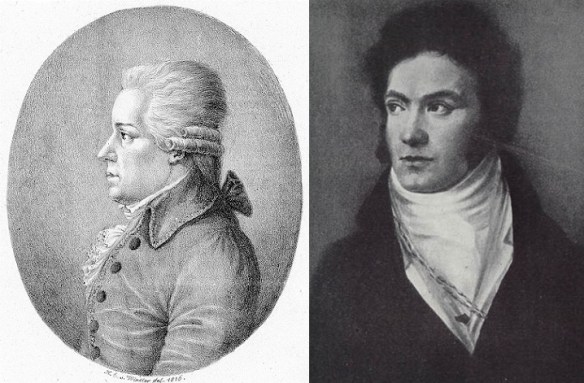
Carl Ditters von Dittersdorf (left) and the young Ludwig van Beethoven
13 Variations on Dittersdorf’s air ‘Es war einmal ein alter Mann’ for piano (1790-92, Beethoven aged 21)
Dedication not known
Duration 12′
Listen
What’s the theme like?
Dittersdorf’s theme is taken from an opera, Das rothe Käppchen. In profile it is similar to the Swiss song on which Beethoven wrote six simple variations, not long before completing this work.
Background and Critical Reception
Having been rather dismissive of the entertaining Waldstein variatioms, booklet writer Jean-Charles Hoffelé is more forthcoming on their successor. They ‘make the most of the popular ballad from the opera Das rothe Käppchen. The dominant-tonic interval is exploited to the full to create a tension that is resolved only in the final march’.
Barry Cooper, writing in the notes for the DG Complete Beethoven Edition, gets to the nub of Beethoven’s wit. ‘The most striking effect is the sudden and prolonged rest in the middle of the theme. Beethoven exploits the humourous effect of this rest by creating witty surprises after it in almost every variation, so that the flow of the music is not merely interrupted by the rest but is diverted from its previous course by what follows. In the final variation, a march, there is once again a witty surprise after the rest – for the first time the music just carries on as if nothing had happened. The joke is that there is no joke!
Thoughts
On first hearing it’s tempting to think the pianist has made a mistake when playing this theme. This is the ‘prolonged rest’ that Barry Cooper talks about, and once you know it’s there the ear listens out for it in each variation.
If it was ever played in public this trick could potentially have brought the house down, and when listening it certainly raises a smile – especially as Beethoven’s approaches to this bit of silence are so wildly varied. Silence, of course, would become a key element of Beethoven’s style as it progressed, and this is the first explicit example of it used prominently in a theme.
The variations sparkle, Beethoven again showing off what he can do with busy figurations for the right hand especially. The minor key variation (the sixth) is unexpectedly dark after the major key brilliance – while the ninth alternates between both moods, a flurry of notes suddenly coming to a sombre pause when Beethoven’s trick once again reveals itself.
Once again Beethoven turns entertainer, and in this case prankster – but beneath the notes he is continuing to explore different techniques and ever-more demanding writing for the piano. As a result there is much of note to find in this piece.
Recordings used
Cécile Ousset (Eloquence), John Ogdon (EMI/Warner Classics), Ronald Brautigam (BIS)
A fascinating and varied trio of versions here. Ousset has a winning elegance from the start, but fully embraces Beethoven’s invention and instinct as the variations progress. John Ogdon brings a mischievous element right from the start, with some appealing, jaunty phrasing, while Brautigam gives a charismatic account. Three excellent versions that complement each other.
Spotify links
Cécile Ousset
John Ogdon
track 34 onwards on this album:
Ronald Brautigam
Also written in 1792 Hummel Piano Trio no.1 in E flat major Op.12
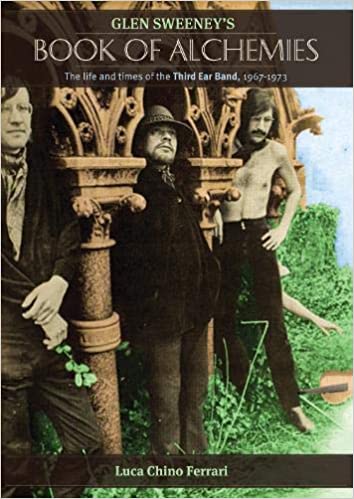
Glen Sweeney’s Book of Alchemies: The life and times of the Third Ear Band 1967-1973
by Luca Chino Ferrari
ReR Megacorp/November Books [softback, 226pp plus CD, ISBN: 978-0-9560184-6-5, £18]
Reviewed by Richard Whitehouse
What’s the story?
Over two decades after his pioneering biography of Third Ear Band, Necromancers of the Drifting West (Sonic Book: 1997), Luca ‘Chino’ Ferrari has now published this larger and more inclusive survey of arguably the ultimate cult band to have emerged in the late 1960s.
What’s the book like?
One thing it is not is an update of that earlier study. Instead, Ferrari has assembled a range of documents from a variety of sources centred on TEB’s guiding force: the often enigmatic and always recalcitrant Glen Sweeney. Only in those (brief) first and second sections does Ferrari posit his thinking as to why this outfit flourished, foundered yet refused to die across a period of almost 30 years. The third section showcases Sweeney’s poems and lyrics – ranging from the inspired to the not so inspired while suggesting that, with a degree of luck, the proto-new wave incarnation of the mid-1970s (aka Hydrogen Jukebox) just might have broken through.
The fourth section features Sweeney’s writings – engaging and frustrating in equal measure – but most valuable are the interviews in section five; above all, an expansive 1990 Q&A with Unhinged’s Nigel Cross as captures Sweeney in almost confessional mood. Quite a contrast with those gnomic ‘soundbites’ in the sixth section where he dons the guise of false Messiah. Much the longest section is the seventh, ‘memories and interviews’, carried out over almost a quarter-century and drawing in almost all TEB’s one-time members (except for the elusive violinist Richard Coff). They range from the humorous to the desultory, with several of those featured seemingly intent upon post-priori acts of self-justification, but not oboist Paul Minns – who, writing in December 1996 (months before his untimely death) places the triumphs and failings of TEB in the wider context of post-war Western culture with a precision and pathos that makes it required reading for anyone at all interested in this veritable fable of disillusion.
The eighth section comprises a chronological listing of audio and video releases – worthwhile especially as TEB releases from the late 1960s or early 1970s have been reissued on various occasions in numerous formats, whereas those from the 1980s onwards constitute a minefield of reissues and partial re-couplings which Sweeney must have relished. Hardly less welcome, section nine offers a day-by-day chronology of the band across 53 years and which is, almost inevitably, at its most thought-provoking when the band had all but ceased activity and those associated with it make a (not always fond) adieu – above all, Sweeney himself in 2005. Chris Cutler’s footnotes are a judicious enhancement from one ‘who was there’, while the selection of photos is decently reproduced with several stunning shots of drummer Sweeney in action.
Does it all work?
Yes, despite vagaries of presentation (Section IV is headed ‘VI’ on p28, and where exactly is the Epilogue?) or inconsistent layout. Whether or not the attached CD indeed constitutes The Dragon Wakes, the unreleased third album from 1971, its content is never less than absorbing.
Is it recommended?
Absolutely. Apart from its historical significance, Third Ear Band’s extensive recorded legacy is still of undeniable relevance, with this latest publication a valuable and necessary resource. Whether or not it proves to be the ‘last word’ on TEB rather depends on Luca Ferrari himself.
Count Waldstein (left) and Ludwig van Beethoven aged approximately 25.
8 Variations on a Theme by Count Waldstein WoO 67 for piano duet (1790-92, Beethoven aged 21)
Dedication not known, but presumed to be Count Waldstein
Duration 8′
Listen
What’s the theme like?
The theme sounds quite quaint and a little rickety on the fortepiano. Its alternations between major and minor harmonies give it a bittersweet flavour.
Background and Critical Reception
This is another piece from Beethoven’s last days in Bonn that was not published in his lifetime – and another that has almost completely bypassed the writings of the composer’s scholars. Keith Anderson, writing booklet notes for the engaging release of Beethoven’s music for piano duet on Grand Piano Records, notes the piece was picked up by the publisher Nikolaus Simrock, but without initial consultation with the composer himself.
By now Beethoven was using the ‘theme and variations’ format as a way of flexing his muscles as a composer, trying out new and – in some cases – ever more daring feats. No doubt when making music with friends he got acquainted with the idea of piano duets – Mozart especially had written a number of pieces for the format – and this was his first, quite extravagant work for four hands.
Waldstein is recorded on Wikipedia as a ‘fairly good pianist and composer’ – so it is tempting to think Beethoven wrote the second part with him in mind. Certainly some of the prompting is easier for the second pianist, as the first part goes wild at the top end of the keyboard!
Thoughts
Beethoven has some fun with these variations, which seem to have been designed for lighthearted performance among friends. Certainly if the fourth variation is anything to go by, with its detached swoops from high down to low and back again. The second and fifth have a torrent of notes in the right hand, while the sixth is also pretty outrageous, an outgoing display piece. The seventh is po-faced, with a syncopation here and there disrupting the rhythms enjoyably, while the eighth variation switches to C minor, rich in harmonic flavour.
Then there is a really pronounced pause, Beethoven looking round at his audience with a tease or two – before a sizeable coda which could really be called a Fantasia. Where will the music go? Beethoven starts to go off at a number of tangents, recalling the unpredictable methods of C.P.E. Bach. The speeds vary wildly, as do the moods – and just as the direction seems uncertain, we head back to the main key through a series of heavy chords. Beethoven refuses to finish with a flourish though, a soft chord all he needs to bring the house down.
Ultimately this piece has a lot of signposts for the watching public, and they surely would have loved it in private performance – if indeed it got to see the light of day. It is a good deal of fun.
Recordings used
Amy & Sara Hamann (Grand Piano) Arthur & Lucas Jussen (Deutsche Grammophon)
This piece is a riot in the hands of the Hamann sisters, who appreciate the rougher edges the fortepiano provides. They use this to their advantage, bringing out the contrasts between the variations. Their album of piano duets presents the pieces first on the fortepiano, and then on a modern Yamaha, giving the listener a great chance to compare and contrast. The modern version is cleaner and less ‘on the edge’, but still very entertaining.
Alongside this pair the Jussen brothers sound rather more chaste, though they too have some fun once the variations are into their stride.
Spotify links
Amy & Sara Hamann (Fortepiano after J.A. Stein, 1784)
Amy & Sara Hamann (modern Yamaha)
Arthur & Lucas Jussen
Also written in 1792 Gelinek 6 Variations on ‘Ein Mädchen oder Weibchen
Next up13 Variations on ‘Es war einmal ein alter Mann’




 Arcana.fm