
On Record: Toumani Diabaté & London Symphony Orchestra: Kôrôlén (World Circuit)

diabate-lso

reviewed by Ben Hogwood

What’s the story?

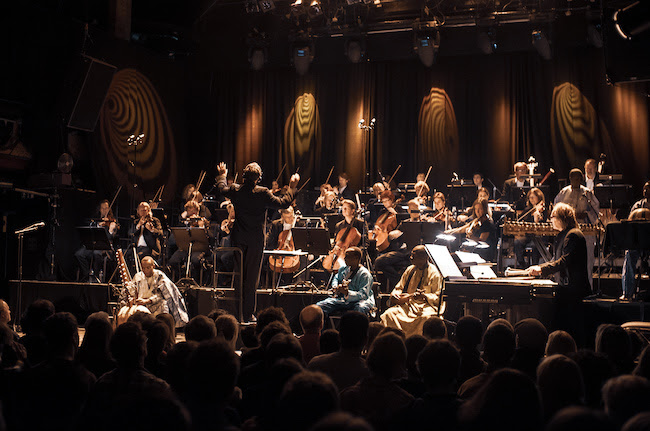
This is the second cross-genre collaboration for the London Symphony Orchestra to be released in as many months, following on from their successful work with Floating Points and Pharoah Sanders, already getting plaudits as an album of the year contender. However this issue of a concert with Malian Toumani Diabaté and his ensemble dates from 2008, another of the kora player’s efforts to bring African music to new audiences.

With arrangements from Nico Muhly and Ian Gardiner, the 21-string kora is set alongside contributions from other Malian musicians and the fulsome presence of the London Symphony Orchestra, bringing forward music that, as Diabaté says, has a tradition stretching back beyond the music of Bach. Ultimately his vision is that we ‘look at African music in a new way’.

What’s the music like?

Rather wonderful. The early exchanges of Haïnamady Town establish the sound world of the kora and orchestra, with an opening solo from Diabaté showing off his fluid and sensitive playing. The serene strings provide colour around the edges, dressing the material rather than dominating it, but as the suite progresses the orchestra takes a more prominent role.
diabate-lso-2

Balafonist Lassana Diabaté comes to the fore for Mama Souraka, a response to the kora that brings fresh, outdoor energy to the music. Attractive woodwind colours are the feature of Elyne Road, which segue to an attractive round that develops. Cantelowes Dream is a longer sequence, where Diabaté takes longer phrases, spinning them above held strings and gently undulating balafon. The music pauses in the middle, giving room for dialogue with the flute.

Moon Kaira has extra propulsion with a recurring bass motif and solos from kora and marimba, and is ultimately taken over by joyful string motifs. Mamadou Kanda Keita provides a fitting climax, beautifully sung by Kasse Mady Diabaté in the first vocal of the album, rapturously received by the Barbican audience.

Does it all work?

In every way. Many collaborations between electronics, jazz and / or symphony orchestra miss the mark because of balance issues, with everything turned up too loud or with too many notes given to too many instruments, or because one or more of the musical parties are not on the same wavelength. This makes Promises all the more remarkable, for even the LSO strings, adding their contribution a year hence, are fully in the moment.

The ‘less is more’ approach of this collaboration pays off in every way. Sure, the music is slow moving, but that is an essential part of its appeal, a meditation for large forces securing the most intimate of responses.

Is it recommended?

Yes, provided the piece is experienced as one. Gardiner and Muhly’s arrangements are nicely weighted, giving the right amount of balance with the African instruments and only occasionally threatening their clarity. The brightness of the wind instruments and softness of the strings complements the studied, picked timbres of the kora. Conductor Clark Rundell gives the music all the room it needs, lending the exchanges an instinctive, almost improvised quality.

Stream

Buy

You can find out more about the release and purchase from the World Circuit website
 

Switched On – Erik Levander: Jökel (Glacial Movements)

erik-levander

reviewed by Ben Hogwood

What’s the story?

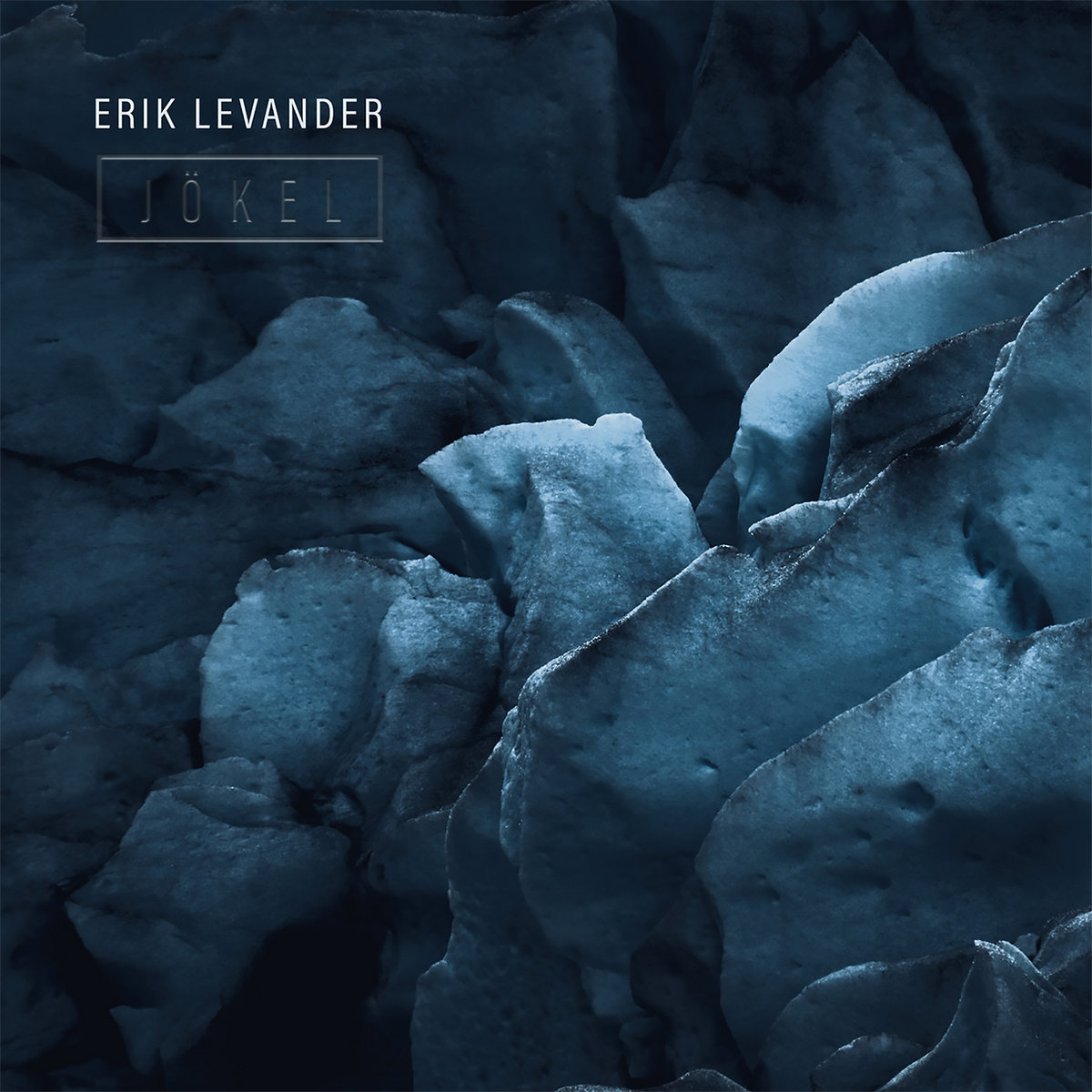
‘Jökel’ is the Swedish word for glacier, with its roots in the Icelandic word ‘Jökull’. It is an entirely appropriate title for Erik Levander’s latest album, borne out of a visit to the Mýrdalsjökull glacier in Iceland (seen below). He crafted a clutch of imaginary field recordings from the visit, inviting the listener to join him on a natural journey around and through this natural phenomenon.

What’s the music like?

Among his plentiful output, this will surely be one of Levander’s more minimal albums to date. Yet that is an entirely valid approach as he looks to capture the slow, incremental progress of the glacier, while also recognising the fact it sits on top of a volcano.

There are no melodies as such here, but the five tracks are compelling as they slowly develop in front of the listener’s ears. Tröskel (Threshold) has an ominous knocking sound that reoccurs as though natural bumps were going on that could lead to something much more substantial down the line. This is a theme developed in the longer Expansion, where the sound widens its perspective and more obvious pitches appear, winding outwards and upwards. This is quite chilling on headphones, before the comfort of the sounds submersed in thick ambience, as though wrapped up in ice.

Myrdalsjökull_01From there we move to Avstånd, where it is possible to discern pieces breaking off the main flow, the ambience still thick behind, before hissing and dripping sounds start to dominate the treble, again a spooky effect on headphones. Yta introduces the most definite pitches we have heard so far, rooted to a single chord initially but then changing to a pitch laden with overtones as the perspective changes. Finally, Massa (Mass) draws back a bit, letting us appreciate the sheer size of the construction, the wind audible over the snow and ice.

The five tracks last just over 50 minutes, and are definitely best heard as a whole in order for the listener to walk with Levander along the edge of this remarkable construction.

Does it all work?

Yes. Levander’s soundscapes are remarkably descriptive, sending a shiver of cold down the spine. This is not comfortable music, and when the listener has the subject matter to hand it is easy to think of the anguish involved with the melting of our glaciers. Levander successfully portrays his subject but with a fair bit of discomfort involved.

Is it recommended?

Yes. Jökel sits comfortably within the spectrum of the Glacial Movements label, and is a compelling document of a visit that clearly had a strong emotional effect on the Swedish artist. 

Stream

Buy


Listening to Beethoven #143 – Neue Liebe, neues Leben WoO 127

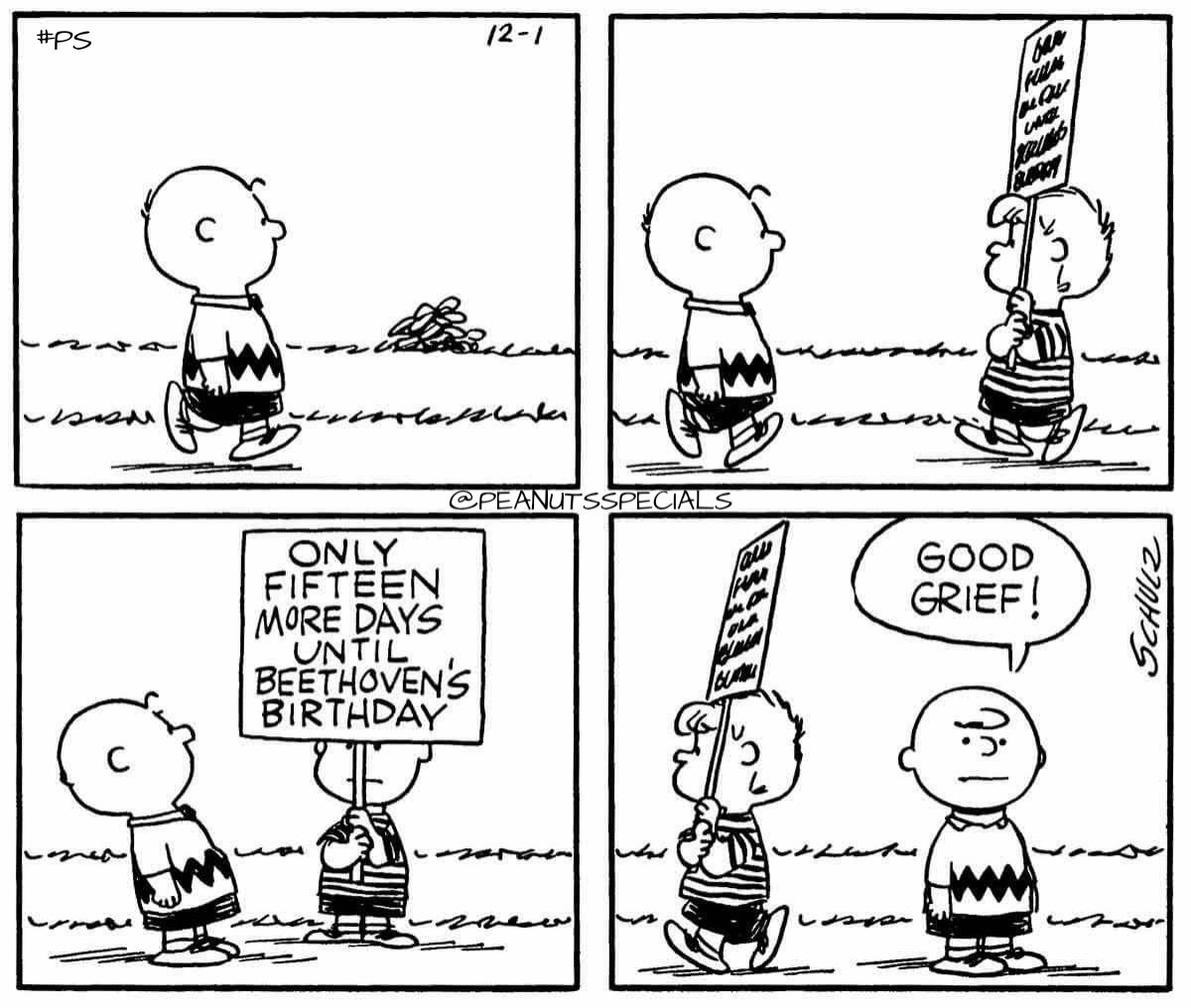
Neue Liebe neues LebenPeanuts comic strip, drawn by Charles M. Schulz (c)PNTS
Neue Liebe, neues Leben WoO 127 for voice and piano (1798-99, Beethoven aged 28)

Dedication not known
Text Johann Wolfgang von Goethe

Duration 3′

Listen

Background and Critical Reception

The third of Beethoven’s songs thought to be written in 1799 – and the third different language!

Susan Nouen, in some impressively detailed notes accompanying Signum’s disc of Beethoven Lieder with Ann Murray, recounts the composer’s history with this particular song. ‘The words…were borne of Goethe’s brief betrothal for some months in 1775 to Anne Elisabeth Schönemann’, who he nicknamed ‘Lili’. Their engagement ran into trouble because of her social circle, but her presence stayed with the poet. ‘She was the first woman I truly and deeply loved’, he said. ‘I can also say that she was the last’.

Beethoven identified strongly with this poem, setting it first in sketches in 1792, then this version, and then his final encounter with the text as Op.75/2.

Thoughts

A song of great urgency and concentrated feeling. Most of Beethoven’s writing is for the upper range of the tenor voice, and with quite short notes too – the singer is not allowed to rest at any point. Although in C major the song has no sense of repose, and Goethe’s words are delivered almost breathlessly. It will be interesting to see the music Beethoven finally brings to this text, for this is restless and less than comfortable.

Recordings used and Spotify links

Peter Maus (tenor), Hans Hilsdorf (piano)


You can chart the Arcana Beethoven playlist as it grows, with one recommended version of each piece we listen to. Catch up here!

Also written in 1799 Salieri Falstaff o sia Le tre burle

Next up Piano Sonata no.9 in E major Op.14/1

Listening to Beethoven #142 – Plaisir d’aimer WoO 128

plaisir-daimer
Peanuts comic strip, drawn by Charles M. Schulz (c)PNTS

Plaisir d’aimer WoO 128 for voice and piano (1798-99, Beethoven aged 28)

Dedication not known
Text Anon

Duration 1’15”

Listen

Background and Critical Reception

This Romance has a text of unknown source, set to music by Beethoven either in late 1798 or early 1799. Beethoven hardly set any songs in French, so this is a notable if very short piece of work, lasting little over a minute.

The singer is worried about the power a lover can have over their soul, and that they might lose their peace in pursuit of a happiness that is far from guaranteed.

Thoughts

A short song, and a worrisome one too. The vocal melody is simple but affected, followed closely by the piano.

Recordings used and Spotify links

Peter Schreier (tenor), Walter Olbertz (piano)

Pamela Coburn & Leonard Hokanson


You can chart the Arcana Beethoven playlist as it grows, with one recommended version of each piece we listen to. Catch up here!

Also written in 1799 Salieri Falstaff o sia Le tre burle

Next up Neue Liebe, neues Leben, WoO 127

Listening to Beethoven #141 – La tiranna WoO 125

tiranna
Peanuts comic strip, drawn by Charles M. Schulz (c)PNTS

La Tiranna WoO 125 for voice and piano (1799, Beethoven aged 28)

Dedication not known
Text Anon, translated William Wennington

Duration 3′

Listen

Background and Critical Reception

This work is described by Susan Youens as a ‘song-aria’, published in London at the end of 1799. William Wennington, who appears to have been in Vienna towards the end of 1798, translated the text from English into Italian. Youens suggests Beethoven probably made his acquaintance, and ‘acceded to his request to set this dramatic lament about unrequited love.’

Youens writes of how ‘Beethoven makes the piano part froth and foam in such a way as to display his own pianism’.

Thoughts

There is quite a substantial piano introduction to this song before the high voice appears, using a more operatic profile than what we have been used to in the songs so far from Beethoven.

The writing is more descriptive, the piano more independent of the vocal line as it sets the scene. The vocal is floated, the piano flowing but adding comments of its own inbetween. in the tempestuous middle section the melody has a curious premonition of The Phantom of the Opera.

Recording used and Spotify link

John Mark Ainsley (baritone), Iain Burnside (piano)

Pamela Coburn & Leonard Hokanson


You can chart the Arcana Beethoven playlist as it grows, with one recommended version of each piece we listen to. Catch up here!

Also written in 1799 Salieri Falstaff o sia Le tre burle

Next up Neue Liebe, neues Leben, WoO 127