
Listening to Beethoven #219 – Variations on Ich bin der Schneider Kakadu Op.121a

Beethoven and the Austrian composer Wenzel Müller, who wrote the initial theme on which the ‘Kakadu’ variations are based

Variations on Ich bin der Schneider Kakadu Op.121a for piano trio (1803, revised 1819-20. Beethoven aged 33 at time of composition)

Dedication Prince Nikolas Borissovich Galitzin


Duration 19′

Listen

by Ben Hogwood

Background and Critical Reception

The reference material I have been using for the Beethoven project has the Kakadu variations with a completion date of 1803 – though there are another tranche of dates to take into account. The first autograph score appeared in 1816 after what appears to have been a number of revisions, giving an indication of how Beethoven regarded the material. The opus number 121 confirms a much later publication date of 1824, closely followed by the Choral symphony.

Lewis Lockwood suspects that a number of revisions may even have been made as late as this, particularly the striking introduction with which the work begins. The theme, however, is taken from an opera by the Austrian composer Wenzel Müller. Completed in 1794, the comedy Die Schwestern von Prag (‘The sisters from Prague’)  contains the aria I am Kakadu the tailor, whose main theme is lifted by Beethoven for this piece. Following a large introduction are 11 variations on the theme.

Thoughts

This is a substantial piece of work, especially with a full bodied introduction added to the front. In truth this introduction gives the Kakadu variations something of a Baroque profile, giving it a stern, slow minor key introduction, very much a ‘Grave’. It builds in tension, too, with some pretty sparse material that lasts over a third of the piece, and is drawn out for maximum dramatic impact.

Once the theme finally arrives it is something of a light relief, with quite a jaunty profile as the piano and staccato strings set out the simple tune. A feeling of contentment prevails, and this spreads to a flowing first variation and a second variation with light hearted triplets on the violin.

The cello takes over melodic duties for a warm third variation, and the interplay becomes more dense – a sparkling fourth and more intimate fifth attest. The sixth opens the hatches with octaves on the piano, before a thoughtful seventh brings violin and cello alone, the former sweetly sung. The piano’s return is initially quite restrained, the ninth variation a hark back to the solemn introduction and a pause for thought. For the tenth it is as though the trio have saddled a horse and ridden off at speed. The last variation and finale is a wholly suitable summing up, bringing the work to a bracing conclusion.

Spotify playlist and Recordings used

Beaux Arts Trio (Philips Classics)
Daniel Barenboim (piano), Pinchas Zukerman (violin), Jacqueline du Pré (cello) (EMI)
Rudolf Serkin (piano), Yuzuko Horigome (violin), Peter Wiley (cello) (Sony Classical)
Florestan Piano Trio (Hyperion)
Stuttgart Piano Trio (SWR)

There are some heavyweight trio combinations who have taken on the Kakadu variations. Among them are the superstar trio of Daniel Barenboim, Pinchas Zukerman and Jacqueline du Pre, whose high voltage version is a memorable encounter. As enjoyable are the versions from the Beaux Arts Trio, the Stuttgart Trio, and Rudolf Serkin leading the Marlboro Music Society.

The below playlist contains those these recordings, while you can click here for clips from the Florestan Trio account

You can chart the Arcana Beethoven playlist as it grows, with one recommended version of each piece we listen to. Catch up here!

Also written in 1803 Danzi Sextet in E major Op.15

Next up tbc
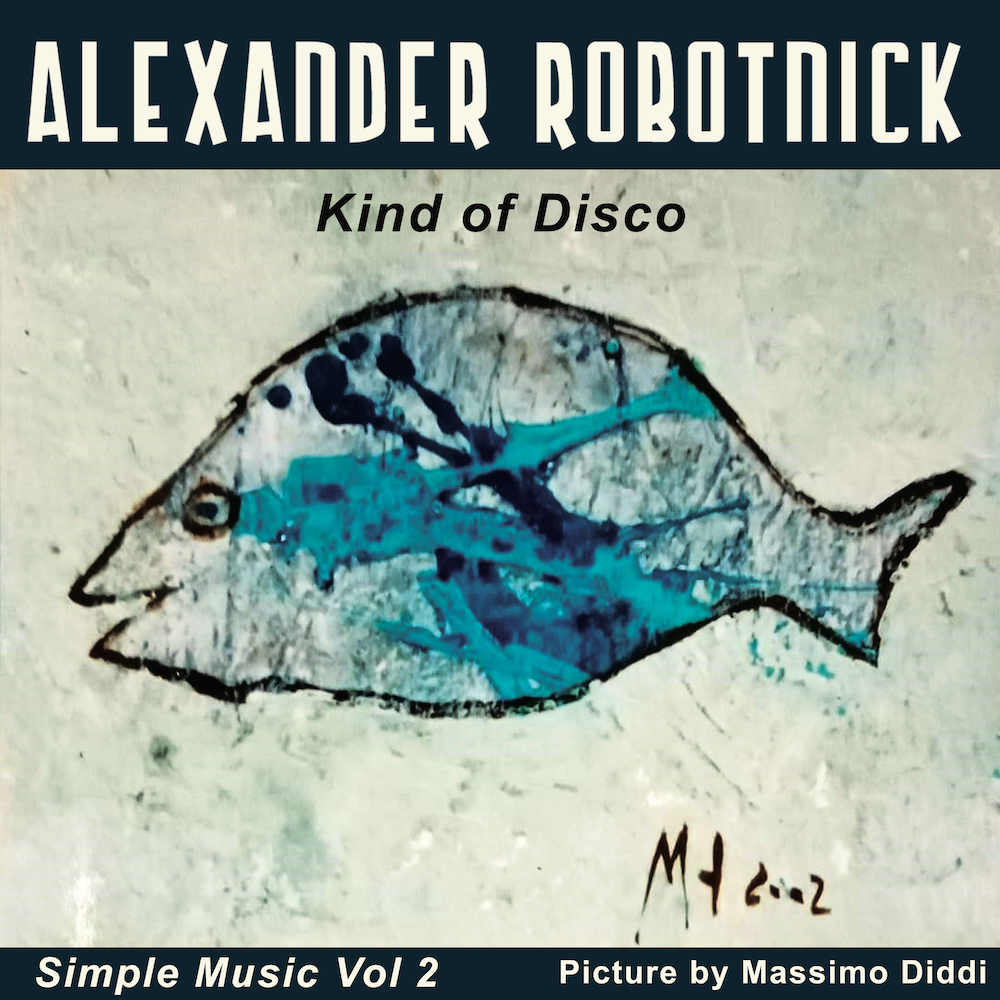
Let’s Dance – Alexander Robotnick: Kind Of Disco: Simple Music Vol. 2 (Hot Elephant Music)

by Ben Hogwood

What’s the story?

Alexander Robotnick doesn’t do anything by halves. The Italian producer – real name Maurizio Dami – has been making disco or disco / house hybrids with great success for more than 30 years now, so it comes as little surprise to report that a second volume of Simple Music follows hot on the heels of the first, at a distance of just three months.

Simple Music refers to the sort of music Robotnick wants to hear when he goes digging for records, and finds him delivering eight new tracks for the dancefloor.

What’s the music like?

Classy. Robotnick is a past master at this sort of stuff, and the music here achieves its aim with the minimum of fuss. Green Past is a great way to start, a bit of mood music with an atmospheric, repeated vocal that would work just as well with opening credits as it does at the start of a disco album. Robotnick knits the melodies together with ease. And Here It Comes Again is a strong Italo-disco cut, and moody with it.

Intergalactic Travel is a brilliant 80s-present day hybrid, with a suitably deadpan vocal and complementary riffs underpinned by a strong beat. Though it is pure escapism the track is actually discounting the possibility of reaching new worlds! Arpico is similarly effective, its oscillating riff bathed in warm textures.

The World Is Dark, proclaims a whispered voice, while its counterpart suggests ‘the world is shiny’. Rippling synthesizers respond, and a bass that glints in the darkness – again a highly effective track. A Blow To The Heart is a burst of nostalgia – ‘listen to your early mixes’, it warns over a squelchy bass. Canzon Triste introduces hints of melancholy, a more minimal and less effective track, but Le Carillon sweeps that away with a riff that bounces around like a game of ping pong, set to a strong rhythm.

Does it all work?

It does. Robotnick knows exactly what he is doing, and the hand of experience delivers eight consistently good tracks primed for the discerning dancefloor.

Is it recommended?

It is – and it’s as good as the first volume.

Listen

Buy

You can listen to clips and purchase at the Juno download website

Switched On – Primitive Motion: Portrait Of An Atmosphere (A Guide To Saints)

by Ben Hogwood

What’s the story?

Brisbane duo Primitive Motion present a new album of unique sound worlds through Lawrence English’s A Guide To Saints imprint.

One look at the credits on their Bandcamp site reveals just how many instruments, colours and textures the two sonic creators have at their disposal. Sandra Selig is credited with contributions through voice, handclap, flute, cymbals, melodica, radio, saxophone, glass bowl, drums, marble in bamboo, zither, wind chimes and bowed cymbal. Meanwhile Leighton Craig contributes on the acoustic guitar, reed organ, cymbals, field recordings (Kyoto Japan), tremolo guitar, miniature saxophone, voice, piano, metal stool, bird call, synthesiser, wind chimes, shaker and timber box.

Between them, Primitive Motion have made a four-part Portrait Suite, bolstered by a fifth track, Trenches Of Time.

What’s the music like?

Intensely descriptive. Although all the instruments above are used, they are of course employed sparingly, and it is immediately clear how much thought has gone into the resultant colours and textures. Yet to their enormous credit Primitive Motion never make anything sound forced. They create their sonic visions with a healthy degree of musical instinct, allowing their material plenty of room to live and breathe.

Portrait is without question an outdoor suite, using field recordings as well as some deeply evocative percussion and instruments where the textures are very clearly thought out. The woozy reed organ with which Portrait II ends is a case in point, and so are Sandra Selig’s vocals, which have a unforced yet primal beauty in the first of the four movements, lost in thought as they are. The mournful and muffled saxophone at the start of Portrait III is striking, its line taken up by Selig’s vocalise. Her mysterious vocal drone on Portrait IV is also a prominent feature, fading in and out over a distracted piano line.

Trenches Of Time sits outside the four-part suite but is more than a coda. Instead it presents what, to this listener at least, feels like a heat-soaked tundra, with distant structures shimmering in the hot sun. Drones reinforce the intense musical humidity.

Does it all work?

It does – though the listening conditions have an important part to play here. This is definitely not an album to experience on the move, as much of the shading and detail will be lost.

Is it recommended?

It is. The name Primitive Motion is well chosen, for Selig and Craig strip music back to its basic elements in order to create pictures and meditations that leave a lasting impression.

Listen

Buy

Playlist – Sarah Beth Briggs

It gives us great pleasure to welcome pianist Sarah Beth Briggs as a guest curator for the Arcana playlist.

Sarah releases her new album Variations on Friday 24 March, a collection of works in the form by Mozart, Beethoven, Mendelssohn and Brahms. It complements a discography for AVIE that already boasts The Austrian Connection and discs of works for piano solo by Schumann and Brahms, and piano trios by Gál and Shostakovich as part of the Briggs Piano Trio.

We asked her for a blend of her current listening and one piece inspired by the Variations album – and I think you’ll agree she has come up with something rather special in the form of Edmund Rubbra’s rare but strikingly original orchestration of BrahmsVariations on a theme of Handel. Here it is in the only available current recording, conducted by Neeme Järvi:

As to her current listening, Sarah gives us a trio of very fine chamber works from the 19th century, Beethoven and Schubert to be precise, and the music of Hans Gál, finally emerging into the public consciousness – his very fine Cello Concerto:

We end with peerless jazz, the Oscar Peterson Trio and their wonderful Night Train

Our grateful thanks to Sarah – do have a listen on the Spotify link below:

On Record: Mark Bebbington, Duncan Riddell, RPO – Vaughan Williams: Fantasia, Piano Quintet, The Lark Ascending, Romance (Resonus Classics)

Vaughan Williams
Piano Quintet in C minor (1903, rev. 1905)
The Lark Ascending (1914, rev, 1919)
Romance (c1914)
Fantasia (quasi variazioni) on the ‘Old 104th’ Psalm Tune (1949)

Mark Bebbington (piano), Duncan Riddell (violin, Piano Quintet, Lark), Abigail Fenna (viola, Piano Quintet, Romance), Richard Harwood (cello, Piano Quintet), Benjamin Cunningham (double bass, Piano Quintet), City of London Choir, Royal Philharmonic Orchestra / Hilary Davon Wetton (Fantasia)

Resonus RES10311 [64’53’’]

Producer Adam Binks
Engineers Dave Rowell (Piano Quintet, Fantasia), Adam Binks (The Lark Ascending, Romance)

Recorded 8, 9 June, 25 July 2022 at St John’s Smith Square, London

Reviewed by Richard Whitehouse

What’s the story?

Mark Bebbington assumes centre-stage for this diverse collection of pieces by Ralph Vaughan Williams, ranging across almost a half-century of his output as well as providing an effective showcase for his (unjustly criticized) piano writing heard here within three different contexts.

Does it all work?

One from a number of early chamber works as have only been revived and published in recent years, the Piano Quintet finds its composer seeking an accommodation between the Germanic and French models. The opening Allegro drives its fiery and wistful main themes through an intense development and curtailed reprise to an uneasy close, while the Andante contrasts the hymnic eloquence of its outer sections with the agitation at its centre. Most distinctive is the closing Fantasia, whose five variations on a plaintive theme shared between piano and strings evince no mean motivic ingenuity or expressive variety as they build to a fervent conclusion. Bebbington and the RPO players make a persuasive case for this uneven yet absorbing piece.

The two duo works make for a telling contrast in themselves. Although now ubiquitous in its orchestral incarnation, The Lark Ascending as originally conceived with piano is appealing and evocative in its own right – not least given with unforced pathos by Duncan Riddell and accompanied by Bebbington with sensitive understatement. Probably dating from the same time, the Romance seemingly went unheard in the composer’s lifetime (one of several pieces intended for but never played by Lionel Tertis) and received its first public hearing in 1962. Its build-up to an impassioned climax and return to its initial serenity is a familiar trajectory though one which is flawlessly carried through here, as least as rendered by Abigail Fenna.

Forward some 35 years to the Fantasia (quasi variazioni) on the ‘Old 104th’ Psalm Tune – a piece whose infrequent performance is explained by the unlikely scoring for piano, chorus and strings but also the hybrid nature of its conception; the forthright nature of its four choral settings duly offset by the formal and expressive freedom of its alternating piano ‘cadenzas’ on route to a powerfully, even starkly drawn coda. Bebbington acquits himself with aplomb in the latter, while the City of London Choir and Royal Philharmonic Orchestra respond with confidence to Hilary Davon Wetton, though perhaps this might have been the ideal occasion to revive the piece with accompaniment for string quartet as heard at its first private hearing.

Does it all work?

Almost. The follow-through of this selection is unusual to say the least, but its distinctiveness of content is undoubted – as, too, the quality of these performances. This is now the seventh version of the Piano Quintet and arguably the finest yet, the duos can stand comparison with any predecessor while that of the Fantasia has greater cohesion than the benchmark account by Adrian Boult with Peter Katin (EMI/Warner). Those familiar with Bebbington’s previous discs of VW’s piano music or early Fantasy (both Somm) will find comparable insights here.

Is it recommended?

Indeed. The recalcitrant acoustic of St John’s, Smith Square here yields the requisite warmth and no little clarity, while Nigel Simeone’s notes are informative if (purposely?) contentious on occasion. Anyone who is wanting to acquire some or all of these works need not hesitate.

For purchase information on this album, and to hear sound clips, visit the Resonus Classics website. For more on the artists, click on the names for information on Mark Bebbington, Hilary Davan Watton, City of London Choir and Royal Philharmonic Orchestra